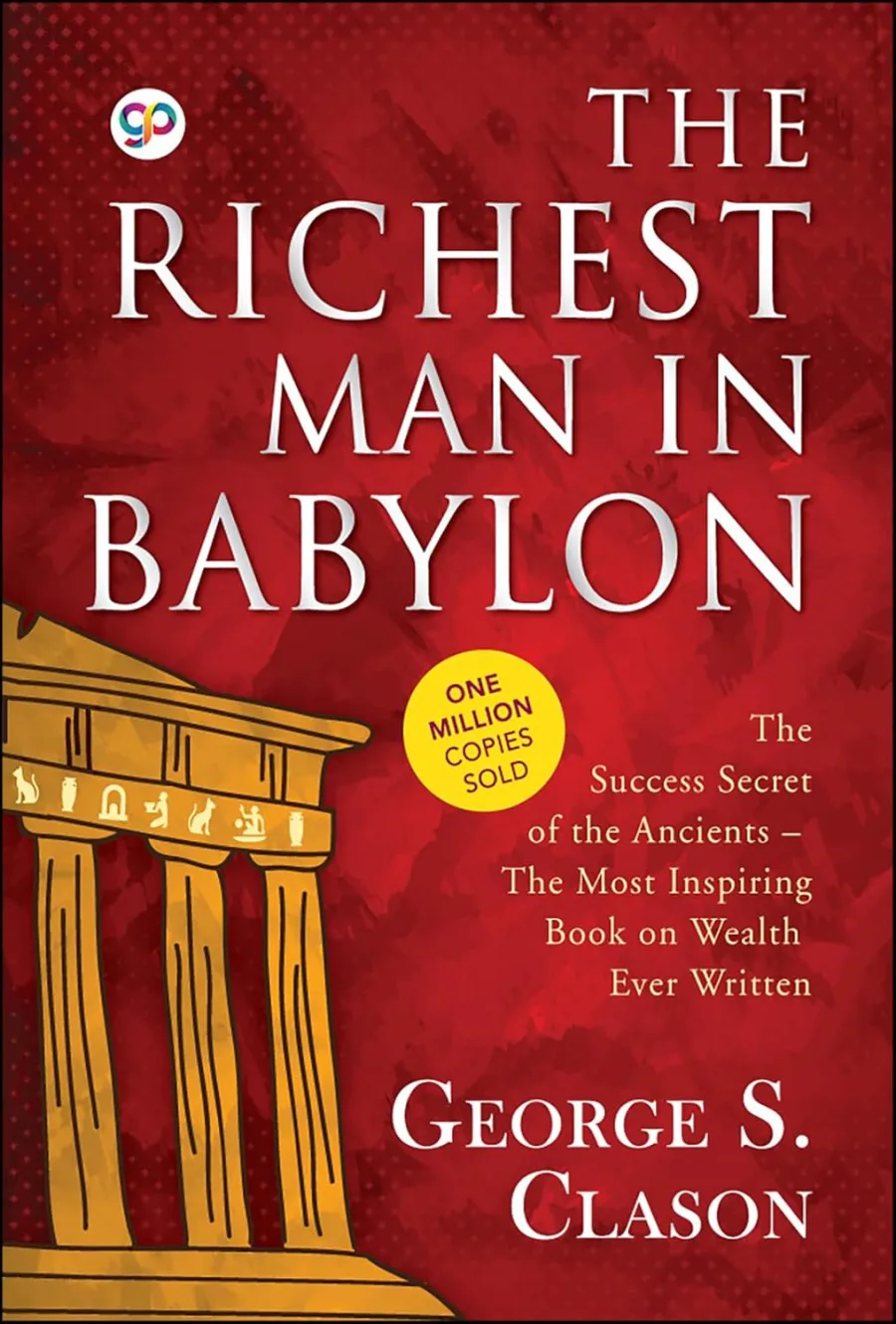
The Richest Man in Babylon
Paperback
• 160 Pages
• USD 8.99
• English
• 9789387669369
No ratings yet
| Publisher | General Press |
|---|---|
| ISBN13 | 9789387669369 |
| ASIN/SKU | 938766936X |
| Book Format | Paperback |
| Language | English |
| Pages | 160 |
| List Price | USD 8.99 |
| Book Code | BD00055170 |
Discover The Richest Man in Babylon by George S. Clason. This book is published by General Press in Paperback format, ISBN 9789387669369, ASIN 938766936X.
Book Description
The Richest Man in Babylon' is considered as the greatest of all inspirational works on the subject of thrift, financial planning, and personal wealth. Revealed inside are the secrets to acquiring money, keeping money, and making money earn more money. Providing financial wisdom through parables, 'The Richest Man in Babylon' was originally a set of pamphlets, written by the author and distributed by banks and insurance companies. These pamphlets were later bundled together, giving birth to a book. In this new rendering by Charles Conrad, the classic tale is retold in clear, simple language for today's readers. These fascinating and informative stories set you on a sure path to prosperity and its accompanying joys.
Author Biography
Author Biography will be added soon…
Editorial Reviews
Editorial Reviews will be added soon…
Book Summary
George S. Clason’s "The Richest Man in Babylon" is a classic of personal finance that eschews complex economic jargon in favor of simple, engaging parables set in the ancient, opulent city of Babylon. The narrative centers around a fundamental question posed by two struggling tradesmen, Bansir the chariot builder and Kobbi the musician. Despite working hard their entire lives, they find themselves with empty purses, looking with envy upon their childhood friend, Arkad, who has grown up to become the wealthiest man in all of Babylon. Seeking wisdom, they approach Arkad to uncover the secret to his vast fortune. Arkad generously shares his knowledge, explaining that wealth is not a matter of luck or divine favor, but rather the result of understanding and strictly applying a set of universal financial laws.
The cornerstone of Arkad’s philosophy, and the most famous lesson of the book, is the principle of paying yourself first. Arkad teaches that a part of all you earn is yours to keep, advising that at least one-tenth of all income should be saved before any other expenses are paid. This requires a profound shift in mindset. Most people pay the grocer, the landlord, and the tailor first, leaving nothing for themselves. By taking ten percent right off the top, an individual builds a sturdy foundation of wealth. Arkad assures his friends that living on the remaining ninety percent is entirely manageable, noting that human desires will always naturally expand to consume whatever income is available unless deliberate, conscious boundaries are set.
Once the habit of saving is established, the next crucial step is learning to control expenditures. Clason makes a clear distinction between necessary expenses and the fulfillment of endless desires. True financial discipline means distinguishing between what we genuinely need and what we simply want, ensuring that our lifestyle does not unnecessarily inflate to swallow our savings. With expenses controlled and savings accumulating, the money must then be put to work. Arkad describes each saved coin as a willing worker, ready to toil tirelessly to earn more coins. This is the ancient Babylonian equivalent of compound interest. A wealthy person does not just hoard their gold; they invest it wisely so that the money reproduces, creating a continuous stream of passive income that flows into their purse whether they are working, traveling, or resting.
However, the accumulation of wealth also brings the danger of loss, which leads to another vital lesson: guarding your treasure. Arkad warns heavily against the intoxicating lure of get-rich-quick schemes and investments that promise impossibly high returns. He emphasizes the critical importance of protecting the principal amount. A key part of guarding wealth involves seeking counsel from wise individuals who have proven themselves adept at managing money. If one wants to know about the quality of jewels, they should go to a jeweler, not a brickmaker. Entrusting money to inexperienced people or investing in businesses one does not fully understand is a surefire way to lose the hard-earned ten percent.
Clason’s parables also touch upon the stability of personal life, advising readers to make their dwelling a profitable investment. By owning a home rather than endlessly renting, an individual redirects money that would otherwise enrich a landlord into building their own equity, while also providing a sense of pride, joy, and security for their family. Furthermore, Arkad stresses the inevitability of aging and the unpredictable nature of life. A wise person must ensure a future income for their older years and make solid provisions to protect their family in case they pass away prematurely. This forward-looking approach ensures that the wealth built over a lifetime serves its ultimate purpose: providing peace of mind and comfort when one can no longer labor.
Finally, the book highlights the most important asset any person possesses: themselves. To truly build lasting wealth, one must continually seek to increase their ability to earn. This means actively cultivating new skills, studying one's trade, and becoming wiser and more capable over time. The more value one can provide, the more one can earn. Coupled with this is a deep, abiding respect for the concept of hard work. Through various stories within the book, including those of former slaves who earned their freedom through sheer diligence, Clason illustrates that work is not a curse but a trusted friend. It is the practical engine that drives ambition and turns financial dreams into tangible reality.
Ultimately, "The Richest Man in Babylon" endures because its wisdom is both profoundly simple and universally applicable. The financial laws that governed the merchants of ancient Babylon are the exact same laws that govern the modern economy today. Wealth is not an overnight phenomenon; it is a slow, methodical accumulation resulting from discipline, continuous learning, and cautious investing. By saving a portion of one's income, living modestly, investing wisely, and continually improving one's skills, Clason promises that absolutely anyone can fill their own purse and secure their financial independence, no matter their starting point in life.
The cornerstone of Arkad’s philosophy, and the most famous lesson of the book, is the principle of paying yourself first. Arkad teaches that a part of all you earn is yours to keep, advising that at least one-tenth of all income should be saved before any other expenses are paid. This requires a profound shift in mindset. Most people pay the grocer, the landlord, and the tailor first, leaving nothing for themselves. By taking ten percent right off the top, an individual builds a sturdy foundation of wealth. Arkad assures his friends that living on the remaining ninety percent is entirely manageable, noting that human desires will always naturally expand to consume whatever income is available unless deliberate, conscious boundaries are set.
Once the habit of saving is established, the next crucial step is learning to control expenditures. Clason makes a clear distinction between necessary expenses and the fulfillment of endless desires. True financial discipline means distinguishing between what we genuinely need and what we simply want, ensuring that our lifestyle does not unnecessarily inflate to swallow our savings. With expenses controlled and savings accumulating, the money must then be put to work. Arkad describes each saved coin as a willing worker, ready to toil tirelessly to earn more coins. This is the ancient Babylonian equivalent of compound interest. A wealthy person does not just hoard their gold; they invest it wisely so that the money reproduces, creating a continuous stream of passive income that flows into their purse whether they are working, traveling, or resting.
However, the accumulation of wealth also brings the danger of loss, which leads to another vital lesson: guarding your treasure. Arkad warns heavily against the intoxicating lure of get-rich-quick schemes and investments that promise impossibly high returns. He emphasizes the critical importance of protecting the principal amount. A key part of guarding wealth involves seeking counsel from wise individuals who have proven themselves adept at managing money. If one wants to know about the quality of jewels, they should go to a jeweler, not a brickmaker. Entrusting money to inexperienced people or investing in businesses one does not fully understand is a surefire way to lose the hard-earned ten percent.
Clason’s parables also touch upon the stability of personal life, advising readers to make their dwelling a profitable investment. By owning a home rather than endlessly renting, an individual redirects money that would otherwise enrich a landlord into building their own equity, while also providing a sense of pride, joy, and security for their family. Furthermore, Arkad stresses the inevitability of aging and the unpredictable nature of life. A wise person must ensure a future income for their older years and make solid provisions to protect their family in case they pass away prematurely. This forward-looking approach ensures that the wealth built over a lifetime serves its ultimate purpose: providing peace of mind and comfort when one can no longer labor.
Finally, the book highlights the most important asset any person possesses: themselves. To truly build lasting wealth, one must continually seek to increase their ability to earn. This means actively cultivating new skills, studying one's trade, and becoming wiser and more capable over time. The more value one can provide, the more one can earn. Coupled with this is a deep, abiding respect for the concept of hard work. Through various stories within the book, including those of former slaves who earned their freedom through sheer diligence, Clason illustrates that work is not a curse but a trusted friend. It is the practical engine that drives ambition and turns financial dreams into tangible reality.
Ultimately, "The Richest Man in Babylon" endures because its wisdom is both profoundly simple and universally applicable. The financial laws that governed the merchants of ancient Babylon are the exact same laws that govern the modern economy today. Wealth is not an overnight phenomenon; it is a slow, methodical accumulation resulting from discipline, continuous learning, and cautious investing. By saving a portion of one's income, living modestly, investing wisely, and continually improving one's skills, Clason promises that absolutely anyone can fill their own purse and secure their financial independence, no matter their starting point in life.
Sample Chapters
Sample Chapters will be added soon…
Build Author or Publisher Website in Minutes
- Design a stunning professional website in minutes to showcase your portfolio, new releases, series, and bestselling titles.
- Use world-class cataloging software to create the metadata of your books. You will forget managing your metadata in excel.
- Share your large cover image and real-time metadata in with the publishing industry.
- Promote your books seamlessly across the Booksdata.org ecosystem and connect directly with a highly engaged reading community.