
Gita According to Gandhi
Paperback
• 220 Pages
• INR 295.00
• English
• 9788180320040
No ratings yet
| Publisher | General Press |
|---|---|
| ISBN13 | 9788180320040 |
| ASIN/SKU | 8180320049 |
| Book Format | Paperback |
| Language | English |
| Pages | 220 |
| List Price | INR 295.00 |
| Subject Code | REL032010, BIO010000, PHI003000, HIS062000 |
| Publishing Date | 01/01/2017 |
| Dimensions | 8.25 x 5.25 x 1.0 inches |
| Book Code | BD00067524 |
Buy this Book
Amazon Stores
Ebook Stores
Other Stores
Discover Gita According to Gandhi by Mahatma Gandhi. This book is published by General Press in Paperback format, ISBN 9788180320040, ASIN 8180320049, under Religion and Spirituality, Hinduism, Philosophy.
Book Description
A sloka-by-sloka interpretation of one of the world's most enduring and influential spiritual texts of the twentieth century. Among the various interpretations of the Bhagavad Gita, the one by Mahatma Gandhi holds a unique position. Unlike other interpretations, Gandhi's commentary is direct and to the point, not offering an opinion on the meaning of the text, but fleshing out the message, often relating it to his own extraordinary experiences.
Gandhi interpreted the Bhagavad Gita, which he regarded as a gospel of selfless action, over a period of nine months from February 24th to November 27th, 1926 at Satyagrah Ashram, Ahmedabad. The morning prayer meetings were followed by his discourses and discussions on the Bhagavad Gita. During this time—a period when Gandhi had withdrawn from mass political activity—he devoted much of his time and energy to translating the Gita from Sanskrit into his native Gujarati. As a result, he met with his followers almost daily, after morning prayer sessions, to discuss the Gita’s contents and meaning as it unfolded before him. This book is the transcription of those daily sessions.
This ebook has been professionally proofread to ensure accuracy and readability on all devices.
Gandhi interpreted the Bhagavad Gita, which he regarded as a gospel of selfless action, over a period of nine months from February 24th to November 27th, 1926 at Satyagrah Ashram, Ahmedabad. The morning prayer meetings were followed by his discourses and discussions on the Bhagavad Gita. During this time—a period when Gandhi had withdrawn from mass political activity—he devoted much of his time and energy to translating the Gita from Sanskrit into his native Gujarati. As a result, he met with his followers almost daily, after morning prayer sessions, to discuss the Gita’s contents and meaning as it unfolded before him. This book is the transcription of those daily sessions.
This ebook has been professionally proofread to ensure accuracy and readability on all devices.
Author Biography
Born in 1869 in the coastal town of Porbandar, India, Mohandas Karamchand Gandhi was raised in a devout Hindu family heavily influenced by Jain pacifist teachings. After completing his early education in India, he traveled to London in 1888 to study law and jurisprudence. Upon passing the bar, he briefly attempted to establish a legal practice in Bombay before accepting a fateful year-long contract to work in South Africa in 1893.
Instead of a brief stint, Gandhi spent over two decades in South Africa, where he faced severe, systemic racial discrimination. These experiences fundamentally transformed him from a shy lawyer into a resilient civil rights activist. It was here that he first developed and implemented Satyagraha, his defining philosophy of nonviolent civil disobedience, successfully mobilizing the Indian expatriate community to protest oppressive colonial laws.
Returning to India in 1915, Gandhi brought his formidable organizing skills and moral authority to the Indian independence movement. Assuming leadership of the Indian National Congress, the "Mahatma" (Great Soul) orchestrated massive nationwide campaigns against British colonial rule, including the famous Salt March of 1930 and the "Quit India" movement of 1942. His methods relied entirely on peaceful non-cooperation, boycotts, and fasting, which continually captured the world's attention.
Throughout his life of activism, Gandhi was also a remarkably prolific writer and journalist. He founded and edited several influential newspapers, using them to advocate for social reforms, religious harmony, and the eradication of untouchability. His most enduring literary contribution is his deeply introspective autobiography, The Story of My Experiments with Truth, which detailed his lifelong pursuit of spiritual purity, dietary discipline, and the profound moral convictions that guided his political vision.
Though India finally achieved independence in 1947, the violent partition of the subcontinent into India and Pakistan left Gandhi deeply sorrowful. While tirelessly working to quell Hindu-Muslim communal violence, he was assassinated by a Hindu nationalist in January 1948 at the age of seventy-eight. He left behind an unparalleled legacy as the father of modern India and a global icon of peaceful resistance.
Instead of a brief stint, Gandhi spent over two decades in South Africa, where he faced severe, systemic racial discrimination. These experiences fundamentally transformed him from a shy lawyer into a resilient civil rights activist. It was here that he first developed and implemented Satyagraha, his defining philosophy of nonviolent civil disobedience, successfully mobilizing the Indian expatriate community to protest oppressive colonial laws.
Returning to India in 1915, Gandhi brought his formidable organizing skills and moral authority to the Indian independence movement. Assuming leadership of the Indian National Congress, the "Mahatma" (Great Soul) orchestrated massive nationwide campaigns against British colonial rule, including the famous Salt March of 1930 and the "Quit India" movement of 1942. His methods relied entirely on peaceful non-cooperation, boycotts, and fasting, which continually captured the world's attention.
Throughout his life of activism, Gandhi was also a remarkably prolific writer and journalist. He founded and edited several influential newspapers, using them to advocate for social reforms, religious harmony, and the eradication of untouchability. His most enduring literary contribution is his deeply introspective autobiography, The Story of My Experiments with Truth, which detailed his lifelong pursuit of spiritual purity, dietary discipline, and the profound moral convictions that guided his political vision.
Though India finally achieved independence in 1947, the violent partition of the subcontinent into India and Pakistan left Gandhi deeply sorrowful. While tirelessly working to quell Hindu-Muslim communal violence, he was assassinated by a Hindu nationalist in January 1948 at the age of seventy-eight. He left behind an unparalleled legacy as the father of modern India and a global icon of peaceful resistance.
Editorial Reviews
Editorial Reviews will be added soon…
Book Summary
Gita According to Gandhi presents Mahatma Gandhi’s deeply personal interpretation of the Bhagavad Gita, one of the foundational texts of Indian spiritual thought. Gandhi did not read the Gita primarily as a historical account of a war between armies. For him, its battlefield was also a powerful symbol of the inner struggle that takes place within every human being. The real battle is between selfishness and selflessness, fear and courage, attachment and detachment, ignorance and wisdom.
Gandhi’s understanding of the Gita grew out of his own life. He repeatedly returned to the text during periods of uncertainty and difficulty, treating it less as a book of abstract philosophy and more as a practical guide to living. His interpretation centers on selfless action, non-attachment, self-control, truth, and devotion to God.
The Battlefield as an Inner Struggle
The Gita begins with Arjuna standing between two armies on the battlefield of Kurukshetra. Seeing relatives, teachers, and friends on both sides, Arjuna becomes overwhelmed with sorrow and refuses to fight. Krishna responds by teaching him about duty, the nature of the self, action, knowledge, and devotion.
Gandhi gives this scene a spiritual rather than merely historical meaning. Arjuna's crisis represents the moral confusion that every person experiences when confronted with difficult choices. We often know that action is necessary, yet fear its consequences. We become attached to people, possessions, success, reputation, and the results of our decisions.
For Gandhi, Krishna's teaching is ultimately a call to right action without selfish attachment.
The Principle of Selfless Action
The central teaching Gandhi draws from the Gita is nishkama karma—action without desire for personal reward. Human beings cannot simply stop acting. Life itself requires action. The important question is therefore not whether we act, but why we act and whether we are attached to the fruits of our actions.
A person should perform his or her duty sincerely while surrendering the results to God. This does not mean becoming careless about outcomes. Instead, it means giving one's best effort without allowing success or failure to determine one's peace of mind.
This principle became fundamental to Gandhi's own public life. His political work was based on the belief that one must act for truth and justice even when victory is uncertain. The value of an action lies partly in its moral integrity, not simply in its visible result.
Detachment Does Not Mean Indifference
Gandhi is careful to distinguish detachment from indifference. A detached person is not someone who stops caring. Rather, detachment means caring deeply about doing what is right while remaining free from selfish craving.
For example, a person serving others should not serve merely because he expects praise, recognition, money, or gratitude. Genuine service becomes possible when the ego gradually disappears from the action.
This idea is closely connected with Gandhi's understanding of seva, or service. Work performed for the welfare of others becomes a spiritual discipline when it is done without personal ambition.
Control of Desire and the Ego
Gandhi sees the uncontrolled mind as one of humanity's greatest sources of suffering. Desire produces attachment; attachment produces anxiety, jealousy, anger, and fear. When people become obsessed with obtaining something, they become slaves to it.
The Gita's ideal person therefore learns to govern the senses and the mind. This does not mean suppressing every human feeling. It means developing enough awareness and discipline to prevent impulses from controlling one's conduct.
Gandhi connects this teaching directly to his own experiments with self-restraint, simplicity, and celibacy. For him, spiritual freedom requires mastery over the appetites of the body and the demands of the ego. A person who cannot govern himself cannot easily serve others without selfish motives.
Ahimsa and the Meaning of the Gita
One of the most distinctive features of Gandhi's interpretation is his relationship between the Gita and ahimsa, or nonviolence. Since the literal setting of the Gita is a war, Gandhi's interpretation is not simply an argument that the text describes ordinary nonviolent conduct. Instead, he understands the battle symbolically and spiritually.
For Gandhi, the deepest teaching of the Gita cannot be separated from love, compassion, and the overcoming of hatred. He rejects the idea that the scripture should be used as a justification for violence motivated by anger, hatred, or personal interest.
His own practice of satyagraha—resistance based on truth and nonviolence—was deeply connected to this interpretation. One must confront injustice, but without hatred toward the wrongdoer. The struggle should purify the person engaged in it rather than feed his ego.
Bhakti, Knowledge, and Surrender
Gandhi also emphasizes devotion to God. For him, spiritual life cannot rest entirely on intellectual understanding. Knowledge is important, but genuine wisdom requires surrender and faith.
The ideal devotee does not merely perform religious rituals. He lives with humility, compassion, self-control, and equality toward others. True devotion becomes visible through conduct.
Gandhi particularly values the Gita's description of the person who remains steady in pleasure and pain, praise and blame, success and failure. Such equanimity is not emotional coldness. It is the result of deep faith and freedom from ego.
Equality and Service
Another important dimension of Gandhi's interpretation is the dignity of all human beings. Spiritual realization should lead to greater compassion and service, not withdrawal into private self-interest.
Gandhi's ideal person therefore works for the welfare of others while expecting nothing in return. The individual who sees God in all beings cannot treat another person as inferior. This principle supports Gandhi's broader commitment to social service, simplicity, and human dignity.
The Ultimate Message
Gita According to Gandhi is ultimately less about winning an external battle than about winning the battle within oneself. Gandhi reads the Gita as a guide for people who must live and act in a difficult world without becoming consumed by selfishness, fear, anger, or attachment.
Its message can be summarized through a few closely connected principles: do your duty, surrender the fruits of your work, control your desires, overcome the ego, serve others, remain truthful, cultivate devotion, and meet success and failure with equanimity.
For Gandhi, the Gita was not a scripture meant to be admired from a distance. It was a book to be practiced. Its real value appears when its teachings enter ordinary life—when a person chooses truth over convenience, service over selfishness, courage over fear, and selfless action over personal reward.
The deepest lesson Gandhi draws from the Gita is therefore profoundly practical: freedom does not come from escaping action, but from learning to act without selfish attachment. When action becomes an offering rather than a means of satisfying the ego, work itself becomes a path toward spiritual liberation.
Gandhi’s understanding of the Gita grew out of his own life. He repeatedly returned to the text during periods of uncertainty and difficulty, treating it less as a book of abstract philosophy and more as a practical guide to living. His interpretation centers on selfless action, non-attachment, self-control, truth, and devotion to God.
The Battlefield as an Inner Struggle
The Gita begins with Arjuna standing between two armies on the battlefield of Kurukshetra. Seeing relatives, teachers, and friends on both sides, Arjuna becomes overwhelmed with sorrow and refuses to fight. Krishna responds by teaching him about duty, the nature of the self, action, knowledge, and devotion.
Gandhi gives this scene a spiritual rather than merely historical meaning. Arjuna's crisis represents the moral confusion that every person experiences when confronted with difficult choices. We often know that action is necessary, yet fear its consequences. We become attached to people, possessions, success, reputation, and the results of our decisions.
For Gandhi, Krishna's teaching is ultimately a call to right action without selfish attachment.
The Principle of Selfless Action
The central teaching Gandhi draws from the Gita is nishkama karma—action without desire for personal reward. Human beings cannot simply stop acting. Life itself requires action. The important question is therefore not whether we act, but why we act and whether we are attached to the fruits of our actions.
A person should perform his or her duty sincerely while surrendering the results to God. This does not mean becoming careless about outcomes. Instead, it means giving one's best effort without allowing success or failure to determine one's peace of mind.
This principle became fundamental to Gandhi's own public life. His political work was based on the belief that one must act for truth and justice even when victory is uncertain. The value of an action lies partly in its moral integrity, not simply in its visible result.
Detachment Does Not Mean Indifference
Gandhi is careful to distinguish detachment from indifference. A detached person is not someone who stops caring. Rather, detachment means caring deeply about doing what is right while remaining free from selfish craving.
For example, a person serving others should not serve merely because he expects praise, recognition, money, or gratitude. Genuine service becomes possible when the ego gradually disappears from the action.
This idea is closely connected with Gandhi's understanding of seva, or service. Work performed for the welfare of others becomes a spiritual discipline when it is done without personal ambition.
Control of Desire and the Ego
Gandhi sees the uncontrolled mind as one of humanity's greatest sources of suffering. Desire produces attachment; attachment produces anxiety, jealousy, anger, and fear. When people become obsessed with obtaining something, they become slaves to it.
The Gita's ideal person therefore learns to govern the senses and the mind. This does not mean suppressing every human feeling. It means developing enough awareness and discipline to prevent impulses from controlling one's conduct.
Gandhi connects this teaching directly to his own experiments with self-restraint, simplicity, and celibacy. For him, spiritual freedom requires mastery over the appetites of the body and the demands of the ego. A person who cannot govern himself cannot easily serve others without selfish motives.
Ahimsa and the Meaning of the Gita
One of the most distinctive features of Gandhi's interpretation is his relationship between the Gita and ahimsa, or nonviolence. Since the literal setting of the Gita is a war, Gandhi's interpretation is not simply an argument that the text describes ordinary nonviolent conduct. Instead, he understands the battle symbolically and spiritually.
For Gandhi, the deepest teaching of the Gita cannot be separated from love, compassion, and the overcoming of hatred. He rejects the idea that the scripture should be used as a justification for violence motivated by anger, hatred, or personal interest.
His own practice of satyagraha—resistance based on truth and nonviolence—was deeply connected to this interpretation. One must confront injustice, but without hatred toward the wrongdoer. The struggle should purify the person engaged in it rather than feed his ego.
Bhakti, Knowledge, and Surrender
Gandhi also emphasizes devotion to God. For him, spiritual life cannot rest entirely on intellectual understanding. Knowledge is important, but genuine wisdom requires surrender and faith.
The ideal devotee does not merely perform religious rituals. He lives with humility, compassion, self-control, and equality toward others. True devotion becomes visible through conduct.
Gandhi particularly values the Gita's description of the person who remains steady in pleasure and pain, praise and blame, success and failure. Such equanimity is not emotional coldness. It is the result of deep faith and freedom from ego.
Equality and Service
Another important dimension of Gandhi's interpretation is the dignity of all human beings. Spiritual realization should lead to greater compassion and service, not withdrawal into private self-interest.
Gandhi's ideal person therefore works for the welfare of others while expecting nothing in return. The individual who sees God in all beings cannot treat another person as inferior. This principle supports Gandhi's broader commitment to social service, simplicity, and human dignity.
The Ultimate Message
Gita According to Gandhi is ultimately less about winning an external battle than about winning the battle within oneself. Gandhi reads the Gita as a guide for people who must live and act in a difficult world without becoming consumed by selfishness, fear, anger, or attachment.
Its message can be summarized through a few closely connected principles: do your duty, surrender the fruits of your work, control your desires, overcome the ego, serve others, remain truthful, cultivate devotion, and meet success and failure with equanimity.
For Gandhi, the Gita was not a scripture meant to be admired from a distance. It was a book to be practiced. Its real value appears when its teachings enter ordinary life—when a person chooses truth over convenience, service over selfishness, courage over fear, and selfless action over personal reward.
The deepest lesson Gandhi draws from the Gita is therefore profoundly practical: freedom does not come from escaping action, but from learning to act without selfish attachment. When action becomes an offering rather than a means of satisfying the ego, work itself becomes a path toward spiritual liberation.
Sample Chapters
Sample Chapters will be added soon…
Reader Reviews
No reviews yet.
Gita According to Gandhi
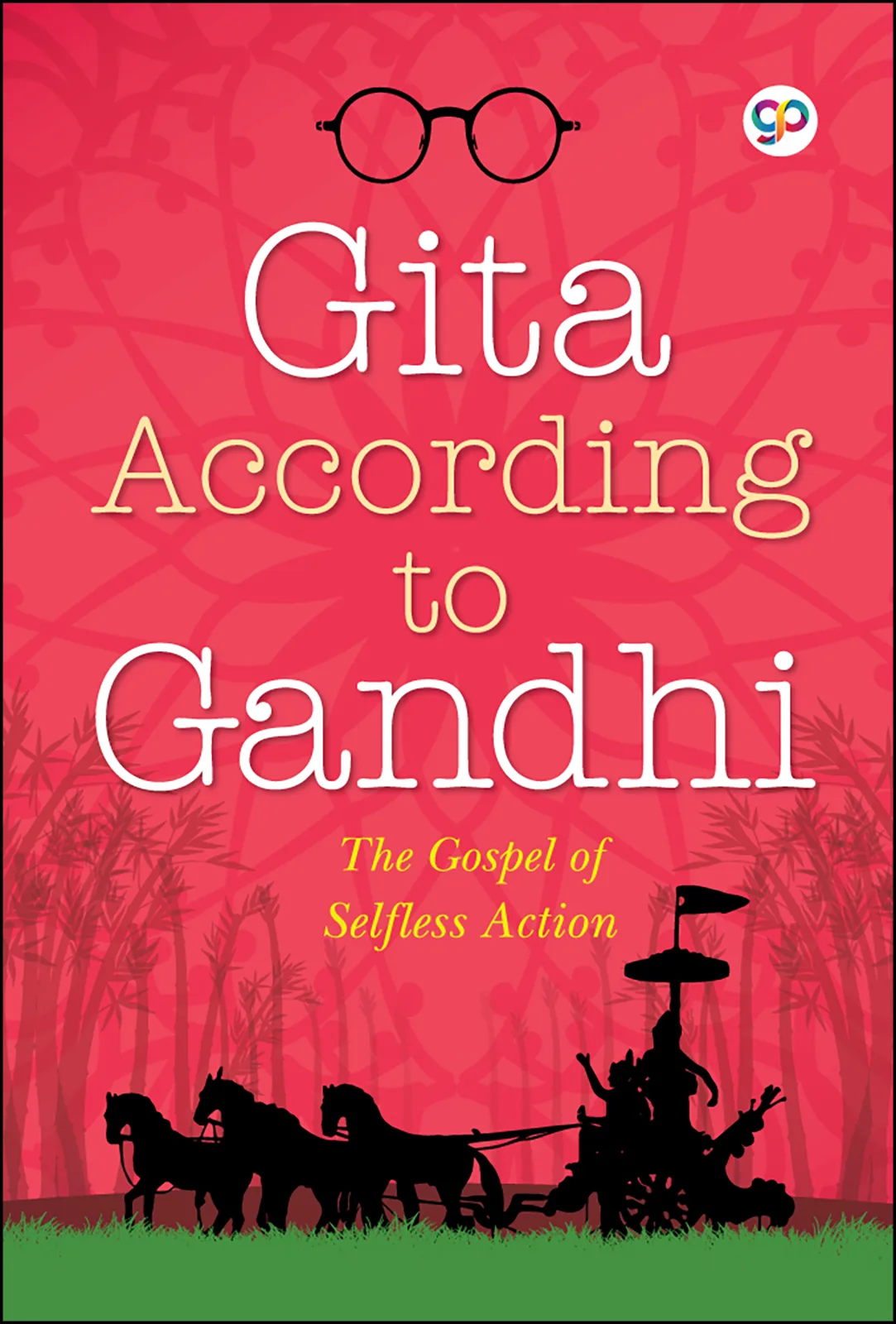
Download Cover Image
Do you want to download the full cover image for Gita According to Gandhi?