
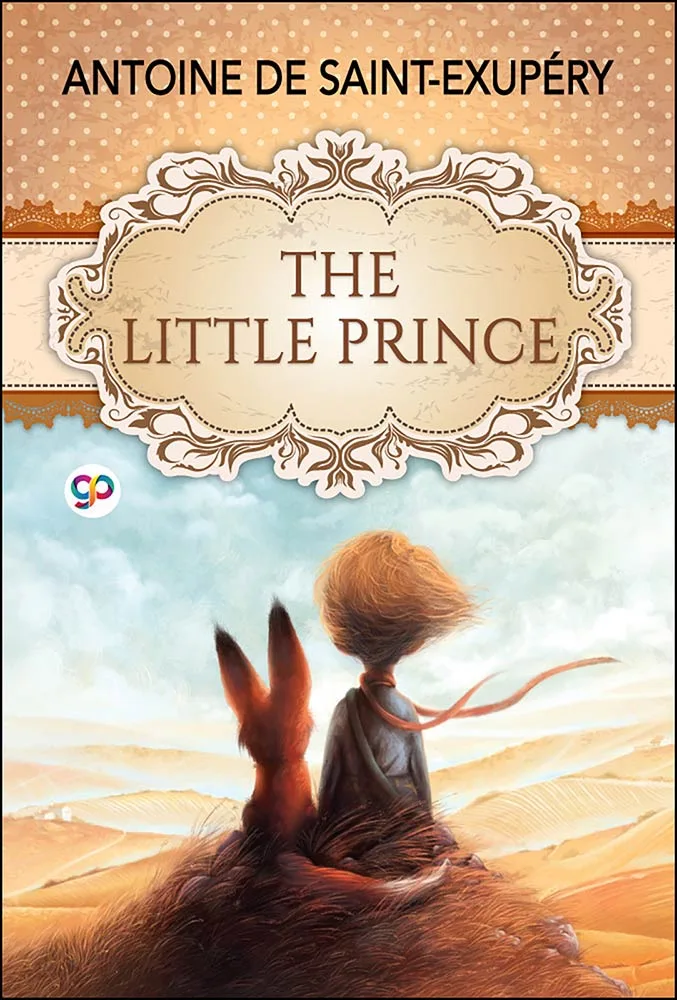
The Little Prince
Paperback
• 112 Pages
• INR 245.00
• English
• 9788180320590
No ratings yet
| Publisher | General Press |
|---|---|
| ISBN13 | 9788180320590 |
| ASIN/SKU | 8180320596 |
| Book Format | Paperback |
| Language | English |
| Pages | 112 |
| List Price | INR 245.00 |
| Subject Code | FIC004000, FIC019000, FIC039000 |
| Publishing Date | 13/09/2017 |
| Dimensions | 8.25 x 5.25 x 1.0 inches |
| Book Code | BD00067535 |
Buy this Book
Amazon Stores
Ebook Stores
Other Stores
Discover The Little Prince by Antoine de Saint-Exupéry. This book is published by General Press in Paperback format, ISBN 9788180320590, ASIN 8180320596, under Children's Books, Metaphysical and Visionary Fiction, Literary Fiction.
Book Description
Antoine de Saint-Exupéry’s 'The Little Prince' is a tender, philosophical modern fable that explores the deep truths of love, loss, and human connection. The story begins when a weary aviator crashes his plane in the desolate Sahara Desert. There, facing isolation and limited survival supplies, he encounters a mysterious, golden-haired child known only as the Little Prince.
The boy reveals he has traveled from a tiny, distant asteroid, leaving behind his most prized possession: a single, vain, but fiercely loved rose. As the prince recounts his journey across the universe, he describes visiting various planets inhabited by narrow-minded adults—a king, a businessman, a lamplighter—who are entirely consumed by meaningless rules and superficial ambitions. Through the child's innocent eyes, Saint-Exupéry gently critiques how adults lose their sense of wonder and prioritize numbers over genuine beauty.
The novel’s emotional core blossoms when the prince reaches Earth and befriends a wise wild fox. The fox teaches him the story’s most enduring secret: "It is only with the heart that one can see rightly; what is essential is invisible to the eye." The prince realizes that the time and devotion he poured into his demanding rose are what make her truly unique in all the universe.
Ultimately, 'The Little Prince' is a poignant reminder to hold onto the purity of childhood. It is a profoundly humane narrative that encourages us to look past the surface, cherish our relationships, and nurture the quiet, unseen bonds that give life meaning.
The boy reveals he has traveled from a tiny, distant asteroid, leaving behind his most prized possession: a single, vain, but fiercely loved rose. As the prince recounts his journey across the universe, he describes visiting various planets inhabited by narrow-minded adults—a king, a businessman, a lamplighter—who are entirely consumed by meaningless rules and superficial ambitions. Through the child's innocent eyes, Saint-Exupéry gently critiques how adults lose their sense of wonder and prioritize numbers over genuine beauty.
The novel’s emotional core blossoms when the prince reaches Earth and befriends a wise wild fox. The fox teaches him the story’s most enduring secret: "It is only with the heart that one can see rightly; what is essential is invisible to the eye." The prince realizes that the time and devotion he poured into his demanding rose are what make her truly unique in all the universe.
Ultimately, 'The Little Prince' is a poignant reminder to hold onto the purity of childhood. It is a profoundly humane narrative that encourages us to look past the surface, cherish our relationships, and nurture the quiet, unseen bonds that give life meaning.
Author Biography
Antoine de Saint-Exupéry was born in Lyons on June 29, 1900. Later, in Paris, he failed the entrance exams for the French naval academy and, instead, enrolled at the prestigious art school l'Ecole des Beaux-Arts. In 1921 Saint-Exupéry began serving in the military, and was stationed in Strasbourg. There he learned to be a pilot, and his career path was forever settled.
Saint-Exupéry's next novel, Wind, Sand and Stars, was published in 1939. A great success, the book won the Académie Française's Grand Prix du Roman (Grand Prize for Novel Writing) and the National Book Award in the United States.
On July 31, 1944, he set out from Borgo, Corsica, to overfly occupied France and never returned.
Saint-Exupéry's next novel, Wind, Sand and Stars, was published in 1939. A great success, the book won the Académie Française's Grand Prix du Roman (Grand Prize for Novel Writing) and the National Book Award in the United States.
On July 31, 1944, he set out from Borgo, Corsica, to overfly occupied France and never returned.
Editorial Reviews
Editorial Reviews will be added soon…
Book Summary
"The Little Prince" by Antoine de Saint-Exupéry is a timeless philosophical novella that combines fantasy, adventure, and profound reflections on human nature. The story begins with a pilot who crashes his airplane in the vast Sahara Desert and finds himself stranded with limited supplies. While attempting to repair his aircraft, he encounters an unusual young boy who calmly asks him to draw a sheep. This mysterious child, known simply as the Little Prince, seems completely unconcerned by the harsh desert surroundings. As the pilot spends time with him, he gradually learns that the boy has travelled from a tiny asteroid called B-612, where he lived alone with three volcanoes and a beautiful but demanding rose. Through their growing friendship, the Little Prince begins to share the remarkable story of his journey across the universe and the lessons he has learned about life, love, and human relationships.
The Little Prince explains that he left his tiny planet because he was confused by the behaviour of his beloved rose. Although he cared for her deeply, her pride, vanity, and constant demands made it difficult for him to understand her true feelings. Believing that distance might help him discover the meaning of love, he decided to travel among the stars, visiting several small planets before arriving on Earth. Each planet is inhabited by a single adult whose life revolves around one narrow obsession. These encounters reveal the limitations of grown-up thinking and highlight how adults often lose sight of imagination, kindness, and genuine happiness as they become consumed by status, wealth, authority, or routine.
The first people the Little Prince meets include a king who believes he rules everything despite having no real subjects, a vain man who desires endless admiration, a drunkard trapped in a cycle of shame, and a businessman who spends his entire life counting stars as though they were possessions. He also encounters a lamplighter who faithfully follows orders without questioning their purpose and a geographer who records information about places he has never personally explored. Although each adult appears respectable on the surface, the Little Prince realises that they are disconnected from what truly gives life meaning. Their lives are shaped by ambition, pride, habit, or empty routines rather than by curiosity, compassion, or meaningful relationships.
When the Little Prince reaches Earth, he discovers that it is far larger and more complicated than any world he has previously visited. He is surprised to find a garden filled with thousands of roses, making him believe that his own rose is not as unique as he once imagined. This discovery leaves him disappointed because he had believed that his flower was one of a kind. However, his perspective changes after meeting a wise fox, who teaches him one of the story's most important lessons. The fox explains that true friendship and love are created through patience, trust, and shared experiences. What makes someone special is not outward appearance but the time, care, and responsibility invested in the relationship. Through this friendship, the Little Prince finally understands why his own rose is precious despite being outwardly similar to many others.
The conversations between the Little Prince and the fox become the emotional heart of the novel. The fox introduces the idea of "taming," which means creating a unique bond that transforms strangers into cherished companions. Once such a bond exists, each person becomes responsible for caring for the other. This lesson changes the Little Prince's understanding of love and helps him realise that he had misunderstood his rose's behaviour. Her vanity and occasional selfishness did not erase the affection they shared. Instead, their relationship required patience, understanding, and acceptance. Armed with this new wisdom, he begins to long for home and recognises that genuine love involves commitment rather than simply seeking perfection.
Meanwhile, the pilot continues struggling to repair his damaged airplane while listening to the Little Prince's extraordinary stories. As the days pass and their water supply begins to run dangerously low, the two companions search together across the desert. During their journey, the Little Prince offers gentle observations about the world that help the pilot rediscover the imagination and wonder he had gradually lost during adulthood. The desert itself becomes a powerful symbol, suggesting that beneath empty appearances there often lies hidden beauty and hope waiting to be discovered. The friendship between the pilot and the Little Prince reminds both characters that meaningful connections can develop even under the most unlikely circumstances.
As the story moves toward its conclusion, the Little Prince decides that it is time to return to his own planet and the rose who has been waiting for him. Because his physical body cannot travel such an immense distance, he accepts the help of a mysterious snake whose bite allows him to leave the Earth behind. Although the moment is deeply emotional, the Little Prince faces it with calm acceptance rather than fear. He explains that what truly matters cannot always be seen and that appearances often hide deeper realities. His departure leaves the pilot heartbroken, yet it also fills him with a renewed appreciation for love, friendship, and the invisible bonds that connect people across time and distance.
After successfully repairing his airplane, the pilot returns to civilisation, but he is forever changed by his encounter with the Little Prince. He often looks toward the night sky, wondering whether the Little Prince has safely returned to his tiny planet and whether his beloved rose still flourishes beneath her protective glass cover. The stars, which once appeared as distant objects, now remind him of laughter, friendship, and the enduring presence of someone who taught him to see the world differently. Though years pass, he continues to hope that the Little Prince remains happy, encouraging readers to share in that hope every time they gaze at the heavens.
"The Little Prince" is ultimately a story about innocence, compassion, responsibility, and the enduring importance of seeing the world through the eyes of the heart rather than through logic alone. Antoine de Saint-Exupéry blends fantasy with philosophical reflection to create a narrative that speaks to both children and adults, offering timeless insights into love, friendship, loneliness, and the search for meaning. Through the Little Prince's extraordinary journey, the novel reminds readers that life is enriched not by possessions, achievements, or appearances, but by the relationships we nurture and the care we show to others. Its gentle storytelling, memorable characters, and universal themes have made it one of the most beloved and widely translated works of literature, continuing to inspire generations with its message that the most valuable truths are often invisible to the eye but unforgettable to the heart.
The Little Prince explains that he left his tiny planet because he was confused by the behaviour of his beloved rose. Although he cared for her deeply, her pride, vanity, and constant demands made it difficult for him to understand her true feelings. Believing that distance might help him discover the meaning of love, he decided to travel among the stars, visiting several small planets before arriving on Earth. Each planet is inhabited by a single adult whose life revolves around one narrow obsession. These encounters reveal the limitations of grown-up thinking and highlight how adults often lose sight of imagination, kindness, and genuine happiness as they become consumed by status, wealth, authority, or routine.
The first people the Little Prince meets include a king who believes he rules everything despite having no real subjects, a vain man who desires endless admiration, a drunkard trapped in a cycle of shame, and a businessman who spends his entire life counting stars as though they were possessions. He also encounters a lamplighter who faithfully follows orders without questioning their purpose and a geographer who records information about places he has never personally explored. Although each adult appears respectable on the surface, the Little Prince realises that they are disconnected from what truly gives life meaning. Their lives are shaped by ambition, pride, habit, or empty routines rather than by curiosity, compassion, or meaningful relationships.
When the Little Prince reaches Earth, he discovers that it is far larger and more complicated than any world he has previously visited. He is surprised to find a garden filled with thousands of roses, making him believe that his own rose is not as unique as he once imagined. This discovery leaves him disappointed because he had believed that his flower was one of a kind. However, his perspective changes after meeting a wise fox, who teaches him one of the story's most important lessons. The fox explains that true friendship and love are created through patience, trust, and shared experiences. What makes someone special is not outward appearance but the time, care, and responsibility invested in the relationship. Through this friendship, the Little Prince finally understands why his own rose is precious despite being outwardly similar to many others.
The conversations between the Little Prince and the fox become the emotional heart of the novel. The fox introduces the idea of "taming," which means creating a unique bond that transforms strangers into cherished companions. Once such a bond exists, each person becomes responsible for caring for the other. This lesson changes the Little Prince's understanding of love and helps him realise that he had misunderstood his rose's behaviour. Her vanity and occasional selfishness did not erase the affection they shared. Instead, their relationship required patience, understanding, and acceptance. Armed with this new wisdom, he begins to long for home and recognises that genuine love involves commitment rather than simply seeking perfection.
Meanwhile, the pilot continues struggling to repair his damaged airplane while listening to the Little Prince's extraordinary stories. As the days pass and their water supply begins to run dangerously low, the two companions search together across the desert. During their journey, the Little Prince offers gentle observations about the world that help the pilot rediscover the imagination and wonder he had gradually lost during adulthood. The desert itself becomes a powerful symbol, suggesting that beneath empty appearances there often lies hidden beauty and hope waiting to be discovered. The friendship between the pilot and the Little Prince reminds both characters that meaningful connections can develop even under the most unlikely circumstances.
As the story moves toward its conclusion, the Little Prince decides that it is time to return to his own planet and the rose who has been waiting for him. Because his physical body cannot travel such an immense distance, he accepts the help of a mysterious snake whose bite allows him to leave the Earth behind. Although the moment is deeply emotional, the Little Prince faces it with calm acceptance rather than fear. He explains that what truly matters cannot always be seen and that appearances often hide deeper realities. His departure leaves the pilot heartbroken, yet it also fills him with a renewed appreciation for love, friendship, and the invisible bonds that connect people across time and distance.
After successfully repairing his airplane, the pilot returns to civilisation, but he is forever changed by his encounter with the Little Prince. He often looks toward the night sky, wondering whether the Little Prince has safely returned to his tiny planet and whether his beloved rose still flourishes beneath her protective glass cover. The stars, which once appeared as distant objects, now remind him of laughter, friendship, and the enduring presence of someone who taught him to see the world differently. Though years pass, he continues to hope that the Little Prince remains happy, encouraging readers to share in that hope every time they gaze at the heavens.
"The Little Prince" is ultimately a story about innocence, compassion, responsibility, and the enduring importance of seeing the world through the eyes of the heart rather than through logic alone. Antoine de Saint-Exupéry blends fantasy with philosophical reflection to create a narrative that speaks to both children and adults, offering timeless insights into love, friendship, loneliness, and the search for meaning. Through the Little Prince's extraordinary journey, the novel reminds readers that life is enriched not by possessions, achievements, or appearances, but by the relationships we nurture and the care we show to others. Its gentle storytelling, memorable characters, and universal themes have made it one of the most beloved and widely translated works of literature, continuing to inspire generations with its message that the most valuable truths are often invisible to the eye but unforgettable to the heart.
Sample Chapters
Chapter One
Once when I was six years old I saw a beautiful picture in a book about the primeval forest called True Stories. It showed a boa constrictor swallowing an animal. Here is a copy of the drawing.
The book stated: ‘Boa constrictors swallow their prey whole without chewing it whereupon they can no longer move and sleep for six months digesting it.’
I then reflected deeply upon the adventures in the jungle and in turn succeeded in making my first drawing with a colour pencil. My drawing No. I was like this:
I showed my masterpiece to the grown-ups and asked them if my drawing frightened them.
They answered: ‘Why should anyone be frightened by a hat?’ My drawing did not represent a hat. It was supposed to be a boa constrictor digesting an elephant. So I made another drawing of the inside of the boa constrictor to enable the grown-ups to understand. They always need explanations. My drawing No. 2 looked like this:
The grown-ups then advised me to give up my drawings of boa constrictors, whether from the inside or the outside, and to devote myself instead to geography, history, arithmetic and grammar. Thus it was that I gave up a magnificent career as a painter at the age of six. I had been disappointed by the lack of success of my drawing No. 1 and my drawing No. 2. Grown-ups never understand anything by themselves and it is rather tedious for children to have to explain things to them time and again.
So I had to choose another job and I learnt to pilot aeroplanes. I flew more or less all over the world. And indeed geography has been extremely useful to me. I am able to distinguish between China and Arizona at a glance. It is extremely helpful if one gets lost in the night.
As a result of which I have been in touch, throughout my life, with all kinds of serious people. I have spent a lot of time with grown-ups. I have seen them at very close quarters which I’m afraid has not greatly enhanced my opinion of them.
Whenever I met one who seemed reasonably clear-sighted to me, I showed them my drawing No 1, which I had kept, as an experiment. I wanted to find out whether he or she was truly understanding. But the answer was always: ‘It is a hat.’ So I gave up mentioning boa constrictors or primeval forests or stars. I would bring myself down to his or her level and talk about bridge, golf, politics and neckties. And the grown-up would be very pleased to have met such a sensible person.
Chapter Two
Thus I lived alone, with no one I could really talk to, until I had an accident in the Sahara Desert six years ago. Something broke down in my engine. And since there was neither a mechanic nor a passenger with me, I prepared myself for a difficult but what I hoped would be successful repair. It was a matter of life or death for me. I had scarcely enough drinking water for a week.
On the first night, I fell asleep on the sand, a thousand miles from any human habitation. I was far more isolated than a shipwrecked sailor on a raft in the middle of the ocean. So you can imagine my surprise at sunrise when an odd little voice woke me up.
It said, ‘Please… draw me a sheep.’
‘What?’
‘Draw me a sheep.’
I jumped up, completely thunderstruck. I rubbed my eyes, blinked hard and looked carefully around me. And I discovered an extraordinary little boy watching me gravely. Here is the best portrait I was able to draw of him later. But of course, my drawing is not half as charming as its model. It is not my fault. I had been discouraged by grown-ups in my career as a painter when I was six years old, and I hadn’t learnt to draw anything with the exception of boas from the outside and boas from the inside.
I therefore stared in total astonishment at this sudden apparition. Do not forget that I was a thousand miles away from any inhabited region.
But my little chap did not seem to be either lost or dead tired or dying of hunger, thirst or fear. He did not look like a child lost in the middle of the desert, a thousand miles from any inhabited region.
When I finally managed to speak, I said to him: ‘But… what are you doing here?’
Whereupon he repeated softly and gravely: ‘Please draw me a sheep.’
When a mystery is too overpowering, one dare not disobey. Absurd as it seemed to me a thousand miles from any human habitation and in danger of death, I took a sheet of paper and my fountain pen out of my pocket. But I suddenly remembered that my studies had been concentrated on geography, history, arithmetic and grammar, so I told the little chap (a little crossly) that I did not know how to draw.
He replied: ‘That doesn’t matter. Draw me a sheep.’
Since I had never drawn a sheep I draw from him one of the two pictures I had drawn before. That of the boa constrictor from the outside. And I was astounded to hear the little fellow saying: ‘No! No! I don’t want an elephant inside a boa. A boa constrictor is a very dangerous creature and an elephant is very cumbersome. Everything is very small where I live. I need a sheep. Draw me a sheep.’
So I drew.
He looked at it carefully and said: ‘No. That one is already very sick. Draw me another one.’
And I drew.
My little friend said gently and indulgently: ‘Don’t you see that is not a sheep, it is a ram. It has horns…’
Once again, I made another drawing.
But it was rejected too, like the previous ones.
‘This one is too old. I want a sheep that will live for a long time.’
My patience had run out by then as I was in a hurry to start dismantling my engine as soon as possible, so I scribbled this drawing. And I explained: ‘That is only the box. The sheep you asked for is inside.’
But I was very surprised to see the face of my young judge lighting up: ‘That is exactly the way I wanted it. Do you think this sheep will need a lot of grass?’
‘Why?’
‘Because where I live everything is so small…’
‘There should be enough grass for him. I have given you a very small sheep.’
He bent his head over the drawing: ‘Not so small that… Look. He has gone to sleep.’
And that is how I met the little prince.
Chapter Three
It took me a long time to find out where he came from. The little prince who asked me so many questions never seemed to hear mine. It is thanks to the odd word, here and there, that everything was revealed to me.
For instance, when he saw my aeroplane for the first time (I shall not draw my aeroplane; that would be far too complicated for me), he asked me: ‘What is that object?
‘It is not an object. It flies. It is an aeroplane. It is my aeroplane.’
And I was proud to be able to tell him that I could fly.
He cried out then: ‘What! You dropped down from the sky?’
‘Yes,’ I replied modestly.
‘Oh! That is funny.’ And the little prince broke into a lovely peal of laughter which annoyed me no end. I like my misfortunes to be taken seriously. ‘So you too come from the sky. From which planet?’
I immediately perceived a ray of light in the mystery of his presence and at once questioned him:
‘So you’ve come from another planet?’
But he didn’t reply. He nodded gently whilst gazing at my aeroplane.
‘It is true that on that you can’t have come from very far away…’
And he sank into a long reverie. Then, taking my sheep out of his pocket, he contemplated his treasure.
You can imagine how my curiosity was aroused by this half confidence about ‘the other planets’. So I tried to find out a little more.
‘Where do you come from, my little fellow? Where is this “where I live” of which you speak? Where do you want to take my sheep?’
After a thoughtful silence, he replied: ‘What I like about the box you have given me is that he can use it as his house at night.’
‘Of course. And if you are good, I shall also give you a rope to tie him up during the day. And a post to tie him to.’
But the little prince seemed shocked by my proposal.
‘Tie him up? What a funny idea.’
‘But if you do not tie him up, he will wander off and get lost.’
My friend burst out laughing again: ‘But where would he go?’
‘Anywhere. Just straight ahead.’
Whereupon the little prince remarked gravely: ‘It wouldn’t matter. Everything is so small where I live.’ And, perhaps a little wistfully, he added: ‘Straight ahead of oneself, one cannot go very far…’
Once when I was six years old I saw a beautiful picture in a book about the primeval forest called True Stories. It showed a boa constrictor swallowing an animal. Here is a copy of the drawing.
The book stated: ‘Boa constrictors swallow their prey whole without chewing it whereupon they can no longer move and sleep for six months digesting it.’
I then reflected deeply upon the adventures in the jungle and in turn succeeded in making my first drawing with a colour pencil. My drawing No. I was like this:
I showed my masterpiece to the grown-ups and asked them if my drawing frightened them.
They answered: ‘Why should anyone be frightened by a hat?’ My drawing did not represent a hat. It was supposed to be a boa constrictor digesting an elephant. So I made another drawing of the inside of the boa constrictor to enable the grown-ups to understand. They always need explanations. My drawing No. 2 looked like this:
The grown-ups then advised me to give up my drawings of boa constrictors, whether from the inside or the outside, and to devote myself instead to geography, history, arithmetic and grammar. Thus it was that I gave up a magnificent career as a painter at the age of six. I had been disappointed by the lack of success of my drawing No. 1 and my drawing No. 2. Grown-ups never understand anything by themselves and it is rather tedious for children to have to explain things to them time and again.
So I had to choose another job and I learnt to pilot aeroplanes. I flew more or less all over the world. And indeed geography has been extremely useful to me. I am able to distinguish between China and Arizona at a glance. It is extremely helpful if one gets lost in the night.
As a result of which I have been in touch, throughout my life, with all kinds of serious people. I have spent a lot of time with grown-ups. I have seen them at very close quarters which I’m afraid has not greatly enhanced my opinion of them.
Whenever I met one who seemed reasonably clear-sighted to me, I showed them my drawing No 1, which I had kept, as an experiment. I wanted to find out whether he or she was truly understanding. But the answer was always: ‘It is a hat.’ So I gave up mentioning boa constrictors or primeval forests or stars. I would bring myself down to his or her level and talk about bridge, golf, politics and neckties. And the grown-up would be very pleased to have met such a sensible person.
Chapter Two
Thus I lived alone, with no one I could really talk to, until I had an accident in the Sahara Desert six years ago. Something broke down in my engine. And since there was neither a mechanic nor a passenger with me, I prepared myself for a difficult but what I hoped would be successful repair. It was a matter of life or death for me. I had scarcely enough drinking water for a week.
On the first night, I fell asleep on the sand, a thousand miles from any human habitation. I was far more isolated than a shipwrecked sailor on a raft in the middle of the ocean. So you can imagine my surprise at sunrise when an odd little voice woke me up.
It said, ‘Please… draw me a sheep.’
‘What?’
‘Draw me a sheep.’
I jumped up, completely thunderstruck. I rubbed my eyes, blinked hard and looked carefully around me. And I discovered an extraordinary little boy watching me gravely. Here is the best portrait I was able to draw of him later. But of course, my drawing is not half as charming as its model. It is not my fault. I had been discouraged by grown-ups in my career as a painter when I was six years old, and I hadn’t learnt to draw anything with the exception of boas from the outside and boas from the inside.
I therefore stared in total astonishment at this sudden apparition. Do not forget that I was a thousand miles away from any inhabited region.
But my little chap did not seem to be either lost or dead tired or dying of hunger, thirst or fear. He did not look like a child lost in the middle of the desert, a thousand miles from any inhabited region.
When I finally managed to speak, I said to him: ‘But… what are you doing here?’
Whereupon he repeated softly and gravely: ‘Please draw me a sheep.’
When a mystery is too overpowering, one dare not disobey. Absurd as it seemed to me a thousand miles from any human habitation and in danger of death, I took a sheet of paper and my fountain pen out of my pocket. But I suddenly remembered that my studies had been concentrated on geography, history, arithmetic and grammar, so I told the little chap (a little crossly) that I did not know how to draw.
He replied: ‘That doesn’t matter. Draw me a sheep.’
Since I had never drawn a sheep I draw from him one of the two pictures I had drawn before. That of the boa constrictor from the outside. And I was astounded to hear the little fellow saying: ‘No! No! I don’t want an elephant inside a boa. A boa constrictor is a very dangerous creature and an elephant is very cumbersome. Everything is very small where I live. I need a sheep. Draw me a sheep.’
So I drew.
He looked at it carefully and said: ‘No. That one is already very sick. Draw me another one.’
And I drew.
My little friend said gently and indulgently: ‘Don’t you see that is not a sheep, it is a ram. It has horns…’
Once again, I made another drawing.
But it was rejected too, like the previous ones.
‘This one is too old. I want a sheep that will live for a long time.’
My patience had run out by then as I was in a hurry to start dismantling my engine as soon as possible, so I scribbled this drawing. And I explained: ‘That is only the box. The sheep you asked for is inside.’
But I was very surprised to see the face of my young judge lighting up: ‘That is exactly the way I wanted it. Do you think this sheep will need a lot of grass?’
‘Why?’
‘Because where I live everything is so small…’
‘There should be enough grass for him. I have given you a very small sheep.’
He bent his head over the drawing: ‘Not so small that… Look. He has gone to sleep.’
And that is how I met the little prince.
Chapter Three
It took me a long time to find out where he came from. The little prince who asked me so many questions never seemed to hear mine. It is thanks to the odd word, here and there, that everything was revealed to me.
For instance, when he saw my aeroplane for the first time (I shall not draw my aeroplane; that would be far too complicated for me), he asked me: ‘What is that object?
‘It is not an object. It flies. It is an aeroplane. It is my aeroplane.’
And I was proud to be able to tell him that I could fly.
He cried out then: ‘What! You dropped down from the sky?’
‘Yes,’ I replied modestly.
‘Oh! That is funny.’ And the little prince broke into a lovely peal of laughter which annoyed me no end. I like my misfortunes to be taken seriously. ‘So you too come from the sky. From which planet?’
I immediately perceived a ray of light in the mystery of his presence and at once questioned him:
‘So you’ve come from another planet?’
But he didn’t reply. He nodded gently whilst gazing at my aeroplane.
‘It is true that on that you can’t have come from very far away…’
And he sank into a long reverie. Then, taking my sheep out of his pocket, he contemplated his treasure.
You can imagine how my curiosity was aroused by this half confidence about ‘the other planets’. So I tried to find out a little more.
‘Where do you come from, my little fellow? Where is this “where I live” of which you speak? Where do you want to take my sheep?’
After a thoughtful silence, he replied: ‘What I like about the box you have given me is that he can use it as his house at night.’
‘Of course. And if you are good, I shall also give you a rope to tie him up during the day. And a post to tie him to.’
But the little prince seemed shocked by my proposal.
‘Tie him up? What a funny idea.’
‘But if you do not tie him up, he will wander off and get lost.’
My friend burst out laughing again: ‘But where would he go?’
‘Anywhere. Just straight ahead.’
Whereupon the little prince remarked gravely: ‘It wouldn’t matter. Everything is so small where I live.’ And, perhaps a little wistfully, he added: ‘Straight ahead of oneself, one cannot go very far…’
Reader Reviews
No reviews yet.
The Little Prince
Download Cover Image
Do you want to download the full cover image for The Little Prince?