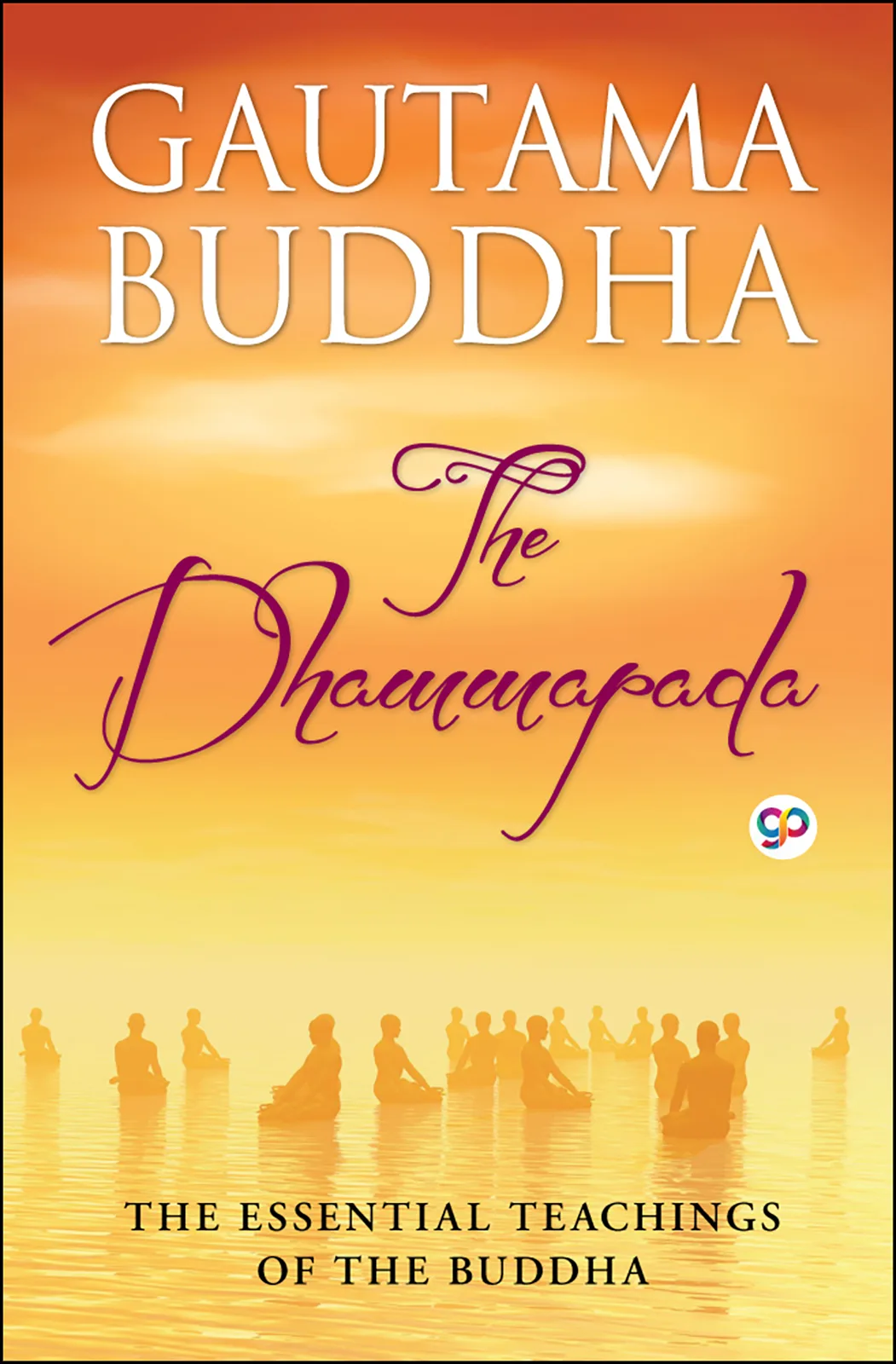
The Dhammapada
Hardcover
• 88 Pages
• INR 345.00
• English
• 9789354990120
No ratings yet
| Publisher | General Press |
|---|---|
| ISBN13 | 9789354990120 |
| ASIN/SKU | 9354990126 |
| Book Format | Hardcover |
| Language | English |
| Pages | 88 |
| List Price | INR 345.00 |
| Subject Code | REL007050, PHI003000, SEL032000 |
| Publishing Date | 15/09/2021 |
| Dimensions | 8.25 x 5.25 x 1.0 inches |
| Book Code | BD00067570 |
Buy this Book
Amazon Stores
Ebook Stores
Other Stores
Discover The Dhammapada by Gautama Buddha. This book is published by General Press in Hardcover format, ISBN 9789354990120, ASIN 9354990126, under Non Fiction, Spirituality, Philosophy.
Book Description
The Dhammapada' is the most important document of the Buddhism religion. It is believed that the Buddha spoke the verses of The Dhammapada, which address themes such as ethics, happiness, and anger, on several occasions. The 423 verses in 26 chapters are an essential part of Buddhist teachings and offer helpful lessons for modern readers. The nature of the self, the value of relationships, the importance of moment-to-moment awareness, the destructiveness of anger, the suffering that attends attachment, the ambiguity of the earth’s beauty, the inevitability of aging, the certainty of death–these dilemmas preoccupy us today as they did centuries ago.
Author Biography
Gautama Buddha, born as Prince Siddhārtha, was a spiritual teacher from the Indian subcontinent, on whose teachings Buddhism was founded.
Gautama is the primary figure in Buddhism, and accounts of his life, discourses, and monastic rules are believed by Buddhists to have been summarized after his death and memorized by his followers. Various collections of teachings attributed to him were passed down by oral tradition, and first committed to writing about 400 years later.
The time of Gautama's birth and death is uncertain: most historians in the early 20th century dated his lifetime as circa 563 BCE to 483 BCE, but more recent opinion dates his death to between 486 and 483 BCE or, according to some, between 411 and 400 BCE. However, at a specialist symposium on this question held in 1988 in Göttingen, the majority of those scholars who presented definite opinions gave dates within 20 years either side of 400 BCE for the Buddha's death, with others supporting earlier or later dates. These alternative chronologies, however, have not yet been accepted by all other historians.
Gautama is the primary figure in Buddhism, and accounts of his life, discourses, and monastic rules are believed by Buddhists to have been summarized after his death and memorized by his followers. Various collections of teachings attributed to him were passed down by oral tradition, and first committed to writing about 400 years later.
The time of Gautama's birth and death is uncertain: most historians in the early 20th century dated his lifetime as circa 563 BCE to 483 BCE, but more recent opinion dates his death to between 486 and 483 BCE or, according to some, between 411 and 400 BCE. However, at a specialist symposium on this question held in 1988 in Göttingen, the majority of those scholars who presented definite opinions gave dates within 20 years either side of 400 BCE for the Buddha's death, with others supporting earlier or later dates. These alternative chronologies, however, have not yet been accepted by all other historians.
Editorial Reviews
Editorial Reviews will be added soon…
Book Summary
The Dhammapada is one of the best-known collections of teachings associated with Gautama Buddha. It is a relatively short work, consisting of verses that address the human mind, suffering, desire, wisdom, ethical conduct, meditation, and the search for liberation. Rather than telling a continuous story, the book presents concise observations and practical guidance intended to help people understand themselves and live more wisely. Its central message is that the quality of our lives is deeply connected to the condition of our minds. By training the mind, overcoming destructive desires, acting with compassion, and developing wisdom, a person can gradually move away from suffering and toward freedom.
The work opens with a powerful statement about the importance of the mind. Thoughts and intentions are presented as the foundation of human experience. Harmful thoughts tend to produce harmful actions and consequences, while wholesome thoughts create conditions for peace. The Buddha therefore places responsibility within the individual. Instead of blaming circumstances, other people, fate, or external forces for everything that happens, a person is encouraged to examine the mind and understand how attitudes and choices shape life. This does not mean that every event is personally caused by one’s thoughts, but it emphasizes that our responses to events have enormous influence over our experience.
One of the book’s most important teachings concerns hatred. The Dhammapada repeatedly explains that hatred cannot be overcome by more hatred. Retaliation creates another cycle of anger, while forgiveness and compassion interrupt that cycle. This is not presented as weakness. On the contrary, controlling anger requires greater strength than giving in to it. A person who responds to hostility with patience begins to free himself from the emotional chains that would otherwise keep him trapped in conflict.
The Buddha also emphasizes the temporary nature of worldly existence. Everything that arises eventually changes and passes away. Human beings suffer partly because they expect temporary things to remain permanent. They become attached to possessions, relationships, status, youth, beauty, pleasure, and even their own ideas about who they are. When these things change, disappointment follows. The Dhammapada does not ask people to hate the world or refuse to appreciate life. Instead, it encourages them to see clearly that everything conditioned by circumstances is impermanent. Understanding impermanence allows a person to enjoy life without becoming completely dependent upon what cannot last.
Desire is another major source of suffering. The Buddha explains that uncontrolled craving binds people to dissatisfaction. A person who continually wants more can never experience lasting contentment because each achievement creates another desire. Wealth may lead to the desire for greater wealth; praise may create the need for more praise; pleasure may produce the fear of losing it. The problem is not simply possessing things but allowing the mind to become dependent upon them. Freedom begins when desire is understood rather than blindly obeyed.
The Dhammapada therefore places great importance on self-control. The individual is encouraged to guard the senses, discipline speech, and observe thoughts carefully. A person who cannot control anger, greed, jealousy, or impulsive speech remains vulnerable to suffering. By contrast, someone who learns to pause before reacting gains inner strength. The Buddha compares the disciplined person to someone who can restrain a restless animal. Such discipline is not repression for its own sake; it is the training necessary to develop freedom.
Ethical conduct is closely connected with this training. The Dhammapada teaches that actions have consequences and that a wise person should avoid causing unnecessary harm. Killing, stealing, dishonesty, sexual misconduct, malicious speech, and intoxication are treated as dangers to spiritual development. The purpose of ethical behavior is not simply obedience to an external authority. Moral discipline protects the mind from guilt, agitation, conflict, and destructive habits. When people act with kindness and honesty, they create conditions in which the mind can become calmer and clearer.
Speech receives special attention. Words can wound, divide, encourage, or heal. The wise person avoids unnecessary arguments, lies, insults, and cruel speech. Speaking truthfully is important, but truth should also be communicated with care and appropriate intention. The Dhammapada suggests that controlling speech is one of the clearest signs of maturity because words often reveal the condition of the mind. A person who cannot govern speech may reveal anger or pride before realizing what has happened.
The book also distinguishes between genuine wisdom and superficial knowledge. A person may memorize teachings or speak intelligently about religion without actually changing his behavior. Real wisdom is shown through conduct. Someone who understands impermanence but remains completely controlled by attachment has not yet fully absorbed the teaching. Someone who speaks about compassion while treating others cruelly has not truly understood it. Wisdom becomes meaningful when it changes the way a person lives.
Meditation and mindfulness provide an important path toward this transformation. The practitioner is encouraged to observe the mind rather than automatically follow every thought or emotion. Anger can be observed without immediately acting on it. Desire can be recognized without automatically satisfying it. Fear can be noticed without allowing it to dictate every decision. Through sustained attention, the mind gradually becomes less restless. Meditation is therefore not merely a method for relaxation; it is a way of seeing reality more clearly.
The Dhammapada also describes the ideal spiritual person in terms of inner freedom. Such a person is not easily disturbed by praise or blame, pleasure or pain, gain or loss. This does not mean becoming cold or indifferent. Instead, the individual develops a stable mind that is not constantly pushed around by external circumstances. Compassion remains essential. The liberated person understands that other beings also experience fear, desire, suffering, and uncertainty and therefore treats them with kindness.
The figure of the wise person appears throughout the work. Wisdom is associated with simplicity, humility, patience, and self-awareness. The wise do not constantly seek attention or prove their superiority. They understand that spiritual progress is gradual and requires persistent effort. The Dhammapada repeatedly encourages people not to waste their lives. Human life is precious, and death can come unexpectedly. Remembering mortality is therefore not intended to create fear but urgency. Knowing that life is temporary should encourage people to use their time carefully and cultivate what truly matters.
The final goal described in the Dhammapada is liberation, or Nirvana—the ending of the cycle of craving, ignorance, and suffering. Nirvana is presented not as an ordinary pleasure but as a state beyond the compulsive patterns that keep the mind trapped. The path toward it involves ethical living, mental discipline, mindfulness, wisdom, and the gradual abandonment of attachment.
Overall, The Dhammapada is a deeply practical work. Its teachings repeatedly return to a simple truth: transformation begins with the mind. A person cannot always control circumstances, other people, or the changes that come with life, but can gradually learn to understand and train the mind. By replacing hatred with compassion, greed with generosity, confusion with wisdom, and impulsiveness with awareness, one moves toward genuine freedom. The book’s enduring appeal comes from the fact that its advice is not limited to a particular historical situation. Its questions remain human and immediate: Why do we suffer? Why do we become angry? Why do we cling to things that change? How can we become kinder, calmer, and wiser? The Dhammapada answers these questions by inviting us to look inward, live carefully, and develop the wisdom that leads beyond suffering.
The work opens with a powerful statement about the importance of the mind. Thoughts and intentions are presented as the foundation of human experience. Harmful thoughts tend to produce harmful actions and consequences, while wholesome thoughts create conditions for peace. The Buddha therefore places responsibility within the individual. Instead of blaming circumstances, other people, fate, or external forces for everything that happens, a person is encouraged to examine the mind and understand how attitudes and choices shape life. This does not mean that every event is personally caused by one’s thoughts, but it emphasizes that our responses to events have enormous influence over our experience.
One of the book’s most important teachings concerns hatred. The Dhammapada repeatedly explains that hatred cannot be overcome by more hatred. Retaliation creates another cycle of anger, while forgiveness and compassion interrupt that cycle. This is not presented as weakness. On the contrary, controlling anger requires greater strength than giving in to it. A person who responds to hostility with patience begins to free himself from the emotional chains that would otherwise keep him trapped in conflict.
The Buddha also emphasizes the temporary nature of worldly existence. Everything that arises eventually changes and passes away. Human beings suffer partly because they expect temporary things to remain permanent. They become attached to possessions, relationships, status, youth, beauty, pleasure, and even their own ideas about who they are. When these things change, disappointment follows. The Dhammapada does not ask people to hate the world or refuse to appreciate life. Instead, it encourages them to see clearly that everything conditioned by circumstances is impermanent. Understanding impermanence allows a person to enjoy life without becoming completely dependent upon what cannot last.
Desire is another major source of suffering. The Buddha explains that uncontrolled craving binds people to dissatisfaction. A person who continually wants more can never experience lasting contentment because each achievement creates another desire. Wealth may lead to the desire for greater wealth; praise may create the need for more praise; pleasure may produce the fear of losing it. The problem is not simply possessing things but allowing the mind to become dependent upon them. Freedom begins when desire is understood rather than blindly obeyed.
The Dhammapada therefore places great importance on self-control. The individual is encouraged to guard the senses, discipline speech, and observe thoughts carefully. A person who cannot control anger, greed, jealousy, or impulsive speech remains vulnerable to suffering. By contrast, someone who learns to pause before reacting gains inner strength. The Buddha compares the disciplined person to someone who can restrain a restless animal. Such discipline is not repression for its own sake; it is the training necessary to develop freedom.
Ethical conduct is closely connected with this training. The Dhammapada teaches that actions have consequences and that a wise person should avoid causing unnecessary harm. Killing, stealing, dishonesty, sexual misconduct, malicious speech, and intoxication are treated as dangers to spiritual development. The purpose of ethical behavior is not simply obedience to an external authority. Moral discipline protects the mind from guilt, agitation, conflict, and destructive habits. When people act with kindness and honesty, they create conditions in which the mind can become calmer and clearer.
Speech receives special attention. Words can wound, divide, encourage, or heal. The wise person avoids unnecessary arguments, lies, insults, and cruel speech. Speaking truthfully is important, but truth should also be communicated with care and appropriate intention. The Dhammapada suggests that controlling speech is one of the clearest signs of maturity because words often reveal the condition of the mind. A person who cannot govern speech may reveal anger or pride before realizing what has happened.
The book also distinguishes between genuine wisdom and superficial knowledge. A person may memorize teachings or speak intelligently about religion without actually changing his behavior. Real wisdom is shown through conduct. Someone who understands impermanence but remains completely controlled by attachment has not yet fully absorbed the teaching. Someone who speaks about compassion while treating others cruelly has not truly understood it. Wisdom becomes meaningful when it changes the way a person lives.
Meditation and mindfulness provide an important path toward this transformation. The practitioner is encouraged to observe the mind rather than automatically follow every thought or emotion. Anger can be observed without immediately acting on it. Desire can be recognized without automatically satisfying it. Fear can be noticed without allowing it to dictate every decision. Through sustained attention, the mind gradually becomes less restless. Meditation is therefore not merely a method for relaxation; it is a way of seeing reality more clearly.
The Dhammapada also describes the ideal spiritual person in terms of inner freedom. Such a person is not easily disturbed by praise or blame, pleasure or pain, gain or loss. This does not mean becoming cold or indifferent. Instead, the individual develops a stable mind that is not constantly pushed around by external circumstances. Compassion remains essential. The liberated person understands that other beings also experience fear, desire, suffering, and uncertainty and therefore treats them with kindness.
The figure of the wise person appears throughout the work. Wisdom is associated with simplicity, humility, patience, and self-awareness. The wise do not constantly seek attention or prove their superiority. They understand that spiritual progress is gradual and requires persistent effort. The Dhammapada repeatedly encourages people not to waste their lives. Human life is precious, and death can come unexpectedly. Remembering mortality is therefore not intended to create fear but urgency. Knowing that life is temporary should encourage people to use their time carefully and cultivate what truly matters.
The final goal described in the Dhammapada is liberation, or Nirvana—the ending of the cycle of craving, ignorance, and suffering. Nirvana is presented not as an ordinary pleasure but as a state beyond the compulsive patterns that keep the mind trapped. The path toward it involves ethical living, mental discipline, mindfulness, wisdom, and the gradual abandonment of attachment.
Overall, The Dhammapada is a deeply practical work. Its teachings repeatedly return to a simple truth: transformation begins with the mind. A person cannot always control circumstances, other people, or the changes that come with life, but can gradually learn to understand and train the mind. By replacing hatred with compassion, greed with generosity, confusion with wisdom, and impulsiveness with awareness, one moves toward genuine freedom. The book’s enduring appeal comes from the fact that its advice is not limited to a particular historical situation. Its questions remain human and immediate: Why do we suffer? Why do we become angry? Why do we cling to things that change? How can we become kinder, calmer, and wiser? The Dhammapada answers these questions by inviting us to look inward, live carefully, and develop the wisdom that leads beyond suffering.
Sample Chapters
Sample Chapters will be added soon…
Reader Reviews
No reviews yet.
The Dhammapada