
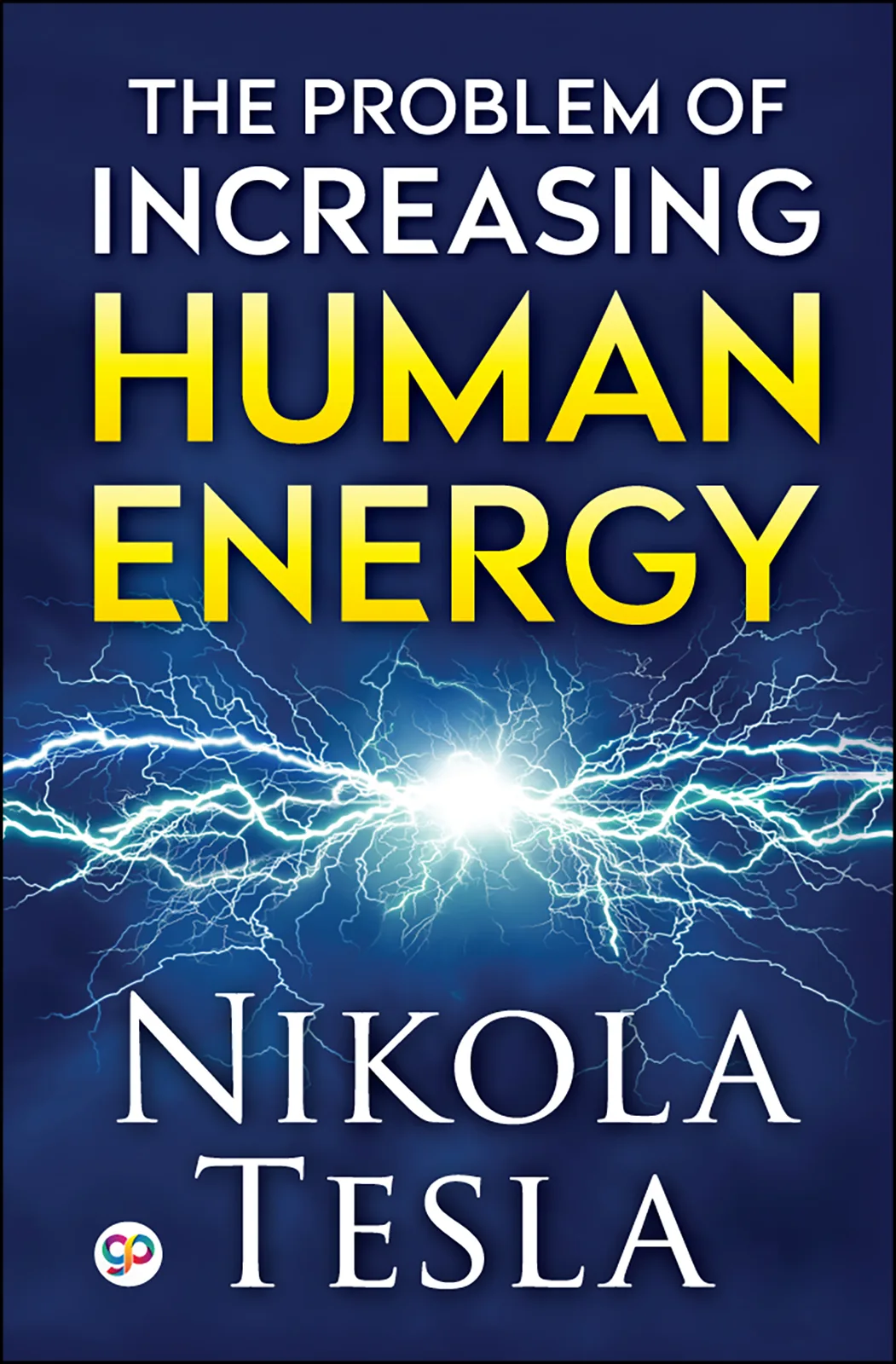
The Problem of Increasing Human Energy
Hardcover
• 104 Pages
• INR 345.00
• English
• 9789354990182
No ratings yet
| Publisher | General Press |
|---|---|
| ISBN13 | 9789354990182 |
| ASIN/SKU | 9354990185 |
| Book Format | Hardcover |
| Language | English |
| Pages | 104 |
| List Price | INR 345.00 |
| Subject Code | SCI042000, TEC009070, SCI092000 |
| Publishing Date | 15/09/2021 |
| Dimensions | 8.25 x 5.25 x 1.0 inches |
| Book Code | BD00067573 |
Buy this Book
Amazon Stores
Ebook Stores
Other Stores
Discover The Problem of Increasing Human Energy by Nikola Tesla. This book is published by General Press in Hardcover format, ISBN 9789354990182, ASIN 9354990185, under Non Fiction, Philosophy, History.
Book Description
What if the greatest challenge facing humanity is not a lack of resources, but our failure to understand and use energy wisely? 'The Problem of Increasing Human Energy' by Nikola Tesla is a classic science and technology essay that explores electricity, invention, human progress, and the future of civilization through the visionary mind of one of history’s most influential inventors. Originally published in 1900, the work combines scientific ideas with a broad philosophical reflection on how humanity might achieve greater prosperity and unity.
Tesla begins by considering the fundamental forces that shape human existence and the extraordinary role energy plays in civilization. He argues that progress depends on our ability to obtain, transmit, and use energy more efficiently, especially as populations grow and societies become increasingly dependent on technology. With characteristic imagination, Tesla looks beyond the inventions of his own time and considers how advances in electrical power could transform industry, communication, transportation, agriculture, and everyday life.
A major theme of the essay is the relationship between scientific discovery and human welfare. Tesla is fascinated by the possibility of harnessing natural forces on a vast scale, including renewable sources of energy, and he considers how improved access to power could reduce hardship and expand opportunities for people around the world. He also reflects on wireless communication and the possibility of connecting distant communities, ideas that reveal just how far ahead of his era his thinking could be.
Yet this is more than a technical discussion of electricity. Tesla repeatedly returns to questions about humanity’s purpose, cooperation, population growth, and the responsible use of scientific knowledge. His vision is ambitious: a future in which technology does not merely make life more convenient, but helps create a more connected, productive, and peaceful civilization.
For readers interested in Nikola Tesla, the history of electricity, scientific innovation, or bold predictions about the future, this fascinating work offers a remarkable glimpse into the imagination of a true technological pioneer. More than a century later, Tesla’s questions about energy and human progress remain surprisingly relevant—and may leave you wondering how much of his future has already arrived.
Tesla begins by considering the fundamental forces that shape human existence and the extraordinary role energy plays in civilization. He argues that progress depends on our ability to obtain, transmit, and use energy more efficiently, especially as populations grow and societies become increasingly dependent on technology. With characteristic imagination, Tesla looks beyond the inventions of his own time and considers how advances in electrical power could transform industry, communication, transportation, agriculture, and everyday life.
A major theme of the essay is the relationship between scientific discovery and human welfare. Tesla is fascinated by the possibility of harnessing natural forces on a vast scale, including renewable sources of energy, and he considers how improved access to power could reduce hardship and expand opportunities for people around the world. He also reflects on wireless communication and the possibility of connecting distant communities, ideas that reveal just how far ahead of his era his thinking could be.
Yet this is more than a technical discussion of electricity. Tesla repeatedly returns to questions about humanity’s purpose, cooperation, population growth, and the responsible use of scientific knowledge. His vision is ambitious: a future in which technology does not merely make life more convenient, but helps create a more connected, productive, and peaceful civilization.
For readers interested in Nikola Tesla, the history of electricity, scientific innovation, or bold predictions about the future, this fascinating work offers a remarkable glimpse into the imagination of a true technological pioneer. More than a century later, Tesla’s questions about energy and human progress remain surprisingly relevant—and may leave you wondering how much of his future has already arrived.
Author Biography
Nikola Tesla (1857-1943) was a revolutionary Serbian scientist who forever changed the scientific fields of electricity and magnetism. His research laid much of the groundwork for modern electrical and communication systems, and his impressive accomplishments include development of the alternating-current electrical system, radio, the Tesla coil transformer, wireless transmission, and fluorescent lighting.
His dream of wireless communication came to pass in both the radio and eventually the cell phone. Yet his story remains widely unknown. History buffs, science enthusiasts, backyard inventors, and anyone who has ever dared to dream big will find the life of Nikola Tesla, written in his own words, engaging, informative, and humorous in its eccentricity.
His dream of wireless communication came to pass in both the radio and eventually the cell phone. Yet his story remains widely unknown. History buffs, science enthusiasts, backyard inventors, and anyone who has ever dared to dream big will find the life of Nikola Tesla, written in his own words, engaging, informative, and humorous in its eccentricity.
Editorial Reviews
Editorial Reviews will be added soon…
Book Summary
The Problem of Increasing Human Energy is one of Nikola Tesla's most fascinating philosophical and scientific essays. Published in 1900, it is not a conventional book with a storyline but rather a visionary exploration of humanity's future. Tesla combines science, engineering, philosophy, and social thought to answer a single grand question: How can humanity increase its collective energy and progress toward a better civilization?
For Tesla, "human energy" is not limited to physical strength. It represents the total productive power of humanity—our intelligence, creativity, health, industry, and ability to improve the world. Throughout the essay, he argues that civilization advances when this energy is increased and directed wisely. His ideas move effortlessly between scientific principles and reflections on human society, making the work remarkably ambitious and, in many ways, ahead of its time.
Tesla begins by presenting a mechanical analogy. He compares humanity to a giant machine moving across the Earth. Just as a machine's performance depends on the forces acting upon it, humanity's progress depends on factors that either increase or decrease its productive power. The central challenge, therefore, is to maximize the forces that propel civilization while minimizing those that hinder it.
According to Tesla, there are three primary ways to increase human energy. The first is by increasing the total mass of humanity. In simple terms, this means supporting population growth through better health, improved living conditions, and reduced mortality. Healthy and educated people contribute more effectively to society than those burdened by disease and poverty. Tesla believes that every human life has the potential to add value to civilization if given the right opportunities.
The second method involves reducing the forces that oppose human progress. Tesla identifies many such obstacles, including war, ignorance, disease, waste, conflict, and inefficient systems. These destructive influences consume enormous amounts of human effort while producing little benefit. He argues that scientific knowledge should be used not merely to invent new machines but to eliminate these barriers. Better sanitation, improved education, peaceful cooperation, and rational thinking are, in his view, as important as technological breakthroughs.
The third and most significant method is increasing the efficiency of human work. Tesla believes that people can accomplish far more if they have better tools, better sources of energy, and better methods of communication. This is where his engineering genius becomes most visible. He imagines a future in which electricity powers industries, transportation, homes, and communication systems with extraordinary efficiency. Instead of relying on exhausting manual labor, humanity would harness the immense forces of nature.
Energy occupies the heart of Tesla's vision. He explains that civilization has always depended on discovering and utilizing new sources of power. Ancient societies relied on human muscles and domesticated animals. Later generations used water wheels, windmills, steam engines, and fossil fuels. Tesla argues that each advance in civilization corresponds to humanity's growing ability to control natural energy. Consequently, the future depends on discovering cleaner, more abundant, and more efficient energy sources.
Among these possibilities, electricity stands above all others. Tesla views electrical power not simply as another invention but as the foundation of an entirely new civilization. He predicts a world where electrical energy is generated on a massive scale and transmitted over great distances, allowing industries and communities everywhere to benefit. Many of his ideas foreshadow the modern electrical grid that powers today's world.
One of the essay's most visionary sections concerns wireless transmission. Tesla imagines transmitting both electricity and information without physical wires. At the time, this concept appeared almost fantastical. Yet his vision anticipated technologies that later became commonplace, including radio communication, wireless networking, and aspects of global telecommunications. Tesla believed that eliminating physical barriers to communication would unite people more closely and accelerate the spread of knowledge.
Tesla also reflects deeply on the relationship between science and morality. Scientific discoveries, he argues, are neither inherently good nor bad. Their value depends entirely on how humanity chooses to use them. Powerful technologies can improve lives, reduce suffering, and increase prosperity, but they can also become instruments of destruction if guided by greed, hatred, or ambition. For this reason, Tesla insists that scientific progress must be accompanied by ethical responsibility.
Education occupies another central place in Tesla's philosophy. He believes that ignorance wastes enormous human potential. Every child should have access to knowledge that develops both intellectual ability and practical skills. Education should encourage curiosity, creativity, and independent thinking rather than mere memorization. An educated population becomes more innovative, more productive, and better equipped to solve society's problems.
Tesla is equally concerned with health. Human beings cannot contribute effectively if weakened by illness or poor living conditions. Advances in medicine, hygiene, nutrition, and public health are therefore essential components of increasing human energy. In this respect, Tesla recognizes that scientific progress extends beyond engineering laboratories into hospitals, schools, and everyday life.
The essay also reveals Tesla's profound optimism about the future. Despite acknowledging humanity's conflicts and shortcomings, he believes that science possesses the power to overcome many of them. He envisions an era in which nations cooperate rather than compete destructively. As communication improves and knowledge becomes more widely shared, misunderstandings between people may diminish, allowing civilization to progress more peacefully.
Nature itself inspires much of Tesla's thinking. He frequently points out that the universe contains almost limitless energy waiting to be harnessed. The sun, the Earth's natural forces, and other untapped resources represent opportunities for future generations. Rather than exhausting finite resources irresponsibly, humanity should learn to work in harmony with nature's vast energy systems. This idea resonates strongly with modern discussions about renewable energy and sustainable development.
Tesla's writing often shifts between technical explanation and philosophical reflection. He marvels at the intricate order of the universe and sees scientific discovery as a way of understanding that order. To him, inventing new technologies is not merely a commercial activity but a noble pursuit that brings humanity closer to the laws governing nature itself.
Although some of Tesla's predictions proved overly optimistic or technically impractical, many of his broader ideas have become reality. The worldwide use of electricity, wireless communication, automation, global information networks, and increasing dependence on scientific innovation all reflect aspects of the future he imagined over a century ago. His confidence in the transformative power of technology has been largely vindicated, even if some specific methods evolved differently than he anticipated.
At its core, The Problem of Increasing Human Energy is a celebration of human potential. Tesla argues that civilization's greatest resource is not coal, oil, or machinery—it is the creative capacity of the human mind. By expanding knowledge, improving health, embracing scientific discovery, and using natural resources wisely, humanity can continually raise its standard of living and move toward a more enlightened future.
Ultimately, this work is far more than a scientific essay. It is a manifesto of hope, arguing that reason, innovation, and cooperation are the true engines of civilization. Tesla challenges readers to think beyond the limitations of their own era and imagine a world where human ingenuity unlocks opportunities that once seemed impossible. More than a century after its publication, the essay remains an inspiring reminder that progress begins with the courage to envision a better future and the determination to transform that vision into reality.
For Tesla, "human energy" is not limited to physical strength. It represents the total productive power of humanity—our intelligence, creativity, health, industry, and ability to improve the world. Throughout the essay, he argues that civilization advances when this energy is increased and directed wisely. His ideas move effortlessly between scientific principles and reflections on human society, making the work remarkably ambitious and, in many ways, ahead of its time.
Tesla begins by presenting a mechanical analogy. He compares humanity to a giant machine moving across the Earth. Just as a machine's performance depends on the forces acting upon it, humanity's progress depends on factors that either increase or decrease its productive power. The central challenge, therefore, is to maximize the forces that propel civilization while minimizing those that hinder it.
According to Tesla, there are three primary ways to increase human energy. The first is by increasing the total mass of humanity. In simple terms, this means supporting population growth through better health, improved living conditions, and reduced mortality. Healthy and educated people contribute more effectively to society than those burdened by disease and poverty. Tesla believes that every human life has the potential to add value to civilization if given the right opportunities.
The second method involves reducing the forces that oppose human progress. Tesla identifies many such obstacles, including war, ignorance, disease, waste, conflict, and inefficient systems. These destructive influences consume enormous amounts of human effort while producing little benefit. He argues that scientific knowledge should be used not merely to invent new machines but to eliminate these barriers. Better sanitation, improved education, peaceful cooperation, and rational thinking are, in his view, as important as technological breakthroughs.
The third and most significant method is increasing the efficiency of human work. Tesla believes that people can accomplish far more if they have better tools, better sources of energy, and better methods of communication. This is where his engineering genius becomes most visible. He imagines a future in which electricity powers industries, transportation, homes, and communication systems with extraordinary efficiency. Instead of relying on exhausting manual labor, humanity would harness the immense forces of nature.
Energy occupies the heart of Tesla's vision. He explains that civilization has always depended on discovering and utilizing new sources of power. Ancient societies relied on human muscles and domesticated animals. Later generations used water wheels, windmills, steam engines, and fossil fuels. Tesla argues that each advance in civilization corresponds to humanity's growing ability to control natural energy. Consequently, the future depends on discovering cleaner, more abundant, and more efficient energy sources.
Among these possibilities, electricity stands above all others. Tesla views electrical power not simply as another invention but as the foundation of an entirely new civilization. He predicts a world where electrical energy is generated on a massive scale and transmitted over great distances, allowing industries and communities everywhere to benefit. Many of his ideas foreshadow the modern electrical grid that powers today's world.
One of the essay's most visionary sections concerns wireless transmission. Tesla imagines transmitting both electricity and information without physical wires. At the time, this concept appeared almost fantastical. Yet his vision anticipated technologies that later became commonplace, including radio communication, wireless networking, and aspects of global telecommunications. Tesla believed that eliminating physical barriers to communication would unite people more closely and accelerate the spread of knowledge.
Tesla also reflects deeply on the relationship between science and morality. Scientific discoveries, he argues, are neither inherently good nor bad. Their value depends entirely on how humanity chooses to use them. Powerful technologies can improve lives, reduce suffering, and increase prosperity, but they can also become instruments of destruction if guided by greed, hatred, or ambition. For this reason, Tesla insists that scientific progress must be accompanied by ethical responsibility.
Education occupies another central place in Tesla's philosophy. He believes that ignorance wastes enormous human potential. Every child should have access to knowledge that develops both intellectual ability and practical skills. Education should encourage curiosity, creativity, and independent thinking rather than mere memorization. An educated population becomes more innovative, more productive, and better equipped to solve society's problems.
Tesla is equally concerned with health. Human beings cannot contribute effectively if weakened by illness or poor living conditions. Advances in medicine, hygiene, nutrition, and public health are therefore essential components of increasing human energy. In this respect, Tesla recognizes that scientific progress extends beyond engineering laboratories into hospitals, schools, and everyday life.
The essay also reveals Tesla's profound optimism about the future. Despite acknowledging humanity's conflicts and shortcomings, he believes that science possesses the power to overcome many of them. He envisions an era in which nations cooperate rather than compete destructively. As communication improves and knowledge becomes more widely shared, misunderstandings between people may diminish, allowing civilization to progress more peacefully.
Nature itself inspires much of Tesla's thinking. He frequently points out that the universe contains almost limitless energy waiting to be harnessed. The sun, the Earth's natural forces, and other untapped resources represent opportunities for future generations. Rather than exhausting finite resources irresponsibly, humanity should learn to work in harmony with nature's vast energy systems. This idea resonates strongly with modern discussions about renewable energy and sustainable development.
Tesla's writing often shifts between technical explanation and philosophical reflection. He marvels at the intricate order of the universe and sees scientific discovery as a way of understanding that order. To him, inventing new technologies is not merely a commercial activity but a noble pursuit that brings humanity closer to the laws governing nature itself.
Although some of Tesla's predictions proved overly optimistic or technically impractical, many of his broader ideas have become reality. The worldwide use of electricity, wireless communication, automation, global information networks, and increasing dependence on scientific innovation all reflect aspects of the future he imagined over a century ago. His confidence in the transformative power of technology has been largely vindicated, even if some specific methods evolved differently than he anticipated.
At its core, The Problem of Increasing Human Energy is a celebration of human potential. Tesla argues that civilization's greatest resource is not coal, oil, or machinery—it is the creative capacity of the human mind. By expanding knowledge, improving health, embracing scientific discovery, and using natural resources wisely, humanity can continually raise its standard of living and move toward a more enlightened future.
Ultimately, this work is far more than a scientific essay. It is a manifesto of hope, arguing that reason, innovation, and cooperation are the true engines of civilization. Tesla challenges readers to think beyond the limitations of their own era and imagine a world where human ingenuity unlocks opportunities that once seemed impossible. More than a century after its publication, the essay remains an inspiring reminder that progress begins with the courage to envision a better future and the determination to transform that vision into reality.
Sample Chapters
Sample Chapters will be added soon…
Reader Reviews
No reviews yet.
The Problem of Increasing Human Energy
Download Cover Image
Do you want to download the full cover image for The Problem of Increasing Human Energy?