
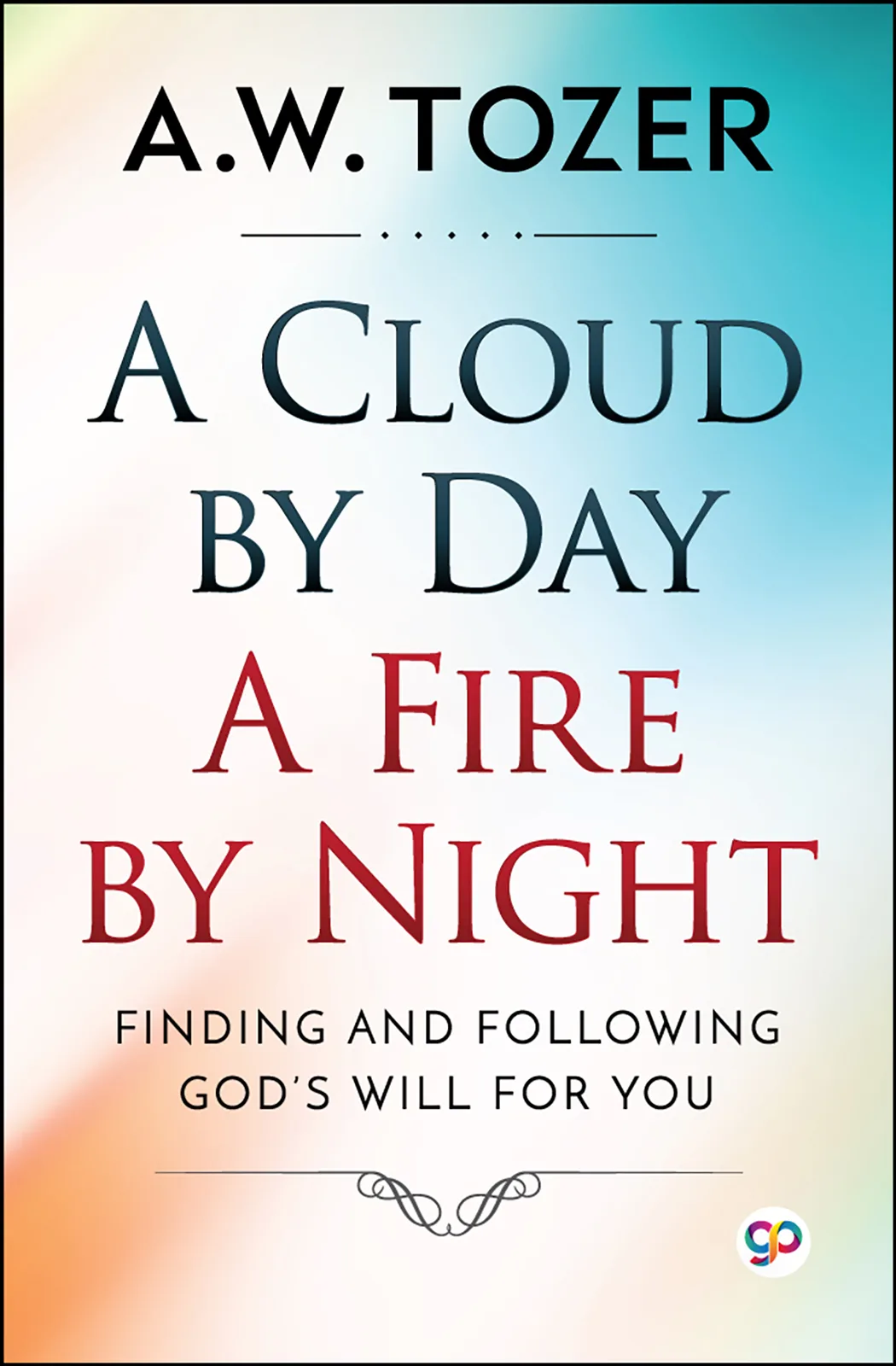
A Cloud by Day, A Fire by Night
Paperback
• 128 Pages
• INR 245.00
• English
• 9789354990854
No ratings yet
| Publisher | General Press |
|---|---|
| ISBN13 | 9789354990854 |
| ASIN/SKU | 9354990851 |
| Book Format | Paperback |
| Language | English |
| Pages | 128 |
| List Price | INR 245.00 |
| Subject Code | REL012040, REL023000, REL108010 |
| Publishing Date | 15/09/2021 |
| Dimensions | 8.25 x 5.25 x 1.0 inches |
| Book Code | BD00067588 |
Buy this Book
Amazon Stores
Ebook Stores
Other Stores
Discover A Cloud by Day, A Fire by Night by A.W. Tozer. This book is published by General Press in Paperback format, ISBN 9789354990854, ASIN 9354990851, under Christian Books and Bibles, Christianity, Religion.
Book Description
A.W. Tozer’s "A Cloud by Day, A Fire by Night" is a deeply comforting and spiritually rich exploration of one of humanity's most persistent anxieties: how to discern and follow the will of God. Drawing upon the profound biblical imagery of the Israelites being guided through the wilderness by a pillar of cloud and a pillar of fire, Tozer transforms a seemingly abstract theological concept into an accessible, deeply personal journey.
Rather than offering a rigid, step-by-step formula for making life choices, Tozer invites readers into a transformative relationship with the Divine. He writes with his signature piercing clarity, yet the tone here is profoundly pastoral and humane. He addresses the very real fears, doubts, and confusions we face when navigating the unknown, gently reminding us that God is not playing a cosmic game of hide-and-seek with His plans for our lives.
The core of the book emphasizes that discovering God's will is less about choosing the "correct" geographical path, relationship, or career, and far more about cultivating a yielded, obedient heart. By surrendering our own stubborn desires and learning to rest in His continuous presence, the path forward naturally illuminates itself.
Ultimately, 'A Cloud by Day, A Fire by Night' is a beautifully lucid meditation on trust and divine companionship. It reassures weary travelers that just as God faithfully guided His people through the desolate desert, He remains intimately and tenderly involved in guiding our steps today, bringing true peace to the restless soul.
Rather than offering a rigid, step-by-step formula for making life choices, Tozer invites readers into a transformative relationship with the Divine. He writes with his signature piercing clarity, yet the tone here is profoundly pastoral and humane. He addresses the very real fears, doubts, and confusions we face when navigating the unknown, gently reminding us that God is not playing a cosmic game of hide-and-seek with His plans for our lives.
The core of the book emphasizes that discovering God's will is less about choosing the "correct" geographical path, relationship, or career, and far more about cultivating a yielded, obedient heart. By surrendering our own stubborn desires and learning to rest in His continuous presence, the path forward naturally illuminates itself.
Ultimately, 'A Cloud by Day, A Fire by Night' is a beautifully lucid meditation on trust and divine companionship. It reassures weary travelers that just as God faithfully guided His people through the desolate desert, He remains intimately and tenderly involved in guiding our steps today, bringing true peace to the restless soul.
Author Biography
Aiden Wilson Tozer (1897–1963) was an influential American Christian pastor, author, and spiritual mentor whose profound theological insights continue to resonate worldwide. Born into poverty in rural western Pennsylvania, Tozer was entirely self-educated, never attending high school or a theological seminary. In 1915, after hearing a street preacher in Akron, Ohio, he committed his life to Christianity, igniting a relentless, lifelong pursuit of God.
Despite his lack of formal training, Tozer began a 44-year ministry in 1919 as a pastor with the Christian and Missionary Alliance (C&MA). He spent three decades leading the Southside Alliance Church in Chicago, where his uncompromising, prophetic preaching drew thousands. In 1950, he expanded his influence by becoming the editor of The Alliance Weekly.
Tozer is best remembered for his enduring literary classics, most notably The Pursuit of God and The Knowledge of the Holy. These works emphasize the absolute majesty of God and the necessity of a deeply contemplative spiritual life. Often referred to as a "20th-century prophet," Tozer lived a remarkably simple lifestyle, giving away much of his book royalties and prioritizing prayer over material wealth. His legacy endures through his writings, which continue to challenge readers to seek a genuine, intimate relationship with the Divine.
Despite his lack of formal training, Tozer began a 44-year ministry in 1919 as a pastor with the Christian and Missionary Alliance (C&MA). He spent three decades leading the Southside Alliance Church in Chicago, where his uncompromising, prophetic preaching drew thousands. In 1950, he expanded his influence by becoming the editor of The Alliance Weekly.
Tozer is best remembered for his enduring literary classics, most notably The Pursuit of God and The Knowledge of the Holy. These works emphasize the absolute majesty of God and the necessity of a deeply contemplative spiritual life. Often referred to as a "20th-century prophet," Tozer lived a remarkably simple lifestyle, giving away much of his book royalties and prioritizing prayer over material wealth. His legacy endures through his writings, which continue to challenge readers to seek a genuine, intimate relationship with the Divine.
Editorial Reviews
Editorial Reviews will be added soon…
Book Summary
"A Cloud by Day, a Fire by Night: Finding and Following God's Will for You" by A.W. Tozer is a thoughtful and deeply spiritual book that explores one of the most important questions in a Christian's life: How can we truly know and follow God's will? Drawing inspiration from the biblical story of the Israelites being guided through the wilderness by a cloud during the day and a pillar of fire at night, Tozer explains that God has never stopped leading His people. While His methods may differ from those seen in the Old Testament, His desire to guide those who trust Him remains the same. The book encourages readers to stop relying solely on their own wisdom and instead develop a close relationship with God, where His direction becomes clearer through faith, obedience, and spiritual maturity.
Tozer begins by challenging the common belief that God's will is mysterious or impossible to understand. He argues that many people struggle to find God's direction because they seek answers without first seeking God Himself. According to Tozer, God's primary concern is not simply revealing a plan but shaping the character of those who follow Him. As believers grow in holiness, humility, and love, they naturally become more capable of recognizing God's leading. Rather than treating God's will as a puzzle to solve, Tozer invites readers to view it as a journey of walking closely with a faithful guide who knows the way ahead.
Throughout the book, Tozer emphasizes that surrender is the foundation of spiritual guidance. A heart that insists on its own desires will often mistake personal ambition for divine direction. True guidance comes only when a person willingly places every dream, fear, and plan into God's hands. This surrender is not a sign of weakness but an act of trust. Tozer reminds readers that God never leads His children to harm them but always works for their ultimate spiritual good, even when the path is difficult or confusing. Obedience, therefore, becomes both the evidence and the result of genuine faith.
Another major theme is the importance of cultivating a personal relationship with God through prayer, Scripture, and quiet reflection. Tozer believes that many people expect dramatic signs while neglecting the ordinary disciplines through which God most often speaks. Regular reading of the Bible shapes the mind to recognize God's truth, while consistent prayer opens the heart to His presence. As believers become more familiar with God's character, they are better equipped to distinguish His guidance from their own emotions, fears, or worldly influences. Spiritual sensitivity develops gradually through faithful devotion rather than sudden revelation.
The book also warns against allowing circumstances or popular opinion to become the primary source of decision-making. While God can certainly use circumstances, Tozer insists that they should never replace biblical truth or the inner conviction produced by the Holy Spirit. He cautions readers against following cultural trends, seeking approval from others, or measuring success by worldly standards. Instead, God's will should always be tested against His revealed Word. Decisions rooted in biblical principles provide lasting peace, even when they require sacrifice or lead in unexpected directions.
Tozer places great emphasis on faith during seasons of uncertainty. There are times when God's direction may seem hidden, and believers may feel as though they are walking through darkness. During such periods, Tozer encourages readers not to lose heart or become impatient. Just as the Israelites had to trust the cloud and the fire even when they did not understand the journey, Christians are called to trust God's wisdom even when they cannot see the destination. Waiting on God is portrayed not as passive inactivity but as active confidence that He will reveal the next step at the right time.
Humility is another recurring lesson throughout the book. Tozer explains that pride often blinds people to God's guidance because it creates confidence in human understanding rather than divine wisdom. A humble believer remains teachable, willing to admit mistakes, and ready to change direction whenever God makes His will known. This humility also produces patience, compassion, and dependence on God instead of self-reliance. Tozer argues that the closer a person grows to God, the less interested they become in personal recognition and the more focused they become on glorifying Christ in every area of life.
The book also addresses the cost of following God's will. Tozer does not promise an easy or comfortable life for obedient believers. In fact, he frequently reminds readers that God's path may involve suffering, rejection, or sacrifice. However, these difficulties are never meaningless. They serve to strengthen faith, deepen character, and draw believers closer to God. True success, according to Tozer, is not measured by wealth, popularity, or achievement but by faithfulness to God's calling. A life lived in obedience may appear ordinary to the world, yet it carries eternal significance because it reflects complete trust in God.
By the end of the book, Tozer leaves readers with both encouragement and challenge. He reassures them that God is fully capable of leading those who sincerely desire to follow Him, but he also reminds them that such guidance requires wholehearted commitment. Discovering God's will is less about finding hidden information and more about becoming the kind of person who delights in doing what pleases God. When believers seek God above all else, cultivate spiritual disciplines, surrender their own ambitions, and trust Him through every season, they can move forward with confidence, knowing that the same God who guided His people by a cloud during the day and a fire by night continues to faithfully guide His children today. The book ultimately calls readers to a life of deeper faith, greater obedience, and unwavering dependence on God's wisdom, offering timeless encouragement for anyone seeking purpose, direction, and a closer walk with Him.
Tozer begins by challenging the common belief that God's will is mysterious or impossible to understand. He argues that many people struggle to find God's direction because they seek answers without first seeking God Himself. According to Tozer, God's primary concern is not simply revealing a plan but shaping the character of those who follow Him. As believers grow in holiness, humility, and love, they naturally become more capable of recognizing God's leading. Rather than treating God's will as a puzzle to solve, Tozer invites readers to view it as a journey of walking closely with a faithful guide who knows the way ahead.
Throughout the book, Tozer emphasizes that surrender is the foundation of spiritual guidance. A heart that insists on its own desires will often mistake personal ambition for divine direction. True guidance comes only when a person willingly places every dream, fear, and plan into God's hands. This surrender is not a sign of weakness but an act of trust. Tozer reminds readers that God never leads His children to harm them but always works for their ultimate spiritual good, even when the path is difficult or confusing. Obedience, therefore, becomes both the evidence and the result of genuine faith.
Another major theme is the importance of cultivating a personal relationship with God through prayer, Scripture, and quiet reflection. Tozer believes that many people expect dramatic signs while neglecting the ordinary disciplines through which God most often speaks. Regular reading of the Bible shapes the mind to recognize God's truth, while consistent prayer opens the heart to His presence. As believers become more familiar with God's character, they are better equipped to distinguish His guidance from their own emotions, fears, or worldly influences. Spiritual sensitivity develops gradually through faithful devotion rather than sudden revelation.
The book also warns against allowing circumstances or popular opinion to become the primary source of decision-making. While God can certainly use circumstances, Tozer insists that they should never replace biblical truth or the inner conviction produced by the Holy Spirit. He cautions readers against following cultural trends, seeking approval from others, or measuring success by worldly standards. Instead, God's will should always be tested against His revealed Word. Decisions rooted in biblical principles provide lasting peace, even when they require sacrifice or lead in unexpected directions.
Tozer places great emphasis on faith during seasons of uncertainty. There are times when God's direction may seem hidden, and believers may feel as though they are walking through darkness. During such periods, Tozer encourages readers not to lose heart or become impatient. Just as the Israelites had to trust the cloud and the fire even when they did not understand the journey, Christians are called to trust God's wisdom even when they cannot see the destination. Waiting on God is portrayed not as passive inactivity but as active confidence that He will reveal the next step at the right time.
Humility is another recurring lesson throughout the book. Tozer explains that pride often blinds people to God's guidance because it creates confidence in human understanding rather than divine wisdom. A humble believer remains teachable, willing to admit mistakes, and ready to change direction whenever God makes His will known. This humility also produces patience, compassion, and dependence on God instead of self-reliance. Tozer argues that the closer a person grows to God, the less interested they become in personal recognition and the more focused they become on glorifying Christ in every area of life.
The book also addresses the cost of following God's will. Tozer does not promise an easy or comfortable life for obedient believers. In fact, he frequently reminds readers that God's path may involve suffering, rejection, or sacrifice. However, these difficulties are never meaningless. They serve to strengthen faith, deepen character, and draw believers closer to God. True success, according to Tozer, is not measured by wealth, popularity, or achievement but by faithfulness to God's calling. A life lived in obedience may appear ordinary to the world, yet it carries eternal significance because it reflects complete trust in God.
By the end of the book, Tozer leaves readers with both encouragement and challenge. He reassures them that God is fully capable of leading those who sincerely desire to follow Him, but he also reminds them that such guidance requires wholehearted commitment. Discovering God's will is less about finding hidden information and more about becoming the kind of person who delights in doing what pleases God. When believers seek God above all else, cultivate spiritual disciplines, surrender their own ambitions, and trust Him through every season, they can move forward with confidence, knowing that the same God who guided His people by a cloud during the day and a fire by night continues to faithfully guide His children today. The book ultimately calls readers to a life of deeper faith, greater obedience, and unwavering dependence on God's wisdom, offering timeless encouragement for anyone seeking purpose, direction, and a closer walk with Him.
Sample Chapters
Chapter 1 : Seeking Direction
Heavenly Father, I come before Thee yearning to know and desiring to trust Thee. May my heart be open to whatever Thou hast for me so I can be where Thou wants me to be. May I yield to Thine Angel before me and come to the place Thou desirest for me. Keep me under the cloud by day and the fire by night. In Jesus’ name, amen.
Thirty-two years ago, at a crucial and painful hour in my life, God began speaking to me about His will for me. I had been the pastor of the Christian and Missionary Alliance church in Indianapolis for several years, and God was blessing and using me in wonderful ways. The church was growing and making an impact on the community, and I had no desire whatsoever to leave Indianapolis.
Then I began getting letters from the Christian and Missionary Alliance church in Chicago inviting me to candidate to be their next pastor. I had no interest in moving and threw the letters away. Yet God began speaking to me about Chicago, though I wasn’t sure why. Finally, I decided I would go to preach there on a Sunday, but pastoring the church was out of the question. Like Calvin Coolidge once famously pronounced, I informed the good people there after preaching, “I do not choose to run.”
But driving back to Indianapolis I found myself in an agony of heart-searching prayer. God was speaking to my heart, and I did not know what I was to do. I truly was in a spiritual dilemma.
When God speaks to us, He does so in a way that opens up to us His plan for our lives. I thought God’s plan for me was to stay in Indianapolis. Everything was going great. The church was growing, and our influence was felt throughout the city.
That morning in Chicago I preached on Exodus 23:20: “Behold, I send an Angel before thee, to keep thee in the way, and to bring thee into the place which I have prepared.” I understood the primary historical meaning of the passage. Certainly I could preach a sermon on the passage and then walk away.
God, however, would not allow it.
I saw and felt the Scripture’s direct meaning for me. God was speaking to me, a spiritual son of Abraham, from His covenant with Abraham. The spiritual laws were in effect and God was reaching out to me in this. It was applicable to me as an individual, but also to the church in their earthly pilgrimage.
I firmly believe that God is speaking today to the church at large and giving us commands based on His covenant with Abraham. God is directing His people in the way He wants them to go. Often it is not the way we want to go, but as we yield ourselves to God, He opens doors and leads us forward. And so the church’s responsibility is to hear that voice and then obey that voice.
After more heart-searching prayer, I finally decided to accept the pastorate in Chicago. It was a big change for me. The church was relatively new, with little heritage to speak of. I came in as a country boy and began my ministry in the big city.
I am here to testify that when God spoke to me about Chicago and I responded in the affirmative, He fulfilled His covenant with me in spite of my personal failures. I will be the first to acknowledge that I have had many failures. You cannot live very long and not accumulate them. But in His graciousness, God uses us, failures and all, in such a way that He receives glory.
God has been moving in our congregation and opening up opportunities for us to fulfill His will in our lives. Nearly twenty-five young people have gone out as missionaries, serving the Lord Jesus Christ. Another ten or so have become pastors and preachers, and our congregation has encouraged them to fulfill God’s calling on their lives. In addition, we have a large number of musicians and music directors and home missionaries. I also rejoice in how God has been financially blessing our interest in foreign missions, stirring our hearts to give sacrificially unto Him.
When we allow God’s Word to go beyond our ears and into our hearts, it stimulates us to do that which God is calling us to do.
Every one of us will face challenges in life, individually and in our churches. Our congregation is being affected by the steady trend of industry and people moving to the suburbs. The neighborhood has deteriorated around us, and crime is making it hard to have any kind of an evening service. The crippling of our public transportation system has also kept many people from coming to our church. None of these things could have been foreseen twenty years ago. Our focus was and is on obeying God and responding to His voice.
Travelers going through an unfamiliar land need to hear a clear word—a voice of wisdom—to guide them. Otherwise they will wander in a hopeless sense of lostness.
To avoid wrong turns, we need to base every decision on the authority and wisdom of God’s Word. My aim for this book is to help us understand this clear word from God. What is God saying? Where can I hear this voice that’s going to give me direction throughout my life?
It is the voice of God that will guide our way through our personal Jordan rivers and into the promised land. Without that voice of God, our Jordan will never open up, and we will never get across.
Guide Me, O Thou Great Jehovah
Guide me, O Thou great Jehovah,
Pilgrim through this barren land;
I am weak, but Thou art mighty,
Hold me with Thy pow’rful hand.
Bread of heaven, bread of heaven,
Feed me till I want no more;
Feed me till I want no more.
William Williams
(1717–1791)
Chapter 2 : The Unmistakable Voice of God
Heavenly Father, the greatest desire in my heart is to hear from Thee. Not simply to hear about Thee, but to hear Thy unmistakable voice resonate within my heart, calling me to a stance of obedience before Thee. Hear me, O Father, so I may hear that unmistakable voice of Thine. I pray this in Jesus’ name, amen.
With all kinds of voices in the world, we are often caught up in those voices instead of God’s. Even when He calls out “Behold!” to get our attention, we can miss out because we have surrounded ourselves with things and activities that drown out the voice of God.
I suggest we push those extra things out of our lives so we can hear the still, small, most mighty voice of God.
God takes the initiative to provide direction for your life. In the Scripture we are studying, Exodus 23:20–23, He promises, “I send an Angel before thee.” He will not let us flounder on our own. Rather, He will send an Angel to guide us.
The Lord also takes responsibility “to keep thee in the way” (v. 20). He sends an Angel before us so that we know which way to go amid life’s many distractions. Even apparent opportunities may turn out to be distractions if they are not God’s will. So this Angel is to keep us in the way He wants us to go.
God also promises “to bring thee into the place” (v. 20). This is crucial. God begins our journey, and the Angel knows the way; only He can take us to the place of God’s choosing. God’s wisdom opens up divine opportunities for us. We may not recognize it in the moment, but there will be an inner voice that speaks confidently, “This is the way, walk ye in it” (Isaiah 30:21).
Exodus 23:20 ends with “the place which I have prepared.” God has already prepared the place where He wants us to go. Coming to Chicago, I really did not know that God had prepared Chicago for me and me for Chicago.
We need to relax a bit, turn away from the noise of the world, and listen to the voice of God because He has everything put together. He has prepared for us a place of service and ministry and will open the necessary doors, despite the obstacles and the confusion we may experience during the journey.
I need to quiet my heart in order to hear God’s direction. This must become a daily discipline for all of us. It is too easy and convenient to trust human inclinations. We gravitate toward earthly methods. We want human understanding. As a culture, we have become addicted to devices and technology. However, those who refuse to trust in these human inclinations and devices are the ones who have their ears open to hear the voice of the Lord.
We must also have a desire to enter God’s prepared place. That’s where I want to go. I think all of us who have been born again and love the Lord Jesus Christ should want to go to that place God has prepared for us—the ministry He has laid out for us. We may not know what that is initially. It may seem ambiguous, but we need to trust that God knows what He’s doing and is going to lead us through our Jordan.
I knew what my ministry was in Indianapolis. When God called me to Chicago, I didn’t have a vision for ministry there. Indianapolis and Chicago are different cities and demand different ministries. I did not know that until I got there.
Those who are willing to go God’s way want to hear the voice of God. The voice of man goes this way and that, but God’s way is always the best. When I surrender myself to God, when I accept nothing less than God’s way revealed to me through God’s voice, I will get to the place He wants me to be.
Having faith to follow God’s leading isn’t easy. We may encounter a great deal of difficulties—difficulties we didn’t anticipate. There will be times we want to quit. But those of us who put our faith and trust in Jesus Christ need to realize that no matter how terrible our circumstances, or how the enemy may come against us, we should have faith in the God who is leading us. That Angel set before us is God’s appointed one. He will lead us through our Jordan to where God can be glorified through our ministry.
Think of the people who will come to Christ when we follow this Angel. Think of those who will respond to God’s calling and enter a ministry of God’s choosing.
You may see challenges before you, but no challenge is bigger than God. Not one challenge could ever surprise God in the least. When we start our journey with God, He knows the beginning and the end and everything in between. His preparation in us is in complete harmony with His knowledge of everything that is going to happen to us. Nothing can ever happen to you or me but what God has prepared us to handle.
This Angel before us is faithfully leading us to the place where God wants us to be.
The Voice of God is Calling
The voice of God is calling
its summons in our day;
Isaiah heard in Zion,
and we now hear God say:
“Whom shall I send to succor
my people in their need?
Whom shall I send to loosen
the bonds of shame and greed?”
John Haynes Holmes
(1879–1964)
Chapter 3 : The Focus on Our Final Destination
Heavenly Father, with great earnestness of heart, I beseech Thee to enable me to put my focus where Thou wants it to be. Not on this life. Not on the things around me. But, O God, may my focus be completely upon Thee and what Thou hast for me. I know this life has a limit to it. I also know the destination Thou hast for me is that eternity without any kind of limitation where I will enjoy a relationship with Thee that I can’t enjoy right now. I look forward to that final destination. Gratefully in Jesus’ name, amen.
Leading God’s people out of Egypt and into the promised land demanded a uniquely called person. Moses was God’s solution to Israel’s problem.
Whenever there is a problem or difficult situation, God always brings in a person with His anointing to solve it. Look at all of the prophets throughout the Old Testament, and you will see how God works. I must say, though, that it’s disappointing how many times the prophets were rejected by the people they were trying to help. This goes on today as well.
We know the story of Israel wandering in the wilderness for forty years before getting into the land God promised them. Israel rejected the leadership of Moses and turned their back on the promised land.
This ancient journey, this experience of wandering, is an illustration of the Christian walk today from earth to heaven. Paul says, “Now all these things happened unto them for examples: and they are written for our admonition, upon whom the ends of the world are come” (1 Corinthians 10:11).
God is going to lead us to His promised land, a land we can’t even imagine at this point. The journey begins with our conversion and progresses through obstacles toward a victorious, fruitful life in the Lord Jesus Christ. But again, we are not alone in our journey, for God has appointed an Angel before us to guide us in the way He has prepared.
I think we are, therefore, in accord with people like the apostle Paul. Look at his testimony and how God started with him on the road to Damascus. From there, it was a journey with all kinds of obstacles on either side of the pathway. But Paul endured it all because he was following the voice of God. His path led him to being martyred, but that, you can be sure, was not the end of the apostle Paul.
Consider the apostle John in the book of Revelation and all he experienced. His vision of heaven motivated him and his ministry even though it cost him greatly.
Read about the church fathers and how they were chosen by God and how God directed them and led many of them also to martyrdom. They were the reformers, the mystics, and so forth. Not only did God guide them, but He set them as examples for us to follow.
I want to look more closely at the divine declaration that we are going to the place God has prepared. Everything God is doing directs us to that predetermined destination. He is systematically preparing us in this life for that place, and our obedience to God now will be reflected in our position in heaven.
There are two sides to this: provisional destinations and our final destination.
In Deuteronomy 1:30 we read, “The Lord your God which goeth before you, he shall fight for you, according to all that he did for you in Egypt before your eyes.” God has a final destination for Israel, but in between are steps—layers of conflict and battles—but He promises Israel He will go before them and fight their battles for them. Every step of the way has been set by God, and one step leads to the next.
Rarely do we see many steps ahead of us. We need to walk entirely by faith. But like God did for Israel, He prepares us for one step at a time. The pathway is of His choosing and may not match the way we want. But to overstep God’s plan is disaster. As a Christian, I go forward under the power of the Holy Spirit, who is leading and preparing me for the path chosen for me.
I believe this also applies to the local church. If we are open to the Holy Spirit, He will lead us on the pathway—a destiny and a ministry He has in mind for us. At this point we may not fully know what that ministry is. We may not know where we are going, but as long as we are following the Lord, we have nothing to fear. As we let go of our past, we can get a firm grip on the future God has for us.
Then we come to the Lord’s final destination for us. For Israel, this was the point of full possession of Canaan. God used Moses to lead them out of Egypt and into the wilderness, and Joshua finally led them across the Jordan River and into the promised land.
Our final destination is “my Father’s house,” Jesus says in John 14:2. This world is not our home or our final destination. Our path has been engineered by God, and He leads by no other way. Many get sidetracked by the world, and unfortunately, they do not reach the place God has for them.
The Christian’s destination is fruitfulness and power along the way and, finally, heaven. As we go along God’s path, we will find all the provisions we need to be who God wants us to be so that we can arrive at the place God has prepared for us. By faith, each day we access God’s provision for us. We never know what we will need, but God does and has made full provision.
To reach that place requires a power not equal but superior to the opposition. We need to always keep that in mind. It is so easy to get diverted from the path the Angel has set before us. But God is providing a cloud by day and a fire by night in order to get us to our destination.
When the Roll is called Up Yonder
When the trumpet of the Lord shall sound, and time shall be no more,
And the morning breaks, eternal, bright and fair;
When the saved of earth shall gather over on the other shore,
And the roll is called up yonder, I’ll be there.
James M. Black
(1856–1938)
Heavenly Father, I come before Thee yearning to know and desiring to trust Thee. May my heart be open to whatever Thou hast for me so I can be where Thou wants me to be. May I yield to Thine Angel before me and come to the place Thou desirest for me. Keep me under the cloud by day and the fire by night. In Jesus’ name, amen.
Thirty-two years ago, at a crucial and painful hour in my life, God began speaking to me about His will for me. I had been the pastor of the Christian and Missionary Alliance church in Indianapolis for several years, and God was blessing and using me in wonderful ways. The church was growing and making an impact on the community, and I had no desire whatsoever to leave Indianapolis.
Then I began getting letters from the Christian and Missionary Alliance church in Chicago inviting me to candidate to be their next pastor. I had no interest in moving and threw the letters away. Yet God began speaking to me about Chicago, though I wasn’t sure why. Finally, I decided I would go to preach there on a Sunday, but pastoring the church was out of the question. Like Calvin Coolidge once famously pronounced, I informed the good people there after preaching, “I do not choose to run.”
But driving back to Indianapolis I found myself in an agony of heart-searching prayer. God was speaking to my heart, and I did not know what I was to do. I truly was in a spiritual dilemma.
When God speaks to us, He does so in a way that opens up to us His plan for our lives. I thought God’s plan for me was to stay in Indianapolis. Everything was going great. The church was growing, and our influence was felt throughout the city.
That morning in Chicago I preached on Exodus 23:20: “Behold, I send an Angel before thee, to keep thee in the way, and to bring thee into the place which I have prepared.” I understood the primary historical meaning of the passage. Certainly I could preach a sermon on the passage and then walk away.
God, however, would not allow it.
I saw and felt the Scripture’s direct meaning for me. God was speaking to me, a spiritual son of Abraham, from His covenant with Abraham. The spiritual laws were in effect and God was reaching out to me in this. It was applicable to me as an individual, but also to the church in their earthly pilgrimage.
I firmly believe that God is speaking today to the church at large and giving us commands based on His covenant with Abraham. God is directing His people in the way He wants them to go. Often it is not the way we want to go, but as we yield ourselves to God, He opens doors and leads us forward. And so the church’s responsibility is to hear that voice and then obey that voice.
After more heart-searching prayer, I finally decided to accept the pastorate in Chicago. It was a big change for me. The church was relatively new, with little heritage to speak of. I came in as a country boy and began my ministry in the big city.
I am here to testify that when God spoke to me about Chicago and I responded in the affirmative, He fulfilled His covenant with me in spite of my personal failures. I will be the first to acknowledge that I have had many failures. You cannot live very long and not accumulate them. But in His graciousness, God uses us, failures and all, in such a way that He receives glory.
God has been moving in our congregation and opening up opportunities for us to fulfill His will in our lives. Nearly twenty-five young people have gone out as missionaries, serving the Lord Jesus Christ. Another ten or so have become pastors and preachers, and our congregation has encouraged them to fulfill God’s calling on their lives. In addition, we have a large number of musicians and music directors and home missionaries. I also rejoice in how God has been financially blessing our interest in foreign missions, stirring our hearts to give sacrificially unto Him.
When we allow God’s Word to go beyond our ears and into our hearts, it stimulates us to do that which God is calling us to do.
Every one of us will face challenges in life, individually and in our churches. Our congregation is being affected by the steady trend of industry and people moving to the suburbs. The neighborhood has deteriorated around us, and crime is making it hard to have any kind of an evening service. The crippling of our public transportation system has also kept many people from coming to our church. None of these things could have been foreseen twenty years ago. Our focus was and is on obeying God and responding to His voice.
Travelers going through an unfamiliar land need to hear a clear word—a voice of wisdom—to guide them. Otherwise they will wander in a hopeless sense of lostness.
To avoid wrong turns, we need to base every decision on the authority and wisdom of God’s Word. My aim for this book is to help us understand this clear word from God. What is God saying? Where can I hear this voice that’s going to give me direction throughout my life?
It is the voice of God that will guide our way through our personal Jordan rivers and into the promised land. Without that voice of God, our Jordan will never open up, and we will never get across.
Guide Me, O Thou Great Jehovah
Guide me, O Thou great Jehovah,
Pilgrim through this barren land;
I am weak, but Thou art mighty,
Hold me with Thy pow’rful hand.
Bread of heaven, bread of heaven,
Feed me till I want no more;
Feed me till I want no more.
William Williams
(1717–1791)
Chapter 2 : The Unmistakable Voice of God
Heavenly Father, the greatest desire in my heart is to hear from Thee. Not simply to hear about Thee, but to hear Thy unmistakable voice resonate within my heart, calling me to a stance of obedience before Thee. Hear me, O Father, so I may hear that unmistakable voice of Thine. I pray this in Jesus’ name, amen.
With all kinds of voices in the world, we are often caught up in those voices instead of God’s. Even when He calls out “Behold!” to get our attention, we can miss out because we have surrounded ourselves with things and activities that drown out the voice of God.
I suggest we push those extra things out of our lives so we can hear the still, small, most mighty voice of God.
God takes the initiative to provide direction for your life. In the Scripture we are studying, Exodus 23:20–23, He promises, “I send an Angel before thee.” He will not let us flounder on our own. Rather, He will send an Angel to guide us.
The Lord also takes responsibility “to keep thee in the way” (v. 20). He sends an Angel before us so that we know which way to go amid life’s many distractions. Even apparent opportunities may turn out to be distractions if they are not God’s will. So this Angel is to keep us in the way He wants us to go.
God also promises “to bring thee into the place” (v. 20). This is crucial. God begins our journey, and the Angel knows the way; only He can take us to the place of God’s choosing. God’s wisdom opens up divine opportunities for us. We may not recognize it in the moment, but there will be an inner voice that speaks confidently, “This is the way, walk ye in it” (Isaiah 30:21).
Exodus 23:20 ends with “the place which I have prepared.” God has already prepared the place where He wants us to go. Coming to Chicago, I really did not know that God had prepared Chicago for me and me for Chicago.
We need to relax a bit, turn away from the noise of the world, and listen to the voice of God because He has everything put together. He has prepared for us a place of service and ministry and will open the necessary doors, despite the obstacles and the confusion we may experience during the journey.
I need to quiet my heart in order to hear God’s direction. This must become a daily discipline for all of us. It is too easy and convenient to trust human inclinations. We gravitate toward earthly methods. We want human understanding. As a culture, we have become addicted to devices and technology. However, those who refuse to trust in these human inclinations and devices are the ones who have their ears open to hear the voice of the Lord.
We must also have a desire to enter God’s prepared place. That’s where I want to go. I think all of us who have been born again and love the Lord Jesus Christ should want to go to that place God has prepared for us—the ministry He has laid out for us. We may not know what that is initially. It may seem ambiguous, but we need to trust that God knows what He’s doing and is going to lead us through our Jordan.
I knew what my ministry was in Indianapolis. When God called me to Chicago, I didn’t have a vision for ministry there. Indianapolis and Chicago are different cities and demand different ministries. I did not know that until I got there.
Those who are willing to go God’s way want to hear the voice of God. The voice of man goes this way and that, but God’s way is always the best. When I surrender myself to God, when I accept nothing less than God’s way revealed to me through God’s voice, I will get to the place He wants me to be.
Having faith to follow God’s leading isn’t easy. We may encounter a great deal of difficulties—difficulties we didn’t anticipate. There will be times we want to quit. But those of us who put our faith and trust in Jesus Christ need to realize that no matter how terrible our circumstances, or how the enemy may come against us, we should have faith in the God who is leading us. That Angel set before us is God’s appointed one. He will lead us through our Jordan to where God can be glorified through our ministry.
Think of the people who will come to Christ when we follow this Angel. Think of those who will respond to God’s calling and enter a ministry of God’s choosing.
You may see challenges before you, but no challenge is bigger than God. Not one challenge could ever surprise God in the least. When we start our journey with God, He knows the beginning and the end and everything in between. His preparation in us is in complete harmony with His knowledge of everything that is going to happen to us. Nothing can ever happen to you or me but what God has prepared us to handle.
This Angel before us is faithfully leading us to the place where God wants us to be.
The Voice of God is Calling
The voice of God is calling
its summons in our day;
Isaiah heard in Zion,
and we now hear God say:
“Whom shall I send to succor
my people in their need?
Whom shall I send to loosen
the bonds of shame and greed?”
John Haynes Holmes
(1879–1964)
Chapter 3 : The Focus on Our Final Destination
Heavenly Father, with great earnestness of heart, I beseech Thee to enable me to put my focus where Thou wants it to be. Not on this life. Not on the things around me. But, O God, may my focus be completely upon Thee and what Thou hast for me. I know this life has a limit to it. I also know the destination Thou hast for me is that eternity without any kind of limitation where I will enjoy a relationship with Thee that I can’t enjoy right now. I look forward to that final destination. Gratefully in Jesus’ name, amen.
Leading God’s people out of Egypt and into the promised land demanded a uniquely called person. Moses was God’s solution to Israel’s problem.
Whenever there is a problem or difficult situation, God always brings in a person with His anointing to solve it. Look at all of the prophets throughout the Old Testament, and you will see how God works. I must say, though, that it’s disappointing how many times the prophets were rejected by the people they were trying to help. This goes on today as well.
We know the story of Israel wandering in the wilderness for forty years before getting into the land God promised them. Israel rejected the leadership of Moses and turned their back on the promised land.
This ancient journey, this experience of wandering, is an illustration of the Christian walk today from earth to heaven. Paul says, “Now all these things happened unto them for examples: and they are written for our admonition, upon whom the ends of the world are come” (1 Corinthians 10:11).
God is going to lead us to His promised land, a land we can’t even imagine at this point. The journey begins with our conversion and progresses through obstacles toward a victorious, fruitful life in the Lord Jesus Christ. But again, we are not alone in our journey, for God has appointed an Angel before us to guide us in the way He has prepared.
I think we are, therefore, in accord with people like the apostle Paul. Look at his testimony and how God started with him on the road to Damascus. From there, it was a journey with all kinds of obstacles on either side of the pathway. But Paul endured it all because he was following the voice of God. His path led him to being martyred, but that, you can be sure, was not the end of the apostle Paul.
Consider the apostle John in the book of Revelation and all he experienced. His vision of heaven motivated him and his ministry even though it cost him greatly.
Read about the church fathers and how they were chosen by God and how God directed them and led many of them also to martyrdom. They were the reformers, the mystics, and so forth. Not only did God guide them, but He set them as examples for us to follow.
I want to look more closely at the divine declaration that we are going to the place God has prepared. Everything God is doing directs us to that predetermined destination. He is systematically preparing us in this life for that place, and our obedience to God now will be reflected in our position in heaven.
There are two sides to this: provisional destinations and our final destination.
In Deuteronomy 1:30 we read, “The Lord your God which goeth before you, he shall fight for you, according to all that he did for you in Egypt before your eyes.” God has a final destination for Israel, but in between are steps—layers of conflict and battles—but He promises Israel He will go before them and fight their battles for them. Every step of the way has been set by God, and one step leads to the next.
Rarely do we see many steps ahead of us. We need to walk entirely by faith. But like God did for Israel, He prepares us for one step at a time. The pathway is of His choosing and may not match the way we want. But to overstep God’s plan is disaster. As a Christian, I go forward under the power of the Holy Spirit, who is leading and preparing me for the path chosen for me.
I believe this also applies to the local church. If we are open to the Holy Spirit, He will lead us on the pathway—a destiny and a ministry He has in mind for us. At this point we may not fully know what that ministry is. We may not know where we are going, but as long as we are following the Lord, we have nothing to fear. As we let go of our past, we can get a firm grip on the future God has for us.
Then we come to the Lord’s final destination for us. For Israel, this was the point of full possession of Canaan. God used Moses to lead them out of Egypt and into the wilderness, and Joshua finally led them across the Jordan River and into the promised land.
Our final destination is “my Father’s house,” Jesus says in John 14:2. This world is not our home or our final destination. Our path has been engineered by God, and He leads by no other way. Many get sidetracked by the world, and unfortunately, they do not reach the place God has for them.
The Christian’s destination is fruitfulness and power along the way and, finally, heaven. As we go along God’s path, we will find all the provisions we need to be who God wants us to be so that we can arrive at the place God has prepared for us. By faith, each day we access God’s provision for us. We never know what we will need, but God does and has made full provision.
To reach that place requires a power not equal but superior to the opposition. We need to always keep that in mind. It is so easy to get diverted from the path the Angel has set before us. But God is providing a cloud by day and a fire by night in order to get us to our destination.
When the Roll is called Up Yonder
When the trumpet of the Lord shall sound, and time shall be no more,
And the morning breaks, eternal, bright and fair;
When the saved of earth shall gather over on the other shore,
And the roll is called up yonder, I’ll be there.
James M. Black
(1856–1938)
Reader Reviews
No reviews yet.
A Cloud by Day, A Fire by Night
Download Cover Image
Do you want to download the full cover image for A Cloud by Day, A Fire by Night?