
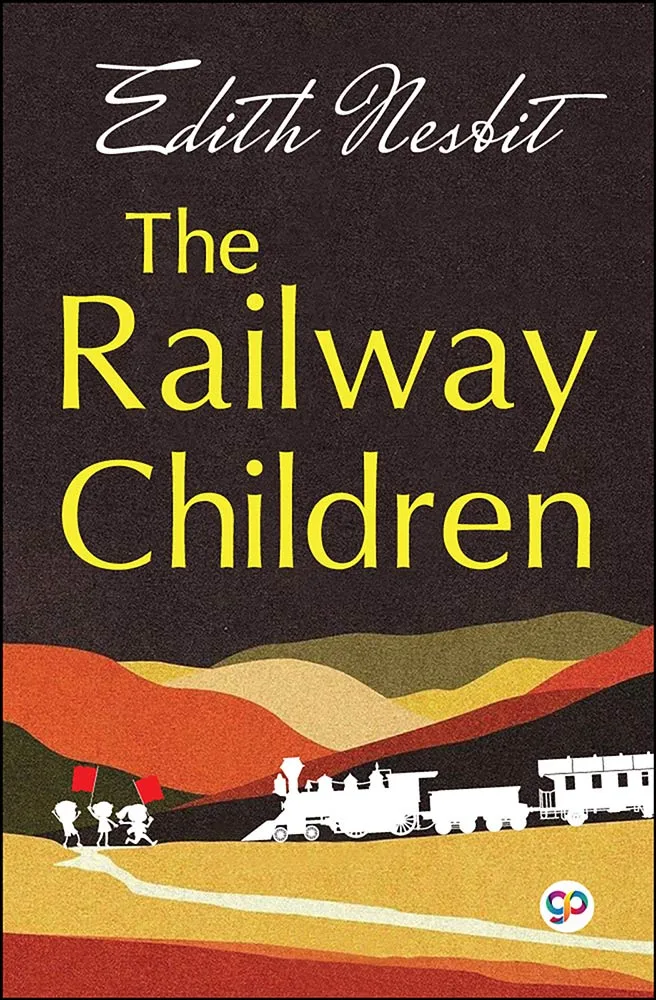
The Railway Children
Paperback
• 208 Pages
• INR 295.00
• English
• 9789354990960
No ratings yet
| Publisher | General Press |
|---|---|
| ISBN13 | 9789354990960 |
| ASIN/SKU | 9354990967 |
| Book Format | Paperback |
| Language | English |
| Pages | 208 |
| List Price | INR 295.00 |
| Subject Code | FIC045000, FIC002000, JUV012030 |
| Publishing Date | 15/09/2021 |
| Dimensions | 8.25 x 5.25 x 1.0 inches |
| Book Code | BD00067595 |
Buy this Book
Amazon Stores
Ebook Stores
Other Stores
Discover The Railway Children by E. Nesbit. This book is published by General Press in Paperback format, ISBN 9789354990960, ASIN 9354990967, under Children's Books, Historical Fiction, Children's Classics.
Book Description
Written by acclaimed children's author E. Nesbit, The Railway Children has been adapted several times for stage and film. First published in book form in 1906, it unravels a story about a family which shifted from London to 'The Three Chimneys.' The novel vividly portrays the struggles and misfortunes that befall their family when their father gets imprisoned for false reasons. The children pass the time by watching the railcars go by and waving to the passengers riding the train. Eventually they meet Perks, the station porter and an old gentleman that may be able to help get their father out of prison.
Weaving hope and optimism, the author highlights the importance of family. Twisting along the paths of hardships and struggles, the story ventures the readers on an adventurous ride with an ultimate reunion at the end. This is a classic tale that has been much loved by many for generations. A great addition to any book collection, and sure to light up your imagination and take you on a heart-warming and colorful adventure-the novel continues to remain a bestseller.
Weaving hope and optimism, the author highlights the importance of family. Twisting along the paths of hardships and struggles, the story ventures the readers on an adventurous ride with an ultimate reunion at the end. This is a classic tale that has been much loved by many for generations. A great addition to any book collection, and sure to light up your imagination and take you on a heart-warming and colorful adventure-the novel continues to remain a bestseller.
Author Biography
Edith Nesbit (married name Edith Bland; 15 August 1858 – 4 May 1924) was an English author and poet; she published her books for children under the name of E. Nesbit.
She wrote or collaborated on over 60 books of fiction for children, several of which have been adapted for film and television. She was also a political activist and co-founded the Fabian Society, a socialist organisation later connected to the Labour Party.
Edith Nesbit was born in Kennington, Surrey, the daughter of agricultural chemist and schoolmaster John Collis Nesbit. The death of her father when she was four and the continuing ill health of her sister meant that Nesbit had a transitory childhood, her family moving across Europe in search of healthy climates only to return to England for financial reasons. Nesbit therefore spent her childhood attaining an education from whatever sources were available—local grammars, the occasional boarding school but mainly through reading.
At 17 her family finally settled in London and aged 19, Nesbit met Hubert Bland, a political activist and writer. They became lovers and when Nesbit found she was pregnant they became engaged, marrying in April 1880. After this scandalous (for Victorian society) beginning, the marriage would be an unconventional one. Initially, the couple lived separately—Nesbit with her family and Bland with his mother and her live-in companion Maggie Doran.
Initially, Edith Nesbit books were novels meant for adults, including The Prophet's Mantle (1885) and The Marden Mystery (1896) about the early days of the socialist movement. Written under the pen name of her third child 'Fabian Bland', these books were not successful. Nesbit generated an income for the family by lecturing around the country on socialism and through her journalism (she was editor of the Fabian Society's journal, Today).
In 1899 she had published The Adventures of the Treasure Seekers to great acclaim.
She wrote or collaborated on over 60 books of fiction for children, several of which have been adapted for film and television. She was also a political activist and co-founded the Fabian Society, a socialist organisation later connected to the Labour Party.
Edith Nesbit was born in Kennington, Surrey, the daughter of agricultural chemist and schoolmaster John Collis Nesbit. The death of her father when she was four and the continuing ill health of her sister meant that Nesbit had a transitory childhood, her family moving across Europe in search of healthy climates only to return to England for financial reasons. Nesbit therefore spent her childhood attaining an education from whatever sources were available—local grammars, the occasional boarding school but mainly through reading.
At 17 her family finally settled in London and aged 19, Nesbit met Hubert Bland, a political activist and writer. They became lovers and when Nesbit found she was pregnant they became engaged, marrying in April 1880. After this scandalous (for Victorian society) beginning, the marriage would be an unconventional one. Initially, the couple lived separately—Nesbit with her family and Bland with his mother and her live-in companion Maggie Doran.
Initially, Edith Nesbit books were novels meant for adults, including The Prophet's Mantle (1885) and The Marden Mystery (1896) about the early days of the socialist movement. Written under the pen name of her third child 'Fabian Bland', these books were not successful. Nesbit generated an income for the family by lecturing around the country on socialism and through her journalism (she was editor of the Fabian Society's journal, Today).
In 1899 she had published The Adventures of the Treasure Seekers to great acclaim.
Editorial Reviews
Editorial Reviews will be added soon…
Book Summary
E. Nesbit’s The Railway Children is a warm, moving story about family, courage, kindness, and the quiet strength of children. First published in 1906, the novel follows three siblings—Roberta, Peter, and Phyllis—whose comfortable life suddenly changes when their father disappears. Forced to leave their home in London and move with their mother to a modest cottage in the countryside, the children gradually discover that happiness does not depend on wealth or comfort. Through their friendships with railway workers, a Russian exile, a young boy named Jim, and an elderly gentleman who travels regularly by train, they learn the importance of compassion, honesty, patience, and hope.
At the beginning of the story, Roberta, Peter, and Phyllis live a happy and comfortable life with their parents. Their father is loving and affectionate, and the family enjoys the security of a pleasant home. The children are energetic and curious, and although they sometimes quarrel over small matters, they are deeply attached to one another. Their mother is also a central figure in their lives, gentle and imaginative, though she prefers not to burden them with adult worries.
Everything changes abruptly when their father is taken away. The children do not initially understand what has happened. Their mother explains very little, and the family must leave London and move to a small house called Three Chimneys near a railway line. The contrast between their former life and their new circumstances is striking. They have little money, and their mother must earn a living by writing stories. Instead of servants and comfort, the children now have a simple country home and the railway as their most exciting source of entertainment.
The railway quickly becomes the center of their world. Every day, the children watch trains passing and begin to recognize familiar railway workers and passengers. They wave to the trains, invent stories about the people inside them, and become fascinated by the mysterious movement of railway life. What initially seems like a symbol of separation becomes a source of friendship and adventure. The children’s innocent curiosity allows them to form connections with people they might never have met in their former privileged life.
One of their most important friendships is with Perks, the railway porter. Perks is hardworking, proud, and sometimes rough in manner, but the children gradually come to understand that he has a generous heart. Their relationship with him teaches them that kindness should not depend on social position. The children also become friendly with an elderly gentleman whom they frequently see on the train. They call him the “Old Gentleman.” He appears distant at first, but their repeated gestures of friendship eventually touch him. The children wave to him whenever his train passes, and their simple affection gradually creates a bond between them.
The children’s adventures are often ordinary events transformed by their imagination and courage. In one memorable episode, they notice that a landslide has covered part of the railway line. Realizing that an approaching train is in danger, they take immediate action. They use their red petticoats as warning flags, risking themselves to alert the driver. Their quick thinking saves the train and its passengers. The incident reveals an important quality of the children: although they are young and inexperienced, they are capable of remarkable bravery when someone else needs help.
The children also become involved in helping a Russian gentleman who is found near the railway. He is a political exile who has suffered greatly and is desperately trying to return to his family. Rather than treating him as a stranger, the children offer him food, shelter, and sympathy. Their mother also helps him. This episode reinforces one of the novel’s strongest ideas: compassion crosses national, social, and cultural boundaries. The children do not need to understand every detail of his political situation. They simply recognize that he is a human being in distress and therefore deserves help.
Another important relationship develops when the children discover Jim, a boy who becomes trapped after an accident in a railway tunnel. The children find him injured and do everything they can to help. Their concern for Jim eventually brings the Old Gentleman into the situation as well. These events show how seemingly unrelated people become connected through acts of kindness. The railway, which initially appears to be merely part of the children’s surroundings, becomes the means through which friendships are formed and lives are changed.
Throughout the novel, the children are also learning to cope with poverty and uncertainty. Their mother tries to protect them from the full weight of their circumstances, but they gradually become aware that money is limited. Instead of becoming bitter, they find ways to enjoy simple pleasures. They appreciate picnics, walks, games, railway adventures, and friendships. Their new life is materially poorer but emotionally rich. Nesbit suggests that children can adapt remarkably well when they are surrounded by love.
Roberta, often called Bobbie, gradually becomes the emotional heart of the story. She is sensitive, thoughtful, and deeply concerned about her father. While Peter and Phyllis are more impulsive, Bobbie often notices the feelings of others. Her longing for her father remains throughout the novel. She cannot accept the idea that he has simply disappeared from their lives, and she continues to hope that he will return.
The mystery surrounding their father is eventually explained. Bobbie discovers information suggesting that he may still be alive. The truth is painful but also hopeful: he has been imprisoned because of a misunderstanding or false accusation. The family’s suffering has therefore not resulted from abandonment or lack of love. Their father has been separated from them against his will.
The emotional climax comes when Bobbie finally discovers that her father is alive. Her determination and faith lead her to seek the truth, and eventually she sees him at the railway station. The reunion is deeply moving because the entire family has spent so long living with uncertainty. Bobbie’s joy confirms what she has always believed—that her father would return to them.
The novel ends on a note of happiness and restoration, but its meaning goes beyond a simple happy ending. The Railway Children shows how adversity can transform people. The children begin the story accustomed to comfort, but they become more mature, compassionate, resourceful, and courageous after losing it. They learn that dignity is not connected to wealth and that a person’s true worth is shown through kindness and character.
Nesbit’s greatest achievement is perhaps the natural way she portrays childhood. Roberta, Peter, and Phyllis are not perfect children. They argue, make mistakes, become frightened, and sometimes behave selfishly. Yet they are also capable of extraordinary generosity. Their adventures feel believable because their courage grows naturally from their curiosity and love for others.
At its heart, The Railway Children is a story about hope. The railway becomes a symbol of movement, connection, separation, and reunion. Trains carry strangers away, bring unexpected people into the children’s lives, and finally help bring their father home. Through the children’s experiences, Nesbit gently reminds readers that difficult circumstances do not have to destroy happiness. Love, friendship, courage, and hope can create a rich life even in the simplest surroundings. The novel remains beloved because its message is both comforting and deeply human: when people care for one another, even an uncertain journey can eventually lead home.
At the beginning of the story, Roberta, Peter, and Phyllis live a happy and comfortable life with their parents. Their father is loving and affectionate, and the family enjoys the security of a pleasant home. The children are energetic and curious, and although they sometimes quarrel over small matters, they are deeply attached to one another. Their mother is also a central figure in their lives, gentle and imaginative, though she prefers not to burden them with adult worries.
Everything changes abruptly when their father is taken away. The children do not initially understand what has happened. Their mother explains very little, and the family must leave London and move to a small house called Three Chimneys near a railway line. The contrast between their former life and their new circumstances is striking. They have little money, and their mother must earn a living by writing stories. Instead of servants and comfort, the children now have a simple country home and the railway as their most exciting source of entertainment.
The railway quickly becomes the center of their world. Every day, the children watch trains passing and begin to recognize familiar railway workers and passengers. They wave to the trains, invent stories about the people inside them, and become fascinated by the mysterious movement of railway life. What initially seems like a symbol of separation becomes a source of friendship and adventure. The children’s innocent curiosity allows them to form connections with people they might never have met in their former privileged life.
One of their most important friendships is with Perks, the railway porter. Perks is hardworking, proud, and sometimes rough in manner, but the children gradually come to understand that he has a generous heart. Their relationship with him teaches them that kindness should not depend on social position. The children also become friendly with an elderly gentleman whom they frequently see on the train. They call him the “Old Gentleman.” He appears distant at first, but their repeated gestures of friendship eventually touch him. The children wave to him whenever his train passes, and their simple affection gradually creates a bond between them.
The children’s adventures are often ordinary events transformed by their imagination and courage. In one memorable episode, they notice that a landslide has covered part of the railway line. Realizing that an approaching train is in danger, they take immediate action. They use their red petticoats as warning flags, risking themselves to alert the driver. Their quick thinking saves the train and its passengers. The incident reveals an important quality of the children: although they are young and inexperienced, they are capable of remarkable bravery when someone else needs help.
The children also become involved in helping a Russian gentleman who is found near the railway. He is a political exile who has suffered greatly and is desperately trying to return to his family. Rather than treating him as a stranger, the children offer him food, shelter, and sympathy. Their mother also helps him. This episode reinforces one of the novel’s strongest ideas: compassion crosses national, social, and cultural boundaries. The children do not need to understand every detail of his political situation. They simply recognize that he is a human being in distress and therefore deserves help.
Another important relationship develops when the children discover Jim, a boy who becomes trapped after an accident in a railway tunnel. The children find him injured and do everything they can to help. Their concern for Jim eventually brings the Old Gentleman into the situation as well. These events show how seemingly unrelated people become connected through acts of kindness. The railway, which initially appears to be merely part of the children’s surroundings, becomes the means through which friendships are formed and lives are changed.
Throughout the novel, the children are also learning to cope with poverty and uncertainty. Their mother tries to protect them from the full weight of their circumstances, but they gradually become aware that money is limited. Instead of becoming bitter, they find ways to enjoy simple pleasures. They appreciate picnics, walks, games, railway adventures, and friendships. Their new life is materially poorer but emotionally rich. Nesbit suggests that children can adapt remarkably well when they are surrounded by love.
Roberta, often called Bobbie, gradually becomes the emotional heart of the story. She is sensitive, thoughtful, and deeply concerned about her father. While Peter and Phyllis are more impulsive, Bobbie often notices the feelings of others. Her longing for her father remains throughout the novel. She cannot accept the idea that he has simply disappeared from their lives, and she continues to hope that he will return.
The mystery surrounding their father is eventually explained. Bobbie discovers information suggesting that he may still be alive. The truth is painful but also hopeful: he has been imprisoned because of a misunderstanding or false accusation. The family’s suffering has therefore not resulted from abandonment or lack of love. Their father has been separated from them against his will.
The emotional climax comes when Bobbie finally discovers that her father is alive. Her determination and faith lead her to seek the truth, and eventually she sees him at the railway station. The reunion is deeply moving because the entire family has spent so long living with uncertainty. Bobbie’s joy confirms what she has always believed—that her father would return to them.
The novel ends on a note of happiness and restoration, but its meaning goes beyond a simple happy ending. The Railway Children shows how adversity can transform people. The children begin the story accustomed to comfort, but they become more mature, compassionate, resourceful, and courageous after losing it. They learn that dignity is not connected to wealth and that a person’s true worth is shown through kindness and character.
Nesbit’s greatest achievement is perhaps the natural way she portrays childhood. Roberta, Peter, and Phyllis are not perfect children. They argue, make mistakes, become frightened, and sometimes behave selfishly. Yet they are also capable of extraordinary generosity. Their adventures feel believable because their courage grows naturally from their curiosity and love for others.
At its heart, The Railway Children is a story about hope. The railway becomes a symbol of movement, connection, separation, and reunion. Trains carry strangers away, bring unexpected people into the children’s lives, and finally help bring their father home. Through the children’s experiences, Nesbit gently reminds readers that difficult circumstances do not have to destroy happiness. Love, friendship, courage, and hope can create a rich life even in the simplest surroundings. The novel remains beloved because its message is both comforting and deeply human: when people care for one another, even an uncertain journey can eventually lead home.
Sample Chapters
Sample Chapters will be added soon…
Reader Reviews
No reviews yet.
The Railway Children
Download Cover Image
Do you want to download the full cover image for The Railway Children?