
A Midsummer Night's Dream
Hardcover
• 96 Pages
• INR 225.00
• English
• 9789354991035
No ratings yet
| Publisher | General Press |
|---|---|
| ISBN13 | 9789354991035 |
| ASIN/SKU | 9354991033 |
| Book Format | Hardcover |
| Language | English |
| Pages | 96 |
| List Price | INR 225.00 |
| Subject Code | DRA003000, DRA004000, DRA010000, FIC004000 |
| Publishing Date | 01/06/2022 |
| Dimensions | 8.25 x 5.25 x 1.0 inches |
| Book Code | BD00067600 |
Buy this Book
Amazon Stores
Ebook Stores
Other Stores
Discover A Midsummer Night's Dream by William Shakespeare. This book is published by General Press in Hardcover format, ISBN 9789354991035, ASIN 9354991033, under Literature and Fiction, Classics, Drama.
Book Description
First published in 1600, ‘A Midsummer Night’s Dream’ is a comic fiction by William Shakespeare, an English playwright, poet, and actor. He is widely considered the most splendid writer in the English language and the world’s most remarkable dramatist.
The play depicts the events encompassing the marriage of the Duke of Athens, Theseus, and Hippolyta. These include the adventures of four young Athenian lovers and a group of six amateur actors, who are controlled and manipulated by the fairies who inhabit the forest in which most of the play is set.
The characters find themselves in a situation that completely changes their lives. In the play, several plot lines are closely intertwined with each other and affect each other. The main conflict of the play is a quarrel between the king of the elves of Oberon and his wife, Queen Titania. The play is one of Shakespeare's most popular works on the stage and is widely performed across the world.
The play depicts the events encompassing the marriage of the Duke of Athens, Theseus, and Hippolyta. These include the adventures of four young Athenian lovers and a group of six amateur actors, who are controlled and manipulated by the fairies who inhabit the forest in which most of the play is set.
The characters find themselves in a situation that completely changes their lives. In the play, several plot lines are closely intertwined with each other and affect each other. The main conflict of the play is a quarrel between the king of the elves of Oberon and his wife, Queen Titania. The play is one of Shakespeare's most popular works on the stage and is widely performed across the world.
Author Biography
William Shakespeare (baptised 26 April 1564) was an English poet and playwright, widely regarded as the greatest writer in the English language and the world's pre-eminent dramatist. He is often called England's national poet and the 'Bard of Avon' (or simply "The Bard"). His surviving works consist of 37 plays, 154 sonnets, two long narrative poems, and several other poems. His plays have been translated into every major living language.
Shakespeare was born and raised in Stratford-upon-Avon. Scholars believe that he died on his fifty-second birthday, coinciding with St George’s Day. At the age of 18 he married Anne Hathaway, who bore him three children: Susanna, twins Hamnet and Judith. Between 1585 and 1592 he began a successful career in London as an actor, writer, and part owner of the playing company the Lord Chamberlain's Men, later known as the King's Men. He appears to have retired to Stratford around 1613, where he died three years later.
Shakespeare produced most of his known work between 1590 and 1613. His early plays were mainly comedies and histories, genres he raised to the peak of sophistication and artistry by the end of the sixteenth century. Next he wrote mainly tragedies until about 1608. He was a respected poet and playwright in his own day, but his reputation did not rise to its present heights until the nineteenth century. The Romantics, in particular, acclaimed Shakespeare's genius, and the Victorians hero-worshipped Shakespeare. In the twentieth century, his work was repeatedly adopted and rediscovered by new movements in scholarship and performance. His plays remain highly popular today and are consistently performed and reinterpreted in diverse cultural and political contexts throughout the world.
Shakespeare was born and raised in Stratford-upon-Avon. Scholars believe that he died on his fifty-second birthday, coinciding with St George’s Day. At the age of 18 he married Anne Hathaway, who bore him three children: Susanna, twins Hamnet and Judith. Between 1585 and 1592 he began a successful career in London as an actor, writer, and part owner of the playing company the Lord Chamberlain's Men, later known as the King's Men. He appears to have retired to Stratford around 1613, where he died three years later.
Shakespeare produced most of his known work between 1590 and 1613. His early plays were mainly comedies and histories, genres he raised to the peak of sophistication and artistry by the end of the sixteenth century. Next he wrote mainly tragedies until about 1608. He was a respected poet and playwright in his own day, but his reputation did not rise to its present heights until the nineteenth century. The Romantics, in particular, acclaimed Shakespeare's genius, and the Victorians hero-worshipped Shakespeare. In the twentieth century, his work was repeatedly adopted and rediscovered by new movements in scholarship and performance. His plays remain highly popular today and are consistently performed and reinterpreted in diverse cultural and political contexts throughout the world.
Editorial Reviews
Editorial Reviews will be added soon…
Book Summary
A Midsummer Night’s Dream by William Shakespeare is a delightful comedy about love, confusion, magic, dreams, and the unpredictable ways human emotions can change. Set between the royal court of Athens and an enchanted forest, the play brings together young lovers, quarrelling fairies, and a group of ordinary craftsmen preparing a play. Through mistaken identities, magical spells, and comic accidents, Shakespeare explores how easily love can become confused and how difficult it can be to distinguish reality from illusion.
The play begins in Athens, where Duke Theseus is preparing to marry Hippolyta, the Queen of the Amazons. Their wedding is only four days away. Into this happy occasion comes Egeus, an Athenian father who is angry with his daughter, Hermia. Egeus wants Hermia to marry Demetrius, but Hermia loves Lysander and refuses to obey her father.
According to Athenian law, Hermia must either marry the man her father has chosen or face a severe punishment. Theseus gives her a short period to make her decision. Rather than give up the man she loves, Hermia and Lysander decide to escape Athens and marry secretly.
Hermia tells her friend Helena about their plan. Helena is desperately in love with Demetrius, but he does not return her affection. In fact, Demetrius has stopped loving Helena and is now pursuing Hermia. Hoping to regain Demetrius's attention, Helena tells him about Hermia and Lysander's plan to escape. Demetrius follows the couple into the forest, and Helena follows him.
The forest is ruled by the fairy king Oberon and Queen Titania, who are engaged in a serious quarrel. Their dispute concerns a young Indian prince whom Titania has taken under her protection. Oberon wants the boy for his own purposes, but Titania refuses to give him up.
Their conflict has disturbed the natural world. Oberon decides to use magic to punish Titania and sends his mischievous servant, Puck, to find a magical flower. The flower has a powerful property: when its juice is placed on the eyelids of a sleeping person, that person will fall in love with the first living creature they see upon waking.
Oberon intends to use the flower on Titania so that she will become distracted by an absurd object and eventually surrender the boy. He also notices Helena's suffering and decides to help her. He instructs Puck to place the magical juice on Demetrius's eyes so that Demetrius will fall in love with Helena.
But Puck does not know which Athenian man is Demetrius. He finds Lysander asleep and assumes he is the correct person. Puck puts the magical juice on Lysander's eyes. When Lysander wakes, he sees Helena and immediately falls in love with her.
The situation becomes increasingly complicated. Helena assumes that Lysander is mocking her because she cannot believe that he suddenly loves her. Meanwhile, Hermia wakes and discovers that Lysander has disappeared. She is frightened and confused.
Oberon realizes Puck's mistake and orders him to correct it. Puck eventually places the magical potion on Demetrius's eyes. When Demetrius wakes, he sees Helena and falls in love with her as well. Now both Lysander and Demetrius are passionately pursuing Helena, while Hermia is left wondering why Lysander has suddenly abandoned her.
The two men begin fighting over Helena. Helena is convinced that the men are making fun of her, while Hermia believes Helena has somehow stolen Lysander from her. Their friendship breaks down as jealousy and confusion take over.
At the same time, another comic story is unfolding in the forest. A group of Athenian craftsmen has decided to perform a play at Theseus and Hippolyta's wedding. The group includes Bottom, an enthusiastic but foolish weaver who loves acting and constantly believes he is the most talented member of the group.
The craftsmen rehearse their play in the forest. Puck encounters them and decides to have some fun. He magically transforms Bottom's head into that of a donkey. His fellow actors run away in terror, leaving Bottom behind.
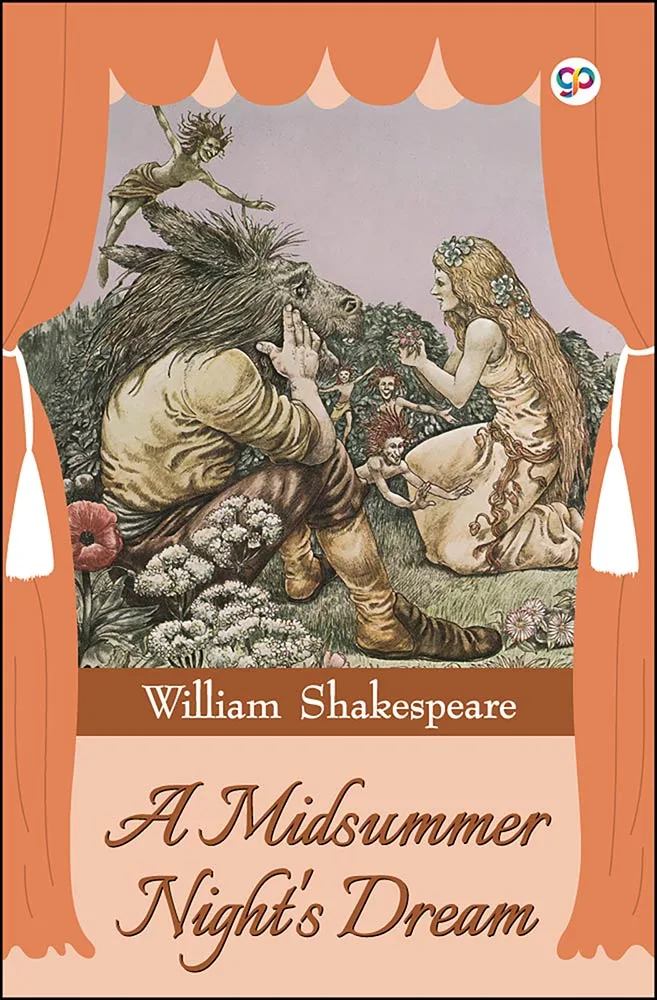
Titania, meanwhile, has fallen asleep after Oberon uses the magical flower on her. When she wakes, the first creature she sees is Bottom, whose head has been transformed into that of a donkey. Under the spell, Titania falls deeply in love with him. She treats him like a beautiful and precious creature, surrounding him with fairies and giving him everything he wants.
The absurd relationship between Titania and Bottom is one of the play's funniest episodes, but it also reflects Shakespeare's deeper interest in the strange nature of desire. Love can make intelligent people behave irrationally, and attraction does not always follow reason or appearance.
Eventually, Oberon gets what he wants from Titania. He releases her from the spell, and she is horrified to discover that she has been in love with a man who had a donkey's head. Oberon and Titania reconcile, and their conflict ends.
Oberon also orders Puck to repair the confusion among the four Athenian lovers. Puck removes the spell from Lysander, so Lysander once again loves Hermia. Demetrius, however, remains under the spell and continues to love Helena. This conveniently resolves the romantic conflict: Lysander will marry Hermia, while Demetrius will marry Helena.
The lovers wake the next morning with little understanding of the strange events they have experienced. Their time in the forest seems almost like a dream. When Theseus and his party discover them, the situation is settled peacefully. Theseus overrules Egeus's original demand, allowing both couples to marry.
The wedding celebrations bring the major characters together. Theseus marries Hippolyta, Lysander marries Hermia, and Demetrius marries Helena. The craftsmen are also invited to perform their play, Pyramus and Thisbe, which is intended to be a tragic love story but becomes hilariously bad because of the actors' clumsy performances and misunderstandings.
Bottom, still unaware of how ridiculous he appears, gives an especially memorable performance. The audience laughs at the actors' mistakes, but their sincere effort also makes the performance charming rather than cruel.
After the play, the fairies quietly bless the newly married couples. Puck then speaks directly to the audience, suggesting that if they disliked what they saw, they should simply think of the entire experience as a dream.
This ending captures the spirit of the play. Throughout A Midsummer Night’s Dream, the boundaries between reality and imagination remain uncertain. People fall in love for irrational reasons, identities are transformed, and events in the forest seem impossible. Yet the emotional consequences are real. The lovers experience jealousy, rejection, hope, and reconciliation even though magic is responsible for much of their confusion.
One of the play's central themes is the unpredictability of love. Shakespeare shows that love rarely follows logic. People may desire someone who does not love them, suddenly change their feelings, or become attracted to someone who seems completely unsuitable. The magical flower simply makes visible the irrational forces that already exist within human desire.
The play also explores appearance versus reality. Characters repeatedly misunderstand what they see, while the audience knows more than they do. The enchanted forest becomes a place where ordinary rules disappear and hidden emotions emerge.
Ultimately, A Midsummer Night’s Dream is a celebration of imagination and the strange beauty of human nature. Shakespeare combines romance, fantasy, comedy, and gentle social criticism to suggest that life itself can sometimes feel like a dream. Love can confuse us, pride can make us foolish, and reality can be difficult to understand—but laughter, forgiveness, and reconciliation can restore harmony.
The play ends happily because the characters are willing to move beyond their confusion. Its enduring charm comes from the simple truth at its heart: human beings may not always understand love or control their emotions, but life becomes richer when they allow themselves to imagine, forgive, and dream.
The play begins in Athens, where Duke Theseus is preparing to marry Hippolyta, the Queen of the Amazons. Their wedding is only four days away. Into this happy occasion comes Egeus, an Athenian father who is angry with his daughter, Hermia. Egeus wants Hermia to marry Demetrius, but Hermia loves Lysander and refuses to obey her father.
According to Athenian law, Hermia must either marry the man her father has chosen or face a severe punishment. Theseus gives her a short period to make her decision. Rather than give up the man she loves, Hermia and Lysander decide to escape Athens and marry secretly.
Hermia tells her friend Helena about their plan. Helena is desperately in love with Demetrius, but he does not return her affection. In fact, Demetrius has stopped loving Helena and is now pursuing Hermia. Hoping to regain Demetrius's attention, Helena tells him about Hermia and Lysander's plan to escape. Demetrius follows the couple into the forest, and Helena follows him.
The forest is ruled by the fairy king Oberon and Queen Titania, who are engaged in a serious quarrel. Their dispute concerns a young Indian prince whom Titania has taken under her protection. Oberon wants the boy for his own purposes, but Titania refuses to give him up.
Their conflict has disturbed the natural world. Oberon decides to use magic to punish Titania and sends his mischievous servant, Puck, to find a magical flower. The flower has a powerful property: when its juice is placed on the eyelids of a sleeping person, that person will fall in love with the first living creature they see upon waking.
Oberon intends to use the flower on Titania so that she will become distracted by an absurd object and eventually surrender the boy. He also notices Helena's suffering and decides to help her. He instructs Puck to place the magical juice on Demetrius's eyes so that Demetrius will fall in love with Helena.
But Puck does not know which Athenian man is Demetrius. He finds Lysander asleep and assumes he is the correct person. Puck puts the magical juice on Lysander's eyes. When Lysander wakes, he sees Helena and immediately falls in love with her.
The situation becomes increasingly complicated. Helena assumes that Lysander is mocking her because she cannot believe that he suddenly loves her. Meanwhile, Hermia wakes and discovers that Lysander has disappeared. She is frightened and confused.
Oberon realizes Puck's mistake and orders him to correct it. Puck eventually places the magical potion on Demetrius's eyes. When Demetrius wakes, he sees Helena and falls in love with her as well. Now both Lysander and Demetrius are passionately pursuing Helena, while Hermia is left wondering why Lysander has suddenly abandoned her.
The two men begin fighting over Helena. Helena is convinced that the men are making fun of her, while Hermia believes Helena has somehow stolen Lysander from her. Their friendship breaks down as jealousy and confusion take over.
At the same time, another comic story is unfolding in the forest. A group of Athenian craftsmen has decided to perform a play at Theseus and Hippolyta's wedding. The group includes Bottom, an enthusiastic but foolish weaver who loves acting and constantly believes he is the most talented member of the group.
The craftsmen rehearse their play in the forest. Puck encounters them and decides to have some fun. He magically transforms Bottom's head into that of a donkey. His fellow actors run away in terror, leaving Bottom behind.
Titania, meanwhile, has fallen asleep after Oberon uses the magical flower on her. When she wakes, the first creature she sees is Bottom, whose head has been transformed into that of a donkey. Under the spell, Titania falls deeply in love with him. She treats him like a beautiful and precious creature, surrounding him with fairies and giving him everything he wants.
The absurd relationship between Titania and Bottom is one of the play's funniest episodes, but it also reflects Shakespeare's deeper interest in the strange nature of desire. Love can make intelligent people behave irrationally, and attraction does not always follow reason or appearance.
Eventually, Oberon gets what he wants from Titania. He releases her from the spell, and she is horrified to discover that she has been in love with a man who had a donkey's head. Oberon and Titania reconcile, and their conflict ends.
Oberon also orders Puck to repair the confusion among the four Athenian lovers. Puck removes the spell from Lysander, so Lysander once again loves Hermia. Demetrius, however, remains under the spell and continues to love Helena. This conveniently resolves the romantic conflict: Lysander will marry Hermia, while Demetrius will marry Helena.
The lovers wake the next morning with little understanding of the strange events they have experienced. Their time in the forest seems almost like a dream. When Theseus and his party discover them, the situation is settled peacefully. Theseus overrules Egeus's original demand, allowing both couples to marry.
The wedding celebrations bring the major characters together. Theseus marries Hippolyta, Lysander marries Hermia, and Demetrius marries Helena. The craftsmen are also invited to perform their play, Pyramus and Thisbe, which is intended to be a tragic love story but becomes hilariously bad because of the actors' clumsy performances and misunderstandings.
Bottom, still unaware of how ridiculous he appears, gives an especially memorable performance. The audience laughs at the actors' mistakes, but their sincere effort also makes the performance charming rather than cruel.
After the play, the fairies quietly bless the newly married couples. Puck then speaks directly to the audience, suggesting that if they disliked what they saw, they should simply think of the entire experience as a dream.
This ending captures the spirit of the play. Throughout A Midsummer Night’s Dream, the boundaries between reality and imagination remain uncertain. People fall in love for irrational reasons, identities are transformed, and events in the forest seem impossible. Yet the emotional consequences are real. The lovers experience jealousy, rejection, hope, and reconciliation even though magic is responsible for much of their confusion.
One of the play's central themes is the unpredictability of love. Shakespeare shows that love rarely follows logic. People may desire someone who does not love them, suddenly change their feelings, or become attracted to someone who seems completely unsuitable. The magical flower simply makes visible the irrational forces that already exist within human desire.
The play also explores appearance versus reality. Characters repeatedly misunderstand what they see, while the audience knows more than they do. The enchanted forest becomes a place where ordinary rules disappear and hidden emotions emerge.
Ultimately, A Midsummer Night’s Dream is a celebration of imagination and the strange beauty of human nature. Shakespeare combines romance, fantasy, comedy, and gentle social criticism to suggest that life itself can sometimes feel like a dream. Love can confuse us, pride can make us foolish, and reality can be difficult to understand—but laughter, forgiveness, and reconciliation can restore harmony.
The play ends happily because the characters are willing to move beyond their confusion. Its enduring charm comes from the simple truth at its heart: human beings may not always understand love or control their emotions, but life becomes richer when they allow themselves to imagine, forgive, and dream.
Sample Chapters
Act 1
Scene 1. The hall in the palace of Theseus, Duke of Athens.
Enter THESEUS and HIPPOLYTA, followed by PHILOSTRATE and ATTENDANTS.
THESEUS : Now, fair Hippolyta, our nuptial hour
Draws on apace: four happy days bring in
Another moon: but O, methinks how slow
This old moon wanes! She lingers my desires,
Like to a step-dame, or a dowager,
Long withering out a young man’s revenue.
HIPPOLYTA : Four days will quickly steep themselves in night:
Four nights will quickly dream away the time:
And then the moon, like to a silver bow
New-bent in heaven, shall behold the night
Of our solemnities.
THESEUS : Go, Philostrate,
Stir up the Athenian youth to merriments,
Awake the pert and nimble spirit of mirth,
Turn melancholy forth to funerals:
The pale companion is not for our pomp.
[Exit Philostrate.
Hippolyta, I wooed thee with my sword,
And won thy love, doing thee injuries;
But I will wed thee in another key,
With pomp, with triumph, and with revelling.
Enter EGEUS and his daughter HERMIA, followed by LYSANDER and DEMETRIUS.
EGEUS : Happy be Theseus, our renownèd duke!
THESEUS : Thanks, good Egeus. What’s the news with thee?
EGEUS : Full of vexation come I, with complaint
Against my child, my daughter Hermia.
Stand forth, Demetrius. My noble lord,
This man hath my consent to marry her.
Stand forth, Lysander. And, my gracious duke,
This man hath bewitched the bosom of my child.
Thou, thou, Lysander, thou hast given her rhymes,
And interchanged love-tokens with my child;
Thou hast, by moonlight, at her window sung,
With feigning voice, verses of faining love,
And stol’n the impression of her fantasy
With bracelets of thy hair, rings, gauds, conceits,
Knacks, trifles, nosegays, sweetmeats (messegers
Of strong prevailment in unhardened youth).
With cunning hast thou filched my daughter’s heart,
Turned her obedience (which is due to me)
To stubborn harshness. And, my gracious duke,
Be it so she will not here, before your grace,
Consent to marry with Demetrius,
I beg the ancient privilege of Athens:
As she is mine, I may dispose of her:
Which shall be either to this gentleman,
Or to her death: according to our law
Immediately provided in that case.
THESEUS : What say you, Hermia? Be advised, fair maid.
To you, your father should be as a god:
One that composed your beauties; yea, and one
To whom you are but as a form in wax,
By him imprinted, and within his power
To leave the figure or disfigure it.
Demetrius is a worthy gentleman.
HERMIA : So is Lysander.
THESEUS : In himself he is;
But in this kind, wanting your father’s voice,
The other must be held the worthier.
HERMIA : I would my father looked but with my eyes.
THESEUS : Rather your eyes must with his judgement look.
HERMIA : I do entreat your grace to pardon me.
I know not by what power I am made bold;
Nor how it may concern my modesty
In such a presence here to plead my thoughts:
But I beseech your grace that I may know
The worst that may befall me in this case,
If I refuse to wed Demetrius.
THESEUS : Either to die the death, or to abjure
For ever the society of men.
Therefore, fair Hermia, question your desires,
Know of your youth, examine well your blood,
Whether (if you yield not to your father’s choice)
You can endure the livery of a nun,
For aye to be in shady cloister mewed,
To live a barren sister all your life,
Chanting faint hymns to the cold fruitless moon.
Thrice blessèd they that master so their blood
To undergo such maiden pilgrimage;
But earthlier happy is the rose distilled,
Than that which, withering on the virgin thorn,
Grows, lives and dies in single blessedness.
HERMIA : So will I grow, so live, so die, my lord,
Ere I will yield my virgin patent up
Unto his lordship, whose unwishèd yoke
My soul consents not to give sovereignty.
THESEUS : Take time to pause, and by the next new moon –
The sealing-day betwixt my love and me
For everlasting bond of fellowship –
Upon that day either prepare to die
For disobedience to your father’s will,
Or else to wed Demetrius, as he would,
Or on Diana’s altar to protest,
For aye, austerity and single life.
DEMETR. : Relent, sweet Hermia; and, Lysander, yield
Thy crazèd title to my certain right.
LYSANDER : You have her father’s love, Demetrius;
Let me have Hermia’s: do you marry him.
EGEUS : Scornful Lysander! True, he hath my love;
And what is mine my love shall render him.
And she is mine, and all my right of her
I do estate unto Demetrius.
LYSANDER : I am, my lord, as well derived as he,
As well possessed; my love is more than his;
My fortunes every way as fairly ranked
(If not with vantage) as Demetrius’;
And which is more than all these boasts can be –
I am beloved of beauteous Hermia.
Why should not I then prosecute my right?
Demetrius – I’ll avouch it to his head –
Made love to Nedar’s daughter, Helena,
And won her soul; and she (sweet lady) dotes,
Devoutly dotes, dotes in idolatry,
Upon this spotted and inconstant man.
THESEUS : I must confess that I have heard so much,
And with Demetrius thought to have spoke thereof;
But, being over-full of self-affairs,
My mind did lose it. But, Demetrius, come,
And come, Egeus: you shall go with me:
I have some private schooling for you both.
For you, fair Hermia, look you arm yourself
To fit your fancies to your father’s will;
Or else the law of Athens yields you up
(Which by no means we may extenuate)
To death, or to a vow of single life.
Come, my Hippolyta: what cheer, my love?
Demetrius ad Egeus, go along:
I must employ you in some business
Against our nuptial, and confer with you
Of something nearly that concerns yourselves.
EGEUS : With duty and desire we follow you.
[Exeunt all except Hermia and Lysander.
Scene 1. The hall in the palace of Theseus, Duke of Athens.
Enter THESEUS and HIPPOLYTA, followed by PHILOSTRATE and ATTENDANTS.
THESEUS : Now, fair Hippolyta, our nuptial hour
Draws on apace: four happy days bring in
Another moon: but O, methinks how slow
This old moon wanes! She lingers my desires,
Like to a step-dame, or a dowager,
Long withering out a young man’s revenue.
HIPPOLYTA : Four days will quickly steep themselves in night:
Four nights will quickly dream away the time:
And then the moon, like to a silver bow
New-bent in heaven, shall behold the night
Of our solemnities.
THESEUS : Go, Philostrate,
Stir up the Athenian youth to merriments,
Awake the pert and nimble spirit of mirth,
Turn melancholy forth to funerals:
The pale companion is not for our pomp.
[Exit Philostrate.
Hippolyta, I wooed thee with my sword,
And won thy love, doing thee injuries;
But I will wed thee in another key,
With pomp, with triumph, and with revelling.
Enter EGEUS and his daughter HERMIA, followed by LYSANDER and DEMETRIUS.
EGEUS : Happy be Theseus, our renownèd duke!
THESEUS : Thanks, good Egeus. What’s the news with thee?
EGEUS : Full of vexation come I, with complaint
Against my child, my daughter Hermia.
Stand forth, Demetrius. My noble lord,
This man hath my consent to marry her.
Stand forth, Lysander. And, my gracious duke,
This man hath bewitched the bosom of my child.
Thou, thou, Lysander, thou hast given her rhymes,
And interchanged love-tokens with my child;
Thou hast, by moonlight, at her window sung,
With feigning voice, verses of faining love,
And stol’n the impression of her fantasy
With bracelets of thy hair, rings, gauds, conceits,
Knacks, trifles, nosegays, sweetmeats (messegers
Of strong prevailment in unhardened youth).
With cunning hast thou filched my daughter’s heart,
Turned her obedience (which is due to me)
To stubborn harshness. And, my gracious duke,
Be it so she will not here, before your grace,
Consent to marry with Demetrius,
I beg the ancient privilege of Athens:
As she is mine, I may dispose of her:
Which shall be either to this gentleman,
Or to her death: according to our law
Immediately provided in that case.
THESEUS : What say you, Hermia? Be advised, fair maid.
To you, your father should be as a god:
One that composed your beauties; yea, and one
To whom you are but as a form in wax,
By him imprinted, and within his power
To leave the figure or disfigure it.
Demetrius is a worthy gentleman.
HERMIA : So is Lysander.
THESEUS : In himself he is;
But in this kind, wanting your father’s voice,
The other must be held the worthier.
HERMIA : I would my father looked but with my eyes.
THESEUS : Rather your eyes must with his judgement look.
HERMIA : I do entreat your grace to pardon me.
I know not by what power I am made bold;
Nor how it may concern my modesty
In such a presence here to plead my thoughts:
But I beseech your grace that I may know
The worst that may befall me in this case,
If I refuse to wed Demetrius.
THESEUS : Either to die the death, or to abjure
For ever the society of men.
Therefore, fair Hermia, question your desires,
Know of your youth, examine well your blood,
Whether (if you yield not to your father’s choice)
You can endure the livery of a nun,
For aye to be in shady cloister mewed,
To live a barren sister all your life,
Chanting faint hymns to the cold fruitless moon.
Thrice blessèd they that master so their blood
To undergo such maiden pilgrimage;
But earthlier happy is the rose distilled,
Than that which, withering on the virgin thorn,
Grows, lives and dies in single blessedness.
HERMIA : So will I grow, so live, so die, my lord,
Ere I will yield my virgin patent up
Unto his lordship, whose unwishèd yoke
My soul consents not to give sovereignty.
THESEUS : Take time to pause, and by the next new moon –
The sealing-day betwixt my love and me
For everlasting bond of fellowship –
Upon that day either prepare to die
For disobedience to your father’s will,
Or else to wed Demetrius, as he would,
Or on Diana’s altar to protest,
For aye, austerity and single life.
DEMETR. : Relent, sweet Hermia; and, Lysander, yield
Thy crazèd title to my certain right.
LYSANDER : You have her father’s love, Demetrius;
Let me have Hermia’s: do you marry him.
EGEUS : Scornful Lysander! True, he hath my love;
And what is mine my love shall render him.
And she is mine, and all my right of her
I do estate unto Demetrius.
LYSANDER : I am, my lord, as well derived as he,
As well possessed; my love is more than his;
My fortunes every way as fairly ranked
(If not with vantage) as Demetrius’;
And which is more than all these boasts can be –
I am beloved of beauteous Hermia.
Why should not I then prosecute my right?
Demetrius – I’ll avouch it to his head –
Made love to Nedar’s daughter, Helena,
And won her soul; and she (sweet lady) dotes,
Devoutly dotes, dotes in idolatry,
Upon this spotted and inconstant man.
THESEUS : I must confess that I have heard so much,
And with Demetrius thought to have spoke thereof;
But, being over-full of self-affairs,
My mind did lose it. But, Demetrius, come,
And come, Egeus: you shall go with me:
I have some private schooling for you both.
For you, fair Hermia, look you arm yourself
To fit your fancies to your father’s will;
Or else the law of Athens yields you up
(Which by no means we may extenuate)
To death, or to a vow of single life.
Come, my Hippolyta: what cheer, my love?
Demetrius ad Egeus, go along:
I must employ you in some business
Against our nuptial, and confer with you
Of something nearly that concerns yourselves.
EGEUS : With duty and desire we follow you.
[Exeunt all except Hermia and Lysander.
Reader Reviews
No reviews yet.
A Midsummer Night's Dream
Download Cover Image
Do you want to download the full cover image for A Midsummer Night's Dream?