
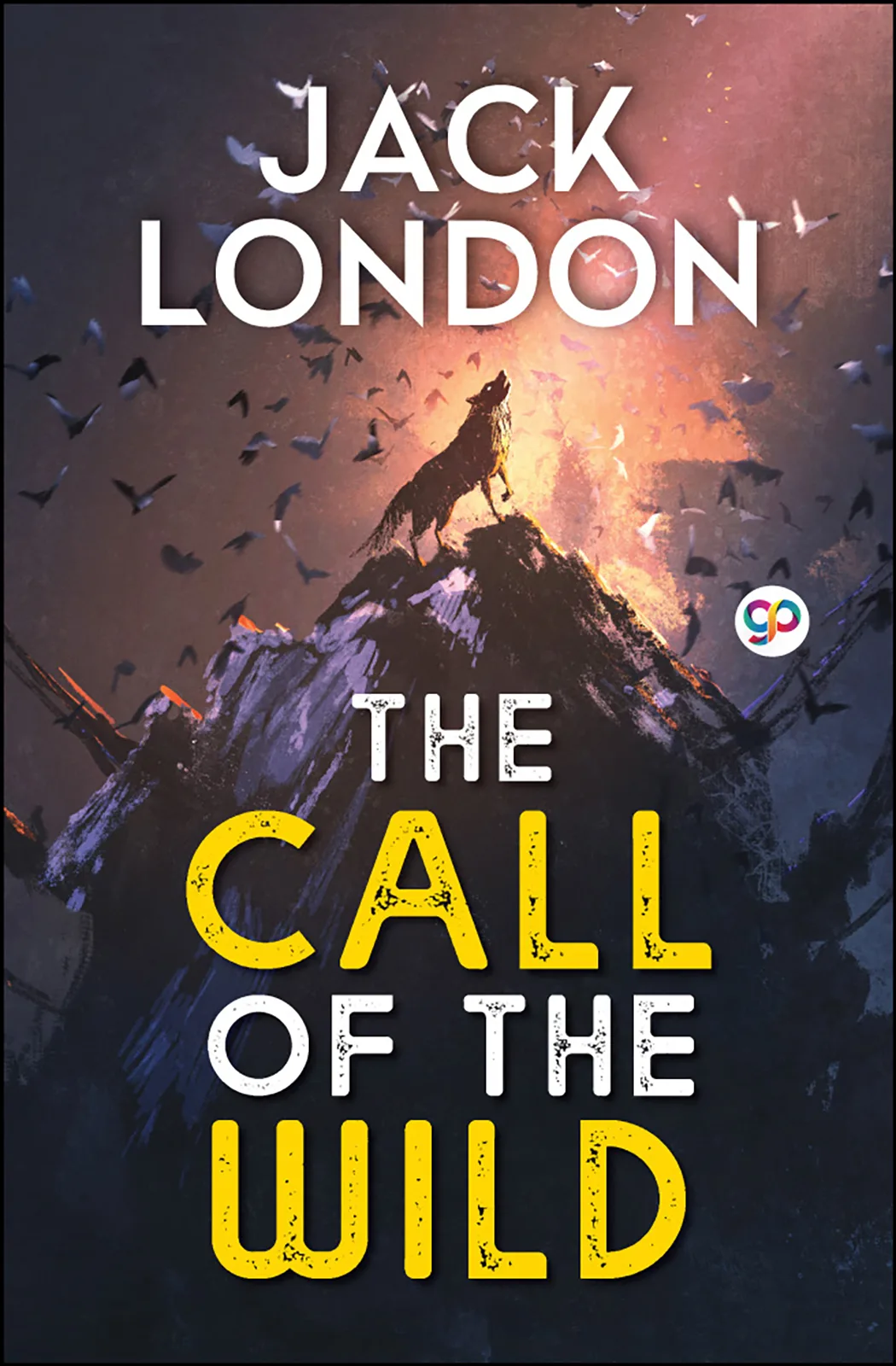
The Call of the Wild
Paperback
• 104 Pages
• INR 245.00
• English
• 9789354991219
No ratings yet
| Publisher | General Press |
|---|---|
| ISBN13 | 9789354991219 |
| ASIN/SKU | 9354991211 |
| Book Format | Paperback |
| Language | English |
| Pages | 104 |
| List Price | INR 245.00 |
| Subject Code | FIC002000, FIC004000, FIC067000, Node 10192708011 |
| Publishing Date | 27/09/2021 |
| Dimensions | 8.25 x 5.25 x 1.0 inches |
| Book Code | BD00067609 |
Buy this Book
Amazon Stores
Ebook Stores
Other Stores
Discover The Call of the Wild by Jack London. This book is published by General Press in Paperback format, ISBN 9789354991219, ASIN 9354991211, under Literature and Fiction, Action and Adventure Fiction, Animal Fiction.
Book Description
First published in 1903, 'The Call of the Wild' by Jack London is a powerful adventure novel that explores the enduring conflict between civilization and nature through the remarkable journey of a dog named Buck. Once a beloved pet living comfortably on a California estate, Buck's life changes dramatically when he is stolen and sold as a sled dog during the Klondike Gold Rush. Forced into the harsh wilderness of the Yukon, he must quickly learn to survive in a world where strength, instinct, and resilience determine life or death.
As Buck faces brutal masters, fierce rivalries with other dogs, and the unforgiving forces of nature, he gradually sheds the habits of domestic life. Each challenge awakens his ancestral instincts, revealing a wild spirit that had long remained hidden beneath years of comfort. Along the way, Buck forms a deep bond with John Thornton, a kind and compassionate man whose friendship restores his trust in humanity. Yet even this powerful connection cannot silence the irresistible call of the wilderness that grows stronger within him.
Jack London combines vivid descriptions of the frozen North with profound reflections on survival, loyalty, freedom, and the untamed spirit that exists in every living creature. More than an exciting adventure, the novel is a moving exploration of identity and transformation, showing how extraordinary circumstances can reveal one's true nature. The Call of the Wild remains a timeless classic, admired for its unforgettable storytelling, emotional depth, and enduring message about the power of instinct and the enduring pull of the natural world.
As Buck faces brutal masters, fierce rivalries with other dogs, and the unforgiving forces of nature, he gradually sheds the habits of domestic life. Each challenge awakens his ancestral instincts, revealing a wild spirit that had long remained hidden beneath years of comfort. Along the way, Buck forms a deep bond with John Thornton, a kind and compassionate man whose friendship restores his trust in humanity. Yet even this powerful connection cannot silence the irresistible call of the wilderness that grows stronger within him.
Jack London combines vivid descriptions of the frozen North with profound reflections on survival, loyalty, freedom, and the untamed spirit that exists in every living creature. More than an exciting adventure, the novel is a moving exploration of identity and transformation, showing how extraordinary circumstances can reveal one's true nature. The Call of the Wild remains a timeless classic, admired for its unforgettable storytelling, emotional depth, and enduring message about the power of instinct and the enduring pull of the natural world.
Author Biography
John Griffith London was an American novelist, journalist, and social activist. A pioneer of commercial fiction and American magazines, he was one of the first American authors to become an international celebrity and earn a large fortune from writing. He was also an innovator in the genre that would later become known as science fiction.
His most famous works include The Call of the Wild and White Fang, both set in the Klondike Gold Rush, as well as the short stories "To Build a Fire", "An Odyssey of the North", and "Love of Life". He also wrote about the South Pacific in stories such as "The Pearls of Parlay", and "The Heathen".
London was part of the radical literary group "The Crowd" in San Francisco and a passionate advocate of unionization, workers' rights, and socialism. He wrote several works dealing with these topics, such as his dystopian novel The Iron Heel, his non-fiction exposé The People of the Abyss, War of the Classes, and Before Adam.
London died November 22, 1916, in a sleeping porch in a cottage on his ranch. London's ashes were buried on his property not far from the Wolf House. The grave is marked by a mossy boulder. The buildings and property were later preserved as Jack London State Historic Park, in Glen Ellen, California.
His most famous works include The Call of the Wild and White Fang, both set in the Klondike Gold Rush, as well as the short stories "To Build a Fire", "An Odyssey of the North", and "Love of Life". He also wrote about the South Pacific in stories such as "The Pearls of Parlay", and "The Heathen".
London was part of the radical literary group "The Crowd" in San Francisco and a passionate advocate of unionization, workers' rights, and socialism. He wrote several works dealing with these topics, such as his dystopian novel The Iron Heel, his non-fiction exposé The People of the Abyss, War of the Classes, and Before Adam.
London died November 22, 1916, in a sleeping porch in a cottage on his ranch. London's ashes were buried on his property not far from the Wolf House. The grave is marked by a mossy boulder. The buildings and property were later preserved as Jack London State Historic Park, in Glen Ellen, California.
Editorial Reviews
• H. L. Mencken (American Journalist and Critic):
Mencken praised London's craftsmanship, stating, "No other popular writer of his time did any better writing than you will find in The Call of the Wild... Here, indeed, are all the elements of sound fiction".
• E. L. Doctorow (in The New York Times Book Review):
Highlighting the novel's enduring global legacy, the acclaimed author noted, "To this day Jack London is the most widely read American writer in the world".
• James Dickey (American Poet and Novelist):
Dickey emphasized the raw, biological themes of the book: "The quintessential Jack London is in the on-rushing compulsive-ness of his northern stories... Few men have more convincingly examined the connection between the creative powers of the individual writer and the unconscious drive to breed and to survive".
• Franklin Walker (Literary Historian and Editor):
Cementing the book's status in the American literary canon, Walker wrote that it is a classic so memorable it "belongs on a shelf with 'Walden' and 'Huckleberry Finn'".
• The New York Times (Original 1903 Review):
In a somewhat blunt contemporary assessment of its mass appeal, a 1903 reviewer for the Times wrote, "If nothing else makes Mr. London's book popular, it ought to be rendered so by the complete way in which it will satisfy the love of dog fights apparently inherent in every man".
• Robert McCrum (The Guardian):
When selecting the book for The Guardian's "100 best novels" list in 2014, McCrum observed that "Jack London's vivid adventures of a pet dog that goes back to nature reveal an extraordinary style and consummate storytelling".
• Hamilton Wright Mabie (American Essayist and Critic):
Reviewing the book shortly after its release, Mabie captured its thematic depth: "The story has a deep psychologic interest, and may be read as a striking parable; but it is, above all, an absorbing tale of wild life, full of pictorial power and abounding in striking incidents".
• The Republic (1903 Review):
Praising London's empathy for animals, the publication noted, "Jack London seems to possess an intuition of the dog life, and the dog heart... The Republic unhesitatingly recommends The Call of the Wild as a story of quality".
• Carl and Mark Van Doren (Literary Critics, 1925):
In their survey American and British Literature since 1890, the critics noted that despite its rugged realism, the novel contained "a genuine current of poetry," which they attributed to "something biographical" rooted in London's own Klondike experiences.
• Ernest Leisy (Literary Scholar, 1929):
In American Literature: An Interpretive Survey, Leisy argued that this novel firmly established London's legendary reputation, serving as the springboard that allowed him to pour forth "tale after tale dealing with 'red-blooded' supermen".
• Edmund Wilson (Literary Critic, 1940):
Wilson acknowledged the immense cultural and literary foundation London built with The Call of the Wild, noting that the massive popularity of later mid-century authors like John Steinbeck was partly due to them "carrying on from" the naturalistic groundwork London laid.
Mencken praised London's craftsmanship, stating, "No other popular writer of his time did any better writing than you will find in The Call of the Wild... Here, indeed, are all the elements of sound fiction".
• E. L. Doctorow (in The New York Times Book Review):
Highlighting the novel's enduring global legacy, the acclaimed author noted, "To this day Jack London is the most widely read American writer in the world".
• James Dickey (American Poet and Novelist):
Dickey emphasized the raw, biological themes of the book: "The quintessential Jack London is in the on-rushing compulsive-ness of his northern stories... Few men have more convincingly examined the connection between the creative powers of the individual writer and the unconscious drive to breed and to survive".
• Franklin Walker (Literary Historian and Editor):
Cementing the book's status in the American literary canon, Walker wrote that it is a classic so memorable it "belongs on a shelf with 'Walden' and 'Huckleberry Finn'".
• The New York Times (Original 1903 Review):
In a somewhat blunt contemporary assessment of its mass appeal, a 1903 reviewer for the Times wrote, "If nothing else makes Mr. London's book popular, it ought to be rendered so by the complete way in which it will satisfy the love of dog fights apparently inherent in every man".
• Robert McCrum (The Guardian):
When selecting the book for The Guardian's "100 best novels" list in 2014, McCrum observed that "Jack London's vivid adventures of a pet dog that goes back to nature reveal an extraordinary style and consummate storytelling".
• Hamilton Wright Mabie (American Essayist and Critic):
Reviewing the book shortly after its release, Mabie captured its thematic depth: "The story has a deep psychologic interest, and may be read as a striking parable; but it is, above all, an absorbing tale of wild life, full of pictorial power and abounding in striking incidents".
• The Republic (1903 Review):
Praising London's empathy for animals, the publication noted, "Jack London seems to possess an intuition of the dog life, and the dog heart... The Republic unhesitatingly recommends The Call of the Wild as a story of quality".
• Carl and Mark Van Doren (Literary Critics, 1925):
In their survey American and British Literature since 1890, the critics noted that despite its rugged realism, the novel contained "a genuine current of poetry," which they attributed to "something biographical" rooted in London's own Klondike experiences.
• Ernest Leisy (Literary Scholar, 1929):
In American Literature: An Interpretive Survey, Leisy argued that this novel firmly established London's legendary reputation, serving as the springboard that allowed him to pour forth "tale after tale dealing with 'red-blooded' supermen".
• Edmund Wilson (Literary Critic, 1940):
Wilson acknowledged the immense cultural and literary foundation London built with The Call of the Wild, noting that the massive popularity of later mid-century authors like John Steinbeck was partly due to them "carrying on from" the naturalistic groundwork London laid.
Book Summary
"The Call of the Wild" by Jack London is a classic adventure novel that follows the remarkable transformation of Buck, a powerful and intelligent dog whose comfortable life is suddenly shattered. Buck lives peacefully on Judge Miller's large estate in California, where he enjoys freedom, affection, and security. However, during the Klondike Gold Rush, strong dogs become highly valuable for pulling sleds across the frozen wilderness of Alaska and Canada. Betrayed by a gardener who sells him for money, Buck is taken far from his familiar home and thrust into a harsh world where survival depends on strength, courage, and adaptability. The brutal treatment he receives during his journey teaches him a painful lesson that he soon comes to understand as the "law of club and fang"—a world where power and instinct often determine who lives and who dies.
After arriving in the North, Buck is trained as a sled dog and quickly discovers that life there is completely different from the comfort he once knew. He joins a team of hardworking dogs owned by government couriers, where every day is filled with exhausting travel through snow-covered mountains, frozen rivers, and dangerous forests. Buck learns to pull heavy loads, endure freezing temperatures, and fight for food and survival. Although the conditions are severe, he also begins to awaken abilities that had long remained hidden beneath generations of domestication. His keen senses, physical strength, and natural intelligence help him adapt quickly, earning the respect of both humans and fellow dogs. With every challenge he overcomes, Buck grows more confident and begins to reconnect with instincts inherited from his wild ancestors.
One of Buck's greatest struggles comes through his rivalry with Spitz, the experienced lead dog of the sled team. Spitz is an excellent leader but rules through fear and aggression, constantly challenging Buck's growing confidence. Their conflict intensifies as Buck gradually gains the loyalty of the other dogs through courage rather than cruelty. Eventually, the rivalry reaches a dramatic conclusion in a fierce fight beneath the northern lights. Buck defeats Spitz and proves that he possesses the strength, determination, and leadership needed to guide the team. Although the human handlers initially resist the idea of replacing Spitz, Buck refuses to accept any lesser position. Once he becomes the lead dog, the entire sled team performs more efficiently than ever before, demonstrating Buck's remarkable leadership and intelligence.
As Buck passes from one owner to another, his experiences vary greatly. Some of his masters understand the needs of working dogs and treat them with fairness, while others are careless, inexperienced, or driven by greed. These changing relationships reveal the contrast between wisdom and ignorance in the wilderness. One particularly unfortunate period comes when Buck and the other dogs fall into the hands of three inexperienced travellers who know little about surviving in the North. They overload the sled, waste supplies, ignore good advice, and push the exhausted dogs beyond their limits. Their poor decisions place both themselves and their animals in constant danger, highlighting how nature quickly punishes those who fail to respect its power.
Buck's life changes once again when he is rescued by John Thornton, a kind and compassionate outdoorsman. Unlike many of Buck's previous owners, Thornton treats him with genuine affection and respect rather than seeing him merely as a working animal. For the first time since leaving California, Buck experiences deep trust and emotional connection with a human. The bond between the two becomes one of the strongest relationships in the novel. Buck responds with complete loyalty, often showing extraordinary devotion and courage to protect Thornton whenever danger arises. In return, Thornton recognises Buck's intelligence and treats him as both a companion and a friend. Their relationship demonstrates that even in a harsh environment, kindness and mutual respect can flourish.
Buck repeatedly proves his exceptional abilities while travelling with Thornton. His strength becomes legendary when he performs incredible feats that astonish those around him, earning admiration from experienced frontiersmen. Yet these moments of success are balanced by an increasingly powerful attraction to the wilderness surrounding him. Whenever Buck wanders into the forests, he feels an irresistible pull toward the untamed world. He begins hunting wild animals, surviving independently for long periods, and forming a mysterious connection with the land itself. Dreams and instincts seem to awaken memories of distant ancestors who once lived freely in nature long before dogs became companions to humans. These experiences gradually reshape Buck's identity, making him feel that he belongs to something older and greater than civilisation.
As Buck spends more time in the wild, he develops extraordinary hunting skills and grows stronger than ever before. He learns to track prey silently, survive alone, and understand the rhythms of the forest. Although he always returns to Thornton because of his deep affection, the call of the wilderness becomes increasingly difficult to resist. Buck discovers that his true nature includes both loyalty to those he loves and an ancient instinct for freedom. The conflict between these two parts of himself becomes one of the novel's central themes. Rather than portraying civilisation and wilderness as complete opposites, the story suggests that every living creature carries natural instincts that may emerge when circumstances demand them.
The novel reaches its emotional climax when Buck's world is shattered by a tragic event that permanently changes his life. Faced with overwhelming grief and the loss of the person he loved most, Buck finally answers the powerful call that has been echoing within him throughout his journey. He leaves behind the last ties connecting him to human society and fully embraces life in the wilderness. There he joins a pack of wolves, earning their respect through his strength, intelligence, and fearless determination. Although he has become completely wild, Buck never entirely forgets the kindness he once received. His transformation is not simply about becoming an animal of the forest but about discovering the deepest part of his own identity.
"The Call of the Wild" is ultimately a story of survival, adaptation, and self-discovery. Through Buck's extraordinary journey from a pampered household pet to a fearless leader of the wilderness, Jack London explores themes of instinct, resilience, loyalty, and the relationship between civilisation and nature. The novel vividly portrays the beauty and danger of the frozen North while showing how extreme circumstances reveal hidden strengths within individuals. Buck's transformation symbolises the enduring power of nature and the ancient instincts that continue to exist beneath the surface of domesticated life. More than a simple adventure tale, the novel remains a timeless exploration of courage, identity, and the search for one's true place in the world, making it one of the most celebrated works of American literature.
After arriving in the North, Buck is trained as a sled dog and quickly discovers that life there is completely different from the comfort he once knew. He joins a team of hardworking dogs owned by government couriers, where every day is filled with exhausting travel through snow-covered mountains, frozen rivers, and dangerous forests. Buck learns to pull heavy loads, endure freezing temperatures, and fight for food and survival. Although the conditions are severe, he also begins to awaken abilities that had long remained hidden beneath generations of domestication. His keen senses, physical strength, and natural intelligence help him adapt quickly, earning the respect of both humans and fellow dogs. With every challenge he overcomes, Buck grows more confident and begins to reconnect with instincts inherited from his wild ancestors.
One of Buck's greatest struggles comes through his rivalry with Spitz, the experienced lead dog of the sled team. Spitz is an excellent leader but rules through fear and aggression, constantly challenging Buck's growing confidence. Their conflict intensifies as Buck gradually gains the loyalty of the other dogs through courage rather than cruelty. Eventually, the rivalry reaches a dramatic conclusion in a fierce fight beneath the northern lights. Buck defeats Spitz and proves that he possesses the strength, determination, and leadership needed to guide the team. Although the human handlers initially resist the idea of replacing Spitz, Buck refuses to accept any lesser position. Once he becomes the lead dog, the entire sled team performs more efficiently than ever before, demonstrating Buck's remarkable leadership and intelligence.
As Buck passes from one owner to another, his experiences vary greatly. Some of his masters understand the needs of working dogs and treat them with fairness, while others are careless, inexperienced, or driven by greed. These changing relationships reveal the contrast between wisdom and ignorance in the wilderness. One particularly unfortunate period comes when Buck and the other dogs fall into the hands of three inexperienced travellers who know little about surviving in the North. They overload the sled, waste supplies, ignore good advice, and push the exhausted dogs beyond their limits. Their poor decisions place both themselves and their animals in constant danger, highlighting how nature quickly punishes those who fail to respect its power.
Buck's life changes once again when he is rescued by John Thornton, a kind and compassionate outdoorsman. Unlike many of Buck's previous owners, Thornton treats him with genuine affection and respect rather than seeing him merely as a working animal. For the first time since leaving California, Buck experiences deep trust and emotional connection with a human. The bond between the two becomes one of the strongest relationships in the novel. Buck responds with complete loyalty, often showing extraordinary devotion and courage to protect Thornton whenever danger arises. In return, Thornton recognises Buck's intelligence and treats him as both a companion and a friend. Their relationship demonstrates that even in a harsh environment, kindness and mutual respect can flourish.
Buck repeatedly proves his exceptional abilities while travelling with Thornton. His strength becomes legendary when he performs incredible feats that astonish those around him, earning admiration from experienced frontiersmen. Yet these moments of success are balanced by an increasingly powerful attraction to the wilderness surrounding him. Whenever Buck wanders into the forests, he feels an irresistible pull toward the untamed world. He begins hunting wild animals, surviving independently for long periods, and forming a mysterious connection with the land itself. Dreams and instincts seem to awaken memories of distant ancestors who once lived freely in nature long before dogs became companions to humans. These experiences gradually reshape Buck's identity, making him feel that he belongs to something older and greater than civilisation.
As Buck spends more time in the wild, he develops extraordinary hunting skills and grows stronger than ever before. He learns to track prey silently, survive alone, and understand the rhythms of the forest. Although he always returns to Thornton because of his deep affection, the call of the wilderness becomes increasingly difficult to resist. Buck discovers that his true nature includes both loyalty to those he loves and an ancient instinct for freedom. The conflict between these two parts of himself becomes one of the novel's central themes. Rather than portraying civilisation and wilderness as complete opposites, the story suggests that every living creature carries natural instincts that may emerge when circumstances demand them.
The novel reaches its emotional climax when Buck's world is shattered by a tragic event that permanently changes his life. Faced with overwhelming grief and the loss of the person he loved most, Buck finally answers the powerful call that has been echoing within him throughout his journey. He leaves behind the last ties connecting him to human society and fully embraces life in the wilderness. There he joins a pack of wolves, earning their respect through his strength, intelligence, and fearless determination. Although he has become completely wild, Buck never entirely forgets the kindness he once received. His transformation is not simply about becoming an animal of the forest but about discovering the deepest part of his own identity.
"The Call of the Wild" is ultimately a story of survival, adaptation, and self-discovery. Through Buck's extraordinary journey from a pampered household pet to a fearless leader of the wilderness, Jack London explores themes of instinct, resilience, loyalty, and the relationship between civilisation and nature. The novel vividly portrays the beauty and danger of the frozen North while showing how extreme circumstances reveal hidden strengths within individuals. Buck's transformation symbolises the enduring power of nature and the ancient instincts that continue to exist beneath the surface of domesticated life. More than a simple adventure tale, the novel remains a timeless exploration of courage, identity, and the search for one's true place in the world, making it one of the most celebrated works of American literature.
Sample Chapters
Chapter 1: Into the Primitive
“Old longings nomadic leap,
Chafing at custom’s chain;
Again from its brumal sleep
Wakens the ferine strain.”
Buck did not read the newspapers, or he would have known that trouble was brewing, not alone for himself, but for every tide-water dog, strong of muscle and with warm, long hair, from Puget Sound to San Diego. Because men, groping in the Arctic darkness, had found a yellow metal, and because steamship and transportation companies were booming the find, thousands of men were rushing into the Northland. These men wanted dogs, and the dogs they wanted were heavy dogs, with strong muscles by which to toil, and furry coats to protect them from the frost.
Buck lived at a big house in the sun-kissed Santa Clara Valley. Judge Miller’s place, it was called. It stood back from the road, half hidden among the trees, through which glimpses could be caught of the wide cool veranda that ran around its four sides. The house was approached by graveled driveways which wound about through wide-spreading lawns and under the interlacing boughs of tall poplars. At the rear things were on even a more spacious scale than at the front. There were great stables, where a dozen grooms and boys held forth, rows of vine-clad servants’ cottages, an endless and orderly array of outhouses, long grape arbors, green pastures, orchards, and berry patches. Then there was the pumping plant for the artesian well, and the big cement tank where Judge Miller’s boys took their morning plunge and kept cool in the hot afternoon.
And over this great demesne Buck ruled. Here he was born, and here he had lived the four years of his life. It was true, there were other dogs. There could not but be other dogs on so vast a place, but they did not count. They came and went, resided in the populous kennels, or lived obscurely in the recesses of the house after the fashion of Toots, the Japanese pug, or Ysabel, the Mexican hairless,—strange creatures that rarely put nose out of doors or set foot to ground. On the other hand, there were the fox terriers, a score of them at least, who yelped fearful promises at Toots and Ysabel looking out of the windows at them and protected by a legion of housemaids armed with brooms and mops.
But Buck was neither house-dog nor kennel-dog. The whole realm was his. He plunged into the swimming tank or went hunting with the Judge’s sons; he escorted Mollie and Alice, the Judge’s daughters, on long twilight or early morning rambles; on wintry nights he lay at the Judge’s feet before the roaring library fire; he carried the Judge’s grandsons on his back, or rolled them in the grass, and guarded their footsteps through wild adventures down to the fountain in the stable yard, and even beyond, where the paddocks were, and the berry patches. Among the terriers he stalked imperiously, and Toots and Ysabel he utterly ignored, for he was king,—king over all creeping, crawling, flying things of Judge Miller’s place, humans included.
His father, Elmo, a huge St. Bernard, had been the Judge’s inseparable companion, and Buck bid fair to follow in the way of his father. He was not so large,—he weighed only one hundred and forty pounds,—for his mother, Shep, had been a Scotch shepherd dog. Nevertheless, one hundred and forty pounds, to which was added the dignity that comes of good living and universal respect, enabled him to carry himself in right royal fashion. During the four years since his puppyhood he had lived the life of a sated aristocrat; he had a fine pride in himself, was even a trifle egotistical, as country gentlemen sometimes become because of their insular situation. But he had saved himself by not becoming a mere pampered house-dog. Hunting and kindred outdoor delights had kept down the fat and hardened his muscles; and to him, as to the cold-tubbing races, the love of water had been a tonic and a health preserver.
And this was the manner of dog Buck was in the fall of 1897, when the Klondike strike dragged men from all the world into the frozen North. But Buck did not read the newspapers, and he did not know that Manuel, one of the gardener’s helpers, was an undesirable acquaintance. Manuel had one besetting sin. He loved to play Chinese lottery. Also, in his gambling, he had one besetting weakness—faith in a system; and this made his damnation certain. For to play a system requires money, while the wages of a gardener’s helper do not lap over the needs of a wife and numerous progeny.
The Judge was at a meeting of the Raisin Growers’ Association, and the boys were busy organizing an athletic club, on the memorable night of Manuel’s treachery. No one saw him and Buck go off through the orchard on what Buck imagined was merely a stroll. And with the exception of a solitary man, no one saw them arrive at the little flag station known as College Park. This man talked with Manuel, and money chinked between them.
“You might wrap up the goods before you deliver ‘m,” the stranger said gruffly, and Manuel doubled a piece of stout rope around Buck’s neck under the collar.
“Twist it, an’ you’ll choke ‘m plentee,” said Manuel, and the stranger grunted a ready affirmative.
Buck had accepted the rope with quiet dignity. To be sure, it was an unwonted performance: but he had learned to trust in men he knew, and to give them credit for a wisdom that outreached his own. But when the ends of the rope were placed in the stranger’s hands, he growled menacingly. He had merely intimated his displeasure, in his pride believing that to intimate was to command. But to his surprise the rope tightened around his neck, shutting off his breath. In quick rage he sprang at the man, who met him halfway, grappled him close by the throat, and with a deft twist threw him over on his back. Then the rope tightened mercilessly, while Buck struggled in a fury, his tongue lolling out of his mouth and his great chest panting futilely. Never in all his life had he been so vilely treated, and never in all his life had he been so angry. But his strength ebbed, his eyes glazed, and he knew nothing when the train was flagged and the two men threw him into the baggage car.
The next he knew, he was dimly aware that his tongue was hurting and that he was being jolted along in some kind of a conveyance. The hoarse shriek of a locomotive whistling a crossing told him where he was. He had traveled too often with the Judge not to know the sensation of riding in a baggage car. He opened his eyes, and into them came the unbridled anger of a kidnapped king. The man sprang for his throat, but Buck was too quick for him. His jaws closed on the hand, nor did they relax till his senses were choked out of him once more.
“Yep, has fits,” the man said, hiding his mangled hand from the baggage man, who had been attracted by the sounds of struggle. “I’m takin’ ‘m up for the boss to ‘Frisco. A crack dog-doctor there thinks that he can cure ‘m.”
Concerning that night’s ride, the man spoke most eloquently for himself, in a little shed back of a saloon on the San Francisco waterfront.
“All I get is fifty for it,” he grumbled; “an’ I wouldn’t do it over for a thousand, cold cash.”
His hand was wrapped in a bloody handkerchief, and the right trouser leg was ripped from knee to ankle.
“How much did the other mug get?” the saloon-keeper demanded.
“A hundred,” was the reply. “Wouldn’t take a sou less, so help me.”
“That makes a hundred and fifty,” the saloon-keeper calculated; “and he’s worth it, or I’m a square head.”
The kidnapper undid the bloody wrappings and looked at his lacerated hand. “If I don’t get the hydrophobia—”
“It’ll be because you was born to hang,” laughed the saloon-keeper. “Here, lend me a hand before you pull your freight,” he added.
Dazed, suffering intolerable pain from throat and tongue, with the life half throttled out of him, Buck attempted to face his tormentors. But he was thrown down and choked repeatedly, till they succeeded in filing the heavy brass collar from off his neck. Then the rope was removed, and he was flung into a cagelike crate.
There he lay for the remainder of the weary night, nursing his wrath and wounded pride. He could not understand what it all meant. What did they want with him, these strange men? Why were they keeping him pent up in this narrow crate? He did not know why, but he felt oppressed by the vague sense of impending calamity. Several times during the night he sprang to his feet when the shed door rattled open, expecting to see the Judge, or the boys at least. But each time it was the bulging face of the saloon-keeper that peered in at him by the sickly light of a tallow candle. And each time the joyful bark that trembled in Buck’s throat was twisted into a savage growl.
But the saloon-keeper let him alone, and in the morning four men entered and picked up the crate. More tormentors, Buck decided, for they were evil-looking creatures, ragged and unkempt; and he stormed and raged at them through the bars. They only laughed and poked sticks at him, which he promptly assailed with his teeth till he realized that that was what they wanted. Whereupon he lay down sullenly and allowed the crate to be lifted into a wagon. Then he, and the crate in which he was imprisoned, began a passage through many hands. Clerks in the express office took charge of him; he was carted about in another wagon; a truck carried him, with an assortment of boxes and parcels, upon a ferry steamer; he was trucked off the steamer into a great railway depot, and finally he was deposited in an express car.
For two days and nights this express car was dragged along at the tail of shrieking locomotives; and for two days and nights Buck neither ate nor drank. In his anger he had met the first advances of the express messengers with growls, and they had retaliated by teasing him. When he flung himself against the bars, quivering and frothing, they laughed at him and taunted him. They growled and barked like detestable dogs, mewed, and flapped their arms and crowed. It was all very silly, he knew; but therefore the more outrage to his dignity, and his anger waxed and waxed. He did not mind the hunger so much, but the lack of water caused him severe suffering and fanned his wrath to fever-pitch. For that matter, high-strung and finely sensitive, the ill treatment had flung him into a fever, which was fed by the inflammation of his parched and swollen throat and tongue.
He was glad for one thing: the rope was off his neck. That had given them an unfair advantage; but now that it was off, he would show them. They would never get another rope around his neck. Upon that he was resolved. For two days and nights he neither ate nor drank, and during those two days and nights of torment, he accumulated a fund of wrath that boded ill for whoever first fell afoul of him. His eyes turned blood-shot, and he was metamorphosed into a raging fiend. So changed was he that the Judge himself would not have recognized him; and the express messengers breathed with relief when they bundled him off the train at Seattle.
Four men gingerly carried the crate from the wagon into a small, high-walled back yard. A stout man, with a red sweater that sagged generously at the neck, came out and signed the book for the driver. That was the man, Buck divined, the next tormentor, and he hurled himself savagely against the bars. The man smiled grimly, and brought a hatchet and a club.
“You ain’t going to take him out now?” the driver asked.
“Sure,” the man replied, driving the hatchet into the crate for a pry.
There was an instantaneous scattering of the four men who had carried it in, and from safe perches on top the wall they prepared to watch the performance.
Buck rushed at the splintering wood, sinking his teeth into it, surging and wrestling with it. Wherever the hatchet fell on the outside, he was there on the inside, snarling and growling, as furiously anxious to get out as the man in the red sweater was calmly intent on getting him out.
“Now, you red-eyed devil,” he said, when he had made an opening sufficient for the passage of Buck’s body. At the same time he dropped the hatchet and shifted the club to his right hand.
And Buck was truly a red-eyed devil, as he drew himself together for the spring, hair bristling, mouth foaming, a mad glitter in his blood-shot eyes. Straight at the man he launched his one hundred and forty pounds of fury, surcharged with the pent passion of two days and nights. In midair, just as his jaws were about to close on the man, he received a shock that checked his body and brought his teeth together with an agonizing clip. He whirled over, fetching the ground on his back and side. He had never been struck by a club in his life, and did not understand. With a snarl that was part bark and more scream he was again on his feet and launched into the air. And again the shock came and he was brought crushingly to the ground. This time he was aware that it was the club, but his madness knew no caution. A dozen times he charged, and as often the club broke the charge and smashed him down.
After a particularly fierce blow, he crawled to his feet, too dazed to rush. He staggered limply about, the blood flowing from nose and mouth and ears, his beautiful coat sprayed and flecked with bloody slaver. Then the man advanced and deliberately dealt him a frightful blow on the nose. All the pain he had endured was as nothing compared with the exquisite agony of this. With a roar that was almost lion-like in its ferocity, he again hurled himself at the man. But the man, shifting the club from right to left, coolly caught him by the under jaw, at the same time wrenching downward and backward. Buck described a complete circle in the air, and half of another, then crashed to the ground on his head and chest.
For the last time he rushed. The man struck the shrewd blow he had purposely withheld for so long, and Buck crumpled up and went down, knocked utterly senseless.
“He’s no slouch at dog-breakin’, that’s wot I say,” one of the men on the wall cried enthusiastically.
“Druther break cayuses any day, and twice on Sundays,” was the reply of the driver, as he climbed on the wagon and started the horses.
Buck’s senses came back to him, but not his strength. He lay where he had fallen, and from there he watched the man in the red sweater.
“‘Answers to the name of Buck,’” the man soliloquized, quoting from the saloon-keeper’s letter which had announced the consignment of the crate and contents. “Well, Buck, my boy,” he went on in a genial voice, “we’ve had our little ruction, and the best thing we can do is to let it go at that. You’ve learned your place, and I know mine. Be a good dog and all ‘ll go well and the goose hang high. Be a bad dog, and I’ll whale the stuffin’ outa you. Understand?”
As he spoke he fearlessly patted the head he had so mercilessly pounded, and though Buck’s hair involuntarily bristled at touch of the hand, he endured it without protest. When the man brought him water he drank eagerly, and later bolted a generous meal of raw meat, chunk by chunk, from the man’s hand.
He was beaten (he knew that); but he was not broken. He saw, once for all, that he stood no chance against a man with a club. He had learned the lesson, and in all his after-life he never forgot it. That club was a revelation. It was his introduction to the reign of primitive law, and he met the introduction halfway. The facts of life took on a fiercer aspect; and while he faced that aspect un-cowed, he faced it with all the latent cunning of his nature aroused. As the days went by, other dogs came, in crates and at the ends of ropes, some docilely, and some raging and roaring as he had come; and, one and all, he watched them pass under the dominion of the man in the red sweater. Again and again, as he looked at each brutal performance, the lesson was driven home to Buck: a man with a club was a lawgiver, a master to be obeyed, though not necessarily conciliated. Of this last Buck was never guilty, though he did see beaten dogs that fawned upon the man, and wagged their tails, and licked his hand. Also he saw one dog, that would neither conciliate nor obey, finally killed in the struggle for mastery.
Now and again men came, strangers, who talked excitedly, wheedlingly, and in all kinds of fashions to the man in the red sweater. And at such times, money passed between them; the strangers took one or more of the dogs away with them. Buck wondered where they went, for they never came back; but the fear of the future was strong upon him, and he was glad each time when he was not selected.
Yet his time came, in the end, in the form of a little weazened man who spat broken English and many strange and uncouth exclamations which Buck could not understand.
“Sacredam!” he cried, when his eyes lit upon Buck. “Dat one dam bully dog! Eh? How moch?”
“Three hundred, and a present at that,” was the prompt reply of the man in the red sweater. “And seem’ it’s government money, you ain’t got no kick coming, eh, Perrault?”
Perrault grinned. Considering that the price of dogs had been boomed skyward by the unwonted demand, it was not an unfair sum for so fine an animal. The Canadian Government would be no loser, nor would its dispatches travel the slower. Perrault knew dogs, and when he looked at Buck he knew that he was one in a thousand—“One in ten t’ousand,” he commented mentally.
Buck saw money pass between them, and was not surprised when Curly, a good-natured Newfoundland, and he were led away by the little weazened man. That was the last he saw of the man in the red sweater, and as Curly and he looked at receding Seattle from the deck of the Narwhal, it was the last he saw of the warm Southland. Curly and he were taken below by Perrault and turned over to a black-faced giant called Francois. Perrault was a French-Canadian, and swarthy; but Francois was a French-Canadian half-breed, and twice as swarthy. They were a new kind of men to Buck (of which he was destined to see many more), and while he developed no affection for them, he none the less grew honestly to respect them. He speedily learned that Perrault and Francois were fair men, calm and impartial in administering justice, and too wise in the way of dogs to be fooled by dogs.
In the ‘tween-decks of the Narwhal, Buck and Curly joined two other dogs. One of them was a big, snow-white fellow from Spitzbergen who had been brought away by a whaling captain, and who had later accompanied a Geological Survey into the Barrens. He was friendly, in a treacherous sort of way, smiling into one’s face the while he meditated some underhand trick, as, for instance, when he stole from Buck’s food at the first meal. As Buck sprang to punish him, the lash of Francois’s whip sang through the air, reaching the culprit first; and nothing remained to Buck but to recover the bone. That was fair of Francois, he decided, and the half-breed began his rise in Buck’s estimation.
The other dog made no advances, nor received any; also, he did not attempt to steal from the newcomers. He was a gloomy, morose fellow, and he showed Curly plainly that all the desire was to be left alone, and further, that there would be trouble if he were not left alone. “Dave” he was called, and he ate and slept, or yawned between times, and took interest in nothing, not even when the Narwhal crossed Queen Charlotte Sound and rolled and pitched and bucked like a thing possessed. When Buck and Curly grew excited, half wild with fear, he raised his head as though annoyed, favored them with an incurious glance, yawned, and went to sleep again.
“Old longings nomadic leap,
Chafing at custom’s chain;
Again from its brumal sleep
Wakens the ferine strain.”
Buck did not read the newspapers, or he would have known that trouble was brewing, not alone for himself, but for every tide-water dog, strong of muscle and with warm, long hair, from Puget Sound to San Diego. Because men, groping in the Arctic darkness, had found a yellow metal, and because steamship and transportation companies were booming the find, thousands of men were rushing into the Northland. These men wanted dogs, and the dogs they wanted were heavy dogs, with strong muscles by which to toil, and furry coats to protect them from the frost.
Buck lived at a big house in the sun-kissed Santa Clara Valley. Judge Miller’s place, it was called. It stood back from the road, half hidden among the trees, through which glimpses could be caught of the wide cool veranda that ran around its four sides. The house was approached by graveled driveways which wound about through wide-spreading lawns and under the interlacing boughs of tall poplars. At the rear things were on even a more spacious scale than at the front. There were great stables, where a dozen grooms and boys held forth, rows of vine-clad servants’ cottages, an endless and orderly array of outhouses, long grape arbors, green pastures, orchards, and berry patches. Then there was the pumping plant for the artesian well, and the big cement tank where Judge Miller’s boys took their morning plunge and kept cool in the hot afternoon.
And over this great demesne Buck ruled. Here he was born, and here he had lived the four years of his life. It was true, there were other dogs. There could not but be other dogs on so vast a place, but they did not count. They came and went, resided in the populous kennels, or lived obscurely in the recesses of the house after the fashion of Toots, the Japanese pug, or Ysabel, the Mexican hairless,—strange creatures that rarely put nose out of doors or set foot to ground. On the other hand, there were the fox terriers, a score of them at least, who yelped fearful promises at Toots and Ysabel looking out of the windows at them and protected by a legion of housemaids armed with brooms and mops.
But Buck was neither house-dog nor kennel-dog. The whole realm was his. He plunged into the swimming tank or went hunting with the Judge’s sons; he escorted Mollie and Alice, the Judge’s daughters, on long twilight or early morning rambles; on wintry nights he lay at the Judge’s feet before the roaring library fire; he carried the Judge’s grandsons on his back, or rolled them in the grass, and guarded their footsteps through wild adventures down to the fountain in the stable yard, and even beyond, where the paddocks were, and the berry patches. Among the terriers he stalked imperiously, and Toots and Ysabel he utterly ignored, for he was king,—king over all creeping, crawling, flying things of Judge Miller’s place, humans included.
His father, Elmo, a huge St. Bernard, had been the Judge’s inseparable companion, and Buck bid fair to follow in the way of his father. He was not so large,—he weighed only one hundred and forty pounds,—for his mother, Shep, had been a Scotch shepherd dog. Nevertheless, one hundred and forty pounds, to which was added the dignity that comes of good living and universal respect, enabled him to carry himself in right royal fashion. During the four years since his puppyhood he had lived the life of a sated aristocrat; he had a fine pride in himself, was even a trifle egotistical, as country gentlemen sometimes become because of their insular situation. But he had saved himself by not becoming a mere pampered house-dog. Hunting and kindred outdoor delights had kept down the fat and hardened his muscles; and to him, as to the cold-tubbing races, the love of water had been a tonic and a health preserver.
And this was the manner of dog Buck was in the fall of 1897, when the Klondike strike dragged men from all the world into the frozen North. But Buck did not read the newspapers, and he did not know that Manuel, one of the gardener’s helpers, was an undesirable acquaintance. Manuel had one besetting sin. He loved to play Chinese lottery. Also, in his gambling, he had one besetting weakness—faith in a system; and this made his damnation certain. For to play a system requires money, while the wages of a gardener’s helper do not lap over the needs of a wife and numerous progeny.
The Judge was at a meeting of the Raisin Growers’ Association, and the boys were busy organizing an athletic club, on the memorable night of Manuel’s treachery. No one saw him and Buck go off through the orchard on what Buck imagined was merely a stroll. And with the exception of a solitary man, no one saw them arrive at the little flag station known as College Park. This man talked with Manuel, and money chinked between them.
“You might wrap up the goods before you deliver ‘m,” the stranger said gruffly, and Manuel doubled a piece of stout rope around Buck’s neck under the collar.
“Twist it, an’ you’ll choke ‘m plentee,” said Manuel, and the stranger grunted a ready affirmative.
Buck had accepted the rope with quiet dignity. To be sure, it was an unwonted performance: but he had learned to trust in men he knew, and to give them credit for a wisdom that outreached his own. But when the ends of the rope were placed in the stranger’s hands, he growled menacingly. He had merely intimated his displeasure, in his pride believing that to intimate was to command. But to his surprise the rope tightened around his neck, shutting off his breath. In quick rage he sprang at the man, who met him halfway, grappled him close by the throat, and with a deft twist threw him over on his back. Then the rope tightened mercilessly, while Buck struggled in a fury, his tongue lolling out of his mouth and his great chest panting futilely. Never in all his life had he been so vilely treated, and never in all his life had he been so angry. But his strength ebbed, his eyes glazed, and he knew nothing when the train was flagged and the two men threw him into the baggage car.
The next he knew, he was dimly aware that his tongue was hurting and that he was being jolted along in some kind of a conveyance. The hoarse shriek of a locomotive whistling a crossing told him where he was. He had traveled too often with the Judge not to know the sensation of riding in a baggage car. He opened his eyes, and into them came the unbridled anger of a kidnapped king. The man sprang for his throat, but Buck was too quick for him. His jaws closed on the hand, nor did they relax till his senses were choked out of him once more.
“Yep, has fits,” the man said, hiding his mangled hand from the baggage man, who had been attracted by the sounds of struggle. “I’m takin’ ‘m up for the boss to ‘Frisco. A crack dog-doctor there thinks that he can cure ‘m.”
Concerning that night’s ride, the man spoke most eloquently for himself, in a little shed back of a saloon on the San Francisco waterfront.
“All I get is fifty for it,” he grumbled; “an’ I wouldn’t do it over for a thousand, cold cash.”
His hand was wrapped in a bloody handkerchief, and the right trouser leg was ripped from knee to ankle.
“How much did the other mug get?” the saloon-keeper demanded.
“A hundred,” was the reply. “Wouldn’t take a sou less, so help me.”
“That makes a hundred and fifty,” the saloon-keeper calculated; “and he’s worth it, or I’m a square head.”
The kidnapper undid the bloody wrappings and looked at his lacerated hand. “If I don’t get the hydrophobia—”
“It’ll be because you was born to hang,” laughed the saloon-keeper. “Here, lend me a hand before you pull your freight,” he added.
Dazed, suffering intolerable pain from throat and tongue, with the life half throttled out of him, Buck attempted to face his tormentors. But he was thrown down and choked repeatedly, till they succeeded in filing the heavy brass collar from off his neck. Then the rope was removed, and he was flung into a cagelike crate.
There he lay for the remainder of the weary night, nursing his wrath and wounded pride. He could not understand what it all meant. What did they want with him, these strange men? Why were they keeping him pent up in this narrow crate? He did not know why, but he felt oppressed by the vague sense of impending calamity. Several times during the night he sprang to his feet when the shed door rattled open, expecting to see the Judge, or the boys at least. But each time it was the bulging face of the saloon-keeper that peered in at him by the sickly light of a tallow candle. And each time the joyful bark that trembled in Buck’s throat was twisted into a savage growl.
But the saloon-keeper let him alone, and in the morning four men entered and picked up the crate. More tormentors, Buck decided, for they were evil-looking creatures, ragged and unkempt; and he stormed and raged at them through the bars. They only laughed and poked sticks at him, which he promptly assailed with his teeth till he realized that that was what they wanted. Whereupon he lay down sullenly and allowed the crate to be lifted into a wagon. Then he, and the crate in which he was imprisoned, began a passage through many hands. Clerks in the express office took charge of him; he was carted about in another wagon; a truck carried him, with an assortment of boxes and parcels, upon a ferry steamer; he was trucked off the steamer into a great railway depot, and finally he was deposited in an express car.
For two days and nights this express car was dragged along at the tail of shrieking locomotives; and for two days and nights Buck neither ate nor drank. In his anger he had met the first advances of the express messengers with growls, and they had retaliated by teasing him. When he flung himself against the bars, quivering and frothing, they laughed at him and taunted him. They growled and barked like detestable dogs, mewed, and flapped their arms and crowed. It was all very silly, he knew; but therefore the more outrage to his dignity, and his anger waxed and waxed. He did not mind the hunger so much, but the lack of water caused him severe suffering and fanned his wrath to fever-pitch. For that matter, high-strung and finely sensitive, the ill treatment had flung him into a fever, which was fed by the inflammation of his parched and swollen throat and tongue.
He was glad for one thing: the rope was off his neck. That had given them an unfair advantage; but now that it was off, he would show them. They would never get another rope around his neck. Upon that he was resolved. For two days and nights he neither ate nor drank, and during those two days and nights of torment, he accumulated a fund of wrath that boded ill for whoever first fell afoul of him. His eyes turned blood-shot, and he was metamorphosed into a raging fiend. So changed was he that the Judge himself would not have recognized him; and the express messengers breathed with relief when they bundled him off the train at Seattle.
Four men gingerly carried the crate from the wagon into a small, high-walled back yard. A stout man, with a red sweater that sagged generously at the neck, came out and signed the book for the driver. That was the man, Buck divined, the next tormentor, and he hurled himself savagely against the bars. The man smiled grimly, and brought a hatchet and a club.
“You ain’t going to take him out now?” the driver asked.
“Sure,” the man replied, driving the hatchet into the crate for a pry.
There was an instantaneous scattering of the four men who had carried it in, and from safe perches on top the wall they prepared to watch the performance.
Buck rushed at the splintering wood, sinking his teeth into it, surging and wrestling with it. Wherever the hatchet fell on the outside, he was there on the inside, snarling and growling, as furiously anxious to get out as the man in the red sweater was calmly intent on getting him out.
“Now, you red-eyed devil,” he said, when he had made an opening sufficient for the passage of Buck’s body. At the same time he dropped the hatchet and shifted the club to his right hand.
And Buck was truly a red-eyed devil, as he drew himself together for the spring, hair bristling, mouth foaming, a mad glitter in his blood-shot eyes. Straight at the man he launched his one hundred and forty pounds of fury, surcharged with the pent passion of two days and nights. In midair, just as his jaws were about to close on the man, he received a shock that checked his body and brought his teeth together with an agonizing clip. He whirled over, fetching the ground on his back and side. He had never been struck by a club in his life, and did not understand. With a snarl that was part bark and more scream he was again on his feet and launched into the air. And again the shock came and he was brought crushingly to the ground. This time he was aware that it was the club, but his madness knew no caution. A dozen times he charged, and as often the club broke the charge and smashed him down.
After a particularly fierce blow, he crawled to his feet, too dazed to rush. He staggered limply about, the blood flowing from nose and mouth and ears, his beautiful coat sprayed and flecked with bloody slaver. Then the man advanced and deliberately dealt him a frightful blow on the nose. All the pain he had endured was as nothing compared with the exquisite agony of this. With a roar that was almost lion-like in its ferocity, he again hurled himself at the man. But the man, shifting the club from right to left, coolly caught him by the under jaw, at the same time wrenching downward and backward. Buck described a complete circle in the air, and half of another, then crashed to the ground on his head and chest.
For the last time he rushed. The man struck the shrewd blow he had purposely withheld for so long, and Buck crumpled up and went down, knocked utterly senseless.
“He’s no slouch at dog-breakin’, that’s wot I say,” one of the men on the wall cried enthusiastically.
“Druther break cayuses any day, and twice on Sundays,” was the reply of the driver, as he climbed on the wagon and started the horses.
Buck’s senses came back to him, but not his strength. He lay where he had fallen, and from there he watched the man in the red sweater.
“‘Answers to the name of Buck,’” the man soliloquized, quoting from the saloon-keeper’s letter which had announced the consignment of the crate and contents. “Well, Buck, my boy,” he went on in a genial voice, “we’ve had our little ruction, and the best thing we can do is to let it go at that. You’ve learned your place, and I know mine. Be a good dog and all ‘ll go well and the goose hang high. Be a bad dog, and I’ll whale the stuffin’ outa you. Understand?”
As he spoke he fearlessly patted the head he had so mercilessly pounded, and though Buck’s hair involuntarily bristled at touch of the hand, he endured it without protest. When the man brought him water he drank eagerly, and later bolted a generous meal of raw meat, chunk by chunk, from the man’s hand.
He was beaten (he knew that); but he was not broken. He saw, once for all, that he stood no chance against a man with a club. He had learned the lesson, and in all his after-life he never forgot it. That club was a revelation. It was his introduction to the reign of primitive law, and he met the introduction halfway. The facts of life took on a fiercer aspect; and while he faced that aspect un-cowed, he faced it with all the latent cunning of his nature aroused. As the days went by, other dogs came, in crates and at the ends of ropes, some docilely, and some raging and roaring as he had come; and, one and all, he watched them pass under the dominion of the man in the red sweater. Again and again, as he looked at each brutal performance, the lesson was driven home to Buck: a man with a club was a lawgiver, a master to be obeyed, though not necessarily conciliated. Of this last Buck was never guilty, though he did see beaten dogs that fawned upon the man, and wagged their tails, and licked his hand. Also he saw one dog, that would neither conciliate nor obey, finally killed in the struggle for mastery.
Now and again men came, strangers, who talked excitedly, wheedlingly, and in all kinds of fashions to the man in the red sweater. And at such times, money passed between them; the strangers took one or more of the dogs away with them. Buck wondered where they went, for they never came back; but the fear of the future was strong upon him, and he was glad each time when he was not selected.
Yet his time came, in the end, in the form of a little weazened man who spat broken English and many strange and uncouth exclamations which Buck could not understand.
“Sacredam!” he cried, when his eyes lit upon Buck. “Dat one dam bully dog! Eh? How moch?”
“Three hundred, and a present at that,” was the prompt reply of the man in the red sweater. “And seem’ it’s government money, you ain’t got no kick coming, eh, Perrault?”
Perrault grinned. Considering that the price of dogs had been boomed skyward by the unwonted demand, it was not an unfair sum for so fine an animal. The Canadian Government would be no loser, nor would its dispatches travel the slower. Perrault knew dogs, and when he looked at Buck he knew that he was one in a thousand—“One in ten t’ousand,” he commented mentally.
Buck saw money pass between them, and was not surprised when Curly, a good-natured Newfoundland, and he were led away by the little weazened man. That was the last he saw of the man in the red sweater, and as Curly and he looked at receding Seattle from the deck of the Narwhal, it was the last he saw of the warm Southland. Curly and he were taken below by Perrault and turned over to a black-faced giant called Francois. Perrault was a French-Canadian, and swarthy; but Francois was a French-Canadian half-breed, and twice as swarthy. They were a new kind of men to Buck (of which he was destined to see many more), and while he developed no affection for them, he none the less grew honestly to respect them. He speedily learned that Perrault and Francois were fair men, calm and impartial in administering justice, and too wise in the way of dogs to be fooled by dogs.
In the ‘tween-decks of the Narwhal, Buck and Curly joined two other dogs. One of them was a big, snow-white fellow from Spitzbergen who had been brought away by a whaling captain, and who had later accompanied a Geological Survey into the Barrens. He was friendly, in a treacherous sort of way, smiling into one’s face the while he meditated some underhand trick, as, for instance, when he stole from Buck’s food at the first meal. As Buck sprang to punish him, the lash of Francois’s whip sang through the air, reaching the culprit first; and nothing remained to Buck but to recover the bone. That was fair of Francois, he decided, and the half-breed began his rise in Buck’s estimation.
The other dog made no advances, nor received any; also, he did not attempt to steal from the newcomers. He was a gloomy, morose fellow, and he showed Curly plainly that all the desire was to be left alone, and further, that there would be trouble if he were not left alone. “Dave” he was called, and he ate and slept, or yawned between times, and took interest in nothing, not even when the Narwhal crossed Queen Charlotte Sound and rolled and pitched and bucked like a thing possessed. When Buck and Curly grew excited, half wild with fear, he raised his head as though annoyed, favored them with an incurious glance, yawned, and went to sleep again.
Reader Reviews
No reviews yet.
The Call of the Wild
Download Cover Image
Do you want to download the full cover image for The Call of the Wild?