
The Strange Case of Dr Jekyll and Mr Hyde
Paperback
• 104 Pages
• INR 225.00
• English
• 9789354991851
No ratings yet
| Publisher | General Press |
|---|---|
| ISBN13 | 9789354991851 |
| ASIN/SKU | 9354991858 |
| Book Format | Paperback |
| Language | English |
| Pages | 104 |
| List Price | INR 225.00 |
| Subject Code | FIC019000, FIC015000, FIC022080, FIC028010 |
| Publishing Date | 15/08/2022 |
| Dimensions | 8.25 x 5.25 x 1.0 inches |
| Book Code | BD00067627 |
Buy this Book
Amazon Stores
Ebook Stores
Other Stores
Discover The Strange Case of Dr Jekyll and Mr Hyde by Robert Louis Stevenson. This book is published by General Press in Paperback format, ISBN 9789354991851, ASIN 9354991858, under Mystery, Thriller and Suspense, Horror, Classic Mystery.
Book Description
First published in 1886, 'The Strange Case of Dr. Jekyll and Mr. Hyde' is one of the most disturbing horror stories and an examination of man's capacity for evil by Robert Louis Stevenson, a Scottish novelist, and essayist, poet, and travel writer.
One pitch-black London morning, a ghoulish little man tramples a young girl and continues heedlessly on his way. Captured by a passerby and returned to the scene of the crime, the man is forced to pay £100 in reimbursement. He produces ten pounds in gold and a check for the remainder. Curiously, the check bears the signature of the well-regarded Dr. Henry Jekyll. Even stranger, Dr. Jekyll will name this same awful and mystifying little man, Mr. Hyde, as the sole beneficiary. Disturbed by the coincidence, Dr. Jekyll's attorney visits his client. What he uncovers is a tale so bizarre and terrifying it has seeped into the very fabric of our consciousness.
One pitch-black London morning, a ghoulish little man tramples a young girl and continues heedlessly on his way. Captured by a passerby and returned to the scene of the crime, the man is forced to pay £100 in reimbursement. He produces ten pounds in gold and a check for the remainder. Curiously, the check bears the signature of the well-regarded Dr. Henry Jekyll. Even stranger, Dr. Jekyll will name this same awful and mystifying little man, Mr. Hyde, as the sole beneficiary. Disturbed by the coincidence, Dr. Jekyll's attorney visits his client. What he uncovers is a tale so bizarre and terrifying it has seeped into the very fabric of our consciousness.
Author Biography
Robert Louis Stevenson was a Scottish novelist, poet, and travel writer, and a leading representative of English literature. He was greatly admired by many authors, including Jorge Luis Borges, Ernest Hemingway, Rudyard Kipling and Vladimir Nabokov.
He was born in Edinburgh, Scotland. A sickly child, Stevenson was an invalid for part of his childhood and remained in ill health throughout his life. He began studying engineering at Edinburgh University but soon switched to law. His true inclination, however, was for writing. For several years after completing his studies, Stevenson traveled on the Continent, gathering ideas for his writing. His Inland Voyage (1878) and Travels with a Donkey (1878) describe some of his experiences there. A variety of essays and short stories followed, most of which were published in magazines. It was with the publication of Treasure Island in 1883, however, that Stevenson achieved wide recognition and fame. This was followed by his most successful adventure story, Kidnapped, which appeared in 1886. The Master of Ballantrae, in particular, is a study of evil character, and this study is taken even further in The Strange Case of Dr. Jekyll and Mr. Hyde (1886).
In 1887 Stevenson and his wife, Fanny, went to the United States, first to the health spas of Saranac Lake, New York, and then on to the West Coast. From there they set out for the South Seas in 1889. Except for one trip to Sidney, Australia, Stevenson spent the remainder of his life on the island of Samoa with his devoted wife and stepson. While there he wrote The Wrecker (1892), Island Nights Entertainments (1893), and Catriona (1893), a sequel to Kidnapped. He also worked on St. Ives and The Weir of Hermiston, which many consider to be his masterpiece. He died suddenly of apoplexy, leaving both of these works unfinished. Both were published posthumously; St. Ives was completed by Sir Arthur Quiller-Couch, and The Weir of Hermiston was published unfinished.
He was born in Edinburgh, Scotland. A sickly child, Stevenson was an invalid for part of his childhood and remained in ill health throughout his life. He began studying engineering at Edinburgh University but soon switched to law. His true inclination, however, was for writing. For several years after completing his studies, Stevenson traveled on the Continent, gathering ideas for his writing. His Inland Voyage (1878) and Travels with a Donkey (1878) describe some of his experiences there. A variety of essays and short stories followed, most of which were published in magazines. It was with the publication of Treasure Island in 1883, however, that Stevenson achieved wide recognition and fame. This was followed by his most successful adventure story, Kidnapped, which appeared in 1886. The Master of Ballantrae, in particular, is a study of evil character, and this study is taken even further in The Strange Case of Dr. Jekyll and Mr. Hyde (1886).
In 1887 Stevenson and his wife, Fanny, went to the United States, first to the health spas of Saranac Lake, New York, and then on to the West Coast. From there they set out for the South Seas in 1889. Except for one trip to Sidney, Australia, Stevenson spent the remainder of his life on the island of Samoa with his devoted wife and stepson. While there he wrote The Wrecker (1892), Island Nights Entertainments (1893), and Catriona (1893), a sequel to Kidnapped. He also worked on St. Ives and The Weir of Hermiston, which many consider to be his masterpiece. He died suddenly of apoplexy, leaving both of these works unfinished. Both were published posthumously; St. Ives was completed by Sir Arthur Quiller-Couch, and The Weir of Hermiston was published unfinished.
Editorial Reviews
Editorial Reviews will be added soon…
Book Summary
The Strange Case of Dr. Jekyll and Mr. Hyde by Robert Louis Stevenson is one of the most famous Gothic novellas in English literature and a powerful exploration of human nature, morality, secrecy, identity, and the conflict between good and evil. First published in 1886, the story follows Gabriel John Utterson, a respectable London lawyer who becomes increasingly troubled by the mysterious relationship between his friend, the respected physician Dr. Henry Jekyll, and the frightening Edward Hyde. What begins as a strange mystery gradually becomes a psychological and supernatural horror story about a man who attempts to separate the good and evil sides of his personality—and discovers that evil, once deliberately released, can become impossible to control.
The enduring appeal of Dr. Jekyll and Mr. Hyde comes from its deceptively simple premise. Dr. Jekyll is a successful, educated, wealthy, and socially respected gentleman. Mr. Hyde, by contrast, is violent, selfish, cruel, and disturbing to everyone who encounters him. Yet the two men are not simply opposites. They are the same person. Stevenson's great insight is that the frightening monster is not an outside force that attacks an otherwise innocent man. Hyde comes from within Jekyll himself. The novella therefore asks a deeply uncomfortable question: How much darkness can exist inside an apparently respectable person? Stevenson turns this question into a suspenseful Gothic mystery while also examining the pressures of Victorian respectability and the hidden desires people may conceal behind socially acceptable identities.
The story begins with Mr. Gabriel John Utterson, a serious and reserved London lawyer. Utterson is not a dramatic hero; he is quiet, rational, observant, and cautious. His character is important because Stevenson initially presents the mystery through his eyes. During one of his regular walks with his relative Richard Enfield, Utterson hears a disturbing story about a strange man named Edward Hyde. Enfield remembers seeing Hyde late one night brutally trample a young girl in the street. When confronted, Hyde shows almost no emotion or remorse. The witnesses demand compensation for the girl's family, and Hyde enters a mysterious building to obtain a cheque. The cheque is genuine and is connected to the respectable Dr. Henry Jekyll. This strange connection immediately creates the central mystery of the book: Why would a respected doctor have any relationship with such a repulsive and apparently criminal man?
Utterson becomes even more concerned when he discovers the contents of Dr. Jekyll's will. Jekyll has arranged for his possessions to pass to Edward Hyde if Jekyll dies or mysteriously disappears. To Utterson, this is deeply disturbing. He knows Jekyll as a respectable friend and client and cannot understand why Jekyll would voluntarily place his fortune in the hands of someone like Hyde. Utterson begins investigating, not because he enjoys gossip but because he genuinely believes his friend may be in danger. His investigation eventually brings him face to face with Hyde. Stevenson's description of Hyde deliberately avoids giving readers a simple physical explanation for his ugliness. People find him profoundly repellent, but they struggle to explain exactly why. His appearance seems to communicate moral corruption. Hyde looks like something fundamentally wrong with humanity itself.
When Utterson eventually speaks with Jekyll, the doctor appears calm and dismissive. Jekyll assures him that he can deal with Hyde whenever he chooses and asks Utterson to respect his wishes. For a while, the situation seems to settle down. But the apparent peace is temporary. The mystery becomes much darker when Sir Danvers Carew, a respected gentleman, is brutally murdered by Hyde. A maid witnesses the attack and identifies Hyde as the killer. Hyde savagely beats Carew with a heavy walking stick until the victim dies. The violence is shocking because Carew appears to have done nothing to provoke such hatred. The murder demonstrates that Hyde is not merely rude, immoral, or socially unacceptable. He is capable of extreme violence.
The police begin searching for Hyde, and Utterson helps them locate his rooms in Soho. They find evidence of a hurried escape, including the broken remains of the walking stick that had been used in the murder. Hyde has disappeared. Jekyll, meanwhile, promises Utterson that Hyde will never return. He even provides a letter supposedly written by Hyde. At first this seems to prove that Jekyll has escaped his dangerous association. But another clue makes the situation stranger. Utterson's clerk notices that the handwriting in Hyde's letter resembles Jekyll's handwriting. The implication is disturbing: perhaps Jekyll himself wrote the letter. The mystery therefore becomes less about where Hyde has gone and more about who Hyde really is.
For a time, Jekyll appears transformed in a positive direction. He becomes sociable again and spends time with his friends. Yet another important character, Dr. Hastie Lanyon, has already experienced something terrible connected with Jekyll. Lanyon and Jekyll were once close colleagues, but their scientific views have diverged. Lanyon considers Jekyll's experiments dangerously speculative. Jekyll, however, has become obsessed with discovering secrets that ordinary science cannot explain. This conflict between traditional scientific respectability and reckless experimentation adds another dimension to the story. Jekyll is not simply a man tempted by evil; he is also a scientist convinced that human nature can be investigated, manipulated, and scientifically transformed.
Eventually Lanyon witnesses the truth. Jekyll sends a mysterious message asking Lanyon to retrieve certain chemicals and other materials from Jekyll's laboratory. Lanyon does so, believing that he is helping a friend. Later, Hyde arrives to collect them. In one of the novella's most dramatic scenes, Hyde drinks the prepared mixture and transforms physically into Dr. Jekyll before Lanyon's horrified eyes. The experience destroys Lanyon's faith in the world as he understood it. He becomes physically ill and refuses to discuss what he has seen. His eventual death leaves behind a written account that is to be opened only under specific circumstances. The revelation is deliberately delayed, allowing Stevenson to preserve the mystery until the final section.
The narrative then returns to Utterson as the strange events become increasingly urgent. Jekyll has become isolated inside his house. His servants are frightened, his behavior is unpredictable, and Hyde seems to be returning more frequently. One of the most haunting scenes occurs when Utterson and Enfield see Jekyll at a window. They speak to him, and for a brief moment he appears willing to communicate. Then his expression suddenly changes into something horrifying, and the window closes. The scene suggests that Jekyll's control over Hyde is rapidly disappearing. The respectable doctor is no longer simply experimenting with another identity; he is losing ownership of his own body and life.
The situation reaches its climax when Poole, Jekyll's butler, becomes convinced that something terrible has happened inside the laboratory. Jekyll's voice sounds different, and the servants believe that the person inside may not be their master. Poole seeks Utterson's help. Together they break down the laboratory door. Inside, they find Hyde's body lying on the floor, dead after taking poison. But Jekyll himself is nowhere to be found. They also discover documents that finally explain the entire mystery. The story's final chapters therefore shift from detective mystery to confession. Stevenson allows Jekyll himself to explain what happened.
In Henry Jekyll's full statement, the reader learns that the doctor had always been aware of a conflict within himself. Jekyll was not secretly innocent. He enjoyed pleasures and impulses that he believed were incompatible with his respectable public identity. His social position required him to appear serious, disciplined, and morally upright, so he learned to hide parts of himself. He became increasingly fascinated by the idea that human beings might actually contain separate moral identities. In his own words, he comes to the conclusion that humanity is divided between conflicting aspects of the self.
Jekyll's scientific experiment is born from this obsession. He develops a chemical mixture that allows him to transform physically into another person. That person is Edward Hyde. At first, Jekyll is delighted by the discovery. As Hyde, he can indulge desires without immediately damaging the reputation of Dr. Jekyll. Hyde is smaller and younger because, as Jekyll explains, this evil personality has been less developed than his respectable identity. The transformation seems to offer Jekyll freedom. He can live one life publicly and another privately. He believes he has found a way to separate morality from desire.
But Jekyll makes a fatal mistake: he assumes that evil can be controlled simply because he created the conditions that release it. Hyde quickly becomes more than a disguise. He is increasingly independent, aggressive, and selfish. Jekyll begins to transform into Hyde without deliberately taking the potion. The boundaries between the two personalities collapse. What initially required scientific experimentation eventually happens spontaneously. Jekyll discovers that Hyde is becoming stronger while his own ability to resist him is becoming weaker.
This is the central tragedy of The Strange Case of Dr. Jekyll and Mr. Hyde. Jekyll does not simply create a monster and then suffer because of it. He discovers that the monster was already part of him. The experiment gives that hidden part a separate identity and removes the social restraints that had previously kept it under control. Hyde therefore represents more than simple evil. He represents unrestrained desire freed from responsibility, conscience, reputation, and social consequences. Jekyll wants the freedom to sin without being identified with the sinner, but the experiment proves that actions cannot be separated from the person who chooses them.
One of the major themes in Dr. Jekyll and Mr. Hyde is therefore the duality of human nature. Stevenson rejects the comforting idea that people can be divided neatly into “good people” and “bad people.” Jekyll contains both impulses. His tragedy comes partly from refusing to accept this complexity honestly. Rather than recognizing and morally confronting the darker aspects of himself, he tries to isolate them. In doing so, he gives them a life of their own. The story's horror comes from the realization that Hyde is not an alien creature invading Jekyll. Hyde is Jekyll without the restraints Jekyll normally imposes upon himself.
Another major theme is secrecy and respectability. Victorian society placed enormous value on reputation, self-control, social status, and outward morality. Jekyll is deeply concerned with how others perceive him. His respectable identity becomes almost a prison because he believes he must hide his private desires completely. Stevenson suggests that extreme repression can produce dangerous consequences when people refuse to acknowledge the complexity of their own nature. The story does not suggest that society's moral standards are necessarily wrong; rather, it asks what happens when a person becomes so obsessed with appearances that he separates his public identity from his private behavior.
Science and unchecked experimentation form another important theme. Jekyll is a scientist who believes that knowledge can unlock the deepest mysteries of human nature. His ambition is not presented as foolish from the beginning. His desire to understand humanity is intellectually fascinating. The danger arises when scientific curiosity becomes detached from moral responsibility. Jekyll treats himself as an experimental subject and fails to recognize the ethical consequences of what he is doing. The novella therefore belongs to the tradition of Gothic literature that explores the dangers of scientific knowledge pursued without restraint.
The setting of Victorian London also contributes significantly to the atmosphere and meaning of the story. Stevenson presents a city of respectable houses, dark streets, fog, locked doors, laboratories, hidden rooms, and mysterious entrances. The physical environment mirrors the psychological structure of the narrative. There is always something concealed behind respectable surfaces. The famous door associated with Hyde becomes a symbol of the hidden entrance into Jekyll's secret life. Similarly, the laboratory becomes a place where conventional boundaries are crossed. The city itself seems divided between public respectability and private darkness.
The title, The Strange Case of Dr. Jekyll and Mr. Hyde, is especially appropriate because the book is simultaneously a mystery, a Gothic horror story, a psychological study, and a moral tragedy. The phrase “Jekyll and Hyde” has since entered everyday English as a description of someone who appears to have two dramatically different sides. The story's influence is so great that even people who have never read Stevenson's novella often understand the basic idea of a person with a respectable exterior and a hidden darker identity. The British Library notes that the phrase has become an English-language idiom for a person or thing with a divided character.
The ending is bleak because Jekyll finally understands that he cannot reverse what he has done. Hyde has become increasingly dominant, and Jekyll's supply of the original chemical eventually becomes unreliable because the particular salt he needs contains an unknown impurity. He cannot reproduce the original transformation exactly. His scientific discovery, once a source of freedom, has become a trap. He knows that eventually Hyde will permanently take over. In his final statement, Jekyll accepts that his life is coming to an end. The person who once believed he could separate good from evil discovers that he has instead destroyed the balance that allowed him to live as an apparently respectable human being.
The deeper meaning of Dr. Jekyll and Mr. Hyde lies in this tragic reversal. Jekyll wants freedom without consequences, pleasure without responsibility, and secrecy without guilt. Hyde appears to provide exactly that freedom. But freedom without moral responsibility becomes destructive. Jekyll's mistake is not simply that he experiments with a dangerous substance. His deeper mistake is believing that he can enjoy evil while remaining untouched by it. Stevenson shows that our actions shape us. The more Jekyll chooses Hyde, the more Hyde becomes part of who he is.
Ultimately, The Strange Case of Dr. Jekyll and Mr. Hyde is a story about the hidden self. It asks readers to consider the parts of themselves they conceal, deny, or refuse to confront. It explores what happens when desire is separated from conscience, when reputation becomes more important than honesty, and when intellectual ambition ignores moral limits. At the same time, it remains a gripping mystery filled with suspense, murder, secret identities, supernatural transformation, and psychological horror. That combination explains why Stevenson's short novella has survived as one of the defining works of Gothic literature.
In summary, The Strange Case of Dr. Jekyll and Mr. Hyde by Robert Louis Stevenson tells the story of a respected doctor who creates a potion capable of transforming him into the evil Edward Hyde. What begins as an experiment in separating good and evil eventually becomes a battle for control of Jekyll's identity. Through Utterson's investigation, Carew's murder, Lanyon's horrifying discovery, and Jekyll's final confession, Stevenson gradually reveals that Jekyll and Hyde are not two unrelated people but two aspects of the same human being. The book's enduring lesson is both disturbing and deeply human: evil does not always arrive from outside us. Sometimes the greatest danger comes from the part of ourselves that we refuse to acknowledge, restrain, or take responsibility for. That is what makes Dr. Jekyll and Mr. Hyde not merely a classic horror story, but an enduring study of human psychology, moral choice, identity, and the consequences of trying to escape ourselves.
The enduring appeal of Dr. Jekyll and Mr. Hyde comes from its deceptively simple premise. Dr. Jekyll is a successful, educated, wealthy, and socially respected gentleman. Mr. Hyde, by contrast, is violent, selfish, cruel, and disturbing to everyone who encounters him. Yet the two men are not simply opposites. They are the same person. Stevenson's great insight is that the frightening monster is not an outside force that attacks an otherwise innocent man. Hyde comes from within Jekyll himself. The novella therefore asks a deeply uncomfortable question: How much darkness can exist inside an apparently respectable person? Stevenson turns this question into a suspenseful Gothic mystery while also examining the pressures of Victorian respectability and the hidden desires people may conceal behind socially acceptable identities.
The story begins with Mr. Gabriel John Utterson, a serious and reserved London lawyer. Utterson is not a dramatic hero; he is quiet, rational, observant, and cautious. His character is important because Stevenson initially presents the mystery through his eyes. During one of his regular walks with his relative Richard Enfield, Utterson hears a disturbing story about a strange man named Edward Hyde. Enfield remembers seeing Hyde late one night brutally trample a young girl in the street. When confronted, Hyde shows almost no emotion or remorse. The witnesses demand compensation for the girl's family, and Hyde enters a mysterious building to obtain a cheque. The cheque is genuine and is connected to the respectable Dr. Henry Jekyll. This strange connection immediately creates the central mystery of the book: Why would a respected doctor have any relationship with such a repulsive and apparently criminal man?
Utterson becomes even more concerned when he discovers the contents of Dr. Jekyll's will. Jekyll has arranged for his possessions to pass to Edward Hyde if Jekyll dies or mysteriously disappears. To Utterson, this is deeply disturbing. He knows Jekyll as a respectable friend and client and cannot understand why Jekyll would voluntarily place his fortune in the hands of someone like Hyde. Utterson begins investigating, not because he enjoys gossip but because he genuinely believes his friend may be in danger. His investigation eventually brings him face to face with Hyde. Stevenson's description of Hyde deliberately avoids giving readers a simple physical explanation for his ugliness. People find him profoundly repellent, but they struggle to explain exactly why. His appearance seems to communicate moral corruption. Hyde looks like something fundamentally wrong with humanity itself.
When Utterson eventually speaks with Jekyll, the doctor appears calm and dismissive. Jekyll assures him that he can deal with Hyde whenever he chooses and asks Utterson to respect his wishes. For a while, the situation seems to settle down. But the apparent peace is temporary. The mystery becomes much darker when Sir Danvers Carew, a respected gentleman, is brutally murdered by Hyde. A maid witnesses the attack and identifies Hyde as the killer. Hyde savagely beats Carew with a heavy walking stick until the victim dies. The violence is shocking because Carew appears to have done nothing to provoke such hatred. The murder demonstrates that Hyde is not merely rude, immoral, or socially unacceptable. He is capable of extreme violence.
The police begin searching for Hyde, and Utterson helps them locate his rooms in Soho. They find evidence of a hurried escape, including the broken remains of the walking stick that had been used in the murder. Hyde has disappeared. Jekyll, meanwhile, promises Utterson that Hyde will never return. He even provides a letter supposedly written by Hyde. At first this seems to prove that Jekyll has escaped his dangerous association. But another clue makes the situation stranger. Utterson's clerk notices that the handwriting in Hyde's letter resembles Jekyll's handwriting. The implication is disturbing: perhaps Jekyll himself wrote the letter. The mystery therefore becomes less about where Hyde has gone and more about who Hyde really is.
For a time, Jekyll appears transformed in a positive direction. He becomes sociable again and spends time with his friends. Yet another important character, Dr. Hastie Lanyon, has already experienced something terrible connected with Jekyll. Lanyon and Jekyll were once close colleagues, but their scientific views have diverged. Lanyon considers Jekyll's experiments dangerously speculative. Jekyll, however, has become obsessed with discovering secrets that ordinary science cannot explain. This conflict between traditional scientific respectability and reckless experimentation adds another dimension to the story. Jekyll is not simply a man tempted by evil; he is also a scientist convinced that human nature can be investigated, manipulated, and scientifically transformed.
Eventually Lanyon witnesses the truth. Jekyll sends a mysterious message asking Lanyon to retrieve certain chemicals and other materials from Jekyll's laboratory. Lanyon does so, believing that he is helping a friend. Later, Hyde arrives to collect them. In one of the novella's most dramatic scenes, Hyde drinks the prepared mixture and transforms physically into Dr. Jekyll before Lanyon's horrified eyes. The experience destroys Lanyon's faith in the world as he understood it. He becomes physically ill and refuses to discuss what he has seen. His eventual death leaves behind a written account that is to be opened only under specific circumstances. The revelation is deliberately delayed, allowing Stevenson to preserve the mystery until the final section.
The narrative then returns to Utterson as the strange events become increasingly urgent. Jekyll has become isolated inside his house. His servants are frightened, his behavior is unpredictable, and Hyde seems to be returning more frequently. One of the most haunting scenes occurs when Utterson and Enfield see Jekyll at a window. They speak to him, and for a brief moment he appears willing to communicate. Then his expression suddenly changes into something horrifying, and the window closes. The scene suggests that Jekyll's control over Hyde is rapidly disappearing. The respectable doctor is no longer simply experimenting with another identity; he is losing ownership of his own body and life.
The situation reaches its climax when Poole, Jekyll's butler, becomes convinced that something terrible has happened inside the laboratory. Jekyll's voice sounds different, and the servants believe that the person inside may not be their master. Poole seeks Utterson's help. Together they break down the laboratory door. Inside, they find Hyde's body lying on the floor, dead after taking poison. But Jekyll himself is nowhere to be found. They also discover documents that finally explain the entire mystery. The story's final chapters therefore shift from detective mystery to confession. Stevenson allows Jekyll himself to explain what happened.
In Henry Jekyll's full statement, the reader learns that the doctor had always been aware of a conflict within himself. Jekyll was not secretly innocent. He enjoyed pleasures and impulses that he believed were incompatible with his respectable public identity. His social position required him to appear serious, disciplined, and morally upright, so he learned to hide parts of himself. He became increasingly fascinated by the idea that human beings might actually contain separate moral identities. In his own words, he comes to the conclusion that humanity is divided between conflicting aspects of the self.
Jekyll's scientific experiment is born from this obsession. He develops a chemical mixture that allows him to transform physically into another person. That person is Edward Hyde. At first, Jekyll is delighted by the discovery. As Hyde, he can indulge desires without immediately damaging the reputation of Dr. Jekyll. Hyde is smaller and younger because, as Jekyll explains, this evil personality has been less developed than his respectable identity. The transformation seems to offer Jekyll freedom. He can live one life publicly and another privately. He believes he has found a way to separate morality from desire.
But Jekyll makes a fatal mistake: he assumes that evil can be controlled simply because he created the conditions that release it. Hyde quickly becomes more than a disguise. He is increasingly independent, aggressive, and selfish. Jekyll begins to transform into Hyde without deliberately taking the potion. The boundaries between the two personalities collapse. What initially required scientific experimentation eventually happens spontaneously. Jekyll discovers that Hyde is becoming stronger while his own ability to resist him is becoming weaker.
This is the central tragedy of The Strange Case of Dr. Jekyll and Mr. Hyde. Jekyll does not simply create a monster and then suffer because of it. He discovers that the monster was already part of him. The experiment gives that hidden part a separate identity and removes the social restraints that had previously kept it under control. Hyde therefore represents more than simple evil. He represents unrestrained desire freed from responsibility, conscience, reputation, and social consequences. Jekyll wants the freedom to sin without being identified with the sinner, but the experiment proves that actions cannot be separated from the person who chooses them.
One of the major themes in Dr. Jekyll and Mr. Hyde is therefore the duality of human nature. Stevenson rejects the comforting idea that people can be divided neatly into “good people” and “bad people.” Jekyll contains both impulses. His tragedy comes partly from refusing to accept this complexity honestly. Rather than recognizing and morally confronting the darker aspects of himself, he tries to isolate them. In doing so, he gives them a life of their own. The story's horror comes from the realization that Hyde is not an alien creature invading Jekyll. Hyde is Jekyll without the restraints Jekyll normally imposes upon himself.
Another major theme is secrecy and respectability. Victorian society placed enormous value on reputation, self-control, social status, and outward morality. Jekyll is deeply concerned with how others perceive him. His respectable identity becomes almost a prison because he believes he must hide his private desires completely. Stevenson suggests that extreme repression can produce dangerous consequences when people refuse to acknowledge the complexity of their own nature. The story does not suggest that society's moral standards are necessarily wrong; rather, it asks what happens when a person becomes so obsessed with appearances that he separates his public identity from his private behavior.
Science and unchecked experimentation form another important theme. Jekyll is a scientist who believes that knowledge can unlock the deepest mysteries of human nature. His ambition is not presented as foolish from the beginning. His desire to understand humanity is intellectually fascinating. The danger arises when scientific curiosity becomes detached from moral responsibility. Jekyll treats himself as an experimental subject and fails to recognize the ethical consequences of what he is doing. The novella therefore belongs to the tradition of Gothic literature that explores the dangers of scientific knowledge pursued without restraint.
The setting of Victorian London also contributes significantly to the atmosphere and meaning of the story. Stevenson presents a city of respectable houses, dark streets, fog, locked doors, laboratories, hidden rooms, and mysterious entrances. The physical environment mirrors the psychological structure of the narrative. There is always something concealed behind respectable surfaces. The famous door associated with Hyde becomes a symbol of the hidden entrance into Jekyll's secret life. Similarly, the laboratory becomes a place where conventional boundaries are crossed. The city itself seems divided between public respectability and private darkness.
The title, The Strange Case of Dr. Jekyll and Mr. Hyde, is especially appropriate because the book is simultaneously a mystery, a Gothic horror story, a psychological study, and a moral tragedy. The phrase “Jekyll and Hyde” has since entered everyday English as a description of someone who appears to have two dramatically different sides. The story's influence is so great that even people who have never read Stevenson's novella often understand the basic idea of a person with a respectable exterior and a hidden darker identity. The British Library notes that the phrase has become an English-language idiom for a person or thing with a divided character.
The ending is bleak because Jekyll finally understands that he cannot reverse what he has done. Hyde has become increasingly dominant, and Jekyll's supply of the original chemical eventually becomes unreliable because the particular salt he needs contains an unknown impurity. He cannot reproduce the original transformation exactly. His scientific discovery, once a source of freedom, has become a trap. He knows that eventually Hyde will permanently take over. In his final statement, Jekyll accepts that his life is coming to an end. The person who once believed he could separate good from evil discovers that he has instead destroyed the balance that allowed him to live as an apparently respectable human being.
The deeper meaning of Dr. Jekyll and Mr. Hyde lies in this tragic reversal. Jekyll wants freedom without consequences, pleasure without responsibility, and secrecy without guilt. Hyde appears to provide exactly that freedom. But freedom without moral responsibility becomes destructive. Jekyll's mistake is not simply that he experiments with a dangerous substance. His deeper mistake is believing that he can enjoy evil while remaining untouched by it. Stevenson shows that our actions shape us. The more Jekyll chooses Hyde, the more Hyde becomes part of who he is.
Ultimately, The Strange Case of Dr. Jekyll and Mr. Hyde is a story about the hidden self. It asks readers to consider the parts of themselves they conceal, deny, or refuse to confront. It explores what happens when desire is separated from conscience, when reputation becomes more important than honesty, and when intellectual ambition ignores moral limits. At the same time, it remains a gripping mystery filled with suspense, murder, secret identities, supernatural transformation, and psychological horror. That combination explains why Stevenson's short novella has survived as one of the defining works of Gothic literature.
In summary, The Strange Case of Dr. Jekyll and Mr. Hyde by Robert Louis Stevenson tells the story of a respected doctor who creates a potion capable of transforming him into the evil Edward Hyde. What begins as an experiment in separating good and evil eventually becomes a battle for control of Jekyll's identity. Through Utterson's investigation, Carew's murder, Lanyon's horrifying discovery, and Jekyll's final confession, Stevenson gradually reveals that Jekyll and Hyde are not two unrelated people but two aspects of the same human being. The book's enduring lesson is both disturbing and deeply human: evil does not always arrive from outside us. Sometimes the greatest danger comes from the part of ourselves that we refuse to acknowledge, restrain, or take responsibility for. That is what makes Dr. Jekyll and Mr. Hyde not merely a classic horror story, but an enduring study of human psychology, moral choice, identity, and the consequences of trying to escape ourselves.
Sample Chapters
Sample Chapters will be added soon…
Reader Reviews
No reviews yet.
The Strange Case of Dr Jekyll and Mr Hyde
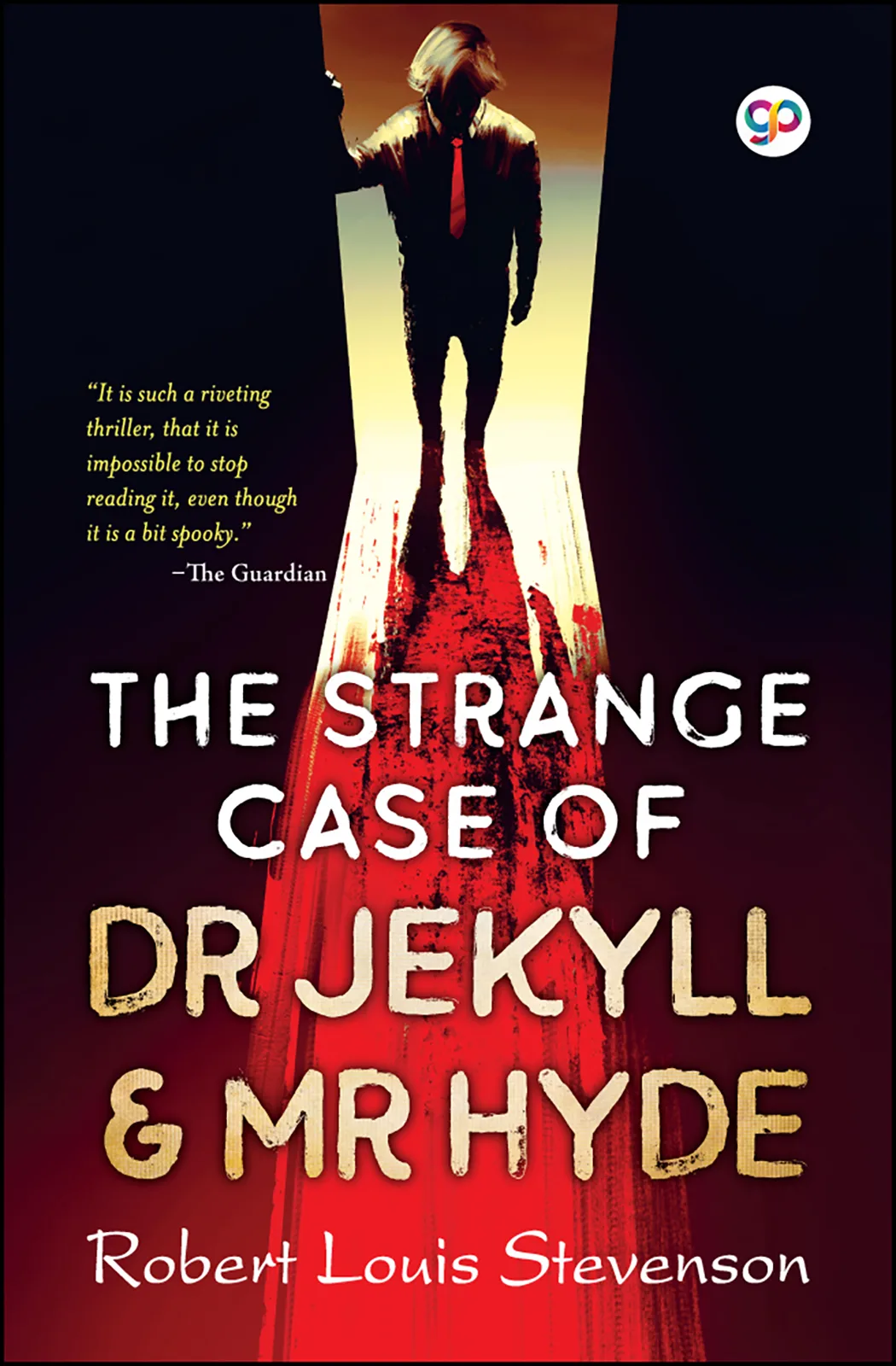
Download Cover Image
Do you want to download the full cover image for The Strange Case of Dr Jekyll and Mr Hyde?