
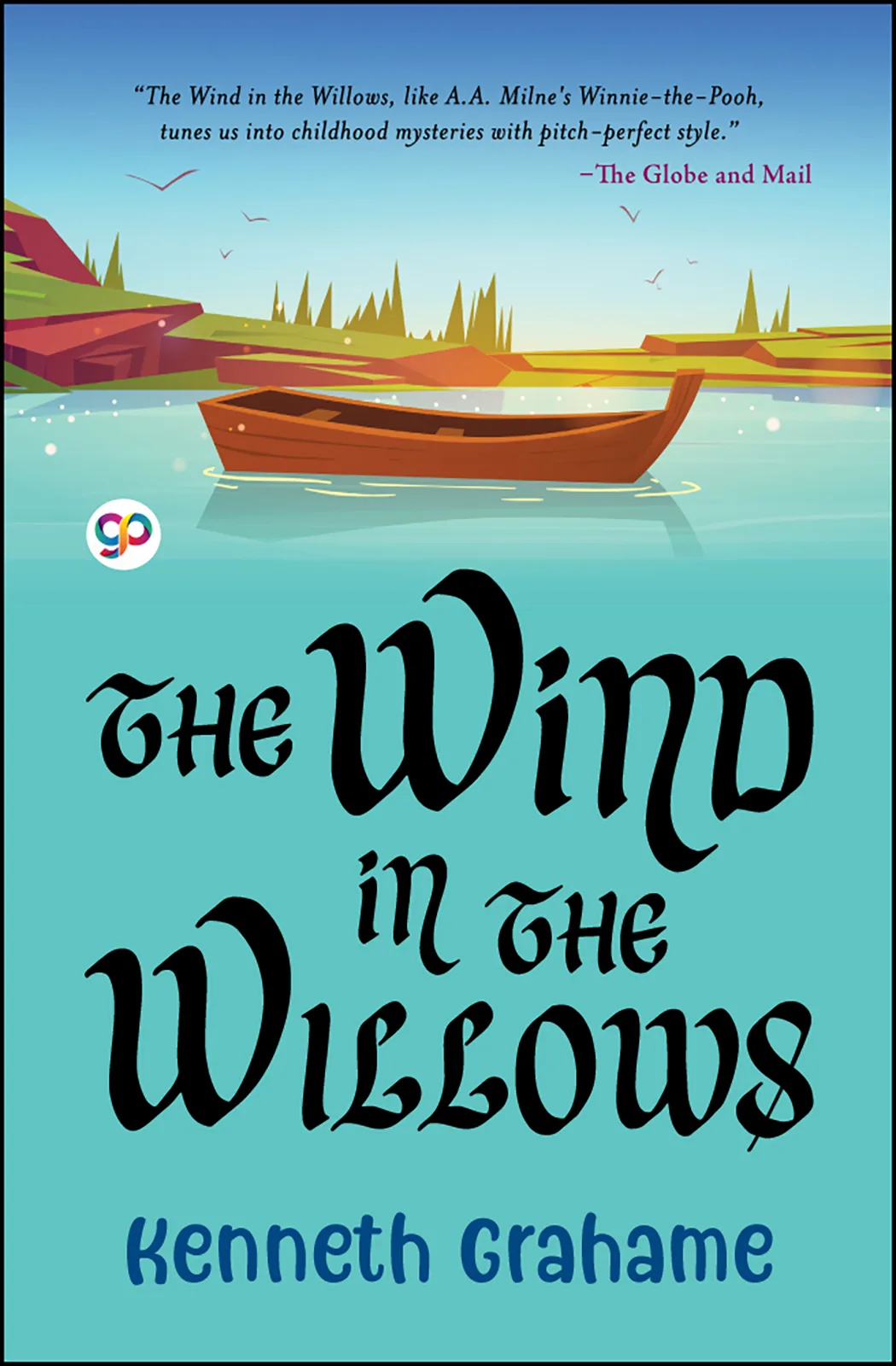
The Wind in the Willows
Paperback
• 200 Pages
• INR 325.00
• English
• 9789354992018
No ratings yet
| Publisher | General Press |
|---|---|
| ISBN13 | 9789354992018 |
| ASIN/SKU | 9354992013 |
| Book Format | Paperback |
| Language | English |
| Pages | 200 |
| List Price | INR 325.00 |
| Subject Code | FIC019000, JUV001000, FIC009070, FIC002000 |
| Publishing Date | 15/08/2022 |
| Dimensions | 8.25 x 5.25 x 1.0 inches |
| Book Code | BD00067631 |
Buy this Book
Amazon Stores
Ebook Stores
Other Stores
Discover The Wind in the Willows by Kenneth Grahame. This book is published by General Press in Paperback format, ISBN 9789354992018, ASIN 9354992013, under Children's Books, Animal Stories, Animal Fantasy.
Book Description
First published in April 1908, ‘The Wind in the Willows’ is one of the most cherished classics of children's literature by Kenneth Grahame, a British writer born in Edinburgh, Scotland.
The story begins with the arrival of spring where we find the good-natured Mole tired of doing his spring cleaning. Mole journeys to the river where he meets Rat, whom he quickly befriends. Together the two rows down the river ultimately meet up with Toad at Toad Hall. There they discover Toad’s current obsession with his horse-drawn caravan, one which he quickly abandons for a motorcar when his caravan is run off the road by one.
A fourth friend enters the story in the form of Badger and when it is discovered that Toad’s obsession is becoming self-destructive, Mole, Rat, and Badger intervene to help protect Toad from himself. This collection of stories is an enchanting and timeless classic that brings alive the creatures of the woodland.
The story begins with the arrival of spring where we find the good-natured Mole tired of doing his spring cleaning. Mole journeys to the river where he meets Rat, whom he quickly befriends. Together the two rows down the river ultimately meet up with Toad at Toad Hall. There they discover Toad’s current obsession with his horse-drawn caravan, one which he quickly abandons for a motorcar when his caravan is run off the road by one.
A fourth friend enters the story in the form of Badger and when it is discovered that Toad’s obsession is becoming self-destructive, Mole, Rat, and Badger intervene to help protect Toad from himself. This collection of stories is an enchanting and timeless classic that brings alive the creatures of the woodland.
Author Biography
Kenneth Grahame was born in Edinburgh on March 3, 1859. When he was five years old, his mother died of scarlet fever and he nearly died himself, of the same disease. His father became an alcoholic and sent the children to Berkshire to live with relatives. They were later reunited with their father, but after a failed year, the children never heard from him again. Sometime later, one of his brothers died at the age of fifteen. He attended St. Edward's School as a child and intended to go on to Oxford University, but his relatives wanted him to go into banking. He worked in his uncle's office, in Westminster, for two years then went to work at the Bank of England as a clerk in 1879. He spent nearly thirty years there and became the Secretary of the Bank at the age of thirty-nine. He retired from the bank right before The Wind in the Willows was published in 1908. He wrote essays on topics that included smoking, walking, and idleness. Many of the essays were published in the book Pagan Papers (1893) and the five orphan characters featured in the papers were developed into the books The Golden Age (1895) and Dream Days (1898). The Wind in the Willows (1908) was based on bedtime stories and letters to his son, where the characters Rat, Badger, Mole, and Toad were created. In 1930, Milne's stage version was brought to another audience in Toad of Toad Hall. Grahame died on July 6, 1932.
Editorial Reviews
Editorial Reviews will be added soon…
Book Summary
Kenneth Grahame’s The Wind in the Willows is a warm, imaginative, and deeply charming classic about friendship, adventure, home, and the longing to live freely. First published in 1908, the novel follows four very different animal friends—Mole, Rat, Badger, and Toad—who live along a peaceful river and in the surrounding countryside. Although it is often described as a children’s book, its themes are surprisingly mature. Beneath the talking animals and gentle adventures, Grahame explores the comforts of home, the excitement of new experiences, the dangers of reckless behavior, and the importance of friendship and loyalty.
The story begins in spring, when Mole becomes tired of cleaning his small underground home. The beautiful weather outside makes him long for freedom, so he abandons his spring-cleaning and comes to the surface. He eventually reaches the river, where he meets Rat, a friendly water-loving creature who enjoys boating, picnics, and the peaceful rhythm of life beside the water. Rat welcomes Mole warmly, and the two quickly become close friends.
Mole is fascinated by Rat’s way of life. Rat is comfortable, cheerful, and deeply connected to the river. He teaches Mole how to row and introduces him to the pleasures of the countryside. Their friendship becomes the emotional center of the novel. Mole is more cautious and inexperienced, while Rat is confident and sociable, but they complement each other naturally.
Their peaceful life is interrupted by their acquaintance with Toad, the wealthy and energetic owner of Toad Hall. Toad is charming, generous, and full of enthusiasm, but he is also impulsive and easily obsessed with whatever new activity catches his attention. He moves from one passion to another without thinking about the consequences. His latest obsession is driving motorcars, which are still relatively new and exciting.
Toad’s enthusiasm quickly becomes dangerous. He drives recklessly, frightening other travelers and damaging property. Rat and Mole try to persuade him to stop, but Toad refuses to listen. His problem is not simply that he enjoys adventure; it is that he cannot control his desire for excitement. Whenever someone warns him about the consequences of his behavior, he becomes even more determined to continue.
Eventually, Toad’s reckless driving leads to serious trouble. He is arrested, brought before a judge, and sentenced to imprisonment. Even after being imprisoned, however, Toad does not immediately understand the seriousness of his actions. He remains self-centered and dramatic, believing mainly that he has been treated unfairly.
Meanwhile, Mole and Rat visit Badger, one of the most respected figures in their world. Badger lives quietly in a large underground home within the Wild Wood. He is strong, wise, private, and dependable. He dislikes unnecessary social activity but deeply cares about his friends. His home represents security and stability, qualities that contrast sharply with Toad’s restless life.
Badger understands Toad’s character better than most. He knows that Toad has become dangerously obsessed and needs to be restrained. Together with Rat and Mole, he tries to help him. Badger’s presence also adds an important moral dimension to the story. He is not interested in excitement for its own sake. For him, friendship means doing what is necessary to protect someone, even when that person does not appreciate the help.
Toad eventually escapes from prison with the help of a sympathetic jailer’s daughter. Disguised in different clothes, he begins a long journey home. During his escape, he encounters a series of comic and dangerous situations. At one point, he finds himself involved with a motorcar again, even though this was the very obsession that caused his imprisonment. His inability to resist temptation becomes both humorous and frustrating.
Eventually, Toad is able to return to the area around Toad Hall, only to discover that things have become much worse. A group of weasels, stoats, and other Wild Wood creatures have taken over Toad Hall. They have occupied the property and are enjoying themselves inside it. Toad is devastated. The house that once represented his wealth, identity, and freedom is now controlled by others.
This part of the story gives the novel a more adventurous tone. Toad realizes that his friends are right: his behavior has created consequences far beyond embarrassment or financial loss. Toad Hall must be reclaimed. Badger organizes a plan with Mole, Rat, and Toad to regain control of the house. The friends enter the underground passages connected to the Hall and prepare for a confrontation with the invaders.
The eventual battle is exciting but also carries a deeper meaning. Toad must participate rather than simply expect his friends to solve his problems. He begins to demonstrate courage and responsibility. His friends do not abandon him, but they also make him face the consequences of his choices.
After Toad Hall is recovered, Toad undergoes a gradual change. He becomes more aware of the damage caused by his pride and recklessness. He is still energetic and somewhat theatrical—his basic personality does not disappear—but he learns greater humility. His journey suggests that growing up does not necessarily mean losing one's personality. Instead, it means learning how to control one's weaknesses and value the people who care about you.
One of the most touching aspects of the novel is its treatment of home. Mole initially leaves his home because he wants adventure, but eventually he realizes how much he misses it. Rat loves the river but also understands the emotional importance of having a place to return to. Badger’s underground house provides safety and belonging. Toad Hall represents both wealth and responsibility. Throughout the novel, the characters repeatedly leave home and then discover the importance of returning.
Grahame also gives nature an almost magical presence. The river, woods, fields, and changing seasons are not merely backgrounds. They shape the mood of the story. Spring brings freedom and energy, winter encourages quietness and reflection, and the river provides a sense of continuity. The natural world seems to offer a slower and more meaningful alternative to the noise and pressures of modern life.
The friendship between the four characters is ultimately the novel’s greatest strength. Mole learns confidence through Rat’s companionship. Rat learns that friendship sometimes requires leaving his comfortable routines. Badger offers wisdom and protection. Toad, despite his flaws, learns that he cannot live entirely for himself. Each character contributes something different, and together they create a community based on loyalty rather than similarity.
At the heart of The Wind in the Willows is a simple but powerful message: life becomes richer when we have people with whom we can share it. Adventure is exciting, but it is not enough by itself. Wealth and possessions cannot guarantee happiness. Freedom is valuable, but freedom without responsibility can become destructive. True friendship means accepting people with their weaknesses while helping them become better.
Kenneth Grahame’s novel remains beloved because it combines gentle humor with genuine emotional warmth. Its animal characters feel human without losing their connection to nature, and its adventures are entertaining without becoming empty. The Wind in the Willows ultimately celebrates friendship, home, loyalty, and the beauty of slowing down enough to appreciate the world around us. It reminds readers that even after the wildest adventure, one of life’s greatest pleasures is knowing that there is somewhere—and someone—to come home to.
The story begins in spring, when Mole becomes tired of cleaning his small underground home. The beautiful weather outside makes him long for freedom, so he abandons his spring-cleaning and comes to the surface. He eventually reaches the river, where he meets Rat, a friendly water-loving creature who enjoys boating, picnics, and the peaceful rhythm of life beside the water. Rat welcomes Mole warmly, and the two quickly become close friends.
Mole is fascinated by Rat’s way of life. Rat is comfortable, cheerful, and deeply connected to the river. He teaches Mole how to row and introduces him to the pleasures of the countryside. Their friendship becomes the emotional center of the novel. Mole is more cautious and inexperienced, while Rat is confident and sociable, but they complement each other naturally.
Their peaceful life is interrupted by their acquaintance with Toad, the wealthy and energetic owner of Toad Hall. Toad is charming, generous, and full of enthusiasm, but he is also impulsive and easily obsessed with whatever new activity catches his attention. He moves from one passion to another without thinking about the consequences. His latest obsession is driving motorcars, which are still relatively new and exciting.
Toad’s enthusiasm quickly becomes dangerous. He drives recklessly, frightening other travelers and damaging property. Rat and Mole try to persuade him to stop, but Toad refuses to listen. His problem is not simply that he enjoys adventure; it is that he cannot control his desire for excitement. Whenever someone warns him about the consequences of his behavior, he becomes even more determined to continue.
Eventually, Toad’s reckless driving leads to serious trouble. He is arrested, brought before a judge, and sentenced to imprisonment. Even after being imprisoned, however, Toad does not immediately understand the seriousness of his actions. He remains self-centered and dramatic, believing mainly that he has been treated unfairly.
Meanwhile, Mole and Rat visit Badger, one of the most respected figures in their world. Badger lives quietly in a large underground home within the Wild Wood. He is strong, wise, private, and dependable. He dislikes unnecessary social activity but deeply cares about his friends. His home represents security and stability, qualities that contrast sharply with Toad’s restless life.
Badger understands Toad’s character better than most. He knows that Toad has become dangerously obsessed and needs to be restrained. Together with Rat and Mole, he tries to help him. Badger’s presence also adds an important moral dimension to the story. He is not interested in excitement for its own sake. For him, friendship means doing what is necessary to protect someone, even when that person does not appreciate the help.
Toad eventually escapes from prison with the help of a sympathetic jailer’s daughter. Disguised in different clothes, he begins a long journey home. During his escape, he encounters a series of comic and dangerous situations. At one point, he finds himself involved with a motorcar again, even though this was the very obsession that caused his imprisonment. His inability to resist temptation becomes both humorous and frustrating.
Eventually, Toad is able to return to the area around Toad Hall, only to discover that things have become much worse. A group of weasels, stoats, and other Wild Wood creatures have taken over Toad Hall. They have occupied the property and are enjoying themselves inside it. Toad is devastated. The house that once represented his wealth, identity, and freedom is now controlled by others.
This part of the story gives the novel a more adventurous tone. Toad realizes that his friends are right: his behavior has created consequences far beyond embarrassment or financial loss. Toad Hall must be reclaimed. Badger organizes a plan with Mole, Rat, and Toad to regain control of the house. The friends enter the underground passages connected to the Hall and prepare for a confrontation with the invaders.
The eventual battle is exciting but also carries a deeper meaning. Toad must participate rather than simply expect his friends to solve his problems. He begins to demonstrate courage and responsibility. His friends do not abandon him, but they also make him face the consequences of his choices.
After Toad Hall is recovered, Toad undergoes a gradual change. He becomes more aware of the damage caused by his pride and recklessness. He is still energetic and somewhat theatrical—his basic personality does not disappear—but he learns greater humility. His journey suggests that growing up does not necessarily mean losing one's personality. Instead, it means learning how to control one's weaknesses and value the people who care about you.
One of the most touching aspects of the novel is its treatment of home. Mole initially leaves his home because he wants adventure, but eventually he realizes how much he misses it. Rat loves the river but also understands the emotional importance of having a place to return to. Badger’s underground house provides safety and belonging. Toad Hall represents both wealth and responsibility. Throughout the novel, the characters repeatedly leave home and then discover the importance of returning.
Grahame also gives nature an almost magical presence. The river, woods, fields, and changing seasons are not merely backgrounds. They shape the mood of the story. Spring brings freedom and energy, winter encourages quietness and reflection, and the river provides a sense of continuity. The natural world seems to offer a slower and more meaningful alternative to the noise and pressures of modern life.
The friendship between the four characters is ultimately the novel’s greatest strength. Mole learns confidence through Rat’s companionship. Rat learns that friendship sometimes requires leaving his comfortable routines. Badger offers wisdom and protection. Toad, despite his flaws, learns that he cannot live entirely for himself. Each character contributes something different, and together they create a community based on loyalty rather than similarity.
At the heart of The Wind in the Willows is a simple but powerful message: life becomes richer when we have people with whom we can share it. Adventure is exciting, but it is not enough by itself. Wealth and possessions cannot guarantee happiness. Freedom is valuable, but freedom without responsibility can become destructive. True friendship means accepting people with their weaknesses while helping them become better.
Kenneth Grahame’s novel remains beloved because it combines gentle humor with genuine emotional warmth. Its animal characters feel human without losing their connection to nature, and its adventures are entertaining without becoming empty. The Wind in the Willows ultimately celebrates friendship, home, loyalty, and the beauty of slowing down enough to appreciate the world around us. It reminds readers that even after the wildest adventure, one of life’s greatest pleasures is knowing that there is somewhere—and someone—to come home to.
Sample Chapters
Sample Chapters will be added soon…
Reader Reviews
No reviews yet.
The Wind in the Willows
Download Cover Image
Do you want to download the full cover image for The Wind in the Willows?