
The Varieties of Religious Experience
Paperback
• 496 Pages
• INR 695.00
• English
• 9789354996016
No ratings yet
| Publisher | General Press |
|---|---|
| ISBN13 | 9789354996016 |
| ASIN/SKU | 9354996019 |
| Book Format | Paperback |
| Language | English |
| Pages | 496 |
| List Price | INR 695.00 |
| Subject Code | PHI034000, REL051000, PHI022000 |
| Publishing Date | 05/09/2023 |
| Dimensions | 8.25 x 5.25 x 1.0 inches |
| Book Code | BD00067643 |
Buy this Book
Amazon Stores
Ebook Stores
Other Stores
Discover The Varieties of Religious Experience by William James. This book is published by General Press in Paperback format, ISBN 9789354996016, ASIN 9354996019, under Non Fiction, Philosophy of Religion, Philosophy.
Book Description
Published in 1902, 'The Varieties of Religious Experience', by a leading American philosopher and psychologist in the 19th century, William James is based on lectures James gave on natural theology. James was the first person to offer a psychology course in the United States and he is often referred to as the Father of American Psychology. In 1901, William came to Britain. He had been invited to deliver a series of prestigious public lectures in Edinburgh. In them, he attempted a daringly original intellectual project.
For the first time, here was a close-up examination of religion not as a body of beliefs, but as an intimately personal experience. When the lectures were printed, as 'The Varieties of Religious Experience', they were an instant success. They laid the ground for a whole new area of study—the psychology of religion and influenced figures from the psychiatrist Carl Jung to the novelist Aldous Huxley.
For the first time, here was a close-up examination of religion not as a body of beliefs, but as an intimately personal experience. When the lectures were printed, as 'The Varieties of Religious Experience', they were an instant success. They laid the ground for a whole new area of study—the psychology of religion and influenced figures from the psychiatrist Carl Jung to the novelist Aldous Huxley.
Author Biography
William James (1842–1910) was an American philosopher, psychologist, physician, and author who is widely regarded as one of the founders of modern psychology and one of the most influential thinkers in American intellectual history. His writings explored the nature of consciousness, belief, religion, and human experience with remarkable clarity and compassion. Through his groundbreaking ideas, James helped establish psychology as a scientific discipline while also shaping the philosophical tradition known as pragmatism.
William James was born on January 11, 1842, in New York City into a highly educated and intellectually vibrant family. His father, Henry James Sr., encouraged curiosity and independent thinking, while his younger brother, Henry James, went on to become one of the greatest novelists in the English language. James received a broad education in both Europe and the United States, studying science, philosophy, literature, and art before eventually earning a medical degree from Harvard University. Although he trained as a physician, his true passion lay in understanding the workings of the human mind.
In 1875, James began teaching at Harvard, where he introduced one of the first psychology courses offered in the United States. His landmark book The Principles of Psychology (1890) transformed the field by presenting the mind as an active, dynamic process rather than a collection of isolated mental events. Concepts such as the "stream of consciousness" became central to both psychology and literature.
Alongside his scientific work, James made profound contributions to philosophy. As a leading advocate of pragmatism, he argued that the value of an idea should be judged by its practical consequences and usefulness in human life. His influential books, including The Varieties of Religious Experience, Pragmatism, and The Will to Believe, examined faith, morality, free will, and the search for meaning with intellectual openness and respect for diverse perspectives.
William James died on August 26, 1910, at his home in Chocorua, New Hampshire. His legacy extends across psychology, philosophy, education, and religious studies. Today, he is remembered not only as a brilliant scholar but also as a deeply humane thinker who believed that understanding the richness of human experience was essential to understanding life itself. His ideas continue to inspire students, researchers, and readers around the world.
William James was born on January 11, 1842, in New York City into a highly educated and intellectually vibrant family. His father, Henry James Sr., encouraged curiosity and independent thinking, while his younger brother, Henry James, went on to become one of the greatest novelists in the English language. James received a broad education in both Europe and the United States, studying science, philosophy, literature, and art before eventually earning a medical degree from Harvard University. Although he trained as a physician, his true passion lay in understanding the workings of the human mind.
In 1875, James began teaching at Harvard, where he introduced one of the first psychology courses offered in the United States. His landmark book The Principles of Psychology (1890) transformed the field by presenting the mind as an active, dynamic process rather than a collection of isolated mental events. Concepts such as the "stream of consciousness" became central to both psychology and literature.
Alongside his scientific work, James made profound contributions to philosophy. As a leading advocate of pragmatism, he argued that the value of an idea should be judged by its practical consequences and usefulness in human life. His influential books, including The Varieties of Religious Experience, Pragmatism, and The Will to Believe, examined faith, morality, free will, and the search for meaning with intellectual openness and respect for diverse perspectives.
William James died on August 26, 1910, at his home in Chocorua, New Hampshire. His legacy extends across psychology, philosophy, education, and religious studies. Today, he is remembered not only as a brilliant scholar but also as a deeply humane thinker who believed that understanding the richness of human experience was essential to understanding life itself. His ideas continue to inspire students, researchers, and readers around the world.
Editorial Reviews
Editorial Reviews will be added soon…
Book Summary
William James’s The Varieties of Religious Experience is one of the most influential books ever written about religion, spirituality, psychology, and the inner life. Originally delivered as the Gifford Lectures at the University of Edinburgh in 1901–1902 and published in book form in 1902, the work explores religion not primarily as a system of doctrines but as something people experience. James is interested in what happens inside a person when they feel the presence of God, experience conversion, confront suffering, discover a sense of peace, or suddenly feel that ordinary life has acquired a deeper meaning. Instead of asking whether one particular religion is objectively true, he asks a more psychological and humane question: What do religious experiences actually do to the people who have them? This approach makes The Varieties of Religious Experience especially valuable to readers interested in psychology of religion, spirituality, religious experience, mysticism, and the nature of faith.
James begins by making an important distinction between institutional religion and personal religion. Churches, rituals, ceremonies, theological systems, and religious organizations certainly matter, but they are not his primary subject. He is much more interested in the individual’s private relationship with what they consider divine. For James, personal religion consists of the feelings, experiences, actions, and states of mind that arise when an individual believes they stand in relation to something sacred or higher than themselves. This distinction gives the book its unusual character. James is not writing a conventional theology book designed to prove or disprove God. He is studying religious life from the inside, using personal testimonies, autobiographies, spiritual writings, and psychological observation to understand why religion can transform human beings so profoundly.
One of the central ideas in the book is that religious experience is deeply personal and highly varied. There is no single emotional pattern that every religious person follows. Some people experience religion through overwhelming joy and gratitude, while others encounter it through despair, guilt, fear, or a painful awareness of their own limitations. Some have sudden experiences of conversion, while others develop faith slowly over many years. Some describe mystical union with God or the universe, while others experience religion primarily as a practical source of courage and moral direction. James therefore rejects the idea that there is one standard model of religious experience. The title itself reflects his main argument: human encounters with the sacred come in many different forms.
A particularly memorable part of the book is James’s discussion of the “healthy-minded” and “sick soul.” These are not medical diagnoses but psychological types. The healthy-minded person tends to experience life through optimism, confidence, gratitude, and an ability to focus on goodness. Such people may naturally believe that the world is fundamentally trustworthy and that happiness is possible. Religion, for them, can reinforce this positive orientation. Their faith may be expressed through joy, gratitude, hope, and an uncomplicated sense of divine goodness.
The “sick soul,” by contrast, is deeply aware of suffering, evil, uncertainty, mortality, and the darker possibilities of human existence. Such a person cannot simply ignore pain by telling themselves that everything is fine. They may experience anxiety, guilt, despair, or a profound sense that something is wrong with themselves or with the world. James treats this experience with remarkable sympathy. He does not dismiss it as weakness. In fact, he suggests that people who have confronted the depths of suffering may possess a more complex understanding of life than those who have never had to face them. Religion can become especially meaningful for such individuals because it may offer a way through suffering rather than merely an escape from thinking about it.
This leads naturally to James’s famous discussion of conversion. What does it mean for someone to experience a religious conversion? James distinguishes between gradual religious development and sudden transformation. In some cases, a person struggles for a long period with doubt, guilt, confusion, or spiritual emptiness before experiencing a dramatic change. Suddenly, they feel that their old way of living has been replaced by a new orientation. The world may appear brighter, the burden of guilt may disappear, and a new sense of purpose may take its place. James describes conversion as a process in which a previously divided or unhappy self becomes unified around a new center of meaning.
James is especially interested in the fact that conversion does not always happen through conscious reasoning. Sometimes people spend months or years trying to solve their spiritual problems intellectually, only to discover that the decisive change occurs almost spontaneously. Something seems to “happen” to them. They awaken with a different outlook. This observation becomes part of James’s larger psychological argument: human consciousness is not entirely controlled by deliberate rational thought. Subconscious or unconscious processes can play an important role in shaping beliefs, emotions, and decisions. Religious conversion therefore provides James with a fascinating example of psychological transformation.
However, James does not simply declare every conversion experience to be supernatural. His approach is more cautious. He is willing to consider psychological explanations, but he does not believe that explaining the psychological mechanism automatically settles the question of whether the experience has spiritual significance. This is one of the book’s most important philosophical ideas. A person might experience a religious vision because of psychological or neurological processes, but that fact alone does not necessarily tell us whether the experience has value or meaning. James wants to separate the origin of an experience from its value or consequences.
This idea becomes clearer in his discussion of the “religious genius.” James observes that some individuals possess extraordinary sensitivity to religious and spiritual experience. Their experiences may be intense, unusual, and difficult for ordinary people to understand. Instead of dismissing these people simply because their experiences seem strange, James asks what their lives and experiences produce. He recognizes that religious genius can sometimes coexist with psychological instability, but he warns against assuming that unusual mental states are automatically meaningless. Human creativity itself can emerge from unusual forms of consciousness, and religion should not be judged solely by whether its most intense experiences fit ordinary psychological patterns.
Another major section of The Varieties of Religious Experience examines saintliness. James is interested in the practical consequences of religious faith. What happens when a person becomes deeply convinced that life has a spiritual meaning? In many cases, the result is a transformation of character. The religious individual may become more compassionate, selfless, disciplined, charitable, peaceful, and willing to sacrifice personal comfort for others. James identifies qualities such as a sense of living in the presence of a larger reality, surrender of excessive self-centeredness, emotional balance, purity of intention, and increased concern for others.
For James, this practical transformation matters enormously. He is less interested in whether someone can construct a sophisticated theological argument than in whether their religious life makes them better able to live. This is closely connected with his broader philosophical approach known as pragmatism. Ideas, beliefs, and experiences have consequences in lived reality. If a religious belief gives a person courage, stability, compassion, and a meaningful framework for facing suffering, James considers those effects philosophically significant. This does not mean that he simply says “whatever works must be true.” Rather, he asks us to pay attention to the practical fruits of belief instead of judging religious ideas solely through abstract intellectual categories.
James also examines mystical experience, one of the most famous subjects associated with the book. Mystical states are moments in which people feel that they have encountered a deeper reality beyond ordinary consciousness. They may describe a profound sense of unity, timelessness, knowledge, love, peace, or connection with the divine. James identifies four characteristics that frequently appear in mystical experiences: they are difficult to put into words, they seem to provide a kind of direct knowledge or insight, they are relatively brief, and the person who experiences them often feels that something important has been revealed.
The difficulty of describing mystical experience is particularly important. A mystical experience may feel completely clear and certain to the person who has it, yet become almost impossible to communicate afterward. Ordinary language is designed to describe ordinary objects and events. A person attempting to describe a mystical state may therefore rely on metaphors such as unity, light, love, eternity, silence, or oneness. James takes these reports seriously without claiming that every interpretation attached to them must be accepted literally.
His treatment of mysticism also illustrates his intellectual openness. James does not insist that mystical experiences prove a particular religious doctrine. Instead, he argues that they deserve to be studied because they can radically alter the lives of those who experience them. A mystical experience may leave a person with a stronger sense of purpose, greater compassion, reduced fear of death, or a feeling that ordinary reality is connected to something much larger. The experience therefore has psychological and practical consequences even when its ultimate metaphysical meaning remains uncertain.
The book also deals with prayer, faith, doubt, and the sense of the unseen. James recognizes that human beings regularly live according to realities they cannot directly observe. Love, moral obligation, hope, justice, and personal meaning are not objects that can simply be placed on a laboratory table. Religion represents one way in which human beings orient themselves toward what they believe lies beyond immediate sensory experience. James does not argue that religious belief should replace critical thinking. Instead, he suggests that human life contains areas where certainty is unavailable and choices must still be made.
This becomes particularly important in James’s discussion of religious belief and philosophy. He challenges the assumption that religion must either be completely scientifically proven or completely irrational. There may be questions where evidence is incomplete but where refusing to decide is itself a practical decision. James’s larger philosophy allows room for uncertainty while recognizing the human need to commit to values and possibilities. Faith, in this sense, can involve living toward a possibility before complete intellectual certainty has been achieved.
Toward the end of the book, James considers what he calls the “reality of the unseen.” Religious people often feel that the visible world is not the whole of reality. There is, for them, some deeper order, presence, or power that cannot be reduced to ordinary physical objects. James does not attempt to establish a single final definition of this unseen reality. Instead, he examines how belief in it can shape human existence. Religion can provide a framework through which suffering becomes bearable, moral ideals become compelling, and life feels connected to something larger than the individual ego.
The overall conclusion of The Varieties of Religious Experience is therefore both modest and profound. James does not claim to have solved the question of God. He does something different: he shows why religious experience deserves to be taken seriously as a dimension of human psychology and life. Religious experiences may have different causes, different interpretations, and different levels of intellectual credibility, but their effects on human beings can be unmistakably real. They can change personalities, redirect lives, inspire extraordinary acts of compassion, and give people the strength to endure suffering.
Perhaps the most humane quality of the book is James’s willingness to listen to people before judging them. He does not reduce believers to stereotypes, nor does he assume that unusual spiritual experiences are simply nonsense. At the same time, he does not abandon intellectual caution. He approaches religion with curiosity, psychological insight, philosophical skepticism, and respect for lived experience. This balance explains why the book remains relevant more than a century after its publication.
Ultimately, William James’s The Varieties of Religious Experience is a book about the many ways human beings search for meaning. Its deepest concern is not organized religion alone but the individual struggle with happiness, suffering, guilt, hope, mortality, uncertainty, and the possibility that life contains a reality larger than the self. James teaches us that religious experience cannot be understood by examining doctrines alone. To understand religion, we must also listen to the person who has experienced conversion, the person who has suffered despair, the mystic who feels united with the universe, the saint who becomes more compassionate, and the ordinary person who quietly discovers a reason to keep going. That is what makes this classic work so enduring: it treats spirituality not as an abstract subject but as one of the most intimate and powerful dimensions of being human.
James begins by making an important distinction between institutional religion and personal religion. Churches, rituals, ceremonies, theological systems, and religious organizations certainly matter, but they are not his primary subject. He is much more interested in the individual’s private relationship with what they consider divine. For James, personal religion consists of the feelings, experiences, actions, and states of mind that arise when an individual believes they stand in relation to something sacred or higher than themselves. This distinction gives the book its unusual character. James is not writing a conventional theology book designed to prove or disprove God. He is studying religious life from the inside, using personal testimonies, autobiographies, spiritual writings, and psychological observation to understand why religion can transform human beings so profoundly.
One of the central ideas in the book is that religious experience is deeply personal and highly varied. There is no single emotional pattern that every religious person follows. Some people experience religion through overwhelming joy and gratitude, while others encounter it through despair, guilt, fear, or a painful awareness of their own limitations. Some have sudden experiences of conversion, while others develop faith slowly over many years. Some describe mystical union with God or the universe, while others experience religion primarily as a practical source of courage and moral direction. James therefore rejects the idea that there is one standard model of religious experience. The title itself reflects his main argument: human encounters with the sacred come in many different forms.
A particularly memorable part of the book is James’s discussion of the “healthy-minded” and “sick soul.” These are not medical diagnoses but psychological types. The healthy-minded person tends to experience life through optimism, confidence, gratitude, and an ability to focus on goodness. Such people may naturally believe that the world is fundamentally trustworthy and that happiness is possible. Religion, for them, can reinforce this positive orientation. Their faith may be expressed through joy, gratitude, hope, and an uncomplicated sense of divine goodness.
The “sick soul,” by contrast, is deeply aware of suffering, evil, uncertainty, mortality, and the darker possibilities of human existence. Such a person cannot simply ignore pain by telling themselves that everything is fine. They may experience anxiety, guilt, despair, or a profound sense that something is wrong with themselves or with the world. James treats this experience with remarkable sympathy. He does not dismiss it as weakness. In fact, he suggests that people who have confronted the depths of suffering may possess a more complex understanding of life than those who have never had to face them. Religion can become especially meaningful for such individuals because it may offer a way through suffering rather than merely an escape from thinking about it.
This leads naturally to James’s famous discussion of conversion. What does it mean for someone to experience a religious conversion? James distinguishes between gradual religious development and sudden transformation. In some cases, a person struggles for a long period with doubt, guilt, confusion, or spiritual emptiness before experiencing a dramatic change. Suddenly, they feel that their old way of living has been replaced by a new orientation. The world may appear brighter, the burden of guilt may disappear, and a new sense of purpose may take its place. James describes conversion as a process in which a previously divided or unhappy self becomes unified around a new center of meaning.
James is especially interested in the fact that conversion does not always happen through conscious reasoning. Sometimes people spend months or years trying to solve their spiritual problems intellectually, only to discover that the decisive change occurs almost spontaneously. Something seems to “happen” to them. They awaken with a different outlook. This observation becomes part of James’s larger psychological argument: human consciousness is not entirely controlled by deliberate rational thought. Subconscious or unconscious processes can play an important role in shaping beliefs, emotions, and decisions. Religious conversion therefore provides James with a fascinating example of psychological transformation.
However, James does not simply declare every conversion experience to be supernatural. His approach is more cautious. He is willing to consider psychological explanations, but he does not believe that explaining the psychological mechanism automatically settles the question of whether the experience has spiritual significance. This is one of the book’s most important philosophical ideas. A person might experience a religious vision because of psychological or neurological processes, but that fact alone does not necessarily tell us whether the experience has value or meaning. James wants to separate the origin of an experience from its value or consequences.
This idea becomes clearer in his discussion of the “religious genius.” James observes that some individuals possess extraordinary sensitivity to religious and spiritual experience. Their experiences may be intense, unusual, and difficult for ordinary people to understand. Instead of dismissing these people simply because their experiences seem strange, James asks what their lives and experiences produce. He recognizes that religious genius can sometimes coexist with psychological instability, but he warns against assuming that unusual mental states are automatically meaningless. Human creativity itself can emerge from unusual forms of consciousness, and religion should not be judged solely by whether its most intense experiences fit ordinary psychological patterns.
Another major section of The Varieties of Religious Experience examines saintliness. James is interested in the practical consequences of religious faith. What happens when a person becomes deeply convinced that life has a spiritual meaning? In many cases, the result is a transformation of character. The religious individual may become more compassionate, selfless, disciplined, charitable, peaceful, and willing to sacrifice personal comfort for others. James identifies qualities such as a sense of living in the presence of a larger reality, surrender of excessive self-centeredness, emotional balance, purity of intention, and increased concern for others.
For James, this practical transformation matters enormously. He is less interested in whether someone can construct a sophisticated theological argument than in whether their religious life makes them better able to live. This is closely connected with his broader philosophical approach known as pragmatism. Ideas, beliefs, and experiences have consequences in lived reality. If a religious belief gives a person courage, stability, compassion, and a meaningful framework for facing suffering, James considers those effects philosophically significant. This does not mean that he simply says “whatever works must be true.” Rather, he asks us to pay attention to the practical fruits of belief instead of judging religious ideas solely through abstract intellectual categories.
James also examines mystical experience, one of the most famous subjects associated with the book. Mystical states are moments in which people feel that they have encountered a deeper reality beyond ordinary consciousness. They may describe a profound sense of unity, timelessness, knowledge, love, peace, or connection with the divine. James identifies four characteristics that frequently appear in mystical experiences: they are difficult to put into words, they seem to provide a kind of direct knowledge or insight, they are relatively brief, and the person who experiences them often feels that something important has been revealed.
The difficulty of describing mystical experience is particularly important. A mystical experience may feel completely clear and certain to the person who has it, yet become almost impossible to communicate afterward. Ordinary language is designed to describe ordinary objects and events. A person attempting to describe a mystical state may therefore rely on metaphors such as unity, light, love, eternity, silence, or oneness. James takes these reports seriously without claiming that every interpretation attached to them must be accepted literally.
His treatment of mysticism also illustrates his intellectual openness. James does not insist that mystical experiences prove a particular religious doctrine. Instead, he argues that they deserve to be studied because they can radically alter the lives of those who experience them. A mystical experience may leave a person with a stronger sense of purpose, greater compassion, reduced fear of death, or a feeling that ordinary reality is connected to something much larger. The experience therefore has psychological and practical consequences even when its ultimate metaphysical meaning remains uncertain.
The book also deals with prayer, faith, doubt, and the sense of the unseen. James recognizes that human beings regularly live according to realities they cannot directly observe. Love, moral obligation, hope, justice, and personal meaning are not objects that can simply be placed on a laboratory table. Religion represents one way in which human beings orient themselves toward what they believe lies beyond immediate sensory experience. James does not argue that religious belief should replace critical thinking. Instead, he suggests that human life contains areas where certainty is unavailable and choices must still be made.
This becomes particularly important in James’s discussion of religious belief and philosophy. He challenges the assumption that religion must either be completely scientifically proven or completely irrational. There may be questions where evidence is incomplete but where refusing to decide is itself a practical decision. James’s larger philosophy allows room for uncertainty while recognizing the human need to commit to values and possibilities. Faith, in this sense, can involve living toward a possibility before complete intellectual certainty has been achieved.
Toward the end of the book, James considers what he calls the “reality of the unseen.” Religious people often feel that the visible world is not the whole of reality. There is, for them, some deeper order, presence, or power that cannot be reduced to ordinary physical objects. James does not attempt to establish a single final definition of this unseen reality. Instead, he examines how belief in it can shape human existence. Religion can provide a framework through which suffering becomes bearable, moral ideals become compelling, and life feels connected to something larger than the individual ego.
The overall conclusion of The Varieties of Religious Experience is therefore both modest and profound. James does not claim to have solved the question of God. He does something different: he shows why religious experience deserves to be taken seriously as a dimension of human psychology and life. Religious experiences may have different causes, different interpretations, and different levels of intellectual credibility, but their effects on human beings can be unmistakably real. They can change personalities, redirect lives, inspire extraordinary acts of compassion, and give people the strength to endure suffering.
Perhaps the most humane quality of the book is James’s willingness to listen to people before judging them. He does not reduce believers to stereotypes, nor does he assume that unusual spiritual experiences are simply nonsense. At the same time, he does not abandon intellectual caution. He approaches religion with curiosity, psychological insight, philosophical skepticism, and respect for lived experience. This balance explains why the book remains relevant more than a century after its publication.
Ultimately, William James’s The Varieties of Religious Experience is a book about the many ways human beings search for meaning. Its deepest concern is not organized religion alone but the individual struggle with happiness, suffering, guilt, hope, mortality, uncertainty, and the possibility that life contains a reality larger than the self. James teaches us that religious experience cannot be understood by examining doctrines alone. To understand religion, we must also listen to the person who has experienced conversion, the person who has suffered despair, the mystic who feels united with the universe, the saint who becomes more compassionate, and the ordinary person who quietly discovers a reason to keep going. That is what makes this classic work so enduring: it treats spirituality not as an abstract subject but as one of the most intimate and powerful dimensions of being human.
Sample Chapters
Sample Chapters will be added soon…
Reader Reviews
No reviews yet.
The Varieties of Religious Experience
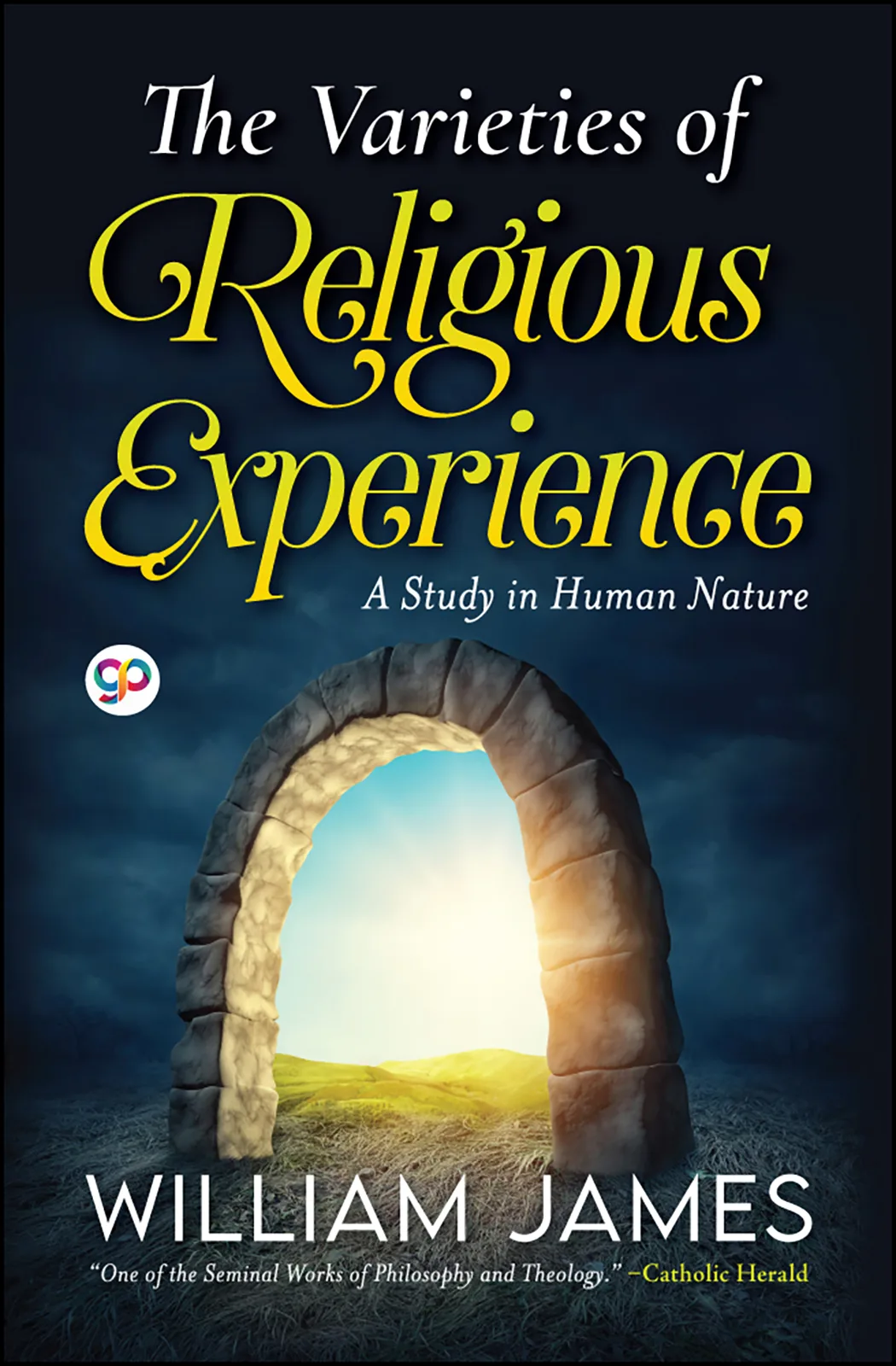
Download Cover Image
Do you want to download the full cover image for The Varieties of Religious Experience?