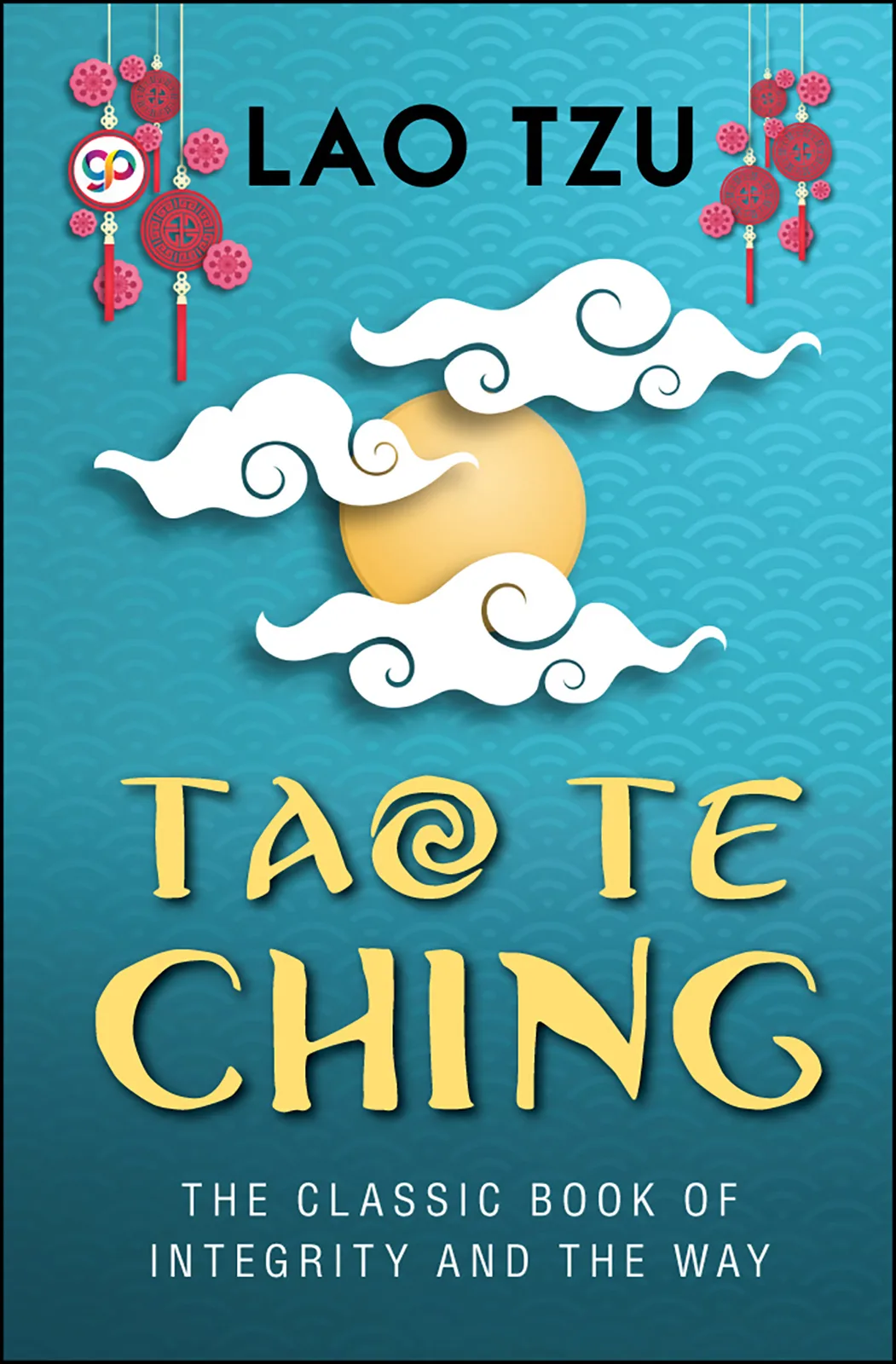
Tao Te Ching
Hardcover
• 104 Pages
• INR 295.00
• English
• 9789354992629
No ratings yet
| Publisher | General Press |
|---|---|
| ISBN13 | 9789354992629 |
| ASIN/SKU | 9354992625 |
| Book Format | Hardcover |
| Language | English |
| Pages | 104 |
| List Price | INR 295.00 |
| Subject Code | PHI023000, REL006010, PHI019000 |
| Publishing Date | 01/06/2022 |
| Dimensions | 8.25 x 5.25 x 1.0 inches |
| Book Code | BD00067649 |
Buy this Book
Amazon Stores
Ebook Stores
Other Stores
Discover Tao Te Ching by Lao Tzu. This book is published by General Press in Hardcover format, ISBN 9789354992629, ASIN 9354992625, under Non Fiction, Spirituality, Philosophy.
Book Description
‘Tao Te Ching’ is a Chinese classic text written around 400 BC and traditionally credited to the sage Lao Tzu, a mystic philosopher of ancient China and a central figure in Chinese culture, both nobility, and common people claim him in their lineage. According to Chinese tradition, Lao Tzu (also known as Laozi) lived in the 6th century BCE.
This is the traditional manual on the art of living and one of the wonders of the world. In eighty-one brief chapters, the ‘Tao Te Ching’ looks at the basic predicament of being alive and gives advice that imparts balance and perspective, a serene and generous spirit. This book is about wisdom in action. It teaches how to work for the good with the effortless skill that comes from being in accord with the Tao (the basic principle of the universe) and applies equally to good government and sexual love, to childrearing, business, and ecology.
This is the traditional manual on the art of living and one of the wonders of the world. In eighty-one brief chapters, the ‘Tao Te Ching’ looks at the basic predicament of being alive and gives advice that imparts balance and perspective, a serene and generous spirit. This book is about wisdom in action. It teaches how to work for the good with the effortless skill that comes from being in accord with the Tao (the basic principle of the universe) and applies equally to good government and sexual love, to childrearing, business, and ecology.
Author Biography
Laozi was a philosopher and poet of ancient China. He is best known as the reputed author of the Tao Te Ching and the founder of philosophical Taoism, but he is also revered as a deity in religious Taoism and traditional Chinese religions. Although a legendary figure, he is usually dated to around the 6th century BC and reckoned a contemporary of Confucius, but some historians contend that he actually lived during the Warring States period of the 5th or 4th century BC. A central figure in Chinese culture, Laozi is claimed by both the emperors of the Tang dynasty and modern people of the Li surname as a founder of their lineage. Throughout history, Laozi's work has been embraced by various anti-authoritarian movements.
Editorial Reviews
Editorial Reviews will be added soon…
Book Summary
Tao Te Ching, traditionally attributed to the ancient Chinese philosopher Lao Tzu, is one of the most influential works in the history of philosophy and spiritual thought. Written in a brief, poetic style, the book consists of 81 short chapters that explore the nature of reality, the meaning of a good life, the dangers of excessive ambition, and the art of living in harmony with the natural order. Although the text is ancient, its central message remains remarkably relevant: much of human suffering comes from trying too hard to control life instead of learning how to move with it.
At the heart of the book is the Tao, usually translated as “the Way.” Yet Lao Tzu makes it clear that the Tao cannot be fully captured in words. The opening idea of the work suggests that the ultimate Way is beyond ordinary naming and description. The Tao is not simply a god, a law, or a physical force. It is the mysterious underlying principle through which everything comes into being, changes, and eventually returns. Nature follows the Tao effortlessly. Human beings, however, often create difficulties because they become separated from this natural rhythm through desire, pride, competition, fear, and excessive control.
One of the book's most important lessons is the value of simplicity. Lao Tzu repeatedly warns against the endless pursuit of wealth, status, pleasure, and recognition. The more people accumulate, the more they may fear losing. The more they try to prove themselves, the more restless they become. Instead, Lao Tzu encourages people to return to what is simple and essential. A peaceful life does not necessarily require possessing more; it may require wanting less.
Closely connected with this idea is wu wei, often translated as “non-action” or “effortless action.” This does not mean laziness or complete inactivity. Rather, it means acting without unnecessary force. A person practicing wu wei understands when to act and when to allow circumstances to unfold naturally. Water provides one of Lao Tzu's most memorable images. Water is soft, flexible, and apparently weak, yet over time it can shape stone and overcome obstacles. It does not struggle to dominate everything around it. Instead, it follows the contours of the world and eventually achieves extraordinary results.
This principle offers a different understanding of strength. Lao Tzu suggests that gentleness can be more powerful than aggression and flexibility more enduring than rigidity. What appears weak may actually possess great resilience. The soft can overcome the hard; the humble can outlast the proud. This is why the book repeatedly praises qualities such as patience, receptiveness, humility, compassion, and restraint.
Lao Tzu also gives considerable attention to desire. Desire itself is not presented simply as evil, but uncontrolled desire can make people dissatisfied with what they already have. When individuals constantly compare themselves with others, seek possessions, or chase recognition, they become increasingly dependent on external circumstances for happiness. Lao Tzu therefore recommends learning to recognize when enough is enough. Contentment is presented not as defeat or lack of ambition, but as a form of inner freedom.
Another major theme is humility. Lao Tzu distrusts the ego's desire to stand above others. He observes that the most valuable things often occupy low positions: water flows downward, valleys lie beneath mountains, and leaders who serve others can earn deeper loyalty than those who demand obedience. The truly wise person does not constantly advertise wisdom. The truly strong person does not need to display strength. By putting the self aside, one becomes more capable of understanding and helping others.
These ideas become especially important in Lao Tzu's discussion of leadership and government. The ideal ruler does not interfere unnecessarily in people's lives or attempt to control every aspect of society. Instead, good leadership creates conditions in which people can live naturally and responsibly. Lao Tzu is deeply suspicious of excessive laws, punishment, bureaucracy, and political ambition because attempts to control people can sometimes produce the very disorder they are meant to prevent. The best leader, in his view, is one whose presence is so unobtrusive that people eventually feel that they have accomplished things themselves.
The Tao Te Ching also presents a profound reflection on opposites. Light exists in relation to darkness, high in relation to low, strength in relation to weakness, and fullness in relation to emptiness. Lao Tzu argues that opposites are not always enemies; they often depend upon one another. Something becomes visible through its contrast with something else. This insight encourages a more balanced way of seeing the world. Instead of dividing everything into absolute categories of success and failure, good and bad, strong and weak, we can recognize that life is constantly changing.
The concept of Te, the second major term in the title, refers broadly to virtue, inner power, or the character that arises from living according to the Tao. True virtue is not something performed for praise. It emerges naturally when a person is aligned with the Way. Lao Tzu therefore contrasts genuine goodness with artificial goodness. When people lose their natural connection with the Tao, they may need increasingly elaborate rules to tell them how to behave. The closer they remain to the Way, the less forced their goodness becomes.
Ultimately, Tao Te Ching is an invitation to live with greater awareness and less unnecessary struggle. It asks us to become quieter, more attentive, less possessive, and more willing to accept change. It does not promise that life will become free of difficulty. Instead, it teaches that we can change our relationship with difficulty. We can stop fighting every current and learn when to bend, when to wait, and when to act.
Lao Tzu's wisdom is powerful precisely because it does not demand constant achievement. It reminds us that life is not always improved by adding more effort, more possessions, more rules, or more ambition. Sometimes the wiser path is to remove what is unnecessary and return to simplicity. The deepest message of the Tao Te Ching is therefore both philosophical and deeply human: when we stop trying to dominate life and learn to live in harmony with its natural movement, we discover a quieter form of strength, freedom, and peace.
At the heart of the book is the Tao, usually translated as “the Way.” Yet Lao Tzu makes it clear that the Tao cannot be fully captured in words. The opening idea of the work suggests that the ultimate Way is beyond ordinary naming and description. The Tao is not simply a god, a law, or a physical force. It is the mysterious underlying principle through which everything comes into being, changes, and eventually returns. Nature follows the Tao effortlessly. Human beings, however, often create difficulties because they become separated from this natural rhythm through desire, pride, competition, fear, and excessive control.
One of the book's most important lessons is the value of simplicity. Lao Tzu repeatedly warns against the endless pursuit of wealth, status, pleasure, and recognition. The more people accumulate, the more they may fear losing. The more they try to prove themselves, the more restless they become. Instead, Lao Tzu encourages people to return to what is simple and essential. A peaceful life does not necessarily require possessing more; it may require wanting less.
Closely connected with this idea is wu wei, often translated as “non-action” or “effortless action.” This does not mean laziness or complete inactivity. Rather, it means acting without unnecessary force. A person practicing wu wei understands when to act and when to allow circumstances to unfold naturally. Water provides one of Lao Tzu's most memorable images. Water is soft, flexible, and apparently weak, yet over time it can shape stone and overcome obstacles. It does not struggle to dominate everything around it. Instead, it follows the contours of the world and eventually achieves extraordinary results.
This principle offers a different understanding of strength. Lao Tzu suggests that gentleness can be more powerful than aggression and flexibility more enduring than rigidity. What appears weak may actually possess great resilience. The soft can overcome the hard; the humble can outlast the proud. This is why the book repeatedly praises qualities such as patience, receptiveness, humility, compassion, and restraint.
Lao Tzu also gives considerable attention to desire. Desire itself is not presented simply as evil, but uncontrolled desire can make people dissatisfied with what they already have. When individuals constantly compare themselves with others, seek possessions, or chase recognition, they become increasingly dependent on external circumstances for happiness. Lao Tzu therefore recommends learning to recognize when enough is enough. Contentment is presented not as defeat or lack of ambition, but as a form of inner freedom.
Another major theme is humility. Lao Tzu distrusts the ego's desire to stand above others. He observes that the most valuable things often occupy low positions: water flows downward, valleys lie beneath mountains, and leaders who serve others can earn deeper loyalty than those who demand obedience. The truly wise person does not constantly advertise wisdom. The truly strong person does not need to display strength. By putting the self aside, one becomes more capable of understanding and helping others.
These ideas become especially important in Lao Tzu's discussion of leadership and government. The ideal ruler does not interfere unnecessarily in people's lives or attempt to control every aspect of society. Instead, good leadership creates conditions in which people can live naturally and responsibly. Lao Tzu is deeply suspicious of excessive laws, punishment, bureaucracy, and political ambition because attempts to control people can sometimes produce the very disorder they are meant to prevent. The best leader, in his view, is one whose presence is so unobtrusive that people eventually feel that they have accomplished things themselves.
The Tao Te Ching also presents a profound reflection on opposites. Light exists in relation to darkness, high in relation to low, strength in relation to weakness, and fullness in relation to emptiness. Lao Tzu argues that opposites are not always enemies; they often depend upon one another. Something becomes visible through its contrast with something else. This insight encourages a more balanced way of seeing the world. Instead of dividing everything into absolute categories of success and failure, good and bad, strong and weak, we can recognize that life is constantly changing.
The concept of Te, the second major term in the title, refers broadly to virtue, inner power, or the character that arises from living according to the Tao. True virtue is not something performed for praise. It emerges naturally when a person is aligned with the Way. Lao Tzu therefore contrasts genuine goodness with artificial goodness. When people lose their natural connection with the Tao, they may need increasingly elaborate rules to tell them how to behave. The closer they remain to the Way, the less forced their goodness becomes.
Ultimately, Tao Te Ching is an invitation to live with greater awareness and less unnecessary struggle. It asks us to become quieter, more attentive, less possessive, and more willing to accept change. It does not promise that life will become free of difficulty. Instead, it teaches that we can change our relationship with difficulty. We can stop fighting every current and learn when to bend, when to wait, and when to act.
Lao Tzu's wisdom is powerful precisely because it does not demand constant achievement. It reminds us that life is not always improved by adding more effort, more possessions, more rules, or more ambition. Sometimes the wiser path is to remove what is unnecessary and return to simplicity. The deepest message of the Tao Te Ching is therefore both philosophical and deeply human: when we stop trying to dominate life and learn to live in harmony with its natural movement, we discover a quieter form of strength, freedom, and peace.
Sample Chapters
Chapter 1
The Tao that can be trodden is not the enduring and unchanging Tao. The name that can be named is not the enduring and unchanging name.
(Conceived of as) having no name, it is the Originator of heaven and earth; (conceived of as) having a name, it is the Mother of all things.
Always without desire we must be found,
If its deep mystery we would sound;
But if desire always within us be,
Its outer fringe is all that we shall see.
Under these two aspects, it is really the same; but as development takes place, it receives the different names. Together we call them the Mystery. Where the Mystery is the deepest is the gate of all that is subtle and wonderful.
Chapter 2
All in the world know the beauty of the beautiful, and in doing this they have (the idea of) what ugliness is; they all know the skill of the skilful, and in doing this they have (the idea of) what they want of skill is.
So it is that existence and non-existence give birth the one to (the idea of) the other; that difficulty and ease produce the one (the idea of) the other; that length and shortness fashion out the one the figure of the other; that (the ideas of) height and lowness arise from the contrast of the one with the other; that the musical notes and tones become harmonious through the relation of one with another; and that being before and behind give the idea of one following another.
Therefore the sage manages affairs without doing anything, and conveys his instructions without the use of speech.
All things spring up, and there is not one which declines to show itself; they grow, and there is no claim made for their ownership; they go through their processes, and there is no expectation (of a reward for the results). The work is accomplished, and there is no resting in it (as an achievement).
The work is done, but how no one can see;
‘Tis this that makes the power not cease to be.
Chapter 3
Not to value and employ men of superior ability is the way to keep the people from rivalry among themselves; not to prize articles which are difficult to procure is the way to keep them from becoming thieves; not to show them what is likely to excite their desires is the way to keep their minds from disorder.
Therefore the sage, in the exercise of his government, empties their minds, fills their bellies, weakens their wills, and strengthens their bones.
He constantly (tries to) keep them without knowledge and without desire, and where there are those who have knowledge, to keep them from presuming to act (on it). When there is this abstinence from action, good order is universal.
Chapter 4
The Tao is (like) the emptiness of a vessel; and in our employment of it we must be on our guard against all fulness. How deep and unfathomable it is, as if it were the Honoured Ancestor of all things!
We should blunt our sharp points, and unravel the complications of things; we should attemper our brightness, and bring ourselves into agreement with the obscurity of others. How pure and still the Tao is, as if it would ever so continue!
I do not know whose son it is. It might appear to have been before God.
Chapter 5
Heaven and earth do not act from (the impulse of) any wish to be benevolent; they deal with all things as the dogs of grass are dealt with. The sages do not act from (any wish to be) benevolent; they deal with the people as the dogs of grass are dealt with.
May not the space between heaven and earth be compared to a bellows?
‘Tis emptied, yet it loses not its power;
‘Tis moved again, and sends forth air the more.
Much speech to swift exhaustion lead we see;
Your inner being guard, and keep it free.
Chapter 6
The valley spirit dies not, aye the same;
The female mystery thus do we name.
Its gate, from which at first they issued forth,
Is called the root from which grew heaven and earth.
Long and unbroken does its power remain,
Used gently, and without the touch of pain.
Chapter 7
Heaven is long-enduring and earth continues long. The reason why heaven and earth are able to endure and continue thus long is because they do not live of, or for, themselves. This is how they are able to continue and endure.
Therefore the sage puts his own person last, and yet it is found in the foremost place; he treats his person as if it were foreign to him, and yet that person is preserved. Is it not because he has no personal and private ends, that therefore such ends are realised?
Chapter 8
The highest excellence is like (that of) water. The excellence of water appears in its benefiting all things, and in its occupying, without striving (to the contrary), the low place which all men dislike. Hence (its way) is near to (that of) the Tao.
The excellence of a residence is in (the suitability of) the place; that of the mind is in abysmal stillness; that of associations is in their being with the virtuous; that of government is in its securing good order; that of (the conduct of) affairs is in its ability; and that of (the initiation of) any movement is in its timeliness.
And when (one with the highest excellence) does not wrangle (about his low position), no one finds fault with him.
Chapter 9
It is better to leave a vessel unfilled, than to attempt to carry it when it is full. If you keep feeling a point that has been sharpened, the point cannot long preserve its sharpness.
When gold and jade fill the hall, their possessor cannot keep them safe. When wealth and honours lead to arrogancy, this brings its evil on itself. When the work is done, and one’s name is becoming distinguished, to withdraw into obscurity is the way of Heaven.
Chapter 10
When the intelligent and animal souls are held together in one embrace, they can be kept from separating. When one gives undivided attention to the (vital) breath, and brings it to the utmost degree of pliancy, he can become as a (tender) babe. When he has cleansed away the most mysterious sights (of his imagination), he can become without a flaw.
In loving the people and ruling the state, cannot he proceed without any (purpose of) action? In the opening and shutting of his gates of heaven, cannot he do so as a female bird? While his intelligence reaches in every direction, cannot he (appear to) be without knowledge?
The Tao that can be trodden is not the enduring and unchanging Tao. The name that can be named is not the enduring and unchanging name.
(Conceived of as) having no name, it is the Originator of heaven and earth; (conceived of as) having a name, it is the Mother of all things.
Always without desire we must be found,
If its deep mystery we would sound;
But if desire always within us be,
Its outer fringe is all that we shall see.
Under these two aspects, it is really the same; but as development takes place, it receives the different names. Together we call them the Mystery. Where the Mystery is the deepest is the gate of all that is subtle and wonderful.
Chapter 2
All in the world know the beauty of the beautiful, and in doing this they have (the idea of) what ugliness is; they all know the skill of the skilful, and in doing this they have (the idea of) what they want of skill is.
So it is that existence and non-existence give birth the one to (the idea of) the other; that difficulty and ease produce the one (the idea of) the other; that length and shortness fashion out the one the figure of the other; that (the ideas of) height and lowness arise from the contrast of the one with the other; that the musical notes and tones become harmonious through the relation of one with another; and that being before and behind give the idea of one following another.
Therefore the sage manages affairs without doing anything, and conveys his instructions without the use of speech.
All things spring up, and there is not one which declines to show itself; they grow, and there is no claim made for their ownership; they go through their processes, and there is no expectation (of a reward for the results). The work is accomplished, and there is no resting in it (as an achievement).
The work is done, but how no one can see;
‘Tis this that makes the power not cease to be.
Chapter 3
Not to value and employ men of superior ability is the way to keep the people from rivalry among themselves; not to prize articles which are difficult to procure is the way to keep them from becoming thieves; not to show them what is likely to excite their desires is the way to keep their minds from disorder.
Therefore the sage, in the exercise of his government, empties their minds, fills their bellies, weakens their wills, and strengthens their bones.
He constantly (tries to) keep them without knowledge and without desire, and where there are those who have knowledge, to keep them from presuming to act (on it). When there is this abstinence from action, good order is universal.
Chapter 4
The Tao is (like) the emptiness of a vessel; and in our employment of it we must be on our guard against all fulness. How deep and unfathomable it is, as if it were the Honoured Ancestor of all things!
We should blunt our sharp points, and unravel the complications of things; we should attemper our brightness, and bring ourselves into agreement with the obscurity of others. How pure and still the Tao is, as if it would ever so continue!
I do not know whose son it is. It might appear to have been before God.
Chapter 5
Heaven and earth do not act from (the impulse of) any wish to be benevolent; they deal with all things as the dogs of grass are dealt with. The sages do not act from (any wish to be) benevolent; they deal with the people as the dogs of grass are dealt with.
May not the space between heaven and earth be compared to a bellows?
‘Tis emptied, yet it loses not its power;
‘Tis moved again, and sends forth air the more.
Much speech to swift exhaustion lead we see;
Your inner being guard, and keep it free.
Chapter 6
The valley spirit dies not, aye the same;
The female mystery thus do we name.
Its gate, from which at first they issued forth,
Is called the root from which grew heaven and earth.
Long and unbroken does its power remain,
Used gently, and without the touch of pain.
Chapter 7
Heaven is long-enduring and earth continues long. The reason why heaven and earth are able to endure and continue thus long is because they do not live of, or for, themselves. This is how they are able to continue and endure.
Therefore the sage puts his own person last, and yet it is found in the foremost place; he treats his person as if it were foreign to him, and yet that person is preserved. Is it not because he has no personal and private ends, that therefore such ends are realised?
Chapter 8
The highest excellence is like (that of) water. The excellence of water appears in its benefiting all things, and in its occupying, without striving (to the contrary), the low place which all men dislike. Hence (its way) is near to (that of) the Tao.
The excellence of a residence is in (the suitability of) the place; that of the mind is in abysmal stillness; that of associations is in their being with the virtuous; that of government is in its securing good order; that of (the conduct of) affairs is in its ability; and that of (the initiation of) any movement is in its timeliness.
And when (one with the highest excellence) does not wrangle (about his low position), no one finds fault with him.
Chapter 9
It is better to leave a vessel unfilled, than to attempt to carry it when it is full. If you keep feeling a point that has been sharpened, the point cannot long preserve its sharpness.
When gold and jade fill the hall, their possessor cannot keep them safe. When wealth and honours lead to arrogancy, this brings its evil on itself. When the work is done, and one’s name is becoming distinguished, to withdraw into obscurity is the way of Heaven.
Chapter 10
When the intelligent and animal souls are held together in one embrace, they can be kept from separating. When one gives undivided attention to the (vital) breath, and brings it to the utmost degree of pliancy, he can become as a (tender) babe. When he has cleansed away the most mysterious sights (of his imagination), he can become without a flaw.
In loving the people and ruling the state, cannot he proceed without any (purpose of) action? In the opening and shutting of his gates of heaven, cannot he do so as a female bird? While his intelligence reaches in every direction, cannot he (appear to) be without knowledge?
Reader Reviews
No reviews yet.
Tao Te Ching