
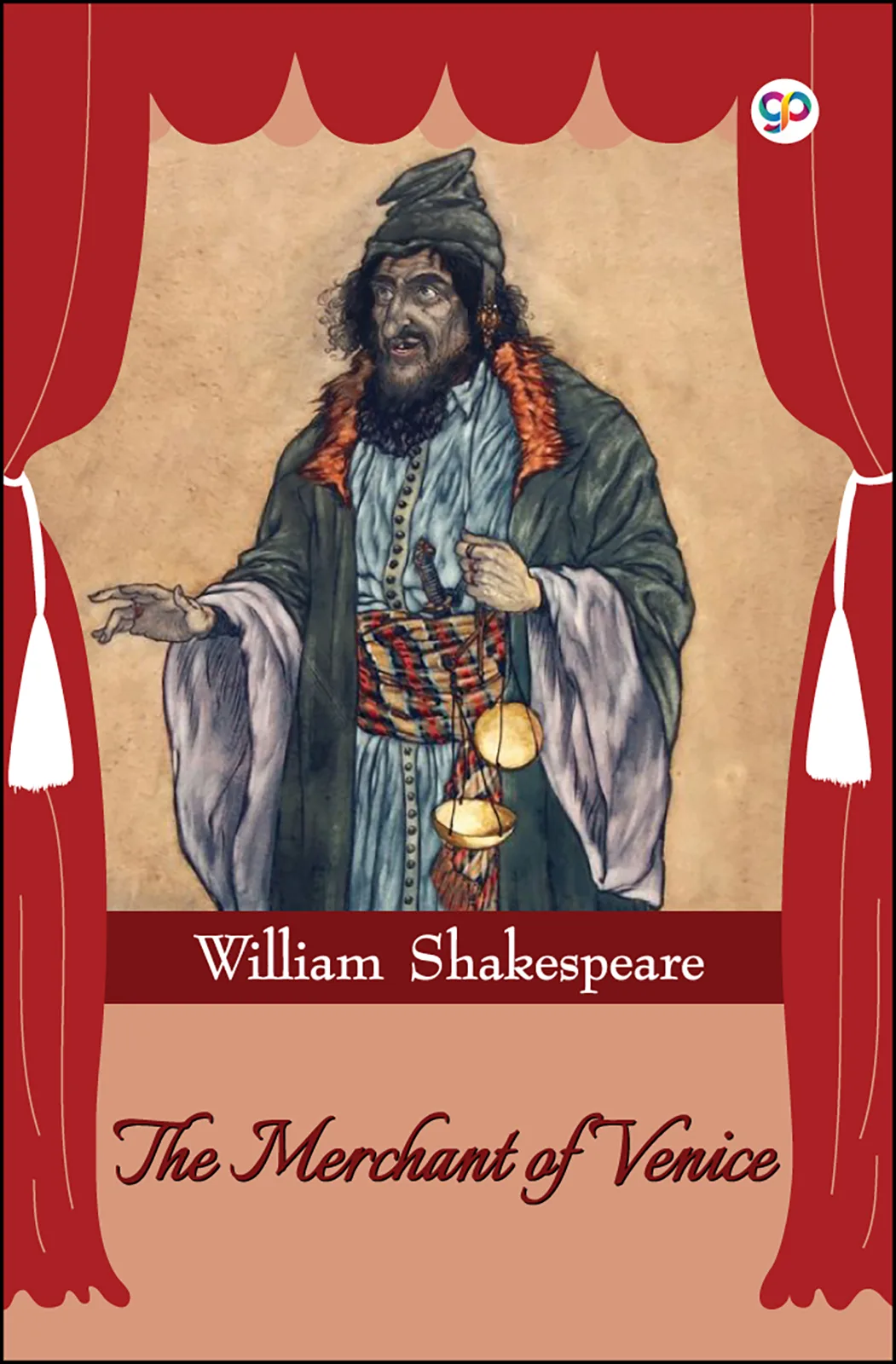
The Merchant of Venice
Hardcover
• 112 Pages
• INR 295.00
• English
• 9789354993008
No ratings yet
| Publisher | General Press |
|---|---|
| ISBN13 | 9789354993008 |
| ASIN/SKU | 9354993001 |
| Book Format | Hardcover |
| Language | English |
| Pages | 112 |
| List Price | INR 295.00 |
| Subject Code | DRA003000, DRA004000, DRA010000, FIC004000 |
| Publishing Date | 01/06/2022 |
| Dimensions | 8.25 x 5.25 x 1.0 inches |
| Book Code | BD00067658 |
Buy this Book
Amazon Stores
Ebook Stores
Other Stores
Discover The Merchant of Venice by William Shakespeare. This book is published by General Press in Hardcover format, ISBN 9789354993008, ASIN 9354993001, under Literature and Fiction, Drama and Plays, Tragicomedy.
Book Description
‘The Merchant of Venice’ is a 16th-century intriguing drama of love, greed, and revenge written by William Shakespeare, an English playwright, poet, and actor. He is widely considered the most splendid writer in the English language and the world’s most remarkable dramatist.
At its core, the play distinguishes the characters of the maddened and revengeful Shylock, a Venetian moneylender, with the generous, level-headed Portia, a wealthy young woman surrounded by suitors. At the play's climax, Shylock insists on the enforcement of a binding contract that will cost the life of the merchant Antonio—provoking Portia to mount a memorable defense.
In this richly plotted drama, Shylock, whom Shakespeare gave all of the depth and vibrancy of his greatest characters, is not alone in his wickedness. In scene after scene, a large cast of enterprising and fraudulent characters displays that honesty is a quality often tested where matters of love and money are concerned.
At its core, the play distinguishes the characters of the maddened and revengeful Shylock, a Venetian moneylender, with the generous, level-headed Portia, a wealthy young woman surrounded by suitors. At the play's climax, Shylock insists on the enforcement of a binding contract that will cost the life of the merchant Antonio—provoking Portia to mount a memorable defense.
In this richly plotted drama, Shylock, whom Shakespeare gave all of the depth and vibrancy of his greatest characters, is not alone in his wickedness. In scene after scene, a large cast of enterprising and fraudulent characters displays that honesty is a quality often tested where matters of love and money are concerned.
Author Biography
William Shakespeare (baptised 26 April 1564) was an English poet and playwright, widely regarded as the greatest writer in the English language and the world's pre-eminent dramatist. He is often called England's national poet and the 'Bard of Avon' (or simply "The Bard"). His surviving works consist of 37 plays, 154 sonnets, two long narrative poems, and several other poems. His plays have been translated into every major living language.
Shakespeare was born and raised in Stratford-upon-Avon. Scholars believe that he died on his fifty-second birthday, coinciding with St George’s Day. At the age of 18 he married Anne Hathaway, who bore him three children: Susanna, twins Hamnet and Judith. Between 1585 and 1592 he began a successful career in London as an actor, writer, and part owner of the playing company the Lord Chamberlain's Men, later known as the King's Men. He appears to have retired to Stratford around 1613, where he died three years later.
Shakespeare produced most of his known work between 1590 and 1613. His early plays were mainly comedies and histories, genres he raised to the peak of sophistication and artistry by the end of the sixteenth century. Next he wrote mainly tragedies until about 1608. He was a respected poet and playwright in his own day, but his reputation did not rise to its present heights until the nineteenth century. The Romantics, in particular, acclaimed Shakespeare's genius, and the Victorians hero-worshipped Shakespeare. In the twentieth century, his work was repeatedly adopted and rediscovered by new movements in scholarship and performance. His plays remain highly popular today and are consistently performed and reinterpreted in diverse cultural and political contexts throughout the world.
Shakespeare was born and raised in Stratford-upon-Avon. Scholars believe that he died on his fifty-second birthday, coinciding with St George’s Day. At the age of 18 he married Anne Hathaway, who bore him three children: Susanna, twins Hamnet and Judith. Between 1585 and 1592 he began a successful career in London as an actor, writer, and part owner of the playing company the Lord Chamberlain's Men, later known as the King's Men. He appears to have retired to Stratford around 1613, where he died three years later.
Shakespeare produced most of his known work between 1590 and 1613. His early plays were mainly comedies and histories, genres he raised to the peak of sophistication and artistry by the end of the sixteenth century. Next he wrote mainly tragedies until about 1608. He was a respected poet and playwright in his own day, but his reputation did not rise to its present heights until the nineteenth century. The Romantics, in particular, acclaimed Shakespeare's genius, and the Victorians hero-worshipped Shakespeare. In the twentieth century, his work was repeatedly adopted and rediscovered by new movements in scholarship and performance. His plays remain highly popular today and are consistently performed and reinterpreted in diverse cultural and political contexts throughout the world.
Editorial Reviews
Editorial Reviews will be added soon…
Book Summary
The Merchant of Venice by William Shakespeare is one of the most famous and controversial plays in English literature. Usually classified as a comedy because of its romantic plot, marriages, disguises, and happy ending, the play also contains deeply serious questions about money, friendship, prejudice, justice, mercy, religious intolerance, love, and the meaning of human dignity. Shakespeare is believed to have written the play between 1596 and 1598, and its story moves between two contrasting worlds: the commercial city of Venice and the more romantic setting of Belmont. At the center of the plot are Antonio, the Venetian merchant; Bassanio, his friend; Portia, the wealthy heiress he hopes to marry; and Shylock, the Jewish moneylender whose demand for a pound of Antonio’s flesh creates the play’s most dramatic conflict.
The story begins in Venice with Antonio, a wealthy merchant who is strangely sad even though there seems to be no obvious reason for his sadness. His friends try to understand what is troubling him, but Antonio cannot explain it. Soon his close friend Bassanio arrives with a request. Bassanio wishes to travel to Belmont and court Portia, a beautiful and wealthy young woman whom he loves. Unfortunately, Bassanio has spent beyond his means and needs money to present himself properly as a suitable suitor. Antonio is willing to help, but there is a problem: his own money is invested in merchant ships currently at sea. Rather than refusing Bassanio, Antonio agrees to borrow the required money using his credit. This decision sets the entire tragedy of the bond into motion.
At Belmont, Shakespeare introduces Portia, one of his most intelligent and capable heroines. Although she is wealthy and admired by many men, she cannot freely choose her husband because her deceased father has established a test in his will. Any man who wishes to marry Portia must choose correctly among three caskets made of gold, silver, and lead. Each casket contains a message, and only one contains Portia’s portrait. The suitor who selects the correct casket will win her hand; anyone who chooses incorrectly must leave and promise never to marry another woman. Portia dislikes many of the suitors who arrive, and she and her maid Nerissa discuss them with humor and sharp observation. Yet Portia remembers Bassanio favorably, and his arrival gives her hope.
To obtain Bassanio’s money, Antonio and Bassanio approach Shylock, a Jewish moneylender in Venice. Their meeting is filled with tension because Antonio has previously insulted Shylock for lending money at interest and has treated him with contempt because of his religion and profession. Shylock therefore has personal reasons for resenting Antonio. Nevertheless, he agrees to lend the required three thousand ducats. Instead of demanding interest, however, Shylock proposes a strange bond: if Antonio cannot repay the money on the agreed date, Shylock may take a pound of Antonio’s flesh. Antonio accepts the agreement because he is confident that his ships will return safely and provide enough money to repay the loan. Bassanio is uneasy about the arrangement, but Antonio considers the risk insignificant.
This bond is the foundation of the play's central conflict because it transforms an ordinary financial transaction into a question of life and death. Money, which initially appears to be a tool for friendship and romance, becomes a source of danger. Shakespeare deliberately places affection, commerce, and violence next to one another. Bassanio needs money to pursue love; Antonio risks his body to help his friend; Shylock turns a financial agreement into an opportunity for revenge. The contract therefore becomes much more than a legal document. It embodies the accumulated resentment between different groups within Venetian society and raises the question of whether strict justice can exist without compassion.
Meanwhile, another important plot develops in Shylock's household. His daughter Jessica is unhappy living with her father and falls in love with Lorenzo, a Christian friend of Bassanio. Jessica decides to escape with Lorenzo, converting to Christianity and taking some of her father's money and possessions with her. Her departure deeply wounds Shylock. Shakespeare presents Shylock's grief alongside his anger, making his character more complicated than a simple villain. He is simultaneously a moneylender, a father who has lost his daughter, a member of a persecuted religious minority, and a man consumed by resentment. This complexity is one reason Shylock remains one of Shakespeare's most debated characters.
The romantic plot at Belmont continues when Portia's suitors attempt the casket test. The Prince of Morocco chooses the gold casket because he is attracted to its outward splendor, but his choice is wrong. The Prince of Arragon chooses silver, believing himself worthy of Portia, but he also fails. Their mistakes reinforce one of the play's most important ideas: appearances can be deceptive. What looks valuable from the outside may not contain true worth. This theme eventually becomes central to Bassanio's successful choice.
When Bassanio arrives at Belmont, Portia hopes he will succeed but cannot openly help him. He studies the inscriptions on the three caskets and rejects the temptation of gold and silver. Instead, he chooses the humble lead casket, which proves to be the correct one. Inside is Portia's portrait, and Bassanio has therefore won her hand. His success is significant because he understands that true value does not always advertise itself through glitter and wealth. Portia and Bassanio are united, while Gratiano, Bassanio's friend, falls in love with Nerissa. The two couples prepare for marriage, and Portia gives Bassanio a ring, asking him to promise never to give it away.
The happiness at Belmont is suddenly interrupted by terrible news from Venice. Antonio's ships have apparently been lost, leaving him unable to repay Shylock. Shylock therefore insists that the bond must be honored. Bassanio immediately returns to Venice to help his friend. The romantic comedy now becomes a courtroom drama. Portia realizes that Bassanio will need help, and she decides to follow him secretly. She and Nerissa disguise themselves as a male lawyer and legal clerk. This disguise becomes one of the play's most important devices because it allows Portia, who is formally restricted by the social conventions of her world, to enter a male-dominated legal environment and exercise extraordinary authority.
The courtroom scene is the emotional and philosophical climax of The Merchant of Venice. Shylock refuses offers of money and insists on receiving exactly what the bond promises: a pound of Antonio's flesh. Bassanio is willing to pay far more than the original debt, but Shylock refuses. His insistence is driven by revenge rather than financial need. He has been insulted and humiliated by Antonio, and now the law appears to give him the power to retaliate. Shakespeare makes the audience confront an uncomfortable question: What happens when someone who has suffered injustice gains the legal power to inflict suffering on someone else?
Portia, disguised as the lawyer Balthazar, first appeals to Shylock's humanity. Her famous speech about mercy argues that mercy cannot be forced; it must be freely given. She presents mercy as something more powerful than strict justice because it benefits both the person who gives it and the person who receives it. Yet Shylock refuses. He insists upon the exact terms of his contract. The irony is striking: the Christian characters have repeatedly treated Shylock without mercy, but when Shylock obtains the opportunity to demand absolute justice, he too refuses mercy.
Portia then uses the language of the law against Shylock. She initially confirms that the bond is legally valid and that he may claim his pound of flesh. But she then points out a crucial limitation: the bond grants him flesh, not blood. If Shylock cuts Antonio, he must do so without spilling a single drop of Venetian blood. Furthermore, he must take exactly one pound of flesh—neither more nor less. The demand is therefore impossible to execute. Shylock realizes that the legal situation has turned against him. When he attempts to accept the money instead, Portia refuses to let him change the terms of the agreement after insisting so strongly upon its strict interpretation.
The consequences for Shylock are severe. He is accused of conspiring against the life of a Venetian citizen and is forced to surrender much of his property. The Duke spares his life, while Antonio imposes additional conditions, including Shylock's conversion to Christianity and the eventual transfer of his estate to Jessica and Lorenzo. This ending is one of the most disturbing aspects of the play for modern audiences. Shylock has certainly attempted to commit a horrifying act, but his punishment also involves religious coercion and the destruction of his identity. Shakespeare's portrayal of the courtroom therefore cannot be reduced to a simple victory of good over evil. The Christian characters win, but the terms of their victory expose serious moral contradictions.
The play then returns to Belmont and its lighter romantic atmosphere. Bassanio and Gratiano do not immediately recognize that the lawyer and clerk who saved Antonio were actually Portia and Nerissa. During the trial, Bassanio gave away the ring Portia had asked him never to surrender, while Gratiano similarly gave Nerissa's ring to the disguised clerk. When the men return to Belmont, their wives confront them about the missing rings. Portia and Nerissa pretend to believe that their husbands have given the rings to other women. The misunderstanding creates the final comic conflict. Eventually, Portia reveals the truth: she herself was the lawyer who saved Antonio, and Nerissa was the clerk. The couples reconcile.
The ending also brings unexpectedly good news for Antonio. Although everyone believed his merchant ships had been lost, they actually return safely. Antonio therefore regains his wealth and escapes the financial catastrophe that seemed certain to destroy him. The marriages are secure, Antonio survives, and the Christian characters celebrate. On the surface, the play ends as a comedy should: danger has passed, lovers are reunited, and prosperity returns. Yet Shylock's fate prevents the ending from feeling entirely cheerful. His suffering remains in the background, making the conclusion much more morally complicated than the conventional happy ending of a romantic comedy.
One of the most important themes in The Merchant of Venice is the conflict between justice and mercy. Shakespeare repeatedly asks whether following the law exactly is enough to make an action morally right. Shylock insists upon justice when he demands the pound of flesh. Portia initially appeals to mercy, but she ultimately defeats Shylock through an extremely strict interpretation of the law. This creates an important irony: the Christian characters praise mercy but do not extend it fully to Shylock. The play therefore encourages readers to question the difference between claiming moral superiority and actually behaving mercifully.
Another major theme is prejudice and religious intolerance. Antonio openly insults Shylock because he is Jewish, while Shylock describes the discrimination he has experienced from Christians. His famous argument that a Jew possesses the same human senses, emotions, and capacity for suffering as a Christian is one of the most powerful moments in the play. Shakespeare's own treatment of Shylock is complicated by the antisemitic assumptions of the culture in which he wrote. Modern productions and readers consequently have to confront both the prejudice embedded in the play and the extraordinary humanity Shakespeare gives Shylock. The Folger Shakespeare Library notes that Shakespeare appears to have shared widespread prejudice against Jews of his period, while also observing that Shylock's expression of alienation can make him emerge as a central or even sympathetic figure in modern productions.
Money and commerce are equally important. Nearly every major relationship in the play is connected in some way to wealth, debt, inheritance, or economic exchange. Bassanio needs money to pursue Portia. Antonio's wealth is tied up in ships. Shylock earns money through lending. Jessica leaves with her father's possessions. Portia herself is desirable partly because of her immense fortune. Even marriage and friendship are repeatedly connected to financial arrangements. Shakespeare thus creates a world in which love and money constantly overlap, forcing the audience to consider whether human relationships can ever remain completely separate from economic interests.
The casket test adds another major theme: appearance versus reality. Gold looks valuable, silver appears impressive, while lead seems unattractive and insignificant. Bassanio succeeds because he understands that external beauty can conceal emptiness. This theme also appears in the disguises used by Portia and Nerissa. The women appear to be young men but are actually the wives of the men standing before them. Shylock appears to be merely a villain but reveals himself as a wounded human being. Antonio appears prosperous but is financially vulnerable. Again and again, Shakespeare shows that what people see on the surface may be very different from what exists underneath.
Portia herself represents intelligence, adaptability, and female agency. She is restricted by her father's will and by the gender expectations of her society, yet she repeatedly finds ways to exercise power. She chooses Bassanio emotionally even though the casket test determines the formal conditions of marriage. Later, she disguises herself as a lawyer and successfully controls the courtroom. Her legal intelligence saves Antonio, and her cleverness allows her to test Bassanio's loyalty through the ring episode. Although Portia exists within a patriarchal social system, Shakespeare gives her remarkable verbal and intellectual authority.
Ultimately, The Merchant of Venice remains powerful because it refuses to fit neatly into a single category. It is a romantic comedy, a courtroom drama, a study of prejudice, and a meditation on justice and mercy all at once. The love stories provide warmth and humor, while the bond between Antonio and Shylock introduces genuine danger. The contrast between Belmont and Venice—between romance and commerce, music and money, love and law—gives the play much of its distinctive character.
For readers searching for a summary of The Merchant of Venice, a detailed plot summary, Shylock character analysis, Portia character analysis, themes of The Merchant of Venice, the pound of flesh, the casket test, the meaning of Portia's mercy speech, or an explanation of the play's ending, the most important point is that Shakespeare's work cannot be understood simply as a story in which a villain is defeated and the heroes live happily ever after. The play's enduring power comes from its contradictions. Shylock is both victim and aggressor; Portia is both advocate of mercy and practitioner of harsh justice; Antonio is generous toward Bassanio yet openly prejudiced against Shylock; and the Christian society that celebrates its victory is also responsible for much of the hostility that produced the conflict.
The deepest lesson of The Merchant of Venice is therefore not simply that mercy is better than justice, or that appearances can be deceptive. It is that human beings often demand compassion for themselves while finding reasons to deny it to others. Shakespeare places this contradiction at the heart of the play. More than four centuries later, that tension continues to make The Merchant of Venice one of his most discussed works: a play about love and money on the surface, but beneath that surface, a challenging examination of prejudice, power, law, forgiveness, and what it truly means to treat another human being with dignity.
The story begins in Venice with Antonio, a wealthy merchant who is strangely sad even though there seems to be no obvious reason for his sadness. His friends try to understand what is troubling him, but Antonio cannot explain it. Soon his close friend Bassanio arrives with a request. Bassanio wishes to travel to Belmont and court Portia, a beautiful and wealthy young woman whom he loves. Unfortunately, Bassanio has spent beyond his means and needs money to present himself properly as a suitable suitor. Antonio is willing to help, but there is a problem: his own money is invested in merchant ships currently at sea. Rather than refusing Bassanio, Antonio agrees to borrow the required money using his credit. This decision sets the entire tragedy of the bond into motion.
At Belmont, Shakespeare introduces Portia, one of his most intelligent and capable heroines. Although she is wealthy and admired by many men, she cannot freely choose her husband because her deceased father has established a test in his will. Any man who wishes to marry Portia must choose correctly among three caskets made of gold, silver, and lead. Each casket contains a message, and only one contains Portia’s portrait. The suitor who selects the correct casket will win her hand; anyone who chooses incorrectly must leave and promise never to marry another woman. Portia dislikes many of the suitors who arrive, and she and her maid Nerissa discuss them with humor and sharp observation. Yet Portia remembers Bassanio favorably, and his arrival gives her hope.
To obtain Bassanio’s money, Antonio and Bassanio approach Shylock, a Jewish moneylender in Venice. Their meeting is filled with tension because Antonio has previously insulted Shylock for lending money at interest and has treated him with contempt because of his religion and profession. Shylock therefore has personal reasons for resenting Antonio. Nevertheless, he agrees to lend the required three thousand ducats. Instead of demanding interest, however, Shylock proposes a strange bond: if Antonio cannot repay the money on the agreed date, Shylock may take a pound of Antonio’s flesh. Antonio accepts the agreement because he is confident that his ships will return safely and provide enough money to repay the loan. Bassanio is uneasy about the arrangement, but Antonio considers the risk insignificant.
This bond is the foundation of the play's central conflict because it transforms an ordinary financial transaction into a question of life and death. Money, which initially appears to be a tool for friendship and romance, becomes a source of danger. Shakespeare deliberately places affection, commerce, and violence next to one another. Bassanio needs money to pursue love; Antonio risks his body to help his friend; Shylock turns a financial agreement into an opportunity for revenge. The contract therefore becomes much more than a legal document. It embodies the accumulated resentment between different groups within Venetian society and raises the question of whether strict justice can exist without compassion.
Meanwhile, another important plot develops in Shylock's household. His daughter Jessica is unhappy living with her father and falls in love with Lorenzo, a Christian friend of Bassanio. Jessica decides to escape with Lorenzo, converting to Christianity and taking some of her father's money and possessions with her. Her departure deeply wounds Shylock. Shakespeare presents Shylock's grief alongside his anger, making his character more complicated than a simple villain. He is simultaneously a moneylender, a father who has lost his daughter, a member of a persecuted religious minority, and a man consumed by resentment. This complexity is one reason Shylock remains one of Shakespeare's most debated characters.
The romantic plot at Belmont continues when Portia's suitors attempt the casket test. The Prince of Morocco chooses the gold casket because he is attracted to its outward splendor, but his choice is wrong. The Prince of Arragon chooses silver, believing himself worthy of Portia, but he also fails. Their mistakes reinforce one of the play's most important ideas: appearances can be deceptive. What looks valuable from the outside may not contain true worth. This theme eventually becomes central to Bassanio's successful choice.
When Bassanio arrives at Belmont, Portia hopes he will succeed but cannot openly help him. He studies the inscriptions on the three caskets and rejects the temptation of gold and silver. Instead, he chooses the humble lead casket, which proves to be the correct one. Inside is Portia's portrait, and Bassanio has therefore won her hand. His success is significant because he understands that true value does not always advertise itself through glitter and wealth. Portia and Bassanio are united, while Gratiano, Bassanio's friend, falls in love with Nerissa. The two couples prepare for marriage, and Portia gives Bassanio a ring, asking him to promise never to give it away.
The happiness at Belmont is suddenly interrupted by terrible news from Venice. Antonio's ships have apparently been lost, leaving him unable to repay Shylock. Shylock therefore insists that the bond must be honored. Bassanio immediately returns to Venice to help his friend. The romantic comedy now becomes a courtroom drama. Portia realizes that Bassanio will need help, and she decides to follow him secretly. She and Nerissa disguise themselves as a male lawyer and legal clerk. This disguise becomes one of the play's most important devices because it allows Portia, who is formally restricted by the social conventions of her world, to enter a male-dominated legal environment and exercise extraordinary authority.
The courtroom scene is the emotional and philosophical climax of The Merchant of Venice. Shylock refuses offers of money and insists on receiving exactly what the bond promises: a pound of Antonio's flesh. Bassanio is willing to pay far more than the original debt, but Shylock refuses. His insistence is driven by revenge rather than financial need. He has been insulted and humiliated by Antonio, and now the law appears to give him the power to retaliate. Shakespeare makes the audience confront an uncomfortable question: What happens when someone who has suffered injustice gains the legal power to inflict suffering on someone else?
Portia, disguised as the lawyer Balthazar, first appeals to Shylock's humanity. Her famous speech about mercy argues that mercy cannot be forced; it must be freely given. She presents mercy as something more powerful than strict justice because it benefits both the person who gives it and the person who receives it. Yet Shylock refuses. He insists upon the exact terms of his contract. The irony is striking: the Christian characters have repeatedly treated Shylock without mercy, but when Shylock obtains the opportunity to demand absolute justice, he too refuses mercy.
Portia then uses the language of the law against Shylock. She initially confirms that the bond is legally valid and that he may claim his pound of flesh. But she then points out a crucial limitation: the bond grants him flesh, not blood. If Shylock cuts Antonio, he must do so without spilling a single drop of Venetian blood. Furthermore, he must take exactly one pound of flesh—neither more nor less. The demand is therefore impossible to execute. Shylock realizes that the legal situation has turned against him. When he attempts to accept the money instead, Portia refuses to let him change the terms of the agreement after insisting so strongly upon its strict interpretation.
The consequences for Shylock are severe. He is accused of conspiring against the life of a Venetian citizen and is forced to surrender much of his property. The Duke spares his life, while Antonio imposes additional conditions, including Shylock's conversion to Christianity and the eventual transfer of his estate to Jessica and Lorenzo. This ending is one of the most disturbing aspects of the play for modern audiences. Shylock has certainly attempted to commit a horrifying act, but his punishment also involves religious coercion and the destruction of his identity. Shakespeare's portrayal of the courtroom therefore cannot be reduced to a simple victory of good over evil. The Christian characters win, but the terms of their victory expose serious moral contradictions.
The play then returns to Belmont and its lighter romantic atmosphere. Bassanio and Gratiano do not immediately recognize that the lawyer and clerk who saved Antonio were actually Portia and Nerissa. During the trial, Bassanio gave away the ring Portia had asked him never to surrender, while Gratiano similarly gave Nerissa's ring to the disguised clerk. When the men return to Belmont, their wives confront them about the missing rings. Portia and Nerissa pretend to believe that their husbands have given the rings to other women. The misunderstanding creates the final comic conflict. Eventually, Portia reveals the truth: she herself was the lawyer who saved Antonio, and Nerissa was the clerk. The couples reconcile.
The ending also brings unexpectedly good news for Antonio. Although everyone believed his merchant ships had been lost, they actually return safely. Antonio therefore regains his wealth and escapes the financial catastrophe that seemed certain to destroy him. The marriages are secure, Antonio survives, and the Christian characters celebrate. On the surface, the play ends as a comedy should: danger has passed, lovers are reunited, and prosperity returns. Yet Shylock's fate prevents the ending from feeling entirely cheerful. His suffering remains in the background, making the conclusion much more morally complicated than the conventional happy ending of a romantic comedy.
One of the most important themes in The Merchant of Venice is the conflict between justice and mercy. Shakespeare repeatedly asks whether following the law exactly is enough to make an action morally right. Shylock insists upon justice when he demands the pound of flesh. Portia initially appeals to mercy, but she ultimately defeats Shylock through an extremely strict interpretation of the law. This creates an important irony: the Christian characters praise mercy but do not extend it fully to Shylock. The play therefore encourages readers to question the difference between claiming moral superiority and actually behaving mercifully.
Another major theme is prejudice and religious intolerance. Antonio openly insults Shylock because he is Jewish, while Shylock describes the discrimination he has experienced from Christians. His famous argument that a Jew possesses the same human senses, emotions, and capacity for suffering as a Christian is one of the most powerful moments in the play. Shakespeare's own treatment of Shylock is complicated by the antisemitic assumptions of the culture in which he wrote. Modern productions and readers consequently have to confront both the prejudice embedded in the play and the extraordinary humanity Shakespeare gives Shylock. The Folger Shakespeare Library notes that Shakespeare appears to have shared widespread prejudice against Jews of his period, while also observing that Shylock's expression of alienation can make him emerge as a central or even sympathetic figure in modern productions.
Money and commerce are equally important. Nearly every major relationship in the play is connected in some way to wealth, debt, inheritance, or economic exchange. Bassanio needs money to pursue Portia. Antonio's wealth is tied up in ships. Shylock earns money through lending. Jessica leaves with her father's possessions. Portia herself is desirable partly because of her immense fortune. Even marriage and friendship are repeatedly connected to financial arrangements. Shakespeare thus creates a world in which love and money constantly overlap, forcing the audience to consider whether human relationships can ever remain completely separate from economic interests.
The casket test adds another major theme: appearance versus reality. Gold looks valuable, silver appears impressive, while lead seems unattractive and insignificant. Bassanio succeeds because he understands that external beauty can conceal emptiness. This theme also appears in the disguises used by Portia and Nerissa. The women appear to be young men but are actually the wives of the men standing before them. Shylock appears to be merely a villain but reveals himself as a wounded human being. Antonio appears prosperous but is financially vulnerable. Again and again, Shakespeare shows that what people see on the surface may be very different from what exists underneath.
Portia herself represents intelligence, adaptability, and female agency. She is restricted by her father's will and by the gender expectations of her society, yet she repeatedly finds ways to exercise power. She chooses Bassanio emotionally even though the casket test determines the formal conditions of marriage. Later, she disguises herself as a lawyer and successfully controls the courtroom. Her legal intelligence saves Antonio, and her cleverness allows her to test Bassanio's loyalty through the ring episode. Although Portia exists within a patriarchal social system, Shakespeare gives her remarkable verbal and intellectual authority.
Ultimately, The Merchant of Venice remains powerful because it refuses to fit neatly into a single category. It is a romantic comedy, a courtroom drama, a study of prejudice, and a meditation on justice and mercy all at once. The love stories provide warmth and humor, while the bond between Antonio and Shylock introduces genuine danger. The contrast between Belmont and Venice—between romance and commerce, music and money, love and law—gives the play much of its distinctive character.
For readers searching for a summary of The Merchant of Venice, a detailed plot summary, Shylock character analysis, Portia character analysis, themes of The Merchant of Venice, the pound of flesh, the casket test, the meaning of Portia's mercy speech, or an explanation of the play's ending, the most important point is that Shakespeare's work cannot be understood simply as a story in which a villain is defeated and the heroes live happily ever after. The play's enduring power comes from its contradictions. Shylock is both victim and aggressor; Portia is both advocate of mercy and practitioner of harsh justice; Antonio is generous toward Bassanio yet openly prejudiced against Shylock; and the Christian society that celebrates its victory is also responsible for much of the hostility that produced the conflict.
The deepest lesson of The Merchant of Venice is therefore not simply that mercy is better than justice, or that appearances can be deceptive. It is that human beings often demand compassion for themselves while finding reasons to deny it to others. Shakespeare places this contradiction at the heart of the play. More than four centuries later, that tension continues to make The Merchant of Venice one of his most discussed works: a play about love and money on the surface, but beneath that surface, a challenging examination of prejudice, power, law, forgiveness, and what it truly means to treat another human being with dignity.
Sample Chapters
Characters in the Play
The Duke of Venice.
The Prince of Morocco : suitor to Portia.
The Prince of Arragon : suitor to Portia.
ANTONIO, a merchant of Venice.
BASSANIO, his friend, suitor to Portia.
GRATIANO : friend to Antonio and Bassanio.
SALARINO : friend to Antonio and Bassanio.
SOLANIO : friend to Antonio and Bassanio.
SALERIO : friend to Antonio and Bassanio.
LORENZO, in love with Jessica.
SHYLOCK, a Jew.
TUBAL, another Jew, friend to Shylock.
LANCELET GOBBO, a clown, servant to Shylock.
OLD GOBBO, father to Lancelet.
LEONARDO, servant to Bassanio.
BALTHAZAR : servant to Portia.
STEPHANO : servant to Portia.
PORTIA, a lady of Belmont.
NERISSA, her waiting-maid.
JESSICA, daughter to Shylock.
Magnificoes of Venice, officers of the Court of Justice,
a jailor, servants, and other attendants.
Act 1
Scene 1. A street in Venice.
Enter ANTONIO, SALARINO, and SOLANIO.
ANTONIO : In sooth, I know not why not why I am so sad.
It wearies me, you say it wearies you;
But how I caught it, found it, or came by it,
What stuff ’tis made of, whereof it is born,
I am to learn:
And such a want-wit sadness makes of me,
That I have much ado to know myself.
SALARINO : Your mind is tossing on the ocean,
There, where your argosies with portly sail –
Like signiors and rich burghers on the flood,
Or as it were the pageants of the sea –
Do overpeer the petty traffickers
That curtsy to them, do them reverence,
As they fly by them with their woven wings.
SOLANIO : Believe me, sir, had I such venture forth,
The better part of my affections would
Be with my hopes abroad. I should be still
Plucking the grass to know where sits the wind,
Peering in maps for ports and piers and roads;
And every object that might make me fear
Misfortune to my ventures, out of doubt
Would make me sad.
SALARINO : My wind, cooling my broth,
Would blow me to an ague when I thought
What harm a wind too great might do at sea.
I should not see the sandy hour-glass run
But I should think of shallows and of flats,
And see my wealthy Andrew docked in sand,
Vailing her high-top lower than her ribs
To kiss her burial. Should I go to church
And see the holy edifice of stone,
And not bethink me straight of dangerous rocks,
Which, touching but my gentle vessel’s side,
Would scatter all her spices on the stream,
Enrobe the roaring waters with my silks,
And, in a word, but even now worth this,
And now worth nothing? Shall I have the thought
To think on this, and shall I lack the thought
That such a thing bechanced would make me sad?
But tell not me; I know Antonio
Is sad to think upon his merchandise.
ANTONIO : Believe me, no. I thank my fortune for it,
My ventures are not in our bottom trusted,
Nor to one place; nor is my whole estate
Upon the fortune of this present year:
Therefore my merchandise makes me not sad.
SOLANIO : Why then you are in love.
ANTONIO : Fie, fie.
SOLANIO : Not in love neither? Then let us say you are sad
Because you are not merry; and ’twere as easy
For you to laugh and leap, and say you are merry
Because you are not sad. Now, by two-headed Janus,
Nature hath framed strange fellows in her time:
Some that will evermore peep through their eyes,
And laugh like parrots at a bagpiper;
And other of such vinegar aspect
That they’ll not show their teeth in way of smile,
Though Nestor swear the jest be laughable.
Enter BASSANIO, LORENZO, and GRATIANO.
Here comes Bassanio, your most noble kinsman,
Gratiano, and Lorenzo. Fare ye well,
We leave you now with better company.
SALARINO : I would have stayed till I had made you merry,
If worthier friends had not prevented me.
ANTONIO : Your worth is very dear in my regard.
I take it your own business calls on you,
And you embrace th’occasion to depart.
SALARINO : Good morrow, my good lords.
BASSANIO : Good signiors both, when shall we laugh? Say, when?
You grow exceeding strange: must it be so?
SALARINO : We’ll make our leisures to attend on yours.
[Exeunt Salarino and Solanio.
LORENZO : My Lord Bassanio, since you have found Antonio,
We two will leave you; but at dinner-time
I pray you have in mind where we must meet.
BASSANIO : I will not fail you.
GRATIANO : You look not well, Signior Antonio;
You have too much respect upon the world:
They lose it that do buy it with much care.
Believe me, you are marvellously changed.
ANTONIO : I hold the world but as the world, Gratiano:
A stage, where every man must play a part,
And mine a sad one.
GRATIANO : Let me play the fool,
With mirth and laughter let old wrinkles come,
And let my liver rather heat with wine
Than my heart cool with mortifying groans.
Why should a man whose blood is warm within
Sit like his grandsire cut in alabaster,
Sleep when he wakes, and creep into the jaundice
By being peevish? I tell thee what, Antonio –
I love thee, and it is my love that speaks –
There are a sort of men whose visages
Do cream and mantle like a standing pond,
And do a wilful stillness entertain,
With purpose to be dressed in an opinion
Of wisdom, gravity, profound conceit,
As who should say, ‘I am Sir Oracle,
And when I ope my lips, let no dog bark.’
O, my Antonio, I do know of these
That therefore only are reputed wise
For saying nothing; when, I am very sure,
If they should speak, would almost damn those ears
Which, hearing them, would call their brothers fools.
I’ll tell thee more of this another time.
But fish not with this melancholy bait
For this fool gudgeon, this opinion.
– Come, good Lorenzo. – Fare ye well awhile;
I’ll end my exhortation after dinner.
LORENZO : Well, we will leave you then till dinner-time.
I must be one of these same dumb wise men,
For Gratiano never lets me speak.
GRATIANO : Well, keep me company but two years moe,
Thou shalt not know the sound of thine own tongue.
ANTONIO : Fare you well. I’ll grow a talker for this gear.
GRATIANO : Thanks, i’faith, for silence is only commendable
In a neat’s tongue dried and a maid not vendible.
[Exeunt Gratiano and Lorenzo.
ANTONIO : Is that anything now?
BASSANIO : Gratiano speaks an infinite deal of nothing, more than any man in all Venice. His reasons are as two grains of wheat hid in two bushels of chaff: you shall seek all day ere you find them, and when you have them they are not worth the search.
ANTONIO : Well, tell me now what lady is the same
To whom you swore a secret pilgrimage,
That you today promised to tell me of?
BASSANIO : ’Tis not unknown to you, Antonio,
How much I have disabled mine estate
By something showing a more swelling port
Than my faint means would grant continuance:
Nor do I now make moan to be abridged
From such a noble rate, but my chief care
Is to come fairly off from the great debts
Wherein my time, something too prodigal,
Hath left me gaged. To you, Antonio,
I owe the most in money and in love,
And from your love I have a warranty
To unburthen all my plots and purposes
How to get clear of all the debts I owe.
ANTONIO : I pray you, good Bassanio, let me know it,
And if it stand, as you yourself still do,
Within the eye of honour, be assured,
My purse, my person, my extremest means,
Lie all unlocked to your occasions.
The Duke of Venice.
The Prince of Morocco : suitor to Portia.
The Prince of Arragon : suitor to Portia.
ANTONIO, a merchant of Venice.
BASSANIO, his friend, suitor to Portia.
GRATIANO : friend to Antonio and Bassanio.
SALARINO : friend to Antonio and Bassanio.
SOLANIO : friend to Antonio and Bassanio.
SALERIO : friend to Antonio and Bassanio.
LORENZO, in love with Jessica.
SHYLOCK, a Jew.
TUBAL, another Jew, friend to Shylock.
LANCELET GOBBO, a clown, servant to Shylock.
OLD GOBBO, father to Lancelet.
LEONARDO, servant to Bassanio.
BALTHAZAR : servant to Portia.
STEPHANO : servant to Portia.
PORTIA, a lady of Belmont.
NERISSA, her waiting-maid.
JESSICA, daughter to Shylock.
Magnificoes of Venice, officers of the Court of Justice,
a jailor, servants, and other attendants.
Act 1
Scene 1. A street in Venice.
Enter ANTONIO, SALARINO, and SOLANIO.
ANTONIO : In sooth, I know not why not why I am so sad.
It wearies me, you say it wearies you;
But how I caught it, found it, or came by it,
What stuff ’tis made of, whereof it is born,
I am to learn:
And such a want-wit sadness makes of me,
That I have much ado to know myself.
SALARINO : Your mind is tossing on the ocean,
There, where your argosies with portly sail –
Like signiors and rich burghers on the flood,
Or as it were the pageants of the sea –
Do overpeer the petty traffickers
That curtsy to them, do them reverence,
As they fly by them with their woven wings.
SOLANIO : Believe me, sir, had I such venture forth,
The better part of my affections would
Be with my hopes abroad. I should be still
Plucking the grass to know where sits the wind,
Peering in maps for ports and piers and roads;
And every object that might make me fear
Misfortune to my ventures, out of doubt
Would make me sad.
SALARINO : My wind, cooling my broth,
Would blow me to an ague when I thought
What harm a wind too great might do at sea.
I should not see the sandy hour-glass run
But I should think of shallows and of flats,
And see my wealthy Andrew docked in sand,
Vailing her high-top lower than her ribs
To kiss her burial. Should I go to church
And see the holy edifice of stone,
And not bethink me straight of dangerous rocks,
Which, touching but my gentle vessel’s side,
Would scatter all her spices on the stream,
Enrobe the roaring waters with my silks,
And, in a word, but even now worth this,
And now worth nothing? Shall I have the thought
To think on this, and shall I lack the thought
That such a thing bechanced would make me sad?
But tell not me; I know Antonio
Is sad to think upon his merchandise.
ANTONIO : Believe me, no. I thank my fortune for it,
My ventures are not in our bottom trusted,
Nor to one place; nor is my whole estate
Upon the fortune of this present year:
Therefore my merchandise makes me not sad.
SOLANIO : Why then you are in love.
ANTONIO : Fie, fie.
SOLANIO : Not in love neither? Then let us say you are sad
Because you are not merry; and ’twere as easy
For you to laugh and leap, and say you are merry
Because you are not sad. Now, by two-headed Janus,
Nature hath framed strange fellows in her time:
Some that will evermore peep through their eyes,
And laugh like parrots at a bagpiper;
And other of such vinegar aspect
That they’ll not show their teeth in way of smile,
Though Nestor swear the jest be laughable.
Enter BASSANIO, LORENZO, and GRATIANO.
Here comes Bassanio, your most noble kinsman,
Gratiano, and Lorenzo. Fare ye well,
We leave you now with better company.
SALARINO : I would have stayed till I had made you merry,
If worthier friends had not prevented me.
ANTONIO : Your worth is very dear in my regard.
I take it your own business calls on you,
And you embrace th’occasion to depart.
SALARINO : Good morrow, my good lords.
BASSANIO : Good signiors both, when shall we laugh? Say, when?
You grow exceeding strange: must it be so?
SALARINO : We’ll make our leisures to attend on yours.
[Exeunt Salarino and Solanio.
LORENZO : My Lord Bassanio, since you have found Antonio,
We two will leave you; but at dinner-time
I pray you have in mind where we must meet.
BASSANIO : I will not fail you.
GRATIANO : You look not well, Signior Antonio;
You have too much respect upon the world:
They lose it that do buy it with much care.
Believe me, you are marvellously changed.
ANTONIO : I hold the world but as the world, Gratiano:
A stage, where every man must play a part,
And mine a sad one.
GRATIANO : Let me play the fool,
With mirth and laughter let old wrinkles come,
And let my liver rather heat with wine
Than my heart cool with mortifying groans.
Why should a man whose blood is warm within
Sit like his grandsire cut in alabaster,
Sleep when he wakes, and creep into the jaundice
By being peevish? I tell thee what, Antonio –
I love thee, and it is my love that speaks –
There are a sort of men whose visages
Do cream and mantle like a standing pond,
And do a wilful stillness entertain,
With purpose to be dressed in an opinion
Of wisdom, gravity, profound conceit,
As who should say, ‘I am Sir Oracle,
And when I ope my lips, let no dog bark.’
O, my Antonio, I do know of these
That therefore only are reputed wise
For saying nothing; when, I am very sure,
If they should speak, would almost damn those ears
Which, hearing them, would call their brothers fools.
I’ll tell thee more of this another time.
But fish not with this melancholy bait
For this fool gudgeon, this opinion.
– Come, good Lorenzo. – Fare ye well awhile;
I’ll end my exhortation after dinner.
LORENZO : Well, we will leave you then till dinner-time.
I must be one of these same dumb wise men,
For Gratiano never lets me speak.
GRATIANO : Well, keep me company but two years moe,
Thou shalt not know the sound of thine own tongue.
ANTONIO : Fare you well. I’ll grow a talker for this gear.
GRATIANO : Thanks, i’faith, for silence is only commendable
In a neat’s tongue dried and a maid not vendible.
[Exeunt Gratiano and Lorenzo.
ANTONIO : Is that anything now?
BASSANIO : Gratiano speaks an infinite deal of nothing, more than any man in all Venice. His reasons are as two grains of wheat hid in two bushels of chaff: you shall seek all day ere you find them, and when you have them they are not worth the search.
ANTONIO : Well, tell me now what lady is the same
To whom you swore a secret pilgrimage,
That you today promised to tell me of?
BASSANIO : ’Tis not unknown to you, Antonio,
How much I have disabled mine estate
By something showing a more swelling port
Than my faint means would grant continuance:
Nor do I now make moan to be abridged
From such a noble rate, but my chief care
Is to come fairly off from the great debts
Wherein my time, something too prodigal,
Hath left me gaged. To you, Antonio,
I owe the most in money and in love,
And from your love I have a warranty
To unburthen all my plots and purposes
How to get clear of all the debts I owe.
ANTONIO : I pray you, good Bassanio, let me know it,
And if it stand, as you yourself still do,
Within the eye of honour, be assured,
My purse, my person, my extremest means,
Lie all unlocked to your occasions.
Reader Reviews
No reviews yet.
The Merchant of Venice
Download Cover Image
Do you want to download the full cover image for The Merchant of Venice?