
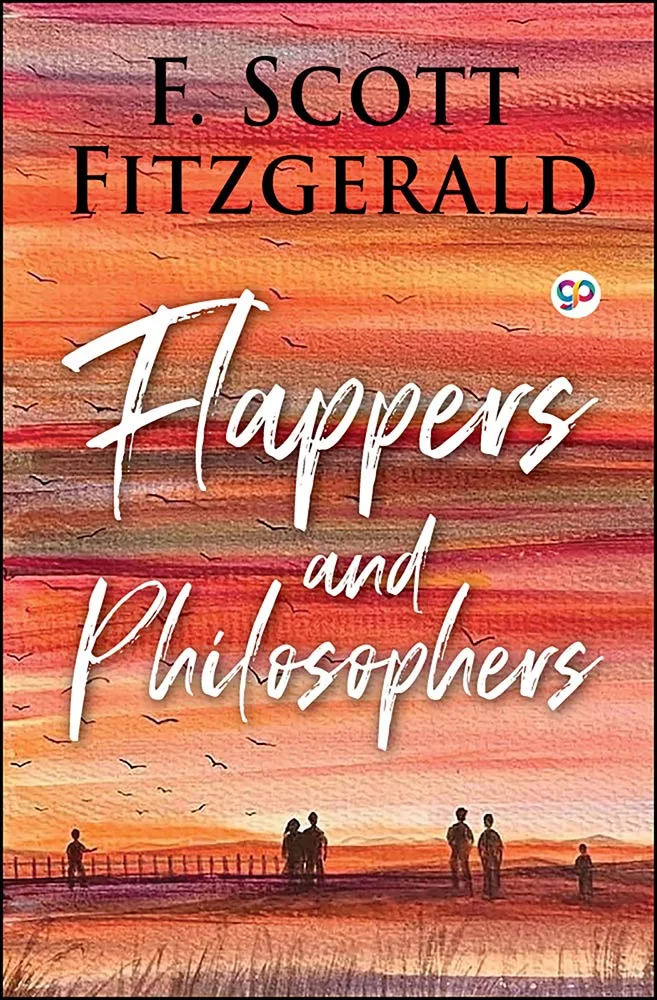
Flappers and Philosophers
Hardcover
• 224 Pages
• INR 495.00
• English
• 9789354996122
No ratings yet
| Publisher | General Press |
|---|---|
| ISBN13 | 9789354996122 |
| ASIN/SKU | 9354996124 |
| Book Format | Hardcover |
| Language | English |
| Pages | 224 |
| List Price | INR 495.00 |
| Subject Code | FIC004000, FIC029000, FIC084030 |
| Publishing Date | 05/09/2023 |
| Dimensions | 8.25 x 5.25 x 1.0 inches |
| Book Code | BD00067664 |
Buy this Book
Amazon Stores
Ebook Stores
Other Stores
Discover Flappers and Philosophers by F. Scott Fitzgerald. This book is published by General Press in Hardcover format, ISBN 9789354996122, ASIN 9354996124, under Literature and Fiction, Short Stories, Literary Fiction.
Book Description
‘Flappers and Philosophers’ was the first collection of short stories, published in 1920 by the Irish American Jazz Age novelist and short story writer regarded as one of the greatest American writers of the twentieth century. He was the self-styled spokesman of the ‘Lost Generation’ and author of ‘The Great Gatsby’. His debut novel, ‘This Side of Paradise’ examines the lives and morality of post-World War I youth.
The collection includes his most famous stories: The Offshore Pirate, The Ice Palace, Head and Shoulders, The Cut-Glass Bowl, Bernice Bobs Her Hair, Benediction, Dalyrimple Goes Wrong, and The Four Fists.
“We both fitted. If our corners were not rubbed off they were at least pulled in. But deep in us both was something that made us require more for happiness. I didn't know what I wanted.”
—F. Scott Fitzgerald, Flappers and Philosophers
The collection includes his most famous stories: The Offshore Pirate, The Ice Palace, Head and Shoulders, The Cut-Glass Bowl, Bernice Bobs Her Hair, Benediction, Dalyrimple Goes Wrong, and The Four Fists.
“We both fitted. If our corners were not rubbed off they were at least pulled in. But deep in us both was something that made us require more for happiness. I didn't know what I wanted.”
—F. Scott Fitzgerald, Flappers and Philosophers
Author Biography
Francis Scott Key Fitzgerald (1896–1940) was an iconic American novelist and short-story writer who came to define the Jazz Age—a term he coined himself. Born in St. Paul, Minnesota, to an upper-middle-class family, Fitzgerald attended Princeton University, where he neglected his studies in favor of literary pursuits. He ultimately dropped out in 1917 to join the U.S. Army during World War I. While stationed in Alabama, he met and fell fiercely in love with Zelda Sayre, a wealthy Southern belle who would become his wife, enduring muse, and occasional rival.
His debut novel, This Side of Paradise (1920), was an overnight sensation that captured the youthful rebellion and shifting morals of the post-war generation. The book's massive success afforded him and Zelda a lavish, chaotic lifestyle split between New York, Paris, and the French Riviera. During this vibrant expatriate period in the 1920s, he formed a complex friendship with fellow author Ernest Hemingway and composed what is widely considered his masterpiece, The Great Gatsby (1925). Though it received mixed reviews and modest sales during his lifetime, the novel later became a cornerstone of classic American literature, renowned for its brilliant critique of the American Dream and its lyrical, melancholic prose.
Despite his early success, Fitzgerald’s later life was marred by financial struggles, severe alcoholism, and Zelda’s deteriorating mental health, which eventually required her long-term institutionalization. He channeled these darker, deeply personal themes into his ambitious but commercially disappointing 1934 novel, Tender Is the Night. In his final years, Fitzgerald moved to Hollywood to work as a screenwriter to pay off his mounting debts. He died of a heart attack at age 44, believing himself a forgotten failure. Today, however, he is celebrated globally as a master of the American novel, immortalized by his peerless ability to capture the glittering, tragic essence of his era.
His debut novel, This Side of Paradise (1920), was an overnight sensation that captured the youthful rebellion and shifting morals of the post-war generation. The book's massive success afforded him and Zelda a lavish, chaotic lifestyle split between New York, Paris, and the French Riviera. During this vibrant expatriate period in the 1920s, he formed a complex friendship with fellow author Ernest Hemingway and composed what is widely considered his masterpiece, The Great Gatsby (1925). Though it received mixed reviews and modest sales during his lifetime, the novel later became a cornerstone of classic American literature, renowned for its brilliant critique of the American Dream and its lyrical, melancholic prose.
Despite his early success, Fitzgerald’s later life was marred by financial struggles, severe alcoholism, and Zelda’s deteriorating mental health, which eventually required her long-term institutionalization. He channeled these darker, deeply personal themes into his ambitious but commercially disappointing 1934 novel, Tender Is the Night. In his final years, Fitzgerald moved to Hollywood to work as a screenwriter to pay off his mounting debts. He died of a heart attack at age 44, believing himself a forgotten failure. Today, however, he is celebrated globally as a master of the American novel, immortalized by his peerless ability to capture the glittering, tragic essence of his era.
Editorial Reviews
Editorial Reviews will be added soon…
Book Summary
Published in 1920, Flappers and Philosophers is F. Scott Fitzgerald’s first collection of short stories and one of the earliest books to establish him as a distinctive voice of the Jazz Age. The collection contains eight stories that explore youth, romance, wealth, social ambition, beauty, disappointment, and the uneasy transition from innocence to experience. Although Fitzgerald is often remembered for glamorous parties and fashionable young people, these stories reveal a more complicated world beneath the glitter. His characters long for happiness and freedom, but they are often trapped by money, social expectations, vanity, pride, or their own changing desires.
The collection opens with “The Offshore Pirate,” a playful romantic story about Ardita Farnam, a wealthy and spirited young woman who is bored with conventional society. While traveling by yacht, she encounters Curtis Carlyle, a charming young man who appears to be a notorious pirate. Instead of being frightened, Ardita is fascinated by his boldness and romantic mystery. Their adventure becomes a mixture of danger, fantasy, and flirtation. Fitzgerald uses the story to show the attraction of escape. Ardita does not simply want a man; she wants a life that feels exciting and different from the predictable world of wealth into which she was born. The story also establishes one of Fitzgerald’s recurring themes: people often fall in love with an idealized image rather than with reality itself.
In “The Ice Palace,” Fitzgerald presents a much darker contrast between two ways of life. Sally Carrol Happer, a young woman from the American South, becomes engaged to Harry Bellamy, a Northerner. When she visits his home in the North, she is fascinated by its modernity but increasingly disturbed by its coldness. The enormous ice palace becomes a powerful symbol of a society that seems emotionally distant and unfamiliar. Sally Carrol realizes that marrying Harry would mean abandoning something deeply rooted in her identity. The story explores the conflict between tradition and modernity, warmth and coldness, belonging and alienation. Fitzgerald suggests that romantic love cannot always overcome cultural and emotional differences.
“Head and Shoulders” is a witty story about Horace Tarbox, a serious young scholar, and Marcia Meadow, an energetic actress. Horace has devoted himself to intellectual achievement, while Marcia lives through performance, emotion, and spontaneity. Their marriage initially seems to threaten both of their identities. Yet circumstances gradually reverse their positions: Horace discovers that he can succeed as a popular writer, while Marcia becomes interested in intellectual pursuits. Fitzgerald gently mocks the idea that people must fit into fixed categories such as “intellectual” or “artist.” Love, he suggests, can transform people in unexpected ways.
One of the collection’s most famous stories, “Bernice Bobs Her Hair,” focuses on a young woman who feels socially unsuccessful. Bernice is visiting her sophisticated cousin Marjorie, who teaches her how to become more attractive and socially confident. Bernice eventually decides to cut her long hair—a dramatic act because hair represented femininity and beauty at the time. The haircut, however, does not bring the happiness she expects. Beneath its humor, the story examines the cruelty of social popularity and the pressure placed on young women to perform a particular version of femininity. Bernice's attempt to reinvent herself reveals how easily insecurity can become humiliation.
In “Benediction,” Fitzgerald moves from social comedy toward spiritual and emotional seriousness. Lois, a young woman preparing for marriage, encounters a priest whose words force her to confront feelings she has been avoiding. The story explores faith, love, desire, and the painful realization that life requires choices. Fitzgerald does not treat religious belief simply as doctrine; instead, he presents it as a source of emotional depth and a possible refuge from the confusion of youth.
“Dalyrimple Goes Wrong” is one of the collection’s most socially critical stories. Bryan Dalyrimple, a young man who returns from war without money or prospects, becomes frustrated by the limitations of respectable society. He turns to crime and discovers that dishonesty can sometimes bring him greater rewards than hard work. When society later rewards him for appearing respectable, Fitzgerald exposes a disturbing hypocrisy: morality is often judged not by what a person has done but by how successful and respectable that person appears. The story questions the American belief that success is naturally connected with virtue.
In “The Four Fists,” Samuel Meredith experiences a series of encounters with people who dramatically alter his understanding of life. Each encounter leaves him with a metaphorical “fist”—a painful lesson about pride, compassion, social class, and human weakness. Meredith begins with an overly idealistic view of morality but gradually learns that life is far more complicated. Fitzgerald shows that maturity rarely comes through comfortable wisdom; instead, it often comes through embarrassment, suffering, and the recognition of one's own limitations.
Finally, “The Four Fists” and the collection as a whole reinforce Fitzgerald’s larger fascination with the passage from innocence to experience. His characters are young, ambitious, romantic, and hungry for something beyond ordinary life. They want love to be perfect, wealth to provide freedom, beauty to provide acceptance, and social success to provide happiness. Yet Fitzgerald repeatedly demonstrates that these things are unstable.
What makes Flappers and Philosophers particularly memorable is the compassion beneath Fitzgerald’s irony. He does not simply laugh at his characters for being vain, romantic, naïve, or ambitious. He understands why they behave as they do. His young people are trying to discover who they are in a rapidly changing world. The glamour of the Jazz Age is therefore accompanied by uncertainty and loneliness.
The collection ultimately suggests that growing up means discovering the difference between fantasy and reality. Dreams are necessary, but they can also deceive us. Wealth can provide comfort but not emotional security; beauty can attract attention but not guarantee love; popularity can create excitement but not lasting fulfillment. Fitzgerald’s early stories already contain the central insight that would define much of his later work: the most beautiful dreams are often the ones most capable of breaking the human heart.
The collection opens with “The Offshore Pirate,” a playful romantic story about Ardita Farnam, a wealthy and spirited young woman who is bored with conventional society. While traveling by yacht, she encounters Curtis Carlyle, a charming young man who appears to be a notorious pirate. Instead of being frightened, Ardita is fascinated by his boldness and romantic mystery. Their adventure becomes a mixture of danger, fantasy, and flirtation. Fitzgerald uses the story to show the attraction of escape. Ardita does not simply want a man; she wants a life that feels exciting and different from the predictable world of wealth into which she was born. The story also establishes one of Fitzgerald’s recurring themes: people often fall in love with an idealized image rather than with reality itself.
In “The Ice Palace,” Fitzgerald presents a much darker contrast between two ways of life. Sally Carrol Happer, a young woman from the American South, becomes engaged to Harry Bellamy, a Northerner. When she visits his home in the North, she is fascinated by its modernity but increasingly disturbed by its coldness. The enormous ice palace becomes a powerful symbol of a society that seems emotionally distant and unfamiliar. Sally Carrol realizes that marrying Harry would mean abandoning something deeply rooted in her identity. The story explores the conflict between tradition and modernity, warmth and coldness, belonging and alienation. Fitzgerald suggests that romantic love cannot always overcome cultural and emotional differences.
“Head and Shoulders” is a witty story about Horace Tarbox, a serious young scholar, and Marcia Meadow, an energetic actress. Horace has devoted himself to intellectual achievement, while Marcia lives through performance, emotion, and spontaneity. Their marriage initially seems to threaten both of their identities. Yet circumstances gradually reverse their positions: Horace discovers that he can succeed as a popular writer, while Marcia becomes interested in intellectual pursuits. Fitzgerald gently mocks the idea that people must fit into fixed categories such as “intellectual” or “artist.” Love, he suggests, can transform people in unexpected ways.
One of the collection’s most famous stories, “Bernice Bobs Her Hair,” focuses on a young woman who feels socially unsuccessful. Bernice is visiting her sophisticated cousin Marjorie, who teaches her how to become more attractive and socially confident. Bernice eventually decides to cut her long hair—a dramatic act because hair represented femininity and beauty at the time. The haircut, however, does not bring the happiness she expects. Beneath its humor, the story examines the cruelty of social popularity and the pressure placed on young women to perform a particular version of femininity. Bernice's attempt to reinvent herself reveals how easily insecurity can become humiliation.
In “Benediction,” Fitzgerald moves from social comedy toward spiritual and emotional seriousness. Lois, a young woman preparing for marriage, encounters a priest whose words force her to confront feelings she has been avoiding. The story explores faith, love, desire, and the painful realization that life requires choices. Fitzgerald does not treat religious belief simply as doctrine; instead, he presents it as a source of emotional depth and a possible refuge from the confusion of youth.
“Dalyrimple Goes Wrong” is one of the collection’s most socially critical stories. Bryan Dalyrimple, a young man who returns from war without money or prospects, becomes frustrated by the limitations of respectable society. He turns to crime and discovers that dishonesty can sometimes bring him greater rewards than hard work. When society later rewards him for appearing respectable, Fitzgerald exposes a disturbing hypocrisy: morality is often judged not by what a person has done but by how successful and respectable that person appears. The story questions the American belief that success is naturally connected with virtue.
In “The Four Fists,” Samuel Meredith experiences a series of encounters with people who dramatically alter his understanding of life. Each encounter leaves him with a metaphorical “fist”—a painful lesson about pride, compassion, social class, and human weakness. Meredith begins with an overly idealistic view of morality but gradually learns that life is far more complicated. Fitzgerald shows that maturity rarely comes through comfortable wisdom; instead, it often comes through embarrassment, suffering, and the recognition of one's own limitations.
Finally, “The Four Fists” and the collection as a whole reinforce Fitzgerald’s larger fascination with the passage from innocence to experience. His characters are young, ambitious, romantic, and hungry for something beyond ordinary life. They want love to be perfect, wealth to provide freedom, beauty to provide acceptance, and social success to provide happiness. Yet Fitzgerald repeatedly demonstrates that these things are unstable.
What makes Flappers and Philosophers particularly memorable is the compassion beneath Fitzgerald’s irony. He does not simply laugh at his characters for being vain, romantic, naïve, or ambitious. He understands why they behave as they do. His young people are trying to discover who they are in a rapidly changing world. The glamour of the Jazz Age is therefore accompanied by uncertainty and loneliness.
The collection ultimately suggests that growing up means discovering the difference between fantasy and reality. Dreams are necessary, but they can also deceive us. Wealth can provide comfort but not emotional security; beauty can attract attention but not guarantee love; popularity can create excitement but not lasting fulfillment. Fitzgerald’s early stories already contain the central insight that would define much of his later work: the most beautiful dreams are often the ones most capable of breaking the human heart.
Sample Chapters
Sample Chapters will be added soon…
Reader Reviews
No reviews yet.
Flappers and Philosophers
Download Cover Image
Do you want to download the full cover image for Flappers and Philosophers?