
The Art of Living
Paperback
• 80 Pages
• INR 245.00
• English
• 9789354993817
No ratings yet
| Publisher | General Press |
|---|---|
| ISBN13 | 9789354993817 |
| ASIN/SKU | 9354993818 |
| Book Format | Paperback |
| Language | English |
| Pages | 80 |
| List Price | INR 245.00 |
| Subject Code | SEL021000, PHI013000, SEL031000 |
| Publishing Date | 16/05/2022 |
| Dimensions | 8.25 x 5.25 x 1.0 inches |
| Book Code | BD00067670 |
Buy this Book
Amazon Stores
Ebook Stores
Other Stores
Discover The Art of Living by Epictetus. This book is published by General Press in Paperback format, ISBN 9789354993817, ASIN 9354993818, under Non Fiction, Spirituality, Philosophy.
Book Description
What if the key to a calmer, wiser, and more fulfilling life is not changing the world around you, but changing the way you respond to it? 'The Art of Living' by Epictetus is a classic work of Stoic philosophy and practical wisdom that offers timeless guidance on how to live with greater self-control, resilience, freedom, and peace of mind. Based on the teachings of the ancient Greek philosopher Epictetus, the book explores a simple but powerful idea: while we cannot control everything that happens to us, we can learn to control our judgments, choices, attitudes, and actions.
Rather than presenting philosophy as an abstract intellectual exercise, Epictetus brings Stoic thought into the ordinary problems of human life. He examines the frustrations, disappointments, ambitions, fears, relationships, and desires that can disturb our inner peace. His central lesson is that much of our suffering comes from demanding that life conform to our expectations. When we learn to distinguish between what is within our control and what lies beyond it, we become less dependent on circumstances for our happiness.
The book encourages readers to develop discipline without becoming harsh, confidence without arrogance, and acceptance without passivity. Epictetus argues that true freedom comes from mastering our own reactions rather than trying to dominate external events. His reflections invite us to question our assumptions, let go of unnecessary attachments, and focus our energy on the choices that genuinely belong to us.
Although written nearly two thousand years ago, 'The Art of Living' remains remarkably relevant in a world filled with uncertainty, pressure, comparison, and constant distraction. Its lessons can be applied to work, relationships, setbacks, personal goals, and everyday decisions. Simple in language but profound in meaning, this enduring guide challenges readers to reconsider what it really means to live well. If you are looking for practical Stoic wisdom that can change the way you see yourself and the world, 'The Art of Living' is a book worth discovering.
Rather than presenting philosophy as an abstract intellectual exercise, Epictetus brings Stoic thought into the ordinary problems of human life. He examines the frustrations, disappointments, ambitions, fears, relationships, and desires that can disturb our inner peace. His central lesson is that much of our suffering comes from demanding that life conform to our expectations. When we learn to distinguish between what is within our control and what lies beyond it, we become less dependent on circumstances for our happiness.
The book encourages readers to develop discipline without becoming harsh, confidence without arrogance, and acceptance without passivity. Epictetus argues that true freedom comes from mastering our own reactions rather than trying to dominate external events. His reflections invite us to question our assumptions, let go of unnecessary attachments, and focus our energy on the choices that genuinely belong to us.
Although written nearly two thousand years ago, 'The Art of Living' remains remarkably relevant in a world filled with uncertainty, pressure, comparison, and constant distraction. Its lessons can be applied to work, relationships, setbacks, personal goals, and everyday decisions. Simple in language but profound in meaning, this enduring guide challenges readers to reconsider what it really means to live well. If you are looking for practical Stoic wisdom that can change the way you see yourself and the world, 'The Art of Living' is a book worth discovering.
Author Biography
Epictetus was a Greek speaking Stoic philosopher. He was born a slave at Hierapolis, Phrygia (present day Pamukkale, Turkey), and lived in Rome until his banishment, when he went to Nicopolis in north-western Greece for the rest of his life. His teachings were written down and published by his pupil Arrian in his Discourses.
Epictetus taught that philosophy is a way of life and not just a theoretical discipline. To Epictetus, all external events are determined by fate, and are thus beyond our control; we should accept whatever happens calmly and dispassionately. However, individuals are responsible for their own actions, which they can examine and control through rigorous self-discipline.
Bio from Wikipedia, the free encyclopedia. Photo by Frontispiece drawn by “Sonnem.” (? hard to read, left bottom corner) and engraved by “MB” (bottom right corner). Image scanned by the John Adams Library at the Boston Public Library. Image slightly improved by Aristeas. [Public domain], via Wikimedia Commons.
Epictetus taught that philosophy is a way of life and not just a theoretical discipline. To Epictetus, all external events are determined by fate, and are thus beyond our control; we should accept whatever happens calmly and dispassionately. However, individuals are responsible for their own actions, which they can examine and control through rigorous self-discipline.
Bio from Wikipedia, the free encyclopedia. Photo by Frontispiece drawn by “Sonnem.” (? hard to read, left bottom corner) and engraved by “MB” (bottom right corner). Image scanned by the John Adams Library at the Boston Public Library. Image slightly improved by Aristeas. [Public domain], via Wikimedia Commons.
Editorial Reviews
Editorial Reviews will be added soon…
Book Summary
The Art of Living is a modern compilation of teachings attributed to the ancient Stoic philosopher Epictetus, presented in a form designed to make his philosophy accessible to contemporary readers. Epictetus himself did not write a book under this exact title. His teachings were recorded by his student Arrian in works such as the Discourses and the Enchiridion, and modern editions titled The Art of Living draw from those Stoic teachings. At the heart of the book is a deceptively simple question: how can a person live a good, peaceful, and meaningful life despite circumstances that cannot always be controlled? Epictetus answers by teaching readers to distinguish between what lies within their control and what does not. This principle becomes the foundation for his philosophy of freedom, resilience, self-discipline, happiness, and inner peace.
Epictetus was born into slavery in the first century CE and eventually became one of the most influential teachers of Stoicism. His personal circumstances are important because his philosophy does not come from a life of complete comfort or security. He understood that external conditions can be unpredictable and sometimes cruel. Yet he argued that a person’s deepest freedom does not depend on wealth, social position, physical comfort, or political power. What matters most is the way a person responds to events. The Art of Living therefore presents Stoicism not simply as an abstract theory but as a practical discipline for everyday life.
The central idea is the famous Stoic distinction between what is within our control and what is outside it. Our judgments, choices, intentions, attitudes, and responses belong to us. Other people’s opinions, our reputation, wealth, physical appearance, social status, many aspects of health, and external events do not completely belong to us. Epictetus argues that much human suffering comes from confusing these two categories. We become anxious because we try to control what cannot be controlled and neglect the things that genuinely depend on us. Peace begins when we reverse this habit.
This principle does not mean that people should become passive or stop caring about the world. Epictetus is not teaching helplessness. Instead, he is teaching intelligent responsibility. If something can be changed through our actions, we should act. If it cannot be changed, we should stop wasting emotional energy demanding that reality be different. The Stoic does not surrender effort; the Stoic surrenders the illusion of total control. This distinction is one of the most useful lessons in the book because it allows a person to remain active without becoming psychologically dependent on outcomes.
Epictetus repeatedly returns to the idea that events themselves are not always the direct cause of our suffering. Our judgments about events play a major role. Losing money, receiving criticism, experiencing rejection, becoming ill, or facing failure can certainly be painful. But the additional suffering we create by telling ourselves that these events are unbearable, humiliating, unfair, or proof that we are worthless can make the situation much worse. The Stoic practice is therefore to examine the interpretation attached to an event. Instead of immediately asking, “Why is this happening to me?” we can ask, “What is actually happening, and how should I respond?”
This emphasis on judgment makes The Art of Living a book about mental discipline. Epictetus understands that the mind can become trapped by automatic reactions. Someone insults us, and anger appears instantly. Someone criticizes our work, and we immediately feel ashamed. Someone else succeeds, and we become jealous. Stoicism does not demand that these first reactions never occur. Rather, it teaches us not to surrender judgment to them. There is a space between the initial impression and the response, and wisdom consists partly in learning to use that space.
The book therefore encourages readers to examine their impressions before accepting them as truth. If someone insults us, for example, the insult itself is an external event. The additional belief that the insult has diminished our worth is a judgment. Another person can speak about us, but they cannot determine our character. Our character is shaped by our own choices. This distinction allows Stoicism to protect inner dignity from the unpredictable opinions of others.
Freedom is one of the deepest themes in Epictetus’s philosophy. For him, a person can be externally powerful yet internally enslaved. Someone who depends entirely on money, admiration, comfort, pleasure, or social approval is vulnerable because those things can be taken away. Conversely, a person who has learned to govern their desires and responses possesses a form of inner freedom that external circumstances cannot easily destroy. Epictetus’s own experience as a former slave makes this concept particularly striking. Physical freedom and philosophical freedom are not identical.
The Stoic understanding of desire is closely connected with this freedom. Epictetus argues that we should be careful about attaching our happiness to things outside our control. If we desperately need a particular outcome, we become vulnerable to fear and disappointment. If we demand that other people behave exactly as we want, we are almost guaranteed to become frustrated. A wiser approach is to desire good character and right action rather than particular external results. We can want to do our best while accepting that the final outcome may depend on circumstances beyond us.
This does not mean that Stoics have no preferences. Epictetus recognizes that people naturally prefer health to illness, friendship to loneliness, and adequate resources to poverty. But these external conditions should not determine whether we regard ourselves as good or bad people. What ultimately matters is how we use whatever circumstances we receive. Wealth can be used generously or selfishly. Poverty can be endured with dignity or bitterness. Success can produce humility or arrogance. The external situation is less important than the character revealed through our response.
The book also teaches the importance of accepting reality. Acceptance, in Stoic philosophy, does not mean approving of everything that happens. It means recognizing that reality has already happened and that wishing it had not happened cannot change the past. Resistance to reality often creates a second layer of suffering. If a person loses something valuable, for example, endlessly thinking that it should not have happened does not restore the loss. Acceptance allows the person to face the actual situation and decide what can be done next.
Epictetus’s teaching on loss is particularly powerful because he reminds readers that everything external is temporary. Relationships, possessions, physical abilities, careers, and even life itself are not permanently guaranteed. Stoicism asks us to appreciate these things without pretending that we own them absolutely. This attitude can deepen gratitude. We can love someone while remembering that human life is fragile. We can enjoy possessions while remembering that they are temporary. The awareness of impermanence is not intended to destroy happiness but to make appreciation more conscious.
Relationships receive considerable attention in Stoic teaching. Other people will sometimes behave badly, irrationally, selfishly, or unfairly. Epictetus encourages us not to make our peace dependent on changing them. We can communicate, establish boundaries, act justly, and refuse harmful behavior, but we cannot control another person’s character. The practical Stoic question is therefore: “What is my responsibility here?” This prevents us from spending our lives trying to manage other people’s thoughts and behavior.
Family and social responsibilities are also important. Stoicism is sometimes misunderstood as a philosophy of emotional isolation, but Epictetus does not argue that people should abandon relationships. Instead, he emphasizes fulfilling one’s roles well. A person may be a parent, child, spouse, friend, citizen, teacher, or colleague. Each role carries responsibilities. The good life involves performing these roles with integrity rather than using them merely for personal advantage.
Another important lesson concerns anger. Epictetus recognizes that anger often arises from the belief that someone has violated our expectations. We think another person should have behaved differently, and we become emotionally consumed by the difference between reality and our expectations. Stoic discipline encourages us to examine the situation more carefully. Was the person acting from ignorance? Was the event genuinely within our control? Can anger improve the situation? Often, calm judgment is more powerful than emotional retaliation.
The philosophy also places great importance on self-discipline. A person cannot become wise merely by reading philosophical ideas. Stoicism is a practice. Readers must apply its principles when they are criticized, delayed, rejected, frightened, tempted, or disappointed. The real test of philosophy is therefore ordinary life. It is easy to talk about patience when nothing goes wrong. It is much harder to practice patience when someone insults us or when plans collapse. Epictetus sees these moments not simply as obstacles but as opportunities to practice virtue.
Virtue itself is the ultimate goal of Stoic living. Epictetus emphasizes qualities such as wisdom, courage, justice, moderation, and self-control. External success does not make a person good. A wealthy person may be corrupt, while someone with little wealth may possess extraordinary integrity. The Stoic therefore measures success primarily by character. Did I act honestly? Did I respond courageously? Did I treat another person fairly? Did I govern my desires? These questions are more important than whether everything turned out exactly as planned.
The book also encourages readers to stop comparing themselves constantly with others. Envy often arises when we measure our lives according to another person’s possessions, appearance, success, or recognition. But those things are external. The Stoic asks whether comparison helps develop character. If not, it is a distraction. Someone else’s success does not prevent us from becoming wiser, kinder, or more disciplined. The truly meaningful competition is with our own previous habits.
Death is another subject that Stoicism confronts directly. Epictetus does not treat death as something that can simply be ignored. Because death is inevitable, fear of it can dominate life if we refuse to acknowledge it. Stoic philosophy encourages people to remember mortality without becoming obsessed with it. The purpose is to appreciate the present and focus attention on what remains possible now. We cannot control how long life lasts, but we can influence how we live the time we have.
The overall message of The Art of Living is therefore practical rather than theoretical. Epictetus asks readers to stop demanding that the world conform perfectly to their wishes. Instead, they should cultivate a strong inner character capable of meeting changing circumstances with clarity and courage. This does not guarantee a life without pain. Stoicism does not promise that bad things will never happen. It promises something more realistic: that a person can become less dependent on circumstances for their sense of worth and peace.
For readers searching for The Art of Living by Epictetus summary, Stoic philosophy, key lessons, or an explanation of how to apply Epictetus to modern life, the book’s central principle can be stated simply: focus your energy on what belongs to you—your choices, judgments, values, and actions—and release your demand for control over everything else. This principle can transform how a person approaches failure, criticism, relationships, money, uncertainty, and loss.
Ultimately, The Art of Living presents happiness as an achievement of character rather than a reward provided by favorable circumstances. Epictetus teaches that a peaceful life does not require perfect health, wealth, success, popularity, or certainty. It requires the ability to distinguish reality from our judgments about reality, to govern our desires, to accept what cannot be changed, and to act honorably within the circumstances we receive. His philosophy remains compelling because the human problems he addresses have not disappeared. People still worry about other people’s opinions, fear losing what they love, become frustrated when plans fail, compare themselves with others, and search for security in things they cannot control. Epictetus offers a disciplined alternative: live deliberately, choose your response, strengthen your character, appreciate what you have without clinging to it, and let your peace come from within rather than from the unpredictable world outside you.
Epictetus was born into slavery in the first century CE and eventually became one of the most influential teachers of Stoicism. His personal circumstances are important because his philosophy does not come from a life of complete comfort or security. He understood that external conditions can be unpredictable and sometimes cruel. Yet he argued that a person’s deepest freedom does not depend on wealth, social position, physical comfort, or political power. What matters most is the way a person responds to events. The Art of Living therefore presents Stoicism not simply as an abstract theory but as a practical discipline for everyday life.
The central idea is the famous Stoic distinction between what is within our control and what is outside it. Our judgments, choices, intentions, attitudes, and responses belong to us. Other people’s opinions, our reputation, wealth, physical appearance, social status, many aspects of health, and external events do not completely belong to us. Epictetus argues that much human suffering comes from confusing these two categories. We become anxious because we try to control what cannot be controlled and neglect the things that genuinely depend on us. Peace begins when we reverse this habit.
This principle does not mean that people should become passive or stop caring about the world. Epictetus is not teaching helplessness. Instead, he is teaching intelligent responsibility. If something can be changed through our actions, we should act. If it cannot be changed, we should stop wasting emotional energy demanding that reality be different. The Stoic does not surrender effort; the Stoic surrenders the illusion of total control. This distinction is one of the most useful lessons in the book because it allows a person to remain active without becoming psychologically dependent on outcomes.
Epictetus repeatedly returns to the idea that events themselves are not always the direct cause of our suffering. Our judgments about events play a major role. Losing money, receiving criticism, experiencing rejection, becoming ill, or facing failure can certainly be painful. But the additional suffering we create by telling ourselves that these events are unbearable, humiliating, unfair, or proof that we are worthless can make the situation much worse. The Stoic practice is therefore to examine the interpretation attached to an event. Instead of immediately asking, “Why is this happening to me?” we can ask, “What is actually happening, and how should I respond?”
This emphasis on judgment makes The Art of Living a book about mental discipline. Epictetus understands that the mind can become trapped by automatic reactions. Someone insults us, and anger appears instantly. Someone criticizes our work, and we immediately feel ashamed. Someone else succeeds, and we become jealous. Stoicism does not demand that these first reactions never occur. Rather, it teaches us not to surrender judgment to them. There is a space between the initial impression and the response, and wisdom consists partly in learning to use that space.
The book therefore encourages readers to examine their impressions before accepting them as truth. If someone insults us, for example, the insult itself is an external event. The additional belief that the insult has diminished our worth is a judgment. Another person can speak about us, but they cannot determine our character. Our character is shaped by our own choices. This distinction allows Stoicism to protect inner dignity from the unpredictable opinions of others.
Freedom is one of the deepest themes in Epictetus’s philosophy. For him, a person can be externally powerful yet internally enslaved. Someone who depends entirely on money, admiration, comfort, pleasure, or social approval is vulnerable because those things can be taken away. Conversely, a person who has learned to govern their desires and responses possesses a form of inner freedom that external circumstances cannot easily destroy. Epictetus’s own experience as a former slave makes this concept particularly striking. Physical freedom and philosophical freedom are not identical.
The Stoic understanding of desire is closely connected with this freedom. Epictetus argues that we should be careful about attaching our happiness to things outside our control. If we desperately need a particular outcome, we become vulnerable to fear and disappointment. If we demand that other people behave exactly as we want, we are almost guaranteed to become frustrated. A wiser approach is to desire good character and right action rather than particular external results. We can want to do our best while accepting that the final outcome may depend on circumstances beyond us.
This does not mean that Stoics have no preferences. Epictetus recognizes that people naturally prefer health to illness, friendship to loneliness, and adequate resources to poverty. But these external conditions should not determine whether we regard ourselves as good or bad people. What ultimately matters is how we use whatever circumstances we receive. Wealth can be used generously or selfishly. Poverty can be endured with dignity or bitterness. Success can produce humility or arrogance. The external situation is less important than the character revealed through our response.
The book also teaches the importance of accepting reality. Acceptance, in Stoic philosophy, does not mean approving of everything that happens. It means recognizing that reality has already happened and that wishing it had not happened cannot change the past. Resistance to reality often creates a second layer of suffering. If a person loses something valuable, for example, endlessly thinking that it should not have happened does not restore the loss. Acceptance allows the person to face the actual situation and decide what can be done next.
Epictetus’s teaching on loss is particularly powerful because he reminds readers that everything external is temporary. Relationships, possessions, physical abilities, careers, and even life itself are not permanently guaranteed. Stoicism asks us to appreciate these things without pretending that we own them absolutely. This attitude can deepen gratitude. We can love someone while remembering that human life is fragile. We can enjoy possessions while remembering that they are temporary. The awareness of impermanence is not intended to destroy happiness but to make appreciation more conscious.
Relationships receive considerable attention in Stoic teaching. Other people will sometimes behave badly, irrationally, selfishly, or unfairly. Epictetus encourages us not to make our peace dependent on changing them. We can communicate, establish boundaries, act justly, and refuse harmful behavior, but we cannot control another person’s character. The practical Stoic question is therefore: “What is my responsibility here?” This prevents us from spending our lives trying to manage other people’s thoughts and behavior.
Family and social responsibilities are also important. Stoicism is sometimes misunderstood as a philosophy of emotional isolation, but Epictetus does not argue that people should abandon relationships. Instead, he emphasizes fulfilling one’s roles well. A person may be a parent, child, spouse, friend, citizen, teacher, or colleague. Each role carries responsibilities. The good life involves performing these roles with integrity rather than using them merely for personal advantage.
Another important lesson concerns anger. Epictetus recognizes that anger often arises from the belief that someone has violated our expectations. We think another person should have behaved differently, and we become emotionally consumed by the difference between reality and our expectations. Stoic discipline encourages us to examine the situation more carefully. Was the person acting from ignorance? Was the event genuinely within our control? Can anger improve the situation? Often, calm judgment is more powerful than emotional retaliation.
The philosophy also places great importance on self-discipline. A person cannot become wise merely by reading philosophical ideas. Stoicism is a practice. Readers must apply its principles when they are criticized, delayed, rejected, frightened, tempted, or disappointed. The real test of philosophy is therefore ordinary life. It is easy to talk about patience when nothing goes wrong. It is much harder to practice patience when someone insults us or when plans collapse. Epictetus sees these moments not simply as obstacles but as opportunities to practice virtue.
Virtue itself is the ultimate goal of Stoic living. Epictetus emphasizes qualities such as wisdom, courage, justice, moderation, and self-control. External success does not make a person good. A wealthy person may be corrupt, while someone with little wealth may possess extraordinary integrity. The Stoic therefore measures success primarily by character. Did I act honestly? Did I respond courageously? Did I treat another person fairly? Did I govern my desires? These questions are more important than whether everything turned out exactly as planned.
The book also encourages readers to stop comparing themselves constantly with others. Envy often arises when we measure our lives according to another person’s possessions, appearance, success, or recognition. But those things are external. The Stoic asks whether comparison helps develop character. If not, it is a distraction. Someone else’s success does not prevent us from becoming wiser, kinder, or more disciplined. The truly meaningful competition is with our own previous habits.
Death is another subject that Stoicism confronts directly. Epictetus does not treat death as something that can simply be ignored. Because death is inevitable, fear of it can dominate life if we refuse to acknowledge it. Stoic philosophy encourages people to remember mortality without becoming obsessed with it. The purpose is to appreciate the present and focus attention on what remains possible now. We cannot control how long life lasts, but we can influence how we live the time we have.
The overall message of The Art of Living is therefore practical rather than theoretical. Epictetus asks readers to stop demanding that the world conform perfectly to their wishes. Instead, they should cultivate a strong inner character capable of meeting changing circumstances with clarity and courage. This does not guarantee a life without pain. Stoicism does not promise that bad things will never happen. It promises something more realistic: that a person can become less dependent on circumstances for their sense of worth and peace.
For readers searching for The Art of Living by Epictetus summary, Stoic philosophy, key lessons, or an explanation of how to apply Epictetus to modern life, the book’s central principle can be stated simply: focus your energy on what belongs to you—your choices, judgments, values, and actions—and release your demand for control over everything else. This principle can transform how a person approaches failure, criticism, relationships, money, uncertainty, and loss.
Ultimately, The Art of Living presents happiness as an achievement of character rather than a reward provided by favorable circumstances. Epictetus teaches that a peaceful life does not require perfect health, wealth, success, popularity, or certainty. It requires the ability to distinguish reality from our judgments about reality, to govern our desires, to accept what cannot be changed, and to act honorably within the circumstances we receive. His philosophy remains compelling because the human problems he addresses have not disappeared. People still worry about other people’s opinions, fear losing what they love, become frustrated when plans fail, compare themselves with others, and search for security in things they cannot control. Epictetus offers a disciplined alternative: live deliberately, choose your response, strengthen your character, appreciate what you have without clinging to it, and let your peace come from within rather than from the unpredictable world outside you.
Sample Chapters
Sample Chapters will be added soon…
Reader Reviews
No reviews yet.
The Art of Living
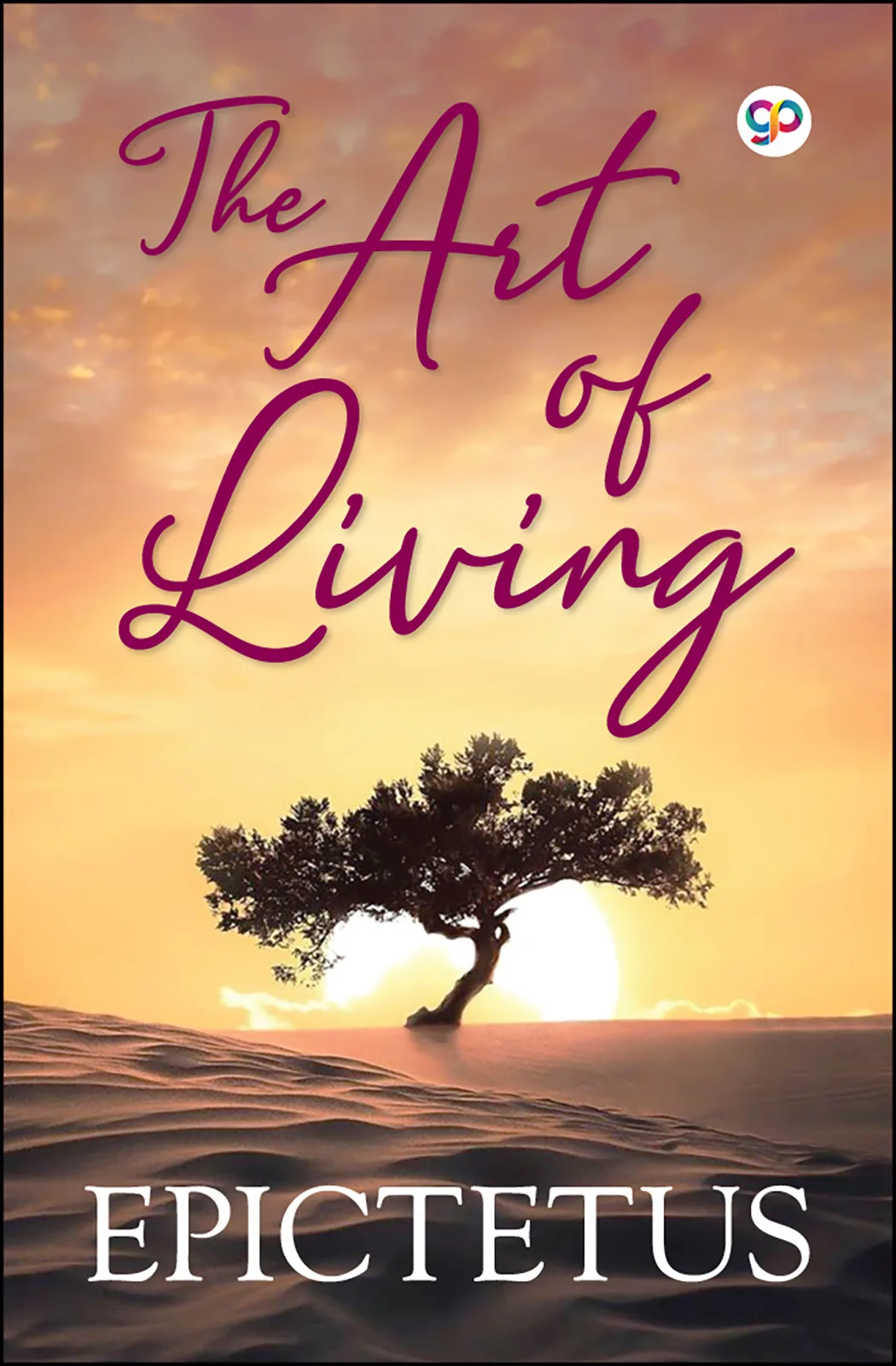
Download Cover Image
Do you want to download the full cover image for The Art of Living?