
The Christian's Secret of a Happy Life
Paperback
• 256 Pages
• INR 395.00
• English
• 9789354993824
No ratings yet
| Publisher | General Press |
|---|---|
| ISBN13 | 9789354993824 |
| ASIN/SKU | 9354993826 |
| Book Format | Paperback |
| Language | English |
| Pages | 256 |
| List Price | INR 395.00 |
| Subject Code | REL012000, SEL032000, REL012120 |
| Publishing Date | 16/05/2022 |
| Dimensions | 8.25 x 5.25 x 1.0 inches |
| Book Code | BD00067672 |
Buy this Book
Amazon Stores
Ebook Stores
Other Stores
Discover The Christian's Secret of a Happy Life by Hannah Whitall Smith. This book is published by General Press in Paperback format, ISBN 9789354993824, ASIN 9354993826, under Christian Books and Bibles, Christian Living, Spiritualism.
Book Description
First published in 1875, ‘The Christian's Secret of a Happy Life’ is a Christian classic by Hannah Whitall Smith, a lay speaker and author in the Holiness movement in the United States and the Higher Life movement in the United Kingdom of Great Britain and Ireland. This is based on Christian mysticism and practical Holiness theology.
Smith explains that life is made of difficulties and painful situations. But the first burden, which she believes to be the greatest burden we have to carry in life, is self. The most difficult thing we have to manage is self. Our own daily living, our feelings, our weaknesses, and temptations—these are the things that confuse us more than anything else. This book has stood the test of time, and helped millions understand how to have full and complete assurance in God alone.
Smith explains that life is made of difficulties and painful situations. But the first burden, which she believes to be the greatest burden we have to carry in life, is self. The most difficult thing we have to manage is self. Our own daily living, our feelings, our weaknesses, and temptations—these are the things that confuse us more than anything else. This book has stood the test of time, and helped millions understand how to have full and complete assurance in God alone.
Author Biography
Hannah Whitall Smith (1832-1911) was born in Philadelphia to a Quaker family. Her life expressed the joy that is found in complete surrender to the Lord. 'The secret to a happy life', according to Whitall Smith, is to trust implicitly in the promises of the Bible. Her goal was not to impress the scholar, but to elevate the simple man or woman who longed for a more consecrated way of living. Deeply practical, her writings deal directly with the day-to-day struggles of ordinary people. She also authored 'The God of All Comfort'.
Editorial Reviews
Editorial Reviews will be added soon…
Book Summary
Hannah Whitall Smith’s The Christian’s Secret of a Happy Life is a practical and deeply personal guide to Christian faith, spiritual surrender, and inner peace. First published in 1875, the book addresses a question that has troubled many believers: how can a person genuinely live a joyful and peaceful Christian life despite weakness, temptation, disappointment, and difficult circumstances? Smith’s answer is that lasting happiness does not come primarily from changing external conditions or trying harder through human effort. Instead, it comes from learning to trust God completely, surrendering one’s life to Him, and allowing His grace to shape everyday thoughts, choices, and responses. The book is written in a warm, encouraging style, and much of its power comes from Smith’s desire to make Christian faith something practical rather than merely theoretical.
Smith begins by describing the common struggle of Christians who sincerely want to live according to their faith but repeatedly feel defeated by their own weaknesses. A person may pray, read the Bible, make resolutions, and try to become more patient, loving, humble, or self-controlled, yet still discover that old habits and temptations return. This can produce discouragement and the feeling that Christian living is an endless battle that can never truly be won. Smith argues that the problem often lies in relying too heavily on personal effort. People may believe that they must somehow transform themselves before God can be pleased with them. According to Smith, this approach keeps believers focused on their failures instead of on God’s sufficiency.
The central idea of the book is surrender. Smith teaches that the believer must consciously place the whole self—desires, plans, fears, ambitions, weaknesses, relationships, and future—into God’s hands. Surrender is not presented as passive hopelessness. Rather, it is an act of trust. Instead of constantly trying to control life, the Christian learns to say, in effect, that God knows what is best and can be trusted with everything. This surrender brings freedom because the individual no longer carries the impossible burden of being responsible for controlling every outcome.
Smith emphasizes that faith must accompany surrender. It is not enough to give one’s life to God and then continue worrying about whether God will actually take care of it. The believer must learn to trust that God accepts the surrendered life and is working within it. Smith repeatedly returns to the idea that God’s promises should be taken seriously. Faith, in her understanding, means believing God’s character and promises even when feelings do not immediately support that belief. A person may feel anxious, discouraged, or spiritually weak, but these feelings do not necessarily determine spiritual reality.
This distinction between faith and feelings is an important part of Smith’s message. She recognizes that emotions naturally change. A person may feel joyful one day and discouraged the next. If spiritual confidence depends entirely upon emotion, faith will constantly rise and fall. Smith therefore encourages Christians to rest their confidence on God rather than on their moods. Happiness in the Christian sense is not simply excitement or constant pleasant feelings. It is a deeper peace that comes from knowing that one’s life is held by God.
Another major theme is the believer’s relationship with sin and temptation. Smith does not suggest that Christians will never experience temptation. Instead, she teaches that temptation itself is not the same as sin. A thought, desire, or impulse may appear without being deliberately accepted. The important issue is how the person responds. Rather than becoming terrified or discouraged by temptation, the believer can turn immediately to God for strength. Smith encourages Christians to stop treating every temptation as evidence that they have failed spiritually. Trusting God in the moment of temptation becomes part of the process of spiritual growth.
The book also challenges the habit of excessive self-examination. Smith believes that constantly examining one’s own spiritual condition can become another form of self-centeredness. A person may become so occupied with asking whether they are humble enough, loving enough, faithful enough, or spiritual enough that they lose sight of God. Smith instead encourages believers to look outward and upward—to God’s character and promises. This does not mean ignoring moral responsibility. It means allowing faith to replace obsessive anxiety about personal performance.
Smith also discusses the role of circumstances. Much of human unhappiness comes from the belief that peace will arrive only when circumstances become favorable. People imagine they will be content when they have more money, better health, greater success, fewer conflicts, or more appreciation from others. Smith argues that this kind of happiness is fragile because circumstances are always changing. The deeper Christian secret is to learn contentment in the middle of circumstances rather than waiting for perfect circumstances to appear.
This teaching does not mean that suffering is pleasant or that Christians should never seek to change harmful situations. Rather, Smith argues that God can give peace even when circumstances cannot immediately be changed. The believer can trust that difficult experiences may become opportunities for spiritual growth. Instead of constantly asking why something unpleasant has happened, the Christian can ask how to respond faithfully to it. This shift in perspective transforms ordinary difficulties into opportunities for trust, patience, and dependence upon God.
Prayer is naturally important within this way of living. Smith presents prayer not simply as a formal religious activity but as a continuing relationship of dependence upon God. The Christian brings fears, needs, temptations, decisions, and desires to Him and learns to leave them there. Prayer becomes an expression of trust rather than merely a list of requests. The goal is not to persuade God to care but to recognize that He already cares and to become more willing to rely on Him.
Smith also stresses obedience. Surrender does not mean that a person can ignore moral responsibilities. Genuine trust in God should produce practical obedience. When a believer understands what is right, the proper response is to act upon it rather than endlessly debating or delaying. The Christian life therefore combines dependence upon God with faithful action. The believer works, but does not depend upon personal strength alone; prays, but also obeys; accepts responsibility, but does not attempt to control the entire future.
One of the book’s most appealing features is its emphasis on ordinary life. Smith does not present spiritual happiness as something reserved for monks, ministers, or exceptionally gifted people. She applies her ideas to family relationships, work, disappointments, irritations, responsibilities, and everyday choices. The real test of faith is not what a person feels during a religious meeting but how that person responds to difficult people, unexpected problems, and ordinary frustrations.
Ultimately, The Christian’s Secret of a Happy Life teaches that Christian happiness is rooted in a relationship of trust rather than in perfect circumstances or flawless personal performance. Smith’s central invitation is simple but demanding: surrender everything to God, believe that He can be trusted, refuse to let changing feelings determine spiritual confidence, and learn to meet each circumstance with faith. The “secret” is therefore not a hidden technique but a change in the direction of the heart. Instead of constantly trying to manage life alone, the believer learns to rest in God’s care. For Smith, this surrender does not weaken a person; it creates freedom. It allows Christians to face temptation without despair, suffering without complete hopelessness, and uncertainty without being consumed by fear. The result is the kind of happiness she considers deepest—not a life without trouble, but a life in which peace, confidence, gratitude, and trust can remain present even when trouble comes.
Smith begins by describing the common struggle of Christians who sincerely want to live according to their faith but repeatedly feel defeated by their own weaknesses. A person may pray, read the Bible, make resolutions, and try to become more patient, loving, humble, or self-controlled, yet still discover that old habits and temptations return. This can produce discouragement and the feeling that Christian living is an endless battle that can never truly be won. Smith argues that the problem often lies in relying too heavily on personal effort. People may believe that they must somehow transform themselves before God can be pleased with them. According to Smith, this approach keeps believers focused on their failures instead of on God’s sufficiency.
The central idea of the book is surrender. Smith teaches that the believer must consciously place the whole self—desires, plans, fears, ambitions, weaknesses, relationships, and future—into God’s hands. Surrender is not presented as passive hopelessness. Rather, it is an act of trust. Instead of constantly trying to control life, the Christian learns to say, in effect, that God knows what is best and can be trusted with everything. This surrender brings freedom because the individual no longer carries the impossible burden of being responsible for controlling every outcome.
Smith emphasizes that faith must accompany surrender. It is not enough to give one’s life to God and then continue worrying about whether God will actually take care of it. The believer must learn to trust that God accepts the surrendered life and is working within it. Smith repeatedly returns to the idea that God’s promises should be taken seriously. Faith, in her understanding, means believing God’s character and promises even when feelings do not immediately support that belief. A person may feel anxious, discouraged, or spiritually weak, but these feelings do not necessarily determine spiritual reality.
This distinction between faith and feelings is an important part of Smith’s message. She recognizes that emotions naturally change. A person may feel joyful one day and discouraged the next. If spiritual confidence depends entirely upon emotion, faith will constantly rise and fall. Smith therefore encourages Christians to rest their confidence on God rather than on their moods. Happiness in the Christian sense is not simply excitement or constant pleasant feelings. It is a deeper peace that comes from knowing that one’s life is held by God.
Another major theme is the believer’s relationship with sin and temptation. Smith does not suggest that Christians will never experience temptation. Instead, she teaches that temptation itself is not the same as sin. A thought, desire, or impulse may appear without being deliberately accepted. The important issue is how the person responds. Rather than becoming terrified or discouraged by temptation, the believer can turn immediately to God for strength. Smith encourages Christians to stop treating every temptation as evidence that they have failed spiritually. Trusting God in the moment of temptation becomes part of the process of spiritual growth.
The book also challenges the habit of excessive self-examination. Smith believes that constantly examining one’s own spiritual condition can become another form of self-centeredness. A person may become so occupied with asking whether they are humble enough, loving enough, faithful enough, or spiritual enough that they lose sight of God. Smith instead encourages believers to look outward and upward—to God’s character and promises. This does not mean ignoring moral responsibility. It means allowing faith to replace obsessive anxiety about personal performance.
Smith also discusses the role of circumstances. Much of human unhappiness comes from the belief that peace will arrive only when circumstances become favorable. People imagine they will be content when they have more money, better health, greater success, fewer conflicts, or more appreciation from others. Smith argues that this kind of happiness is fragile because circumstances are always changing. The deeper Christian secret is to learn contentment in the middle of circumstances rather than waiting for perfect circumstances to appear.
This teaching does not mean that suffering is pleasant or that Christians should never seek to change harmful situations. Rather, Smith argues that God can give peace even when circumstances cannot immediately be changed. The believer can trust that difficult experiences may become opportunities for spiritual growth. Instead of constantly asking why something unpleasant has happened, the Christian can ask how to respond faithfully to it. This shift in perspective transforms ordinary difficulties into opportunities for trust, patience, and dependence upon God.
Prayer is naturally important within this way of living. Smith presents prayer not simply as a formal religious activity but as a continuing relationship of dependence upon God. The Christian brings fears, needs, temptations, decisions, and desires to Him and learns to leave them there. Prayer becomes an expression of trust rather than merely a list of requests. The goal is not to persuade God to care but to recognize that He already cares and to become more willing to rely on Him.
Smith also stresses obedience. Surrender does not mean that a person can ignore moral responsibilities. Genuine trust in God should produce practical obedience. When a believer understands what is right, the proper response is to act upon it rather than endlessly debating or delaying. The Christian life therefore combines dependence upon God with faithful action. The believer works, but does not depend upon personal strength alone; prays, but also obeys; accepts responsibility, but does not attempt to control the entire future.
One of the book’s most appealing features is its emphasis on ordinary life. Smith does not present spiritual happiness as something reserved for monks, ministers, or exceptionally gifted people. She applies her ideas to family relationships, work, disappointments, irritations, responsibilities, and everyday choices. The real test of faith is not what a person feels during a religious meeting but how that person responds to difficult people, unexpected problems, and ordinary frustrations.
Ultimately, The Christian’s Secret of a Happy Life teaches that Christian happiness is rooted in a relationship of trust rather than in perfect circumstances or flawless personal performance. Smith’s central invitation is simple but demanding: surrender everything to God, believe that He can be trusted, refuse to let changing feelings determine spiritual confidence, and learn to meet each circumstance with faith. The “secret” is therefore not a hidden technique but a change in the direction of the heart. Instead of constantly trying to manage life alone, the believer learns to rest in God’s care. For Smith, this surrender does not weaken a person; it creates freedom. It allows Christians to face temptation without despair, suffering without complete hopelessness, and uncertainty without being consumed by fear. The result is the kind of happiness she considers deepest—not a life without trouble, but a life in which peace, confidence, gratitude, and trust can remain present even when trouble comes.
Sample Chapters
Sample Chapters will be added soon…
Reader Reviews
No reviews yet.
The Christian's Secret of a Happy Life
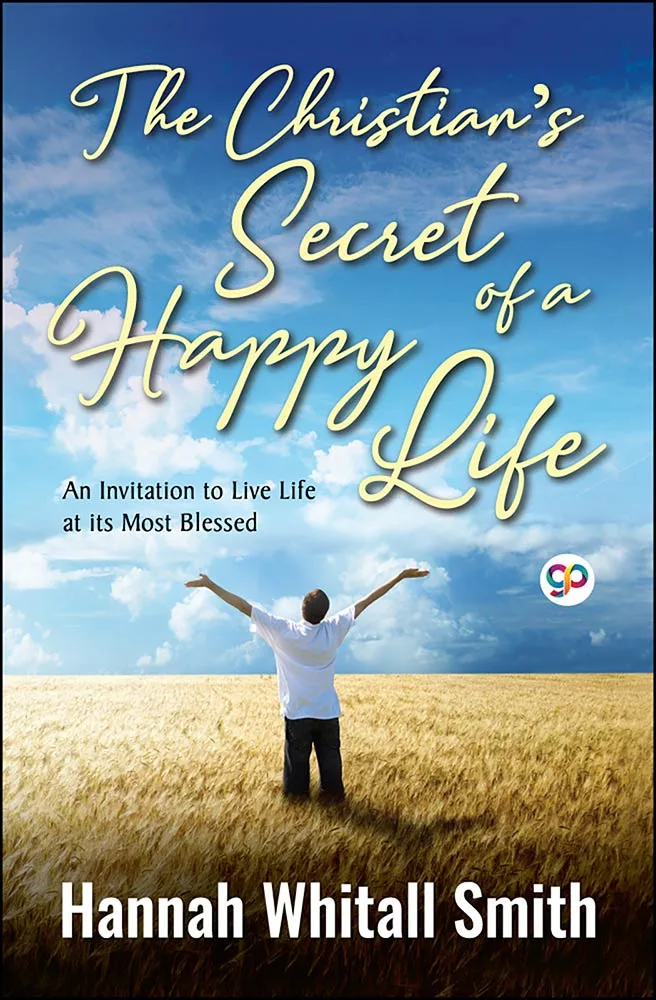
Download Cover Image
Do you want to download the full cover image for The Christian's Secret of a Happy Life?