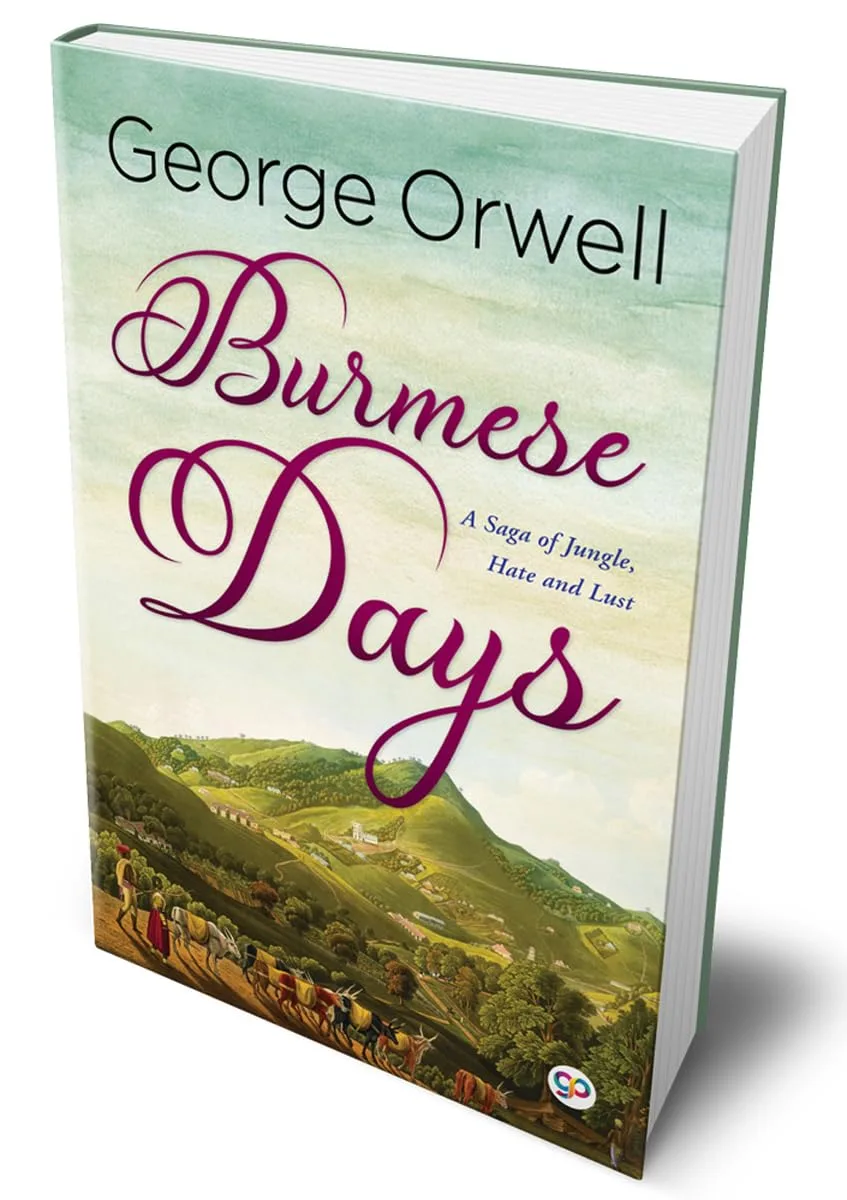
Burmese Days
Hardcover
• 304 Pages
• INR 495.00
• English
• 9789354994036
No ratings yet
| Publisher | General Press |
|---|---|
| ISBN13 | 9789354994036 |
| ASIN/SKU | 9354994032 |
| Book Format | Hardcover |
| Language | English |
| Pages | 304 |
| List Price | INR 495.00 |
| Subject Code | FIC019000, FIC045000, FIC037000, FIC028060 |
| Publishing Date | 01/06/2022 |
| Dimensions | 8.25 x 5.25 x 1.0 inches |
| Book Code | BD00067693 |
Buy this Book
Amazon Stores
Ebook Stores
Other Stores
Discover Burmese Days by George Orwell. This book is published by General Press in Hardcover format, ISBN 9789354994036, ASIN 9354994032, under Literature and Fiction, Historical Fiction, Classics.
Book Description
First published in 1934, George Orwell’s first novel 'Burmese Days', presents a devastating portrayal of British colonial rule, inspired by his experiences in the Indian Imperial Police in Burma. The story describes both indigenous corruption and Imperial bigotry.
John Flory is a white timber merchant in 1920s Burma. Disillusioned by imperial life, Flory defies orthodoxy and befriends Indian Dr. Veraswami. The doctor is being pursued by a corrupt magistrate, U Po Kyin, who is orchestrating his downfall. The only thing that can save his reputation is membership in the all-white Club, and Flory is in a position to help. Flory’s life is also upended by the arrival of beautiful Parisian Elizabeth Lackersteen, who offers an escape from loneliness and the deceit of colonial life. It is an astonishing examination of the debasing effect of empire on occupied and occupier.
John Flory is a white timber merchant in 1920s Burma. Disillusioned by imperial life, Flory defies orthodoxy and befriends Indian Dr. Veraswami. The doctor is being pursued by a corrupt magistrate, U Po Kyin, who is orchestrating his downfall. The only thing that can save his reputation is membership in the all-white Club, and Flory is in a position to help. Flory’s life is also upended by the arrival of beautiful Parisian Elizabeth Lackersteen, who offers an escape from loneliness and the deceit of colonial life. It is an astonishing examination of the debasing effect of empire on occupied and occupier.
Author Biography
Eric Arthur Blair (1903–1950), universally known by his pen name George Orwell, was an English novelist, essayist, and critic famous for his lucid prose and fierce opposition to totalitarianism. Born in Motihari, India, where his father worked for the British civil service, he was sent to England for his education, eventually attending Eton College. Rather than pursuing a university degree, he joined the Indian Imperial Police in Burma in 1922, an experience that cultivated his lifelong hatred of imperialism and authority.
Resigning from the police force in 1927, Blair returned to Europe determined to become a writer. To truly understand the lives of the destitute, he deliberately lived in poverty in London and Paris, documenting his experiences in his first published book, Down and Out in Paris and London (1933). It was for this publication that he adopted the pseudonym George Orwell. He continued to write novels and journalistic pieces throughout the 1930s, heavily focused on class divides and social injustice.
A defining moment in Orwell’s life occurred in 1936 when he traveled to Spain to fight against fascism in the Spanish Civil War. Serving with a Republican militia, he witnessed firsthand the brutal suppression of political dissent by Stalinist factions, which profoundly shaped his anti-Stalinist worldview. A sniper's bullet to the throat nearly killed him, forcing his return to England and inspiring his autobiographical account, Homage to Catalonia.
Orwell’s enduring global fame rests largely on his two final masterpieces. Animal Farm (1945), a brilliant anti-Soviet satire, brought him his first significant financial success. He followed this with the dystopian triumph 1984 (1949), introducing enduring concepts like "Big Brother," "Thought Police," and "doublethink" into the cultural lexicon.
Tragically, Orwell did not live long enough to witness the full impact of his final novel. Battling tuberculosis for years, he died in London in 1950 at the age of 46. Today, his name remains synonymous with the defense of democratic socialism and the unrelenting critique of oppressive state surveillance.
Resigning from the police force in 1927, Blair returned to Europe determined to become a writer. To truly understand the lives of the destitute, he deliberately lived in poverty in London and Paris, documenting his experiences in his first published book, Down and Out in Paris and London (1933). It was for this publication that he adopted the pseudonym George Orwell. He continued to write novels and journalistic pieces throughout the 1930s, heavily focused on class divides and social injustice.
A defining moment in Orwell’s life occurred in 1936 when he traveled to Spain to fight against fascism in the Spanish Civil War. Serving with a Republican militia, he witnessed firsthand the brutal suppression of political dissent by Stalinist factions, which profoundly shaped his anti-Stalinist worldview. A sniper's bullet to the throat nearly killed him, forcing his return to England and inspiring his autobiographical account, Homage to Catalonia.
Orwell’s enduring global fame rests largely on his two final masterpieces. Animal Farm (1945), a brilliant anti-Soviet satire, brought him his first significant financial success. He followed this with the dystopian triumph 1984 (1949), introducing enduring concepts like "Big Brother," "Thought Police," and "doublethink" into the cultural lexicon.
Tragically, Orwell did not live long enough to witness the full impact of his final novel. Battling tuberculosis for years, he died in London in 1950 at the age of 46. Today, his name remains synonymous with the defense of democratic socialism and the unrelenting critique of oppressive state surveillance.
Editorial Reviews
Editorial Reviews will be added soon…
Book Summary
Burmese Days is George Orwell's first published novel and one of his most powerful critiques of British colonial rule. Drawing heavily on his own experiences as a police officer in colonial Burma (now Myanmar), Orwell presents a deeply human story about loneliness, prejudice, moral compromise, and the corrosive effects of imperialism. Rather than portraying colonial life as adventurous or glamorous, the novel exposes its hypocrisy and emotional emptiness.
The story is set during the 1920s in the fictional town of Kyauktada, a remote outpost where a small community of British officials lives among the Burmese population. Although these officials claim to represent civilization and justice, Orwell reveals that many of them are driven by arrogance, racial superiority, and self-interest. Their lives revolve around routine, gossip, drinking, and maintaining the illusion of British dominance.
At the center of the novel is John Flory, a middle-aged British timber merchant who has spent many years in Burma. Unlike most of the Europeans around him, Flory recognizes the cruelty and injustice of colonial rule. He admires Burmese culture, enjoys the company of local people, and privately criticizes the racist attitudes of his fellow countrymen. Yet he lacks the courage to openly challenge the colonial system. His inner conflict—between what he believes and what he dares to do—forms the emotional heart of the novel.
Flory's closest friend is Dr. Veraswami, an educated and compassionate Indian physician. Veraswami genuinely believes that the British Empire has brought order and progress, despite experiencing discrimination himself. He hopes to be admitted to the exclusive European Club, believing that acceptance there would validate his status and protect him from political attacks. Flory sympathizes with his friend and wishes to help him, but his own fear of social rejection prevents him from offering the firm public support that Veraswami desperately needs.
Another important figure is U Po Kyin, a wealthy Burmese magistrate whose ambition and cunning make him one of Orwell's most memorable characters. U Po Kyin understands how power operates within the colonial system and manipulates it for personal gain. Through bribery, lies, and carefully planned conspiracies, he seeks to destroy Veraswami's reputation while advancing his own influence. Orwell portrays him not simply as a villain but as someone shaped by a corrupt political environment in which dishonesty is often rewarded.
The arrival of Elizabeth Lackersteen, a young Englishwoman seeking a husband, introduces a more personal dimension to the story. Flory quickly falls in love with her and imagines that she could rescue him from his isolation. Elizabeth initially appears interested in him because he offers stability and companionship in an unfamiliar land. However, her values are shaped by the rigid attitudes of the colonial society. She prefers displays of status and authority to Flory's thoughtful, questioning nature, and she gradually becomes more attracted to men who embody the confident image of British superiority.
As the story progresses, Flory finds himself torn between hope and disappointment. He longs for an authentic human connection, but he also fears exposing his true beliefs. His hesitation repeatedly undermines his relationships. Orwell shows that silence in the face of injustice can be as damaging as active participation, especially when a person's moral convictions remain hidden.
The European Club serves as one of the novel's strongest symbols. It represents the exclusiveness and racial divisions of the colonial world. Membership is restricted almost entirely to Europeans, reinforcing the belief that British identity is inherently superior to that of the local population. Even discussions about admitting a single Indian member provoke intense hostility among many of the club's members. Orwell uses these debates to reveal how prejudice is maintained through social institutions as much as through individual attitudes.
Throughout the novel, Orwell also examines the psychological cost of imperialism. The British officials often appear powerful, but many are unhappy, insecure, and trapped by the very system they defend. Their isolation from Burmese society leaves them emotionally stagnant, while their constant need to uphold racial hierarchies prevents genuine friendships or meaningful lives. Colonialism, Orwell suggests, damages the rulers as well as the ruled by encouraging fear, dishonesty, and moral blindness.
Nature provides a striking contrast to the artificial social world of the Europeans. Orwell's vivid descriptions of Burma's forests, rivers, wildlife, and landscapes reveal his admiration for the country itself. The beauty of the natural environment stands in sharp opposition to the ugliness of human prejudice and political manipulation. These passages remind readers that the land possesses a richness and dignity independent of colonial rule.
As political intrigue intensifies, U Po Kyin's schemes become increasingly effective. Through rumors, fabricated accusations, and strategic alliances, he succeeds in weakening Veraswami's position. Flory repeatedly has opportunities to defend his friend publicly but fails to act decisively when it matters most. His inability to overcome fear becomes one of the novel's greatest tragedies, illustrating Orwell's belief that moral conviction without courage rarely changes unjust systems.
Flory's relationship with Elizabeth also deteriorates as misunderstandings, social pressure, and personal insecurity grow. Elizabeth ultimately embraces the values of the colonial society that Flory quietly rejects. Their failed relationship symbolizes the impossibility of building genuine intimacy in an environment dominated by prejudice, appearances, and rigid expectations.
The novel moves steadily toward a tragic conclusion, in which personal failures and institutional injustice converge. Orwell avoids presenting simple heroes or villains. Instead, he shows how flawed individuals become entangled in a larger system that rewards conformity and punishes honesty. The ending reinforces the novel's central message: societies built on inequality ultimately harm everyone involved, even those who appear to benefit from them.
One of the book's greatest strengths is its nuanced portrayal of human weakness. Flory is sympathetic but deeply imperfect. He understands the truth about colonialism, yet repeatedly compromises his principles out of fear and loneliness. Orwell suggests that recognizing injustice is only the first step; meaningful change requires the courage to act despite personal risk.
The novel also explores themes of identity, belonging, friendship, social isolation, and the search for integrity. Orwell demonstrates how racism distorts relationships, how power encourages corruption, and how silence enables oppression. At the same time, he writes with empathy for individuals struggling to preserve their humanity within an unjust social order.
Today, Burmese Days remains an important literary examination of colonialism and its lasting consequences. Its critique extends beyond the historical setting, raising timeless questions about privilege, moral responsibility, and the choices people make when confronted with injustice. By combining political insight with deeply personal storytelling, George Orwell created a novel that continues to resonate with readers seeking to understand both the human and institutional costs of power.
The story is set during the 1920s in the fictional town of Kyauktada, a remote outpost where a small community of British officials lives among the Burmese population. Although these officials claim to represent civilization and justice, Orwell reveals that many of them are driven by arrogance, racial superiority, and self-interest. Their lives revolve around routine, gossip, drinking, and maintaining the illusion of British dominance.
At the center of the novel is John Flory, a middle-aged British timber merchant who has spent many years in Burma. Unlike most of the Europeans around him, Flory recognizes the cruelty and injustice of colonial rule. He admires Burmese culture, enjoys the company of local people, and privately criticizes the racist attitudes of his fellow countrymen. Yet he lacks the courage to openly challenge the colonial system. His inner conflict—between what he believes and what he dares to do—forms the emotional heart of the novel.
Flory's closest friend is Dr. Veraswami, an educated and compassionate Indian physician. Veraswami genuinely believes that the British Empire has brought order and progress, despite experiencing discrimination himself. He hopes to be admitted to the exclusive European Club, believing that acceptance there would validate his status and protect him from political attacks. Flory sympathizes with his friend and wishes to help him, but his own fear of social rejection prevents him from offering the firm public support that Veraswami desperately needs.
Another important figure is U Po Kyin, a wealthy Burmese magistrate whose ambition and cunning make him one of Orwell's most memorable characters. U Po Kyin understands how power operates within the colonial system and manipulates it for personal gain. Through bribery, lies, and carefully planned conspiracies, he seeks to destroy Veraswami's reputation while advancing his own influence. Orwell portrays him not simply as a villain but as someone shaped by a corrupt political environment in which dishonesty is often rewarded.
The arrival of Elizabeth Lackersteen, a young Englishwoman seeking a husband, introduces a more personal dimension to the story. Flory quickly falls in love with her and imagines that she could rescue him from his isolation. Elizabeth initially appears interested in him because he offers stability and companionship in an unfamiliar land. However, her values are shaped by the rigid attitudes of the colonial society. She prefers displays of status and authority to Flory's thoughtful, questioning nature, and she gradually becomes more attracted to men who embody the confident image of British superiority.
As the story progresses, Flory finds himself torn between hope and disappointment. He longs for an authentic human connection, but he also fears exposing his true beliefs. His hesitation repeatedly undermines his relationships. Orwell shows that silence in the face of injustice can be as damaging as active participation, especially when a person's moral convictions remain hidden.
The European Club serves as one of the novel's strongest symbols. It represents the exclusiveness and racial divisions of the colonial world. Membership is restricted almost entirely to Europeans, reinforcing the belief that British identity is inherently superior to that of the local population. Even discussions about admitting a single Indian member provoke intense hostility among many of the club's members. Orwell uses these debates to reveal how prejudice is maintained through social institutions as much as through individual attitudes.
Throughout the novel, Orwell also examines the psychological cost of imperialism. The British officials often appear powerful, but many are unhappy, insecure, and trapped by the very system they defend. Their isolation from Burmese society leaves them emotionally stagnant, while their constant need to uphold racial hierarchies prevents genuine friendships or meaningful lives. Colonialism, Orwell suggests, damages the rulers as well as the ruled by encouraging fear, dishonesty, and moral blindness.
Nature provides a striking contrast to the artificial social world of the Europeans. Orwell's vivid descriptions of Burma's forests, rivers, wildlife, and landscapes reveal his admiration for the country itself. The beauty of the natural environment stands in sharp opposition to the ugliness of human prejudice and political manipulation. These passages remind readers that the land possesses a richness and dignity independent of colonial rule.
As political intrigue intensifies, U Po Kyin's schemes become increasingly effective. Through rumors, fabricated accusations, and strategic alliances, he succeeds in weakening Veraswami's position. Flory repeatedly has opportunities to defend his friend publicly but fails to act decisively when it matters most. His inability to overcome fear becomes one of the novel's greatest tragedies, illustrating Orwell's belief that moral conviction without courage rarely changes unjust systems.
Flory's relationship with Elizabeth also deteriorates as misunderstandings, social pressure, and personal insecurity grow. Elizabeth ultimately embraces the values of the colonial society that Flory quietly rejects. Their failed relationship symbolizes the impossibility of building genuine intimacy in an environment dominated by prejudice, appearances, and rigid expectations.
The novel moves steadily toward a tragic conclusion, in which personal failures and institutional injustice converge. Orwell avoids presenting simple heroes or villains. Instead, he shows how flawed individuals become entangled in a larger system that rewards conformity and punishes honesty. The ending reinforces the novel's central message: societies built on inequality ultimately harm everyone involved, even those who appear to benefit from them.
One of the book's greatest strengths is its nuanced portrayal of human weakness. Flory is sympathetic but deeply imperfect. He understands the truth about colonialism, yet repeatedly compromises his principles out of fear and loneliness. Orwell suggests that recognizing injustice is only the first step; meaningful change requires the courage to act despite personal risk.
The novel also explores themes of identity, belonging, friendship, social isolation, and the search for integrity. Orwell demonstrates how racism distorts relationships, how power encourages corruption, and how silence enables oppression. At the same time, he writes with empathy for individuals struggling to preserve their humanity within an unjust social order.
Today, Burmese Days remains an important literary examination of colonialism and its lasting consequences. Its critique extends beyond the historical setting, raising timeless questions about privilege, moral responsibility, and the choices people make when confronted with injustice. By combining political insight with deeply personal storytelling, George Orwell created a novel that continues to resonate with readers seeking to understand both the human and institutional costs of power.
Sample Chapters
Sample Chapters will be added soon…
Reader Reviews
No reviews yet.
Burmese Days