
Five Chimneys: A Woman Survivor's True Story of Auschwitz
Hardcover
• 232 Pages
• INR 425.00
• English
• 9789354994043
No ratings yet
| Publisher | General Press |
|---|---|
| ISBN13 | 9789354994043 |
| ASIN/SKU | 9354994040 |
| Book Format | Hardcover |
| Language | English |
| Pages | 232 |
| List Price | INR 425.00 |
| Subject Code | BIO022000, HIS043000, HIS027100 |
| Publishing Date | 01/06/2022 |
| Dimensions | 8.25 x 5.25 x 1.0 inches |
| Book Code | BD00067695 |
Buy this Book
Amazon Stores
Ebook Stores
Other Stores
Discover Five Chimneys: A Woman Survivor's True Story of Auschwitz by Olga Lengyel. This book is published by General Press in Hardcover format, ISBN 9789354994043, ASIN 9354994040, under Biographies and Memoirs, Holocaust, Women's Memoirs.
Book Description
First published in 1947, 'Five Chimneys' by Olga Lengyel, a Hungarian Jewish prisoner at the Auschwitz-Birkenau concentration camp, who later wrote about her experiences in this book.
Olga Lengyel recounts, honestly and without compromise, one of the most frightening stories of all time. This authentic, registered chronicle is the personal, day-to-day journal of a beautiful woman who endured the nightmare of Auschwitz and Birkenau. This book is a critical reminder of one of the most unappealing chapters in the history of human civilization. It was a shocking experience.
"... Thank you for your very frank, very well-written book. You have done a real service by letting the ones who are now silent and most forgotten speak ...With best regards and wishes."— A. Einstein
"This book is a horrifying, but necessary, reminder of one of the ugliest chapters in the history of human civilization. Passionate, tormenting."—New York Herald-Tribune
"It is a picture of utter hell."—Saturday Review of Literature
Olga Lengyel recounts, honestly and without compromise, one of the most frightening stories of all time. This authentic, registered chronicle is the personal, day-to-day journal of a beautiful woman who endured the nightmare of Auschwitz and Birkenau. This book is a critical reminder of one of the most unappealing chapters in the history of human civilization. It was a shocking experience.
"... Thank you for your very frank, very well-written book. You have done a real service by letting the ones who are now silent and most forgotten speak ...With best regards and wishes."— A. Einstein
"This book is a horrifying, but necessary, reminder of one of the ugliest chapters in the history of human civilization. Passionate, tormenting."—New York Herald-Tribune
"It is a picture of utter hell."—Saturday Review of Literature
Author Biography
Olga Lengyel was a Hungarian author and Holocaust survivor best known for her memoir Five Chimneys, which provides a harrowing account of her experiences in the Auschwitz-Birkenau concentration camp during World War II. Born in 1908 in Cluj, Hungary (now Romania), she was the wife of Dr. Miklós Lengyel, a respected surgeon. When Nazi forces occupied Hungary in 1944, Olga, along with her husband, two sons, and her parents, were deported to Auschwitz. She lost her entire family to the horrors of the Holocaust.
In Auschwitz, Olga was subjected to unimaginable suffering and witnessed the brutalities inflicted upon thousands of prisoners. After surviving the camp, she emigrated to the United States, where she dedicated her life to educating the world about the atrocities of the Holocaust. Her memoir, published in 1947, was one of the earliest survivor accounts to be widely read and remains a crucial document for understanding the human cost of the Holocaust. Lengyel's work not only serves as a personal testimony but also as a historical record of the systematic genocide perpetrated by the Nazis. She passed away in 2001, leaving behind a legacy of courage and a commitment to never forget the atrocities of the past.
In Auschwitz, Olga was subjected to unimaginable suffering and witnessed the brutalities inflicted upon thousands of prisoners. After surviving the camp, she emigrated to the United States, where she dedicated her life to educating the world about the atrocities of the Holocaust. Her memoir, published in 1947, was one of the earliest survivor accounts to be widely read and remains a crucial document for understanding the human cost of the Holocaust. Lengyel's work not only serves as a personal testimony but also as a historical record of the systematic genocide perpetrated by the Nazis. She passed away in 2001, leaving behind a legacy of courage and a commitment to never forget the atrocities of the past.
Editorial Reviews
Editorial Reviews will be added soon…
Book Summary
Olga Lengyel’s Five Chimneys: A Woman Survivor’s True Story of Auschwitz is one of the earliest personal accounts of life inside Auschwitz-Birkenau. First published in French in 1946, shortly after the war, the memoir records Lengyel’s deportation, the destruction of her family, her months inside the camp, her involvement in the prisoners’ underground resistance, and her eventual escape and liberation. It is not simply a description of Nazi brutality. It is also a deeply personal attempt to understand how an ordinary woman could survive a place designed to destroy human beings physically, emotionally, and morally.
Before the war, Lengyel lives in Cluj, in Transylvania, with her husband Miklós, their two sons, and her parents. She works as a surgical assistant in her husband’s medical clinic and describes a relatively comfortable family life. The importance of this opening becomes clearer as the story progresses: the people who arrive at Auschwitz are not presented as abstract victims. They have homes, professions, family relationships, hopes, habits, and ordinary concerns. They are people who cannot imagine that their familiar world is about to disappear.
The Nazi persecution initially reaches Lengyel’s family through rumors, restrictions, arrests, and deportations. Like many people who heard reports of Nazi atrocities, she finds the worst stories difficult to believe. The idea that an advanced modern society could deliberately build systems for mass murder seems almost impossible. This disbelief becomes one of the memoir’s painful themes. The Nazis benefit from precisely this inability to imagine the unimaginable. Deception is part of their machinery of control.
In 1944, Lengyel’s husband is taken away, and she chooses to accompany him rather than allow the family to be separated. Her parents and children eventually join them. The family is transported in a cattle car under conditions of extreme overcrowding. The journey itself becomes a transformation from civilian life into imprisonment. People are packed together with almost no space, food, water, or dignity. By the time the train reaches Auschwitz, exhaustion and death have already begun to claim the passengers.
The arrival at Auschwitz is the central rupture in Lengyel’s life. Families are separated almost immediately, and the prisoners are subjected to a selection process that determines who will be used for forced labor and who will be murdered. Lengyel does not initially understand the full meaning of what is happening. Her husband is separated from her, while her parents and two young sons are sent away. She later realizes that they have been murdered almost immediately after arrival.
This realization is devastating because Lengyel carries an agonizing sense of responsibility. She had believed the family would remain together and had encouraged their decision to travel together. Afterward, she repeatedly questions her own judgment. Her grief is therefore mixed with guilt: she has survived, while the people she loved most have not. The memoir’s emotional power comes partly from this survivor’s burden. Survival does not feel like victory to her. It often feels like an obligation to speak for those who were silenced.
Inside Auschwitz-Birkenau, Lengyel encounters a world organized around hunger, exhaustion, fear, disease, humiliation, and arbitrary violence. Prisoners live in overcrowded barracks with inadequate food and clothing. Hygiene is almost impossible. Roll calls can last for hours in freezing or miserable conditions. The prisoners are constantly threatened by selections, beatings, disease, and death. The camp’s rules are deliberately irrational, making it impossible for prisoners to feel secure. Even a small mistake can have fatal consequences.
One of Lengyel’s important observations is that the Nazis attack not only the body but also the prisoner’s sense of identity. People are reduced to numbers, stripped of possessions, separated from families, and forced into degrading conditions. Normal ideas of privacy, dignity, and personal choice disappear. Yet Lengyel also shows that human individuality does not disappear completely. Prisoners continue to form friendships, exchange information, share food, protect one another, and take enormous risks for people they barely know.
Her medical background eventually becomes important to her survival. She obtains work connected with the camp infirmary, where she witnesses another side of Nazi cruelty. Medicine, which in ordinary life is associated with healing and compassion, has been corrupted by the concentration-camp system. Sick prisoners can be treated as burdens rather than patients, while Nazi doctors conduct selections and experiments with little regard for human life. Lengyel describes the terrifying presence of medical experimentation and the exploitation of vulnerable prisoners, including women and children.
The memoir is particularly significant because it brings attention to women’s experiences in Auschwitz. Pregnancy, childbirth, motherhood, illness, and physical vulnerability become dangerous conditions within the camp. Lengyel shows how Nazi policies attacked women not only as prisoners but as mothers and human beings. The destruction of families is therefore one of the book’s deepest wounds: motherhood itself becomes inseparable from fear because children are often among the first victims.
Another important element of the book is Lengyel’s description of the prisoners’ internal social world. Auschwitz is not a simple story in which every prisoner behaves heroically and every person with authority behaves identically. The camp creates terrible moral pressures. Some prisoners become cruel or selfish in order to survive; others show extraordinary generosity. Some people are given limited privileges and are placed in positions where they must make painful choices. Lengyel is frank about these moral complications.
This honesty makes the memoir more than a catalogue of Nazi crimes. It examines what happens to ordinary human relationships when people are placed in an environment deliberately constructed to produce fear, competition, hunger, and helplessness. At the same time, Lengyel refuses to conclude that cruelty is inevitable. Acts of kindness, resistance, friendship, and courage continue even under the most terrible circumstances.
The underground resistance becomes one of the strongest signs of this continuing humanity. Prisoners secretly exchange information, organize acts of resistance, and attempt to oppose the machinery that surrounds them. Such resistance is dangerous because discovery can mean torture or death. Yet its existence matters greatly to Lengyel. It demonstrates that the prisoners are not merely passive objects of history. Even when their choices are drastically limited, they can still make moral decisions and resist their oppressors.
The title Five Chimneys refers to the crematory chimneys that become a constant symbol of Auschwitz. They represent the industrial scale of the killing and the frightening transformation of death into a routine part of camp life. For Lengyel, the chimneys are also a symbol of everything the prisoners have lost: families, homes, futures, names, and ordinary human existence. Their presence turns the surrounding landscape into a place where death is always visible, even when it is not immediately spoken about.
As the war moves toward its end, Auschwitz becomes increasingly unstable. The advancing Soviet forces create panic among the Germans, and prisoners are eventually forced to leave the camp. Lengyel joins a death march in the winter of 1945. The prisoners are exhausted and poorly equipped for the journey, while guards kill those who cannot keep pace. Lengyel manages to escape with other prisoners and receives help from Polish villagers, but danger continues even after she has left Auschwitz.
Her eventual liberation does not produce a simple happy ending. She has survived, but almost everyone she loved has been murdered. Her husband later dies during the death march. The freedom she reaches is therefore inseparable from grief. The memoir understands survival as something complicated: the survivor has escaped physically, but the past cannot simply be escaped emotionally.
The final meaning of Five Chimneys lies in Lengyel’s decision to remember and testify. She wants the dead to remain present through the stories of those who survived. Her purpose is not revenge but remembrance and warning. She writes because forgetting would give the perpetrators another victory. The memoir therefore becomes a responsibility: if the survivors remain silent, future generations may fail to understand how hatred, prejudice, obedience, propaganda, and dehumanization can develop into organized mass murder.
What makes the book so powerful is its combination of historical horror and intimate human experience. Lengyel does not describe Auschwitz from a distant historical perspective. She describes it as someone who lost her children there, someone who was hungry, frightened, humiliated, and uncertain whether she would live another day. Her story reminds readers that the Holocaust was not only a vast historical event involving millions of victims; it was also the destruction of individual families, friendships, dreams, and ordinary lives.
Five Chimneys is ultimately a book about survival, but it is equally a book about memory. Lengyel survives not because Auschwitz becomes less terrible, but because she finds reasons to continue: the hope of witnessing, the bonds formed with other prisoners, the possibility of resistance, and the instinct to remain alive. Her testimony asks readers to look directly at the consequences of hatred and to recognize the human beings behind historical statistics. Its central message remains painfully relevant: civilization cannot be taken for granted, and human dignity must be defended precisely when it is most threatened.
Before the war, Lengyel lives in Cluj, in Transylvania, with her husband Miklós, their two sons, and her parents. She works as a surgical assistant in her husband’s medical clinic and describes a relatively comfortable family life. The importance of this opening becomes clearer as the story progresses: the people who arrive at Auschwitz are not presented as abstract victims. They have homes, professions, family relationships, hopes, habits, and ordinary concerns. They are people who cannot imagine that their familiar world is about to disappear.
The Nazi persecution initially reaches Lengyel’s family through rumors, restrictions, arrests, and deportations. Like many people who heard reports of Nazi atrocities, she finds the worst stories difficult to believe. The idea that an advanced modern society could deliberately build systems for mass murder seems almost impossible. This disbelief becomes one of the memoir’s painful themes. The Nazis benefit from precisely this inability to imagine the unimaginable. Deception is part of their machinery of control.
In 1944, Lengyel’s husband is taken away, and she chooses to accompany him rather than allow the family to be separated. Her parents and children eventually join them. The family is transported in a cattle car under conditions of extreme overcrowding. The journey itself becomes a transformation from civilian life into imprisonment. People are packed together with almost no space, food, water, or dignity. By the time the train reaches Auschwitz, exhaustion and death have already begun to claim the passengers.
The arrival at Auschwitz is the central rupture in Lengyel’s life. Families are separated almost immediately, and the prisoners are subjected to a selection process that determines who will be used for forced labor and who will be murdered. Lengyel does not initially understand the full meaning of what is happening. Her husband is separated from her, while her parents and two young sons are sent away. She later realizes that they have been murdered almost immediately after arrival.
This realization is devastating because Lengyel carries an agonizing sense of responsibility. She had believed the family would remain together and had encouraged their decision to travel together. Afterward, she repeatedly questions her own judgment. Her grief is therefore mixed with guilt: she has survived, while the people she loved most have not. The memoir’s emotional power comes partly from this survivor’s burden. Survival does not feel like victory to her. It often feels like an obligation to speak for those who were silenced.
Inside Auschwitz-Birkenau, Lengyel encounters a world organized around hunger, exhaustion, fear, disease, humiliation, and arbitrary violence. Prisoners live in overcrowded barracks with inadequate food and clothing. Hygiene is almost impossible. Roll calls can last for hours in freezing or miserable conditions. The prisoners are constantly threatened by selections, beatings, disease, and death. The camp’s rules are deliberately irrational, making it impossible for prisoners to feel secure. Even a small mistake can have fatal consequences.
One of Lengyel’s important observations is that the Nazis attack not only the body but also the prisoner’s sense of identity. People are reduced to numbers, stripped of possessions, separated from families, and forced into degrading conditions. Normal ideas of privacy, dignity, and personal choice disappear. Yet Lengyel also shows that human individuality does not disappear completely. Prisoners continue to form friendships, exchange information, share food, protect one another, and take enormous risks for people they barely know.
Her medical background eventually becomes important to her survival. She obtains work connected with the camp infirmary, where she witnesses another side of Nazi cruelty. Medicine, which in ordinary life is associated with healing and compassion, has been corrupted by the concentration-camp system. Sick prisoners can be treated as burdens rather than patients, while Nazi doctors conduct selections and experiments with little regard for human life. Lengyel describes the terrifying presence of medical experimentation and the exploitation of vulnerable prisoners, including women and children.
The memoir is particularly significant because it brings attention to women’s experiences in Auschwitz. Pregnancy, childbirth, motherhood, illness, and physical vulnerability become dangerous conditions within the camp. Lengyel shows how Nazi policies attacked women not only as prisoners but as mothers and human beings. The destruction of families is therefore one of the book’s deepest wounds: motherhood itself becomes inseparable from fear because children are often among the first victims.
Another important element of the book is Lengyel’s description of the prisoners’ internal social world. Auschwitz is not a simple story in which every prisoner behaves heroically and every person with authority behaves identically. The camp creates terrible moral pressures. Some prisoners become cruel or selfish in order to survive; others show extraordinary generosity. Some people are given limited privileges and are placed in positions where they must make painful choices. Lengyel is frank about these moral complications.
This honesty makes the memoir more than a catalogue of Nazi crimes. It examines what happens to ordinary human relationships when people are placed in an environment deliberately constructed to produce fear, competition, hunger, and helplessness. At the same time, Lengyel refuses to conclude that cruelty is inevitable. Acts of kindness, resistance, friendship, and courage continue even under the most terrible circumstances.
The underground resistance becomes one of the strongest signs of this continuing humanity. Prisoners secretly exchange information, organize acts of resistance, and attempt to oppose the machinery that surrounds them. Such resistance is dangerous because discovery can mean torture or death. Yet its existence matters greatly to Lengyel. It demonstrates that the prisoners are not merely passive objects of history. Even when their choices are drastically limited, they can still make moral decisions and resist their oppressors.
The title Five Chimneys refers to the crematory chimneys that become a constant symbol of Auschwitz. They represent the industrial scale of the killing and the frightening transformation of death into a routine part of camp life. For Lengyel, the chimneys are also a symbol of everything the prisoners have lost: families, homes, futures, names, and ordinary human existence. Their presence turns the surrounding landscape into a place where death is always visible, even when it is not immediately spoken about.
As the war moves toward its end, Auschwitz becomes increasingly unstable. The advancing Soviet forces create panic among the Germans, and prisoners are eventually forced to leave the camp. Lengyel joins a death march in the winter of 1945. The prisoners are exhausted and poorly equipped for the journey, while guards kill those who cannot keep pace. Lengyel manages to escape with other prisoners and receives help from Polish villagers, but danger continues even after she has left Auschwitz.
Her eventual liberation does not produce a simple happy ending. She has survived, but almost everyone she loved has been murdered. Her husband later dies during the death march. The freedom she reaches is therefore inseparable from grief. The memoir understands survival as something complicated: the survivor has escaped physically, but the past cannot simply be escaped emotionally.
The final meaning of Five Chimneys lies in Lengyel’s decision to remember and testify. She wants the dead to remain present through the stories of those who survived. Her purpose is not revenge but remembrance and warning. She writes because forgetting would give the perpetrators another victory. The memoir therefore becomes a responsibility: if the survivors remain silent, future generations may fail to understand how hatred, prejudice, obedience, propaganda, and dehumanization can develop into organized mass murder.
What makes the book so powerful is its combination of historical horror and intimate human experience. Lengyel does not describe Auschwitz from a distant historical perspective. She describes it as someone who lost her children there, someone who was hungry, frightened, humiliated, and uncertain whether she would live another day. Her story reminds readers that the Holocaust was not only a vast historical event involving millions of victims; it was also the destruction of individual families, friendships, dreams, and ordinary lives.
Five Chimneys is ultimately a book about survival, but it is equally a book about memory. Lengyel survives not because Auschwitz becomes less terrible, but because she finds reasons to continue: the hope of witnessing, the bonds formed with other prisoners, the possibility of resistance, and the instinct to remain alive. Her testimony asks readers to look directly at the consequences of hatred and to recognize the human beings behind historical statistics. Its central message remains painfully relevant: civilization cannot be taken for granted, and human dignity must be defended precisely when it is most threatened.
Sample Chapters
Sample Chapters will be added soon…
Reader Reviews
No reviews yet.
Five Chimneys: A Woman Survivor's True Story of Auschwitz
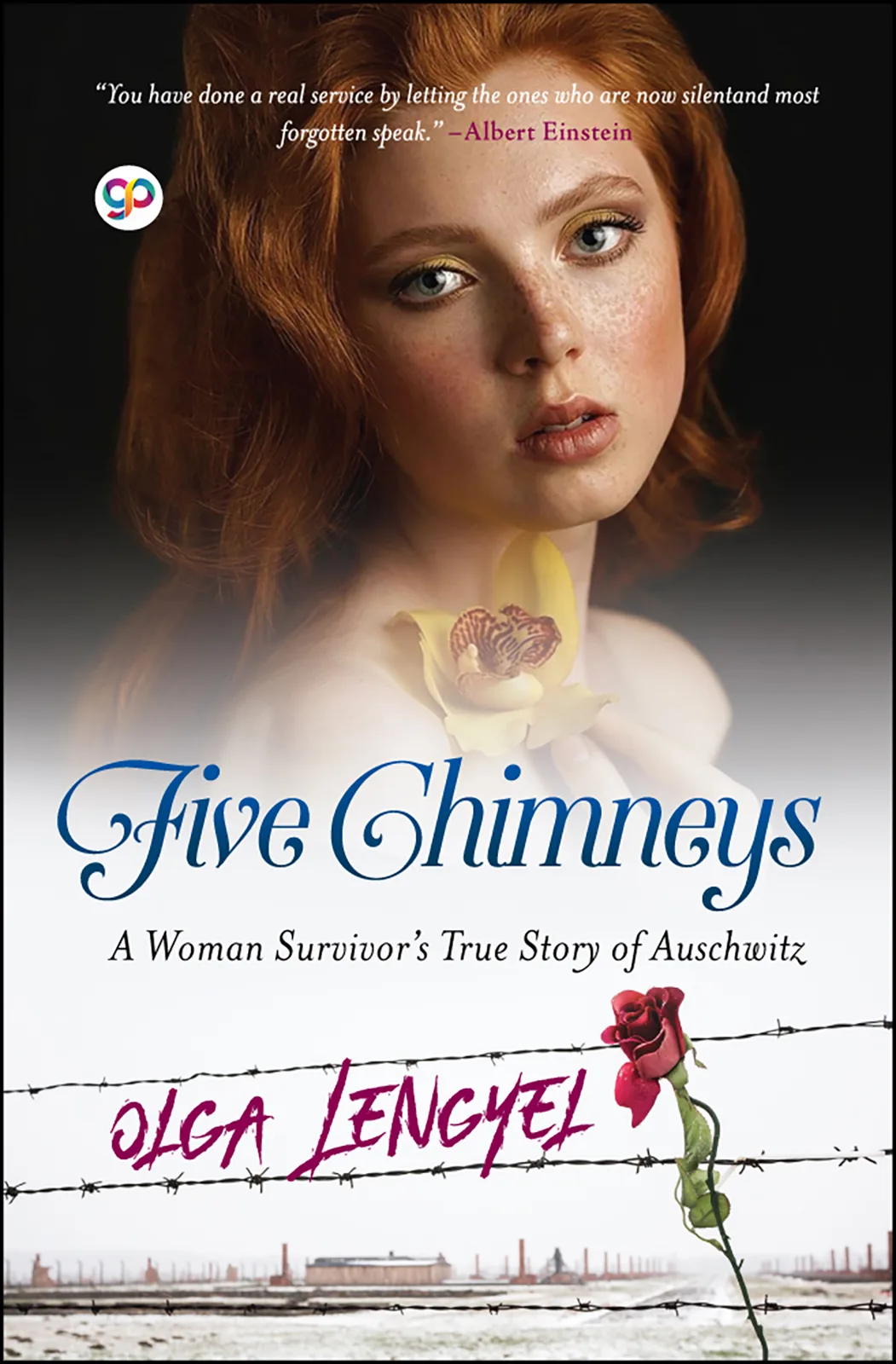
Download Cover Image
Do you want to download the full cover image for Five Chimneys: A Woman Survivor's True Story of Auschwitz?