
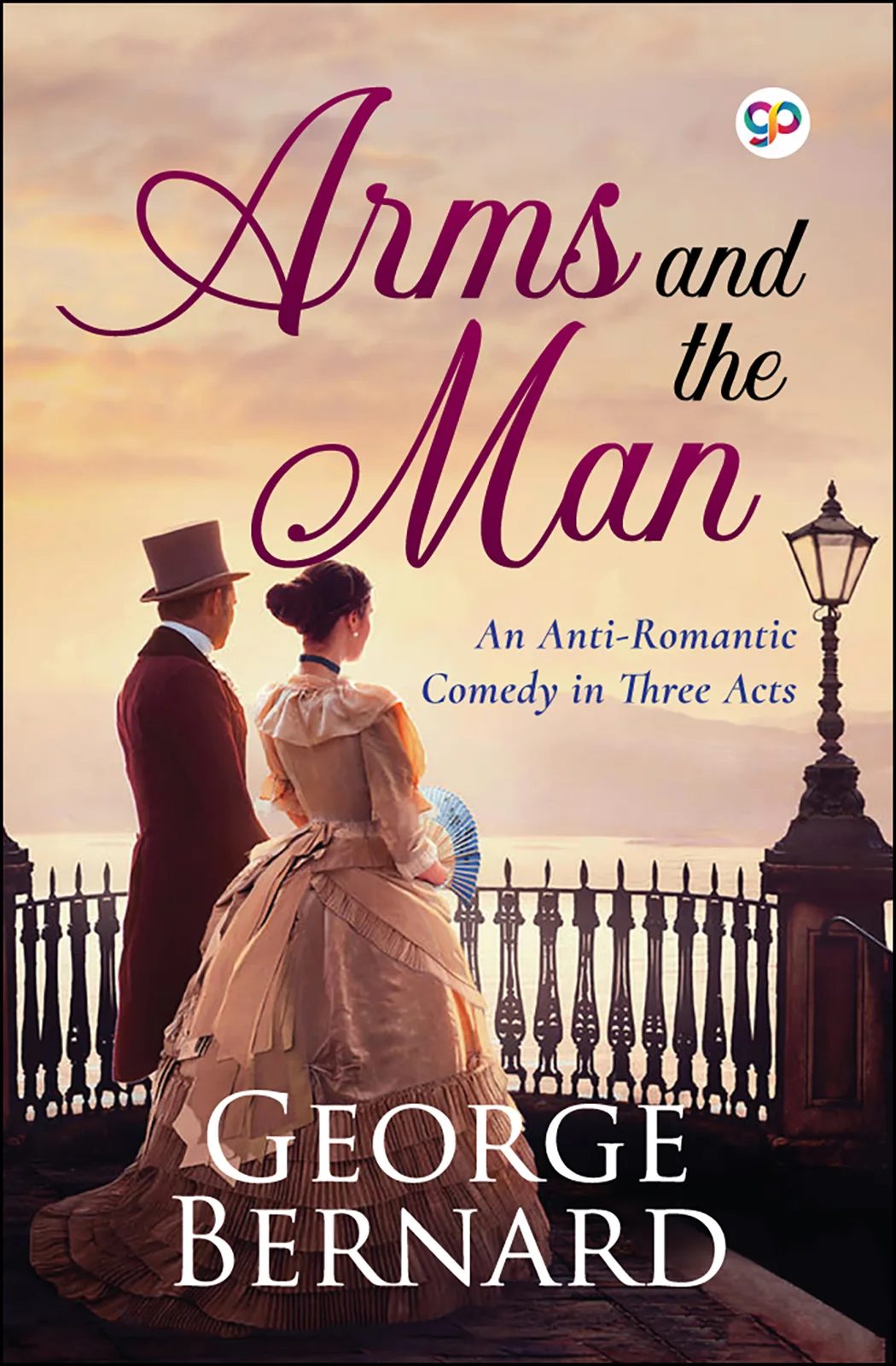
Arms and the Man
Paperback
• 108 Pages
• INR 245.00
• English
• 9789354994159
No ratings yet
| Publisher | General Press |
|---|---|
| ISBN13 | 9789354994159 |
| ASIN/SKU | 9354994156 |
| Book Format | Paperback |
| Language | English |
| Pages | 108 |
| List Price | INR 245.00 |
| Subject Code | FIC016000, DRA001000, FIC016000, FIC027250 |
| Publishing Date | 01/08/2022 |
| Dimensions | 8.25 x 5.25 x 1.0 inches |
| Book Code | BD00067709 |
Buy this Book
Amazon Stores
Ebook Stores
Other Stores
Discover Arms and the Man by George Bernard Shaw. This book is published by General Press in Paperback format, ISBN 9789354994159, ASIN 9354994156, under Literature and Fiction, Classics, War Fiction.
Book Description
First produced on the London stage in 1894, ‘Arms and the Man’ was one of George Bernard Shaw's most performed and studied plays and his first commercial success. It is a classic example of Shaw's comedic wit about idealized love versus true love. Set during the Serbo-Bulgarian war, it is a biting social commentary on the conflict that occurs in both love and war.
Its heroine, Raina Petkoff, is a young Bulgarian woman engaged to Sergius Saranoff, one of the heroes of that war, whom she idolizes. On the night after the Battle of Slivnitsa, a Swiss mercenary soldier in the Serbian army, Captain Bluntschli, climbs in through her bedroom balcony window and threatens to shoot Raina if she gives the alarm. When Russian and Bulgarian troops burst in to search the house for him, Raina hides him so that he won't be killed. He asks her to remember that “nine soldiers out of ten are born fools.”
Its heroine, Raina Petkoff, is a young Bulgarian woman engaged to Sergius Saranoff, one of the heroes of that war, whom she idolizes. On the night after the Battle of Slivnitsa, a Swiss mercenary soldier in the Serbian army, Captain Bluntschli, climbs in through her bedroom balcony window and threatens to shoot Raina if she gives the alarm. When Russian and Bulgarian troops burst in to search the house for him, Raina hides him so that he won't be killed. He asks her to remember that “nine soldiers out of ten are born fools.”
Author Biography
George Bernard Shaw (1856-1950) was born in Dublin, the son of a civil servant. His education was irregular, due to his dislike of any organized training. After working in an estate agent’s office for a while he moved to London as a young man (1876), where he established himself as a leading music and theatre critic in the eighties and nineties and became a prominent member of the Fabian Society, for which he composed many pamphlets. He began his literary career as a novelist; as a fervent advocate of the new theatre of Ibsen (The Quintessence of Ibsenism, 1891) he decided to write plays in order to illustrate his criticism of the English stage. His earliest dramas were called appropriately Plays Pleasant and Unpleasant (1898). Among these, Widower’s Houses and Mrs. Warren’s Profession savagely attack social hypocrisy, while in plays such as Arms and the Man and The Man of Destiny the criticism is less fierce. Shaw’s radical rationalism, his utter disregard of conventions, his keen dialectic interest and verbal wit often turn the stage into a forum of ideas, and nowhere more openly than in the famous discourses on the Life Force, «Don Juan in Hell», the third act of the dramatization of woman’s love chase of man, Man and Superman (1903).
In the plays of his later period discussion sometimes drowns the drama, in Back to Methuselah (1921), although in the same period he worked on his masterpiece Saint Joan (1923), in which he rewrites the well-known story of the French maiden and extends it from the Middle Ages to the present.
Other important plays by Shaw are Caesar and Cleopatra (1901), a historical play filled with allusions to modern times, and Androcles and the Lion (1912), in which he exercised a kind of retrospective history and from modern movements drew deductions for the Christian era. In Major Barbara (1905), one of Shaw’s most successful «discussion» plays, the audience’s attention is held by the power of the witty argumentation that man can achieve aesthetic salvation only through political activity, not as an individual. The Doctor’s Dilemma (1906), facetiously classified as a tragedy by Shaw, is really a comedy the humour of which is directed at the medical profession. Candida (1898), with social attitudes toward sex relations as objects of his satire, and Pygmalion (1912), a witty study of phonetics as well as a clever treatment of middle-class morality and class distinction, proved some of Shaw’s greatest successes on the stage. It is a combination of the dramatic, the comic, and the social corrective that gives Shaw’s comedies their special flavour.
Shaw’s complete works appeared in thirty-six volumes between 1930 and 1950, the year of his death.
In the plays of his later period discussion sometimes drowns the drama, in Back to Methuselah (1921), although in the same period he worked on his masterpiece Saint Joan (1923), in which he rewrites the well-known story of the French maiden and extends it from the Middle Ages to the present.
Other important plays by Shaw are Caesar and Cleopatra (1901), a historical play filled with allusions to modern times, and Androcles and the Lion (1912), in which he exercised a kind of retrospective history and from modern movements drew deductions for the Christian era. In Major Barbara (1905), one of Shaw’s most successful «discussion» plays, the audience’s attention is held by the power of the witty argumentation that man can achieve aesthetic salvation only through political activity, not as an individual. The Doctor’s Dilemma (1906), facetiously classified as a tragedy by Shaw, is really a comedy the humour of which is directed at the medical profession. Candida (1898), with social attitudes toward sex relations as objects of his satire, and Pygmalion (1912), a witty study of phonetics as well as a clever treatment of middle-class morality and class distinction, proved some of Shaw’s greatest successes on the stage. It is a combination of the dramatic, the comic, and the social corrective that gives Shaw’s comedies their special flavour.
Shaw’s complete works appeared in thirty-six volumes between 1930 and 1950, the year of his death.
Editorial Reviews
Editorial Reviews will be added soon…
Book Summary
George Bernard Shaw’s Arms and the Man is a witty and intelligent comedy that challenges romantic ideas about love, war, heroism, and social class. First performed in 1894, the play is set during the 1885 Serbo-Bulgarian War and follows the unexpected relationship between Raina Petkoff, a young Bulgarian woman who dreams of heroic romance, and Captain Bluntschli, a practical Swiss professional soldier. Through humor and sharp dialogue, Shaw exposes the difference between the beautiful stories people tell themselves about life and the much more complicated reality underneath.
The play begins in Raina Petkoff’s bedroom in Bulgaria. Raina is young, attractive, wealthy, and deeply romantic. She comes from an upper-class Bulgarian family and has been raised on stories of military glory and noble love. She is engaged to Sergius Saranoff, a Bulgarian officer whom she admires as the perfect heroic figure. Sergius has recently achieved fame for leading a daring cavalry charge against the Serbian forces.
Raina is proud of Sergius and imagines their love as something almost larger than ordinary human relationships. She idealizes him as a noble warrior and herself as a devoted romantic heroine. Shaw immediately suggests, however, that Raina’s image of love and war is based more on fantasy than reality.
One night, while Raina is alone in her bedroom, a Serbian soldier climbs through her window to escape from Bulgarian troops. The man is Captain Bluntschli, a professional Swiss soldier fighting on the Serbian side. Instead of looking like the heroic warrior Raina expects, Bluntschli is exhausted, frightened, and practical. He is carrying no romantic ideals about warfare. His first concern is survival.
Bluntschli tells Raina that he is not the sort of soldier who enjoys fighting for glory. He admits that he carries chocolates instead of extra ammunition because food is more useful to him than heroic ideals. Raina is shocked by his attitude. She has been taught to admire courage and sacrifice, while Bluntschli sees war as a dangerous profession in which sensible people should try to stay alive.
When Bulgarian soldiers search the house, Raina hides Bluntschli. She takes a personal risk to protect him, even though she initially finds him disappointing compared with her ideal of a heroic soldier. Their encounter begins to change her understanding of courage and reality.
Bluntschli eventually escapes, but he leaves a strong impression on Raina. She secretly gives him refuge and later sends him a photograph of herself with a note calling him a “chocolate cream soldier,” referring to his practical attitude toward war. The nickname becomes an important symbol of the play’s rejection of romantic military mythology.
The action then shifts to the Petkoff household. Raina’s father, Major Petkoff, has returned from the war. He is proud of his military position but is also a fairly ordinary and somewhat comical man. Shaw uses him to show that military officers are not necessarily heroic figures. They are human beings with habits, weaknesses, and everyday concerns.
Sergius also returns. He has become famous because of his reckless cavalry charge, but Shaw gradually reveals that the charge was actually a military disaster. Sergius succeeded partly because the Serbian forces had faulty ammunition. His supposed heroic victory was therefore based more on luck than military genius.
Sergius himself begins to question the ideals he once represented. Although he is engaged to Raina, he becomes involved with Louka, a servant in the Petkoff household. Louka is ambitious and determined to escape her lower social position. She refuses to accept the idea that servants must remain socially inferior forever.
The relationship between Sergius and Louka creates another layer of comedy and social criticism. Sergius is attracted to Louka precisely because she challenges him. Unlike Raina, Louka does not treat him as a perfect hero. She speaks openly and confidently, and her independence attracts him. Their relationship exposes the weakness of Sergius’s supposedly noble romantic image.
Meanwhile, Bluntschli unexpectedly returns to the Petkoff household. The war is over, and he has come to return the coat that Raina’s family had given him during his escape. His arrival creates a series of comic misunderstandings. Raina tries to maintain the image she created during their first meeting, but Bluntschli is too observant to be fooled easily.
He gradually discovers that Raina is not quite the idealized woman she pretended to be. She has exaggerated her romantic feelings and carefully constructed an image of herself as noble and innocent. Bluntschli, however, is not offended by this discovery. He likes the real Raina more than the imaginary version.
The contrast between Bluntschli and Sergius becomes increasingly clear. Sergius is attractive, passionate, and dramatic, but he is also vain and inconsistent. Bluntschli is older, less glamorous, and far more practical. Yet he understands people better and has a realistic attitude toward life.
Raina eventually recognizes that her love for Sergius was based largely on fantasy. She had fallen in love with the image of a heroic soldier rather than the complicated man himself. Her relationship with Bluntschli, in contrast, is built on honesty. He does not ask her to pretend to be someone she is not.
The play’s treatment of war is particularly important. Shaw rejects the traditional image of war as an arena of noble courage and patriotic glory. Soldiers are often frightened, hungry, confused, and motivated by survival. Bluntschli does not consider this shameful. For him, understanding danger is part of being a professional soldier. His practical wisdom makes him more competent than the men who loudly celebrate heroic ideals.
Shaw also mocks the language of romantic love. Raina and Sergius initially speak as though their relationship belongs to some grand poetic world. Yet their actual behavior reveals jealousy, dishonesty, boredom, and desire. Shaw suggests that people often use romantic language to hide ordinary human emotions.
Social class is another major theme. Louka refuses to believe that birth determines a person’s worth. She dreams of becoming a lady and eventually succeeds in changing her social position through her relationship with Sergius. Shaw does not present class mobility as entirely simple, but he clearly questions the idea that aristocratic status automatically makes someone superior.
By the end of the play, the romantic illusions have largely collapsed. Raina and Bluntschli are brought together, while Sergius and Louka become a couple. The marriages are based on relationships that are much more realistic than the ones the characters imagined at the beginning.
Bluntschli also reveals that he has inherited a large business empire, making him financially successful and socially respectable. This adds another humorous twist: the practical “chocolate cream soldier” turns out to be far more impressive in worldly terms than anyone initially assumed.
Ultimately, Arms and the Man is a comedy about the difference between appearance and reality. Shaw does not simply make fun of romantic people; he invites the audience to question the stories society teaches us about heroism, love, masculinity, and social respectability. Raina’s development is especially important because she moves from fantasy toward honesty. She learns that genuine love does not require a person to behave like a heroic character from a romantic story.
The title itself is ironic. Instead of celebrating “arms” and heroic warriors, Shaw turns the subject upside down. His real interest is not in glorifying war but in exposing its absurdity. The supposedly heroic soldier is often less admirable than the ordinary professional who simply understands reality.
In the end, Arms and the Man remains entertaining because its humor carries serious ideas without becoming heavy. Shaw encourages readers to laugh at human pretensions while also examining their own assumptions. The play suggests that honesty is more valuable than romantic fantasy, practical wisdom more useful than empty heroism, and genuine human connection more meaningful than social appearance. By replacing idealized heroes with flawed, believable people, Shaw creates a comedy that is both amusing and remarkably modern.
The play begins in Raina Petkoff’s bedroom in Bulgaria. Raina is young, attractive, wealthy, and deeply romantic. She comes from an upper-class Bulgarian family and has been raised on stories of military glory and noble love. She is engaged to Sergius Saranoff, a Bulgarian officer whom she admires as the perfect heroic figure. Sergius has recently achieved fame for leading a daring cavalry charge against the Serbian forces.
Raina is proud of Sergius and imagines their love as something almost larger than ordinary human relationships. She idealizes him as a noble warrior and herself as a devoted romantic heroine. Shaw immediately suggests, however, that Raina’s image of love and war is based more on fantasy than reality.
One night, while Raina is alone in her bedroom, a Serbian soldier climbs through her window to escape from Bulgarian troops. The man is Captain Bluntschli, a professional Swiss soldier fighting on the Serbian side. Instead of looking like the heroic warrior Raina expects, Bluntschli is exhausted, frightened, and practical. He is carrying no romantic ideals about warfare. His first concern is survival.
Bluntschli tells Raina that he is not the sort of soldier who enjoys fighting for glory. He admits that he carries chocolates instead of extra ammunition because food is more useful to him than heroic ideals. Raina is shocked by his attitude. She has been taught to admire courage and sacrifice, while Bluntschli sees war as a dangerous profession in which sensible people should try to stay alive.
When Bulgarian soldiers search the house, Raina hides Bluntschli. She takes a personal risk to protect him, even though she initially finds him disappointing compared with her ideal of a heroic soldier. Their encounter begins to change her understanding of courage and reality.
Bluntschli eventually escapes, but he leaves a strong impression on Raina. She secretly gives him refuge and later sends him a photograph of herself with a note calling him a “chocolate cream soldier,” referring to his practical attitude toward war. The nickname becomes an important symbol of the play’s rejection of romantic military mythology.
The action then shifts to the Petkoff household. Raina’s father, Major Petkoff, has returned from the war. He is proud of his military position but is also a fairly ordinary and somewhat comical man. Shaw uses him to show that military officers are not necessarily heroic figures. They are human beings with habits, weaknesses, and everyday concerns.
Sergius also returns. He has become famous because of his reckless cavalry charge, but Shaw gradually reveals that the charge was actually a military disaster. Sergius succeeded partly because the Serbian forces had faulty ammunition. His supposed heroic victory was therefore based more on luck than military genius.
Sergius himself begins to question the ideals he once represented. Although he is engaged to Raina, he becomes involved with Louka, a servant in the Petkoff household. Louka is ambitious and determined to escape her lower social position. She refuses to accept the idea that servants must remain socially inferior forever.
The relationship between Sergius and Louka creates another layer of comedy and social criticism. Sergius is attracted to Louka precisely because she challenges him. Unlike Raina, Louka does not treat him as a perfect hero. She speaks openly and confidently, and her independence attracts him. Their relationship exposes the weakness of Sergius’s supposedly noble romantic image.
Meanwhile, Bluntschli unexpectedly returns to the Petkoff household. The war is over, and he has come to return the coat that Raina’s family had given him during his escape. His arrival creates a series of comic misunderstandings. Raina tries to maintain the image she created during their first meeting, but Bluntschli is too observant to be fooled easily.
He gradually discovers that Raina is not quite the idealized woman she pretended to be. She has exaggerated her romantic feelings and carefully constructed an image of herself as noble and innocent. Bluntschli, however, is not offended by this discovery. He likes the real Raina more than the imaginary version.
The contrast between Bluntschli and Sergius becomes increasingly clear. Sergius is attractive, passionate, and dramatic, but he is also vain and inconsistent. Bluntschli is older, less glamorous, and far more practical. Yet he understands people better and has a realistic attitude toward life.
Raina eventually recognizes that her love for Sergius was based largely on fantasy. She had fallen in love with the image of a heroic soldier rather than the complicated man himself. Her relationship with Bluntschli, in contrast, is built on honesty. He does not ask her to pretend to be someone she is not.
The play’s treatment of war is particularly important. Shaw rejects the traditional image of war as an arena of noble courage and patriotic glory. Soldiers are often frightened, hungry, confused, and motivated by survival. Bluntschli does not consider this shameful. For him, understanding danger is part of being a professional soldier. His practical wisdom makes him more competent than the men who loudly celebrate heroic ideals.
Shaw also mocks the language of romantic love. Raina and Sergius initially speak as though their relationship belongs to some grand poetic world. Yet their actual behavior reveals jealousy, dishonesty, boredom, and desire. Shaw suggests that people often use romantic language to hide ordinary human emotions.
Social class is another major theme. Louka refuses to believe that birth determines a person’s worth. She dreams of becoming a lady and eventually succeeds in changing her social position through her relationship with Sergius. Shaw does not present class mobility as entirely simple, but he clearly questions the idea that aristocratic status automatically makes someone superior.
By the end of the play, the romantic illusions have largely collapsed. Raina and Bluntschli are brought together, while Sergius and Louka become a couple. The marriages are based on relationships that are much more realistic than the ones the characters imagined at the beginning.
Bluntschli also reveals that he has inherited a large business empire, making him financially successful and socially respectable. This adds another humorous twist: the practical “chocolate cream soldier” turns out to be far more impressive in worldly terms than anyone initially assumed.
Ultimately, Arms and the Man is a comedy about the difference between appearance and reality. Shaw does not simply make fun of romantic people; he invites the audience to question the stories society teaches us about heroism, love, masculinity, and social respectability. Raina’s development is especially important because she moves from fantasy toward honesty. She learns that genuine love does not require a person to behave like a heroic character from a romantic story.
The title itself is ironic. Instead of celebrating “arms” and heroic warriors, Shaw turns the subject upside down. His real interest is not in glorifying war but in exposing its absurdity. The supposedly heroic soldier is often less admirable than the ordinary professional who simply understands reality.
In the end, Arms and the Man remains entertaining because its humor carries serious ideas without becoming heavy. Shaw encourages readers to laugh at human pretensions while also examining their own assumptions. The play suggests that honesty is more valuable than romantic fantasy, practical wisdom more useful than empty heroism, and genuine human connection more meaningful than social appearance. By replacing idealized heroes with flawed, believable people, Shaw creates a comedy that is both amusing and remarkably modern.
Sample Chapters
Sample Chapters will be added soon…
Reader Reviews
No reviews yet.
Arms and the Man
Download Cover Image
Do you want to download the full cover image for Arms and the Man?