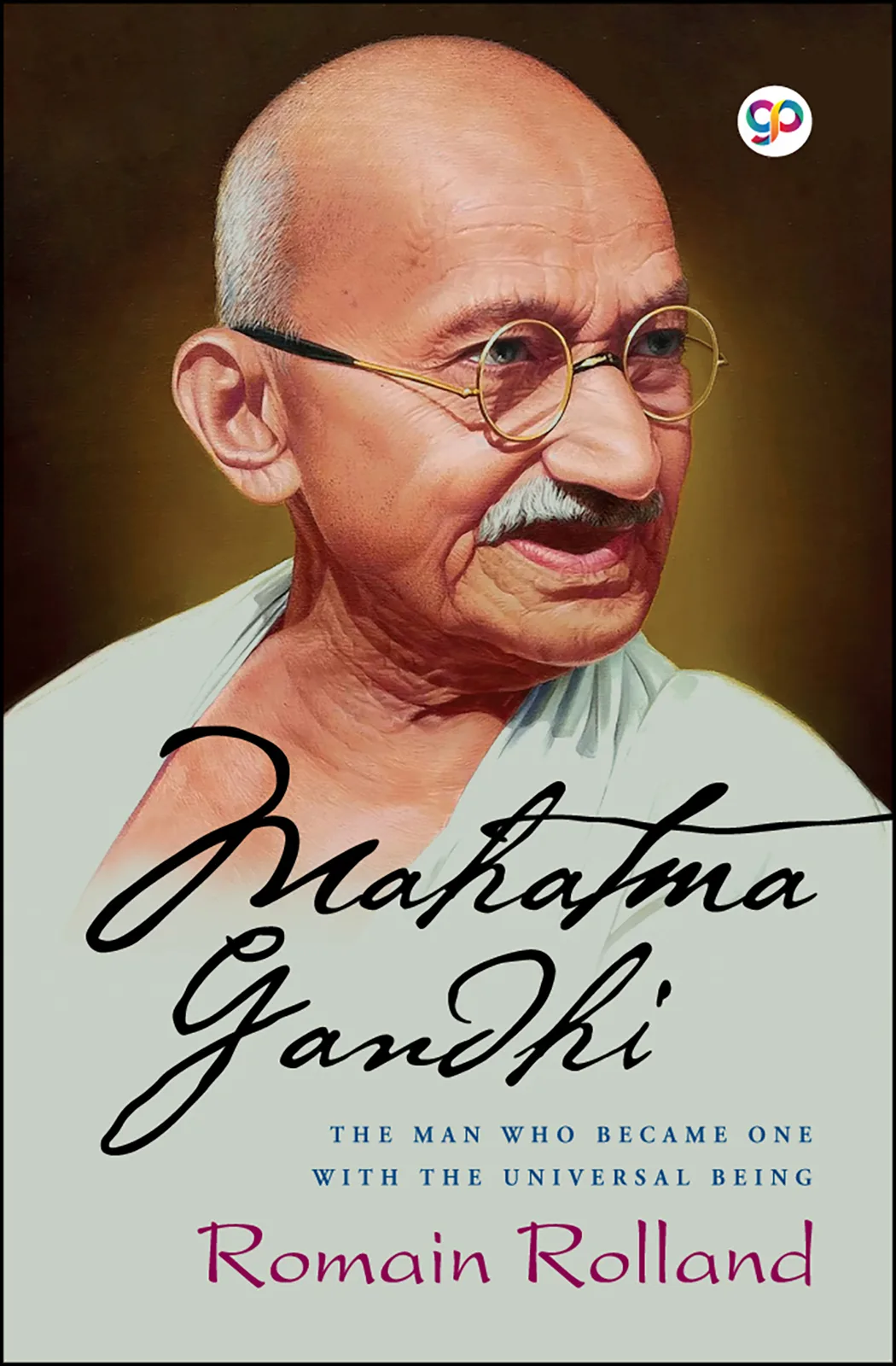
Mahatma Gandhi
Paperback
• 152 Pages
• INR 275.00
• English
• 9789354994456
No ratings yet
| Publisher | General Press |
|---|---|
| ISBN13 | 9789354994456 |
| ASIN/SKU | 9354994458 |
| Book Format | Paperback |
| Language | English |
| Pages | 152 |
| List Price | INR 275.00 |
| Subject Code | BIO010000, PHI016000, REL032010 |
| Publishing Date | 22/09/2022 |
| Dimensions | 8.25 x 5.25 x 1.0 inches |
| Book Code | BD00067742 |
Buy this Book
Amazon Stores
Ebook Stores
Other Stores
Discover Mahatma Gandhi by Romain Rolland. This book is published by General Press in Paperback format, ISBN 9789354994456, ASIN 9354994458, under Biographies and Memoirs, History.
Book Description
What happens when a quiet, seemingly ordinary man becomes the moral force behind a nation’s struggle for freedom? 'Mahatma Gandhi' by Romain Rolland is a compelling biographical and historical work that explores the life, character, ideals, and philosophy of Mohandas K. Gandhi, presenting him not simply as a political leader but as a remarkable advocate of truth, nonviolence, and spiritual courage.
Written by French author and Nobel Prize-winning writer Romain Rolland, this biography offers an intimate portrait of Gandhi at a crucial moment in India’s history. Rather than concentrating only on political events, Rolland looks closely at the principles that shaped Gandhi’s actions and made his approach to resistance so distinctive. The book examines Gandhi’s belief in satyagraha, or the power of truth, and his conviction that nonviolent resistance could challenge injustice without reproducing the hatred and brutality it opposed.
Rolland also explores the influences behind Gandhi’s worldview, his simple way of living, his dedication to self-discipline, and his deep concern for ordinary people. Through Gandhi’s struggles and public campaigns, readers gain a broader understanding of the Indian independence movement and the social and moral questions surrounding it. The biography also reveals why Gandhi’s ideas attracted admiration far beyond India and why his methods were viewed as a new form of political and ethical action.
One of the book’s greatest strengths is Rolland’s ability to present Gandhi as a complex human being rather than a distant historical monument. His admiration is clear, yet the narrative remains focused on understanding the forces that shaped Gandhi’s beliefs and leadership. For readers interested in Mahatma Gandhi’s life, Indian independence, nonviolence, civil resistance, or political philosophy, this book provides a concise and thoughtful introduction to one of the twentieth century’s most influential figures. Its portrait of a man who sought to transform both society and himself leaves an enduring question: can truth and nonviolence truly change the course of history?
Written by French author and Nobel Prize-winning writer Romain Rolland, this biography offers an intimate portrait of Gandhi at a crucial moment in India’s history. Rather than concentrating only on political events, Rolland looks closely at the principles that shaped Gandhi’s actions and made his approach to resistance so distinctive. The book examines Gandhi’s belief in satyagraha, or the power of truth, and his conviction that nonviolent resistance could challenge injustice without reproducing the hatred and brutality it opposed.
Rolland also explores the influences behind Gandhi’s worldview, his simple way of living, his dedication to self-discipline, and his deep concern for ordinary people. Through Gandhi’s struggles and public campaigns, readers gain a broader understanding of the Indian independence movement and the social and moral questions surrounding it. The biography also reveals why Gandhi’s ideas attracted admiration far beyond India and why his methods were viewed as a new form of political and ethical action.
One of the book’s greatest strengths is Rolland’s ability to present Gandhi as a complex human being rather than a distant historical monument. His admiration is clear, yet the narrative remains focused on understanding the forces that shaped Gandhi’s beliefs and leadership. For readers interested in Mahatma Gandhi’s life, Indian independence, nonviolence, civil resistance, or political philosophy, this book provides a concise and thoughtful introduction to one of the twentieth century’s most influential figures. Its portrait of a man who sought to transform both society and himself leaves an enduring question: can truth and nonviolence truly change the course of history?
Author Biography
Romain Rolland (1866–1944) was a distinguished French novelist, playwright, essayist, music historian, and humanitarian whose writings championed peace, compassion, and the dignity of the human spirit. One of the most respected intellectuals of his time, he believed that literature should inspire moral courage and promote understanding across nations. In recognition of his idealistic vision and remarkable literary achievements, he was awarded the Nobel Prize in Literature in 1915.
Rolland was born on January 29, 1866, in Clamecy, France, into a middle-class family that valued education and culture. From an early age, he developed a deep love of history, music, and literature. He studied at the prestigious École Normale Supérieure in Paris, where he specialized in history and developed a lifelong interest in the cultural achievements of Europe. His admiration for great composers such as Beethoven, Michelangelo, and Tolstoy later inspired several important biographical and critical works.
Rolland achieved international fame with his monumental ten-volume novel Jean-Christophe, published between 1904 and 1912. The novel follows the life of a gifted German musician and explores themes of artistic integrity, personal growth, friendship, and the search for truth. Widely praised for its emotional depth and humanistic outlook, Jean-Christophe established Rolland as one of Europe's leading novelists. He also wrote acclaimed plays, biographies, and essays that celebrated individuals who had devoted their lives to creativity, justice, and peace.
During the First World War, Rolland adopted a courageous pacifist position at a time of intense nationalism. Living in neutral Switzerland, he wrote passionately against violence and urged reconciliation between nations. His essays, particularly Above the Battle, reflected his unwavering belief that humanity should rise above hatred and conflict. Throughout his life, he maintained friendships with prominent figures such as Mahatma Gandhi, Rabindranath Tagore, and Albert Einstein, sharing their commitment to peace and international understanding.
Romain Rolland died on December 30, 1944, in Vézelay, France. Today, he is remembered not only as a brilliant writer but also as a compassionate humanist whose works continue to inspire readers with their messages of courage, tolerance, and universal brotherhood. His enduring legacy reminds us that literature can be a powerful force for peace, empathy, and the betterment of humanity.
Rolland was born on January 29, 1866, in Clamecy, France, into a middle-class family that valued education and culture. From an early age, he developed a deep love of history, music, and literature. He studied at the prestigious École Normale Supérieure in Paris, where he specialized in history and developed a lifelong interest in the cultural achievements of Europe. His admiration for great composers such as Beethoven, Michelangelo, and Tolstoy later inspired several important biographical and critical works.
Rolland achieved international fame with his monumental ten-volume novel Jean-Christophe, published between 1904 and 1912. The novel follows the life of a gifted German musician and explores themes of artistic integrity, personal growth, friendship, and the search for truth. Widely praised for its emotional depth and humanistic outlook, Jean-Christophe established Rolland as one of Europe's leading novelists. He also wrote acclaimed plays, biographies, and essays that celebrated individuals who had devoted their lives to creativity, justice, and peace.
During the First World War, Rolland adopted a courageous pacifist position at a time of intense nationalism. Living in neutral Switzerland, he wrote passionately against violence and urged reconciliation between nations. His essays, particularly Above the Battle, reflected his unwavering belief that humanity should rise above hatred and conflict. Throughout his life, he maintained friendships with prominent figures such as Mahatma Gandhi, Rabindranath Tagore, and Albert Einstein, sharing their commitment to peace and international understanding.
Romain Rolland died on December 30, 1944, in Vézelay, France. Today, he is remembered not only as a brilliant writer but also as a compassionate humanist whose works continue to inspire readers with their messages of courage, tolerance, and universal brotherhood. His enduring legacy reminds us that literature can be a powerful force for peace, empathy, and the betterment of humanity.
Editorial Reviews
Editorial Reviews will be added soon…
Book Summary
Mahatma Gandhi by the French Nobel Prize-winning writer Romain Rolland is one of the earliest and most influential biographies of Mohandas Karamchand Gandhi written for an international audience. Published in the 1920s, the book introduces readers to Gandhi not merely as a political leader but as a moral force whose life transformed the meaning of resistance, leadership, and public service. Rolland admires Gandhi deeply, yet his work is more than praise; it is an attempt to explain how one ordinary human being, armed with truth and compassion rather than weapons, inspired millions and challenged one of the world's greatest empires.
The biography begins by placing Gandhi within the historical context of British colonial rule in India. Rolland explains that India was not only politically controlled but also economically and socially weakened by foreign domination. Against this backdrop emerged Gandhi, whose methods differed dramatically from those of traditional revolutionaries. Rather than seeking victory through violence, he believed that lasting freedom could only be achieved through moral courage, self-discipline, and respect for human dignity.
Rolland traces Gandhi's early life in Gujarat, describing him as a shy and thoughtful child rather than a born hero. His upbringing in a deeply religious household shaped his lifelong commitment to honesty, simplicity, and compassion. Gandhi's mother, known for her spiritual devotion and strict moral discipline, had a profound influence on his character. From an early age, he learned the importance of self-control, keeping promises, and respecting all forms of life. These values remained at the heart of his philosophy throughout his life.
The biography then follows Gandhi's journey to England, where he studied law. Rolland portrays this period as one of intellectual growth rather than political awakening. Gandhi encountered Western philosophy, Christianity, and modern political thought while remaining deeply connected to his Indian heritage. He learned that true wisdom often lies not in rejecting other cultures but in understanding them while remaining faithful to one's own principles.
A defining turning point came when Gandhi traveled to South Africa to practice law. There, he experienced racial discrimination firsthand, including the famous incident in which he was forced off a train despite holding a valid first-class ticket. Rolland presents this humiliation not as an isolated injustice but as the moment that awakened Gandhi's lifelong commitment to resisting oppression. Instead of responding with hatred or revenge, Gandhi began searching for a higher method of confronting injustice.
It was in South Africa that Gandhi gradually developed the principle of Satyagraha, often translated as "truth-force" or "soul-force." Rolland explains that this philosophy went far beyond passive resistance. Satyagraha required immense courage because it demanded that individuals oppose injustice without harming their opponents. By willingly accepting suffering rather than inflicting it, Gandhi believed people could awaken the conscience of those who oppressed them. Rolland emphasizes that this approach was rooted in strength of character, not weakness or submission.
Returning to India, Gandhi became increasingly involved in the struggle for independence. Rolland describes how he traveled extensively through villages, choosing to understand the lives of ordinary farmers, laborers, and craftsmen before attempting to lead them. Gandhi believed that genuine leadership required listening before speaking. His ability to connect with people from every social background gradually transformed him into the moral voice of the nation.
One of the biography's central themes is Gandhi's extraordinary simplicity. Rolland repeatedly notes that Gandhi deliberately rejected luxury and status. He wore hand-spun cotton clothing, performed manual labor, lived modestly, and encouraged others to become self-reliant. These choices were not symbolic gestures alone; they reflected his conviction that leaders should share the hardships of the people they serve. His lifestyle became a visible expression of equality and humility.
Rolland also examines Gandhi's campaign for economic self-sufficiency. The spinning wheel became one of the most powerful symbols of his movement because it represented dignity, independence, and resistance to economic exploitation. Gandhi urged Indians to produce their own cloth rather than rely on imported British textiles. Rolland interprets this not merely as an economic strategy but as an effort to restore confidence and self-respect to a nation that had grown dependent on colonial industries.
Religion occupies an equally important place in Rolland's portrait. Gandhi drew inspiration from Hinduism, yet he also studied Christianity, Islam, Buddhism, Jainism, and other faiths with genuine respect. Rolland stresses that Gandhi never viewed religion as a reason for division. Instead, he believed that every faith contained valuable truths and that all sincere spiritual traditions ultimately encouraged compassion, honesty, and service. This broad outlook allowed Gandhi to appeal to people across religious boundaries.
The biography highlights Gandhi's unwavering commitment to nonviolence, or Ahimsa. Rolland explains that nonviolence was not simply the refusal to fight but an active expression of love and respect for every human being. Gandhi believed that hatred only creates more hatred, while forgiveness and understanding possess the power to transform relationships. Although many critics considered this ideal unrealistic, Gandhi demonstrated through repeated public campaigns that disciplined nonviolent action could mobilize millions while preserving their humanity.
Rolland does not portray Gandhi as a flawless individual. Instead, he describes a man constantly engaged in self-examination. Gandhi openly acknowledged his mistakes, questioned his own motives, and regarded personal discipline as a lifelong process. His frequent fasting, prayer, and reflection were intended not to impress others but to strengthen his own moral character. Rolland presents this humility as one of Gandhi's greatest qualities, arguing that true greatness grows from continuous self-improvement rather than claims of perfection.
The relationship between personal ethics and political action forms another major theme. Gandhi refused to separate private conduct from public leadership. He believed that justice in society begins with honesty in individual lives. Rolland admires this consistency, observing that Gandhi sought to embody the principles he advocated. Whether discussing truthfulness, simplicity, forgiveness, or self-restraint, Gandhi attempted to practice these virtues before asking others to embrace them.
Rolland also explores Gandhi's global significance. Although his immediate goal was India's freedom, his ideas carried universal importance. His methods inspired people who sought justice without violence and demonstrated that moral authority could become a powerful political force. Rolland suggests that Gandhi belonged not only to India but to humanity as a whole, offering an alternative vision of leadership in an age often dominated by war, nationalism, and political rivalry.
Throughout the biography, Rolland writes with warmth and admiration while grounding his observations in Gandhi's actions rather than in abstract praise. He presents Gandhi as someone who united spiritual conviction with practical action, proving that compassion and courage can coexist. His leadership challenged conventional ideas about power, showing that enduring influence comes not from coercion but from integrity and service.
Ultimately, Mahatma Gandhi is both the story of an extraordinary individual and a meditation on the power of moral conviction. Romain Rolland portrays Gandhi as a leader whose greatest achievements arose from his unwavering commitment to truth, nonviolence, humility, and human dignity. More than a historical biography, the book invites readers to reflect on the enduring relevance of these values in a world still confronted by injustice, conflict, and inequality. It remains a timeless reminder that lasting change often begins with the transformation of one's own character and the courage to act according to conscience.
The biography begins by placing Gandhi within the historical context of British colonial rule in India. Rolland explains that India was not only politically controlled but also economically and socially weakened by foreign domination. Against this backdrop emerged Gandhi, whose methods differed dramatically from those of traditional revolutionaries. Rather than seeking victory through violence, he believed that lasting freedom could only be achieved through moral courage, self-discipline, and respect for human dignity.
Rolland traces Gandhi's early life in Gujarat, describing him as a shy and thoughtful child rather than a born hero. His upbringing in a deeply religious household shaped his lifelong commitment to honesty, simplicity, and compassion. Gandhi's mother, known for her spiritual devotion and strict moral discipline, had a profound influence on his character. From an early age, he learned the importance of self-control, keeping promises, and respecting all forms of life. These values remained at the heart of his philosophy throughout his life.
The biography then follows Gandhi's journey to England, where he studied law. Rolland portrays this period as one of intellectual growth rather than political awakening. Gandhi encountered Western philosophy, Christianity, and modern political thought while remaining deeply connected to his Indian heritage. He learned that true wisdom often lies not in rejecting other cultures but in understanding them while remaining faithful to one's own principles.
A defining turning point came when Gandhi traveled to South Africa to practice law. There, he experienced racial discrimination firsthand, including the famous incident in which he was forced off a train despite holding a valid first-class ticket. Rolland presents this humiliation not as an isolated injustice but as the moment that awakened Gandhi's lifelong commitment to resisting oppression. Instead of responding with hatred or revenge, Gandhi began searching for a higher method of confronting injustice.
It was in South Africa that Gandhi gradually developed the principle of Satyagraha, often translated as "truth-force" or "soul-force." Rolland explains that this philosophy went far beyond passive resistance. Satyagraha required immense courage because it demanded that individuals oppose injustice without harming their opponents. By willingly accepting suffering rather than inflicting it, Gandhi believed people could awaken the conscience of those who oppressed them. Rolland emphasizes that this approach was rooted in strength of character, not weakness or submission.
Returning to India, Gandhi became increasingly involved in the struggle for independence. Rolland describes how he traveled extensively through villages, choosing to understand the lives of ordinary farmers, laborers, and craftsmen before attempting to lead them. Gandhi believed that genuine leadership required listening before speaking. His ability to connect with people from every social background gradually transformed him into the moral voice of the nation.
One of the biography's central themes is Gandhi's extraordinary simplicity. Rolland repeatedly notes that Gandhi deliberately rejected luxury and status. He wore hand-spun cotton clothing, performed manual labor, lived modestly, and encouraged others to become self-reliant. These choices were not symbolic gestures alone; they reflected his conviction that leaders should share the hardships of the people they serve. His lifestyle became a visible expression of equality and humility.
Rolland also examines Gandhi's campaign for economic self-sufficiency. The spinning wheel became one of the most powerful symbols of his movement because it represented dignity, independence, and resistance to economic exploitation. Gandhi urged Indians to produce their own cloth rather than rely on imported British textiles. Rolland interprets this not merely as an economic strategy but as an effort to restore confidence and self-respect to a nation that had grown dependent on colonial industries.
Religion occupies an equally important place in Rolland's portrait. Gandhi drew inspiration from Hinduism, yet he also studied Christianity, Islam, Buddhism, Jainism, and other faiths with genuine respect. Rolland stresses that Gandhi never viewed religion as a reason for division. Instead, he believed that every faith contained valuable truths and that all sincere spiritual traditions ultimately encouraged compassion, honesty, and service. This broad outlook allowed Gandhi to appeal to people across religious boundaries.
The biography highlights Gandhi's unwavering commitment to nonviolence, or Ahimsa. Rolland explains that nonviolence was not simply the refusal to fight but an active expression of love and respect for every human being. Gandhi believed that hatred only creates more hatred, while forgiveness and understanding possess the power to transform relationships. Although many critics considered this ideal unrealistic, Gandhi demonstrated through repeated public campaigns that disciplined nonviolent action could mobilize millions while preserving their humanity.
Rolland does not portray Gandhi as a flawless individual. Instead, he describes a man constantly engaged in self-examination. Gandhi openly acknowledged his mistakes, questioned his own motives, and regarded personal discipline as a lifelong process. His frequent fasting, prayer, and reflection were intended not to impress others but to strengthen his own moral character. Rolland presents this humility as one of Gandhi's greatest qualities, arguing that true greatness grows from continuous self-improvement rather than claims of perfection.
The relationship between personal ethics and political action forms another major theme. Gandhi refused to separate private conduct from public leadership. He believed that justice in society begins with honesty in individual lives. Rolland admires this consistency, observing that Gandhi sought to embody the principles he advocated. Whether discussing truthfulness, simplicity, forgiveness, or self-restraint, Gandhi attempted to practice these virtues before asking others to embrace them.
Rolland also explores Gandhi's global significance. Although his immediate goal was India's freedom, his ideas carried universal importance. His methods inspired people who sought justice without violence and demonstrated that moral authority could become a powerful political force. Rolland suggests that Gandhi belonged not only to India but to humanity as a whole, offering an alternative vision of leadership in an age often dominated by war, nationalism, and political rivalry.
Throughout the biography, Rolland writes with warmth and admiration while grounding his observations in Gandhi's actions rather than in abstract praise. He presents Gandhi as someone who united spiritual conviction with practical action, proving that compassion and courage can coexist. His leadership challenged conventional ideas about power, showing that enduring influence comes not from coercion but from integrity and service.
Ultimately, Mahatma Gandhi is both the story of an extraordinary individual and a meditation on the power of moral conviction. Romain Rolland portrays Gandhi as a leader whose greatest achievements arose from his unwavering commitment to truth, nonviolence, humility, and human dignity. More than a historical biography, the book invites readers to reflect on the enduring relevance of these values in a world still confronted by injustice, conflict, and inequality. It remains a timeless reminder that lasting change often begins with the transformation of one's own character and the courage to act according to conscience.
Sample Chapters
Sample Chapters will be added soon…
Reader Reviews
No reviews yet.
Mahatma Gandhi