
The Beautiful and Damned
Paperback
• 400 Pages
• INR 495.00
• English
• 9789354994548
No ratings yet
| Publisher | General Press |
|---|---|
| ISBN13 | 9789354994548 |
| ASIN/SKU | 9354994547 |
| Book Format | Paperback |
| Language | English |
| Pages | 400 |
| List Price | INR 495.00 |
| Subject Code | FIC019000, FIC014000, FIC027000 |
| Publishing Date | 22/09/2022 |
| Dimensions | 8.25 x 5.25 x 1.0 inches |
| Book Code | BD00067751 |
Buy this Book
Amazon Stores
Ebook Stores
Other Stores
Discover The Beautiful and Damned by F. Scott Fitzgerald. This book is published by General Press in Paperback format, ISBN 9789354994548, ASIN 9354994547, under Literature and Fiction, Historical Fiction, Literary Fiction.
Book Description
The Beautiful and Damned written by F. Scott Fitzgerald, widely regarded as one of the greatest American writers of the 20th century, whose works are the paradigmatic writings of the Jazz Age, a term he coined. Set in New York City, the book tells the story of Anthony Patch, a socialite who thinks of himself as a refined aesthete. He marries the impressively beautiful Gloria and they both lead a luxurious life, travelling from one place to another and spending money irresponsibly while waiting to inherit the great fortune of Anthony's grandfather.
Most of the narrative is about the life of emptiness and purposelessness led by the couple whose sole vocation is to dream of spending the money that they have not earned. Their marriage starts to deteriorate mainly because of this general lack of purpose, but also because of the couple's addiction to alcohol and idleness.
The story also features other characters representing the generation of the Jazz Age. It turns out that the only character who seems to be confident and sure of his choices and objectives in life is Anthony's grandfather who represents the previous generation and whose principles are clearly juxtaposed by the author with the adrift life of younger characters.
Most of the narrative is about the life of emptiness and purposelessness led by the couple whose sole vocation is to dream of spending the money that they have not earned. Their marriage starts to deteriorate mainly because of this general lack of purpose, but also because of the couple's addiction to alcohol and idleness.
The story also features other characters representing the generation of the Jazz Age. It turns out that the only character who seems to be confident and sure of his choices and objectives in life is Anthony's grandfather who represents the previous generation and whose principles are clearly juxtaposed by the author with the adrift life of younger characters.
Author Biography
Francis Scott Key Fitzgerald (1896–1940) was an iconic American novelist and short-story writer who came to define the Jazz Age—a term he coined himself. Born in St. Paul, Minnesota, to an upper-middle-class family, Fitzgerald attended Princeton University, where he neglected his studies in favor of literary pursuits. He ultimately dropped out in 1917 to join the U.S. Army during World War I. While stationed in Alabama, he met and fell fiercely in love with Zelda Sayre, a wealthy Southern belle who would become his wife, enduring muse, and occasional rival.
His debut novel, This Side of Paradise (1920), was an overnight sensation that captured the youthful rebellion and shifting morals of the post-war generation. The book's massive success afforded him and Zelda a lavish, chaotic lifestyle split between New York, Paris, and the French Riviera. During this vibrant expatriate period in the 1920s, he formed a complex friendship with fellow author Ernest Hemingway and composed what is widely considered his masterpiece, The Great Gatsby (1925). Though it received mixed reviews and modest sales during his lifetime, the novel later became a cornerstone of classic American literature, renowned for its brilliant critique of the American Dream and its lyrical, melancholic prose.
Despite his early success, Fitzgerald’s later life was marred by financial struggles, severe alcoholism, and Zelda’s deteriorating mental health, which eventually required her long-term institutionalization. He channeled these darker, deeply personal themes into his ambitious but commercially disappointing 1934 novel, Tender Is the Night. In his final years, Fitzgerald moved to Hollywood to work as a screenwriter to pay off his mounting debts. He died of a heart attack at age 44, believing himself a forgotten failure. Today, however, he is celebrated globally as a master of the American novel, immortalized by his peerless ability to capture the glittering, tragic essence of his era.
His debut novel, This Side of Paradise (1920), was an overnight sensation that captured the youthful rebellion and shifting morals of the post-war generation. The book's massive success afforded him and Zelda a lavish, chaotic lifestyle split between New York, Paris, and the French Riviera. During this vibrant expatriate period in the 1920s, he formed a complex friendship with fellow author Ernest Hemingway and composed what is widely considered his masterpiece, The Great Gatsby (1925). Though it received mixed reviews and modest sales during his lifetime, the novel later became a cornerstone of classic American literature, renowned for its brilliant critique of the American Dream and its lyrical, melancholic prose.
Despite his early success, Fitzgerald’s later life was marred by financial struggles, severe alcoholism, and Zelda’s deteriorating mental health, which eventually required her long-term institutionalization. He channeled these darker, deeply personal themes into his ambitious but commercially disappointing 1934 novel, Tender Is the Night. In his final years, Fitzgerald moved to Hollywood to work as a screenwriter to pay off his mounting debts. He died of a heart attack at age 44, believing himself a forgotten failure. Today, however, he is celebrated globally as a master of the American novel, immortalized by his peerless ability to capture the glittering, tragic essence of his era.
Editorial Reviews
Editorial Reviews will be added soon…
Book Summary
F. Scott Fitzgerald’s The Beautiful and Damned is a powerful novel about wealth, youth, desire, marriage, ambition, and the slow destruction that can follow a life built around pleasure rather than purpose. Published in 1922, the novel is set among the privileged social world of New York during the Jazz Age and follows Anthony Patch, a young man who believes he is destined for greatness, and Gloria Gilbert, a beautiful and socially ambitious woman who becomes his wife. At first, Anthony and Gloria appear to possess everything necessary for a glamorous life: money, attractiveness, education, social connections, and the expectation of a large inheritance. Yet Fitzgerald gradually reveals the emptiness beneath that glittering surface. What begins as a story of romance and privilege develops into a tragic examination of wasted potential, alcoholism, financial dependence, selfishness, and the destructive effects of waiting for wealth instead of creating a meaningful life.
The central character, Anthony Patch, is introduced as a young man who has inherited enough money to live comfortably but has not yet inherited the fortune he expects from his wealthy grandfather, Adam Patch. Anthony sees himself as an intellectual and considers himself capable of achieving something significant, but he lacks the discipline and ambition required to turn that self-image into reality. He spends much of his time thinking about what he might accomplish rather than actually accomplishing it. This distinction between imagined greatness and genuine achievement becomes one of the novel’s most important themes. Anthony is not completely without intelligence or sensitivity. His problem is that privilege has protected him from the necessity of developing his abilities. Because he expects to become rich eventually, he has little incentive to build a career or impose structure on his life.
Anthony’s grandfather, Adam Patch, provides a sharp contrast to him. Adam is wealthy, disciplined, morally serious, and committed to reform. He has built his fortune through hard work and has developed a reputation as a crusader against social corruption. Yet Fitzgerald does not present him as a simple embodiment of virtue. Adam’s moral seriousness can become rigid and self-righteous, and his relationship with Anthony is strained by his disappointment in his grandson’s lack of purpose. Anthony expects his grandfather’s fortune to rescue him from the consequences of his own choices. This expectation becomes the invisible force governing much of his life.
Gloria Gilbert enters the story as the embodiment of youth, beauty, charm, and social ambition. She is highly conscious of her attractiveness and understands the power that beauty gives her in social situations. Gloria wants to remain young, admired, and desirable, and she fears the ordinary limitations that accompany aging. Unlike Anthony, whose fantasy centers largely on money and intellectual distinction, Gloria’s dream is connected to beauty, attention, pleasure, and social recognition. When Anthony meets Gloria, he is fascinated by her confidence and attractiveness. She, in turn, is attracted to his wealth, sophistication, and romantic intensity. Their relationship quickly develops into a passionate romance.
Their courtship is exciting partly because both characters believe they are entering a glamorous future. They imagine marriage as an extension of their romantic ideal rather than as a partnership requiring compromise, work, and responsibility. Fitzgerald deliberately presents their love in a beautiful but unstable way. Anthony and Gloria are drawn together by genuine attraction, but they also share serious weaknesses. Neither has developed the emotional maturity necessary for a stable marriage. They want the pleasures associated with adulthood without accepting the responsibilities that adulthood demands.
After they marry, Anthony and Gloria begin their married life surrounded by luxury and entertainment. They attend parties, socialize with fashionable people, travel, drink, and spend money. Fitzgerald captures the atmosphere of the Jazz Age with remarkable sensitivity. Beneath the surface of elegance, however, the marriage begins to deteriorate. Their relationship becomes increasingly shaped by boredom, jealousy, financial anxiety, alcohol, and resentment. The couple's inability to establish a meaningful purpose leaves them vulnerable to every passing disappointment.
One of the most important ideas in The Beautiful and Damned is the danger of living for the future. Anthony continually imagines the inheritance that will eventually make him secure. Instead of building an independent life, he waits for the fortune to arrive. This creates a psychological trap. Because he believes his real life will begin later, the present becomes something to be spent rather than lived. Money that should have provided security instead becomes a source of anxiety because Anthony's lifestyle gradually exceeds his resources. He is trapped between the wealth he expects and the poverty he fears.
Gloria’s relationship with time is equally destructive. She is obsessed with preserving her youth. Her beauty gives her identity and social power, so the possibility of aging becomes almost existentially frightening. Fitzgerald uses Gloria to explore the cultural worship of youth and physical attractiveness. She is not merely vain; she is terrified of becoming invisible. Her desperate desire to remain young prevents her from developing deeper sources of identity. She struggles to imagine a meaningful future because she has defined herself primarily through the admiration of others.
As the novel progresses, Anthony and Gloria increasingly retreat into a world of parties, alcohol, and escapism. Drinking initially appears to be part of their glamorous lifestyle, but it gradually becomes a means of avoiding reality. Alcohol weakens Anthony’s judgment and ambition and intensifies his conflicts with Gloria. Their drinking also symbolizes a broader pattern in their lives: whenever reality becomes painful, they look for something that will temporarily make them forget it.
The marriage becomes particularly troubled as money becomes scarce. The couple has been accustomed to a comfortable lifestyle, but Anthony’s lack of a stable career leaves them dependent upon the expected inheritance. Their financial difficulties expose the weaknesses that pleasure had previously concealed. Arguments become more frequent, affection becomes mixed with resentment, and each begins to blame the other for their declining circumstances. The tragedy is that both characters have contributed to the problem, yet neither is willing to accept full responsibility.
Fitzgerald’s treatment of wealth is more complicated than a simple condemnation of rich people. He shows how inherited privilege can create a dangerous psychological condition when it eliminates the pressure to develop purpose and discipline. Anthony is not ruined because he is wealthy; he is ruined because he treats wealth as a substitute for character. The expectation of inheritance allows him to postpone adulthood. He has enough money to avoid immediate hardship but not enough to satisfy his extravagant desires. This creates an unstable existence in which he is neither truly secure nor truly motivated.
The novel also examines the conflict between idealism and reality. Anthony wants to think of himself as a sensitive, cultured, intelligent man, and at certain moments he seems capable of genuine insight. Yet his self-conception is rarely matched by his actions. Fitzgerald repeatedly exposes the distance between who Anthony thinks he is and who he actually is. This makes Anthony a tragic rather than purely villainous figure. Readers can see the possibility of a better person inside him, but that possibility is gradually overwhelmed by laziness, alcohol, resentment, and dependence.
Gloria’s tragedy is similarly rooted in the gap between appearance and reality. She possesses extraordinary beauty, but beauty cannot protect her from time. She wants life to remain permanently young, exciting, and romantic, yet life inevitably changes. Her struggle against aging becomes a struggle against reality itself. Fitzgerald portrays her vulnerability with more sympathy as the story progresses. Although Gloria can be selfish and demanding, her fear of losing youth reflects a universal human anxiety: the fear that the qualities that once made us valuable will eventually disappear.
The inheritance becomes increasingly important as the novel approaches its climax. Anthony and Gloria’s entire emotional and financial future seems to depend upon Adam Patch’s decision. This makes the inheritance more than a financial object. It becomes a symbol of the life Anthony believes he deserves without having earned it. When circumstances surrounding the inheritance go against his expectations, the consequences are devastating. The couple’s financial insecurity exposes how completely their identity has become tied to money.
The later sections of the novel are darker and more painful. Anthony’s decline becomes increasingly severe, and his dependence on alcohol destroys much of his remaining independence. The energetic young man who once imagined himself destined for greatness becomes physically and psychologically diminished. Gloria also suffers as the realities of age, financial hardship, and disappointment undermine the image she has tried to maintain. Their relationship, once based on romantic excitement, becomes increasingly defined by mutual dependence and shared failure.
Yet Fitzgerald refuses to make the novel simply a moral lesson about irresponsible young people. His deeper subject is the human tendency to confuse desire with purpose. Anthony and Gloria want happiness, but they never develop a stable understanding of what happiness requires. They believe that money, beauty, pleasure, and social admiration will naturally produce fulfillment. Fitzgerald shows that these things can provide comfort and excitement, but they cannot create meaning by themselves.
The title, The Beautiful and Damned, captures this contradiction perfectly. Anthony and Gloria are “beautiful” because they possess youth, attractiveness, privilege, and social advantages. They are “damned” because those advantages become entangled with their weaknesses. Their beauty cannot save them from time, and their wealth cannot save them from themselves. The title also suggests the moral ambiguity of the novel. Fitzgerald does not portray his characters as simply good or evil. They are flawed, vulnerable human beings whose gifts and weaknesses become intertwined.
The novel is also an important portrait of the early Jazz Age. Fitzgerald captures a generation fascinated by parties, consumption, romance, celebrity, and personal freedom. The excitement of the period is real, but so is its underlying anxiety. The characters live as if the party might continue forever, even though they know, consciously or unconsciously, that youth cannot last. In this sense, The Beautiful and Damned anticipates many of Fitzgerald’s later concerns, especially the relationship between wealth and happiness, the fragility of romantic dreams, and the painful realization that the future imagined in youth may never arrive.
One of the most striking features of Fitzgerald’s writing is his ability to make the glamorous and the tragic exist side by side. Parties can be beautiful while the people attending them are emotionally empty. A luxurious lifestyle can conceal financial desperation. A passionate marriage can contain loneliness. Youth can look limitless while already moving toward old age. This contrast gives the novel much of its emotional power.
Ultimately, The Beautiful and Damned is a cautionary story about wasted potential and the consequences of refusing to grow up. Anthony and Gloria are not destroyed by a single catastrophic mistake. Their downfall happens gradually through hundreds of smaller decisions: postponing work, spending beyond their means, drinking excessively, avoiding responsibility, depending upon inheritance, demanding constant pleasure, and refusing to confront reality. Fitzgerald’s insight is that a life can be wasted without ever appearing disastrous at first. A person can have beauty, money, intelligence, and opportunity and still fail to create a meaningful existence.
For readers searching for an in-depth summary of The Beautiful and Damned, the novel’s enduring message is ultimately both simple and unsettling. Happiness cannot be permanently purchased with wealth, preserved through beauty, or created through endless pleasure. Life requires purpose, discipline, responsibility, and the willingness to accept change. Anthony Patch and Gloria Gilbert spend much of their lives trying to escape those truths, and their tragedy lies in discovering them too late. Fitzgerald’s novel remains compelling because its concerns extend far beyond the glamorous world of the 1920s. Its questions about money, marriage, ambition, aging, addiction, privilege, and the search for meaning remain deeply recognizable. Beneath its Jazz Age parties and glittering social scenes, The Beautiful and Damned is ultimately a profoundly human story about two people who possess many advantages but struggle to understand what those advantages are actually worth.
The central character, Anthony Patch, is introduced as a young man who has inherited enough money to live comfortably but has not yet inherited the fortune he expects from his wealthy grandfather, Adam Patch. Anthony sees himself as an intellectual and considers himself capable of achieving something significant, but he lacks the discipline and ambition required to turn that self-image into reality. He spends much of his time thinking about what he might accomplish rather than actually accomplishing it. This distinction between imagined greatness and genuine achievement becomes one of the novel’s most important themes. Anthony is not completely without intelligence or sensitivity. His problem is that privilege has protected him from the necessity of developing his abilities. Because he expects to become rich eventually, he has little incentive to build a career or impose structure on his life.
Anthony’s grandfather, Adam Patch, provides a sharp contrast to him. Adam is wealthy, disciplined, morally serious, and committed to reform. He has built his fortune through hard work and has developed a reputation as a crusader against social corruption. Yet Fitzgerald does not present him as a simple embodiment of virtue. Adam’s moral seriousness can become rigid and self-righteous, and his relationship with Anthony is strained by his disappointment in his grandson’s lack of purpose. Anthony expects his grandfather’s fortune to rescue him from the consequences of his own choices. This expectation becomes the invisible force governing much of his life.
Gloria Gilbert enters the story as the embodiment of youth, beauty, charm, and social ambition. She is highly conscious of her attractiveness and understands the power that beauty gives her in social situations. Gloria wants to remain young, admired, and desirable, and she fears the ordinary limitations that accompany aging. Unlike Anthony, whose fantasy centers largely on money and intellectual distinction, Gloria’s dream is connected to beauty, attention, pleasure, and social recognition. When Anthony meets Gloria, he is fascinated by her confidence and attractiveness. She, in turn, is attracted to his wealth, sophistication, and romantic intensity. Their relationship quickly develops into a passionate romance.
Their courtship is exciting partly because both characters believe they are entering a glamorous future. They imagine marriage as an extension of their romantic ideal rather than as a partnership requiring compromise, work, and responsibility. Fitzgerald deliberately presents their love in a beautiful but unstable way. Anthony and Gloria are drawn together by genuine attraction, but they also share serious weaknesses. Neither has developed the emotional maturity necessary for a stable marriage. They want the pleasures associated with adulthood without accepting the responsibilities that adulthood demands.
After they marry, Anthony and Gloria begin their married life surrounded by luxury and entertainment. They attend parties, socialize with fashionable people, travel, drink, and spend money. Fitzgerald captures the atmosphere of the Jazz Age with remarkable sensitivity. Beneath the surface of elegance, however, the marriage begins to deteriorate. Their relationship becomes increasingly shaped by boredom, jealousy, financial anxiety, alcohol, and resentment. The couple's inability to establish a meaningful purpose leaves them vulnerable to every passing disappointment.
One of the most important ideas in The Beautiful and Damned is the danger of living for the future. Anthony continually imagines the inheritance that will eventually make him secure. Instead of building an independent life, he waits for the fortune to arrive. This creates a psychological trap. Because he believes his real life will begin later, the present becomes something to be spent rather than lived. Money that should have provided security instead becomes a source of anxiety because Anthony's lifestyle gradually exceeds his resources. He is trapped between the wealth he expects and the poverty he fears.
Gloria’s relationship with time is equally destructive. She is obsessed with preserving her youth. Her beauty gives her identity and social power, so the possibility of aging becomes almost existentially frightening. Fitzgerald uses Gloria to explore the cultural worship of youth and physical attractiveness. She is not merely vain; she is terrified of becoming invisible. Her desperate desire to remain young prevents her from developing deeper sources of identity. She struggles to imagine a meaningful future because she has defined herself primarily through the admiration of others.
As the novel progresses, Anthony and Gloria increasingly retreat into a world of parties, alcohol, and escapism. Drinking initially appears to be part of their glamorous lifestyle, but it gradually becomes a means of avoiding reality. Alcohol weakens Anthony’s judgment and ambition and intensifies his conflicts with Gloria. Their drinking also symbolizes a broader pattern in their lives: whenever reality becomes painful, they look for something that will temporarily make them forget it.
The marriage becomes particularly troubled as money becomes scarce. The couple has been accustomed to a comfortable lifestyle, but Anthony’s lack of a stable career leaves them dependent upon the expected inheritance. Their financial difficulties expose the weaknesses that pleasure had previously concealed. Arguments become more frequent, affection becomes mixed with resentment, and each begins to blame the other for their declining circumstances. The tragedy is that both characters have contributed to the problem, yet neither is willing to accept full responsibility.
Fitzgerald’s treatment of wealth is more complicated than a simple condemnation of rich people. He shows how inherited privilege can create a dangerous psychological condition when it eliminates the pressure to develop purpose and discipline. Anthony is not ruined because he is wealthy; he is ruined because he treats wealth as a substitute for character. The expectation of inheritance allows him to postpone adulthood. He has enough money to avoid immediate hardship but not enough to satisfy his extravagant desires. This creates an unstable existence in which he is neither truly secure nor truly motivated.
The novel also examines the conflict between idealism and reality. Anthony wants to think of himself as a sensitive, cultured, intelligent man, and at certain moments he seems capable of genuine insight. Yet his self-conception is rarely matched by his actions. Fitzgerald repeatedly exposes the distance between who Anthony thinks he is and who he actually is. This makes Anthony a tragic rather than purely villainous figure. Readers can see the possibility of a better person inside him, but that possibility is gradually overwhelmed by laziness, alcohol, resentment, and dependence.
Gloria’s tragedy is similarly rooted in the gap between appearance and reality. She possesses extraordinary beauty, but beauty cannot protect her from time. She wants life to remain permanently young, exciting, and romantic, yet life inevitably changes. Her struggle against aging becomes a struggle against reality itself. Fitzgerald portrays her vulnerability with more sympathy as the story progresses. Although Gloria can be selfish and demanding, her fear of losing youth reflects a universal human anxiety: the fear that the qualities that once made us valuable will eventually disappear.
The inheritance becomes increasingly important as the novel approaches its climax. Anthony and Gloria’s entire emotional and financial future seems to depend upon Adam Patch’s decision. This makes the inheritance more than a financial object. It becomes a symbol of the life Anthony believes he deserves without having earned it. When circumstances surrounding the inheritance go against his expectations, the consequences are devastating. The couple’s financial insecurity exposes how completely their identity has become tied to money.
The later sections of the novel are darker and more painful. Anthony’s decline becomes increasingly severe, and his dependence on alcohol destroys much of his remaining independence. The energetic young man who once imagined himself destined for greatness becomes physically and psychologically diminished. Gloria also suffers as the realities of age, financial hardship, and disappointment undermine the image she has tried to maintain. Their relationship, once based on romantic excitement, becomes increasingly defined by mutual dependence and shared failure.
Yet Fitzgerald refuses to make the novel simply a moral lesson about irresponsible young people. His deeper subject is the human tendency to confuse desire with purpose. Anthony and Gloria want happiness, but they never develop a stable understanding of what happiness requires. They believe that money, beauty, pleasure, and social admiration will naturally produce fulfillment. Fitzgerald shows that these things can provide comfort and excitement, but they cannot create meaning by themselves.
The title, The Beautiful and Damned, captures this contradiction perfectly. Anthony and Gloria are “beautiful” because they possess youth, attractiveness, privilege, and social advantages. They are “damned” because those advantages become entangled with their weaknesses. Their beauty cannot save them from time, and their wealth cannot save them from themselves. The title also suggests the moral ambiguity of the novel. Fitzgerald does not portray his characters as simply good or evil. They are flawed, vulnerable human beings whose gifts and weaknesses become intertwined.
The novel is also an important portrait of the early Jazz Age. Fitzgerald captures a generation fascinated by parties, consumption, romance, celebrity, and personal freedom. The excitement of the period is real, but so is its underlying anxiety. The characters live as if the party might continue forever, even though they know, consciously or unconsciously, that youth cannot last. In this sense, The Beautiful and Damned anticipates many of Fitzgerald’s later concerns, especially the relationship between wealth and happiness, the fragility of romantic dreams, and the painful realization that the future imagined in youth may never arrive.
One of the most striking features of Fitzgerald’s writing is his ability to make the glamorous and the tragic exist side by side. Parties can be beautiful while the people attending them are emotionally empty. A luxurious lifestyle can conceal financial desperation. A passionate marriage can contain loneliness. Youth can look limitless while already moving toward old age. This contrast gives the novel much of its emotional power.
Ultimately, The Beautiful and Damned is a cautionary story about wasted potential and the consequences of refusing to grow up. Anthony and Gloria are not destroyed by a single catastrophic mistake. Their downfall happens gradually through hundreds of smaller decisions: postponing work, spending beyond their means, drinking excessively, avoiding responsibility, depending upon inheritance, demanding constant pleasure, and refusing to confront reality. Fitzgerald’s insight is that a life can be wasted without ever appearing disastrous at first. A person can have beauty, money, intelligence, and opportunity and still fail to create a meaningful existence.
For readers searching for an in-depth summary of The Beautiful and Damned, the novel’s enduring message is ultimately both simple and unsettling. Happiness cannot be permanently purchased with wealth, preserved through beauty, or created through endless pleasure. Life requires purpose, discipline, responsibility, and the willingness to accept change. Anthony Patch and Gloria Gilbert spend much of their lives trying to escape those truths, and their tragedy lies in discovering them too late. Fitzgerald’s novel remains compelling because its concerns extend far beyond the glamorous world of the 1920s. Its questions about money, marriage, ambition, aging, addiction, privilege, and the search for meaning remain deeply recognizable. Beneath its Jazz Age parties and glittering social scenes, The Beautiful and Damned is ultimately a profoundly human story about two people who possess many advantages but struggle to understand what those advantages are actually worth.
Sample Chapters
Sample Chapters will be added soon…
Reader Reviews
No reviews yet.
The Beautiful and Damned
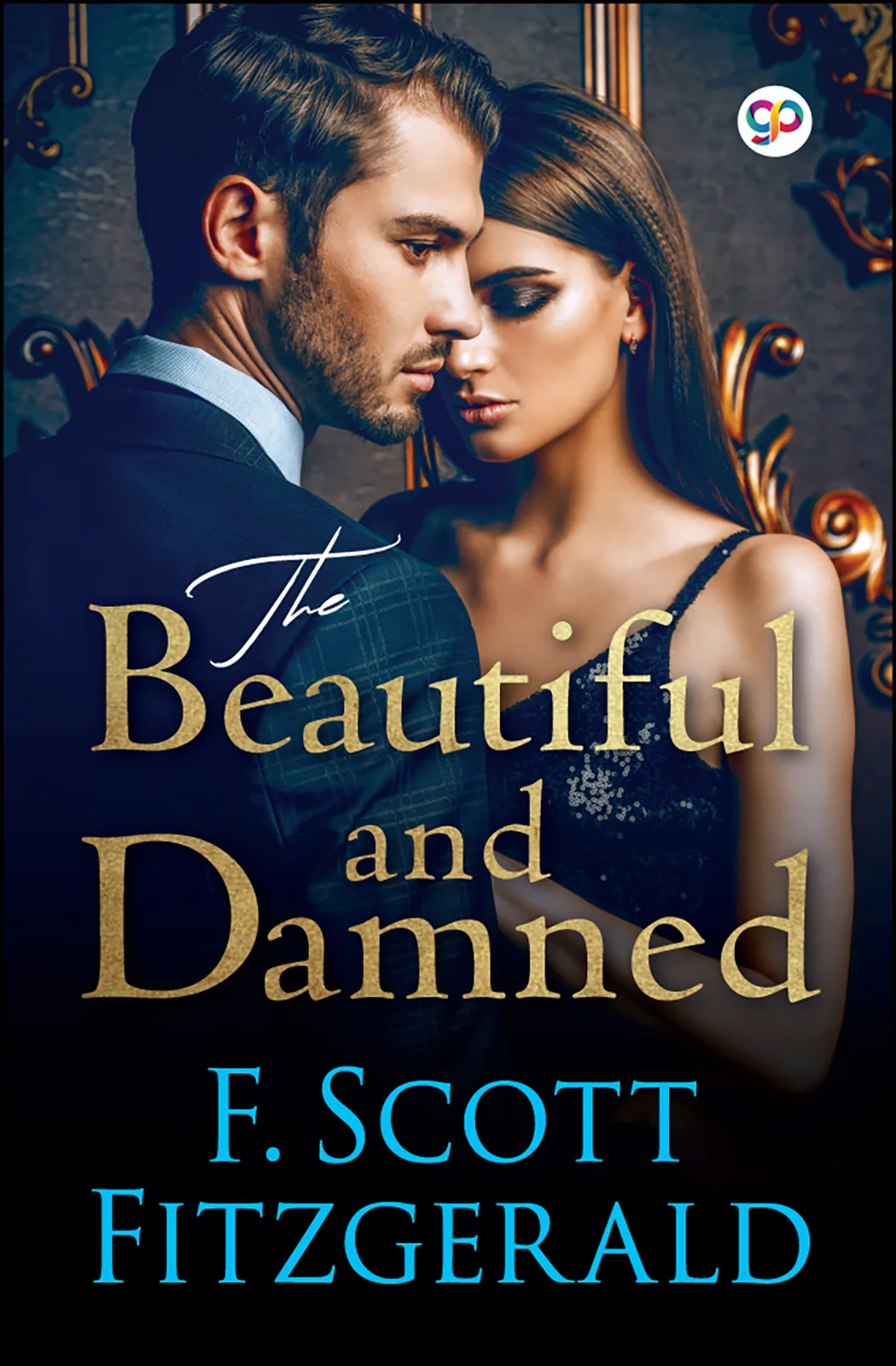
Download Cover Image
Do you want to download the full cover image for The Beautiful and Damned?