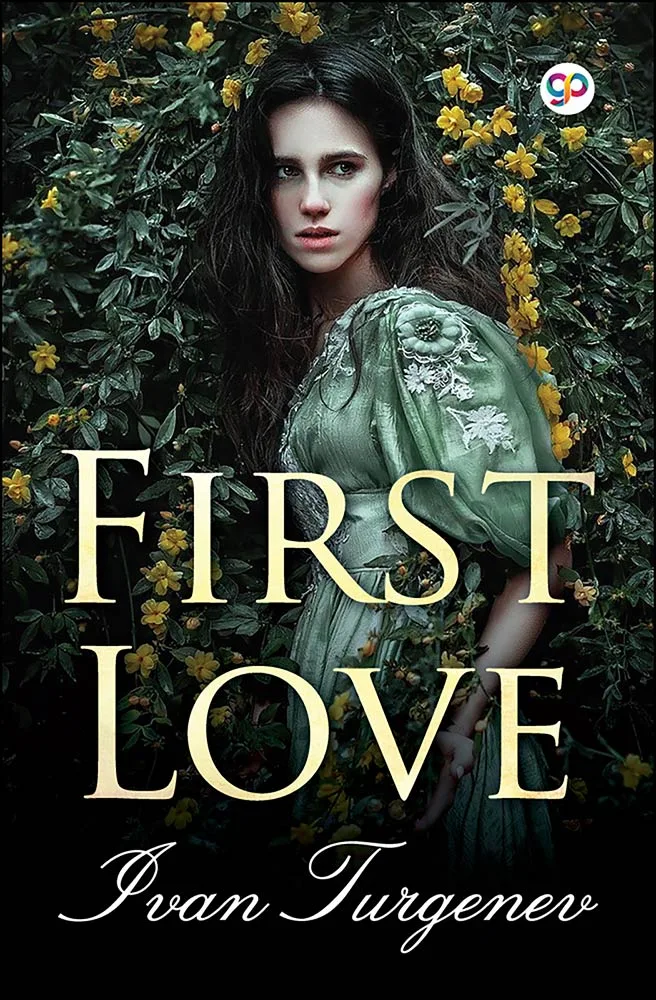
First Love
Paperback
• 120 Pages
• INR 245.00
• English
• 9789354994715
No ratings yet
| Publisher | General Press |
|---|---|
| ISBN13 | 9789354994715 |
| ASIN/SKU | 9354994717 |
| Book Format | Paperback |
| Language | English |
| Pages | 120 |
| List Price | INR 245.00 |
| Subject Code | FIC027000, SOC032000, BIO022000, FIC043000 |
| Publishing Date | 01/08/2022 |
| Dimensions | 8.25 x 5.25 x 1.0 inches |
| Book Code | BD00067766 |
Buy this Book
Amazon Stores
Ebook Stores
Other Stores
Discover First Love by Ivan Turgenev. This book is published by General Press in Paperback format, ISBN 9789354994715, ASIN 9354994717, under Literature and Fiction, Russian Literature, Historical Fiction.
Book Description
First published in 1860, 'First Love' is a novella by Ivan Turgenev, a Russian novelist, short story writer, poet, playwright, translator and popularizer of Russian literature in the West. It is one of his most popular works of short fiction. Some criticized its light subject matter that did not touch upon any of the pressing social and political issues of the day. But it had its many admirers, including the French novelist Gustave Flaubert, who gushed in a letter to Turgenev, "What an exciting girl that Zinochka [Zinaida] is!"
It tells the love story between a 21-year-old girl and a 16-year-old boy. Like many of Turgenev's works, this one is highly autobiographical. Indeed, the author claimed it was the most autobiographical of all his works. Here Turgenev is retelling an incident from his own life, his infatuation with a young neighbor in the country, Catherine Shakovskoy (the Zinaida of the novella), an infatuation that lasted until his discovery that Catherine was in fact his own father's mistress.
It tells the love story between a 21-year-old girl and a 16-year-old boy. Like many of Turgenev's works, this one is highly autobiographical. Indeed, the author claimed it was the most autobiographical of all his works. Here Turgenev is retelling an incident from his own life, his infatuation with a young neighbor in the country, Catherine Shakovskoy (the Zinaida of the novella), an infatuation that lasted until his discovery that Catherine was in fact his own father's mistress.
Author Biography
Ivan Turgenev (born October 28 [November 9, New Style], 1818, Oryol, Russia—died August 22 [September 3], 1883, Bougival, near Paris, France) was a Russian novelist, poet, and playwright whose major works include the short-story collection A Sportsman’s Sketches (1852) and the novels Rudin (1856), Home of the Gentry (1859), On the Eve (1860), and Fathers and Sons (1862). These works offer realistic, affectionate portrayals of the Russian peasantry and penetrating studies of the Russian intelligentsia who were attempting to move the country into a new age. Turgenev poured into his writings not only a deep concern for the future of his native land but also an integrity of craft that has ensured his place in Russian literature. The many years that he spent in western Europe were due in part to his personal and artistic stand as a liberal between the reactionary tsarist rule and the spirit of revolutionary radicalism that held sway in contemporary artistic and intellectual circles in Russia.
Editorial Reviews
Editorial Reviews will be added soon…
Book Summary
Ivan Turgenev’s First Love, first published in 1860, is a short but deeply moving novella about the intensity, confusion, and lasting influence of a young person’s first experience of love. Told through memory, the story follows Vladimir Petrovich, who looks back on the summer when, as a sixteen-year-old boy, he fell passionately in love with an older woman named Zinaida Alexandrovna. What begins as an innocent adolescent infatuation gradually becomes a painful lesson about desire, jealousy, emotional dependence, and the complicated nature of adults.
The story begins with Vladimir as an adult, gathered with friends who are discussing their first experiences of love. Vladimir says that his first love was unlike any ordinary romance and agrees to tell the story. This framing device immediately establishes that the events belong to the past, but they remain emotionally alive in his memory. He does not simply remember what happened; he remembers the feelings of his younger self and tries to understand them with the greater knowledge of adulthood.
The story takes place during a summer vacation when Vladimir is sixteen. He is staying with his parents in the country, enjoying the freedom and excitement of youth. His life is comfortable, but he is still inexperienced and uncertain about the adult world.
One day, Vladimir meets Zinaida Alexandrovna, a beautiful young woman who lives nearby with her mother. Zinaida is older than Vladimir and possesses a personality that immediately fascinates him. She is lively, intelligent, playful, unpredictable, and surrounded by admirers. Several young men regularly visit her, compete for her attention, and willingly obey her teasing commands.
Vladimir is instantly captivated. He does not initially understand what he is feeling. He simply knows that being near Zinaida makes him happy and that he wants desperately to attract her attention. His feelings quickly become an obsession.
Zinaida enjoys playing with her admirers. She invents games, assigns them amusing roles, teases them, and encourages their devotion without appearing to take their romantic feelings seriously. Vladimir is both delighted and tormented by this behavior. He becomes one of her admirers, even though he is younger and less experienced than the others.
For Vladimir, everything about Zinaida seems extraordinary. Her beauty, moods, gestures, and words acquire enormous significance. He idealizes her, as young people often do when experiencing love for the first time. His feelings are not yet the balanced affection of mature love. They are overwhelming, absolute, and sometimes painful.
The other young men surrounding Zinaida intensify Vladimir’s jealousy. He begins comparing himself with them and wondering whom she truly loves. He wants to be special to her but cannot determine what she really feels.
Zinaida occasionally treats him with genuine tenderness. She seems to recognize his innocence and enjoys his devotion. At times she behaves almost like an older sister; at other times, her attention becomes more intimate and emotionally charged. Vladimir cannot understand the difference. His emotional world is still too inexperienced to separate affection, attraction, admiration, and love.
As the summer progresses, Vladimir becomes increasingly consumed by Zinaida. He writes poetry, wanders through the countryside, dreams about her, and experiences the strange mixture of happiness and suffering that accompanies first love. He feels that his entire identity has become connected to another person.
Yet the story gradually takes a darker turn. Vladimir begins to notice that Zinaida herself is emotionally troubled. Beneath her playful confidence is a deep vulnerability. She is not simply a flirt who enjoys controlling her admirers. She is caught in a complicated emotional relationship that she cannot escape.
Vladimir eventually discovers the painful truth: Zinaida is in love with his father.
This revelation transforms the story. Vladimir’s father, Pyotr Vasilyevich, is a proud, handsome, intelligent, and emotionally distant man. He is very different from Vladimir. He possesses the authority and self-confidence of an experienced adult. Zinaida is drawn to him with a passion that is much deeper than the playful affection she shows toward her young admirers.
For Vladimir, discovering this relationship is devastating. His father has been an admired figure in his life, and now the person he worships romantically is secretly involved with him. Vladimir's first experience of love therefore becomes entangled with his first painful recognition of adult sexuality and betrayal.
The most disturbing element is that Vladimir witnesses a moment of emotional violence between Zinaida and his father. His father, usually controlled and dignified, reveals a fierce and possessive side. Vladimir sees him strike Zinaida with a riding crop. Instead of simply recoiling from the scene, Vladimir is shocked by the intensity of the relationship between them.
This moment is crucial because it destroys Vladimir's childish understanding of love. Until then, he has imagined love as beauty, admiration, poetry, and romantic devotion. Now he discovers that passion can contain jealousy, power, humiliation, and suffering.
Zinaida does not behave like a conventional victim or romantic heroine. She continues to love Vladimir's father despite the pain of their relationship. This confuses Vladimir even further. He cannot understand why someone would willingly remain attached to a person who hurts her.
His father's relationship with Zinaida eventually ends, but the emotional consequences remain. Vladimir returns to his ordinary life, carrying a new understanding of the complexity of adults. His first love has not ended in romance or fulfillment. Instead, it has become an education in human desire.
The novella's greatest strength lies in its exploration of memory. The adult Vladimir does not simply condemn his younger self for being naïve. He remembers the extraordinary intensity of those emotions with tenderness. First love is important not because it necessarily leads to a lasting relationship, but because it introduces a person to powerful emotions that were previously unknown.
Turgenev also explores the contrast between youth and adulthood. Vladimir initially believes adults understand love and life better than he does. But as the story unfolds, he discovers that adults can be just as confused, vulnerable, and irrational as young people. Experience does not eliminate emotional weakness.
The character of Zinaida is especially complex. She is both powerful and vulnerable, playful and serious, independent and emotionally dependent. Her relationships with her admirers reveal her ability to manipulate others, but her relationship with Vladimir's father reveals that she herself can become emotionally powerless.
Vladimir's father represents another dimension of adult love: love mixed with authority and possession. His relationship with Zinaida is passionate but destructive. Through him, Turgenev shows that emotional intensity does not necessarily equal emotional health or happiness.
Another important theme is the loss of innocence. Vladimir's first love marks the moment when he begins to see the adult world without the protective illusions of childhood. He learns that people can desire what they should not, that love can hurt, and that those we admire may possess troubling weaknesses.
The story's conclusion adds another layer of melancholy. Years later, Vladimir learns that Zinaida has married and died after giving birth. Her life has continued beyond the summer that transformed his own. Yet she remains permanently connected to his memory.
Ultimately, First Love is not simply a romantic story. It is a meditation on the way a single emotional experience can shape an entire life. Vladimir's love for Zinaida is innocent, but the world he discovers through that love is not. He learns that desire can be beautiful and painful at the same time, and that the people we idealize are often more complicated than our imaginations allow.
Turgenev captures the emotional atmosphere of first love with remarkable delicacy. The excitement, jealousy, embarrassment, longing, fantasy, and sudden heartbreak all feel intimate and believable. The novel does not ridicule youthful emotion; instead, it treats it with respect.
In the end, First Love suggests that growing up means learning to live with the contradictions of human feeling. We may lose our innocence, but we gain a deeper understanding of ourselves and others. Vladimir never forgets Zinaida because she was not merely the first woman he loved. She was the person through whom he first discovered that love could be both wonderful and painful—and that the heart does not always obey reason.
The story begins with Vladimir as an adult, gathered with friends who are discussing their first experiences of love. Vladimir says that his first love was unlike any ordinary romance and agrees to tell the story. This framing device immediately establishes that the events belong to the past, but they remain emotionally alive in his memory. He does not simply remember what happened; he remembers the feelings of his younger self and tries to understand them with the greater knowledge of adulthood.
The story takes place during a summer vacation when Vladimir is sixteen. He is staying with his parents in the country, enjoying the freedom and excitement of youth. His life is comfortable, but he is still inexperienced and uncertain about the adult world.
One day, Vladimir meets Zinaida Alexandrovna, a beautiful young woman who lives nearby with her mother. Zinaida is older than Vladimir and possesses a personality that immediately fascinates him. She is lively, intelligent, playful, unpredictable, and surrounded by admirers. Several young men regularly visit her, compete for her attention, and willingly obey her teasing commands.
Vladimir is instantly captivated. He does not initially understand what he is feeling. He simply knows that being near Zinaida makes him happy and that he wants desperately to attract her attention. His feelings quickly become an obsession.
Zinaida enjoys playing with her admirers. She invents games, assigns them amusing roles, teases them, and encourages their devotion without appearing to take their romantic feelings seriously. Vladimir is both delighted and tormented by this behavior. He becomes one of her admirers, even though he is younger and less experienced than the others.
For Vladimir, everything about Zinaida seems extraordinary. Her beauty, moods, gestures, and words acquire enormous significance. He idealizes her, as young people often do when experiencing love for the first time. His feelings are not yet the balanced affection of mature love. They are overwhelming, absolute, and sometimes painful.
The other young men surrounding Zinaida intensify Vladimir’s jealousy. He begins comparing himself with them and wondering whom she truly loves. He wants to be special to her but cannot determine what she really feels.
Zinaida occasionally treats him with genuine tenderness. She seems to recognize his innocence and enjoys his devotion. At times she behaves almost like an older sister; at other times, her attention becomes more intimate and emotionally charged. Vladimir cannot understand the difference. His emotional world is still too inexperienced to separate affection, attraction, admiration, and love.
As the summer progresses, Vladimir becomes increasingly consumed by Zinaida. He writes poetry, wanders through the countryside, dreams about her, and experiences the strange mixture of happiness and suffering that accompanies first love. He feels that his entire identity has become connected to another person.
Yet the story gradually takes a darker turn. Vladimir begins to notice that Zinaida herself is emotionally troubled. Beneath her playful confidence is a deep vulnerability. She is not simply a flirt who enjoys controlling her admirers. She is caught in a complicated emotional relationship that she cannot escape.
Vladimir eventually discovers the painful truth: Zinaida is in love with his father.
This revelation transforms the story. Vladimir’s father, Pyotr Vasilyevich, is a proud, handsome, intelligent, and emotionally distant man. He is very different from Vladimir. He possesses the authority and self-confidence of an experienced adult. Zinaida is drawn to him with a passion that is much deeper than the playful affection she shows toward her young admirers.
For Vladimir, discovering this relationship is devastating. His father has been an admired figure in his life, and now the person he worships romantically is secretly involved with him. Vladimir's first experience of love therefore becomes entangled with his first painful recognition of adult sexuality and betrayal.
The most disturbing element is that Vladimir witnesses a moment of emotional violence between Zinaida and his father. His father, usually controlled and dignified, reveals a fierce and possessive side. Vladimir sees him strike Zinaida with a riding crop. Instead of simply recoiling from the scene, Vladimir is shocked by the intensity of the relationship between them.
This moment is crucial because it destroys Vladimir's childish understanding of love. Until then, he has imagined love as beauty, admiration, poetry, and romantic devotion. Now he discovers that passion can contain jealousy, power, humiliation, and suffering.
Zinaida does not behave like a conventional victim or romantic heroine. She continues to love Vladimir's father despite the pain of their relationship. This confuses Vladimir even further. He cannot understand why someone would willingly remain attached to a person who hurts her.
His father's relationship with Zinaida eventually ends, but the emotional consequences remain. Vladimir returns to his ordinary life, carrying a new understanding of the complexity of adults. His first love has not ended in romance or fulfillment. Instead, it has become an education in human desire.
The novella's greatest strength lies in its exploration of memory. The adult Vladimir does not simply condemn his younger self for being naïve. He remembers the extraordinary intensity of those emotions with tenderness. First love is important not because it necessarily leads to a lasting relationship, but because it introduces a person to powerful emotions that were previously unknown.
Turgenev also explores the contrast between youth and adulthood. Vladimir initially believes adults understand love and life better than he does. But as the story unfolds, he discovers that adults can be just as confused, vulnerable, and irrational as young people. Experience does not eliminate emotional weakness.
The character of Zinaida is especially complex. She is both powerful and vulnerable, playful and serious, independent and emotionally dependent. Her relationships with her admirers reveal her ability to manipulate others, but her relationship with Vladimir's father reveals that she herself can become emotionally powerless.
Vladimir's father represents another dimension of adult love: love mixed with authority and possession. His relationship with Zinaida is passionate but destructive. Through him, Turgenev shows that emotional intensity does not necessarily equal emotional health or happiness.
Another important theme is the loss of innocence. Vladimir's first love marks the moment when he begins to see the adult world without the protective illusions of childhood. He learns that people can desire what they should not, that love can hurt, and that those we admire may possess troubling weaknesses.
The story's conclusion adds another layer of melancholy. Years later, Vladimir learns that Zinaida has married and died after giving birth. Her life has continued beyond the summer that transformed his own. Yet she remains permanently connected to his memory.
Ultimately, First Love is not simply a romantic story. It is a meditation on the way a single emotional experience can shape an entire life. Vladimir's love for Zinaida is innocent, but the world he discovers through that love is not. He learns that desire can be beautiful and painful at the same time, and that the people we idealize are often more complicated than our imaginations allow.
Turgenev captures the emotional atmosphere of first love with remarkable delicacy. The excitement, jealousy, embarrassment, longing, fantasy, and sudden heartbreak all feel intimate and believable. The novel does not ridicule youthful emotion; instead, it treats it with respect.
In the end, First Love suggests that growing up means learning to live with the contradictions of human feeling. We may lose our innocence, but we gain a deeper understanding of ourselves and others. Vladimir never forgets Zinaida because she was not merely the first woman he loved. She was the person through whom he first discovered that love could be both wonderful and painful—and that the heart does not always obey reason.
Sample Chapters
Sample Chapters will be added soon…
Reader Reviews
No reviews yet.
First Love