
A Portrait of Artist as a Young Man
Hardcover
• 296 Pages
• INR 495.00
• English
• 9789354994838
No ratings yet
| Publisher | General Press |
|---|---|
| ISBN13 | 9789354994838 |
| ASIN/SKU | 9354994830 |
| Book Format | Hardcover |
| Language | English |
| Pages | 296 |
| List Price | INR 495.00 |
| Subject Code | FIC019000, FIC047000, FIC025000 |
| Publishing Date | 01/08/2022 |
| Dimensions | 8.25 x 5.25 x 1.0 inches |
| Book Code | BD00067776 |
Buy this Book
Amazon Stores
Ebook Stores
Other Stores
Discover A Portrait of Artist as a Young Man by James Joyce. This book is published by General Press in Hardcover format, ISBN 9789354994838, ASIN 9354994830, under Literature and Fiction, Irish Literature, Classics.
Book Description
First published in 1916, ‘A Portrait of Artist as a Young Man’ is the first novel and the semi-autobiographical portrayal of James Joyce, an Irish novelist, short story writer, poet, and literary critic. Joyce is regarded as one of the most effective and significant writers of the 20th century.
This recounts James Joyce’s early upbringing as an Irish Catholic in late 19th century and early 20th century Dublin. Joyce administers the strict realism which he originally planned in favor of the use of free indirect speech. The novel’s central figure is Stephen Dedalus, whose life is shown in its various stages starting in childhood and moving through early adulthood. It is a proficient portrayal of the process of self-discovery and revolt against authority that is signifying of youth, one which would demonstrate Joyce as a central figure of the modernist literary movement.
This recounts James Joyce’s early upbringing as an Irish Catholic in late 19th century and early 20th century Dublin. Joyce administers the strict realism which he originally planned in favor of the use of free indirect speech. The novel’s central figure is Stephen Dedalus, whose life is shown in its various stages starting in childhood and moving through early adulthood. It is a proficient portrayal of the process of self-discovery and revolt against authority that is signifying of youth, one which would demonstrate Joyce as a central figure of the modernist literary movement.
Author Biography
James Joyce (2 February 1882 – 13 January 1941) was an Irish novelist and poet, regarded as one of the most influential and important authors of the twentieth century. Joyce's technical innovations in the art of the novel include an extensive use of interior monologue; he used a complex network of symbolic parallels drawn from the mythology, history, and literature, and created a unique language of invented words, puns, and allusions.
James Joyce was born in Dublin, on February 2, 1882, as the son of John Stanislaus Joyce, an impoverished gentleman, who had failed in a distillery business and tried all kinds of professions, including politics and tax collecting. Joyce's mother, Mary Jane Murray, was ten years younger than her husband. She was an accomplished pianist, whose life was dominated by the Roman Catholic Church. In spite of their poverty, the family struggled to maintain a solid middle-class facade.
From the age of six, Joyce was educated by Jesuits at Clongowes Wood College, at Clane, and then at Belvedere College in Dublin (1893-97). In 1898 he entered the University College, Dublin. Joyce's first publication was an essay on Ibsen's play 'When We Dead Awaken'. It appeared in the 'Fortnightly Review' in 1900. At this time he also began writing lyric poems.
After graduation in 1902, the twenty-year-old Joyce went to Paris, where he worked as a journalist, teacher and in other occupations under difficult financial conditions. He spent a year in France, returning when a telegram arrived saying his mother was dying. Not long after her death, Joyce was traveling again. He left Dublin in 1904 with Nora Barnacle, a chambermaid who he married in 1931.
Joyce published 'Dubliners' in 1914, 'A Portrait of the Artist as a Young Man' in 1916, a play 'Exiles' in 1918 and 'Ulysses' in 1922. In 1907 Joyce had published a collection of poems, 'Chamber Music'.
At the outset of the First World War, Joyce moved with his family to Zürich. In Zürich Joyce started to develop the early chapters of 'Ulysses', which was first published in France because of censorship troubles in the Great Britain and the United States, where the book became legally available only in 1933. In March 1923 Joyce started his second major work, 'Finnegans Wake', suffering at the same time chronic eye troubles caused by glaucoma. The first segment of the novel appeared in Ford Madox Ford's transatlantic review in April 1924, as part of what Joyce called Work in Progress. The final version was published in 1939.
James Joyce was born in Dublin, on February 2, 1882, as the son of John Stanislaus Joyce, an impoverished gentleman, who had failed in a distillery business and tried all kinds of professions, including politics and tax collecting. Joyce's mother, Mary Jane Murray, was ten years younger than her husband. She was an accomplished pianist, whose life was dominated by the Roman Catholic Church. In spite of their poverty, the family struggled to maintain a solid middle-class facade.
From the age of six, Joyce was educated by Jesuits at Clongowes Wood College, at Clane, and then at Belvedere College in Dublin (1893-97). In 1898 he entered the University College, Dublin. Joyce's first publication was an essay on Ibsen's play 'When We Dead Awaken'. It appeared in the 'Fortnightly Review' in 1900. At this time he also began writing lyric poems.
After graduation in 1902, the twenty-year-old Joyce went to Paris, where he worked as a journalist, teacher and in other occupations under difficult financial conditions. He spent a year in France, returning when a telegram arrived saying his mother was dying. Not long after her death, Joyce was traveling again. He left Dublin in 1904 with Nora Barnacle, a chambermaid who he married in 1931.
Joyce published 'Dubliners' in 1914, 'A Portrait of the Artist as a Young Man' in 1916, a play 'Exiles' in 1918 and 'Ulysses' in 1922. In 1907 Joyce had published a collection of poems, 'Chamber Music'.
At the outset of the First World War, Joyce moved with his family to Zürich. In Zürich Joyce started to develop the early chapters of 'Ulysses', which was first published in France because of censorship troubles in the Great Britain and the United States, where the book became legally available only in 1933. In March 1923 Joyce started his second major work, 'Finnegans Wake', suffering at the same time chronic eye troubles caused by glaucoma. The first segment of the novel appeared in Ford Madox Ford's transatlantic review in April 1924, as part of what Joyce called Work in Progress. The final version was published in 1939.
Editorial Reviews
Editorial Reviews will be added soon…
Book Summary
James Joyce’s A Portrait of the Artist as a Young Man is a coming-of-age novel about Stephen Dedalus, a sensitive and intelligent Irish boy who gradually grows into an independent young artist. First published in 1916, the novel follows Stephen from early childhood through his university years, tracing not only the events of his life but also the development of his thoughts, emotions, imagination, and artistic identity. At its heart, the book is about the difficult process of becoming oneself while resisting the powerful forces of family, religion, society, and national identity.
The story begins with Stephen as a small child at Clongowes Wood College, a Jesuit boarding school. His earliest experiences are presented through the limited understanding of a child, and Joyce allows the language itself to become more sophisticated as Stephen grows. This technique makes the reader feel that Stephen is not simply being described from the outside; instead, we experience the world as he experiences it. His childhood is filled with small joys, fears, humiliations, and discoveries. He remembers family stories, school punishments, Christmas gatherings, and simple childhood pleasures, but he is also unusually sensitive to the behavior of adults and the complicated world around him.
Stephen’s family gradually falls into financial difficulty, and the security of his childhood begins to disappear. His father, Simon Dedalus, is charming and talkative but irresponsible, and the family’s decline becomes an important part of Stephen’s growing awareness of the adult world. Political disagreements also enter the household. Stephen witnesses arguments about Irish nationalism and the memory of Charles Stewart Parnell, whose fall has deeply divided Irish society. These conflicts teach Stephen that even family life is shaped by larger political and historical forces.
As Stephen grows older, his relationship with religion becomes increasingly important. He is educated in a strongly Catholic environment, and the teachings of the Church influence almost every aspect of his thinking. At first, religion provides him with a sense of order and meaning. Later, however, it becomes a source of intense fear and guilt. This conflict reaches its most powerful point during a religious retreat, when a priest delivers sermons about sin, death, judgment, hell, and eternal punishment. Stephen becomes terrified by the possibility that his sins have separated him from God. His imagination turns the descriptions of hell into vivid and horrifying images.
Overwhelmed by guilt, Stephen decides to change his life completely. He confesses his sins and becomes deeply religious, carefully controlling his thoughts and actions. For a time, he takes great pride in discipline and self-denial. He follows religious practices with extraordinary seriousness and even begins to imagine that he might have a vocation to the priesthood. When Jesuit priests recognize his intelligence and seriousness, Stephen is invited to consider joining the religious life.
Yet this possibility ultimately forces Stephen to understand what he does not want. Although he respects the intellectual discipline of the Church, he realizes that a life devoted to religious obedience would require him to surrender something essential within himself. He wants freedom to experience the world, to think independently, and to create. The more deeply he examines himself, the more strongly he feels the need to escape the restrictions that have shaped him.
One of the major turning points comes when Stephen encounters a young girl wading in the sea. The scene affects him profoundly. Instead of feeling sinful desire, he experiences a sudden sense of beauty, freedom, and spiritual awakening. The girl becomes, in his imagination, almost a symbol of artistic inspiration. The moment helps him understand that beauty and sensual experience do not necessarily have to be enemies of the spirit. For Stephen, the world itself can become a source of revelation.
At university, Stephen becomes increasingly independent in his thinking. He spends much of his time discussing philosophy, literature, religion, politics, and art with his fellow students. These conversations reveal his growing determination to develop a personal philosophy rather than simply accept the beliefs handed down to him. He is especially critical of the pressures imposed by Irish nationalism, Catholicism, and conventional social expectations.
Stephen’s relationship with Ireland becomes particularly complicated. He loves aspects of his country and is deeply shaped by its language, history, landscape, and culture, but he does not want his identity to be defined entirely by nationalism. He feels that Ireland has placed many invisible nets around him—religion, nationality, family, and social expectations. His challenge is to find a way of becoming an artist without allowing these forces to determine what he thinks or creates.
The novel’s central artistic idea emerges through Stephen’s discussions about aesthetics. He tries to understand what makes something beautiful and what separates genuine artistic creation from ordinary emotional or moral reactions. He develops an ideal of the artist as someone who stands apart from the immediate struggles of society and transforms experience into art. Stephen increasingly believes that an artist must observe life deeply but maintain enough independence to create something new from it.
By the end of the novel, Stephen has decided to leave Ireland and pursue his artistic ambitions elsewhere. His departure is not presented as a simple rejection of everything he has known. Instead, he carries his experiences with him. His family, religion, friendships, sexuality, political surroundings, and memories have all contributed to the person he has become. Escape, therefore, does not mean forgetting the past. It means gaining enough freedom to transform the past into something creative.
The final pages take the form of Stephen’s diary entries, marking a striking change in the novel’s style. His voice becomes more confident, personal, and direct. He announces his intention to live, encounter experience, and create through art. The image of Dedalus, the mythological craftsman who escaped imprisonment by constructing wings, becomes central to Stephen’s identity. Like his namesake, Stephen wants to construct his own means of escape—not through physical wings, but through imagination and artistic creation.
Ultimately, A Portrait of the Artist as a Young Man is a deeply personal story about self-discovery. Stephen’s journey is painful because independence requires him to question almost everything he has been taught to believe. Joyce shows that becoming an artist is not simply a matter of talent; it involves developing the courage to think independently and accept the uncertainty that comes with freedom. Stephen does not emerge from the novel with every question answered. Instead, he emerges ready to face life on his own terms.
The novel’s lasting power lies in the honesty of that struggle. Stephen is intelligent but often arrogant, sensitive but sometimes selfish, courageous but also uncertain. Joyce does not make him an ideal hero. He makes him human. Through Stephen’s gradual awakening, the novel captures one of the most difficult experiences of growing up: discovering that the life others imagine for us may not be the life we are meant to live. In choosing art, freedom, and self-expression, Stephen chooses the uncertain path of becoming himself.
The story begins with Stephen as a small child at Clongowes Wood College, a Jesuit boarding school. His earliest experiences are presented through the limited understanding of a child, and Joyce allows the language itself to become more sophisticated as Stephen grows. This technique makes the reader feel that Stephen is not simply being described from the outside; instead, we experience the world as he experiences it. His childhood is filled with small joys, fears, humiliations, and discoveries. He remembers family stories, school punishments, Christmas gatherings, and simple childhood pleasures, but he is also unusually sensitive to the behavior of adults and the complicated world around him.
Stephen’s family gradually falls into financial difficulty, and the security of his childhood begins to disappear. His father, Simon Dedalus, is charming and talkative but irresponsible, and the family’s decline becomes an important part of Stephen’s growing awareness of the adult world. Political disagreements also enter the household. Stephen witnesses arguments about Irish nationalism and the memory of Charles Stewart Parnell, whose fall has deeply divided Irish society. These conflicts teach Stephen that even family life is shaped by larger political and historical forces.
As Stephen grows older, his relationship with religion becomes increasingly important. He is educated in a strongly Catholic environment, and the teachings of the Church influence almost every aspect of his thinking. At first, religion provides him with a sense of order and meaning. Later, however, it becomes a source of intense fear and guilt. This conflict reaches its most powerful point during a religious retreat, when a priest delivers sermons about sin, death, judgment, hell, and eternal punishment. Stephen becomes terrified by the possibility that his sins have separated him from God. His imagination turns the descriptions of hell into vivid and horrifying images.
Overwhelmed by guilt, Stephen decides to change his life completely. He confesses his sins and becomes deeply religious, carefully controlling his thoughts and actions. For a time, he takes great pride in discipline and self-denial. He follows religious practices with extraordinary seriousness and even begins to imagine that he might have a vocation to the priesthood. When Jesuit priests recognize his intelligence and seriousness, Stephen is invited to consider joining the religious life.
Yet this possibility ultimately forces Stephen to understand what he does not want. Although he respects the intellectual discipline of the Church, he realizes that a life devoted to religious obedience would require him to surrender something essential within himself. He wants freedom to experience the world, to think independently, and to create. The more deeply he examines himself, the more strongly he feels the need to escape the restrictions that have shaped him.
One of the major turning points comes when Stephen encounters a young girl wading in the sea. The scene affects him profoundly. Instead of feeling sinful desire, he experiences a sudden sense of beauty, freedom, and spiritual awakening. The girl becomes, in his imagination, almost a symbol of artistic inspiration. The moment helps him understand that beauty and sensual experience do not necessarily have to be enemies of the spirit. For Stephen, the world itself can become a source of revelation.
At university, Stephen becomes increasingly independent in his thinking. He spends much of his time discussing philosophy, literature, religion, politics, and art with his fellow students. These conversations reveal his growing determination to develop a personal philosophy rather than simply accept the beliefs handed down to him. He is especially critical of the pressures imposed by Irish nationalism, Catholicism, and conventional social expectations.
Stephen’s relationship with Ireland becomes particularly complicated. He loves aspects of his country and is deeply shaped by its language, history, landscape, and culture, but he does not want his identity to be defined entirely by nationalism. He feels that Ireland has placed many invisible nets around him—religion, nationality, family, and social expectations. His challenge is to find a way of becoming an artist without allowing these forces to determine what he thinks or creates.
The novel’s central artistic idea emerges through Stephen’s discussions about aesthetics. He tries to understand what makes something beautiful and what separates genuine artistic creation from ordinary emotional or moral reactions. He develops an ideal of the artist as someone who stands apart from the immediate struggles of society and transforms experience into art. Stephen increasingly believes that an artist must observe life deeply but maintain enough independence to create something new from it.
By the end of the novel, Stephen has decided to leave Ireland and pursue his artistic ambitions elsewhere. His departure is not presented as a simple rejection of everything he has known. Instead, he carries his experiences with him. His family, religion, friendships, sexuality, political surroundings, and memories have all contributed to the person he has become. Escape, therefore, does not mean forgetting the past. It means gaining enough freedom to transform the past into something creative.
The final pages take the form of Stephen’s diary entries, marking a striking change in the novel’s style. His voice becomes more confident, personal, and direct. He announces his intention to live, encounter experience, and create through art. The image of Dedalus, the mythological craftsman who escaped imprisonment by constructing wings, becomes central to Stephen’s identity. Like his namesake, Stephen wants to construct his own means of escape—not through physical wings, but through imagination and artistic creation.
Ultimately, A Portrait of the Artist as a Young Man is a deeply personal story about self-discovery. Stephen’s journey is painful because independence requires him to question almost everything he has been taught to believe. Joyce shows that becoming an artist is not simply a matter of talent; it involves developing the courage to think independently and accept the uncertainty that comes with freedom. Stephen does not emerge from the novel with every question answered. Instead, he emerges ready to face life on his own terms.
The novel’s lasting power lies in the honesty of that struggle. Stephen is intelligent but often arrogant, sensitive but sometimes selfish, courageous but also uncertain. Joyce does not make him an ideal hero. He makes him human. Through Stephen’s gradual awakening, the novel captures one of the most difficult experiences of growing up: discovering that the life others imagine for us may not be the life we are meant to live. In choosing art, freedom, and self-expression, Stephen chooses the uncertain path of becoming himself.
Sample Chapters
Sample Chapters will be added soon…
Reader Reviews
No reviews yet.
A Portrait of Artist as a Young Man
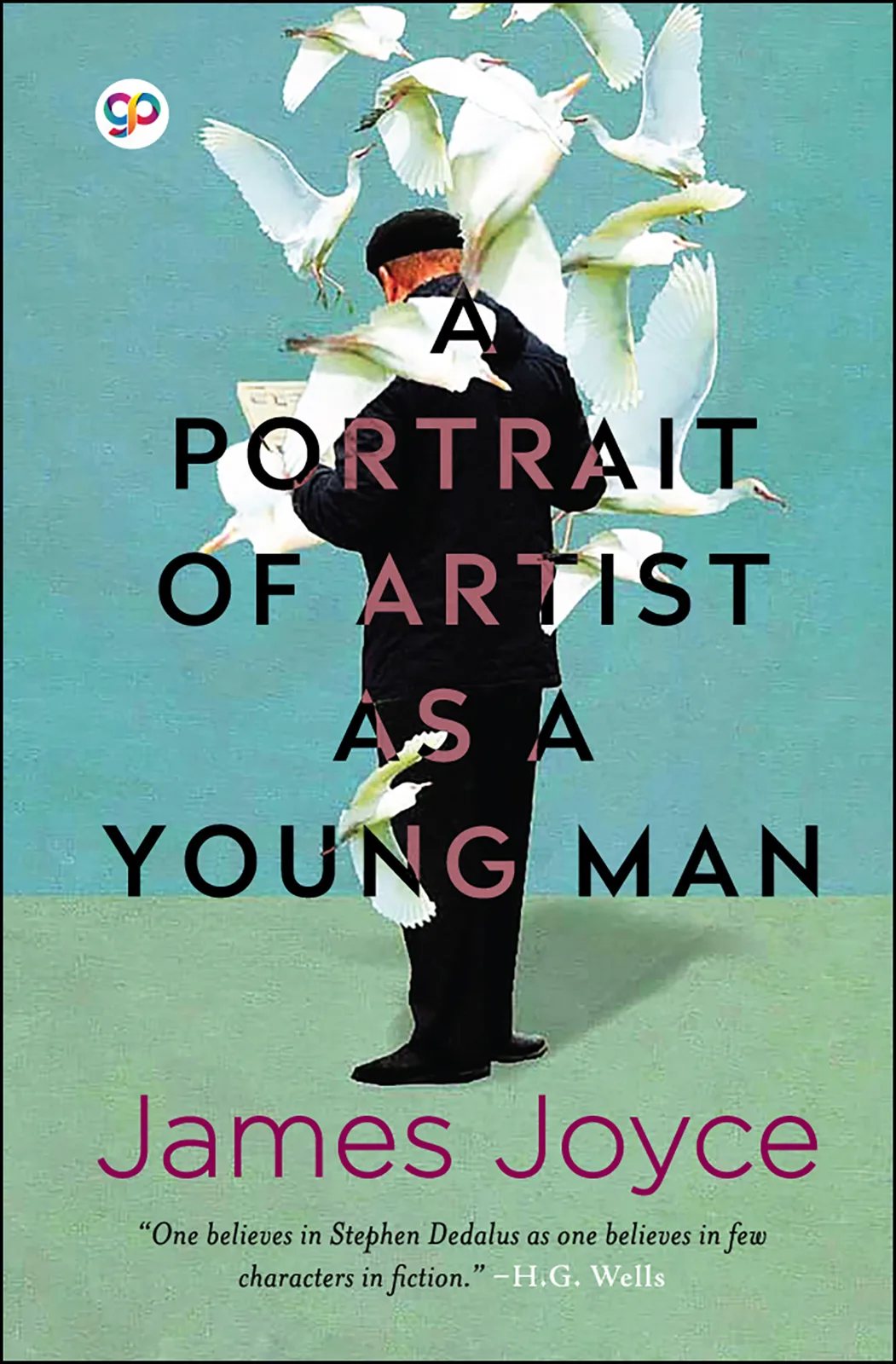
Download Cover Image
Do you want to download the full cover image for A Portrait of Artist as a Young Man?