
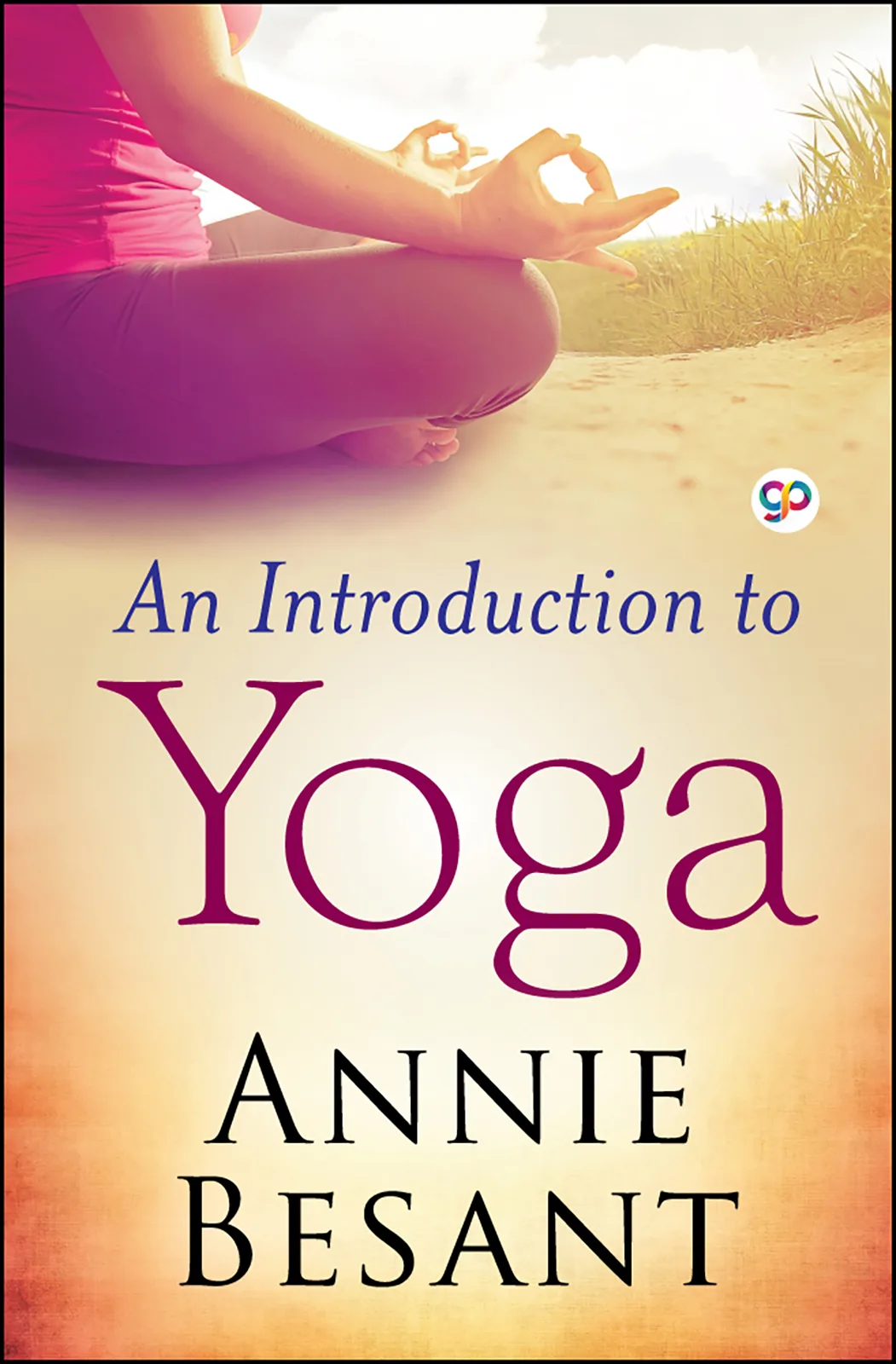
An Introduction to Yoga
Hardcover
• 112 Pages
• INR 245.00
• English
• 9789354995323
No ratings yet
| Publisher | General Press |
|---|---|
| ISBN13 | 9789354995323 |
| ASIN/SKU | 9354995322 |
| Book Format | Hardcover |
| Language | English |
| Pages | 112 |
| List Price | INR 245.00 |
| Subject Code | HEA025000, OCC026000, SEL032000, OCC000000 |
| Publishing Date | 15/12/2022 |
| Dimensions | 8.25 x 5.25 x 1.0 inches |
| Book Code | BD00067796 |
Buy this Book
Amazon Stores
Ebook Stores
Other Stores
Discover An Introduction to Yoga by Annie Besant. This book is published by General Press in Hardcover format, ISBN 9789354995323, ASIN 9354995322, under Health, Fitness and Dieting, Health, Yoga and Meditaion.
Book Description
‘An Introduction to Yoga’ by Annie Besant gives an overview of Yoga, in order to ready the student to take up, for practical purposes, the Yoga sutras of Patanjali, the chief treatise on Yoga. This book leads to the way where tranquility can be attained that can make life peaceful and healthy.
Annie Besant explains the theory of spiritual development based on the teachings of yoga. In the first lecture, ‘The Nature of Yoga’, Besant talks about consciousness, what is divine, and how they interrelate. The second lecture views the six Indian schools of philosophy, mostly comparing and contrasting yoga to Samkhya and Vedanta—the schools in that yoga is most closely linked. The third lecture views yoga as applied science. Finally, the fourth lecture discusses the practice of yoga. The book also contains some discussion of diet and statements on purifying the physical body.
Annie Besant explains the theory of spiritual development based on the teachings of yoga. In the first lecture, ‘The Nature of Yoga’, Besant talks about consciousness, what is divine, and how they interrelate. The second lecture views the six Indian schools of philosophy, mostly comparing and contrasting yoga to Samkhya and Vedanta—the schools in that yoga is most closely linked. The third lecture views yoga as applied science. Finally, the fourth lecture discusses the practice of yoga. The book also contains some discussion of diet and statements on purifying the physical body.
Author Biography
Annie Besant was a leading member of the Theosophical Society, a feminist and political activist, and a politician in India. She had a close relationship with Charles Bradlaugh, MP, a free-thinker who was often known as the 'Member for India'. Having declared herself an atheist, Annie Besant was drawn to other ideas of spiritualism and joined the Theosophical Society in 1889. She was very close to the co-founder, Madame Blavatsky, and allowed Blavatksy to live in her house in St John's Wood from 1889. In 1907, after the death of Colonel Olcott, Besant was made President of the Theosophical Society.
In 1911, Besant brought Jiddu Krishnamurti and his brother to England and acted as their guardian. She proclaimed in 1927 that Krishnamurti was the 'coming', i.e., messiah, and was devastated when he left the Theosophical Society in 1929.
Besant also campaigned for the rights of Indians and for Indian 'home rule'. She launched the Home Rule League in 1916, modelling the Indian plight on that of Ireland. She was a member of the Fabian Society, owing to her close relationship with George Bernard Shaw. In 1917 she became the first woman president of the Indian National Congress at a session in Calcutta.
In 1911, Besant brought Jiddu Krishnamurti and his brother to England and acted as their guardian. She proclaimed in 1927 that Krishnamurti was the 'coming', i.e., messiah, and was devastated when he left the Theosophical Society in 1929.
Besant also campaigned for the rights of Indians and for Indian 'home rule'. She launched the Home Rule League in 1916, modelling the Indian plight on that of Ireland. She was a member of the Fabian Society, owing to her close relationship with George Bernard Shaw. In 1917 she became the first woman president of the Indian National Congress at a session in Calcutta.
Editorial Reviews
Editorial Reviews will be added soon…
Book Summary
Annie Besant’s An Introduction to Yoga is a concise but profound exploration of yoga as a path of spiritual development, self-discipline, meditation, and the discovery of the deeper nature of consciousness. First published in 1907–1908, the work is based on four lectures Besant delivered in Benares. Rather than treating yoga as a system of physical exercises, Besant presents it primarily as a disciplined science of the mind and spirit. Her purpose is to help readers understand the principles behind yoga and prepare them for deeper study of Patañjali’s Yoga Sutras.
Besant begins with a fundamental question: What is the purpose of human life? In her view, human beings are more than physical bodies and personalities. Within every person is a deeper spiritual consciousness that gradually unfolds through experience. Ordinary life is part of a much larger process of spiritual evolution. Yoga provides a deliberate method through which a person can accelerate this development by gaining control over the mind and turning awareness inward.
For Besant, yoga means union, particularly the union of the individual consciousness with its deeper spiritual source. Human beings normally identify themselves with their bodies, emotions, desires, memories, and thoughts. These things constantly change, yet people usually say “I” when referring to them. Yoga teaches a different way of seeing. The practitioner gradually learns to distinguish the permanent spiritual Self from the temporary experiences through which that Self expresses itself.
Besant describes yoga as a science of consciousness. Just as scientists study the external world through observation, discipline, and experiment, the yogic practitioner studies the inner world. The mind becomes the field of investigation. Instead of simply believing that certain spiritual states exist, the aspirant attempts to experience them through disciplined practice.
This requires an understanding of the mind and its constant activity. Human consciousness is usually filled with thoughts, memories, desires, fears, images, and reactions. The mind moves quickly from one subject to another, often without conscious direction. Because of this restlessness, people may feel that they are being carried along by their thoughts rather than directing them.
Yoga begins to change this relationship. The practitioner learns to observe mental activity without being completely controlled by it. Thoughts are recognized as passing movements rather than as the whole of one's identity. This distinction is crucial because spiritual freedom, in Besant's view, begins when consciousness can stand apart from the changing contents of the mind.
Besant discusses several states of consciousness, including waking, dreaming, and deep sleep. She also introduces higher states that can be reached through spiritual discipline. Among these is samadhi, a state of profound concentration and expanded awareness. These higher states are not simply forms of relaxation; they represent deeper levels of consciousness in which ordinary mental limitations are transcended.
An important part of Besant's discussion concerns the relationship between consciousness and the body. The physical body is necessary for ordinary experience, but it is not the deepest identity of the individual. Besant's Theosophical framework also includes subtler levels or “bodies” through which consciousness functions. These must gradually be purified and brought under control if the aspirant is to progress spiritually.
The second major theme is self-knowledge. Besant believes that people often suffer because they misunderstand who they are. They identify themselves with temporary emotions and circumstances. If a person thinks, “I am angry,” the emotion may seem to define the whole self. Yoga encourages a different attitude: anger is something being experienced, not the deepest identity of the person experiencing it.
This principle can be applied to fear, sadness, desire, pride, and even pleasure. The yogic practitioner learns to observe these experiences without becoming their prisoner.
Besant also stresses that spiritual development cannot be separated from ethical living. Meditation alone cannot transform someone whose daily life is dominated by selfishness, dishonesty, hatred, uncontrolled desire, or harmful behavior. Such qualities disturb the mind and prevent sustained concentration.
For this reason, yoga requires self-purification. The aspirant must gradually develop self-control, truthfulness, compassion, patience, and detachment. Moral discipline is not presented as a set of arbitrary rules. It is a practical preparation for meditation. A restless or dishonest life creates inner conflict, while an ethical life makes the mind calmer and more capable of concentration.
Besant also examines the problem of desire and attachment. Human beings are naturally drawn toward pleasure and away from pain. But constant pursuit of pleasure creates dependence, while fear of pain creates anxiety. Yoga teaches the individual to develop greater balance. Pleasure can be appreciated without becoming an obsession, and pain can be faced without allowing it to destroy inner stability.
The practical section of the book focuses particularly on concentration and meditation. Besant explains that the mind must first learn to remain focused on one object. Normally, attention is scattered among many things. Meditation begins when the practitioner deliberately gathers that attention and keeps it directed toward a chosen subject.
At first, this requires effort. The mind wanders, becomes distracted, or produces unrelated thoughts. The practitioner repeatedly brings it back. Through consistent practice, concentration becomes stronger.
Besant discusses the use of mantras and sacred sounds as aids to concentration. Repetition can help steady the mind and turn attention toward spiritual realities. The purpose is not mechanical repetition but the deliberate shaping of consciousness.
She also explains that meditation can progress from concentration on an object toward deeper states in which the mind becomes increasingly still. The ultimate aim is not simply to think more clearly but to move beyond the ordinary limitations of thought and experience a higher state of consciousness.
However, Besant warns that the path is not easy. Obstacles and difficulties are inevitable. Doubt, laziness, restlessness, emotional disturbance, physical discomfort, impatience, and attachment can interrupt spiritual practice. The aspirant must therefore develop perseverance.
One of the book's most humane qualities is that Besant does not suggest that spiritual growth happens instantly. It requires time and repeated effort. A person may fail, become distracted, or lose confidence, but these difficulties are part of the journey. The important thing is to continue practicing with sincerity.
Besant also cautions against seeking unusual spiritual experiences merely for their novelty. The purpose of yoga is not supernatural entertainment or personal power. Spiritual abilities, if they arise, should never become the goal. The true purpose is self-mastery and realization of the deeper Self.
Ultimately, Besant describes the yogic journey as a movement from outward identification toward inner realization. Human consciousness has become deeply involved with the physical and emotional world, but through yoga it gradually turns inward. The practitioner learns to recognize the deeper reality behind the changing personality.
The goal is spiritual freedom. This freedom does not mean escaping ordinary responsibilities. Instead, it means becoming less controlled by impulses, fears, desires, and mental habits. A spiritually mature person can live in the world without being completely dominated by it.
At its heart, An Introduction to Yoga presents yoga as a lifelong process of awakening. The human being contains possibilities that are usually undeveloped. Through ethical living, concentration, meditation, self-observation, and disciplined practice, those possibilities can gradually unfold.
Besant's central message is therefore both spiritual and practical: we cannot become masters of our lives until we learn to become masters of our minds. Yoga begins when we stop allowing every thought, emotion, and desire to control us and start observing them with greater awareness. As the mind becomes calmer and more disciplined, the deeper Self becomes easier to recognize.
Ultimately, Besant sees yoga not as a retreat from life but as a way of understanding life more deeply. Its purpose is to transform the individual from a person driven unconsciously by external circumstances into one who lives with awareness, discipline, compassion, and spiritual purpose. The journey begins with the mind, but its destination is the realization of the deeper consciousness within.
Besant begins with a fundamental question: What is the purpose of human life? In her view, human beings are more than physical bodies and personalities. Within every person is a deeper spiritual consciousness that gradually unfolds through experience. Ordinary life is part of a much larger process of spiritual evolution. Yoga provides a deliberate method through which a person can accelerate this development by gaining control over the mind and turning awareness inward.
For Besant, yoga means union, particularly the union of the individual consciousness with its deeper spiritual source. Human beings normally identify themselves with their bodies, emotions, desires, memories, and thoughts. These things constantly change, yet people usually say “I” when referring to them. Yoga teaches a different way of seeing. The practitioner gradually learns to distinguish the permanent spiritual Self from the temporary experiences through which that Self expresses itself.
Besant describes yoga as a science of consciousness. Just as scientists study the external world through observation, discipline, and experiment, the yogic practitioner studies the inner world. The mind becomes the field of investigation. Instead of simply believing that certain spiritual states exist, the aspirant attempts to experience them through disciplined practice.
This requires an understanding of the mind and its constant activity. Human consciousness is usually filled with thoughts, memories, desires, fears, images, and reactions. The mind moves quickly from one subject to another, often without conscious direction. Because of this restlessness, people may feel that they are being carried along by their thoughts rather than directing them.
Yoga begins to change this relationship. The practitioner learns to observe mental activity without being completely controlled by it. Thoughts are recognized as passing movements rather than as the whole of one's identity. This distinction is crucial because spiritual freedom, in Besant's view, begins when consciousness can stand apart from the changing contents of the mind.
Besant discusses several states of consciousness, including waking, dreaming, and deep sleep. She also introduces higher states that can be reached through spiritual discipline. Among these is samadhi, a state of profound concentration and expanded awareness. These higher states are not simply forms of relaxation; they represent deeper levels of consciousness in which ordinary mental limitations are transcended.
An important part of Besant's discussion concerns the relationship between consciousness and the body. The physical body is necessary for ordinary experience, but it is not the deepest identity of the individual. Besant's Theosophical framework also includes subtler levels or “bodies” through which consciousness functions. These must gradually be purified and brought under control if the aspirant is to progress spiritually.
The second major theme is self-knowledge. Besant believes that people often suffer because they misunderstand who they are. They identify themselves with temporary emotions and circumstances. If a person thinks, “I am angry,” the emotion may seem to define the whole self. Yoga encourages a different attitude: anger is something being experienced, not the deepest identity of the person experiencing it.
This principle can be applied to fear, sadness, desire, pride, and even pleasure. The yogic practitioner learns to observe these experiences without becoming their prisoner.
Besant also stresses that spiritual development cannot be separated from ethical living. Meditation alone cannot transform someone whose daily life is dominated by selfishness, dishonesty, hatred, uncontrolled desire, or harmful behavior. Such qualities disturb the mind and prevent sustained concentration.
For this reason, yoga requires self-purification. The aspirant must gradually develop self-control, truthfulness, compassion, patience, and detachment. Moral discipline is not presented as a set of arbitrary rules. It is a practical preparation for meditation. A restless or dishonest life creates inner conflict, while an ethical life makes the mind calmer and more capable of concentration.
Besant also examines the problem of desire and attachment. Human beings are naturally drawn toward pleasure and away from pain. But constant pursuit of pleasure creates dependence, while fear of pain creates anxiety. Yoga teaches the individual to develop greater balance. Pleasure can be appreciated without becoming an obsession, and pain can be faced without allowing it to destroy inner stability.
The practical section of the book focuses particularly on concentration and meditation. Besant explains that the mind must first learn to remain focused on one object. Normally, attention is scattered among many things. Meditation begins when the practitioner deliberately gathers that attention and keeps it directed toward a chosen subject.
At first, this requires effort. The mind wanders, becomes distracted, or produces unrelated thoughts. The practitioner repeatedly brings it back. Through consistent practice, concentration becomes stronger.
Besant discusses the use of mantras and sacred sounds as aids to concentration. Repetition can help steady the mind and turn attention toward spiritual realities. The purpose is not mechanical repetition but the deliberate shaping of consciousness.
She also explains that meditation can progress from concentration on an object toward deeper states in which the mind becomes increasingly still. The ultimate aim is not simply to think more clearly but to move beyond the ordinary limitations of thought and experience a higher state of consciousness.
However, Besant warns that the path is not easy. Obstacles and difficulties are inevitable. Doubt, laziness, restlessness, emotional disturbance, physical discomfort, impatience, and attachment can interrupt spiritual practice. The aspirant must therefore develop perseverance.
One of the book's most humane qualities is that Besant does not suggest that spiritual growth happens instantly. It requires time and repeated effort. A person may fail, become distracted, or lose confidence, but these difficulties are part of the journey. The important thing is to continue practicing with sincerity.
Besant also cautions against seeking unusual spiritual experiences merely for their novelty. The purpose of yoga is not supernatural entertainment or personal power. Spiritual abilities, if they arise, should never become the goal. The true purpose is self-mastery and realization of the deeper Self.
Ultimately, Besant describes the yogic journey as a movement from outward identification toward inner realization. Human consciousness has become deeply involved with the physical and emotional world, but through yoga it gradually turns inward. The practitioner learns to recognize the deeper reality behind the changing personality.
The goal is spiritual freedom. This freedom does not mean escaping ordinary responsibilities. Instead, it means becoming less controlled by impulses, fears, desires, and mental habits. A spiritually mature person can live in the world without being completely dominated by it.
At its heart, An Introduction to Yoga presents yoga as a lifelong process of awakening. The human being contains possibilities that are usually undeveloped. Through ethical living, concentration, meditation, self-observation, and disciplined practice, those possibilities can gradually unfold.
Besant's central message is therefore both spiritual and practical: we cannot become masters of our lives until we learn to become masters of our minds. Yoga begins when we stop allowing every thought, emotion, and desire to control us and start observing them with greater awareness. As the mind becomes calmer and more disciplined, the deeper Self becomes easier to recognize.
Ultimately, Besant sees yoga not as a retreat from life but as a way of understanding life more deeply. Its purpose is to transform the individual from a person driven unconsciously by external circumstances into one who lives with awareness, discipline, compassion, and spiritual purpose. The journey begins with the mind, but its destination is the realization of the deeper consciousness within.
Sample Chapters
Sample Chapters will be added soon…
Reader Reviews
No reviews yet.
An Introduction to Yoga
Download Cover Image
Do you want to download the full cover image for An Introduction to Yoga?