
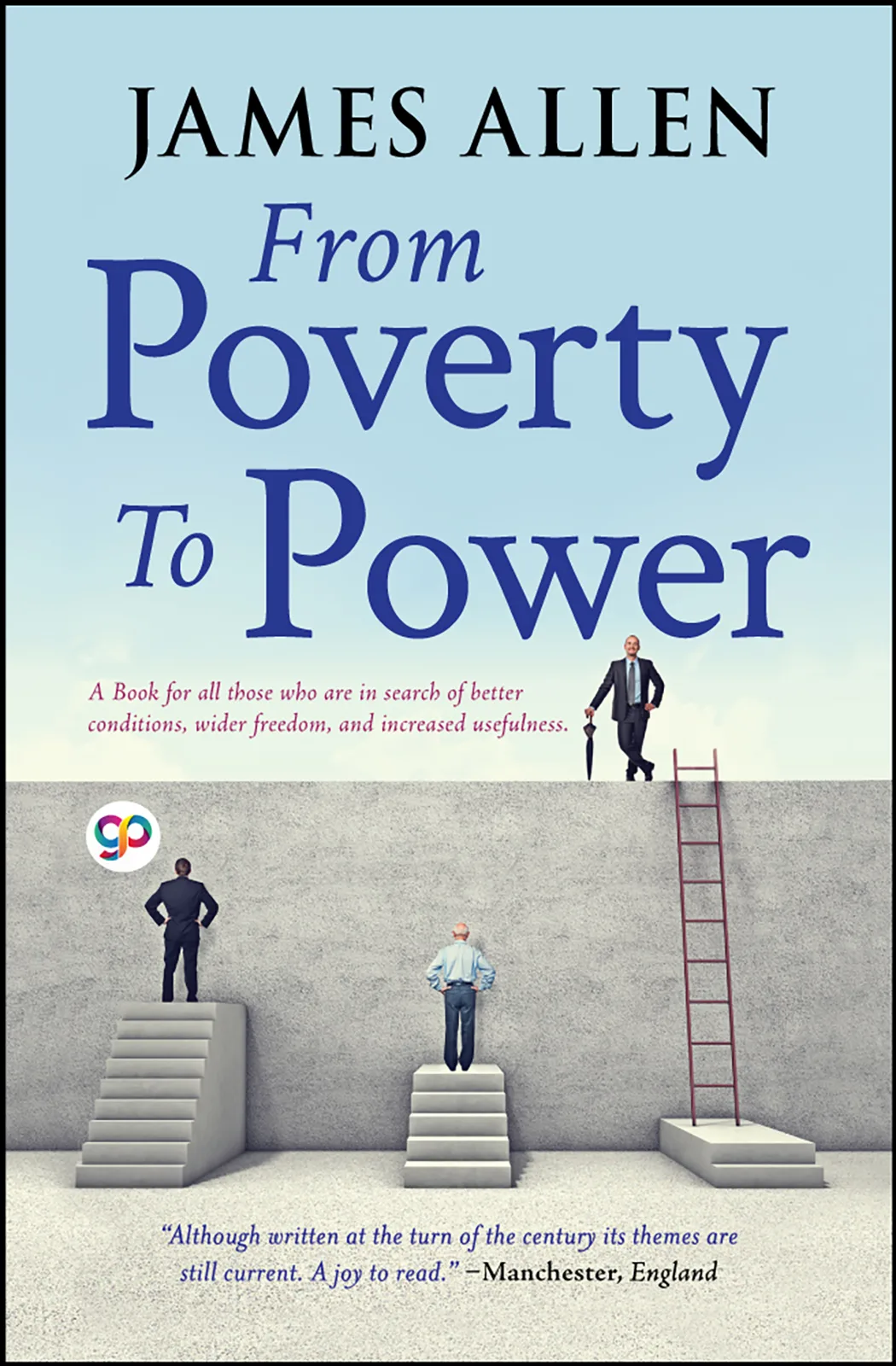
From Poverty to Power
Paperback
• 160 Pages
• INR 245.00
• English
• 9789354995941
No ratings yet
| Publisher | General Press |
|---|---|
| ISBN13 | 9789354995941 |
| ASIN/SKU | 9354995942 |
| Book Format | Paperback |
| Language | English |
| Pages | 160 |
| List Price | INR 245.00 |
| Subject Code | BUS046000, SEL023000, SEL027000 |
| Publishing Date | 05/09/2023 |
| Dimensions | 8.25 x 5.25 x 1.0 inches |
| Book Code | BD00067819 |
Buy this Book
Amazon Stores
Ebook Stores
Other Stores
Discover From Poverty to Power by James Allen. This book is published by General Press in Paperback format, ISBN 9789354995941, ASIN 9354995942, under Self-Help, Philosophy, Motivational.
Book Description
James Allen's ‘From Poverty to Power’ (1901) stands as a seminal text in the self-help genre that has served as a source of inspiration since its publication at the beginning of the twentieth century. Loosely based on its principles around the Biblical proverb “As a man thinketh in his heart, so is he”. ‘As a Man Thinketh’ asserts the powerful idea that belief is central to bringing about positive events in one's life.
This is Allen's first book that relies on a similar philosophy but addresses themes of adversity and suffering more directly and offers his simple wisdom as a means of overcoming difficulty. Allen's writings are powerful and relevant today as they were over a century ago, and this collection brings solace and inspiration to modern listeners.
"A Book for all those who are in search of better conditions, wider freedom, and increased usefulness."
—James Allen"
This is Allen's first book that relies on a similar philosophy but addresses themes of adversity and suffering more directly and offers his simple wisdom as a means of overcoming difficulty. Allen's writings are powerful and relevant today as they were over a century ago, and this collection brings solace and inspiration to modern listeners.
"A Book for all those who are in search of better conditions, wider freedom, and increased usefulness."
—James Allen"
Author Biography
Born in Leicester, England, in 1864, James Allen experienced profound tragedy early in life. When he was just fifteen, his father traveled to America in search of better economic opportunities, only to be robbed and murdered before the family could join him. This sudden loss forced Allen to abandon his formal education and enter the workforce to support his family, taking on various clerical and secretarial jobs for British manufacturing firms over the next two decades.
Despite his abbreviated schooling, Allen was a voracious reader with a deeply inquisitive mind. He immersed himself in the works of Leo Tolstoy, Ralph Waldo Emerson, and various Eastern philosophical and religious texts, cultivating a profound understanding of spiritual principles. In 1902, drawing from years of quiet reflection, he published his first book, From Poverty to Power, and subsequently launched a spiritual magazine titled The Light of Reason to share his evolving insights on personal empowerment.
The following year, Allen published the work that would cement his legacy: As a Man Thinketh. A seminal text in the New Thought movement, the brief philosophical essay argued that individuals hold the key to their own happiness, health, and success through the mastery of their thoughts. With its empowering message that a person's character and outer circumstances are the direct result of their inner mind, the book became a foundational pillar of modern self-help literature and has continuously influenced readers for over a century.
Following his initial literary success, Allen retired from his corporate work and moved with his wife, Lily, to the coastal town of Ilfracombe in Devon. There, he embraced a quiet, contemplative lifestyle dedicated entirely to writing, meditation, and gardening. Over the course of a brief but remarkably prolific decade, he produced a total of nineteen books before his untimely death in 1912 at the age of forty-seven, leaving behind an enduring legacy of inspirational philosophy.
Despite his abbreviated schooling, Allen was a voracious reader with a deeply inquisitive mind. He immersed himself in the works of Leo Tolstoy, Ralph Waldo Emerson, and various Eastern philosophical and religious texts, cultivating a profound understanding of spiritual principles. In 1902, drawing from years of quiet reflection, he published his first book, From Poverty to Power, and subsequently launched a spiritual magazine titled The Light of Reason to share his evolving insights on personal empowerment.
The following year, Allen published the work that would cement his legacy: As a Man Thinketh. A seminal text in the New Thought movement, the brief philosophical essay argued that individuals hold the key to their own happiness, health, and success through the mastery of their thoughts. With its empowering message that a person's character and outer circumstances are the direct result of their inner mind, the book became a foundational pillar of modern self-help literature and has continuously influenced readers for over a century.
Following his initial literary success, Allen retired from his corporate work and moved with his wife, Lily, to the coastal town of Ilfracombe in Devon. There, he embraced a quiet, contemplative lifestyle dedicated entirely to writing, meditation, and gardening. Over the course of a brief but remarkably prolific decade, he produced a total of nineteen books before his untimely death in 1912 at the age of forty-seven, leaving behind an enduring legacy of inspirational philosophy.
Editorial Reviews
Editorial Reviews will be added soon…
Book Summary
James Allen’s From Poverty to Power, first published in 1901, is a short but deeply philosophical book about self-mastery, personal responsibility, and the relationship between thought and circumstances. Allen’s central message is simple but demanding: a person’s outer life is profoundly influenced by the quality of his or her inner life. Poverty, success, peace, failure, and achievement are not presented merely as accidents of fate. Instead, Allen argues that disciplined thought, purposeful action, self-control, and perseverance gradually shape a person’s character and circumstances.
The book is divided into two major parts: “The Path to Prosperity” and “The Way of Peace.” Together, they move from practical questions about success and personal development toward a deeper exploration of spiritual calm and inner freedom.
The Path to Prosperity
Allen begins by examining the power of thought. For him, thoughts are not harmless or temporary mental events. They influence character, and character eventually expresses itself in conduct and circumstances. A person who repeatedly entertains thoughts of anger, resentment, dishonesty, laziness, or fear gradually develops those qualities in his character. Conversely, disciplined, courageous, honest, and purposeful thinking strengthens those qualities.
This does not mean that Allen believes a person can simply wish for wealth and immediately become rich. His argument is more practical. Thought must be transformed into character, and character must be expressed through action. A person who wants better circumstances must therefore begin by improving the habits of mind that guide everyday behavior.
One of Allen’s most important ideas is that people often remain trapped because they blame external circumstances for everything that happens to them. He does not deny that difficult circumstances exist. Poverty, injustice, illness, social limitations, and misfortune can be real and painful. But he insists that a person still possesses an inner power: the ability to choose how to respond. Instead of constantly blaming others or complaining about circumstances, one can cultivate discipline, patience, courage, and determination.
For Allen, self-control is the foundation of genuine power. A person controlled by anger, jealousy, fear, or uncontrolled desire may possess money or social status but is not truly powerful. Real strength comes from mastering oneself. When a person can govern thoughts, emotions, habits, and impulses, he or she becomes capable of sustained effort.
Allen also places enormous importance on purpose. A life without a definite aim is easily scattered. The person who chooses a meaningful goal and concentrates on it develops strength through focused effort. Success, in this sense, is not simply the possession of money. It is the achievement of a worthwhile purpose through disciplined work.
He particularly emphasizes the importance of perseverance. Difficulties are not merely obstacles; they can become opportunities for developing strength. A person who repeatedly works through hardship develops qualities that comfort alone could never produce. Failure can therefore become a teacher. Every setback can reveal weaknesses in character and provide an opportunity for correction.
Another important theme is the connection between desire and achievement. Allen distinguishes between vague wishing and purposeful desire. A dream becomes productive only when it is supported by effort, patience, sacrifice, and persistence. The individual must be willing to exchange temporary comfort for a greater long-term goal.
Allen also argues that genuine prosperity should benefit more than the individual. Wealth achieved through dishonesty or exploitation does not represent true success. Prosperity should be connected with usefulness, integrity, and service. In this sense, his philosophy is not simply about becoming rich; it is about becoming capable, disciplined, trustworthy, and useful.
The Way of Peace
The second half of the book moves from external achievement to inner tranquility. Allen suggests that even great success cannot provide lasting happiness if the mind remains disturbed by resentment, fear, hatred, jealousy, and uncontrolled desire.
The person who constantly fights against circumstances remains mentally imprisoned by them. Peace comes through understanding, acceptance, self-discipline, and compassion. Allen does not mean passive resignation. Rather, he encourages people to distinguish between what they can change and what they must accept with wisdom.
A particularly powerful idea in this section is that peace is something cultivated from within. It cannot permanently be obtained through possessions, status, praise, or external comfort. A wealthy person may be miserable, while someone living with very little may possess profound inner serenity.
Allen therefore presents the journey toward peace as a movement away from ego. When people become obsessed with personal advantage, they are easily offended and disappointed. But when they develop understanding and compassion, they become less controlled by the behavior of others.
His ideal person is calm without being weak, ambitious without being greedy, successful without being arrogant, and disciplined without becoming harsh. Such a person acts deliberately rather than being pushed around by every passing emotion.
The Larger Message
At its heart, From Poverty to Power is a book about inner transformation. Allen believes that lasting external change begins with the transformation of character. The journey is not quick, and it is not accomplished through positive thinking alone. It requires honest self-examination, disciplined thought, meaningful work, perseverance, and moral responsibility.
The title itself captures Allen’s philosophy. “Poverty” represents not only material lack but also weakness, confusion, fear, and lack of purpose. “Power” represents self-mastery, wisdom, useful achievement, and inner peace. The journey from one to the other begins inside the individual.
What makes Allen’s book enduring is its humane insistence that human beings are capable of change. He asks readers to stop seeing themselves as helpless victims of circumstance and instead become conscious participants in their own development. His philosophy can sometimes sound uncompromising, but its underlying purpose is encouraging: you may not control everything that happens to you, but you can cultivate the character with which you meet life.
Ultimately, From Poverty to Power teaches that the greatest form of prosperity is not wealth alone. It is the possession of a disciplined mind, a purposeful life, a strong character, and a peaceful heart. For Allen, true power begins when a person learns to govern himself. Once that inner foundation is established, external achievement becomes not merely possible, but meaningful.
The book is divided into two major parts: “The Path to Prosperity” and “The Way of Peace.” Together, they move from practical questions about success and personal development toward a deeper exploration of spiritual calm and inner freedom.
The Path to Prosperity
Allen begins by examining the power of thought. For him, thoughts are not harmless or temporary mental events. They influence character, and character eventually expresses itself in conduct and circumstances. A person who repeatedly entertains thoughts of anger, resentment, dishonesty, laziness, or fear gradually develops those qualities in his character. Conversely, disciplined, courageous, honest, and purposeful thinking strengthens those qualities.
This does not mean that Allen believes a person can simply wish for wealth and immediately become rich. His argument is more practical. Thought must be transformed into character, and character must be expressed through action. A person who wants better circumstances must therefore begin by improving the habits of mind that guide everyday behavior.
One of Allen’s most important ideas is that people often remain trapped because they blame external circumstances for everything that happens to them. He does not deny that difficult circumstances exist. Poverty, injustice, illness, social limitations, and misfortune can be real and painful. But he insists that a person still possesses an inner power: the ability to choose how to respond. Instead of constantly blaming others or complaining about circumstances, one can cultivate discipline, patience, courage, and determination.
For Allen, self-control is the foundation of genuine power. A person controlled by anger, jealousy, fear, or uncontrolled desire may possess money or social status but is not truly powerful. Real strength comes from mastering oneself. When a person can govern thoughts, emotions, habits, and impulses, he or she becomes capable of sustained effort.
Allen also places enormous importance on purpose. A life without a definite aim is easily scattered. The person who chooses a meaningful goal and concentrates on it develops strength through focused effort. Success, in this sense, is not simply the possession of money. It is the achievement of a worthwhile purpose through disciplined work.
He particularly emphasizes the importance of perseverance. Difficulties are not merely obstacles; they can become opportunities for developing strength. A person who repeatedly works through hardship develops qualities that comfort alone could never produce. Failure can therefore become a teacher. Every setback can reveal weaknesses in character and provide an opportunity for correction.
Another important theme is the connection between desire and achievement. Allen distinguishes between vague wishing and purposeful desire. A dream becomes productive only when it is supported by effort, patience, sacrifice, and persistence. The individual must be willing to exchange temporary comfort for a greater long-term goal.
Allen also argues that genuine prosperity should benefit more than the individual. Wealth achieved through dishonesty or exploitation does not represent true success. Prosperity should be connected with usefulness, integrity, and service. In this sense, his philosophy is not simply about becoming rich; it is about becoming capable, disciplined, trustworthy, and useful.
The Way of Peace
The second half of the book moves from external achievement to inner tranquility. Allen suggests that even great success cannot provide lasting happiness if the mind remains disturbed by resentment, fear, hatred, jealousy, and uncontrolled desire.
The person who constantly fights against circumstances remains mentally imprisoned by them. Peace comes through understanding, acceptance, self-discipline, and compassion. Allen does not mean passive resignation. Rather, he encourages people to distinguish between what they can change and what they must accept with wisdom.
A particularly powerful idea in this section is that peace is something cultivated from within. It cannot permanently be obtained through possessions, status, praise, or external comfort. A wealthy person may be miserable, while someone living with very little may possess profound inner serenity.
Allen therefore presents the journey toward peace as a movement away from ego. When people become obsessed with personal advantage, they are easily offended and disappointed. But when they develop understanding and compassion, they become less controlled by the behavior of others.
His ideal person is calm without being weak, ambitious without being greedy, successful without being arrogant, and disciplined without becoming harsh. Such a person acts deliberately rather than being pushed around by every passing emotion.
The Larger Message
At its heart, From Poverty to Power is a book about inner transformation. Allen believes that lasting external change begins with the transformation of character. The journey is not quick, and it is not accomplished through positive thinking alone. It requires honest self-examination, disciplined thought, meaningful work, perseverance, and moral responsibility.
The title itself captures Allen’s philosophy. “Poverty” represents not only material lack but also weakness, confusion, fear, and lack of purpose. “Power” represents self-mastery, wisdom, useful achievement, and inner peace. The journey from one to the other begins inside the individual.
What makes Allen’s book enduring is its humane insistence that human beings are capable of change. He asks readers to stop seeing themselves as helpless victims of circumstance and instead become conscious participants in their own development. His philosophy can sometimes sound uncompromising, but its underlying purpose is encouraging: you may not control everything that happens to you, but you can cultivate the character with which you meet life.
Ultimately, From Poverty to Power teaches that the greatest form of prosperity is not wealth alone. It is the possession of a disciplined mind, a purposeful life, a strong character, and a peaceful heart. For Allen, true power begins when a person learns to govern himself. Once that inner foundation is established, external achievement becomes not merely possible, but meaningful.
Sample Chapters
Sample Chapters will be added soon…
Reader Reviews
No reviews yet.
From Poverty to Power
Download Cover Image
Do you want to download the full cover image for From Poverty to Power?