
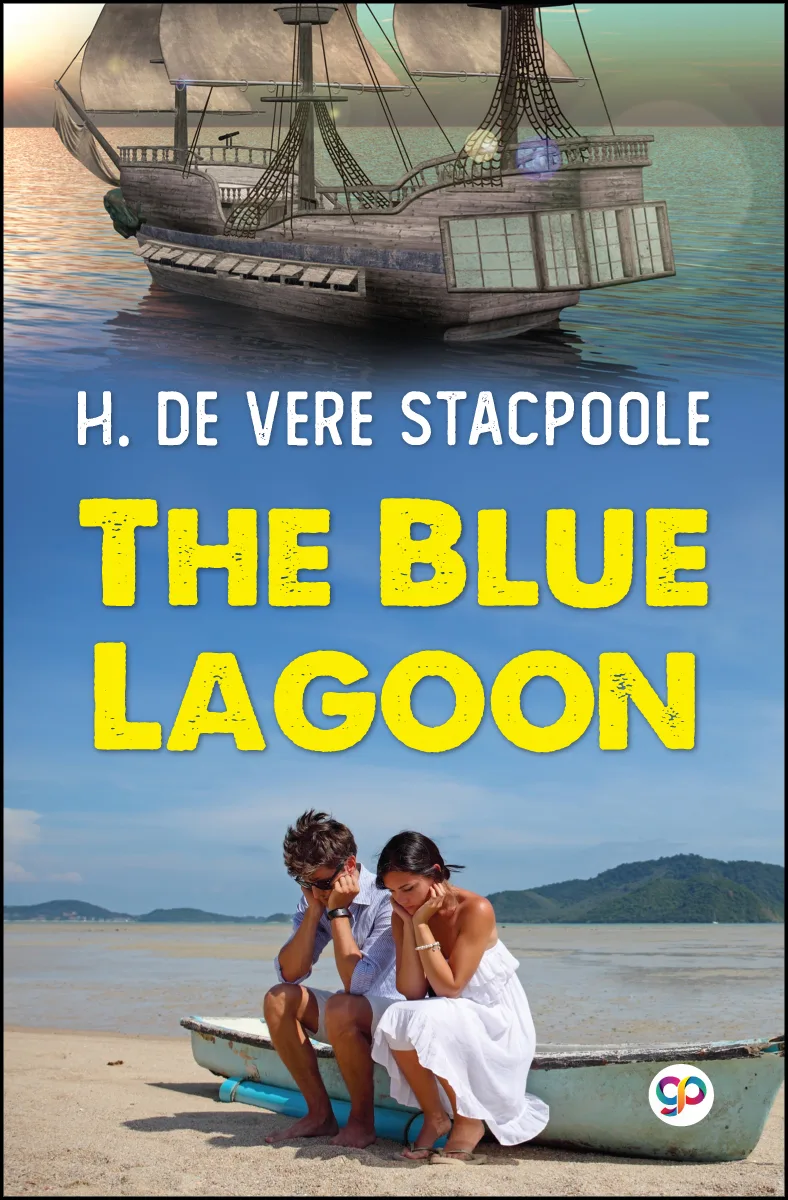
The Blue Lagoon
Hardcover
• 240 Pages
• INR 375.00
• English
• 9789354999482
No ratings yet
| Publisher | General Press |
|---|---|
| ISBN13 | 9789354999482 |
| ASIN/SKU | 9354999484 |
| Book Format | Hardcover |
| Language | English |
| Pages | 240 |
| List Price | INR 375.00 |
| Subject Code | FIC027260, FIC043000, FIC044000 |
| Dimensions | 8.25 x 5.25 x 1.0 inches |
| Book Code | BD00067887 |
Buy this Book
Amazon Stores
Ebook Stores
Other Stores
Discover The Blue Lagoon by H. de Vere Stacpoole. This book is published by General Press in Hardcover format, ISBN 9789354999482, ASIN 9354999484, under Literature and Fiction, Historical Romance, Sea Stories.
Book Description
The first novel of the classic romance trilogy by H. de Vere Stacpoole is titled ‘The Blue Lagoon’. After a shipwreck, Dick and Emmeline, two young teenagers, are left alone on a beautiful island in the South Pacific. On their abundant island, the two spend their days swimming, diving for pearls, and adventuring.
They gradually fall into an innocent love as they mature. They are unaware of their human sexuality and lack the language or understanding to communicate their attraction to one another physically. The two engaged in courtship in a manner similar to how birds engage in romantic relationships. Their relationship grows entirely naturally, without fault or sin; it is a marriage in accordance with nature.
Numerous significant films have been made as a result of this timeless story. An Irish author with more than 50 novels to his name, Henry De Vere Stacpoole was a best-selling author.
They gradually fall into an innocent love as they mature. They are unaware of their human sexuality and lack the language or understanding to communicate their attraction to one another physically. The two engaged in courtship in a manner similar to how birds engage in romantic relationships. Their relationship grows entirely naturally, without fault or sin; it is a marriage in accordance with nature.
Numerous significant films have been made as a result of this timeless story. An Irish author with more than 50 novels to his name, Henry De Vere Stacpoole was a best-selling author.
Author Biography
H. de Vere Stacpoole (1863–1951) was an Irish author and physician best known for his romantic adventure novel The Blue Lagoon (1908), a story that became a literary and cinematic classic. Born in Kingstown (now Dún Laoghaire), Ireland, he was educated in England and France and trained as a doctor in Charing Cross Hospital, London. However, he eventually abandoned medicine to pursue a career in writing.
Stacpoole’s early literary efforts included poetry and fiction, but he struggled to gain recognition until the success of The Blue Lagoon. The novel, which tells the story of two shipwrecked children growing up in isolation on a tropical island, captivated readers with its mix of innocence, survival, and natural beauty. It was followed by sequels, including The Garden of God (1923) and The Gates of Morning (1925).
In his middle years, Stacpoole became a prolific writer, publishing more than 60 novels, plays, and short stories. Many of his works explored themes of nature, romance, and the human spirit, often set in exotic locales. He was also an advocate for animal welfare and social justice. H. de Vere Stacpoole died in 1951. His literary legacy is firmly tied to The Blue Lagoon, which remains his most enduring and widely adapted work.
Stacpoole’s early literary efforts included poetry and fiction, but he struggled to gain recognition until the success of The Blue Lagoon. The novel, which tells the story of two shipwrecked children growing up in isolation on a tropical island, captivated readers with its mix of innocence, survival, and natural beauty. It was followed by sequels, including The Garden of God (1923) and The Gates of Morning (1925).
In his middle years, Stacpoole became a prolific writer, publishing more than 60 novels, plays, and short stories. Many of his works explored themes of nature, romance, and the human spirit, often set in exotic locales. He was also an advocate for animal welfare and social justice. H. de Vere Stacpoole died in 1951. His literary legacy is firmly tied to The Blue Lagoon, which remains his most enduring and widely adapted work.
Editorial Reviews
Editorial Reviews will be added soon…
Book Summary
H. de Vere Stacpoole’s The Blue Lagoon is a romantic adventure novel about two young cousins who are shipwrecked on a remote tropical island and are forced to survive far from civilization. First published in 1908, the novel combines the appeal of a castaway adventure with a story about innocence, nature, growing up, love, and the complicated relationship between human beings and civilization. Its central characters, Richard Lestrange and Emmeline Foster, are children when they are separated from the adult world and stranded together on an isolated island. Along with the ship’s galley boy, Paddy Button, they gradually learn to survive by relying on the natural resources around them. As years pass, the island becomes their entire world. Their transformation from children into adults forms the emotional core of the novel.
The story begins aboard a sailing ship traveling through the South Pacific. Richard and Emmeline are traveling with their relatives, but the voyage becomes disastrous when the ship catches fire. During the confusion, the two children and Paddy Button become separated from the rest of the passengers. They eventually find themselves adrift in a small boat. Their situation appears hopeless because they are young, inexperienced, and surrounded by an immense ocean. Yet the three manage to survive the journey until they reach a remote tropical island. The island contains a beautiful lagoon, abundant vegetation, fresh water, and enough food to make survival possible. What initially looks like a place of danger gradually becomes a sanctuary.
The opening of The Blue Lagoon establishes one of the novel’s central contrasts: civilization versus nature. The children have come from a structured society in which adults establish rules, provide food, teach knowledge, and protect them from danger. On the island, all of those systems disappear. There are no schools, shops, doctors, laws, or social institutions. Richard and Emmeline must discover how to live through direct experience. Paddy, who is slightly older and has practical knowledge from his life aboard ship, initially becomes an important source of guidance. His knowledge of fishing, sailing, and basic survival helps keep the children alive during their first difficult period.
The island itself becomes almost a character in the novel. Stacpoole describes the lagoon, beaches, forests, coral, birds, fish, and tropical vegetation with considerable attention. The natural world is presented as beautiful, generous, mysterious, and sometimes dangerous. The island supplies food and shelter, but it also demands respect. Richard and Emmeline learn to understand tides, weather, plants, animals, and the rhythms of the sea. Their knowledge grows not from formal education but from observation and experience. The novel therefore presents nature as both teacher and environment.
At first, the children are frightened and dependent upon one another. Their survival requires cooperation. They learn where to find food, how to catch fish, how to make shelter, and how to use the materials available on the island. Their early experiences are filled with small discoveries. Things that would be ordinary in civilization—finding food, obtaining fresh water, making a fire, building a home—become major achievements. This transformation gives the novel much of its adventure appeal. The readers watch helpless children gradually become capable inhabitants of their new world.
As time passes, however, Paddy’s role becomes less central. Richard and Emmeline grow older, and the island becomes increasingly familiar. They learn to depend on themselves and each other. Their childhood memories of civilization begin to fade. The island is no longer merely a place where they are stranded; it becomes their home. Their understanding of the world is shaped almost entirely by their natural surroundings.
This is where the novel moves beyond a conventional survival adventure. Richard and Emmeline are not simply trying to stay alive. They are growing up without the cultural institutions that normally guide that process. Their relationship develops naturally within the isolated environment. They share experiences, responsibilities, fears, discoveries, and affection. As they mature, their childhood companionship changes into romantic attachment. Stacpoole presents this development through the perspective of characters who have very little understanding of the social conventions that govern relationships in the outside world.
The novel’s treatment of innocence is therefore central. Richard and Emmeline do not begin their lives on the island with a developed understanding of society’s rules and expectations. They learn about themselves through nature and through their relationship with each other. The island shields them from many of the pressures of civilization, but it also deprives them of the knowledge and protection that civilization provides. Their innocence is both beautiful and precarious.
Richard’s development is particularly important. As a boy, he is frightened and uncertain, but island life gradually makes him stronger and more independent. He becomes skilled at fishing, hunting, exploring, and dealing with the environment. He develops a practical confidence that would have been difficult to acquire in his former life. Yet his growth is not simply physical. His emotional attachment to Emmeline deepens as well. She becomes the most important person in his world.
Emmeline’s transformation is equally significant. She grows from a sheltered child into a young woman who is comfortable in the natural environment. Her understanding of the island is instinctive and practical. She is not simply a passive companion waiting for rescue. She participates in the work of survival and becomes an essential part of the small society she and Richard have created. Her character also reflects the novel’s fascination with the idea of a person shaped almost entirely by nature rather than by formal social institutions.
Paddy Button remains an important figure because he represents the connection between the children and the civilized world. His practical knowledge helps them survive, but he is also fundamentally different from Richard and Emmeline because he retains a stronger awareness of society beyond the island. His presence introduces another perspective on their unusual situation. The relationships among the three characters also demonstrate how cooperation can become essential when conventional social structures disappear.
As the years pass, the island’s apparent paradise becomes more complicated. The children’s survival is successful, but their isolation has consequences. They have no access to books, formal education, medicine, technology, or broader human society. Their knowledge of the outside world becomes increasingly distant and uncertain. The very environment that protects them from civilization also prevents them from participating in it.
The blue lagoon itself symbolizes the beauty and isolation of their existence. It is a place of peace, abundance, and intimacy, but it is also enclosed and separated from the wider world. The lagoon represents the self-contained life Richard and Emmeline create together. Their world seems complete because they know little else. Yet the reader understands that their apparent paradise is fragile because it depends entirely on continued isolation.
One of the most interesting themes in The Blue Lagoon is the question of whether civilization is necessary for human development. Stacpoole does not provide a simple answer. On one hand, the island allows Richard and Emmeline to escape many of civilization’s artificial pressures. They do not worry about money, social status, careers, or fashionable expectations. Their lives are direct and immediate. Food, shelter, companionship, weather, and the sea matter more than abstract social ambitions.
On the other hand, the absence of civilization leaves them vulnerable. They lack the knowledge needed to understand their own situation fully. They cannot easily anticipate the consequences of major events. Their isolation also means that their ideas about relationships, responsibility, and the future develop without outside guidance. The novel therefore presents nature as liberating but also limiting.
The romance between Richard and Emmeline gives the story much of its emotional power. Their relationship develops from childhood companionship into a deep attachment shaped by years of shared experience. Because they have grown up together on the island, their bond is based on a profound familiarity. They have no social world beyond each other. Their love is therefore inseparable from the environment that created it.
Yet their romantic relationship is also connected to the novel’s broader questions about innocence and social convention. In the world outside the island, their circumstances would be judged through established rules and expectations. On the island, those rules are largely absent. Stacpoole uses this situation to explore what happens when human relationships develop outside ordinary social structures. The result is a story that can feel simultaneously romantic, adventurous, idyllic, and unsettling.
The novel’s atmosphere is one of its greatest strengths. Stacpoole fills the narrative with tropical imagery: blue water, sunlight, palms, coral reefs, beaches, forests, and the sounds of birds and sea life. The island often appears almost dreamlike. The beauty of the setting makes the children’s existence seem like a fantasy. At the same time, the descriptions remind readers that nature is not merely decorative. It determines the characters’ survival and shapes their entire understanding of life.
Another important theme is the passage of time. The novel begins with children who still belong to the adult world, but years of isolation transform them into people who know the island far better than they know civilization. Time changes their bodies, emotions, skills, and expectations. Childhood gradually disappears without the characters fully recognizing the transformation. The island becomes a place where time is measured through growth and seasons rather than through clocks, schools, or careers.
Eventually, the outside world re-enters their story, threatening to disrupt the life they have built. The possibility of rescue creates an important emotional conflict. In an ordinary castaway story, rescue would automatically be a happy ending. In The Blue Lagoon, however, rescue is complicated because civilization is no longer simply their lost home. Richard and Emmeline have created another home on the island. Returning to society means leaving behind the world in which they grew up and the identity they developed there.
This tension gives the conclusion much of its emotional force. The island has offered freedom, beauty, companionship, and self-sufficiency, but it has also created isolation and vulnerability. Civilization offers safety, knowledge, medicine, and social connection, but it also threatens to impose rules and expectations upon people who have learned to live differently. The contrast between these worlds is one of the novel’s deepest concerns.
For modern readers, The Blue Lagoon can therefore be appreciated on several levels. On the surface, it is a classic castaway adventure filled with survival challenges, tropical scenery, exploration, and romance. Beneath that surface, it is a coming-of-age story about two young people who grow up outside ordinary society. It is also a meditation on nature, innocence, human relationships, and the complicated meaning of home. The book asks what people truly need in order to live and whether happiness depends more on material civilization or on connection with nature and other human beings.
The enduring appeal of The Blue Lagoon comes from the fantasy at its center: the dream of leaving the complicated adult world behind and discovering a beautiful place where life can be rebuilt from the beginning. Yet Stacpoole does not allow that dream to remain entirely simple. His characters discover that paradise has its own difficulties. Nature can provide food and beauty, but it cannot provide everything that human civilization provides. Freedom can be exhilarating, but complete isolation can also become dangerous.
Ultimately, The Blue Lagoon is a story about growing up, even though its characters grow up in an extraordinarily unusual environment. Richard and Emmeline begin as children who know little about the world and gradually become young adults shaped by the island. Their survival teaches them independence, their isolation shapes their worldview, and their shared experiences create a bond that becomes the center of their lives. Stacpoole’s novel remains memorable because it combines the excitement of a survival story with the emotional questions of a coming-of-age romance. For readers searching for an in-depth summary of The Blue Lagoon, its central message can be understood as a meditation on the beauty and limits of innocence: a paradise may offer freedom from society, but growing into adulthood inevitably forces human beings to confront responsibility, change, and the wider world beyond the lagoon.
The story begins aboard a sailing ship traveling through the South Pacific. Richard and Emmeline are traveling with their relatives, but the voyage becomes disastrous when the ship catches fire. During the confusion, the two children and Paddy Button become separated from the rest of the passengers. They eventually find themselves adrift in a small boat. Their situation appears hopeless because they are young, inexperienced, and surrounded by an immense ocean. Yet the three manage to survive the journey until they reach a remote tropical island. The island contains a beautiful lagoon, abundant vegetation, fresh water, and enough food to make survival possible. What initially looks like a place of danger gradually becomes a sanctuary.
The opening of The Blue Lagoon establishes one of the novel’s central contrasts: civilization versus nature. The children have come from a structured society in which adults establish rules, provide food, teach knowledge, and protect them from danger. On the island, all of those systems disappear. There are no schools, shops, doctors, laws, or social institutions. Richard and Emmeline must discover how to live through direct experience. Paddy, who is slightly older and has practical knowledge from his life aboard ship, initially becomes an important source of guidance. His knowledge of fishing, sailing, and basic survival helps keep the children alive during their first difficult period.
The island itself becomes almost a character in the novel. Stacpoole describes the lagoon, beaches, forests, coral, birds, fish, and tropical vegetation with considerable attention. The natural world is presented as beautiful, generous, mysterious, and sometimes dangerous. The island supplies food and shelter, but it also demands respect. Richard and Emmeline learn to understand tides, weather, plants, animals, and the rhythms of the sea. Their knowledge grows not from formal education but from observation and experience. The novel therefore presents nature as both teacher and environment.
At first, the children are frightened and dependent upon one another. Their survival requires cooperation. They learn where to find food, how to catch fish, how to make shelter, and how to use the materials available on the island. Their early experiences are filled with small discoveries. Things that would be ordinary in civilization—finding food, obtaining fresh water, making a fire, building a home—become major achievements. This transformation gives the novel much of its adventure appeal. The readers watch helpless children gradually become capable inhabitants of their new world.
As time passes, however, Paddy’s role becomes less central. Richard and Emmeline grow older, and the island becomes increasingly familiar. They learn to depend on themselves and each other. Their childhood memories of civilization begin to fade. The island is no longer merely a place where they are stranded; it becomes their home. Their understanding of the world is shaped almost entirely by their natural surroundings.
This is where the novel moves beyond a conventional survival adventure. Richard and Emmeline are not simply trying to stay alive. They are growing up without the cultural institutions that normally guide that process. Their relationship develops naturally within the isolated environment. They share experiences, responsibilities, fears, discoveries, and affection. As they mature, their childhood companionship changes into romantic attachment. Stacpoole presents this development through the perspective of characters who have very little understanding of the social conventions that govern relationships in the outside world.
The novel’s treatment of innocence is therefore central. Richard and Emmeline do not begin their lives on the island with a developed understanding of society’s rules and expectations. They learn about themselves through nature and through their relationship with each other. The island shields them from many of the pressures of civilization, but it also deprives them of the knowledge and protection that civilization provides. Their innocence is both beautiful and precarious.
Richard’s development is particularly important. As a boy, he is frightened and uncertain, but island life gradually makes him stronger and more independent. He becomes skilled at fishing, hunting, exploring, and dealing with the environment. He develops a practical confidence that would have been difficult to acquire in his former life. Yet his growth is not simply physical. His emotional attachment to Emmeline deepens as well. She becomes the most important person in his world.
Emmeline’s transformation is equally significant. She grows from a sheltered child into a young woman who is comfortable in the natural environment. Her understanding of the island is instinctive and practical. She is not simply a passive companion waiting for rescue. She participates in the work of survival and becomes an essential part of the small society she and Richard have created. Her character also reflects the novel’s fascination with the idea of a person shaped almost entirely by nature rather than by formal social institutions.
Paddy Button remains an important figure because he represents the connection between the children and the civilized world. His practical knowledge helps them survive, but he is also fundamentally different from Richard and Emmeline because he retains a stronger awareness of society beyond the island. His presence introduces another perspective on their unusual situation. The relationships among the three characters also demonstrate how cooperation can become essential when conventional social structures disappear.
As the years pass, the island’s apparent paradise becomes more complicated. The children’s survival is successful, but their isolation has consequences. They have no access to books, formal education, medicine, technology, or broader human society. Their knowledge of the outside world becomes increasingly distant and uncertain. The very environment that protects them from civilization also prevents them from participating in it.
The blue lagoon itself symbolizes the beauty and isolation of their existence. It is a place of peace, abundance, and intimacy, but it is also enclosed and separated from the wider world. The lagoon represents the self-contained life Richard and Emmeline create together. Their world seems complete because they know little else. Yet the reader understands that their apparent paradise is fragile because it depends entirely on continued isolation.
One of the most interesting themes in The Blue Lagoon is the question of whether civilization is necessary for human development. Stacpoole does not provide a simple answer. On one hand, the island allows Richard and Emmeline to escape many of civilization’s artificial pressures. They do not worry about money, social status, careers, or fashionable expectations. Their lives are direct and immediate. Food, shelter, companionship, weather, and the sea matter more than abstract social ambitions.
On the other hand, the absence of civilization leaves them vulnerable. They lack the knowledge needed to understand their own situation fully. They cannot easily anticipate the consequences of major events. Their isolation also means that their ideas about relationships, responsibility, and the future develop without outside guidance. The novel therefore presents nature as liberating but also limiting.
The romance between Richard and Emmeline gives the story much of its emotional power. Their relationship develops from childhood companionship into a deep attachment shaped by years of shared experience. Because they have grown up together on the island, their bond is based on a profound familiarity. They have no social world beyond each other. Their love is therefore inseparable from the environment that created it.
Yet their romantic relationship is also connected to the novel’s broader questions about innocence and social convention. In the world outside the island, their circumstances would be judged through established rules and expectations. On the island, those rules are largely absent. Stacpoole uses this situation to explore what happens when human relationships develop outside ordinary social structures. The result is a story that can feel simultaneously romantic, adventurous, idyllic, and unsettling.
The novel’s atmosphere is one of its greatest strengths. Stacpoole fills the narrative with tropical imagery: blue water, sunlight, palms, coral reefs, beaches, forests, and the sounds of birds and sea life. The island often appears almost dreamlike. The beauty of the setting makes the children’s existence seem like a fantasy. At the same time, the descriptions remind readers that nature is not merely decorative. It determines the characters’ survival and shapes their entire understanding of life.
Another important theme is the passage of time. The novel begins with children who still belong to the adult world, but years of isolation transform them into people who know the island far better than they know civilization. Time changes their bodies, emotions, skills, and expectations. Childhood gradually disappears without the characters fully recognizing the transformation. The island becomes a place where time is measured through growth and seasons rather than through clocks, schools, or careers.
Eventually, the outside world re-enters their story, threatening to disrupt the life they have built. The possibility of rescue creates an important emotional conflict. In an ordinary castaway story, rescue would automatically be a happy ending. In The Blue Lagoon, however, rescue is complicated because civilization is no longer simply their lost home. Richard and Emmeline have created another home on the island. Returning to society means leaving behind the world in which they grew up and the identity they developed there.
This tension gives the conclusion much of its emotional force. The island has offered freedom, beauty, companionship, and self-sufficiency, but it has also created isolation and vulnerability. Civilization offers safety, knowledge, medicine, and social connection, but it also threatens to impose rules and expectations upon people who have learned to live differently. The contrast between these worlds is one of the novel’s deepest concerns.
For modern readers, The Blue Lagoon can therefore be appreciated on several levels. On the surface, it is a classic castaway adventure filled with survival challenges, tropical scenery, exploration, and romance. Beneath that surface, it is a coming-of-age story about two young people who grow up outside ordinary society. It is also a meditation on nature, innocence, human relationships, and the complicated meaning of home. The book asks what people truly need in order to live and whether happiness depends more on material civilization or on connection with nature and other human beings.
The enduring appeal of The Blue Lagoon comes from the fantasy at its center: the dream of leaving the complicated adult world behind and discovering a beautiful place where life can be rebuilt from the beginning. Yet Stacpoole does not allow that dream to remain entirely simple. His characters discover that paradise has its own difficulties. Nature can provide food and beauty, but it cannot provide everything that human civilization provides. Freedom can be exhilarating, but complete isolation can also become dangerous.
Ultimately, The Blue Lagoon is a story about growing up, even though its characters grow up in an extraordinarily unusual environment. Richard and Emmeline begin as children who know little about the world and gradually become young adults shaped by the island. Their survival teaches them independence, their isolation shapes their worldview, and their shared experiences create a bond that becomes the center of their lives. Stacpoole’s novel remains memorable because it combines the excitement of a survival story with the emotional questions of a coming-of-age romance. For readers searching for an in-depth summary of The Blue Lagoon, its central message can be understood as a meditation on the beauty and limits of innocence: a paradise may offer freedom from society, but growing into adulthood inevitably forces human beings to confront responsibility, change, and the wider world beyond the lagoon.
Sample Chapters
Sample Chapters will be added soon…
Reader Reviews
No reviews yet.
The Blue Lagoon
Download Cover Image
Do you want to download the full cover image for The Blue Lagoon?