
Narrative of the Life of Frederick Douglass
Hardcover
• 128 Pages
• INR 245.00
• English
• 9789354999529
No ratings yet
| Publisher | General Press |
|---|---|
| ISBN13 | 9789354999529 |
| ASIN/SKU | 9354999522 |
| Book Format | Hardcover |
| Language | English |
| Pages | 128 |
| List Price | INR 245.00 |
| Subject Code | BIO026000, BIO006000, BIO002010 |
| Dimensions | 8.25 x 5.25 x 1.0 inches |
| Book Code | BD00067894 |
Buy this Book
Amazon Stores
Ebook Stores
Other Stores
Discover Narrative of the Life of Frederick Douglass by Frederick Douglass. This book is published by General Press in Hardcover format, ISBN 9789354999529, ASIN 9354999522, under Biographies and Memoirs, History, Memoirs.
Book Description
The renowned orator and former slave Frederick Douglass wrote his memoir and abolitionist essay, ‘Narrative of the Life of Frederick Douglass’, in 1845. Among several accounts recorded by former slaves during the same time period, it is widely considered to be the most well-known. The narrative, which is regarded as one of the most important works of literature to have fueled the American abolitionist movement in the early 19th century, factually details the events of his life.
After relocating to Rochester, New York, in 1847, Frederick Douglass began collaborating with fellow abolitionist Martin R. Delany on the weekly publication of North Star, a newspaper critical of slavery. Douglass was the only man to speak at the inaugural women's rights convention in Seneca Falls, New York, in 1848, in support of Elizabeth Cady Stanton's contentious plank of women's suffrage.
Douglass, who signed the Declaration of Sentiments, advocated for women's suffrage in his North Star. Stanton and Douglass stayed lifelong friends.
After relocating to Rochester, New York, in 1847, Frederick Douglass began collaborating with fellow abolitionist Martin R. Delany on the weekly publication of North Star, a newspaper critical of slavery. Douglass was the only man to speak at the inaugural women's rights convention in Seneca Falls, New York, in 1848, in support of Elizabeth Cady Stanton's contentious plank of women's suffrage.
Douglass, who signed the Declaration of Sentiments, advocated for women's suffrage in his North Star. Stanton and Douglass stayed lifelong friends.
Author Biography
Frederick Douglass (né Frederick Augustus Washington Bailey) was born a slave in the state of Maryland in 1818. After his escape from slavery, Douglass became a renowned abolitionist, editor and feminist. Having escaped from slavery at age 20, he took the name Frederick Douglass for himself and became an advocate of abolition. Douglass traveled widely, and often perilously, to lecture against slavery.
His first of three autobiographies, The Narrative of the Life of Frederick Douglass: An American Slave, was published in 1845. In 1847 he moved to Rochester, New York, and started working with fellow abolitionist Martin R. Delany to publish a weekly anti-slavery newspaper, North Star. Douglass was the only man to speak in favor of Elizabeth Cady Stanton's controversial plank of woman suffrage at the first women's rights convention in Seneca Falls, New York, in 1848. As a signer of the Declaration of Sentiments, Douglass also promoted woman suffrage in his North Star. Douglass and Stanton remained lifelong friends.
In 1870 Douglass launched The New National Era out of Washington, D.C. He was nominated for vice-president by the Equal Rights Party to run with Victoria Woodhull as presidential candidate in 1872. He became U.S. marshal of the District of Columbia in 1877, and was later appointed minister resident and consul-general to Haiti. His District of Columbia home is a national historic site. D. 1895.
His first of three autobiographies, The Narrative of the Life of Frederick Douglass: An American Slave, was published in 1845. In 1847 he moved to Rochester, New York, and started working with fellow abolitionist Martin R. Delany to publish a weekly anti-slavery newspaper, North Star. Douglass was the only man to speak in favor of Elizabeth Cady Stanton's controversial plank of woman suffrage at the first women's rights convention in Seneca Falls, New York, in 1848. As a signer of the Declaration of Sentiments, Douglass also promoted woman suffrage in his North Star. Douglass and Stanton remained lifelong friends.
In 1870 Douglass launched The New National Era out of Washington, D.C. He was nominated for vice-president by the Equal Rights Party to run with Victoria Woodhull as presidential candidate in 1872. He became U.S. marshal of the District of Columbia in 1877, and was later appointed minister resident and consul-general to Haiti. His District of Columbia home is a national historic site. D. 1895.
Editorial Reviews
Editorial Reviews will be added soon…
Book Summary
Narrative of the Life of Frederick Douglass by Frederick Douglass is one of the most powerful firsthand accounts of American slavery and one of the great works of autobiographical literature. Published in 1845, the book tells the story of Douglass’s childhood under slavery, his painful awakening to the injustice of his condition, his struggle to educate himself, his resistance to oppression, and finally his escape to freedom. More than a personal story, it is a passionate argument for human dignity, education, freedom, and equality.
Douglass begins by explaining how little he knew about his own identity. Like many enslaved children, he did not know his exact birth date or much about his father. He was separated from his mother when he was very young, a practice that reveals one of slavery’s cruelest features: the deliberate destruction of family bonds. His mother, Harriet Bailey, was forced to work at night and could visit him only occasionally. Douglass remembers her with affection, but their relationship was cut short by death when he was still a child.
His early experiences introduce the reader to the violence and humiliation built into slavery. Douglass witnesses the brutal beating of an enslaved woman named Henny and is deeply disturbed by what he sees. Such scenes teach him that enslaved people are treated not as human beings but as property whose suffering can be ignored. He also describes the ways slaveholders control people through fear, hunger, exhaustion, and punishment.
A major turning point occurs when Douglass is sent to Baltimore to live with Hugh and Sophia Auld. Sophia initially treats him with kindness and begins teaching him to read. However, her husband objects, arguing that education would make an enslaved person dissatisfied with slavery. This lesson becomes one of the most important discoveries of Douglass’s life: knowledge is a source of power. Once he understands that slavery depends partly on keeping enslaved people ignorant, he becomes determined to educate himself.
Douglass secretly learns to read and write. He exchanges bread with poor white children in return for reading lessons and studies whatever printed material he can find. Reading opens a new world to him. It gives him language for feelings he had previously been unable to express and allows him to understand the political and moral arguments surrounding freedom. Yet education also brings pain. The more clearly he understands slavery, the more unbearable his own condition becomes.
Eventually Douglass is sent to Edward Covey, a man notorious for breaking enslaved people through relentless physical and psychological abuse. Covey works Douglass almost to exhaustion and repeatedly beats him. At one point, however, Douglass finally refuses to submit. He fights Covey and, after a fierce struggle, prevents him from continuing to dominate him physically. This confrontation becomes a defining moment. Douglass realizes that although he remains legally enslaved, something inside him has changed. His sense of dignity and self-respect has returned.
Douglass later works for William Freeland, where he secretly teaches other enslaved people to read. These lessons become acts of resistance because literacy threatens the system that depends on ignorance. Douglass and several companions eventually make plans to escape, but the attempt fails, and he is imprisoned. Rather than allowing this failure to destroy his hope, he continues to look for another opportunity.
His successful escape is described carefully but without revealing unnecessary details that might endanger others still attempting to flee slavery. After reaching the North, Douglass experiences the profound emotional difference between being treated as property and being recognized as a free person. He eventually settles in New Bedford, Massachusetts, where he works and begins building an independent life.
Freedom, however, does not end his struggle. Douglass becomes increasingly involved in the abolitionist movement and begins speaking publicly about slavery. His powerful firsthand testimony challenges people who claimed that Black people were intellectually inferior or incapable of speaking for themselves. His very existence as a highly articulate writer and speaker becomes a refutation of racist assumptions.
Throughout the narrative, Douglass also exposes the hypocrisy of those who use Christianity to justify slavery. He makes an important distinction between genuine Christianity and the religious practices of slaveholders. Slaveholders may attend church, quote Scripture, and present themselves as moral people, yet they participate in cruelty, family separation, sexual exploitation, and violence. For Douglass, this contradiction demonstrates how religion can be corrupted when it serves power rather than compassion and justice.
One of the book’s greatest strengths is that Douglass does not portray slavery merely as a collection of individual acts of cruelty. He shows it as an entire social system designed to deprive human beings of freedom, education, family, property, security, and control over their own bodies. Slaveholders themselves are morally damaged by this system. Power without accountability turns people cruel, while constant oppression attempts to make the oppressed feel powerless.
At the heart of the narrative is Douglass’s belief that freedom begins within the human spirit. Education awakens his mind, resistance restores his self-respect, and escape gives him physical freedom. But he does not treat his personal liberation as the end of the story. His purpose in writing is to make readers confront the reality of slavery and to encourage them to oppose it.
The book remains deeply moving because Douglass combines historical testimony with personal reflection. He writes with anger, intelligence, courage, and remarkable restraint. His story reminds us that freedom is not simply the absence of chains. It means having the right to learn, think, love, speak, work, and determine the direction of one’s own life. Narrative of the Life of Frederick Douglass is therefore both a record of suffering and a celebration of the human capacity to resist, learn, and reclaim dignity. Its central message remains timeless: no system of oppression can erase the fundamental humanity of those who endure it, and knowledge, courage, and solidarity can become powerful instruments in the struggle for freedom.
Douglass begins by explaining how little he knew about his own identity. Like many enslaved children, he did not know his exact birth date or much about his father. He was separated from his mother when he was very young, a practice that reveals one of slavery’s cruelest features: the deliberate destruction of family bonds. His mother, Harriet Bailey, was forced to work at night and could visit him only occasionally. Douglass remembers her with affection, but their relationship was cut short by death when he was still a child.
His early experiences introduce the reader to the violence and humiliation built into slavery. Douglass witnesses the brutal beating of an enslaved woman named Henny and is deeply disturbed by what he sees. Such scenes teach him that enslaved people are treated not as human beings but as property whose suffering can be ignored. He also describes the ways slaveholders control people through fear, hunger, exhaustion, and punishment.
A major turning point occurs when Douglass is sent to Baltimore to live with Hugh and Sophia Auld. Sophia initially treats him with kindness and begins teaching him to read. However, her husband objects, arguing that education would make an enslaved person dissatisfied with slavery. This lesson becomes one of the most important discoveries of Douglass’s life: knowledge is a source of power. Once he understands that slavery depends partly on keeping enslaved people ignorant, he becomes determined to educate himself.
Douglass secretly learns to read and write. He exchanges bread with poor white children in return for reading lessons and studies whatever printed material he can find. Reading opens a new world to him. It gives him language for feelings he had previously been unable to express and allows him to understand the political and moral arguments surrounding freedom. Yet education also brings pain. The more clearly he understands slavery, the more unbearable his own condition becomes.
Eventually Douglass is sent to Edward Covey, a man notorious for breaking enslaved people through relentless physical and psychological abuse. Covey works Douglass almost to exhaustion and repeatedly beats him. At one point, however, Douglass finally refuses to submit. He fights Covey and, after a fierce struggle, prevents him from continuing to dominate him physically. This confrontation becomes a defining moment. Douglass realizes that although he remains legally enslaved, something inside him has changed. His sense of dignity and self-respect has returned.
Douglass later works for William Freeland, where he secretly teaches other enslaved people to read. These lessons become acts of resistance because literacy threatens the system that depends on ignorance. Douglass and several companions eventually make plans to escape, but the attempt fails, and he is imprisoned. Rather than allowing this failure to destroy his hope, he continues to look for another opportunity.
His successful escape is described carefully but without revealing unnecessary details that might endanger others still attempting to flee slavery. After reaching the North, Douglass experiences the profound emotional difference between being treated as property and being recognized as a free person. He eventually settles in New Bedford, Massachusetts, where he works and begins building an independent life.
Freedom, however, does not end his struggle. Douglass becomes increasingly involved in the abolitionist movement and begins speaking publicly about slavery. His powerful firsthand testimony challenges people who claimed that Black people were intellectually inferior or incapable of speaking for themselves. His very existence as a highly articulate writer and speaker becomes a refutation of racist assumptions.
Throughout the narrative, Douglass also exposes the hypocrisy of those who use Christianity to justify slavery. He makes an important distinction between genuine Christianity and the religious practices of slaveholders. Slaveholders may attend church, quote Scripture, and present themselves as moral people, yet they participate in cruelty, family separation, sexual exploitation, and violence. For Douglass, this contradiction demonstrates how religion can be corrupted when it serves power rather than compassion and justice.
One of the book’s greatest strengths is that Douglass does not portray slavery merely as a collection of individual acts of cruelty. He shows it as an entire social system designed to deprive human beings of freedom, education, family, property, security, and control over their own bodies. Slaveholders themselves are morally damaged by this system. Power without accountability turns people cruel, while constant oppression attempts to make the oppressed feel powerless.
At the heart of the narrative is Douglass’s belief that freedom begins within the human spirit. Education awakens his mind, resistance restores his self-respect, and escape gives him physical freedom. But he does not treat his personal liberation as the end of the story. His purpose in writing is to make readers confront the reality of slavery and to encourage them to oppose it.
The book remains deeply moving because Douglass combines historical testimony with personal reflection. He writes with anger, intelligence, courage, and remarkable restraint. His story reminds us that freedom is not simply the absence of chains. It means having the right to learn, think, love, speak, work, and determine the direction of one’s own life. Narrative of the Life of Frederick Douglass is therefore both a record of suffering and a celebration of the human capacity to resist, learn, and reclaim dignity. Its central message remains timeless: no system of oppression can erase the fundamental humanity of those who endure it, and knowledge, courage, and solidarity can become powerful instruments in the struggle for freedom.
Sample Chapters
Sample Chapters will be added soon…
Reader Reviews
No reviews yet.
Narrative of the Life of Frederick Douglass
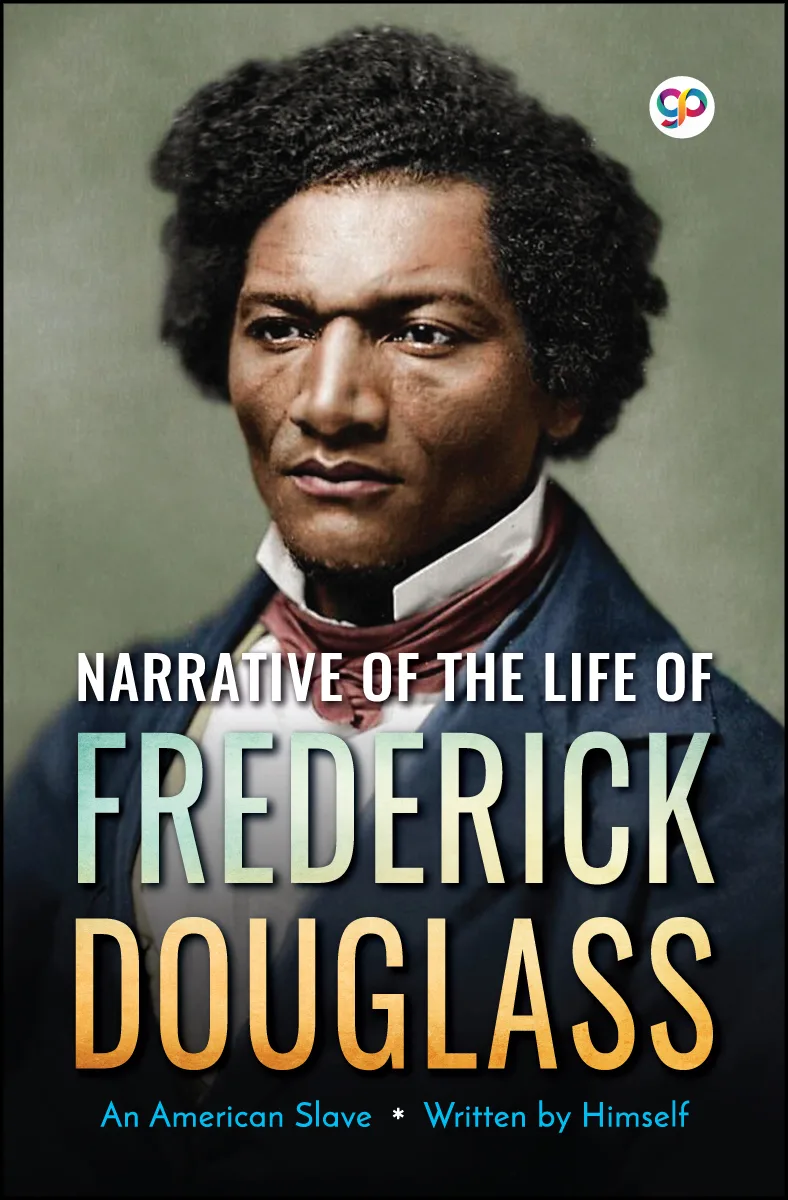
Download Cover Image
Do you want to download the full cover image for Narrative of the Life of Frederick Douglass?