
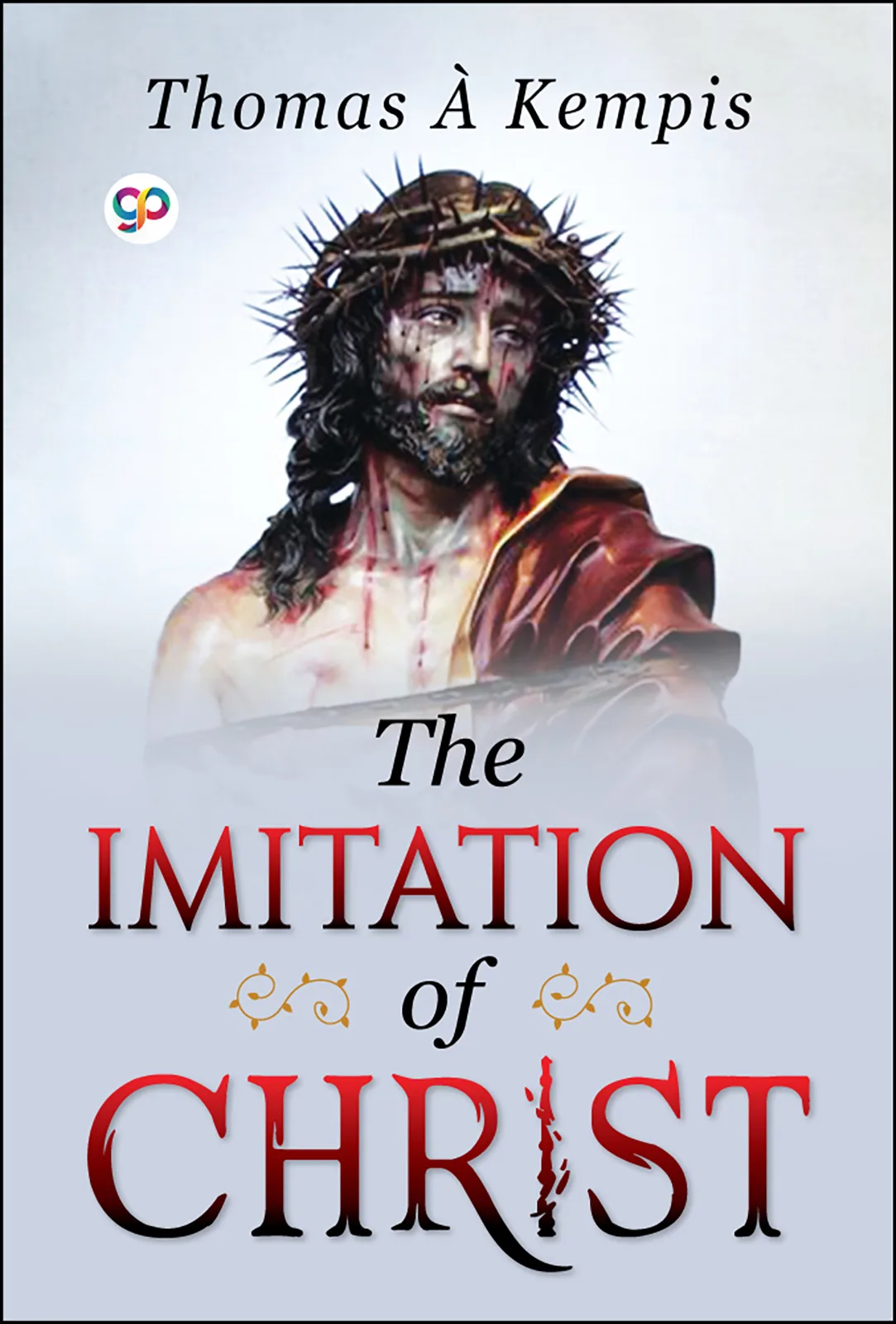
The Imitation of Christ
Paperback
• 218 Pages
• INR 345.00
• English
• 9789388118057
No ratings yet
| Publisher | General Press |
|---|---|
| ISBN13 | 9789388118057 |
| ASIN/SKU | 9388118057 |
| Book Format | Paperback |
| Language | English |
| Pages | 218 |
| List Price | INR 345.00 |
| Subject Code | REL006160, REL02200, REL012120, REL070000 |
| Publishing Date | 11/07/2018 |
| Dimensions | 8.25 x 5.25 x 1.0 inches |
| Book Code | BD00067905 |
Buy this Book
Amazon Stores
Ebook Stores
Other Stores
Discover The Imitation of Christ by Thomas À. Kempis. This book is published by General Press in Paperback format, ISBN 9789388118057, ASIN 9388118057, under Christian Books and Bibles, Christian Living, Christian Mysticism.
Book Description
What if the greatest journey a person could undertake was not across distant lands, but deep within the human heart? 'The Imitation of Christ' by Thomas à Kempis is a timeless Christian devotional classic that explores the spiritual life, humility, faith, self-discipline, and the search for a closer relationship with God. Written in a direct and deeply personal voice, the book speaks to anyone who has ever struggled with pride, distraction, temptation, disappointment, or the desire to live a more meaningful life.
Rather than telling a conventional story with a plot and cast of characters, 'The Imitation of Christ' unfolds as a series of spiritual reflections and intimate teachings centered on the example of Jesus Christ. Thomas à Kempis encourages readers to look beyond worldly success, praise, wealth, and temporary pleasures and instead cultivate the inner qualities that lead to lasting peace. Through thoughtful counsel, he examines the importance of humility, obedience, patience, silence, self-knowledge, prayer, and detachment from the pressures of the world. His message is not presented as an easy path; genuine spiritual growth requires honesty about one's weaknesses and a willingness to change.
The book also explores the struggles that accompany faith. Doubt, temptation, loneliness, suffering, and the longing for comfort are treated as natural parts of the spiritual journey rather than signs of failure. Again and again, the reader is guided toward Christ as the model for endurance, compassion, simplicity, and devotion. The language is often quiet and contemplative, yet its ideas remain strikingly relevant in a world filled with noise, ambition, comparison, and constant distraction.
More than a religious classic, 'The Imitation of Christ' is an invitation to examine how we live, what we value, and what truly brings peace to the soul. Its simple but profound wisdom continues to speak across centuries, leaving readers with the feeling that its most important lessons are not merely meant to be understood, but lived.
Rather than telling a conventional story with a plot and cast of characters, 'The Imitation of Christ' unfolds as a series of spiritual reflections and intimate teachings centered on the example of Jesus Christ. Thomas à Kempis encourages readers to look beyond worldly success, praise, wealth, and temporary pleasures and instead cultivate the inner qualities that lead to lasting peace. Through thoughtful counsel, he examines the importance of humility, obedience, patience, silence, self-knowledge, prayer, and detachment from the pressures of the world. His message is not presented as an easy path; genuine spiritual growth requires honesty about one's weaknesses and a willingness to change.
The book also explores the struggles that accompany faith. Doubt, temptation, loneliness, suffering, and the longing for comfort are treated as natural parts of the spiritual journey rather than signs of failure. Again and again, the reader is guided toward Christ as the model for endurance, compassion, simplicity, and devotion. The language is often quiet and contemplative, yet its ideas remain strikingly relevant in a world filled with noise, ambition, comparison, and constant distraction.
More than a religious classic, 'The Imitation of Christ' is an invitation to examine how we live, what we value, and what truly brings peace to the soul. Its simple but profound wisdom continues to speak across centuries, leaving readers with the feeling that its most important lessons are not merely meant to be understood, but lived.
Author Biography
Thomas à Kempis was born at Kempen, Germany in 1380. He attended Deventer in the Netherlands where he eventually joined the Canons and was later ordained as a priest. His most well-known work is the Imitation of Christ. It has been acclaimed as one of the greatest spiritual writings of all time. For some time there was some dispute as to the title's authorship. He died July 25, 1471.
Editorial Reviews
Editorial Reviews will be added soon…
Book Summary
Thomas à Kempis’s The Imitation of Christ is one of the most influential devotional works in Christian history and one of the classic books of Christian spirituality. Traditionally attributed to Thomas à Kempis, a fifteenth-century German-Dutch Augustinian canon regular, the book was written as a collection of spiritual instructions rather than as a conventional narrative or systematic theology. Its central purpose is simple but demanding: Christians should seek to imitate Jesus Christ not merely by admiring his teachings but by transforming their own lives through humility, self-denial, prayer, obedience, simplicity, patience, and love. The book is divided into four major sections and repeatedly turns the reader away from worldly pride and distraction toward the inner life of the soul. Its enduring appeal comes from its direct language and its emphasis on practical spiritual transformation rather than abstract religious argument.
The opening section, commonly titled “Admonitions Useful for the Spiritual Life,” establishes the central philosophy of the entire work. Thomas begins by warning readers against excessive dependence on worldly knowledge, status, reputation, and intellectual pride. Learning can be valuable, but knowledge without humility can become a source of vanity. A person may know a great deal about theology, philosophy, literature, or other subjects and still fail to live a genuinely Christian life. The author therefore makes a distinction between knowing about Christ and actually following Christ. The goal is not simply to accumulate information about religion but to become more like the person one claims to follow.
This distinction gives the book its title. To imitate Christ means to allow his character to shape one's own character. Jesus becomes the model for humility, patience, obedience, compassion, endurance, and self-sacrificing love. The Christian life is therefore presented as a process of transformation. Thomas does not suggest that imitation is easy. In fact, he repeatedly warns that following Christ requires the surrender of selfish desires and attachments. The reader is invited to ask not merely, “What do I believe?” but “How am I living?”
One of the book’s strongest themes is the danger of worldly attachment. Thomas repeatedly contrasts temporary earthly things with eternal spiritual realities. Wealth, beauty, popularity, comfort, possessions, and social recognition are all unstable. They can disappear quickly and cannot ultimately satisfy the soul. A person who builds identity around them becomes vulnerable to anxiety because everything external is subject to change. The author therefore encourages detachment. Detachment does not mean that every material thing is inherently evil; rather, it means that created things should never become more important than God.
The book’s warnings against worldly distraction are particularly striking because Thomas understands how easily spiritual life can become superficial. People may become obsessed with other people's faults, arguments, gossip, reputation, or intellectual controversies while neglecting their own souls. He therefore encourages readers to develop interior silence. Instead of constantly judging what others are doing, the Christian should examine the condition of the heart. True spiritual progress begins when a person becomes more honest about personal weaknesses.
Humility is perhaps the most important virtue in The Imitation of Christ. Thomas repeatedly argues that human beings become spiritually healthier when they stop seeking admiration. Pride encourages people to compare themselves with others, defend their reputation, and demand recognition. Humility allows them to accept correction, acknowledge weakness, and remain dependent upon God. For Thomas, humility is not self-hatred. It is a realistic recognition that human beings are limited and that their abilities, achievements, and possessions ultimately depend upon God.
The author also emphasizes self-knowledge. A person should learn to understand personal weaknesses, desires, temptations, fears, and motives. This self-examination is not meant to produce endless self-criticism. Its purpose is to make the individual honest enough to recognize the areas in which transformation is needed. Spiritual maturity requires knowing oneself as well as knowing religious teachings. Someone who refuses to acknowledge personal faults will struggle to grow.
The book’s discussion of suffering and adversity is another major theme. Thomas believes that difficulty can become an important part of spiritual formation. Human beings naturally want comfort and success, but suffering can expose attachments and reveal the limits of self-reliance. When life becomes difficult, the Christian is encouraged to respond with patience rather than resentment. Trials can teach endurance, deepen dependence upon God, and loosen attachment to temporary things. This does not mean that suffering is automatically pleasant or that Christians should seek pain for its own sake. Rather, the author sees unavoidable suffering as something that can be transformed into spiritual growth.
Thomas repeatedly returns to the example of Christ’s Passion. Jesus endured humiliation, rejection, pain, and death, and therefore the Christian should not be surprised when discipleship involves sacrifice. The cross becomes the central model of Christian perseverance. Following Christ means accepting that love sometimes requires giving up comfort, status, control, or personal preference. The Christian does not imitate Christ only when life is easy; imitation becomes most meaningful when faithfulness becomes costly.
The second major section, “The Interior Life,” moves more deeply into the spiritual psychology of the believer. Thomas encourages readers to cultivate an inward relationship with God rather than depending entirely on external religious activity. Religious practices matter, but they should lead toward interior transformation. A person can participate in religious ceremonies while remaining spiritually distracted or proud. The deeper goal is communion with God.
This interior life involves prayer, contemplation, silence, repentance, and attention to God. Thomas recognizes that the human mind is easily distracted. Thoughts about possessions, relationships, ambitions, fears, and conflicts continually pull attention away from spiritual realities. The Christian therefore needs discipline. The inner life does not automatically become peaceful; it must be cultivated through repeated practice.
Thomas also discusses consolation and spiritual dryness. Sometimes prayer feels joyful and God seems close. At other times, the believer experiences emptiness, distraction, or silence. The author warns readers not to become dependent upon emotional religious experiences. Spiritual maturity means continuing to trust God even when one does not feel spiritually inspired. Consolation is a gift, but it is not the foundation of faith. The believer must learn to remain faithful during periods when prayer feels difficult.
This idea is important because Thomas understands the spiritual life as a relationship rather than a continuous emotional experience. People naturally want reassurance, but dependence upon spiritual feelings can make faith unstable. When consolation disappears, the person may assume that God has abandoned them. Thomas instead encourages perseverance. Sometimes spiritual dryness can reveal whether a person loves God for God’s sake or merely for the emotional comfort that religious experience provides.
The third section, “Internal Consolation,” develops this theme of intimacy with Christ. The writing becomes more explicitly devotional and often takes the form of dialogue between Christ and the disciple. The reader is encouraged to imagine Christ speaking directly to the soul, offering guidance, correction, comfort, and reassurance. This conversational style gives the book much of its emotional power. It transforms theological ideas into a personal encounter.
One of the major lessons in these dialogues is trust in God rather than in oneself. Thomas does not encourage passive weakness. Instead, he argues that genuine spiritual strength begins when a person recognizes personal limitations. Human beings are easily deceived by pride and unstable emotions. God, by contrast, is presented as the stable source of truth and peace. The soul becomes freer when it stops trying to control everything.
The author also discusses love. Christian love is not merely an emotional affection for people who treat us well. It includes patience with difficult people, forgiveness of offenses, generosity toward others, and willingness to sacrifice personal advantage. Because Christ loved humanity sacrificially, the Christian is called to extend love beyond the boundaries of convenience. This makes love a discipline rather than simply a feeling.
Thomas also warns against complaining and seeking sympathy. When difficulties arise, people naturally want others to understand how much they are suffering. While there is nothing inherently wrong with seeking legitimate support, Thomas warns against making one's suffering into an identity. Constant complaint can reinforce self-centeredness. Instead, he encourages the believer to bring suffering to God and to learn patience.
The fourth section, “The Book of the Blessed Sacrament,” focuses particularly on the Eucharist, or Holy Communion. Here the devotional character of the book becomes especially strong. Thomas approaches the Eucharist as the profound meeting point between Christ and the believer. The sacrament is not treated merely as a symbolic ceremony but as a sacred mystery through which the Christian encounters Christ.
The Eucharistic section emphasizes preparation, reverence, humility, gratitude, repentance, and love. Before receiving Communion, the believer should examine the heart and approach the sacrament with seriousness. After receiving, the believer should remain attentive to Christ rather than immediately returning to worldly distractions. The sacrament therefore becomes both an expression of faith and a means of spiritual renewal.
Thomas’s treatment of the Eucharist also reinforces one of the book’s most important ideas: Christianity is ultimately about union with Christ. To imitate Christ is not merely to copy external behaviors. The believer seeks an inward relationship that gradually changes desires, attitudes, and character. The Eucharist becomes a particularly powerful expression of this desire for communion.
Throughout the book, Thomas repeatedly warns against spiritual pride. Even spiritual practices can become occasions for vanity. A person may become proud of fasting, prayer, knowledge, discipline, religious service, or apparent holiness. The author therefore insists that humility must remain at the center of everything. The more a person grows spiritually, the less interested that person should become in receiving praise.
Another important theme is the transience of life. Thomas encourages readers to remember death. This is not intended simply to frighten people but to place everyday concerns in perspective. Human life is short, and earthly achievements eventually disappear. Remembering mortality can therefore encourage people to focus on what has lasting value. Instead of spending life pursuing reputation or temporary pleasures, the believer should prepare for eternal life.
The book’s emphasis on death also connects with its broader call to detachment. If everything earthly is temporary, then excessive attachment produces unnecessary suffering. The Christian should enjoy good things with gratitude but should remain inwardly free enough to let them go. This principle applies not only to possessions but also to status, relationships, health, success, and personal plans.
For modern readers, some of Thomas’s language may appear severe. His emphasis on self-denial, suffering, humility, and detachment reflects the medieval Christian devotional environment in which the book was written. Yet beneath the historical language lies a recognizable psychological insight: people often suffer because they demand control, recognition, certainty, and comfort from life. Thomas encourages a different posture—acceptance, gratitude, patience, humility, and trust.
The enduring power of The Imitation of Christ lies in its practicality. It does not present spirituality as an abstract intellectual system. Instead, it repeatedly asks the reader to change everyday behavior: speak less, judge others less, pray more sincerely, forgive more readily, accept correction, resist vanity, serve others, remain patient in difficulty, and seek God rather than applause. The book is therefore best read slowly, perhaps one chapter at a time, because its short teachings are intended for meditation rather than rapid consumption.
Ultimately, The Imitation of Christ is a book about becoming rather than merely believing. Thomas à Kempis does not reject doctrine, but he insists that genuine Christianity must eventually become visible in character. The person who follows Christ should gradually become more humble, patient, loving, disciplined, peaceful, forgiving, and detached from worldly pride. Religious knowledge has value only when it contributes to this transformation.
For readers searching for an in-depth summary of The Imitation of Christ by Thomas à Kempis, the central message is clear: the Christian life is a lifelong effort to turn away from self-centeredness and toward Christ-centered living. The four books move from practical spiritual instruction to the inner life, from consolation and communion with Christ to the Eucharist. Throughout them all, Thomas emphasizes humility, prayer, self-knowledge, detachment, patience, suffering, love, and sacramental devotion. The book’s deepest challenge is not simply to admire Jesus but to imitate him—to allow his humility, obedience, compassion, sacrifice, and love to become increasingly visible in one's own life. That is why The Imitation of Christ has remained a spiritual classic for centuries: it speaks directly to the enduring human struggle between what we know we should be and the person we actually are, and it offers a disciplined path toward becoming more faithful, more humble, and more deeply rooted in God.
The opening section, commonly titled “Admonitions Useful for the Spiritual Life,” establishes the central philosophy of the entire work. Thomas begins by warning readers against excessive dependence on worldly knowledge, status, reputation, and intellectual pride. Learning can be valuable, but knowledge without humility can become a source of vanity. A person may know a great deal about theology, philosophy, literature, or other subjects and still fail to live a genuinely Christian life. The author therefore makes a distinction between knowing about Christ and actually following Christ. The goal is not simply to accumulate information about religion but to become more like the person one claims to follow.
This distinction gives the book its title. To imitate Christ means to allow his character to shape one's own character. Jesus becomes the model for humility, patience, obedience, compassion, endurance, and self-sacrificing love. The Christian life is therefore presented as a process of transformation. Thomas does not suggest that imitation is easy. In fact, he repeatedly warns that following Christ requires the surrender of selfish desires and attachments. The reader is invited to ask not merely, “What do I believe?” but “How am I living?”
One of the book’s strongest themes is the danger of worldly attachment. Thomas repeatedly contrasts temporary earthly things with eternal spiritual realities. Wealth, beauty, popularity, comfort, possessions, and social recognition are all unstable. They can disappear quickly and cannot ultimately satisfy the soul. A person who builds identity around them becomes vulnerable to anxiety because everything external is subject to change. The author therefore encourages detachment. Detachment does not mean that every material thing is inherently evil; rather, it means that created things should never become more important than God.
The book’s warnings against worldly distraction are particularly striking because Thomas understands how easily spiritual life can become superficial. People may become obsessed with other people's faults, arguments, gossip, reputation, or intellectual controversies while neglecting their own souls. He therefore encourages readers to develop interior silence. Instead of constantly judging what others are doing, the Christian should examine the condition of the heart. True spiritual progress begins when a person becomes more honest about personal weaknesses.
Humility is perhaps the most important virtue in The Imitation of Christ. Thomas repeatedly argues that human beings become spiritually healthier when they stop seeking admiration. Pride encourages people to compare themselves with others, defend their reputation, and demand recognition. Humility allows them to accept correction, acknowledge weakness, and remain dependent upon God. For Thomas, humility is not self-hatred. It is a realistic recognition that human beings are limited and that their abilities, achievements, and possessions ultimately depend upon God.
The author also emphasizes self-knowledge. A person should learn to understand personal weaknesses, desires, temptations, fears, and motives. This self-examination is not meant to produce endless self-criticism. Its purpose is to make the individual honest enough to recognize the areas in which transformation is needed. Spiritual maturity requires knowing oneself as well as knowing religious teachings. Someone who refuses to acknowledge personal faults will struggle to grow.
The book’s discussion of suffering and adversity is another major theme. Thomas believes that difficulty can become an important part of spiritual formation. Human beings naturally want comfort and success, but suffering can expose attachments and reveal the limits of self-reliance. When life becomes difficult, the Christian is encouraged to respond with patience rather than resentment. Trials can teach endurance, deepen dependence upon God, and loosen attachment to temporary things. This does not mean that suffering is automatically pleasant or that Christians should seek pain for its own sake. Rather, the author sees unavoidable suffering as something that can be transformed into spiritual growth.
Thomas repeatedly returns to the example of Christ’s Passion. Jesus endured humiliation, rejection, pain, and death, and therefore the Christian should not be surprised when discipleship involves sacrifice. The cross becomes the central model of Christian perseverance. Following Christ means accepting that love sometimes requires giving up comfort, status, control, or personal preference. The Christian does not imitate Christ only when life is easy; imitation becomes most meaningful when faithfulness becomes costly.
The second major section, “The Interior Life,” moves more deeply into the spiritual psychology of the believer. Thomas encourages readers to cultivate an inward relationship with God rather than depending entirely on external religious activity. Religious practices matter, but they should lead toward interior transformation. A person can participate in religious ceremonies while remaining spiritually distracted or proud. The deeper goal is communion with God.
This interior life involves prayer, contemplation, silence, repentance, and attention to God. Thomas recognizes that the human mind is easily distracted. Thoughts about possessions, relationships, ambitions, fears, and conflicts continually pull attention away from spiritual realities. The Christian therefore needs discipline. The inner life does not automatically become peaceful; it must be cultivated through repeated practice.
Thomas also discusses consolation and spiritual dryness. Sometimes prayer feels joyful and God seems close. At other times, the believer experiences emptiness, distraction, or silence. The author warns readers not to become dependent upon emotional religious experiences. Spiritual maturity means continuing to trust God even when one does not feel spiritually inspired. Consolation is a gift, but it is not the foundation of faith. The believer must learn to remain faithful during periods when prayer feels difficult.
This idea is important because Thomas understands the spiritual life as a relationship rather than a continuous emotional experience. People naturally want reassurance, but dependence upon spiritual feelings can make faith unstable. When consolation disappears, the person may assume that God has abandoned them. Thomas instead encourages perseverance. Sometimes spiritual dryness can reveal whether a person loves God for God’s sake or merely for the emotional comfort that religious experience provides.
The third section, “Internal Consolation,” develops this theme of intimacy with Christ. The writing becomes more explicitly devotional and often takes the form of dialogue between Christ and the disciple. The reader is encouraged to imagine Christ speaking directly to the soul, offering guidance, correction, comfort, and reassurance. This conversational style gives the book much of its emotional power. It transforms theological ideas into a personal encounter.
One of the major lessons in these dialogues is trust in God rather than in oneself. Thomas does not encourage passive weakness. Instead, he argues that genuine spiritual strength begins when a person recognizes personal limitations. Human beings are easily deceived by pride and unstable emotions. God, by contrast, is presented as the stable source of truth and peace. The soul becomes freer when it stops trying to control everything.
The author also discusses love. Christian love is not merely an emotional affection for people who treat us well. It includes patience with difficult people, forgiveness of offenses, generosity toward others, and willingness to sacrifice personal advantage. Because Christ loved humanity sacrificially, the Christian is called to extend love beyond the boundaries of convenience. This makes love a discipline rather than simply a feeling.
Thomas also warns against complaining and seeking sympathy. When difficulties arise, people naturally want others to understand how much they are suffering. While there is nothing inherently wrong with seeking legitimate support, Thomas warns against making one's suffering into an identity. Constant complaint can reinforce self-centeredness. Instead, he encourages the believer to bring suffering to God and to learn patience.
The fourth section, “The Book of the Blessed Sacrament,” focuses particularly on the Eucharist, or Holy Communion. Here the devotional character of the book becomes especially strong. Thomas approaches the Eucharist as the profound meeting point between Christ and the believer. The sacrament is not treated merely as a symbolic ceremony but as a sacred mystery through which the Christian encounters Christ.
The Eucharistic section emphasizes preparation, reverence, humility, gratitude, repentance, and love. Before receiving Communion, the believer should examine the heart and approach the sacrament with seriousness. After receiving, the believer should remain attentive to Christ rather than immediately returning to worldly distractions. The sacrament therefore becomes both an expression of faith and a means of spiritual renewal.
Thomas’s treatment of the Eucharist also reinforces one of the book’s most important ideas: Christianity is ultimately about union with Christ. To imitate Christ is not merely to copy external behaviors. The believer seeks an inward relationship that gradually changes desires, attitudes, and character. The Eucharist becomes a particularly powerful expression of this desire for communion.
Throughout the book, Thomas repeatedly warns against spiritual pride. Even spiritual practices can become occasions for vanity. A person may become proud of fasting, prayer, knowledge, discipline, religious service, or apparent holiness. The author therefore insists that humility must remain at the center of everything. The more a person grows spiritually, the less interested that person should become in receiving praise.
Another important theme is the transience of life. Thomas encourages readers to remember death. This is not intended simply to frighten people but to place everyday concerns in perspective. Human life is short, and earthly achievements eventually disappear. Remembering mortality can therefore encourage people to focus on what has lasting value. Instead of spending life pursuing reputation or temporary pleasures, the believer should prepare for eternal life.
The book’s emphasis on death also connects with its broader call to detachment. If everything earthly is temporary, then excessive attachment produces unnecessary suffering. The Christian should enjoy good things with gratitude but should remain inwardly free enough to let them go. This principle applies not only to possessions but also to status, relationships, health, success, and personal plans.
For modern readers, some of Thomas’s language may appear severe. His emphasis on self-denial, suffering, humility, and detachment reflects the medieval Christian devotional environment in which the book was written. Yet beneath the historical language lies a recognizable psychological insight: people often suffer because they demand control, recognition, certainty, and comfort from life. Thomas encourages a different posture—acceptance, gratitude, patience, humility, and trust.
The enduring power of The Imitation of Christ lies in its practicality. It does not present spirituality as an abstract intellectual system. Instead, it repeatedly asks the reader to change everyday behavior: speak less, judge others less, pray more sincerely, forgive more readily, accept correction, resist vanity, serve others, remain patient in difficulty, and seek God rather than applause. The book is therefore best read slowly, perhaps one chapter at a time, because its short teachings are intended for meditation rather than rapid consumption.
Ultimately, The Imitation of Christ is a book about becoming rather than merely believing. Thomas à Kempis does not reject doctrine, but he insists that genuine Christianity must eventually become visible in character. The person who follows Christ should gradually become more humble, patient, loving, disciplined, peaceful, forgiving, and detached from worldly pride. Religious knowledge has value only when it contributes to this transformation.
For readers searching for an in-depth summary of The Imitation of Christ by Thomas à Kempis, the central message is clear: the Christian life is a lifelong effort to turn away from self-centeredness and toward Christ-centered living. The four books move from practical spiritual instruction to the inner life, from consolation and communion with Christ to the Eucharist. Throughout them all, Thomas emphasizes humility, prayer, self-knowledge, detachment, patience, suffering, love, and sacramental devotion. The book’s deepest challenge is not simply to admire Jesus but to imitate him—to allow his humility, obedience, compassion, sacrifice, and love to become increasingly visible in one's own life. That is why The Imitation of Christ has remained a spiritual classic for centuries: it speaks directly to the enduring human struggle between what we know we should be and the person we actually are, and it offers a disciplined path toward becoming more faithful, more humble, and more deeply rooted in God.
Sample Chapters
Book 1 : ADMONITIONS PROFITABLE FOR THE SPIRITUAL LIFE
Chapter 1
OF THE IMITATION OF CHRIST, AND OF CONTEMPT OF THE WORLD AND ALL ITS VANITIES
He that followeth me shall not walk in darkness, saith the Lord. These are the words of Christ; and they teach us how far we must imitate His life and character, if we seek true illumination, and deliverance from all blindness of heart. Let it be our most earnest study, therefore, to dwell upon the life of Jesus Christ.
2. His teaching surpasseth all teaching of holy men, and such as have His Spirit find therein the hidden manna. But there are many who, though they frequently hear the Gospel, yet feel but little longing after it, because they have not the mind of Christ. He, therefore, that will fully and with true wisdom understand the words of Christ, let him strive to conform his whole life to that mind of Christ.
3. What doth it profit thee to enter into deep discussion concerning the Holy Trinity, if thou lack humility, and be thus displeasing to the Trinity? For verily it is not deep words that make a man holy and upright; it is a good life which maketh a man dear to God. I had rather feel contrition than be skilful in the definition thereof. If thou knewest the whole Bible, and the sayings of all the philosophers, what should all this profit thee without the love and grace of God? Vanity of vanities, all is vanity, save to love God, and Him only to serve. That is the highest wisdom, to cast the world behind us, and to reach forward to the heavenly kingdom.
4. It is vanity then to seek after, and to trust in, the riches that shall perish. It is vanity, too, to covet honours, and to lift up ourselves on high. It is vanity to follow the desires of the flesh and be led by them, for this shall bring misery at the last. It is vanity to desire a long life, and to have little care for a good life. It is vanity to take thought only for the life which now is, and not to look forward to the things which shall be hereafter. It is vanity to love that which quickly passeth away, and not to hasten where eternal joy abideth.
5. Be ofttimes mindful of the saying, The eye is not satisfied with seeing, nor the ear with hearing. Strive, therefore, to turn away thy heart from the love of the things that are seen, and to set it upon the things that are not seen. For they who follow after their own fleshly lusts, defile the conscience, and destroy the grace of God.
Chapter 2
OF THINKING HUMBLY OF ONESELF
There is naturally in every man a desire to know, but what profiteth knowledge without the fear of God? Better of a surety is a lowly peasant who serveth God, than a proud philosopher who watcheth the stars and neglecteth the knowledge of himself. He who knoweth himself well is vile in his own sight; neither regardeth he the praises of men. If I knew all the things that are in the world, and were not in charity, what should it help me before God, who is to judge me according to my deeds?
2. Rest from inordinate desire of knowledge, for therein is found much distraction and deceit. Those who have knowledge desire to appear learned, and to be called wise. Many things there are to know which profiteth little or nothing to the soul. And foolish out of measure is he who attendeth upon other things rather than those which serve to his soul’s health. Many words satisfy not the soul, but a good life refresheth the mind, and a pure conscience giveth great confidence towards God.
3. The greater and more complete thy knowledge, the more severely shalt thou be judged, unless thou hast lived holily. Therefore be not lifted up by any skill or knowledge that thou hast; but rather fear concerning the knowledge which is given to thee. If it seemeth to thee that thou knowest many things, and understandest them well, know also that there are many more things which thou knowest not. Be not high-minded, but rather confess thine ignorance. Why desirest thou to lift thyself above another, when there are found many more learned and more skilled in the Scripture than thou? If thou wilt know and learn anything with profit, love to be thyself unknown and to be counted for nothing.
4. That is the highest and most profitable lesson, when a man truly knoweth and judgeth lowly of himself. To account nothing of one’s self, and to think always kindly and highly of others, this is great and perfect wisdom. Even shouldest thou see thy neighbor sin openly or grievously, yet thou oughtest not to reckon thyself better than he, for thou knowest not how long thou shalt keep thine integrity. All of us are weak and frail; hold thou no man more frail than thyself.
Chapter 3
OF THE KNOWLEDGE OF TRUTH
Happy is the man whom Truth by itself doth teach, not by figures and transient words, but as it is in itself. Our own judgment and feelings often deceive us, and we discern but little of the truth. What doth it profit to argue about hidden and dark things, concerning which we shall not be even reproved in the judgment, because we knew them not? Oh, grievous folly, to neglect the things which are profitable and necessary, and to give our minds to things which are curious and hurtful! Having eyes, we see not.
2. And what have we to do with talk about genus and species! He to whom the Eternal Word speaketh is free from multiplied questionings. From this One Word are all things, and all things speak of Him; and this is the Beginning which also speaketh unto us. No man without Him understandeth or rightly judgeth. The man to whom all things are one, who bringeth all things to one, who seeth all things in one, he is able to remain steadfast of spirit, and at rest in God. O God, who are the Truth, make me one with Thee in everlasting love. It wearieth me oftentimes to read and listen to many things; in Thee is all that I wish for and desire. Let all the doctors hold their peace; let all creation keep silence before Thee: speak Thou alone to me.
3. The more a man hath unity and simplicity in himself, the more things and the deeper things he understandeth; and that without labour, because he receiveth the light of understanding from above. The spirit which is pure, sincere, and steadfast, is not distracted though it hath many works to do, because it doth all things to the honour of God, and striveth to be free from all thoughts of self-seeking. Who is so full of hindrance and annoyance to thee as thine own undisciplined heart? A man who is good and devout arrangeth beforehand within his own heart the works which he hath to do abroad; and so is not drawn away by the desires of his evil will, but subjecteth everything to the judgment of right reason. Who hath a harder battle to fight than he who striveth for self-mastery? And this should be our endeavour, even to master self, and thus daily to grow stronger than self, and go on unto perfection.
4. All perfection hath some imperfection joined to it in this life, and all our power of sight is not without some darkness. A lowly knowledge of thyself is a surer way to God than the deep searching of man’s learning. Not that learning is to be blamed, nor the taking account of anything that is good; but a good conscience and a holy life is better than all. And because many seek knowledge rather than good living, therefore they go astray, and bear little or no fruit.
5. O if they would give that diligence to the rooting out of vice and the planting of virtue which they give unto vain questionings: there had not been so many evil doings and stumbling-blocks among the laity, nor such ill living among houses of religion. Of a surety, at the Day of Judgment it will be demanded of us, not what we have read, but what we have done; not how well we have spoken, but how holily we have lived. Tell me, where now are all those masters and teachers, whom thou knewest well, whilst they were yet with you, and flourished in learning? Their stalls are now filled by others, who perhaps never have one thought concerning them. Whilst they lived they seemed to be somewhat, but now no one speaks of them.
6. Oh how quickly passeth the glory of the world away! Would that their life and knowledge had agreed together! For then would they have read and inquired unto good purpose. How many perish through empty learning in this world, who care little for serving God. And because they love to be great more than to be humble, therefore they “have become vain in their imaginations.” He only is truly great, who hath great charity. He is truly great who deemeth himself small, and counteth all height of honour as nothing. He is the truly wise man, who counteth all earthly things as dung that he may win Christ. And he is the truly learned man, who doeth the will of God, and forsaketh his own will.
Chapter 4
OF PRUDENCE IN ACTION
We must not trust every word of others or feeling within ourselves, but cautiously and patiently try the matter, whether it be of God. Unhappily we are so weak that we find it easier to believe and speak evil of others, rather than good. But they that are perfect, do not give ready heed to every news-bearer, for they know man’s weakness that it is prone to evil and unstable in words.
2. This is great wisdom, not to be hasty in action, or stubborn in our own opinions. A part of this wisdom also is not to believe every word we hear, nor to tell others all that we hear, even though we believe it. Take counsel with a man who is wise and of a good conscience; and seek to be instructed by one better than thyself, rather than to follow thine own inventions. A good life maketh a man wise toward God, and giveth him experience in many things. The more humble a man is in himself, and the more obedient towards God, the wiser will he be in all things, and the more shall his soul be at peace.
Chapter 5
OF THE READING OF HOLY SCRIPTURES
It is Truth which we must look for in Holy Writ, not cunning of words. All Scripture ought to be read in the spirit in which it was written. We must rather seek for what is profitable in Scripture, than for what ministereth to subtlety in discourse. Therefore we ought to read books which are devotional and simple, as well as those which are deep and difficult. And let not the weight of the writer be a stumbling-block to thee, whether he be of little or much learning, but let the love of the pure Truth draw thee to read. Ask not, who hath said this or that, but look to what he says.
Chapter 1
OF THE IMITATION OF CHRIST, AND OF CONTEMPT OF THE WORLD AND ALL ITS VANITIES
He that followeth me shall not walk in darkness, saith the Lord. These are the words of Christ; and they teach us how far we must imitate His life and character, if we seek true illumination, and deliverance from all blindness of heart. Let it be our most earnest study, therefore, to dwell upon the life of Jesus Christ.
2. His teaching surpasseth all teaching of holy men, and such as have His Spirit find therein the hidden manna. But there are many who, though they frequently hear the Gospel, yet feel but little longing after it, because they have not the mind of Christ. He, therefore, that will fully and with true wisdom understand the words of Christ, let him strive to conform his whole life to that mind of Christ.
3. What doth it profit thee to enter into deep discussion concerning the Holy Trinity, if thou lack humility, and be thus displeasing to the Trinity? For verily it is not deep words that make a man holy and upright; it is a good life which maketh a man dear to God. I had rather feel contrition than be skilful in the definition thereof. If thou knewest the whole Bible, and the sayings of all the philosophers, what should all this profit thee without the love and grace of God? Vanity of vanities, all is vanity, save to love God, and Him only to serve. That is the highest wisdom, to cast the world behind us, and to reach forward to the heavenly kingdom.
4. It is vanity then to seek after, and to trust in, the riches that shall perish. It is vanity, too, to covet honours, and to lift up ourselves on high. It is vanity to follow the desires of the flesh and be led by them, for this shall bring misery at the last. It is vanity to desire a long life, and to have little care for a good life. It is vanity to take thought only for the life which now is, and not to look forward to the things which shall be hereafter. It is vanity to love that which quickly passeth away, and not to hasten where eternal joy abideth.
5. Be ofttimes mindful of the saying, The eye is not satisfied with seeing, nor the ear with hearing. Strive, therefore, to turn away thy heart from the love of the things that are seen, and to set it upon the things that are not seen. For they who follow after their own fleshly lusts, defile the conscience, and destroy the grace of God.
Chapter 2
OF THINKING HUMBLY OF ONESELF
There is naturally in every man a desire to know, but what profiteth knowledge without the fear of God? Better of a surety is a lowly peasant who serveth God, than a proud philosopher who watcheth the stars and neglecteth the knowledge of himself. He who knoweth himself well is vile in his own sight; neither regardeth he the praises of men. If I knew all the things that are in the world, and were not in charity, what should it help me before God, who is to judge me according to my deeds?
2. Rest from inordinate desire of knowledge, for therein is found much distraction and deceit. Those who have knowledge desire to appear learned, and to be called wise. Many things there are to know which profiteth little or nothing to the soul. And foolish out of measure is he who attendeth upon other things rather than those which serve to his soul’s health. Many words satisfy not the soul, but a good life refresheth the mind, and a pure conscience giveth great confidence towards God.
3. The greater and more complete thy knowledge, the more severely shalt thou be judged, unless thou hast lived holily. Therefore be not lifted up by any skill or knowledge that thou hast; but rather fear concerning the knowledge which is given to thee. If it seemeth to thee that thou knowest many things, and understandest them well, know also that there are many more things which thou knowest not. Be not high-minded, but rather confess thine ignorance. Why desirest thou to lift thyself above another, when there are found many more learned and more skilled in the Scripture than thou? If thou wilt know and learn anything with profit, love to be thyself unknown and to be counted for nothing.
4. That is the highest and most profitable lesson, when a man truly knoweth and judgeth lowly of himself. To account nothing of one’s self, and to think always kindly and highly of others, this is great and perfect wisdom. Even shouldest thou see thy neighbor sin openly or grievously, yet thou oughtest not to reckon thyself better than he, for thou knowest not how long thou shalt keep thine integrity. All of us are weak and frail; hold thou no man more frail than thyself.
Chapter 3
OF THE KNOWLEDGE OF TRUTH
Happy is the man whom Truth by itself doth teach, not by figures and transient words, but as it is in itself. Our own judgment and feelings often deceive us, and we discern but little of the truth. What doth it profit to argue about hidden and dark things, concerning which we shall not be even reproved in the judgment, because we knew them not? Oh, grievous folly, to neglect the things which are profitable and necessary, and to give our minds to things which are curious and hurtful! Having eyes, we see not.
2. And what have we to do with talk about genus and species! He to whom the Eternal Word speaketh is free from multiplied questionings. From this One Word are all things, and all things speak of Him; and this is the Beginning which also speaketh unto us. No man without Him understandeth or rightly judgeth. The man to whom all things are one, who bringeth all things to one, who seeth all things in one, he is able to remain steadfast of spirit, and at rest in God. O God, who are the Truth, make me one with Thee in everlasting love. It wearieth me oftentimes to read and listen to many things; in Thee is all that I wish for and desire. Let all the doctors hold their peace; let all creation keep silence before Thee: speak Thou alone to me.
3. The more a man hath unity and simplicity in himself, the more things and the deeper things he understandeth; and that without labour, because he receiveth the light of understanding from above. The spirit which is pure, sincere, and steadfast, is not distracted though it hath many works to do, because it doth all things to the honour of God, and striveth to be free from all thoughts of self-seeking. Who is so full of hindrance and annoyance to thee as thine own undisciplined heart? A man who is good and devout arrangeth beforehand within his own heart the works which he hath to do abroad; and so is not drawn away by the desires of his evil will, but subjecteth everything to the judgment of right reason. Who hath a harder battle to fight than he who striveth for self-mastery? And this should be our endeavour, even to master self, and thus daily to grow stronger than self, and go on unto perfection.
4. All perfection hath some imperfection joined to it in this life, and all our power of sight is not without some darkness. A lowly knowledge of thyself is a surer way to God than the deep searching of man’s learning. Not that learning is to be blamed, nor the taking account of anything that is good; but a good conscience and a holy life is better than all. And because many seek knowledge rather than good living, therefore they go astray, and bear little or no fruit.
5. O if they would give that diligence to the rooting out of vice and the planting of virtue which they give unto vain questionings: there had not been so many evil doings and stumbling-blocks among the laity, nor such ill living among houses of religion. Of a surety, at the Day of Judgment it will be demanded of us, not what we have read, but what we have done; not how well we have spoken, but how holily we have lived. Tell me, where now are all those masters and teachers, whom thou knewest well, whilst they were yet with you, and flourished in learning? Their stalls are now filled by others, who perhaps never have one thought concerning them. Whilst they lived they seemed to be somewhat, but now no one speaks of them.
6. Oh how quickly passeth the glory of the world away! Would that their life and knowledge had agreed together! For then would they have read and inquired unto good purpose. How many perish through empty learning in this world, who care little for serving God. And because they love to be great more than to be humble, therefore they “have become vain in their imaginations.” He only is truly great, who hath great charity. He is truly great who deemeth himself small, and counteth all height of honour as nothing. He is the truly wise man, who counteth all earthly things as dung that he may win Christ. And he is the truly learned man, who doeth the will of God, and forsaketh his own will.
Chapter 4
OF PRUDENCE IN ACTION
We must not trust every word of others or feeling within ourselves, but cautiously and patiently try the matter, whether it be of God. Unhappily we are so weak that we find it easier to believe and speak evil of others, rather than good. But they that are perfect, do not give ready heed to every news-bearer, for they know man’s weakness that it is prone to evil and unstable in words.
2. This is great wisdom, not to be hasty in action, or stubborn in our own opinions. A part of this wisdom also is not to believe every word we hear, nor to tell others all that we hear, even though we believe it. Take counsel with a man who is wise and of a good conscience; and seek to be instructed by one better than thyself, rather than to follow thine own inventions. A good life maketh a man wise toward God, and giveth him experience in many things. The more humble a man is in himself, and the more obedient towards God, the wiser will he be in all things, and the more shall his soul be at peace.
Chapter 5
OF THE READING OF HOLY SCRIPTURES
It is Truth which we must look for in Holy Writ, not cunning of words. All Scripture ought to be read in the spirit in which it was written. We must rather seek for what is profitable in Scripture, than for what ministereth to subtlety in discourse. Therefore we ought to read books which are devotional and simple, as well as those which are deep and difficult. And let not the weight of the writer be a stumbling-block to thee, whether he be of little or much learning, but let the love of the pure Truth draw thee to read. Ask not, who hath said this or that, but look to what he says.
Reader Reviews
No reviews yet.
The Imitation of Christ
Download Cover Image
Do you want to download the full cover image for The Imitation of Christ?