
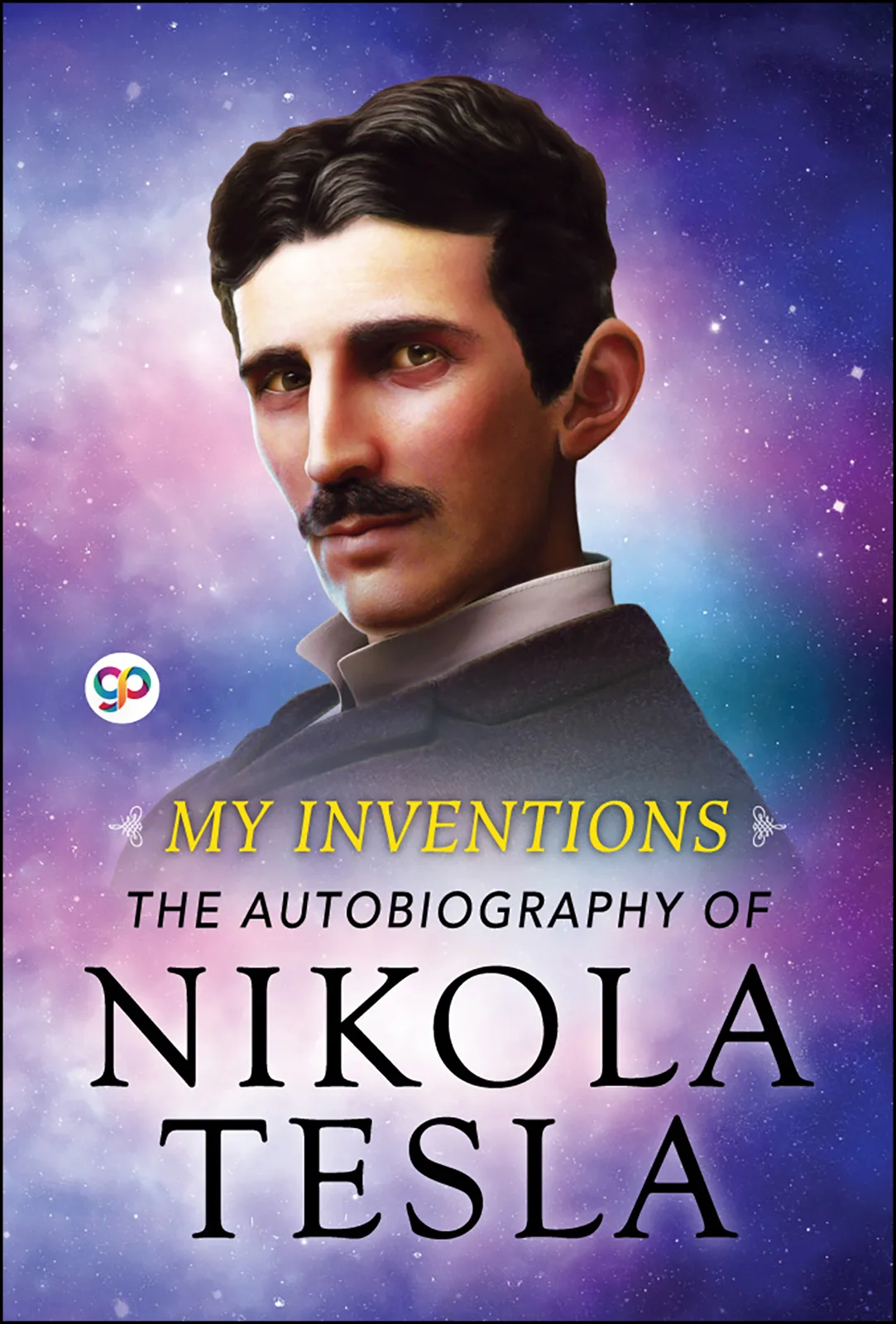
My Inventions: The Autobiography of Nikola Tesla
Paperback
• 120 Pages
• INR 295.00
• English
• 9789388118132
No ratings yet
| Publisher | General Press |
|---|---|
| ISBN13 | 9789388118132 |
| ASIN/SKU | 9388118138 |
| Book Format | Paperback |
| Language | English |
| Pages | 120 |
| List Price | INR 295.00 |
| Subject Code | BIO015000, TEC008000, BUS070010 |
| Publishing Date | 01/01/2018 |
| Dimensions | 8.25 x 5.25 x 1.0 inches |
| Book Code | BD00067912 |
Buy this Book
Amazon Stores
Ebook Stores
Other Stores
Discover My Inventions: The Autobiography of Nikola Tesla by Nikola Tesla. This book is published by General Press in Paperback format, ISBN 9789388118132, ASIN 9388118138, under Biographies and Memoirs, Nonfiction, Autobiographies.
Book Description
What happens when an extraordinary imagination meets the limitless possibilities of electricity? 'My Inventions: The Autobiography of Nikola Tesla' by Nikola Tesla is a fascinating autobiography and science memoir that takes readers inside the life, mind, and creative process of one of history’s most remarkable inventors. First published as a series of articles in 'Electrical Experimenter' in 1919, the book presents Tesla’s own reflections on his childhood, inventions, experiments, ambitions, and unconventional way of thinking.
Tesla begins by looking back at his early life and the experiences that shaped his extraordinary interest in science and invention. From childhood, he describes an unusually vivid imagination, a powerful ability to visualize objects mentally, and an intense fascination with mechanical and electrical phenomena. Rather than presenting invention as a series of lucky discoveries, Tesla explains it as a deeply personal process involving observation, imagination, persistence, and the ability to see an idea clearly before turning it into a physical machine. His recollections offer a rare glimpse into how he believed the inventive mind actually worked.
As the narrative moves into his professional life, Tesla discusses the struggles and breakthroughs that eventually led him toward some of his most important electrical discoveries. A central part of the story is his development of the rotating magnetic field and alternating-current technology, ideas that would transform the transmission and use of electricity. He also reflects on his experiences in the electrical industry and his encounters with other influential figures of the period. The book does not read simply as a technical history; Tesla continually connects his scientific work with his larger belief that invention should help humanity harness the forces of nature.
The autobiography becomes particularly compelling when Tesla describes his experiments with high-frequency electricity, the Tesla coil and transformer, and his increasingly ambitious efforts to transmit energy and information without wires. His discussion of the magnifying transmitter reveals the scale of his imagination. Tesla was not satisfied with improving existing technology; he dreamed of a world in which electricity and communication could cross enormous distances, potentially changing everyday life in ways that seemed almost impossible in his era.
The final sections also introduce his work in remote control and what he called “telautomatics,” showing how his ideas extended beyond electrical power into machines that could respond to signals from a distance. Throughout the book, Tesla’s confidence, eccentricity, curiosity, and intense dedication are impossible to miss. He openly discusses the obstacles faced by inventors and the loneliness that can accompany ideas far ahead of their time.
More than a record of famous inventions, 'My Inventions' is an intimate portrait of creativity itself. Tesla invites readers to consider where great ideas come from, how imagination can become technology, and what it means to pursue a vision when others cannot yet see its possibilities. For anyone interested in Nikola Tesla, electricity, science history, invention, or the fascinating workings of a creative mind, this short but memorable autobiography offers a direct encounter with the inventor in his own words—and leaves you wondering just how far his imagination was ahead of the world around him.
Tesla begins by looking back at his early life and the experiences that shaped his extraordinary interest in science and invention. From childhood, he describes an unusually vivid imagination, a powerful ability to visualize objects mentally, and an intense fascination with mechanical and electrical phenomena. Rather than presenting invention as a series of lucky discoveries, Tesla explains it as a deeply personal process involving observation, imagination, persistence, and the ability to see an idea clearly before turning it into a physical machine. His recollections offer a rare glimpse into how he believed the inventive mind actually worked.
As the narrative moves into his professional life, Tesla discusses the struggles and breakthroughs that eventually led him toward some of his most important electrical discoveries. A central part of the story is his development of the rotating magnetic field and alternating-current technology, ideas that would transform the transmission and use of electricity. He also reflects on his experiences in the electrical industry and his encounters with other influential figures of the period. The book does not read simply as a technical history; Tesla continually connects his scientific work with his larger belief that invention should help humanity harness the forces of nature.
The autobiography becomes particularly compelling when Tesla describes his experiments with high-frequency electricity, the Tesla coil and transformer, and his increasingly ambitious efforts to transmit energy and information without wires. His discussion of the magnifying transmitter reveals the scale of his imagination. Tesla was not satisfied with improving existing technology; he dreamed of a world in which electricity and communication could cross enormous distances, potentially changing everyday life in ways that seemed almost impossible in his era.
The final sections also introduce his work in remote control and what he called “telautomatics,” showing how his ideas extended beyond electrical power into machines that could respond to signals from a distance. Throughout the book, Tesla’s confidence, eccentricity, curiosity, and intense dedication are impossible to miss. He openly discusses the obstacles faced by inventors and the loneliness that can accompany ideas far ahead of their time.
More than a record of famous inventions, 'My Inventions' is an intimate portrait of creativity itself. Tesla invites readers to consider where great ideas come from, how imagination can become technology, and what it means to pursue a vision when others cannot yet see its possibilities. For anyone interested in Nikola Tesla, electricity, science history, invention, or the fascinating workings of a creative mind, this short but memorable autobiography offers a direct encounter with the inventor in his own words—and leaves you wondering just how far his imagination was ahead of the world around him.
Author Biography
Nikola Tesla was a Serbian American inventor, electrical engineer, mechanical engineer, and futurist best known for his contributions to the design of the modern alternating current electricity supply system. Tesla gained experience in telephony and electrical engineering before emigrating to the United States in 1884 to work for Thomas Edison in New York City. He soon struck out on his own with financial backers, setting up laboratories and companies to develop a range of electrical devices. His patented AC induction motor and transformer were licensed by George Westinghouse, who also hired Tesla for a short time as a consultant. His work in the formative years of electric power development was also involved in the corporate struggle between making alternating current or direct current the power transmission standard, referred to as the war of currents. Tesla went on to pursue his ideas of wireless lighting and electricity distribution in his high-voltage, high-frequency power experiments in New York and Colorado Springs and made early pronouncements on the possibility of wireless communication with his devices.
Editorial Reviews
Editorial Reviews will be added soon…
Book Summary
My Inventions: The Autobiography of Nikola Tesla is Nikola Tesla’s personal account of his life, intellectual development, scientific experiments, and most important inventions. Written in a reflective and sometimes intensely personal style, the book offers much more than a list of technological achievements. Tesla describes how his imagination developed from childhood, how he learned to visualize machines in his mind, how he struggled through periods of poverty and disappointment, and how his determination led him to transform ideas about electricity and communication. At its heart, the autobiography is the story of a man who believed that imagination, disciplined thought, and persistent experimentation could change the world.
Tesla begins by recalling his childhood in the village of Smiljan, in what was then the Austrian Empire. He describes his family, especially his mother, whom he credits with possessing remarkable practical intelligence and inventive ability. From an early age, Tesla experienced vivid mental images and unusual flashes of imagination. He also suffered from strange sensory experiences, sometimes seeing brilliant flashes of light or experiencing images so intensely that they seemed almost real. Although these experiences were troubling, Tesla eventually learned to control them and use his extraordinary visual imagination for creative purposes.
One of the most important characteristics Tesla describes is his ability to construct and test inventions mentally before building them physically. Instead of immediately drawing a machine or making a model, he could imagine an entire apparatus in his mind, set it in motion, observe its operation, identify weaknesses, and modify it. This unusual capacity became one of the foundations of his inventive method. For Tesla, imagination was not an escape from reality; it was a practical laboratory in which ideas could be tested before resources were spent on physical experiments.
His fascination with electricity gradually became the central force of his life. During his education and early professional years, Tesla became convinced that existing methods of generating and distributing electrical power could be greatly improved. The breakthrough came when he developed the idea of the rotating magnetic field, which provided the foundation for the alternating-current induction motor. Tesla explains how the idea suddenly came to him while he was walking and reciting poetry. He visualized the principle so clearly that he immediately understood how it could work.
The development of alternating current became one of Tesla's greatest contributions to modern technology. At the time, electrical systems based on direct current were being strongly promoted, but Tesla believed that alternating current offered major advantages for transmitting electricity over long distances. His induction motor and polyphase alternating-current system eventually demonstrated the enormous potential of this approach. The autobiography presents these achievements not simply as technical successes but as examples of how a seemingly impossible idea can become practical through persistence.
Tesla's journey also brought him to the United States, where he worked for Thomas Edison. He describes the experience with a mixture of admiration, frustration, and disagreement. Tesla believed strongly in alternating current, while Edison was committed to direct-current systems. Their different approaches reflected a larger conflict over the future of electrical power. Tesla eventually left Edison's company and faced financial difficulties, but his confidence in his own ideas remained intact.
His partnership with George Westinghouse proved crucial. Westinghouse recognized the potential of Tesla's alternating-current patents and helped bring his system into large-scale commercial use. The successful application of Tesla's ideas at the 1893 World's Columbian Exposition in Chicago and later at Niagara Falls demonstrated that alternating current could provide electricity efficiently on a vast scale. Tesla regarded these developments as evidence that scientific principles, when properly understood, could fundamentally transform everyday life.
Another major part of the autobiography concerns Tesla's experiments with high-frequency currents and high voltages. He became fascinated by the possibility of producing electrical effects that appeared almost magical: luminous tubes, electrical discharges, wireless transmission, and other phenomena. His experiments with the Tesla coil helped advance research into high-frequency electricity and laid important foundations for later developments in radio and wireless technology.
Tesla also discusses his work on wireless communication and the transmission of energy without wires. He imagined a future in which information could travel instantly across great distances and electrical energy might be transmitted without conventional cables. His vision was remarkably ambitious. He believed that technology should ultimately reduce barriers between people and make communication and knowledge accessible on a global scale.
Throughout the book, Tesla emphasizes the importance of concentration and perseverance. He does not portray invention as a series of effortless flashes of genius. Although inspiration often came to him suddenly, he stresses the years of mental discipline and experimentation required to turn ideas into reality. He describes working for long hours, refusing to abandon difficult problems, and maintaining intense concentration even when others doubted him.
At the same time, the autobiography reveals Tesla's deeply idealistic view of science. He believed that scientific progress should ultimately serve humanity rather than merely generate personal wealth. He dreamed of technologies that would make life easier, increase communication, provide abundant energy, and reduce human suffering. His ambitions were therefore not limited to individual inventions; he imagined an entirely transformed civilization.
Tesla's account also reveals his eccentricities and personal sacrifices. He describes a life increasingly devoted to intellectual work rather than ordinary domestic pleasures. He remained intensely private and developed strict personal habits. His dedication sometimes approached obsession, but he regarded these sacrifices as necessary for creative achievement.
Ultimately, My Inventions is both an autobiography and a portrait of the inventive mind. Tesla's story shows how a childhood filled with curiosity and imagination developed into a lifelong search for new possibilities. His greatest lesson is that invention begins before the machine exists—in the mind of the person capable of imagining something that does not yet exist.
The enduring appeal of the book lies in Tesla's belief that human beings should not merely accept the limits of their present world. They should question them, imagine alternatives, and patiently work toward something better. His life was marked by triumphs, disappointments, financial struggles, professional conflicts, and extraordinary breakthroughs. Yet beneath all of these experiences remained one powerful conviction: the future belongs to those who can see possibilities before others can see them. In this sense, My Inventions is not only the story of Nikola Tesla's inventions; it is a deeply personal reflection on imagination, perseverance, curiosity, and the human desire to create a better future.
Tesla begins by recalling his childhood in the village of Smiljan, in what was then the Austrian Empire. He describes his family, especially his mother, whom he credits with possessing remarkable practical intelligence and inventive ability. From an early age, Tesla experienced vivid mental images and unusual flashes of imagination. He also suffered from strange sensory experiences, sometimes seeing brilliant flashes of light or experiencing images so intensely that they seemed almost real. Although these experiences were troubling, Tesla eventually learned to control them and use his extraordinary visual imagination for creative purposes.
One of the most important characteristics Tesla describes is his ability to construct and test inventions mentally before building them physically. Instead of immediately drawing a machine or making a model, he could imagine an entire apparatus in his mind, set it in motion, observe its operation, identify weaknesses, and modify it. This unusual capacity became one of the foundations of his inventive method. For Tesla, imagination was not an escape from reality; it was a practical laboratory in which ideas could be tested before resources were spent on physical experiments.
His fascination with electricity gradually became the central force of his life. During his education and early professional years, Tesla became convinced that existing methods of generating and distributing electrical power could be greatly improved. The breakthrough came when he developed the idea of the rotating magnetic field, which provided the foundation for the alternating-current induction motor. Tesla explains how the idea suddenly came to him while he was walking and reciting poetry. He visualized the principle so clearly that he immediately understood how it could work.
The development of alternating current became one of Tesla's greatest contributions to modern technology. At the time, electrical systems based on direct current were being strongly promoted, but Tesla believed that alternating current offered major advantages for transmitting electricity over long distances. His induction motor and polyphase alternating-current system eventually demonstrated the enormous potential of this approach. The autobiography presents these achievements not simply as technical successes but as examples of how a seemingly impossible idea can become practical through persistence.
Tesla's journey also brought him to the United States, where he worked for Thomas Edison. He describes the experience with a mixture of admiration, frustration, and disagreement. Tesla believed strongly in alternating current, while Edison was committed to direct-current systems. Their different approaches reflected a larger conflict over the future of electrical power. Tesla eventually left Edison's company and faced financial difficulties, but his confidence in his own ideas remained intact.
His partnership with George Westinghouse proved crucial. Westinghouse recognized the potential of Tesla's alternating-current patents and helped bring his system into large-scale commercial use. The successful application of Tesla's ideas at the 1893 World's Columbian Exposition in Chicago and later at Niagara Falls demonstrated that alternating current could provide electricity efficiently on a vast scale. Tesla regarded these developments as evidence that scientific principles, when properly understood, could fundamentally transform everyday life.
Another major part of the autobiography concerns Tesla's experiments with high-frequency currents and high voltages. He became fascinated by the possibility of producing electrical effects that appeared almost magical: luminous tubes, electrical discharges, wireless transmission, and other phenomena. His experiments with the Tesla coil helped advance research into high-frequency electricity and laid important foundations for later developments in radio and wireless technology.
Tesla also discusses his work on wireless communication and the transmission of energy without wires. He imagined a future in which information could travel instantly across great distances and electrical energy might be transmitted without conventional cables. His vision was remarkably ambitious. He believed that technology should ultimately reduce barriers between people and make communication and knowledge accessible on a global scale.
Throughout the book, Tesla emphasizes the importance of concentration and perseverance. He does not portray invention as a series of effortless flashes of genius. Although inspiration often came to him suddenly, he stresses the years of mental discipline and experimentation required to turn ideas into reality. He describes working for long hours, refusing to abandon difficult problems, and maintaining intense concentration even when others doubted him.
At the same time, the autobiography reveals Tesla's deeply idealistic view of science. He believed that scientific progress should ultimately serve humanity rather than merely generate personal wealth. He dreamed of technologies that would make life easier, increase communication, provide abundant energy, and reduce human suffering. His ambitions were therefore not limited to individual inventions; he imagined an entirely transformed civilization.
Tesla's account also reveals his eccentricities and personal sacrifices. He describes a life increasingly devoted to intellectual work rather than ordinary domestic pleasures. He remained intensely private and developed strict personal habits. His dedication sometimes approached obsession, but he regarded these sacrifices as necessary for creative achievement.
Ultimately, My Inventions is both an autobiography and a portrait of the inventive mind. Tesla's story shows how a childhood filled with curiosity and imagination developed into a lifelong search for new possibilities. His greatest lesson is that invention begins before the machine exists—in the mind of the person capable of imagining something that does not yet exist.
The enduring appeal of the book lies in Tesla's belief that human beings should not merely accept the limits of their present world. They should question them, imagine alternatives, and patiently work toward something better. His life was marked by triumphs, disappointments, financial struggles, professional conflicts, and extraordinary breakthroughs. Yet beneath all of these experiences remained one powerful conviction: the future belongs to those who can see possibilities before others can see them. In this sense, My Inventions is not only the story of Nikola Tesla's inventions; it is a deeply personal reflection on imagination, perseverance, curiosity, and the human desire to create a better future.
Sample Chapters
Sample Chapters will be added soon…
Reader Reviews
No reviews yet.
My Inventions: The Autobiography of Nikola Tesla
Download Cover Image
Do you want to download the full cover image for My Inventions: The Autobiography of Nikola Tesla?