
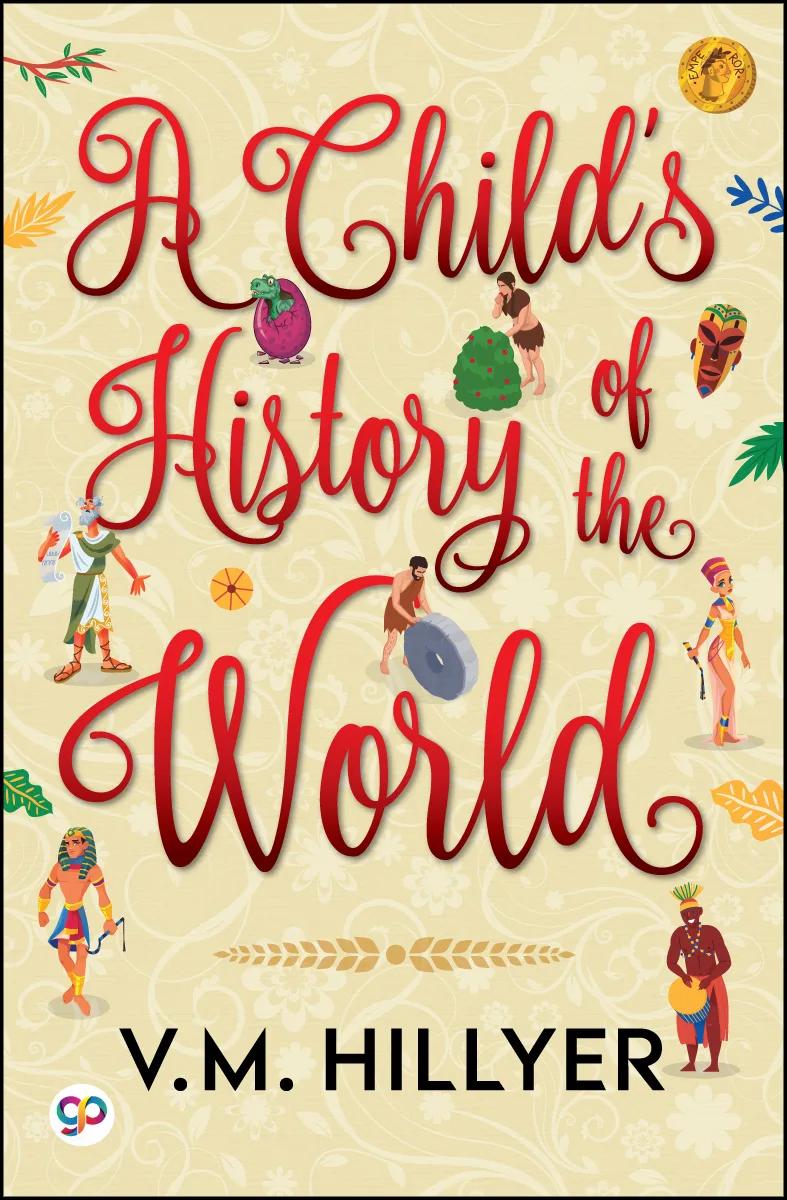
A Child's History of the World
Paperback
• 392 Pages
• INR 495.00
• English
• 9789354999840
No ratings yet
| Publisher | General Press |
|---|---|
| ISBN13 | 9789354999840 |
| ASIN/SKU | 9354999840 |
| Book Format | Paperback |
| Language | English |
| Pages | 392 |
| List Price | INR 495.00 |
| Subject Code | JNF025000, JNF048000, HIS037000 |
| Dimensions | 8.25 x 5.25 x 1.0 inches |
| Book Code | BD00067921 |
Buy this Book
Amazon Stores
Ebook Stores
Other Stores
Discover A Child's History of the World by V.M. Hillyer. This book is published by General Press in Paperback format, ISBN 9789354999840, ASIN 9354999840, under Children's Books, History, Children's Nonfiction.
Book Description
The book ‘A Child's History of the World’ is a classic. This history storybook, which was penned shortly after World War I by Virgil Hillyer, the first Head Master of Calvert School, combines charm with information to pique young readers' interests and leave them thirsting for more knowledge. Seventy-nine tales from the past, present, and future are included in this volume of A Child's History of the World. Carle Michel Book and M.S. Wright contributed a lot of the illustrations.
This beloved Hillyer classic, one of the best history books for kids, tells tales of world history from the time of the earliest humans through the 20th century, encouraging readers to understand how different historical periods are connected.
“The Parthenon is considered by some people to be the most beautiful building in the world.”
—Virgil M. Hillyer
This beloved Hillyer classic, one of the best history books for kids, tells tales of world history from the time of the earliest humans through the 20th century, encouraging readers to understand how different historical periods are connected.
“The Parthenon is considered by some people to be the most beautiful building in the world.”
—Virgil M. Hillyer
Author Biography
Virgil Mores Hillyer (1875–1931), known as V.M. Hillyer, was an American educator, historian, and author best known for his innovative approach to teaching history and literature to children. Born in South Dakota, Hillyer developed a deep interest in classical education and graduated from Harvard University. His passion for education led him to become the first headmaster of the Calvert School in Baltimore, Maryland, a pioneer in home-based and correspondence education.
In his early and middle career, Hillyer sought to make learning engaging and accessible for young readers. His most renowned work, A Child’s History of the World (1924), presents world history in a storytelling format designed for children. The book became a foundational text in many homeschooling and classical education curricula. Its clarity, narrative style, and global perspective distinguished it from traditional textbooks of the time.
He later authored A Child’s Geography of the World and A Child’s History of Art, continuing his mission to educate children through vivid, conversational writing. These books emphasized not just facts but curiosity, context, and imagination.
V.M. Hillyer died in 1931, but his works remain in print and widely used. His legacy lies in transforming complex subjects into inspiring stories for young minds.
In his early and middle career, Hillyer sought to make learning engaging and accessible for young readers. His most renowned work, A Child’s History of the World (1924), presents world history in a storytelling format designed for children. The book became a foundational text in many homeschooling and classical education curricula. Its clarity, narrative style, and global perspective distinguished it from traditional textbooks of the time.
He later authored A Child’s Geography of the World and A Child’s History of Art, continuing his mission to educate children through vivid, conversational writing. These books emphasized not just facts but curiosity, context, and imagination.
V.M. Hillyer died in 1931, but his works remain in print and widely used. His legacy lies in transforming complex subjects into inspiring stories for young minds.
Editorial Reviews
Editorial Reviews will be added soon…
Book Summary
A Child's History of the World is a classic introduction to world history written especially for young readers. Rather than presenting history as a collection of dates and battles to memorize, V. M. Hillyer tells the story of humanity as a continuous journey, beginning with the earliest civilizations and extending into the modern age. His goal is to spark curiosity by showing how different peoples, cultures, inventions, and ideas have shaped the world over thousands of years.
The book opens by encouraging readers to think of history as the story of ordinary people as well as famous rulers and explorers. Hillyer explains that every civilization builds upon the achievements of those who came before it. He emphasizes that understanding the past helps us understand the present, making history not merely an academic subject but a way of appreciating the world around us.
The narrative begins with the earliest human communities and the gradual development of agriculture, permanent settlements, and organized societies. Hillyer introduces ancient civilizations such as those of Mesopotamia and Egypt, describing how rivers, farming, writing, and trade allowed communities to flourish. These early chapters highlight the remarkable ingenuity of people who created the foundations of law, government, architecture, and learning.
As the story moves forward, readers encounter the civilizations of ancient India and China, where rich cultural traditions, philosophical ideas, and technological innovations emerged. Hillyer presents these societies as important contributors to world civilization, showing that history has always been shaped by many different cultures rather than by a single region alone.
Ancient Greece receives considerable attention as the birthplace of many ideas about democracy, philosophy, literature, and scientific inquiry. Hillyer introduces influential figures such as Socrates, Plato, and Aristotle, explaining their importance in simple language. He also describes the achievements of Greek artists, architects, and thinkers, illustrating how their ideas continued to influence later generations.
The rise of Rome forms another major section of the book. Hillyer explains how a small city gradually became a vast empire through military organization, political skill, and administrative ability. Alongside Rome's accomplishments, he also discusses the challenges of governing such an extensive territory and the factors that eventually contributed to the empire's decline. Throughout these chapters, he emphasizes that even the greatest civilizations experience periods of growth, change, and transformation.
The Middle Ages are presented as a complex era marked by kingdoms, castles, religious institutions, and expanding trade. Hillyer introduces readers to the feudal system, the influence of the Church, and the gradual emergence of towns and cities. He seeks to make this period understandable by focusing on everyday life as well as major historical developments.
One of the book's recurring themes is exploration. Hillyer vividly describes the journeys of explorers who crossed oceans and continents in search of new trade routes and opportunities. These voyages expanded geographical knowledge and connected distant parts of the world, while also leading to profound cultural exchanges and lasting historical consequences.
The Renaissance and the Scientific Revolution illustrate humanity's growing interest in learning, observation, and creativity. Hillyer explains how artists, inventors, and scholars challenged traditional ideas and encouraged new ways of thinking. Figures such as Leonardo da Vinci, Galileo, and Isaac Newton are introduced as individuals whose curiosity transformed humanity's understanding of art, science, and nature.
Political revolutions also play an important role in the narrative. Hillyer describes events such as the American Revolution and the French Revolution as turning points that introduced new ideas about liberty, citizenship, and government. Rather than focusing only on military events, he highlights the ideals and debates that shaped these movements and influenced future societies.
The Industrial Revolution marks another major stage in the story. Hillyer explains how new inventions, factories, transportation systems, and machines dramatically changed daily life. He discusses both the opportunities created by industrial progress and the social challenges that accompanied rapid economic and technological change.
Throughout the book, Hillyer introduces important historical personalities not simply as heroic figures but as individuals whose decisions affected the course of events. Kings, queens, inventors, explorers, scientists, writers, and reformers all contribute to the unfolding story of civilization. Their achievements are presented in ways that young readers can easily understand, while encouraging them to explore these figures in greater depth.
A notable feature of the book is its conversational style. Hillyer writes as though he is telling stories rather than delivering formal lessons. His language is warm, engaging, and filled with vivid examples that make historical events feel approachable. Maps, illustrations, and timelines further help readers visualize the movement of civilizations across time and geography.
The book consistently encourages readers to recognize connections between different cultures and historical periods. Rather than treating civilizations as isolated, Hillyer shows how ideas, technologies, religions, and trade routes linked people across continents. This broad perspective helps readers appreciate history as a shared human experience shaped by cooperation, conflict, discovery, and adaptation.
It is important to note that A Child's History of the World reflects the historical knowledge and educational perspectives of the early twentieth century. Modern historians have expanded, revised, and sometimes challenged aspects of its interpretation, particularly by giving greater attention to the experiences of diverse cultures and communities. Many contemporary readers therefore enjoy the book both as an engaging introduction to history and as an example of how historical storytelling has evolved over time.
Ultimately, A Child's History of the World succeeds because it inspires curiosity rather than simply presenting facts. Hillyer reminds readers that history is the story of humanity's continual search for knowledge, security, creativity, and progress. By connecting ancient civilizations with the modern world through clear storytelling and an accessible style, the book encourages young readers to see themselves as part of an ongoing human story—one in which every generation inherits the achievements of the past while helping shape the future.
The book opens by encouraging readers to think of history as the story of ordinary people as well as famous rulers and explorers. Hillyer explains that every civilization builds upon the achievements of those who came before it. He emphasizes that understanding the past helps us understand the present, making history not merely an academic subject but a way of appreciating the world around us.
The narrative begins with the earliest human communities and the gradual development of agriculture, permanent settlements, and organized societies. Hillyer introduces ancient civilizations such as those of Mesopotamia and Egypt, describing how rivers, farming, writing, and trade allowed communities to flourish. These early chapters highlight the remarkable ingenuity of people who created the foundations of law, government, architecture, and learning.
As the story moves forward, readers encounter the civilizations of ancient India and China, where rich cultural traditions, philosophical ideas, and technological innovations emerged. Hillyer presents these societies as important contributors to world civilization, showing that history has always been shaped by many different cultures rather than by a single region alone.
Ancient Greece receives considerable attention as the birthplace of many ideas about democracy, philosophy, literature, and scientific inquiry. Hillyer introduces influential figures such as Socrates, Plato, and Aristotle, explaining their importance in simple language. He also describes the achievements of Greek artists, architects, and thinkers, illustrating how their ideas continued to influence later generations.
The rise of Rome forms another major section of the book. Hillyer explains how a small city gradually became a vast empire through military organization, political skill, and administrative ability. Alongside Rome's accomplishments, he also discusses the challenges of governing such an extensive territory and the factors that eventually contributed to the empire's decline. Throughout these chapters, he emphasizes that even the greatest civilizations experience periods of growth, change, and transformation.
The Middle Ages are presented as a complex era marked by kingdoms, castles, religious institutions, and expanding trade. Hillyer introduces readers to the feudal system, the influence of the Church, and the gradual emergence of towns and cities. He seeks to make this period understandable by focusing on everyday life as well as major historical developments.
One of the book's recurring themes is exploration. Hillyer vividly describes the journeys of explorers who crossed oceans and continents in search of new trade routes and opportunities. These voyages expanded geographical knowledge and connected distant parts of the world, while also leading to profound cultural exchanges and lasting historical consequences.
The Renaissance and the Scientific Revolution illustrate humanity's growing interest in learning, observation, and creativity. Hillyer explains how artists, inventors, and scholars challenged traditional ideas and encouraged new ways of thinking. Figures such as Leonardo da Vinci, Galileo, and Isaac Newton are introduced as individuals whose curiosity transformed humanity's understanding of art, science, and nature.
Political revolutions also play an important role in the narrative. Hillyer describes events such as the American Revolution and the French Revolution as turning points that introduced new ideas about liberty, citizenship, and government. Rather than focusing only on military events, he highlights the ideals and debates that shaped these movements and influenced future societies.
The Industrial Revolution marks another major stage in the story. Hillyer explains how new inventions, factories, transportation systems, and machines dramatically changed daily life. He discusses both the opportunities created by industrial progress and the social challenges that accompanied rapid economic and technological change.
Throughout the book, Hillyer introduces important historical personalities not simply as heroic figures but as individuals whose decisions affected the course of events. Kings, queens, inventors, explorers, scientists, writers, and reformers all contribute to the unfolding story of civilization. Their achievements are presented in ways that young readers can easily understand, while encouraging them to explore these figures in greater depth.
A notable feature of the book is its conversational style. Hillyer writes as though he is telling stories rather than delivering formal lessons. His language is warm, engaging, and filled with vivid examples that make historical events feel approachable. Maps, illustrations, and timelines further help readers visualize the movement of civilizations across time and geography.
The book consistently encourages readers to recognize connections between different cultures and historical periods. Rather than treating civilizations as isolated, Hillyer shows how ideas, technologies, religions, and trade routes linked people across continents. This broad perspective helps readers appreciate history as a shared human experience shaped by cooperation, conflict, discovery, and adaptation.
It is important to note that A Child's History of the World reflects the historical knowledge and educational perspectives of the early twentieth century. Modern historians have expanded, revised, and sometimes challenged aspects of its interpretation, particularly by giving greater attention to the experiences of diverse cultures and communities. Many contemporary readers therefore enjoy the book both as an engaging introduction to history and as an example of how historical storytelling has evolved over time.
Ultimately, A Child's History of the World succeeds because it inspires curiosity rather than simply presenting facts. Hillyer reminds readers that history is the story of humanity's continual search for knowledge, security, creativity, and progress. By connecting ancient civilizations with the modern world through clear storytelling and an accessible style, the book encourages young readers to see themselves as part of an ongoing human story—one in which every generation inherits the achievements of the past while helping shape the future.
Sample Chapters
Sample Chapters will be added soon…
Reader Reviews
No reviews yet.
A Child's History of the World
Download Cover Image
Do you want to download the full cover image for A Child's History of the World?