
The Dynamic Laws of Prosperity
Hardcover
• 292 Pages
• INR 595.00
• English
• 9789388118194
No ratings yet
| Publisher | General Press |
|---|---|
| ISBN13 | 9789388118194 |
| ASIN/SKU | 9388118197 |
| Book Format | Hardcover |
| Language | English |
| Pages | 292 |
| List Price | INR 595.00 |
| Subject Code | SEL032000, SEL031000, REL062000 |
| Publishing Date | 22/08/2018 |
| Dimensions | 8.25 x 5.25 x 1.0 inches |
| Book Code | BD00067924 |
Buy this Book
Amazon Stores
Ebook Stores
Other Stores
Discover The Dynamic Laws of Prosperity by Catherine Ponder. This book is published by General Press in Hardcover format, ISBN 9789388118194, ASIN 9388118197, under Self-Help, Motivational, New Thought.
Book Description
What if the biggest obstacle standing between you and a prosperous life isn't your circumstances, your background, or even your bank account — but the way you think? That is the bold, quietly radical claim at the center of 'The Dynamic Laws of Prosperity' by Catherine Ponder, a enduring classic in the self-help and spiritual living genre that has guided readers toward greater abundance for more than half a century.
Ponder writes from a place of deep conviction, blending practical wisdom with spiritual principle in a way that feels neither preachy nor naive. Her central argument is that prosperity is not simply a matter of money — it is a whole way of being in the world, a mindset rooted in expectation, gratitude, and what she calls the "prosperous thinking" that naturally draws good things toward you. For Ponder, the laws governing abundance are as real and consistent as any law of physics. The question is whether you're working with them or against them.
The book moves through a rich range of topics — from how to overcome the deep mental habits of lack and limitation, to the surprising role that giving plays in opening the door to receiving. Ponder draws on ancient wisdom traditions, scripture, and the stories of real people whose lives changed when they changed their inner dialogue. Her writing is direct and encouraging, never condescending, and she offers concrete practices — affirmations, visualizations, and specific mental exercises — that readers can put to work immediately.
What makes this book feel different from much of the prosperity literature that followed it is Ponder's genuine spiritual depth. She isn't simply teaching a technique for getting more stuff. She's inviting readers into a fundamentally different relationship with life — one built on trust, generosity, and the belief that abundance is not scarce but endlessly available. If you've ever suspected that something in your own thinking might be quietly holding you back, this book will give you both the mirror and the map.
Ponder writes from a place of deep conviction, blending practical wisdom with spiritual principle in a way that feels neither preachy nor naive. Her central argument is that prosperity is not simply a matter of money — it is a whole way of being in the world, a mindset rooted in expectation, gratitude, and what she calls the "prosperous thinking" that naturally draws good things toward you. For Ponder, the laws governing abundance are as real and consistent as any law of physics. The question is whether you're working with them or against them.
The book moves through a rich range of topics — from how to overcome the deep mental habits of lack and limitation, to the surprising role that giving plays in opening the door to receiving. Ponder draws on ancient wisdom traditions, scripture, and the stories of real people whose lives changed when they changed their inner dialogue. Her writing is direct and encouraging, never condescending, and she offers concrete practices — affirmations, visualizations, and specific mental exercises — that readers can put to work immediately.
What makes this book feel different from much of the prosperity literature that followed it is Ponder's genuine spiritual depth. She isn't simply teaching a technique for getting more stuff. She's inviting readers into a fundamentally different relationship with life — one built on trust, generosity, and the belief that abundance is not scarce but endlessly available. If you've ever suspected that something in your own thinking might be quietly holding you back, this book will give you both the mirror and the map.
Author Biography
Catherine Ponder is considered one of America's foremost inspirational authors. She has written more than a dozen books, which include such bestsellers as her Millionaires of the Bible series. She is a minister of the non-denominational Unity faith and has been described by some as "the Norman Vincent Peale among lady ministers."
Editorial Reviews
Editorial Reviews will be added soon…
Book Summary
Catherine Ponder’s The Dynamic Laws of Prosperity is a classic New Thought and Christian prosperity book that argues that abundance begins not with money itself but with a change in consciousness. First published in 1962 and later revised and updated, the book presents prosperity as a spiritual as well as practical principle. Ponder’s central claim is that people often live beneath their potential because they carry deeply rooted beliefs about scarcity, limitation, failure, and unworthiness. By changing those beliefs and cultivating faith, positive expectation, purposeful thinking, generosity, disciplined action, and persistence, she believes individuals can become more receptive to prosperity in its many forms. The book is organized around a series of “laws,” including the basic law of prosperity, the vacuum law, the creative and imaging laws, the laws of command and increase, attitudes toward money, work, financial independence, love and goodwill, prayer, self-confidence, persistence, indebtedness, and prosperous thinking about health.
At the beginning of the book, Ponder challenges the assumption that wanting prosperity is somehow spiritually wrong. This is one of the book’s most important starting points. She recognizes that many religious people feel uncomfortable with the pursuit of wealth because they associate money with greed, materialism, or moral compromise. Ponder attempts to separate prosperity from the worship of money. In her view, wealth becomes spiritually destructive when it becomes an idol, but material abundance itself does not have to be considered evil. She argues that prosperity can include financial security, meaningful work, health, happiness, fulfilling relationships, creativity, peace, and spiritual well-being. Her broader message is that people should not automatically equate poverty with holiness or lack with virtue.
Ponder’s understanding of prosperity is deeply rooted in her Christian and New Thought worldview. She repeatedly turns to biblical examples to support the idea that abundance can be compatible with spiritual life. The book treats the Bible as a source of prosperity principles, particularly ideas concerning faith, giving, expectancy, thought, prayer, and divine provision. Ponder does not approach these passages primarily as a traditional biblical scholar would. Instead, she reads them as practical spiritual teachings that can be applied to everyday life. Her interpretation is that God is the ultimate source of supply, while money and material resources are channels through which that supply can appear.
The “basic law of prosperity” provides the foundation for everything that follows. Ponder presents prosperity as a relationship between what a person thinks, feels, gives, expects, and receives. Her philosophy is closely associated with the New Thought idea that consciousness has a formative influence on experience. She emphasizes what might be called the principle of radiation and attraction: people tend to project attitudes into their surroundings, and those attitudes influence the experiences they are prepared to recognize and pursue. A mindset dominated by fear and scarcity can lead people to notice limitations everywhere, while a mindset of faith and possibility can make them more willing to act, create opportunities, and recognize resources.
An important part of this law is giving. Ponder argues that prosperity does not mean accumulating everything for oneself. Instead, abundance should circulate. Giving is presented as a way of expressing trust that there is enough rather than acting from fear that there will never be enough. She discusses the principle of sowing and reaping, suggesting that generosity can open new channels of opportunity. In practical terms, the idea encourages readers to become less psychologically attached to scarcity and more willing to contribute their money, talents, time, encouragement, and goodwill. For Ponder, giving is not merely charity; it is part of the spiritual psychology of abundance.
The “vacuum law of prosperity” develops this idea by arguing that something new often requires space in which to appear. Ponder encourages readers to release things that are no longer useful or appropriate—whether possessions, habits, negative beliefs, outdated relationships, resentments, or obsolete ways of thinking. Clutter becomes a symbol of psychological attachment. If a person insists on holding tightly to everything familiar, there may be little room for change. Creating a vacuum is therefore an act of faith: one releases what no longer serves a purpose while expecting something better to enter. This principle makes the book’s prosperity philosophy more active than simply wishing for wealth. It requires clearing away obstacles.
The “creative law of prosperity” shifts attention toward the mind’s ability to generate ideas. Ponder considers ideas to be valuable forms of wealth. A person may not initially possess money, connections, or resources, but may possess imagination, intelligence, skills, or an insight that can become productive. Prosperity can therefore begin as an idea before it becomes a financial result. This is why Ponder places so much emphasis on cultivating the mind. She encourages readers to become attentive to ideas, desires, opportunities, and intuitive impressions rather than assuming that their present circumstances define their future.
The “imaging law” develops this principle through visualization. Ponder encourages readers to form clear mental pictures of the conditions they desire. Instead of concentrating constantly on what is missing, the reader is asked to imagine the desired outcome as already possible. This mental rehearsal is meant to strengthen faith, clarify goals, and influence behavior. Her approach resembles later popular teachings on visualization and manifestation, but it is explicitly connected to her spiritual understanding of divine provision. The mental image is not supposed to replace effort; rather, it gives direction to effort by helping a person establish a clear internal picture of the goal.
The “prosperity law of command” adds the importance of spoken and written affirmations. Ponder believes words have creative power because repeated statements influence thought patterns and emotional expectations. Instead of repeatedly saying that there is not enough money, that opportunities never appear, or that success is impossible, she encourages prosperity-oriented language. The purpose is to replace habitual negative thinking with statements of faith and possibility. Modern readers may understand this less as a literal supernatural mechanism and more as a method of reshaping attention, confidence, and behavior. Ponder, however, presents it within her spiritual framework as a practical expression of faith.
The “prosperity law of increase” asks readers to focus on what is already working and deliberately cultivate it. Rather than constantly criticizing shortcomings, Ponder encourages appreciation and expansion. Gratitude becomes important because it shifts attention from absence toward existing resources. If someone has a useful skill, supportive relationship, small business, job, creative ability, or other source of value, the principle of increase suggests nurturing it rather than overlooking it. Prosperity therefore grows partly through recognition: people become better able to develop what they already possess when they stop treating their current resources as insignificant.
Her chapter on “prosperous attitudes toward money” addresses one of the book’s most practical psychological concerns. Ponder believes people often carry contradictory feelings about money. They may desire financial security while simultaneously believing that money is dirty, selfish, difficult to obtain, or incompatible with spiritual goodness. Such internal conflict can undermine their ability to deal with finances confidently. Ponder encourages readers to view money more neutrally—as a useful medium of exchange and a means of supporting constructive purposes. The goal is not to worship money but to remove unnecessary guilt and fear surrounding it.
Work receives equally serious attention. Ponder does not suggest that prosperity comes merely from thinking about it. She describes work as a “mighty channel for prosperity,” making productive effort an essential part of her philosophy. Work provides a channel through which ideas, talents, skills, and service can become material results. This makes the book more grounded than a simple wish-fulfillment philosophy. Although Ponder emphasizes mental and spiritual principles, she also expects readers to act, develop their abilities, pursue opportunities, and persist through difficulties.
The discussion of financial independence extends this practical dimension. Ponder encourages readers to think beyond immediate income toward long-term self-sufficiency. Financial independence requires changing one's relationship with money, developing useful abilities, making responsible decisions, and becoming willing to pursue new channels of income. Her emphasis is ultimately on empowerment. Instead of seeing oneself as permanently dependent upon circumstances or other people, the reader is encouraged to recognize personal capacities and actively participate in creating greater financial stability.
Love and goodwill are presented as prosperity principles because Ponder sees resentment and hostility as forms of inner blockage. Holding onto anger can consume mental energy and keep a person psychologically tied to unpleasant experiences. Forgiveness, in her system, is therefore not merely a moral obligation but also a prosperity practice. Releasing resentment creates emotional space for new experiences. Goodwill toward others likewise changes the quality of one's relationships and encourages cooperation. Prosperity is not imagined as something achieved in isolation; human relationships are among the channels through which opportunities and support can develop.
Prayer provides the explicitly spiritual foundation of the entire system. Ponder encourages readers to bring their financial and personal concerns to God rather than treating prosperity as entirely dependent upon human control. Prayer, however, is not presented simply as asking for money. It involves aligning thought and desire with divine intelligence, seeking guidance, expressing gratitude, and developing faith. Ponder believes that prayer can change the individual’s consciousness and make new possibilities visible. In this sense, prayer works together with visualization, affirmations, and practical action.
Self-confidence becomes another essential ingredient. A person may have talent and opportunity but still fail to act because of fear, insecurity, or a belief that success belongs to other people. Ponder argues that prosperity requires confidence in one's God-given capacities. Her discussion of “genius powers” and “special powers” encourages readers to recognize abilities that may not yet have been fully developed. Intuition, imagination, creativity, insight, communication, and other personal gifts are treated as potential channels of prosperity.
These chapters reveal one of the book’s strongest themes: prosperity is partly a process of discovering personal potential. Ponder wants readers to stop defining themselves solely by past failures or present circumstances. A person who believes that nothing can change may stop looking for opportunities. Someone who believes that new possibilities exist may begin experimenting, learning, networking, creating, and trying again. Her language is spiritual, but the underlying psychological message is one of agency and possibility.
Persistence is consequently essential. Ponder understands that changing one's financial and personal circumstances rarely happens instantly. Doubt, setbacks, rejection, unexpected expenses, and failures can tempt people to return to old patterns of thinking. Persistence means continuing to hold a constructive vision while adjusting one's methods and taking further action. Faith, in this context, is not passive optimism. It is the willingness to keep moving toward a goal despite temporary evidence that the goal has not yet been reached.
The chapter on indebtedness addresses an especially important practical issue. Debt can generate fear, shame, and a constant sense of limitation. Ponder's response is to encourage readers not to become mentally consumed by debt. Instead, they should face their obligations while maintaining a constructive attitude about their ability to resolve them. The emphasis is on changing the emotional relationship with indebtedness while continuing to take responsible steps. This distinction matters because the book's prosperity philosophy can otherwise be misunderstood as suggesting that positive thinking alone solves financial problems.
The final major theme is the relationship between prosperous thinking and health. Ponder extends her philosophy beyond money, arguing that prosperity consciousness includes physical and emotional well-being. Negative mental habits, fear, resentment, and persistent worry can affect the quality of life, while gratitude, faith, constructive thought, and emotional release can contribute to a healthier outlook. Her ideas should be understood within the spiritual and self-help framework of her era rather than as a substitute for evidence-based medical care, but they reveal the book's broader definition of prosperity: genuine abundance involves the whole person.
Ultimately, The Dynamic Laws of Prosperity is less a conventional financial guide than a spiritual philosophy of abundance. Ponder's “laws” form a connected system: think differently, create space for new possibilities, cultivate ideas, visualize worthwhile goals, speak constructively, appreciate and increase existing resources, work diligently, give generously, practice love and forgiveness, pray, build confidence, recognize personal gifts, persist through setbacks, and refuse to let fear dominate one's relationship with money. The book's table of contents reflects this progression from foundational prosperity principles toward increasingly personal questions about money, work, confidence, debt, and health.
For readers searching for an in-depth summary of The Dynamic Laws of Prosperity by Catherine Ponder, the central message can be expressed simply: prosperity begins with consciousness but must ultimately become action. Ponder asks readers to stop thinking of abundance as something reserved for a fortunate few and instead cultivate an inner expectation that life can contain more possibility, usefulness, generosity, and fulfillment. Her approach combines Christian faith with New Thought ideas about thought, affirmation, visualization, giving, and spiritual alignment. Some of her claims are metaphysical rather than empirically established, so the book is best approached as a spiritual and motivational philosophy rather than a scientifically proven formula for wealth. Yet its enduring appeal lies in its humane challenge to scarcity thinking. Ponder encourages readers to see themselves not as helpless victims of circumstances but as people capable of changing their attitudes, recognizing their abilities, pursuing opportunities, releasing limiting beliefs, and contributing to the prosperity of others. In that sense, the deepest prosperity she describes is not simply having more money. It is developing a richer relationship with possibility, purpose, work, faith, generosity, and life itself.
At the beginning of the book, Ponder challenges the assumption that wanting prosperity is somehow spiritually wrong. This is one of the book’s most important starting points. She recognizes that many religious people feel uncomfortable with the pursuit of wealth because they associate money with greed, materialism, or moral compromise. Ponder attempts to separate prosperity from the worship of money. In her view, wealth becomes spiritually destructive when it becomes an idol, but material abundance itself does not have to be considered evil. She argues that prosperity can include financial security, meaningful work, health, happiness, fulfilling relationships, creativity, peace, and spiritual well-being. Her broader message is that people should not automatically equate poverty with holiness or lack with virtue.
Ponder’s understanding of prosperity is deeply rooted in her Christian and New Thought worldview. She repeatedly turns to biblical examples to support the idea that abundance can be compatible with spiritual life. The book treats the Bible as a source of prosperity principles, particularly ideas concerning faith, giving, expectancy, thought, prayer, and divine provision. Ponder does not approach these passages primarily as a traditional biblical scholar would. Instead, she reads them as practical spiritual teachings that can be applied to everyday life. Her interpretation is that God is the ultimate source of supply, while money and material resources are channels through which that supply can appear.
The “basic law of prosperity” provides the foundation for everything that follows. Ponder presents prosperity as a relationship between what a person thinks, feels, gives, expects, and receives. Her philosophy is closely associated with the New Thought idea that consciousness has a formative influence on experience. She emphasizes what might be called the principle of radiation and attraction: people tend to project attitudes into their surroundings, and those attitudes influence the experiences they are prepared to recognize and pursue. A mindset dominated by fear and scarcity can lead people to notice limitations everywhere, while a mindset of faith and possibility can make them more willing to act, create opportunities, and recognize resources.
An important part of this law is giving. Ponder argues that prosperity does not mean accumulating everything for oneself. Instead, abundance should circulate. Giving is presented as a way of expressing trust that there is enough rather than acting from fear that there will never be enough. She discusses the principle of sowing and reaping, suggesting that generosity can open new channels of opportunity. In practical terms, the idea encourages readers to become less psychologically attached to scarcity and more willing to contribute their money, talents, time, encouragement, and goodwill. For Ponder, giving is not merely charity; it is part of the spiritual psychology of abundance.
The “vacuum law of prosperity” develops this idea by arguing that something new often requires space in which to appear. Ponder encourages readers to release things that are no longer useful or appropriate—whether possessions, habits, negative beliefs, outdated relationships, resentments, or obsolete ways of thinking. Clutter becomes a symbol of psychological attachment. If a person insists on holding tightly to everything familiar, there may be little room for change. Creating a vacuum is therefore an act of faith: one releases what no longer serves a purpose while expecting something better to enter. This principle makes the book’s prosperity philosophy more active than simply wishing for wealth. It requires clearing away obstacles.
The “creative law of prosperity” shifts attention toward the mind’s ability to generate ideas. Ponder considers ideas to be valuable forms of wealth. A person may not initially possess money, connections, or resources, but may possess imagination, intelligence, skills, or an insight that can become productive. Prosperity can therefore begin as an idea before it becomes a financial result. This is why Ponder places so much emphasis on cultivating the mind. She encourages readers to become attentive to ideas, desires, opportunities, and intuitive impressions rather than assuming that their present circumstances define their future.
The “imaging law” develops this principle through visualization. Ponder encourages readers to form clear mental pictures of the conditions they desire. Instead of concentrating constantly on what is missing, the reader is asked to imagine the desired outcome as already possible. This mental rehearsal is meant to strengthen faith, clarify goals, and influence behavior. Her approach resembles later popular teachings on visualization and manifestation, but it is explicitly connected to her spiritual understanding of divine provision. The mental image is not supposed to replace effort; rather, it gives direction to effort by helping a person establish a clear internal picture of the goal.
The “prosperity law of command” adds the importance of spoken and written affirmations. Ponder believes words have creative power because repeated statements influence thought patterns and emotional expectations. Instead of repeatedly saying that there is not enough money, that opportunities never appear, or that success is impossible, she encourages prosperity-oriented language. The purpose is to replace habitual negative thinking with statements of faith and possibility. Modern readers may understand this less as a literal supernatural mechanism and more as a method of reshaping attention, confidence, and behavior. Ponder, however, presents it within her spiritual framework as a practical expression of faith.
The “prosperity law of increase” asks readers to focus on what is already working and deliberately cultivate it. Rather than constantly criticizing shortcomings, Ponder encourages appreciation and expansion. Gratitude becomes important because it shifts attention from absence toward existing resources. If someone has a useful skill, supportive relationship, small business, job, creative ability, or other source of value, the principle of increase suggests nurturing it rather than overlooking it. Prosperity therefore grows partly through recognition: people become better able to develop what they already possess when they stop treating their current resources as insignificant.
Her chapter on “prosperous attitudes toward money” addresses one of the book’s most practical psychological concerns. Ponder believes people often carry contradictory feelings about money. They may desire financial security while simultaneously believing that money is dirty, selfish, difficult to obtain, or incompatible with spiritual goodness. Such internal conflict can undermine their ability to deal with finances confidently. Ponder encourages readers to view money more neutrally—as a useful medium of exchange and a means of supporting constructive purposes. The goal is not to worship money but to remove unnecessary guilt and fear surrounding it.
Work receives equally serious attention. Ponder does not suggest that prosperity comes merely from thinking about it. She describes work as a “mighty channel for prosperity,” making productive effort an essential part of her philosophy. Work provides a channel through which ideas, talents, skills, and service can become material results. This makes the book more grounded than a simple wish-fulfillment philosophy. Although Ponder emphasizes mental and spiritual principles, she also expects readers to act, develop their abilities, pursue opportunities, and persist through difficulties.
The discussion of financial independence extends this practical dimension. Ponder encourages readers to think beyond immediate income toward long-term self-sufficiency. Financial independence requires changing one's relationship with money, developing useful abilities, making responsible decisions, and becoming willing to pursue new channels of income. Her emphasis is ultimately on empowerment. Instead of seeing oneself as permanently dependent upon circumstances or other people, the reader is encouraged to recognize personal capacities and actively participate in creating greater financial stability.
Love and goodwill are presented as prosperity principles because Ponder sees resentment and hostility as forms of inner blockage. Holding onto anger can consume mental energy and keep a person psychologically tied to unpleasant experiences. Forgiveness, in her system, is therefore not merely a moral obligation but also a prosperity practice. Releasing resentment creates emotional space for new experiences. Goodwill toward others likewise changes the quality of one's relationships and encourages cooperation. Prosperity is not imagined as something achieved in isolation; human relationships are among the channels through which opportunities and support can develop.
Prayer provides the explicitly spiritual foundation of the entire system. Ponder encourages readers to bring their financial and personal concerns to God rather than treating prosperity as entirely dependent upon human control. Prayer, however, is not presented simply as asking for money. It involves aligning thought and desire with divine intelligence, seeking guidance, expressing gratitude, and developing faith. Ponder believes that prayer can change the individual’s consciousness and make new possibilities visible. In this sense, prayer works together with visualization, affirmations, and practical action.
Self-confidence becomes another essential ingredient. A person may have talent and opportunity but still fail to act because of fear, insecurity, or a belief that success belongs to other people. Ponder argues that prosperity requires confidence in one's God-given capacities. Her discussion of “genius powers” and “special powers” encourages readers to recognize abilities that may not yet have been fully developed. Intuition, imagination, creativity, insight, communication, and other personal gifts are treated as potential channels of prosperity.
These chapters reveal one of the book’s strongest themes: prosperity is partly a process of discovering personal potential. Ponder wants readers to stop defining themselves solely by past failures or present circumstances. A person who believes that nothing can change may stop looking for opportunities. Someone who believes that new possibilities exist may begin experimenting, learning, networking, creating, and trying again. Her language is spiritual, but the underlying psychological message is one of agency and possibility.
Persistence is consequently essential. Ponder understands that changing one's financial and personal circumstances rarely happens instantly. Doubt, setbacks, rejection, unexpected expenses, and failures can tempt people to return to old patterns of thinking. Persistence means continuing to hold a constructive vision while adjusting one's methods and taking further action. Faith, in this context, is not passive optimism. It is the willingness to keep moving toward a goal despite temporary evidence that the goal has not yet been reached.
The chapter on indebtedness addresses an especially important practical issue. Debt can generate fear, shame, and a constant sense of limitation. Ponder's response is to encourage readers not to become mentally consumed by debt. Instead, they should face their obligations while maintaining a constructive attitude about their ability to resolve them. The emphasis is on changing the emotional relationship with indebtedness while continuing to take responsible steps. This distinction matters because the book's prosperity philosophy can otherwise be misunderstood as suggesting that positive thinking alone solves financial problems.
The final major theme is the relationship between prosperous thinking and health. Ponder extends her philosophy beyond money, arguing that prosperity consciousness includes physical and emotional well-being. Negative mental habits, fear, resentment, and persistent worry can affect the quality of life, while gratitude, faith, constructive thought, and emotional release can contribute to a healthier outlook. Her ideas should be understood within the spiritual and self-help framework of her era rather than as a substitute for evidence-based medical care, but they reveal the book's broader definition of prosperity: genuine abundance involves the whole person.
Ultimately, The Dynamic Laws of Prosperity is less a conventional financial guide than a spiritual philosophy of abundance. Ponder's “laws” form a connected system: think differently, create space for new possibilities, cultivate ideas, visualize worthwhile goals, speak constructively, appreciate and increase existing resources, work diligently, give generously, practice love and forgiveness, pray, build confidence, recognize personal gifts, persist through setbacks, and refuse to let fear dominate one's relationship with money. The book's table of contents reflects this progression from foundational prosperity principles toward increasingly personal questions about money, work, confidence, debt, and health.
For readers searching for an in-depth summary of The Dynamic Laws of Prosperity by Catherine Ponder, the central message can be expressed simply: prosperity begins with consciousness but must ultimately become action. Ponder asks readers to stop thinking of abundance as something reserved for a fortunate few and instead cultivate an inner expectation that life can contain more possibility, usefulness, generosity, and fulfillment. Her approach combines Christian faith with New Thought ideas about thought, affirmation, visualization, giving, and spiritual alignment. Some of her claims are metaphysical rather than empirically established, so the book is best approached as a spiritual and motivational philosophy rather than a scientifically proven formula for wealth. Yet its enduring appeal lies in its humane challenge to scarcity thinking. Ponder encourages readers to see themselves not as helpless victims of circumstances but as people capable of changing their attitudes, recognizing their abilities, pursuing opportunities, releasing limiting beliefs, and contributing to the prosperity of others. In that sense, the deepest prosperity she describes is not simply having more money. It is developing a richer relationship with possibility, purpose, work, faith, generosity, and life itself.
Sample Chapters
Sample Chapters will be added soon…
Reader Reviews
No reviews yet.
The Dynamic Laws of Prosperity
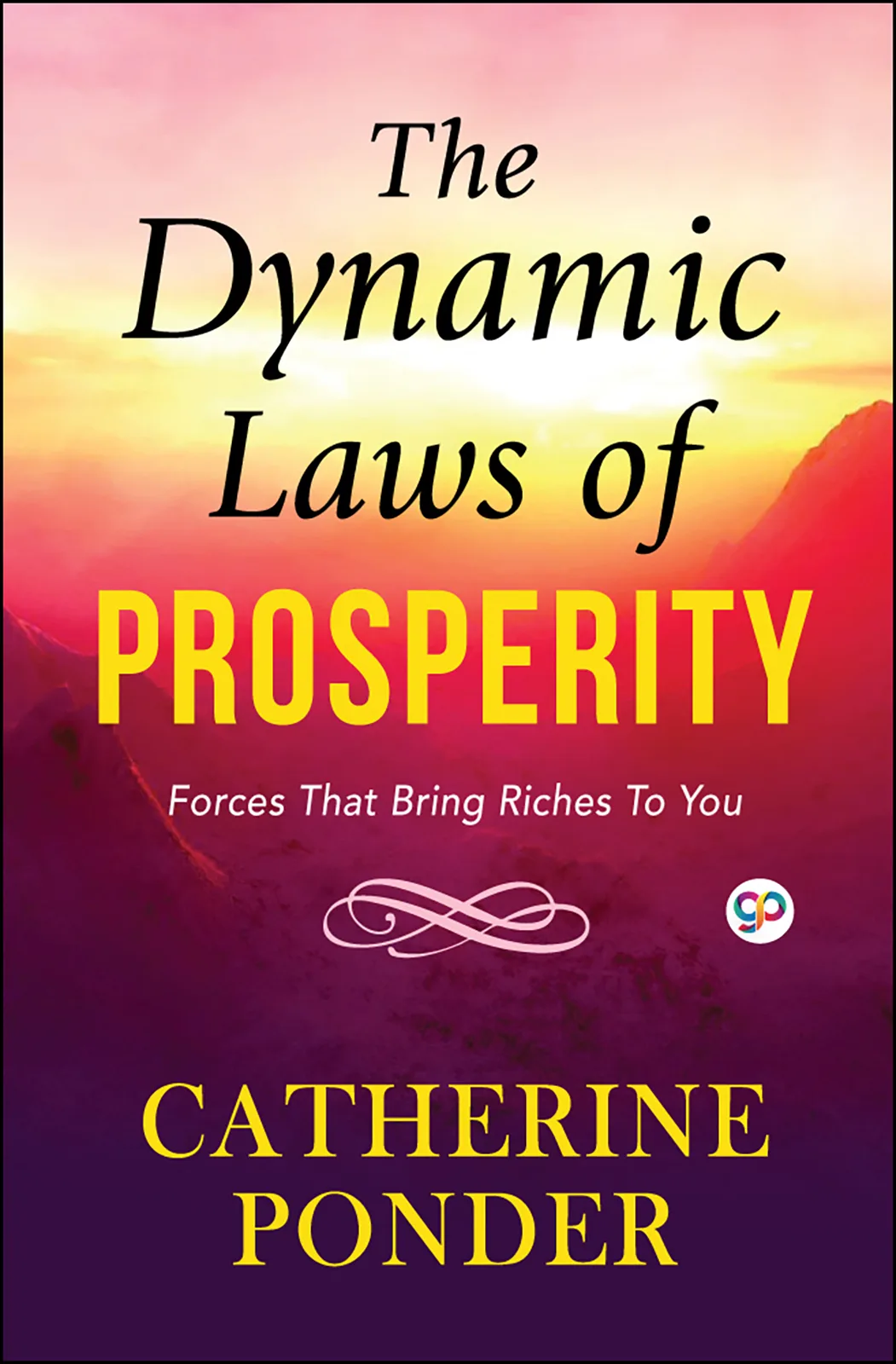
Download Cover Image
Do you want to download the full cover image for The Dynamic Laws of Prosperity?