
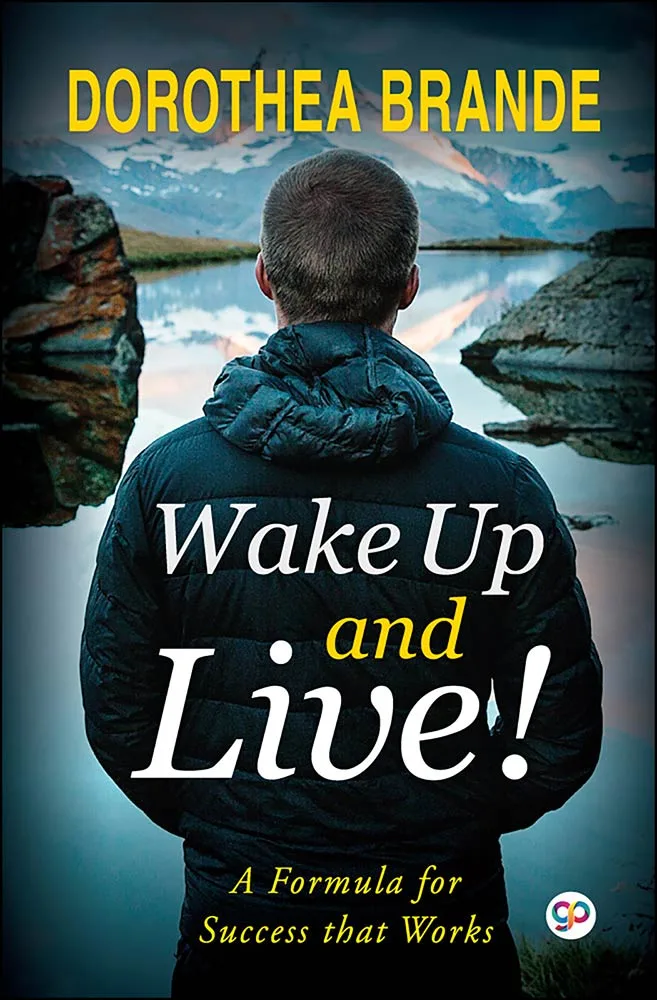
Wake Up and Live!
Hardcover
• 160 Pages
• INR 345.00
• English
• 9789388118255
No ratings yet
| Publisher | General Press |
|---|---|
| ISBN13 | 9789388118255 |
| ASIN/SKU | 9388118251 |
| Book Format | Hardcover |
| Language | English |
| Pages | 160 |
| List Price | INR 345.00 |
| Subject Code | FIC000000, PSY000000, SEL021000, SEL027000 |
| Publishing Date | 03/08/2018 |
| Dimensions | 8.25 x 5.25 x 1.0 inches |
| Book Code | BD00067937 |
Buy this Book
Amazon Stores
Ebook Stores
Other Stores
Discover Wake Up and Live! by Dorothea Brande. This book is published by General Press in Hardcover format, ISBN 9789388118255, ASIN 9388118251, under Self-Help, Motivational, Spirituality.
Book Description
One of the greatest self-help books ever written. More than two million copies sold. 'Wake Up and Live!' is a practical handbook for every man and woman who wants to find success and happiness in life. Simply written and easy to read, it shows you how to overcome the obstacles that are holding you down. It will prove to you that the USE, not the quantity, of your brains is what counts most toward successful living. 'Wake Up and Live!' has opened the eyes of thousands of readers to a whole new idea of living. Here is a book that can revolutionize your entire existence and put success within reach by teaching you to concentrate on the things that really matter.
CONTENTS:
I. Why Do We Fail?
II. The Will to Fail
III. Victims of the Will to Fail
IV. The Rewards of Failure
V. Righting the Direction
VI. The System in Operation
VII. Warnings and Qualifications
VIII. On Saving Breath
IX. The Task of the Imagination
X. On Codes and Standards
XI. Twelve Disciplines
XII. And the Best of Luck!
CONTENTS:
I. Why Do We Fail?
II. The Will to Fail
III. Victims of the Will to Fail
IV. The Rewards of Failure
V. Righting the Direction
VI. The System in Operation
VII. Warnings and Qualifications
VIII. On Saving Breath
IX. The Task of the Imagination
X. On Codes and Standards
XI. Twelve Disciplines
XII. And the Best of Luck!
Author Biography
American author, lecturer and magazine editor, Dorothea Brande, was the youngest of five children born to Frederick S. and Alice P. Thompson of Chicago, Illinois. Alice Dorothea Alden Thompson was born in Englewood, a Chicago community, on 12 January, 1892. Both of her parents were originally from Maine and had previously lived in Delaware where her three oldest siblings were born. Her father was employed as a manager at local business in the Chicago area. Brande attended the Universities of Michigan and Chicago, earning her Phi Beta Kappa key at the former. She went on to work as a newspaper reporter in Chicago and later as circulation manager for American Mercury magazine during the time of H.L. Mencken and George Jean Nathan. In the 1930s she became an associate editor of Bookman magazine and later its successor (1934), the American Review. In the years to come Brande would also operate a nationwide correspondence school for aspiring writers and tour on the lecture circuit. In 1916 she married fellow Chicago newspaper reporter Herbert Brande. Herbert would later gain some notoriety as an editorial writer. Their marriage ended in divorce sometime before 1930. In 1936 she married Seward B. Collins, who at the time was American Review's editor. Her inspirational book, 'Wake Up and Live' (1936) was written during the Great Depression and was a best seller and her most successful book. She was also the author of 'Becoming a Writer' (1934), 'Most Beautiful Lady' (1935), 'Letters to Philippa'(1937), 'My Invincible Aunt' (1938) and others.
Editorial Reviews
Editorial Reviews will be added soon…
Book Summary
Dorothea Brande’s Wake Up and Live! is a practical and encouraging book about overcoming hesitation, self-doubt, fear, and the habit of postponing life. First published in 1936, it is built around a simple but powerful idea: many people do not fail because they lack intelligence or ability, but because they continually hold themselves back. They think about what they want, make plans, worry about possible failure, and wait for the perfect moment to begin. Brande challenges this pattern and asks readers to become more decisive, energetic, and willing to act. Her message is not simply about achieving professional success; it is about learning to live with greater purpose and confidence.
Brande begins with the observation that human beings often possess far more ability than they actually use. A person may have ambitions, creative ideas, talents, and good intentions, yet remain stuck in familiar routines. The problem is often not a lack of opportunity but an internal resistance to action. Fear of failure, fear of criticism, fear of uncertainty, and even fear of success can quietly prevent people from using their abilities. Brande wants readers to recognize these hidden obstacles instead of blaming circumstances for everything that goes wrong.
One of the central ideas of the book is that success requires a change in attitude before it can produce a change in circumstances. Brande believes people frequently approach life defensively. They concentrate on avoiding mistakes rather than discovering what they can accomplish. They worry about what others will think, imagine everything that could go wrong, and make excuses for delaying action. Such habits gradually weaken confidence. The person begins to see hesitation as a natural part of his or her personality when, in fact, it is a learned pattern that can be changed.
Brande’s solution is remarkably direct: act as though success is possible. This does not mean pretending that difficulties do not exist. Rather, it means refusing to allow fear to make decisions on one’s behalf. She encourages readers to behave with the confidence they would naturally have if they knew their efforts would succeed. Such behavior can gradually create genuine confidence because action produces experience, and experience reduces fear.
One of the book’s most memorable exercises is the instruction to live for a period as though success were certain. Brande asks the reader to experiment with a different mental attitude rather than merely reading about one. The purpose is to interrupt the usual cycle of doubt. Instead of asking, “What if I fail?” the reader is encouraged to ask, in effect, “What would I do if I knew I could succeed?” The question shifts attention away from fear and toward possibility.
Brande also places great importance on decision-making. Many people waste enormous amounts of mental energy by repeatedly reconsidering choices. They make a decision, doubt it, change their minds, imagine alternatives, and then return to the original decision. This constant uncertainty creates fatigue and prevents effective action. Brande encourages decisive thinking: make a reasonable choice, commit to it, and move forward unless there is a genuine reason to change direction.
Another important theme is the relationship between thought and action. Brande does not dismiss thinking; she recognizes its importance. But she warns against excessive analysis that becomes an excuse for avoiding action. People can become so absorbed in preparing, researching, planning, and imagining that they never actually begin. The result is the illusion of progress without real movement. For Brande, a modest action taken today is often more valuable than a perfect plan postponed indefinitely.
The book also examines the influence of other people. Many individuals unconsciously shape their lives around the expectations of family, friends, colleagues, and society. They choose careers because others consider them respectable, suppress creative interests because those interests seem impractical, or avoid opportunities because they fear criticism. Brande argues that a person must learn to distinguish between genuine responsibility and unnecessary dependence on other people’s approval.
This does not mean becoming selfish or ignoring legitimate obligations. Instead, Brande advocates developing an inner standard of judgment. A person should know what he or she actually wants and should be willing to accept the discomfort that comes with pursuing it. Independence of mind is essential because no meaningful life can be built entirely around pleasing other people.
Creativity receives particular attention in the book. Brande believes that creative ability is not limited to professional artists or writers. Every person has some capacity to create, solve problems, organize ideas, or approach life differently. Yet creative energy is easily blocked by perfectionism. People may refuse to begin because they fear that their first attempt will not be good enough. Brande encourages the opposite approach: begin, produce something, and improve through practice. The first attempt does not have to be perfect because creativity develops through use.
Her advice is especially relevant to writers and other creative workers. She emphasizes regular practice and the importance of separating creative activity from self-criticism. If a person judges every idea immediately, the flow of ideas becomes restricted. One must sometimes allow imperfect thoughts and rough attempts to exist without instantly rejecting them. The creative mind needs freedom before it can produce its best work.
Brande also discusses the importance of living in the present. People often spend their emotional energy regretting the past or fearing the future. While reflection and planning are useful, excessive attention to either can prevent people from experiencing the life immediately in front of them. “Wake up” therefore has a deeper meaning than simply becoming more productive. It means becoming more conscious of one’s choices, habits, relationships, and possibilities.
The book’s approach is strongly practical. Brande does not merely offer abstract encouragement; she proposes exercises designed to make readers observe their own behavior. These exercises challenge habitual responses and encourage experimentation with new ways of acting. The reader is asked to test the principles personally rather than accepting them simply because they sound inspiring.
At the same time, the book’s philosophy can feel demanding. Acting confidently does not guarantee success, and not every failure results from fear or hesitation. External circumstances, economic conditions, social inequality, health, and sheer chance can strongly influence a person’s opportunities. Brande’s emphasis is therefore most useful when understood as a method for dealing with the part of life that lies within one’s control. Her message is strongest when she encourages people to stop unnecessarily limiting themselves, rather than suggesting that determination alone can solve every problem.
Ultimately, Wake Up and Live! is a call to stop living cautiously by default. Brande believes that many people wait for confidence before taking action, when the truth is often the reverse: confidence grows because we act. We learn by beginning, improve by practicing, and become courageous by repeatedly doing things that once frightened us.
The enduring appeal of the book lies in this simple movement from thought to action. It asks readers to notice how often they postpone decisions, seek approval, imagine failure, or demand perfection before beginning. Then it offers a practical alternative: choose, act, learn, and continue. Brande’s message is ultimately humane because she understands that hesitation is part of being human. She does not ask readers to become fearless; she asks them not to let fear run their lives. To “wake up and live” means to become fully present, use the abilities one possesses, take reasonable risks, and participate actively in one’s own life instead of merely waiting for life to happen. The book’s central lesson remains clear: the future becomes different not when we think about change endlessly, but when we finally begin to act.
Brande begins with the observation that human beings often possess far more ability than they actually use. A person may have ambitions, creative ideas, talents, and good intentions, yet remain stuck in familiar routines. The problem is often not a lack of opportunity but an internal resistance to action. Fear of failure, fear of criticism, fear of uncertainty, and even fear of success can quietly prevent people from using their abilities. Brande wants readers to recognize these hidden obstacles instead of blaming circumstances for everything that goes wrong.
One of the central ideas of the book is that success requires a change in attitude before it can produce a change in circumstances. Brande believes people frequently approach life defensively. They concentrate on avoiding mistakes rather than discovering what they can accomplish. They worry about what others will think, imagine everything that could go wrong, and make excuses for delaying action. Such habits gradually weaken confidence. The person begins to see hesitation as a natural part of his or her personality when, in fact, it is a learned pattern that can be changed.
Brande’s solution is remarkably direct: act as though success is possible. This does not mean pretending that difficulties do not exist. Rather, it means refusing to allow fear to make decisions on one’s behalf. She encourages readers to behave with the confidence they would naturally have if they knew their efforts would succeed. Such behavior can gradually create genuine confidence because action produces experience, and experience reduces fear.
One of the book’s most memorable exercises is the instruction to live for a period as though success were certain. Brande asks the reader to experiment with a different mental attitude rather than merely reading about one. The purpose is to interrupt the usual cycle of doubt. Instead of asking, “What if I fail?” the reader is encouraged to ask, in effect, “What would I do if I knew I could succeed?” The question shifts attention away from fear and toward possibility.
Brande also places great importance on decision-making. Many people waste enormous amounts of mental energy by repeatedly reconsidering choices. They make a decision, doubt it, change their minds, imagine alternatives, and then return to the original decision. This constant uncertainty creates fatigue and prevents effective action. Brande encourages decisive thinking: make a reasonable choice, commit to it, and move forward unless there is a genuine reason to change direction.
Another important theme is the relationship between thought and action. Brande does not dismiss thinking; she recognizes its importance. But she warns against excessive analysis that becomes an excuse for avoiding action. People can become so absorbed in preparing, researching, planning, and imagining that they never actually begin. The result is the illusion of progress without real movement. For Brande, a modest action taken today is often more valuable than a perfect plan postponed indefinitely.
The book also examines the influence of other people. Many individuals unconsciously shape their lives around the expectations of family, friends, colleagues, and society. They choose careers because others consider them respectable, suppress creative interests because those interests seem impractical, or avoid opportunities because they fear criticism. Brande argues that a person must learn to distinguish between genuine responsibility and unnecessary dependence on other people’s approval.
This does not mean becoming selfish or ignoring legitimate obligations. Instead, Brande advocates developing an inner standard of judgment. A person should know what he or she actually wants and should be willing to accept the discomfort that comes with pursuing it. Independence of mind is essential because no meaningful life can be built entirely around pleasing other people.
Creativity receives particular attention in the book. Brande believes that creative ability is not limited to professional artists or writers. Every person has some capacity to create, solve problems, organize ideas, or approach life differently. Yet creative energy is easily blocked by perfectionism. People may refuse to begin because they fear that their first attempt will not be good enough. Brande encourages the opposite approach: begin, produce something, and improve through practice. The first attempt does not have to be perfect because creativity develops through use.
Her advice is especially relevant to writers and other creative workers. She emphasizes regular practice and the importance of separating creative activity from self-criticism. If a person judges every idea immediately, the flow of ideas becomes restricted. One must sometimes allow imperfect thoughts and rough attempts to exist without instantly rejecting them. The creative mind needs freedom before it can produce its best work.
Brande also discusses the importance of living in the present. People often spend their emotional energy regretting the past or fearing the future. While reflection and planning are useful, excessive attention to either can prevent people from experiencing the life immediately in front of them. “Wake up” therefore has a deeper meaning than simply becoming more productive. It means becoming more conscious of one’s choices, habits, relationships, and possibilities.
The book’s approach is strongly practical. Brande does not merely offer abstract encouragement; she proposes exercises designed to make readers observe their own behavior. These exercises challenge habitual responses and encourage experimentation with new ways of acting. The reader is asked to test the principles personally rather than accepting them simply because they sound inspiring.
At the same time, the book’s philosophy can feel demanding. Acting confidently does not guarantee success, and not every failure results from fear or hesitation. External circumstances, economic conditions, social inequality, health, and sheer chance can strongly influence a person’s opportunities. Brande’s emphasis is therefore most useful when understood as a method for dealing with the part of life that lies within one’s control. Her message is strongest when she encourages people to stop unnecessarily limiting themselves, rather than suggesting that determination alone can solve every problem.
Ultimately, Wake Up and Live! is a call to stop living cautiously by default. Brande believes that many people wait for confidence before taking action, when the truth is often the reverse: confidence grows because we act. We learn by beginning, improve by practicing, and become courageous by repeatedly doing things that once frightened us.
The enduring appeal of the book lies in this simple movement from thought to action. It asks readers to notice how often they postpone decisions, seek approval, imagine failure, or demand perfection before beginning. Then it offers a practical alternative: choose, act, learn, and continue. Brande’s message is ultimately humane because she understands that hesitation is part of being human. She does not ask readers to become fearless; she asks them not to let fear run their lives. To “wake up and live” means to become fully present, use the abilities one possesses, take reasonable risks, and participate actively in one’s own life instead of merely waiting for life to happen. The book’s central lesson remains clear: the future becomes different not when we think about change endlessly, but when we finally begin to act.
Sample Chapters
Sample Chapters will be added soon…
Reader Reviews
No reviews yet.
Wake Up and Live!
Download Cover Image
Do you want to download the full cover image for Wake Up and Live!?