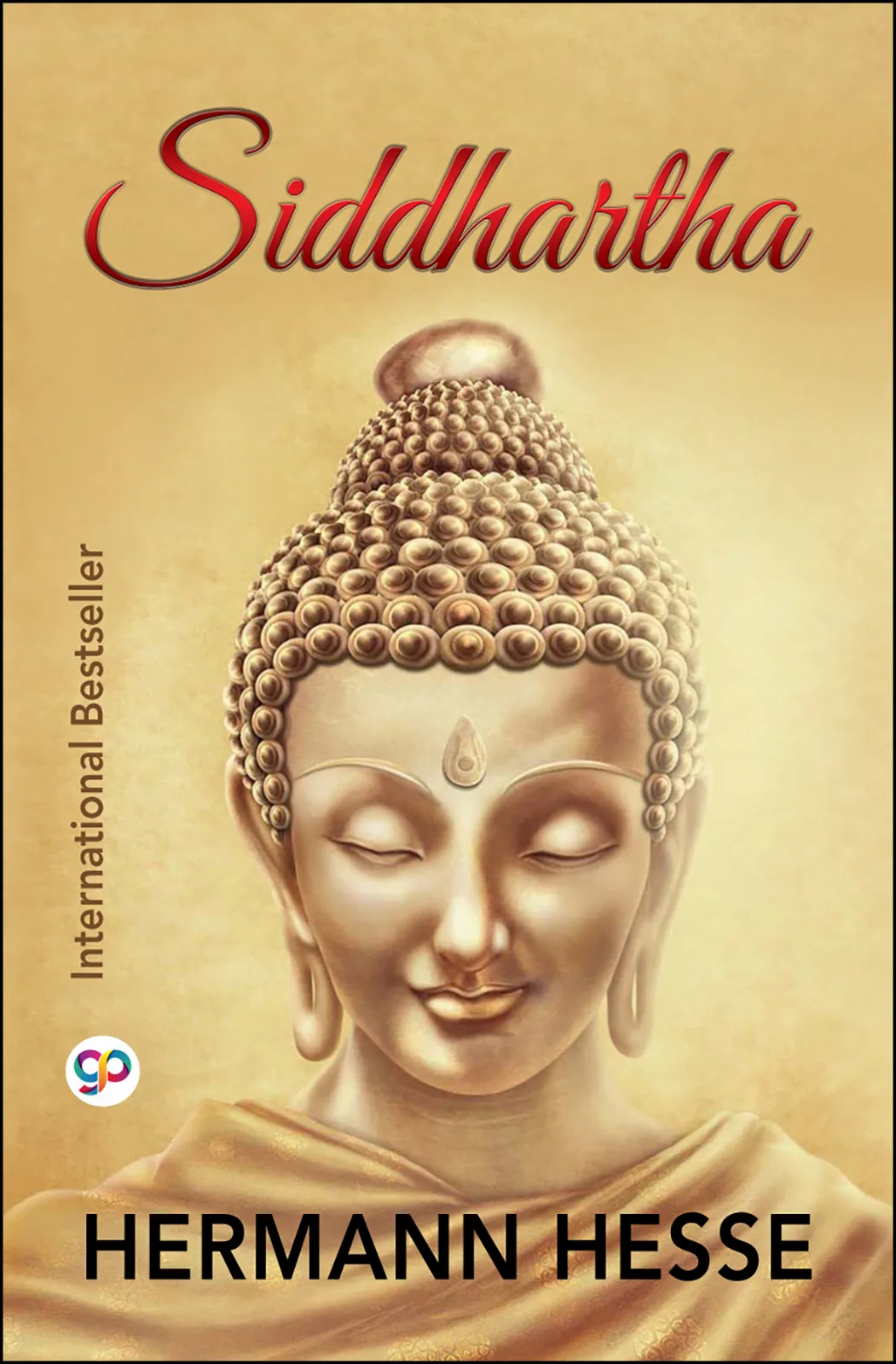
Siddhartha
Paperback
• 170 Pages
• INR 295.00
• English
• 9789380914145
No ratings yet
| Publisher | General Press |
|---|---|
| ISBN13 | 9789380914145 |
| ASIN/SKU | 9380914148 |
| Book Format | Paperback |
| Language | English |
| Pages | 170 |
| List Price | INR 295.00 |
| Subject Code | FIC004000, FIC039000, FIC019000, Node 10399 |
| Publishing Date | 01/09/2011 |
| Dimensions | 8.25 x 5.25 x 1.0 inches |
| Book Code | BD00067948 |
Buy this Book
Amazon Stores
Ebook Stores
Other Stores
Discover Siddhartha by Hermann Hesse. This book is published by General Press in Paperback format, ISBN 9789380914145, ASIN 9380914148, under Literature and Fiction, Classic Literature and Fiction, Literary Fiction.
Book Description
'Siddhartha' by Hermann Hesse is a profound philosophical novel that follows the spiritual journey of a young man named Siddhartha in ancient India during the time of the Buddha. Although inspired by Buddhist ideas, the story is not a retelling of the Buddha’s life. Instead, it explores the universal search for truth, self-discovery, and inner peace through the experiences of one individual who refuses to accept wisdom secondhand.
Dissatisfied with the comfortable life he has known, Siddhartha leaves his family to seek enlightenment. Along the way, he lives as an ascetic, studies with wise teachers, embraces wealth and worldly pleasures, experiences love, suffers loss, and eventually learns the value of simplicity. Each phase of his life teaches him something essential, yet he gradually realizes that true wisdom cannot be borrowed from books, teachers, or religious doctrines. It must be discovered through personal experience and deep reflection.
One of the novel’s most powerful symbols is the river, which becomes Siddhartha’s greatest teacher. By observing its constant flow and quiet strength, he comes to understand the unity of all life, the passage of time, and the importance of living fully in the present moment. Through patience, compassion, and acceptance, he finally attains the inner harmony he has long sought.
Written in graceful, poetic prose, 'Siddhartha' remains a timeless meditation on the human spirit. Hermann Hesse masterfully explores themes of identity, enlightenment, love, and self-realization, making the novel an enduring source of inspiration for readers seeking meaning, balance, and a deeper understanding of life.
Dissatisfied with the comfortable life he has known, Siddhartha leaves his family to seek enlightenment. Along the way, he lives as an ascetic, studies with wise teachers, embraces wealth and worldly pleasures, experiences love, suffers loss, and eventually learns the value of simplicity. Each phase of his life teaches him something essential, yet he gradually realizes that true wisdom cannot be borrowed from books, teachers, or religious doctrines. It must be discovered through personal experience and deep reflection.
One of the novel’s most powerful symbols is the river, which becomes Siddhartha’s greatest teacher. By observing its constant flow and quiet strength, he comes to understand the unity of all life, the passage of time, and the importance of living fully in the present moment. Through patience, compassion, and acceptance, he finally attains the inner harmony he has long sought.
Written in graceful, poetic prose, 'Siddhartha' remains a timeless meditation on the human spirit. Hermann Hesse masterfully explores themes of identity, enlightenment, love, and self-realization, making the novel an enduring source of inspiration for readers seeking meaning, balance, and a deeper understanding of life.
Author Biography
Born in Calw, Germany, in 1877, Hermann Hesse grew up in a strict family of Pietist missionaries. Expected to follow in his parents' footsteps and enter the ministry, the young Hesse actively rebelled against his rigid religious schooling. He eventually abandoned his seminary studies, worked as an apprentice in various bookshops, and dedicated himself to poetry and writing, finding his first taste of literary success with the publication of his novel Peter Camenzind in 1904.
Despite this early achievement, the outbreak of World War I, combined with marital struggles and the death of his father, plunged Hesse into a severe emotional crisis. Seeking relief, he underwent psychoanalysis with a disciple of Carl Jung. This profound encounter with psychoanalytic theory fundamentally shifted his artistic focus inward, transforming his literature into an intense exploration of the subconscious mind, human duality, and the individual's restless search for authentic identity.
This introspective journey fueled the creation of his most enduring masterpieces. In 1919, he published Demian, a striking exploration of self-realization that deeply resonated with a disillusioned post-war generation. He followed this with Siddhartha in 1922, a novel born from his lifelong fascination with Eastern philosophy and the quest for spiritual enlightenment. A few years later, Steppenwolf (1927) cemented his international reputation by brilliantly capturing the existential angst and fractured psyche of the modern individual.
Hesse’s literary career culminated with his magnum opus, The Glass Bead Game, published in 1943. In 1946, he was awarded the Nobel Prize in Literature for his deeply inspired writings, which consistently championed classical humanitarian ideals. Hesse spent the latter half of his life as a Swiss citizen in the quiet village of Montagnola, dedicating his time to writing, gardening, and painting watercolors until his death in 1962.
Despite this early achievement, the outbreak of World War I, combined with marital struggles and the death of his father, plunged Hesse into a severe emotional crisis. Seeking relief, he underwent psychoanalysis with a disciple of Carl Jung. This profound encounter with psychoanalytic theory fundamentally shifted his artistic focus inward, transforming his literature into an intense exploration of the subconscious mind, human duality, and the individual's restless search for authentic identity.
This introspective journey fueled the creation of his most enduring masterpieces. In 1919, he published Demian, a striking exploration of self-realization that deeply resonated with a disillusioned post-war generation. He followed this with Siddhartha in 1922, a novel born from his lifelong fascination with Eastern philosophy and the quest for spiritual enlightenment. A few years later, Steppenwolf (1927) cemented his international reputation by brilliantly capturing the existential angst and fractured psyche of the modern individual.
Hesse’s literary career culminated with his magnum opus, The Glass Bead Game, published in 1943. In 1946, he was awarded the Nobel Prize in Literature for his deeply inspired writings, which consistently championed classical humanitarian ideals. Hesse spent the latter half of his life as a Swiss citizen in the quiet village of Montagnola, dedicating his time to writing, gardening, and painting watercolors until his death in 1962.
Editorial Reviews
Editorial Reviews will be added soon…
Book Summary
"Siddhartha" by Hermann Hesse is a philosophical novel that follows the spiritual journey of a young man in ancient India as he searches for wisdom, inner peace, and true enlightenment. Although the story unfolds during the lifetime of the Buddha, it is not a retelling of Buddhist teachings but an exploration of one individual's personal quest for meaning. Siddhartha, the son of a respected Brahmin, is admired for his intelligence, discipline, and promise, yet he feels dissatisfied with the knowledge and religious traditions that surround him. Despite mastering sacred rituals and earning the respect of his family, he senses that borrowed wisdom cannot provide the deep understanding he longs for. Believing that truth must be discovered through direct experience rather than inherited beliefs, he leaves home with his loyal friend Govinda to begin a life of spiritual exploration.
The two companions first join a group of wandering ascetics known as the Samanas, who practise severe self-denial in the hope of overcoming worldly desires. Siddhartha embraces their disciplined lifestyle, enduring hunger, hardship, and meditation with remarkable determination. He learns to control his body and quiet his mind, yet after years of strict practice, he realises that these methods have not brought him the lasting peace he seeks. Although he gains valuable discipline, he concludes that escaping the self is only temporary and does not reveal ultimate truth. This growing dissatisfaction convinces him that even the most respected teachers cannot provide enlightenment if it is not discovered through one's own experience.
During their travels, Siddhartha and Govinda hear about Gautama, the Buddha, whose wisdom has attracted countless followers. Curious to meet the enlightened teacher, they seek him out and listen carefully to his teachings. Govinda is deeply moved and chooses to become one of the Buddha's disciples, convinced that he has found the path to liberation. Siddhartha, however, respectfully declines the opportunity to follow him. He greatly admires the Buddha's serenity and recognises the perfection of his teachings, but he believes that enlightenment cannot simply be transferred from one person to another. In his view, every individual must discover truth independently by living through life's experiences rather than relying solely on the wisdom of others. With gratitude and respect, he parts from both the Buddha and Govinda, continuing his journey alone.
Having rejected the life of strict asceticism, Siddhartha enters the ordinary world that he had previously avoided. He becomes fascinated by beauty, wealth, and human relationships, experiences he once considered distractions from spiritual growth. He meets Kamala, an intelligent and graceful courtesan, who agrees to teach him about love and the pleasures of life on the condition that he first become successful in the world of business. Siddhartha accepts the challenge and begins working with the wealthy merchant Kamaswami. Over time, he learns trade, acquires riches, dresses elegantly, and enjoys the comforts of material success. Yet as the years pass, he gradually becomes absorbed in luxury, gambling, ambition, and desire. Although outwardly prosperous, he begins to recognise that his inner peace has quietly disappeared.
Eventually, Siddhartha realises that his pursuit of wealth and pleasure has left him spiritually empty. He feels trapped by habits that once seemed exciting but now appear meaningless. Overcome by disappointment and exhaustion, he abandons his possessions and leaves the city without looking back. Wandering aimlessly, he reaches the edge of a river where despair almost overwhelms him. In this moment of profound crisis, he experiences a deep awakening that saves him from surrendering to hopelessness. Falling into a peaceful sleep, he awakens with a renewed sense of clarity, feeling as though his life has begun again. The river becomes a powerful symbol of renewal, continuity, and the ever-changing flow of existence that will shape the rest of his journey.
Near the river, Siddhartha meets Vasudeva, a humble ferryman whose quiet wisdom leaves a lasting impression. Unlike the many teachers Siddhartha has encountered before, Vasudeva offers few instructions and instead encourages careful observation and patient listening. Together they ferry travellers across the river, living a simple life close to nature. As Siddhartha spends years beside the flowing water, he begins to understand that the river reflects the unity of all life. It teaches him that time is not divided into past, present, and future but exists as a single, continuous whole. By listening attentively to the many voices carried by the river, he gradually discovers that joy and sorrow, gain and loss, youth and old age are all interconnected parts of the same existence.
Siddhartha's final personal challenge arrives unexpectedly when he is reunited with Kamala under tragic circumstances. She is travelling with their young son, whom Siddhartha has never known. After her death, the boy remains with his father, but he struggles to accept the quiet life beside the river and resents Siddhartha's attempts to care for him. Eventually, the boy chooses to leave, causing Siddhartha deep emotional pain. For the first time, he fully experiences the suffering that accompanies parental love and attachment. This loss teaches him compassion in a way that intellectual understanding never could. Through his own grief, he comes to recognise the universal nature of human suffering and the importance of allowing others the freedom to follow their own paths.
Years later, Govinda visits the ferryman, still searching for complete enlightenment despite a lifetime devoted to religious practice. When he meets Siddhartha again, he is surprised by the profound peace that now radiates from his old friend. Siddhartha explains that wisdom cannot be captured fully in words or rigid doctrines because life's deepest truths are discovered through direct experience, love, acceptance, and patient observation. He describes how every stage of his journey, including his mistakes, desires, successes, and failures, contributed to the understanding he now possesses. Nothing was wasted because every experience formed part of a greater whole. Through his words and his peaceful presence, Siddhartha reveals that true enlightenment comes not from rejecting life but from embracing it in all its complexity.
"Siddhartha" is ultimately a timeless meditation on self-discovery, spirituality, and the search for meaning. Hermann Hesse presents a deeply personal journey that suggests wisdom cannot simply be taught but must be lived and experienced. Through Siddhartha's encounters with religion, asceticism, wealth, love, loss, nature, and human relationships, the novel explores universal themes of identity, compassion, acceptance, and inner peace. The river, which quietly accompanies the second half of the story, becomes a lasting symbol of life's unity and the interconnectedness of all existence. Rich in philosophical insight yet told with clarity and simplicity, Siddhartha continues to inspire readers across cultures and generations, reminding them that the path to understanding is unique for every individual and that genuine peace is found by embracing life with patience, humility, and an open heart.
The two companions first join a group of wandering ascetics known as the Samanas, who practise severe self-denial in the hope of overcoming worldly desires. Siddhartha embraces their disciplined lifestyle, enduring hunger, hardship, and meditation with remarkable determination. He learns to control his body and quiet his mind, yet after years of strict practice, he realises that these methods have not brought him the lasting peace he seeks. Although he gains valuable discipline, he concludes that escaping the self is only temporary and does not reveal ultimate truth. This growing dissatisfaction convinces him that even the most respected teachers cannot provide enlightenment if it is not discovered through one's own experience.
During their travels, Siddhartha and Govinda hear about Gautama, the Buddha, whose wisdom has attracted countless followers. Curious to meet the enlightened teacher, they seek him out and listen carefully to his teachings. Govinda is deeply moved and chooses to become one of the Buddha's disciples, convinced that he has found the path to liberation. Siddhartha, however, respectfully declines the opportunity to follow him. He greatly admires the Buddha's serenity and recognises the perfection of his teachings, but he believes that enlightenment cannot simply be transferred from one person to another. In his view, every individual must discover truth independently by living through life's experiences rather than relying solely on the wisdom of others. With gratitude and respect, he parts from both the Buddha and Govinda, continuing his journey alone.
Having rejected the life of strict asceticism, Siddhartha enters the ordinary world that he had previously avoided. He becomes fascinated by beauty, wealth, and human relationships, experiences he once considered distractions from spiritual growth. He meets Kamala, an intelligent and graceful courtesan, who agrees to teach him about love and the pleasures of life on the condition that he first become successful in the world of business. Siddhartha accepts the challenge and begins working with the wealthy merchant Kamaswami. Over time, he learns trade, acquires riches, dresses elegantly, and enjoys the comforts of material success. Yet as the years pass, he gradually becomes absorbed in luxury, gambling, ambition, and desire. Although outwardly prosperous, he begins to recognise that his inner peace has quietly disappeared.
Eventually, Siddhartha realises that his pursuit of wealth and pleasure has left him spiritually empty. He feels trapped by habits that once seemed exciting but now appear meaningless. Overcome by disappointment and exhaustion, he abandons his possessions and leaves the city without looking back. Wandering aimlessly, he reaches the edge of a river where despair almost overwhelms him. In this moment of profound crisis, he experiences a deep awakening that saves him from surrendering to hopelessness. Falling into a peaceful sleep, he awakens with a renewed sense of clarity, feeling as though his life has begun again. The river becomes a powerful symbol of renewal, continuity, and the ever-changing flow of existence that will shape the rest of his journey.
Near the river, Siddhartha meets Vasudeva, a humble ferryman whose quiet wisdom leaves a lasting impression. Unlike the many teachers Siddhartha has encountered before, Vasudeva offers few instructions and instead encourages careful observation and patient listening. Together they ferry travellers across the river, living a simple life close to nature. As Siddhartha spends years beside the flowing water, he begins to understand that the river reflects the unity of all life. It teaches him that time is not divided into past, present, and future but exists as a single, continuous whole. By listening attentively to the many voices carried by the river, he gradually discovers that joy and sorrow, gain and loss, youth and old age are all interconnected parts of the same existence.
Siddhartha's final personal challenge arrives unexpectedly when he is reunited with Kamala under tragic circumstances. She is travelling with their young son, whom Siddhartha has never known. After her death, the boy remains with his father, but he struggles to accept the quiet life beside the river and resents Siddhartha's attempts to care for him. Eventually, the boy chooses to leave, causing Siddhartha deep emotional pain. For the first time, he fully experiences the suffering that accompanies parental love and attachment. This loss teaches him compassion in a way that intellectual understanding never could. Through his own grief, he comes to recognise the universal nature of human suffering and the importance of allowing others the freedom to follow their own paths.
Years later, Govinda visits the ferryman, still searching for complete enlightenment despite a lifetime devoted to religious practice. When he meets Siddhartha again, he is surprised by the profound peace that now radiates from his old friend. Siddhartha explains that wisdom cannot be captured fully in words or rigid doctrines because life's deepest truths are discovered through direct experience, love, acceptance, and patient observation. He describes how every stage of his journey, including his mistakes, desires, successes, and failures, contributed to the understanding he now possesses. Nothing was wasted because every experience formed part of a greater whole. Through his words and his peaceful presence, Siddhartha reveals that true enlightenment comes not from rejecting life but from embracing it in all its complexity.
"Siddhartha" is ultimately a timeless meditation on self-discovery, spirituality, and the search for meaning. Hermann Hesse presents a deeply personal journey that suggests wisdom cannot simply be taught but must be lived and experienced. Through Siddhartha's encounters with religion, asceticism, wealth, love, loss, nature, and human relationships, the novel explores universal themes of identity, compassion, acceptance, and inner peace. The river, which quietly accompanies the second half of the story, becomes a lasting symbol of life's unity and the interconnectedness of all existence. Rich in philosophical insight yet told with clarity and simplicity, Siddhartha continues to inspire readers across cultures and generations, reminding them that the path to understanding is unique for every individual and that genuine peace is found by embracing life with patience, humility, and an open heart.
Sample Chapters
The Son of the Brahmin
Siddhartha, the handsome son of the Brahmin, the young falcon, grew up together with his friend Govinda, the Brahmin’s son, in the shadow of the house, in the sun of the riverbank near the boats, in the shadow of the sala forest, and in the shadow of the fig trees. The sun tanned his fair shoulders on the riverbank while he bathed, during the holy cleansing, at the holy sacrifices. Shadows flowed into his black eyes in the mango grove, during the boyish games, when his mother sang, at the holy sacrifices, during the teaching of his father the scholar, and when speaking with the wise ones. For a long time Siddhartha had taken part in the wise ones’ discussions; he had practiced word-wrestling with Govinda, had practiced the art of contemplation and the duty of meditation with Govinda. He already understood how to speak the “Om” silently, that word of words, how to speak it silently in his inner being as he inhaled, how to pronounce it silently out of himself as he exhaled, how to do so with his whole soul while his forehead was enveloped by the radiance of the clear-thinking mind. He already understood how to recognize Atman within this inner essence of his that was indestructible and one with the universe.
Joy sprang up in his father’s heart over the son who was so apt to learn and so thirsty after knowledge; he saw growing within him a great sage and priest, a prince among the Brahmins.
Delight welled up in his mother’s heart when she saw him taking long strides, saw him sitting down and standing up: Siddhartha the strong and handsome, who strode upon lean legs and who greeted her with impeccable manners.
All the young daughters of the Brahmins felt love stirring within their hearts when Siddhartha walked through the side-streets of the city with a beaming face, a lean physique, and a royal look in his eyes.
Govinda the Brahmin’s son, however, loved him more than all of these. He loved the eye of Siddhartha and his sweet voice, his gait and the perfection of his movements; he loved everything that Siddhartha did and said, and above all he loved Siddhartha’s mind, his sublime and fiery thoughts, his blazing will, and Siddhartha’s high calling. Govinda knew that this would be no ordinary Brahmin, no lazy official presiding over the sacrifices, no money-grubbing merchant hawking magic trinkets, no vain and vacuous speaker, no wicked and lying priest, and also not a good-hearted but dim-witted sheep in the plebeian herds. Govinda didn’t want to be such a person either, didn’t want to be a Brahmin like all the ten thousand other Brahmins. He wanted to follow Siddhartha, who was beloved and majestic. When Siddhartha first became a god, when he entered into the radiance, then Govinda wanted to follow him as his friend, his escort, his servant, his spear-carrier, and his shadow.
In this manner, everyone loved Siddhartha. He brought everyone joy; he pleased everyone.
However, Siddhartha didn’t bring himself joy; he didn’t please himself. He strolled on the rosy paths of the fig gardens, sat in the blue shadows of the grove of meditation, washed his limbs daily in baths of atonement, and sacrificed in the deep shadows of the mango forest. Everyone loved him; he was joyous to them, and yet he carried no joy in his own heart. Dreams and restless thoughts came flowing to him out of the river’s water, twinkled to him from the stars of the night, melted out of the sunbeams. Dreams and anxiety came billowing out of the sacrificial smoke, whispering from the verses of the Rig-Veda or trickling out of the old Brahmin’s teachings.
Siddhartha had started to cultivate the seed of discontent within himself. He had started to feel like his father’s love, his mother’s love, and the love of his friend Govinda wouldn’t make him happy forever, wouldn’t bring him peace, satisfy him, and be sufficient for all time. He had started to suspect that his illustrious father, his other teachers, and the wise Brahmins had shared the majority and the best of their wisdom with him, that they had already poured their all into his ready vessel without filling the vessel: the mind wasn’t satisfied, the soul wasn’t quiet, the heart wasn’t stilled. The purifications were nice, but they were just water, and didn’t wash away sins; they didn’t cure the mental thirst or allay his heart’s anxiety. Sacrifices and invocations to the gods were superb—but were they sufficient? Did the sacrifices bring happiness? And what about all those gods? Was Prajapati really the one who had created the world? Wasn’t it Atman, he who was the Only One, the All-One? Weren’t the gods creatures, created just like you and I were: subject to time and transitory? Was it even good, was it right, did it make sense or was it important to sacrifice, to the gods? To whom else would one sacrifice to whom else should one bring worship other than Him, the Only, the Atman? And where could Atman be found, where did he live, where did his eternal heart beat—where else other than in the self, in one’s inner being, in the indestructible part of each person that they carried within themselves? But where was this self, where was this inner being, this most paramount thing? It was not made of flesh or the legs that carried it, it wasn’t just the thoughts or the awareness—or so taught the wisest men. Where then was it? One had to penetrate that far into the self, into myself, into the Atman—was there some other way, however, a search which still yielded worthwhile results? Ah, but nobody pointed to this way, nobody knew it: not father, not the teachers and wise ones, not the holy chants sung during sacrifices! They knew everything, those Brahmins and their holy books. They knew everything, they had concerned themselves with everything and with more than everything: the creation of the world, the origins of language, of foods, of inhalation and exhalation, the institution of the senses, the deeds of the gods—they knew an inordinate amount, and yet was it worthwhile to know everything like this when one didn’t know the one and only thing that was most important—that which alone was important?
To be sure, many verses from the holy books—especially the Upanishads of the Sama-Veda—spoke about these innermost and most important things—majestic verses. “Your soul is the whole world” was written there; it was also written that the person who slept in the deepest slumber went within to their innermost place and lived in Atman. Wonderful wisdom stood within these verses, all the wisdom of the wisest was gathered there in the magical words, pure like the honey gathered by the bees. No, the behemoth of knowledge that innumerable generations of wise Brahmins had gathered and protected there wasn’t to be lightly esteemed. But where were the Brahmins, where were the priests, the wise ones and the penitents—those who were successful not only in knowing this deepest wisdom but also in living it? Where were the elders who could merge this Atman of their dreams with the waking being, to bring it fully into their lives and into their words and deeds? Siddhartha knew many venerable Brahmins—not the least of whom was his father, who was pure, scholarly, and highly esteemed. His father was admirable: his habits were quiet and elegant, his life pure, his words wise, and the thoughts that inhabited his brow were both fine and noble—but did he who possessed so much wisdom live a blessed life? Did he have joy; wasn’t he also a mere seeker, one who had thirst? Did not he, who had thirst, have to receive a holy quenching of this thirst by drinking time and time again at the sacrifices, at the books, at the conversations of the Brahmins? Why did he, who was irreproachable, have to wash out his sins every day, have to expend great effort once more to attain purification each and every day? Wasn’t Atman him; didn’t the ancient spring flow in his heart? The ancient spring must be found in one’s own self; one must own it! Everything else was just a search, a detour; it was to go astray.
Thus went Siddhartha’s thoughts; this was his thirst, his sorrow.
He often spoke to himself out of the Chandogya-Upanishad: “Verily, the name of the Brahman is Satyam—in truth, one who knows this enters daily into the heavenly world.” This heavenly world often appeared close, but he had never totally reached it; never had he quenched the ultimate thirst. Furthermore, among all the wise ones whom he knew whose teaching he had savored—even the wisest—among them all there were none who had totally reached the heavenly world, who had completely quenched the eternal thirst.
“Govinda,” said Siddhartha to his friend, “Govinda, beloved, come with me among the Banyan trees, and we will practice meditating.”
They went to the Banyan trees and sat down: here Siddhartha, and Govinda twenty paces farther. When Siddhartha sat down, ready to speak the Om, he murmured and repeated the verse:
“Om is the bow; the arrow is the soul,
The Brahman is the arrow’s goal
That one should continuously hit.”
When the usual time for practising meditation had passed, Govinda rose up. The twilight had come and it was time to perform the cleansing of the evening hour. He called Siddhartha’s name. Siddhartha gave no answer. Siddhartha sat with his eyes open, immersed, staring with his eyes fixed upon a very far goal; the tip of his tongue stuck out a little between his teeth and he didn’t appear to be breathing. Thus he sat, shrouded in meditation, thinking Om, his soul sent out like an arrow after the Brahman.
Once, the Samanas pulled through Siddhartha’s town. They were pilgrims and ascetics: three scraggly, worn-out men who were neither old nor young, with dusty and bloody shoulders. They were nearly naked, singed by the sun, given over to loneliness, strangers and enemies of the world, and estranged, gaunt jackals in the domain of mankind. From behind them wafted a hot scent of quiet passion, of a duty that destroys, of a merciless self-effacing.
In the evening, after the hour of contemplation, Siddhartha said to Govinda: “Early tomorrow, my friend, Siddhartha will go to the Samanas. He will become a Samana.”
Govinda paled when he heard these words and saw the resolution in the stony face of his friend, a resolution that, like the swiftest arrow let loose from the bow, could never be deflected. As soon as Govinda glimpsed this, he recognized: now it begins; now Siddhartha goes his own way; now his fate begins to sprout, and with his, mine. Govinda paled like the peel of a dry banana.
“O Siddhartha,” he called, “will your father allow you to do that?”
Siddhartha glanced at his friend like one just waking up. As quickly as the arrow flies, he read Govinda’s soul; he read the anxiety and the devotion there.
“O Govinda,” he said quietly, “don’t waste any words on this. Tomorrow at daybreak I will begin a Samana’s life. Don’t discuss this any more.”
Siddhartha stepped in the chamber where his father sat on a raffia mat, and walked behind his father, standing there until his father sensed that someone was standing behind him. The Brahmin spoke: “Is that you, Siddhartha? Well, say what you have come here to say.”
Siddhartha spoke: “With your permission, my father, I have come to say to you that I am desirous of leaving your house tomorrow and going to the ascetics. My wish is to become a Samana. May my father not be opposed to this.”
The Brahmin was silent, and silent so long that in the little window the stars wandered and changed their configuration before the silence in the chamber found an end. Silent and still, the son stood with crossed arms; silent and still, the father sat on the mat, and the stars moved in the heavens. Then the father spoke: “It is not fitting for the Brahmins to speak with severe and scornful words. Yet, I see displeasure moving your heart. I would not like to hear this request come out of your mouth a second time.”
Slowly the Brahmin raised himself. Siddhartha, mute and with crossed arms, stood there.
“What are you waiting for?” asked the father.
Spoke Siddhartha: “You know what for.”
Displeased, the father went out of the chamber; displeased, he sought his bed and lay down.
After an hour during which no sleep came to his eyes, the Brahmin stood up, paced to and fro, and stepped out of the house. Through the little window of the chamber he looked in, and saw that Siddhartha stood there with crossed arms, unmoved. His lightweight outer garment shimmered with a pale light. Restless at heart, the father returned to his bed.
After an hour during which no sleep came to his eyes, the Brahmin stood up again, paced to and fro, stepped in front of the house, and saw the moon, which had risen. Through the window of the chamber he glanced inside: there stood Siddhartha, unmoved, with crossed arms and the moonlight mirrored on his bare shins. The father, concerned in his heart, sought his bed.
And he came again after an hour, and came again after two hours; he glanced through the little window, saw Siddhartha standing in the moonlight, in the star shine, and in the darkness. And the father silently came again from hour to hour, glanced in the chamber, saw the immobile person standing there, then filled his heart with rage, filled his heart with disquietude, filled his heart with anxiety, and filled it with sorrow.
And in the last hour of the night, before the day began, he turned again, came into the chamber, and saw standing there the young boy that now appeared so large and strange to him.
“Siddhartha,” said he, “what are you waiting for?”
“You know what for.”
“Will you always stand like this and wait, until it becomes day, becomes noon, becomes evening?”
“I will stand and wait.”
“You will become tired, Siddhartha.”
“I will become tired.”
“You will fall asleep, Siddhartha.”
“I will not fall asleep.”
“You will die, Siddhartha.”
“I will die.”
“And you would rather die than listen to your father?”
“Siddhartha has always listened to his father.”
“So you want to give up your intentions?”
“Siddhartha will do what his father is going to tell him to do.”
The first sunshine of the day fell upon the chamber. The Brahmin saw that Siddhartha’s knees were gently trembling. In Siddhartha’s face, however, he saw no trembling: the eyes looked far away. Then the father realized that Siddhartha had already gone from him and his household, that he had already left him.
The father touched Siddhartha’s shoulder.
“You will,” he said, “go in the woods and be a Samana. If you have found blessedness in the woods, then come and teach me how to be blessed. If you find disappointment, then return once more and let us once again sacrifice to the gods together. Now go and kiss your mother; tell her where you are going. For me, however, it is time to go to the river and perform the first cleansing.”
He took his hand from his son’s shoulder and went outside. Siddhartha swayed to one side as if he wanted to go. He conquered his limbs, bowed down before his father and went to his mother in order to do as his father had said.
At dawn, he slowly and with stiff legs left the still-quiet city. At the last hut, he saw a shadow that was crouching down there rise up and join him, the new pilgrim—Govinda.
“You have come,” said Siddhartha as he smiled.
“I have come,” said Govinda.
Siddhartha, the handsome son of the Brahmin, the young falcon, grew up together with his friend Govinda, the Brahmin’s son, in the shadow of the house, in the sun of the riverbank near the boats, in the shadow of the sala forest, and in the shadow of the fig trees. The sun tanned his fair shoulders on the riverbank while he bathed, during the holy cleansing, at the holy sacrifices. Shadows flowed into his black eyes in the mango grove, during the boyish games, when his mother sang, at the holy sacrifices, during the teaching of his father the scholar, and when speaking with the wise ones. For a long time Siddhartha had taken part in the wise ones’ discussions; he had practiced word-wrestling with Govinda, had practiced the art of contemplation and the duty of meditation with Govinda. He already understood how to speak the “Om” silently, that word of words, how to speak it silently in his inner being as he inhaled, how to pronounce it silently out of himself as he exhaled, how to do so with his whole soul while his forehead was enveloped by the radiance of the clear-thinking mind. He already understood how to recognize Atman within this inner essence of his that was indestructible and one with the universe.
Joy sprang up in his father’s heart over the son who was so apt to learn and so thirsty after knowledge; he saw growing within him a great sage and priest, a prince among the Brahmins.
Delight welled up in his mother’s heart when she saw him taking long strides, saw him sitting down and standing up: Siddhartha the strong and handsome, who strode upon lean legs and who greeted her with impeccable manners.
All the young daughters of the Brahmins felt love stirring within their hearts when Siddhartha walked through the side-streets of the city with a beaming face, a lean physique, and a royal look in his eyes.
Govinda the Brahmin’s son, however, loved him more than all of these. He loved the eye of Siddhartha and his sweet voice, his gait and the perfection of his movements; he loved everything that Siddhartha did and said, and above all he loved Siddhartha’s mind, his sublime and fiery thoughts, his blazing will, and Siddhartha’s high calling. Govinda knew that this would be no ordinary Brahmin, no lazy official presiding over the sacrifices, no money-grubbing merchant hawking magic trinkets, no vain and vacuous speaker, no wicked and lying priest, and also not a good-hearted but dim-witted sheep in the plebeian herds. Govinda didn’t want to be such a person either, didn’t want to be a Brahmin like all the ten thousand other Brahmins. He wanted to follow Siddhartha, who was beloved and majestic. When Siddhartha first became a god, when he entered into the radiance, then Govinda wanted to follow him as his friend, his escort, his servant, his spear-carrier, and his shadow.
In this manner, everyone loved Siddhartha. He brought everyone joy; he pleased everyone.
However, Siddhartha didn’t bring himself joy; he didn’t please himself. He strolled on the rosy paths of the fig gardens, sat in the blue shadows of the grove of meditation, washed his limbs daily in baths of atonement, and sacrificed in the deep shadows of the mango forest. Everyone loved him; he was joyous to them, and yet he carried no joy in his own heart. Dreams and restless thoughts came flowing to him out of the river’s water, twinkled to him from the stars of the night, melted out of the sunbeams. Dreams and anxiety came billowing out of the sacrificial smoke, whispering from the verses of the Rig-Veda or trickling out of the old Brahmin’s teachings.
Siddhartha had started to cultivate the seed of discontent within himself. He had started to feel like his father’s love, his mother’s love, and the love of his friend Govinda wouldn’t make him happy forever, wouldn’t bring him peace, satisfy him, and be sufficient for all time. He had started to suspect that his illustrious father, his other teachers, and the wise Brahmins had shared the majority and the best of their wisdom with him, that they had already poured their all into his ready vessel without filling the vessel: the mind wasn’t satisfied, the soul wasn’t quiet, the heart wasn’t stilled. The purifications were nice, but they were just water, and didn’t wash away sins; they didn’t cure the mental thirst or allay his heart’s anxiety. Sacrifices and invocations to the gods were superb—but were they sufficient? Did the sacrifices bring happiness? And what about all those gods? Was Prajapati really the one who had created the world? Wasn’t it Atman, he who was the Only One, the All-One? Weren’t the gods creatures, created just like you and I were: subject to time and transitory? Was it even good, was it right, did it make sense or was it important to sacrifice, to the gods? To whom else would one sacrifice to whom else should one bring worship other than Him, the Only, the Atman? And where could Atman be found, where did he live, where did his eternal heart beat—where else other than in the self, in one’s inner being, in the indestructible part of each person that they carried within themselves? But where was this self, where was this inner being, this most paramount thing? It was not made of flesh or the legs that carried it, it wasn’t just the thoughts or the awareness—or so taught the wisest men. Where then was it? One had to penetrate that far into the self, into myself, into the Atman—was there some other way, however, a search which still yielded worthwhile results? Ah, but nobody pointed to this way, nobody knew it: not father, not the teachers and wise ones, not the holy chants sung during sacrifices! They knew everything, those Brahmins and their holy books. They knew everything, they had concerned themselves with everything and with more than everything: the creation of the world, the origins of language, of foods, of inhalation and exhalation, the institution of the senses, the deeds of the gods—they knew an inordinate amount, and yet was it worthwhile to know everything like this when one didn’t know the one and only thing that was most important—that which alone was important?
To be sure, many verses from the holy books—especially the Upanishads of the Sama-Veda—spoke about these innermost and most important things—majestic verses. “Your soul is the whole world” was written there; it was also written that the person who slept in the deepest slumber went within to their innermost place and lived in Atman. Wonderful wisdom stood within these verses, all the wisdom of the wisest was gathered there in the magical words, pure like the honey gathered by the bees. No, the behemoth of knowledge that innumerable generations of wise Brahmins had gathered and protected there wasn’t to be lightly esteemed. But where were the Brahmins, where were the priests, the wise ones and the penitents—those who were successful not only in knowing this deepest wisdom but also in living it? Where were the elders who could merge this Atman of their dreams with the waking being, to bring it fully into their lives and into their words and deeds? Siddhartha knew many venerable Brahmins—not the least of whom was his father, who was pure, scholarly, and highly esteemed. His father was admirable: his habits were quiet and elegant, his life pure, his words wise, and the thoughts that inhabited his brow were both fine and noble—but did he who possessed so much wisdom live a blessed life? Did he have joy; wasn’t he also a mere seeker, one who had thirst? Did not he, who had thirst, have to receive a holy quenching of this thirst by drinking time and time again at the sacrifices, at the books, at the conversations of the Brahmins? Why did he, who was irreproachable, have to wash out his sins every day, have to expend great effort once more to attain purification each and every day? Wasn’t Atman him; didn’t the ancient spring flow in his heart? The ancient spring must be found in one’s own self; one must own it! Everything else was just a search, a detour; it was to go astray.
Thus went Siddhartha’s thoughts; this was his thirst, his sorrow.
He often spoke to himself out of the Chandogya-Upanishad: “Verily, the name of the Brahman is Satyam—in truth, one who knows this enters daily into the heavenly world.” This heavenly world often appeared close, but he had never totally reached it; never had he quenched the ultimate thirst. Furthermore, among all the wise ones whom he knew whose teaching he had savored—even the wisest—among them all there were none who had totally reached the heavenly world, who had completely quenched the eternal thirst.
“Govinda,” said Siddhartha to his friend, “Govinda, beloved, come with me among the Banyan trees, and we will practice meditating.”
They went to the Banyan trees and sat down: here Siddhartha, and Govinda twenty paces farther. When Siddhartha sat down, ready to speak the Om, he murmured and repeated the verse:
“Om is the bow; the arrow is the soul,
The Brahman is the arrow’s goal
That one should continuously hit.”
When the usual time for practising meditation had passed, Govinda rose up. The twilight had come and it was time to perform the cleansing of the evening hour. He called Siddhartha’s name. Siddhartha gave no answer. Siddhartha sat with his eyes open, immersed, staring with his eyes fixed upon a very far goal; the tip of his tongue stuck out a little between his teeth and he didn’t appear to be breathing. Thus he sat, shrouded in meditation, thinking Om, his soul sent out like an arrow after the Brahman.
Once, the Samanas pulled through Siddhartha’s town. They were pilgrims and ascetics: three scraggly, worn-out men who were neither old nor young, with dusty and bloody shoulders. They were nearly naked, singed by the sun, given over to loneliness, strangers and enemies of the world, and estranged, gaunt jackals in the domain of mankind. From behind them wafted a hot scent of quiet passion, of a duty that destroys, of a merciless self-effacing.
In the evening, after the hour of contemplation, Siddhartha said to Govinda: “Early tomorrow, my friend, Siddhartha will go to the Samanas. He will become a Samana.”
Govinda paled when he heard these words and saw the resolution in the stony face of his friend, a resolution that, like the swiftest arrow let loose from the bow, could never be deflected. As soon as Govinda glimpsed this, he recognized: now it begins; now Siddhartha goes his own way; now his fate begins to sprout, and with his, mine. Govinda paled like the peel of a dry banana.
“O Siddhartha,” he called, “will your father allow you to do that?”
Siddhartha glanced at his friend like one just waking up. As quickly as the arrow flies, he read Govinda’s soul; he read the anxiety and the devotion there.
“O Govinda,” he said quietly, “don’t waste any words on this. Tomorrow at daybreak I will begin a Samana’s life. Don’t discuss this any more.”
Siddhartha stepped in the chamber where his father sat on a raffia mat, and walked behind his father, standing there until his father sensed that someone was standing behind him. The Brahmin spoke: “Is that you, Siddhartha? Well, say what you have come here to say.”
Siddhartha spoke: “With your permission, my father, I have come to say to you that I am desirous of leaving your house tomorrow and going to the ascetics. My wish is to become a Samana. May my father not be opposed to this.”
The Brahmin was silent, and silent so long that in the little window the stars wandered and changed their configuration before the silence in the chamber found an end. Silent and still, the son stood with crossed arms; silent and still, the father sat on the mat, and the stars moved in the heavens. Then the father spoke: “It is not fitting for the Brahmins to speak with severe and scornful words. Yet, I see displeasure moving your heart. I would not like to hear this request come out of your mouth a second time.”
Slowly the Brahmin raised himself. Siddhartha, mute and with crossed arms, stood there.
“What are you waiting for?” asked the father.
Spoke Siddhartha: “You know what for.”
Displeased, the father went out of the chamber; displeased, he sought his bed and lay down.
After an hour during which no sleep came to his eyes, the Brahmin stood up, paced to and fro, and stepped out of the house. Through the little window of the chamber he looked in, and saw that Siddhartha stood there with crossed arms, unmoved. His lightweight outer garment shimmered with a pale light. Restless at heart, the father returned to his bed.
After an hour during which no sleep came to his eyes, the Brahmin stood up again, paced to and fro, stepped in front of the house, and saw the moon, which had risen. Through the window of the chamber he glanced inside: there stood Siddhartha, unmoved, with crossed arms and the moonlight mirrored on his bare shins. The father, concerned in his heart, sought his bed.
And he came again after an hour, and came again after two hours; he glanced through the little window, saw Siddhartha standing in the moonlight, in the star shine, and in the darkness. And the father silently came again from hour to hour, glanced in the chamber, saw the immobile person standing there, then filled his heart with rage, filled his heart with disquietude, filled his heart with anxiety, and filled it with sorrow.
And in the last hour of the night, before the day began, he turned again, came into the chamber, and saw standing there the young boy that now appeared so large and strange to him.
“Siddhartha,” said he, “what are you waiting for?”
“You know what for.”
“Will you always stand like this and wait, until it becomes day, becomes noon, becomes evening?”
“I will stand and wait.”
“You will become tired, Siddhartha.”
“I will become tired.”
“You will fall asleep, Siddhartha.”
“I will not fall asleep.”
“You will die, Siddhartha.”
“I will die.”
“And you would rather die than listen to your father?”
“Siddhartha has always listened to his father.”
“So you want to give up your intentions?”
“Siddhartha will do what his father is going to tell him to do.”
The first sunshine of the day fell upon the chamber. The Brahmin saw that Siddhartha’s knees were gently trembling. In Siddhartha’s face, however, he saw no trembling: the eyes looked far away. Then the father realized that Siddhartha had already gone from him and his household, that he had already left him.
The father touched Siddhartha’s shoulder.
“You will,” he said, “go in the woods and be a Samana. If you have found blessedness in the woods, then come and teach me how to be blessed. If you find disappointment, then return once more and let us once again sacrifice to the gods together. Now go and kiss your mother; tell her where you are going. For me, however, it is time to go to the river and perform the first cleansing.”
He took his hand from his son’s shoulder and went outside. Siddhartha swayed to one side as if he wanted to go. He conquered his limbs, bowed down before his father and went to his mother in order to do as his father had said.
At dawn, he slowly and with stiff legs left the still-quiet city. At the last hut, he saw a shadow that was crouching down there rise up and join him, the new pilgrim—Govinda.
“You have come,” said Siddhartha as he smiled.
“I have come,” said Govinda.
Reader Reviews
No reviews yet.
Siddhartha