
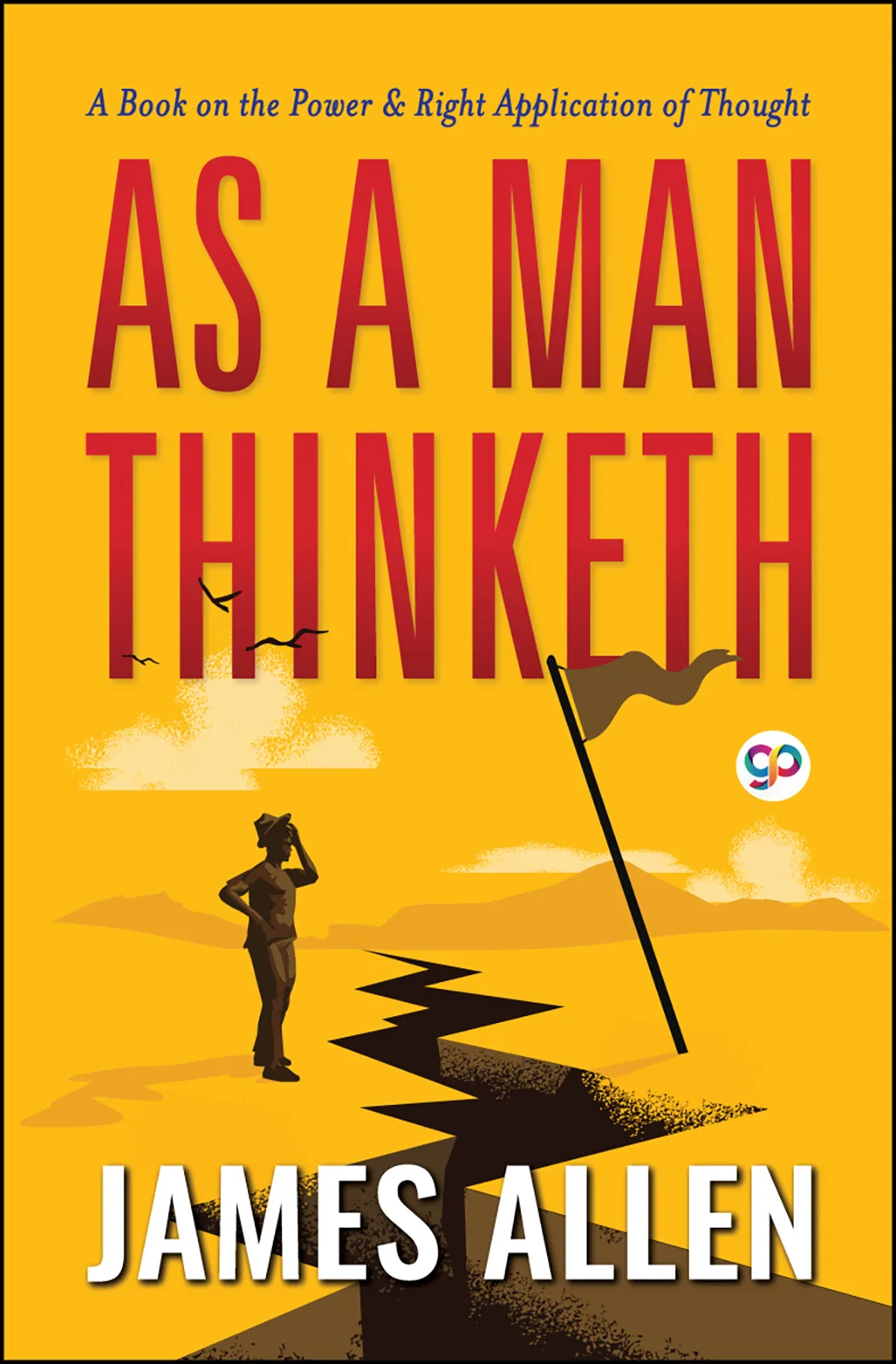
As a Man Thinketh
Hardcover
• 96 Pages
• INR 345.00
• English
• 9789388118422
No ratings yet
| Publisher | General Press |
|---|---|
| ISBN13 | 9789388118422 |
| ASIN/SKU | 9388118421 |
| Book Format | Hardcover |
| Language | English |
| Pages | 96 |
| List Price | INR 345.00 |
| Subject Code | SEL021000, SEL027000, OCC014000, Node 12676 |
| Publishing Date | 06/09/2018 |
| Dimensions | 8.25 x 5.25 x 1.0 inches |
| Book Code | BD00067961 |
Buy this Book
Amazon Stores
Ebook Stores
Other Stores
Discover As a Man Thinketh by James Allen. This book is published by General Press in Hardcover format, ISBN 9789388118422, ASIN 9388118421, under Self-Help, Motivational, Success.
Book Description
James Allen’s classic 1903 essay, 'As a Man Thinketh', is a gentle yet profound meditation on the hidden power of our inner lives. At its core lies a beautifully simple, timeless metaphor: the human mind is like a garden. If we intentionally plant seeds of positivity, wisdom, and love, our lives will naturally bloom with purpose and joy. However, if we leave our minds untended, the destructive weeds of fear, doubt, and negativity will inevitably take root and choke our potential.
Allen writes with deep empathy, fully acknowledging the very human tendency to blame external circumstances for our daily struggles and setbacks. Yet, he kindly challenges this defensive instinct, arguing that our outer world is actually a direct reflection of our inner landscape. Our character, our physical health, and even our fleeting life circumstances are shaped continuously by the thoughts we quietly harbor. He insists that we are never mere victims of fate; rather, we are the active, capable architects of our own destinies.
Ultimately, this brief but deeply moving book is an invitation to accept personal responsibility and embrace quiet empowerment. By consciously mastering our thoughts, Allen assures us, we can profoundly transform our character and elevate our lived experience. It serves as a deeply humane reminder that true peace and enduring success do not arise from forcefully changing the world around us, but from patiently, lovingly cultivating the invisible world within.
Allen writes with deep empathy, fully acknowledging the very human tendency to blame external circumstances for our daily struggles and setbacks. Yet, he kindly challenges this defensive instinct, arguing that our outer world is actually a direct reflection of our inner landscape. Our character, our physical health, and even our fleeting life circumstances are shaped continuously by the thoughts we quietly harbor. He insists that we are never mere victims of fate; rather, we are the active, capable architects of our own destinies.
Ultimately, this brief but deeply moving book is an invitation to accept personal responsibility and embrace quiet empowerment. By consciously mastering our thoughts, Allen assures us, we can profoundly transform our character and elevate our lived experience. It serves as a deeply humane reminder that true peace and enduring success do not arise from forcefully changing the world around us, but from patiently, lovingly cultivating the invisible world within.
Author Biography
Born in Leicester, England, in 1864, James Allen experienced profound tragedy early in life. When he was just fifteen, his father traveled to America in search of better economic opportunities, only to be robbed and murdered before the family could join him. This sudden loss forced Allen to abandon his formal education and enter the workforce to support his family, taking on various clerical and secretarial jobs for British manufacturing firms over the next two decades.
Despite his abbreviated schooling, Allen was a voracious reader with a deeply inquisitive mind. He immersed himself in the works of Leo Tolstoy, Ralph Waldo Emerson, and various Eastern philosophical and religious texts, cultivating a profound understanding of spiritual principles. In 1902, drawing from years of quiet reflection, he published his first book, From Poverty to Power, and subsequently launched a spiritual magazine titled The Light of Reason to share his evolving insights on personal empowerment.
The following year, Allen published the work that would cement his legacy: As a Man Thinketh. A seminal text in the New Thought movement, the brief philosophical essay argued that individuals hold the key to their own happiness, health, and success through the mastery of their thoughts. With its empowering message that a person's character and outer circumstances are the direct result of their inner mind, the book became a foundational pillar of modern self-help literature and has continuously influenced readers for over a century.
Following his initial literary success, Allen retired from his corporate work and moved with his wife, Lily, to the coastal town of Ilfracombe in Devon. There, he embraced a quiet, contemplative lifestyle dedicated entirely to writing, meditation, and gardening. Over the course of a brief but remarkably prolific decade, he produced a total of nineteen books before his untimely death in 1912 at the age of forty-seven, leaving behind an enduring legacy of inspirational philosophy.
Despite his abbreviated schooling, Allen was a voracious reader with a deeply inquisitive mind. He immersed himself in the works of Leo Tolstoy, Ralph Waldo Emerson, and various Eastern philosophical and religious texts, cultivating a profound understanding of spiritual principles. In 1902, drawing from years of quiet reflection, he published his first book, From Poverty to Power, and subsequently launched a spiritual magazine titled The Light of Reason to share his evolving insights on personal empowerment.
The following year, Allen published the work that would cement his legacy: As a Man Thinketh. A seminal text in the New Thought movement, the brief philosophical essay argued that individuals hold the key to their own happiness, health, and success through the mastery of their thoughts. With its empowering message that a person's character and outer circumstances are the direct result of their inner mind, the book became a foundational pillar of modern self-help literature and has continuously influenced readers for over a century.
Following his initial literary success, Allen retired from his corporate work and moved with his wife, Lily, to the coastal town of Ilfracombe in Devon. There, he embraced a quiet, contemplative lifestyle dedicated entirely to writing, meditation, and gardening. Over the course of a brief but remarkably prolific decade, he produced a total of nineteen books before his untimely death in 1912 at the age of forty-seven, leaving behind an enduring legacy of inspirational philosophy.
Editorial Reviews
• Tony Robbins (Author and Life Coach):
Robbins frequently cites Allen's essay as one of his favorite and most recommended books. In a review of his top reads, he praised the work because "it's so small and easy to read and so profound," noting that he has read it at least a dozen times to reinforce the concept that life is completely under one's control rather than up to fate.
• John C. Maxwell (Leadership Author):
Maxwell, one of the world's foremost leadership experts, has cited the book as fundamentally shifting his approach to character and leadership. He specifically praised Allen's central analogy—that the human mind is like a garden where you must constantly pull weeds and plant seeds to bear the fruit you desire.
• Earl Nightingale (Broadcaster and Author):
Nightingale, widely considered the dean of modern personal development, was heavily influenced by Allen's work. His famous spoken-word record The Strangest Secret—which became the first spoken-word recording to achieve Gold Record status—was fundamentally an expansion of Allen's thesis that "we become what we think about."
• Business Insider (Editorial Review):
In a retrospective on brilliant business books you can read in an afternoon, Business Insider highlighted the book's enduring relevance. The publication noted that the century-old essay "contains wisdom that transcends time" by demanding that readers take absolute personal responsibility for both their successes and their failures.
• Bob Proctor (Author and Speaker):
The late philosopher and The Secret contributor was perhaps the book's most famous modern champion. Proctor noted in several seminars that he carried a copy of As a Man Thinketh in his pocket for decades, reading a few lines every single day. He reviewed it not just as a book, but as an operating manual for the law of attraction.
• Jim Rohn (Entrepreneur and Author):
Rohn routinely placed Allen's work on his mandatory reading list for success. He praised the book for definitively linking human thought directly to human character, reinforcing his own teachings that external circumstances are simply a reflection of internal beliefs.
• Gents Cafe (Contemporary Editorial Review):
In a modern review of the classic, this publication praised it as a refreshing alternative to modern, trending self-help books. The reviewer noted: "If you have an hour or two, you can read it in one sitting, it is packed with wisdom and insights... The writing is clear and concise, and the ideas are well-organized and easy to understand".
• Norman Vincent Peale (Author of The Power of Positive Thinking):
Peale credited James Allen's turn-of-the-century writings as the foundational bedrock for the entire "positive thinking" movement that Peale himself later popularized in the 1950s. He viewed Allen as the ultimate pioneer of the mindset-reality connection.
• Og Mandino (Author of The Greatest Salesman in the World):
Mandino repeatedly championed Allen's essay in his own works and reading lists. He viewed the book as a prerequisite for anyone attempting to achieve sales or business success, as it forces the reader to confront their own self-limiting beliefs before trying to influence others.
• The Invisible Mentor (Avil Beckford, Reviewer):
In a retrospective critical review, Beckford noted that the book is actually more important today than when it was written in 1903. She wrote, "This book is more important today because we are constantly being bombarded with hundreds of messages every day, some of them conflicting. So, we have to closely monitor our thoughts".
• Mark Victor Hansen (Co-creator of Chicken Soup for the Soul):
Hansen has praised Allen's brief book as a timeless masterpiece of human potential. He frequently noted that its brevity is its greatest strength, stripping away all filler to deliver the raw truth about personal accountability and mental discipline.
Robbins frequently cites Allen's essay as one of his favorite and most recommended books. In a review of his top reads, he praised the work because "it's so small and easy to read and so profound," noting that he has read it at least a dozen times to reinforce the concept that life is completely under one's control rather than up to fate.
• John C. Maxwell (Leadership Author):
Maxwell, one of the world's foremost leadership experts, has cited the book as fundamentally shifting his approach to character and leadership. He specifically praised Allen's central analogy—that the human mind is like a garden where you must constantly pull weeds and plant seeds to bear the fruit you desire.
• Earl Nightingale (Broadcaster and Author):
Nightingale, widely considered the dean of modern personal development, was heavily influenced by Allen's work. His famous spoken-word record The Strangest Secret—which became the first spoken-word recording to achieve Gold Record status—was fundamentally an expansion of Allen's thesis that "we become what we think about."
• Business Insider (Editorial Review):
In a retrospective on brilliant business books you can read in an afternoon, Business Insider highlighted the book's enduring relevance. The publication noted that the century-old essay "contains wisdom that transcends time" by demanding that readers take absolute personal responsibility for both their successes and their failures.
• Bob Proctor (Author and Speaker):
The late philosopher and The Secret contributor was perhaps the book's most famous modern champion. Proctor noted in several seminars that he carried a copy of As a Man Thinketh in his pocket for decades, reading a few lines every single day. He reviewed it not just as a book, but as an operating manual for the law of attraction.
• Jim Rohn (Entrepreneur and Author):
Rohn routinely placed Allen's work on his mandatory reading list for success. He praised the book for definitively linking human thought directly to human character, reinforcing his own teachings that external circumstances are simply a reflection of internal beliefs.
• Gents Cafe (Contemporary Editorial Review):
In a modern review of the classic, this publication praised it as a refreshing alternative to modern, trending self-help books. The reviewer noted: "If you have an hour or two, you can read it in one sitting, it is packed with wisdom and insights... The writing is clear and concise, and the ideas are well-organized and easy to understand".
• Norman Vincent Peale (Author of The Power of Positive Thinking):
Peale credited James Allen's turn-of-the-century writings as the foundational bedrock for the entire "positive thinking" movement that Peale himself later popularized in the 1950s. He viewed Allen as the ultimate pioneer of the mindset-reality connection.
• Og Mandino (Author of The Greatest Salesman in the World):
Mandino repeatedly championed Allen's essay in his own works and reading lists. He viewed the book as a prerequisite for anyone attempting to achieve sales or business success, as it forces the reader to confront their own self-limiting beliefs before trying to influence others.
• The Invisible Mentor (Avil Beckford, Reviewer):
In a retrospective critical review, Beckford noted that the book is actually more important today than when it was written in 1903. She wrote, "This book is more important today because we are constantly being bombarded with hundreds of messages every day, some of them conflicting. So, we have to closely monitor our thoughts".
• Mark Victor Hansen (Co-creator of Chicken Soup for the Soul):
Hansen has praised Allen's brief book as a timeless masterpiece of human potential. He frequently noted that its brevity is its greatest strength, stripping away all filler to deliver the raw truth about personal accountability and mental discipline.
Book Summary
James Allen’s enduring classic, "As a Man Thinketh", published in 1903, remains one of the most profoundly influential works in the realm of personal development and self-improvement. Borrowing its title from the biblical proverb, "As a man thinketh in his heart, so is he," the brief but dense book functions as a concise, poetic meditation on the absolute power of human thought. Allen proposes a radically empowering philosophy: that the individual is the sole architect of their own character, circumstances, and destiny. The central thesis is that the mind is the master weaver, capable of fashioning both the inner garment of one's character and the outer garment of their physical and social circumstances. Far from being helpless victims of fate or environment, humans hold the chisel that actively sculpts their own reality through the unseen mechanics of their daily thoughts.
The foundational argument of the book is the inextricable link between thought and human character. Allen asserts that a noble and God-like character is not a thing of favor, luck, or chance, but the natural, inevitable result of continued, disciplined effort in right thinking. Conversely, a degraded and miserable character is the direct consequence of continuously harboring base and negative thoughts. An individual is quite literally the sum total of their internal monologue. Man is made or unmade by himself; in the unseen armory of thought, he forges the weapons by which he destroys himself, just as he also fashions the tools with which he builds heavenly mansions of joy, strength, and peace. Every act of a person springs directly from the hidden seeds of thought, making character an inside-out phenomenon.
To illustrate this internal mechanism, Allen employs the timeless and resonant metaphor of a garden. He compares the human mind to a plot of land that may be intelligently cultivated or simply allowed to run wild. Regardless of whether it is deliberately tended or carelessly neglected, it must, and will, bring forth results. If a person does not intentionally plant useful seeds of positive, constructive thought, then an abundance of useless weed-seeds will inevitably take root and produce their kind. Just as a gardener must constantly weed their plot to allow flowers and crops to thrive, an individual must relentlessly weed out impure, useless, and negative thoughts to cultivate the blossoms of a pure, noble, and productive character.
Building upon the garden metaphor, Allen addresses the often-misunderstood relationship between a person’s internal thoughts and their external circumstances. He argues that humanity fundamentally misunderstands the nature of attraction. We do not attract what we want, wish for, or pray for; rather, we attract exactly what we are. Circumstances do not make the man; they merely reveal him to himself. While it is deeply tempting to blame an oppressive environment, bad luck, or cruel individuals for our hardships, Allen insists that our external world is intimately, inextricably linked to our internal state. If a person is subjected to persistent adversity or suffering, it is almost always a reflection of internal disharmony or hidden, destructive thought patterns that need to be addressed and corrected.
This philosophy of absolute personal responsibility extends directly into the realm of physical health and well-being. Allen posits that the body is the delicate and highly plastic servant of the mind, rapidly responding to the operations of thought, whether they be deliberate or automatic. Thoughts of fear, anxiety, and negativity are literal poisons that manifest in physical disease, premature aging, and bodily decay. A sour face does not come by chance; it is carved over time by sour thoughts. Conversely, harboring pure, happy, and peaceful thoughts builds a body of vigor, grace, and vitality. There is no physician like cheerful thought for dissipating the ills of the body, and no comforter to compare with goodwill for dispersing the shadows of grief, sorrow, and physical ailment.
To effectively harness this incredible power of the mind, Allen stresses the absolute necessity of aligning thought with a definitive purpose. Until thought is firmly linked with purpose, there is no intelligent accomplishment. Aimlessness is described not just as a flaw, but as a destructive vice. Without a central, guiding objective, a person falls easy prey to petty worries, fears, troubles, and self-pity, all of which are indications of weakness that lead inevitably to failure and unhappiness. A person must conceive of a legitimate purpose in their heart and set out to accomplish it, making this purpose the centralizing point of their thoughts. Doubt and fear are the great enemies of purpose, and until they are ruthlessly conquered, a person cannot hope to achieve anything of lasting value.
The mechanics of true achievement, therefore, require a deliberate rejection of weakness and a deep, sustained commitment to personal sacrifice. All achievements, whether in the business, intellectual, or spiritual realms, are the direct result of definitely directed thought. Allen outlines a stark, unyielding equation: there is a direct and proportional correlation between the level of sacrifice and the level of success. A person can only rise, conquer, and achieve by lifting their thoughts above self-indulgence, laziness, and animalistic desires. Those who refuse to sacrifice their lower impulses can never realize their higher aspirations. Intellectual and spiritual achievements are the beautiful blossoms of holy, directed thought, requiring a mind fiercely disciplined against the distractions of instant gratification.
Crucial to this upward trajectory of achievement is the vital role of visions and ideals. Allen paints dreamers not as idle fantasists, but as the true saviors of the world, asserting that humanity is sustained by the beautiful visions of its most imaginative minds. He strongly encourages readers to cherish their loftiest ideals and their most beautiful visions, for out of them will eventually grow all delightful conditions and realities. If one remains completely faithful to a noble vision, their outer world will eventually build itself around that internal ideal. The oak sleeps within the acorn, and the bird waits within the egg. Similarly, the highest visions of the soul are the waking realities of tomorrow, provided they are nurtured with relentless, focused, and faithful thought.
The ultimate culmination of this disciplined, purposeful, and right-thinking life is a state of profound serenity. Allen describes calmness of mind as one of the beautiful jewels of wisdom and the final, crowning flower of a perfected character. This exquisite tranquility is not an accident of birth or circumstance, but the hard-won result of long, patient, and persistent effort in self-control. A calm person, having learned how to govern their internal storms, knows exactly how to adapt to others, and in turn, others reverence their spiritual strength and naturally rely upon their quiet steadiness. "As a Man Thinketh" ultimately leaves the reader with a profound sense of absolute accountability and boundless hope: by mastering the invisible realm of our thoughts, we master our ultimate destiny, turning the mind into an unshakable sanctuary of peace.
The foundational argument of the book is the inextricable link between thought and human character. Allen asserts that a noble and God-like character is not a thing of favor, luck, or chance, but the natural, inevitable result of continued, disciplined effort in right thinking. Conversely, a degraded and miserable character is the direct consequence of continuously harboring base and negative thoughts. An individual is quite literally the sum total of their internal monologue. Man is made or unmade by himself; in the unseen armory of thought, he forges the weapons by which he destroys himself, just as he also fashions the tools with which he builds heavenly mansions of joy, strength, and peace. Every act of a person springs directly from the hidden seeds of thought, making character an inside-out phenomenon.
To illustrate this internal mechanism, Allen employs the timeless and resonant metaphor of a garden. He compares the human mind to a plot of land that may be intelligently cultivated or simply allowed to run wild. Regardless of whether it is deliberately tended or carelessly neglected, it must, and will, bring forth results. If a person does not intentionally plant useful seeds of positive, constructive thought, then an abundance of useless weed-seeds will inevitably take root and produce their kind. Just as a gardener must constantly weed their plot to allow flowers and crops to thrive, an individual must relentlessly weed out impure, useless, and negative thoughts to cultivate the blossoms of a pure, noble, and productive character.
Building upon the garden metaphor, Allen addresses the often-misunderstood relationship between a person’s internal thoughts and their external circumstances. He argues that humanity fundamentally misunderstands the nature of attraction. We do not attract what we want, wish for, or pray for; rather, we attract exactly what we are. Circumstances do not make the man; they merely reveal him to himself. While it is deeply tempting to blame an oppressive environment, bad luck, or cruel individuals for our hardships, Allen insists that our external world is intimately, inextricably linked to our internal state. If a person is subjected to persistent adversity or suffering, it is almost always a reflection of internal disharmony or hidden, destructive thought patterns that need to be addressed and corrected.
This philosophy of absolute personal responsibility extends directly into the realm of physical health and well-being. Allen posits that the body is the delicate and highly plastic servant of the mind, rapidly responding to the operations of thought, whether they be deliberate or automatic. Thoughts of fear, anxiety, and negativity are literal poisons that manifest in physical disease, premature aging, and bodily decay. A sour face does not come by chance; it is carved over time by sour thoughts. Conversely, harboring pure, happy, and peaceful thoughts builds a body of vigor, grace, and vitality. There is no physician like cheerful thought for dissipating the ills of the body, and no comforter to compare with goodwill for dispersing the shadows of grief, sorrow, and physical ailment.
To effectively harness this incredible power of the mind, Allen stresses the absolute necessity of aligning thought with a definitive purpose. Until thought is firmly linked with purpose, there is no intelligent accomplishment. Aimlessness is described not just as a flaw, but as a destructive vice. Without a central, guiding objective, a person falls easy prey to petty worries, fears, troubles, and self-pity, all of which are indications of weakness that lead inevitably to failure and unhappiness. A person must conceive of a legitimate purpose in their heart and set out to accomplish it, making this purpose the centralizing point of their thoughts. Doubt and fear are the great enemies of purpose, and until they are ruthlessly conquered, a person cannot hope to achieve anything of lasting value.
The mechanics of true achievement, therefore, require a deliberate rejection of weakness and a deep, sustained commitment to personal sacrifice. All achievements, whether in the business, intellectual, or spiritual realms, are the direct result of definitely directed thought. Allen outlines a stark, unyielding equation: there is a direct and proportional correlation between the level of sacrifice and the level of success. A person can only rise, conquer, and achieve by lifting their thoughts above self-indulgence, laziness, and animalistic desires. Those who refuse to sacrifice their lower impulses can never realize their higher aspirations. Intellectual and spiritual achievements are the beautiful blossoms of holy, directed thought, requiring a mind fiercely disciplined against the distractions of instant gratification.
Crucial to this upward trajectory of achievement is the vital role of visions and ideals. Allen paints dreamers not as idle fantasists, but as the true saviors of the world, asserting that humanity is sustained by the beautiful visions of its most imaginative minds. He strongly encourages readers to cherish their loftiest ideals and their most beautiful visions, for out of them will eventually grow all delightful conditions and realities. If one remains completely faithful to a noble vision, their outer world will eventually build itself around that internal ideal. The oak sleeps within the acorn, and the bird waits within the egg. Similarly, the highest visions of the soul are the waking realities of tomorrow, provided they are nurtured with relentless, focused, and faithful thought.
The ultimate culmination of this disciplined, purposeful, and right-thinking life is a state of profound serenity. Allen describes calmness of mind as one of the beautiful jewels of wisdom and the final, crowning flower of a perfected character. This exquisite tranquility is not an accident of birth or circumstance, but the hard-won result of long, patient, and persistent effort in self-control. A calm person, having learned how to govern their internal storms, knows exactly how to adapt to others, and in turn, others reverence their spiritual strength and naturally rely upon their quiet steadiness. "As a Man Thinketh" ultimately leaves the reader with a profound sense of absolute accountability and boundless hope: by mastering the invisible realm of our thoughts, we master our ultimate destiny, turning the mind into an unshakable sanctuary of peace.
Sample Chapters
Chapter 1 : Thought and Character
As a being of power, intelligence, and love and the lord of his own thoughts, man holds the key to every situation, and contains within himself that transforming and regenerative agency by which he makes himself what he wills.
The aphorism, “As a man thinketh in his heart so is he,” not only embraces the whole of a man’s being, but is so comprehensive that it reaches out to every condition and circumstance of his life. A man is literally what he thinks, his character being the complete sum of all his thoughts.
As the plant springs from, and could not be without, the seed, so every act of a man springs from the hidden seeds of thought, and could not have appeared without them. This applies equally to those acts called “spontaneous” and “unpremeditated” as to those, which are deliberately executed.
An act is the blossom of thought, and joy and suffering are its fruits; thus does a man garner in the sweet and bitter fruitage of his own husbandry.
Thought in the mind has made us what we are. By thought was wrought and built if a man’s mind has evil thoughts, pain comes on him as comes the wheel behind the ox… If one endure in purity of thought, joy follows him as his own shadow — sure.
Man is a growth by law, and a not a creation by artifice, and cause-and-effect is as absolute and undeviating in the hidden realm of thought as in the world of visible and material things.
A noble and God-like character is not a thing of favour or chance, but is the natural result of continued effort in right thinking, the effect of long-cherished association with God-like thoughts. An ignoble and bestial character, by the same process, is the result of the continued harbouring of grovelling thoughts.
You are Master of Your Fate
Man is made or unmade by himself; in the armoury of thought he forges the weapons by which he destroys himself; he also fashions the tools with which he builds for himself heavenly mansions of joy and strength and peace. By the right choice and true application of thought, man ascends to the Divine perfection; by the abuse and wrong application of thought, he descends below the level of the beast. Between these two extremes are all the grades of character, and man is their maker and master.
Of all the beautiful truths pertaining to the soul which have been restored and brought to light in this age, none is more gladdening or fruitful of Divine promise and confidence than this—that man is the master of thought, the moulder of character, and the maker and shaper of condition, environment, and destiny.
As a being of power, intelligence, and love, and the lord of his own thoughts, man holds the key to every situation, and contains within himself that transforming and regenerative agency by which he may make himself what he wills.
Man is always the master, even in his weaker and most abandoned state; but in his weakness and degradation he is the foolish master who misgoverns his “household”. When he begins to reflect upon his condition, and to search diligently for the Law upon which his being is established, he then becomes the wise master, directing his energies with intelligence, and fashioning his thoughts to fruitful issues.
Such is the conscious master, and man can only thus become by discovering within himself the laws of thought; which discovery is totally a matter of application, self-analysis, and experience.
Seek and You shall Find
Only be much searching and mining, are gold and diamonds obtained, and man can find every truth connected with his being, if he will dig deep into the mine of his soul.
Man is the maker of his character, the moulder of his life, and the builder of his destiny. This he may prove unerringly, if he will watch, control, and alter his thoughts, tracing their effects upon himself, upon others, and upon his life and circumstances; this he may prove by linking cause and effect by patient practice and investigation, and utilising his every experience, even to the most trivial, everyday occurrence, as a means of obtaining that knowledge of himself which is understanding, wisdom and power.
In this direction, as in no other, is the law absolute that “He that seeketh findeth; and to him that knocketh it shall be opened”; for only by patience, practice, and ceaseless importunity can a man enter the door of the Temple of Knowledge.
As a being of power, intelligence, and love and the lord of his own thoughts, man holds the key to every situation, and contains within himself that transforming and regenerative agency by which he makes himself what he wills.
The aphorism, “As a man thinketh in his heart so is he,” not only embraces the whole of a man’s being, but is so comprehensive that it reaches out to every condition and circumstance of his life. A man is literally what he thinks, his character being the complete sum of all his thoughts.
As the plant springs from, and could not be without, the seed, so every act of a man springs from the hidden seeds of thought, and could not have appeared without them. This applies equally to those acts called “spontaneous” and “unpremeditated” as to those, which are deliberately executed.
An act is the blossom of thought, and joy and suffering are its fruits; thus does a man garner in the sweet and bitter fruitage of his own husbandry.
Thought in the mind has made us what we are. By thought was wrought and built if a man’s mind has evil thoughts, pain comes on him as comes the wheel behind the ox… If one endure in purity of thought, joy follows him as his own shadow — sure.
Man is a growth by law, and a not a creation by artifice, and cause-and-effect is as absolute and undeviating in the hidden realm of thought as in the world of visible and material things.
A noble and God-like character is not a thing of favour or chance, but is the natural result of continued effort in right thinking, the effect of long-cherished association with God-like thoughts. An ignoble and bestial character, by the same process, is the result of the continued harbouring of grovelling thoughts.
You are Master of Your Fate
Man is made or unmade by himself; in the armoury of thought he forges the weapons by which he destroys himself; he also fashions the tools with which he builds for himself heavenly mansions of joy and strength and peace. By the right choice and true application of thought, man ascends to the Divine perfection; by the abuse and wrong application of thought, he descends below the level of the beast. Between these two extremes are all the grades of character, and man is their maker and master.
Of all the beautiful truths pertaining to the soul which have been restored and brought to light in this age, none is more gladdening or fruitful of Divine promise and confidence than this—that man is the master of thought, the moulder of character, and the maker and shaper of condition, environment, and destiny.
As a being of power, intelligence, and love, and the lord of his own thoughts, man holds the key to every situation, and contains within himself that transforming and regenerative agency by which he may make himself what he wills.
Man is always the master, even in his weaker and most abandoned state; but in his weakness and degradation he is the foolish master who misgoverns his “household”. When he begins to reflect upon his condition, and to search diligently for the Law upon which his being is established, he then becomes the wise master, directing his energies with intelligence, and fashioning his thoughts to fruitful issues.
Such is the conscious master, and man can only thus become by discovering within himself the laws of thought; which discovery is totally a matter of application, self-analysis, and experience.
Seek and You shall Find
Only be much searching and mining, are gold and diamonds obtained, and man can find every truth connected with his being, if he will dig deep into the mine of his soul.
Man is the maker of his character, the moulder of his life, and the builder of his destiny. This he may prove unerringly, if he will watch, control, and alter his thoughts, tracing their effects upon himself, upon others, and upon his life and circumstances; this he may prove by linking cause and effect by patient practice and investigation, and utilising his every experience, even to the most trivial, everyday occurrence, as a means of obtaining that knowledge of himself which is understanding, wisdom and power.
In this direction, as in no other, is the law absolute that “He that seeketh findeth; and to him that knocketh it shall be opened”; for only by patience, practice, and ceaseless importunity can a man enter the door of the Temple of Knowledge.
Reader Reviews
No reviews yet.
As a Man Thinketh
Download Cover Image
Do you want to download the full cover image for As a Man Thinketh?