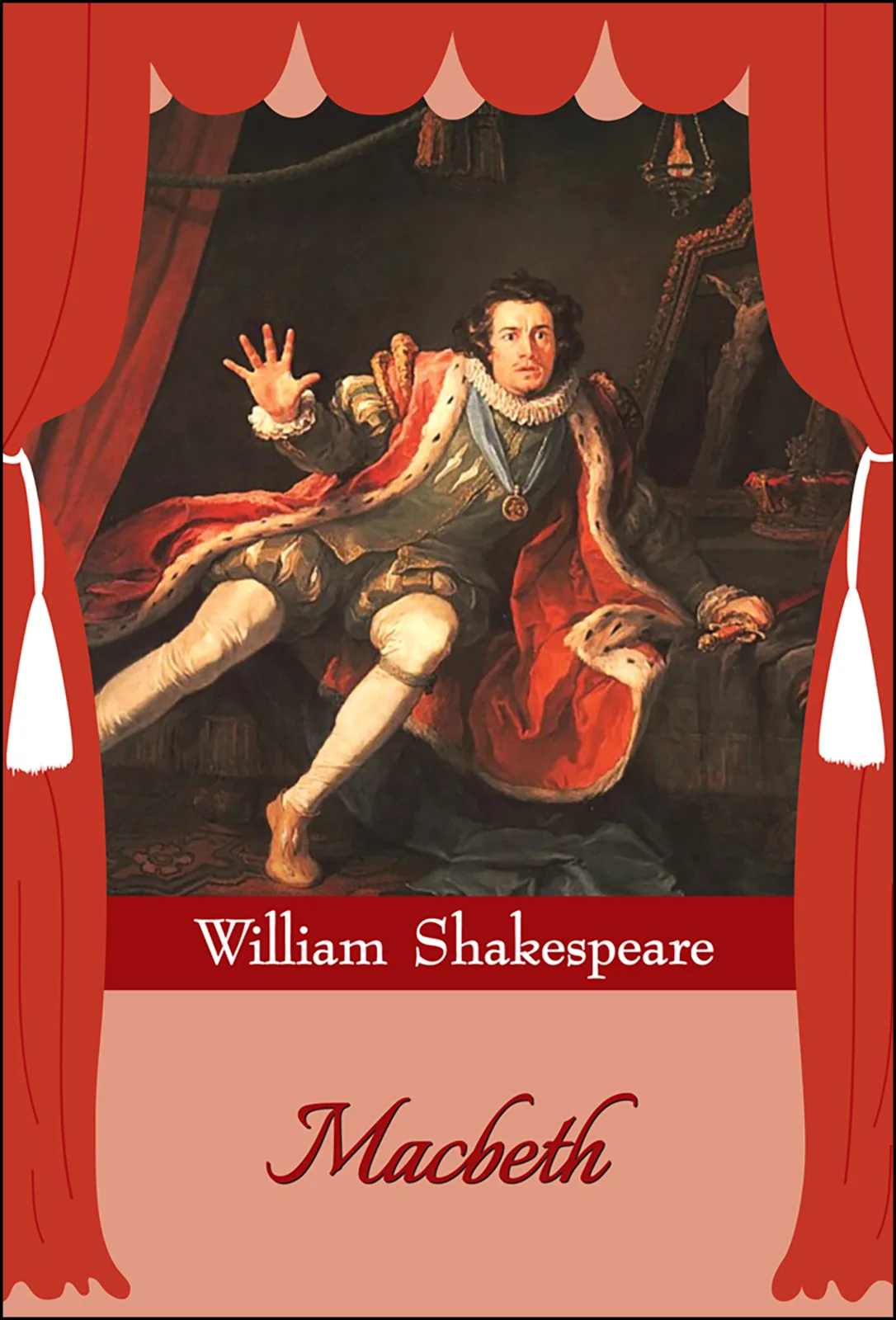
Macbeth
Paperback
• 104 Pages
• INR 245.00
• English
• 9789380914343
No ratings yet
| Publisher | General Press |
|---|---|
| ISBN13 | 9789380914343 |
| ASIN/SKU | 9380914342 |
| Book Format | Paperback |
| Language | English |
| Pages | 104 |
| List Price | INR 245.00 |
| Subject Code | DRA003000, DRA004000, DRA010000, FIC004000 |
| Publishing Date | 01/01/2013 |
| Dimensions | 8.25 x 5.25 x 1.0 inches |
| Book Code | BD00067962 |
Buy this Book
Amazon Stores
Ebook Stores
Other Stores
Discover Macbeth by William Shakespeare. This book is published by General Press in Paperback format, ISBN 9789380914343, ASIN 9380914342, under Literature and Fiction, Classics, Drama.
Book Description
Ambition can be a powerful force, but in Shakespeare’s world, it can also become dangerously destructive. 'Macbeth' by William Shakespeare is a classic tragedy and one of the most celebrated works of English literature, exploring ambition, guilt, fate, power, and the consequences of unchecked desire. Set in medieval Scotland, the play follows Macbeth, a brave and respected military leader whose life changes after he encounters three mysterious witches who predict that he will one day become king.
Intrigued by the possibility of power, Macbeth begins to wonder whether the prophecy might come true. Encouraged by his ambitious wife, Lady Macbeth, he becomes increasingly willing to abandon his moral boundaries in pursuit of the crown. What begins as a tempting possibility soon develops into a dangerous struggle for power, as Macbeth finds himself caught between his conscience, his ambitions, and the expectations placed upon him.
As Macbeth rises in authority, however, his success brings neither peace nor happiness. Fear and suspicion begin to dominate his thoughts, and he becomes increasingly determined to protect the position he has gained. Lady Macbeth, initially the stronger and more determined of the two, also finds that the consequences of their choices are far more difficult to escape than either imagined. Their relationship changes as guilt, paranoia, and fear begin to consume them.
Alongside Macbeth’s personal downfall, the play explores the wider consequences of political ambition. Scotland becomes a country troubled by violence and uncertainty, while other characters are forced to confront questions of loyalty, courage, justice, and revenge. Shakespeare also leaves readers wondering how much of Macbeth’s fate is controlled by supernatural prophecy and how much is created by his own choices.
Dark, suspenseful, and psychologically compelling, 'Macbeth' remains powerful because its central questions still feel remarkably human. How far would someone go to achieve power, and what happens when ambition becomes more important than conscience? To discover how Macbeth’s choices transform his life and the kingdom around him, readers must enter Shakespeare’s haunting world of prophecy, betrayal, and ambition.
Intrigued by the possibility of power, Macbeth begins to wonder whether the prophecy might come true. Encouraged by his ambitious wife, Lady Macbeth, he becomes increasingly willing to abandon his moral boundaries in pursuit of the crown. What begins as a tempting possibility soon develops into a dangerous struggle for power, as Macbeth finds himself caught between his conscience, his ambitions, and the expectations placed upon him.
As Macbeth rises in authority, however, his success brings neither peace nor happiness. Fear and suspicion begin to dominate his thoughts, and he becomes increasingly determined to protect the position he has gained. Lady Macbeth, initially the stronger and more determined of the two, also finds that the consequences of their choices are far more difficult to escape than either imagined. Their relationship changes as guilt, paranoia, and fear begin to consume them.
Alongside Macbeth’s personal downfall, the play explores the wider consequences of political ambition. Scotland becomes a country troubled by violence and uncertainty, while other characters are forced to confront questions of loyalty, courage, justice, and revenge. Shakespeare also leaves readers wondering how much of Macbeth’s fate is controlled by supernatural prophecy and how much is created by his own choices.
Dark, suspenseful, and psychologically compelling, 'Macbeth' remains powerful because its central questions still feel remarkably human. How far would someone go to achieve power, and what happens when ambition becomes more important than conscience? To discover how Macbeth’s choices transform his life and the kingdom around him, readers must enter Shakespeare’s haunting world of prophecy, betrayal, and ambition.
Author Biography
William Shakespeare (baptised 26 April 1564) was an English poet and playwright, widely regarded as the greatest writer in the English language and the world's pre-eminent dramatist. He is often called England's national poet and the 'Bard of Avon' (or simply "The Bard"). His surviving works consist of 37 plays, 154 sonnets, two long narrative poems, and several other poems. His plays have been translated into every major living language.
Shakespeare was born and raised in Stratford-upon-Avon. Scholars believe that he died on his fifty-second birthday, coinciding with St George’s Day. At the age of 18 he married Anne Hathaway, who bore him three children: Susanna, twins Hamnet and Judith. Between 1585 and 1592 he began a successful career in London as an actor, writer, and part owner of the playing company the Lord Chamberlain's Men, later known as the King's Men. He appears to have retired to Stratford around 1613, where he died three years later.
Shakespeare produced most of his known work between 1590 and 1613. His early plays were mainly comedies and histories, genres he raised to the peak of sophistication and artistry by the end of the sixteenth century. Next he wrote mainly tragedies until about 1608. He was a respected poet and playwright in his own day, but his reputation did not rise to its present heights until the nineteenth century. The Romantics, in particular, acclaimed Shakespeare's genius, and the Victorians hero-worshipped Shakespeare. In the twentieth century, his work was repeatedly adopted and rediscovered by new movements in scholarship and performance. His plays remain highly popular today and are consistently performed and reinterpreted in diverse cultural and political contexts throughout the world.
Shakespeare was born and raised in Stratford-upon-Avon. Scholars believe that he died on his fifty-second birthday, coinciding with St George’s Day. At the age of 18 he married Anne Hathaway, who bore him three children: Susanna, twins Hamnet and Judith. Between 1585 and 1592 he began a successful career in London as an actor, writer, and part owner of the playing company the Lord Chamberlain's Men, later known as the King's Men. He appears to have retired to Stratford around 1613, where he died three years later.
Shakespeare produced most of his known work between 1590 and 1613. His early plays were mainly comedies and histories, genres he raised to the peak of sophistication and artistry by the end of the sixteenth century. Next he wrote mainly tragedies until about 1608. He was a respected poet and playwright in his own day, but his reputation did not rise to its present heights until the nineteenth century. The Romantics, in particular, acclaimed Shakespeare's genius, and the Victorians hero-worshipped Shakespeare. In the twentieth century, his work was repeatedly adopted and rediscovered by new movements in scholarship and performance. His plays remain highly popular today and are consistently performed and reinterpreted in diverse cultural and political contexts throughout the world.
Editorial Reviews
Editorial Reviews will be added soon…
Book Summary
William Shakespeare’s "Macbeth" opens in the murky, storm-tossed Scottish moors, setting a dark and foreboding tone that permeates the entire tragedy. Returning from a grueling but victorious battle against rebel forces and Norwegian invaders, two Scottish generals, Macbeth and Banquo, encounter three mysterious witches upon the heath. These strange sisters offer a startling set of prophecies that alter the course of history. They hail Macbeth first by his current title, Thane of Glamis, then as the Thane of Cawdor, and finally as the future King of Scotland. To Banquo, they offer a paradoxical prediction: he will not be king himself, but he will father a line of kings. As quickly as they appear, the witches vanish into the mist, leaving the two warriors bewildered and intrigued by the impossible promises spoken in the storm.
The seeds of ambition are instantly watered when messengers from King Duncan arrive shortly after the witches' departure. They bring news that the King, thrilled by Macbeth’s valor on the battlefield, has stripped the traitorous Thane of Cawdor of his title and bestowed it upon Macbeth. The immediate fulfillment of the witches' first prophecy strikes Macbeth like a lightning bolt. If the first prediction came true so effortlessly, the prospect of wearing the crown suddenly seems like a tangible destiny rather than a mere fantasy. A dark ambition begins to take root in his mind. Eager to share this miraculous turn of events, Macbeth writes a letter to his wife, Lady Macbeth, detailing the witches’ prophecies and the sudden elevation of his status, unknowingly setting the stage for their mutual downfall.
Upon reading her husband’s letter, Lady Macbeth is immediately consumed by a ruthless, unyielding lust for power. Unlike Macbeth, who wrestles with his conscience and loyalty to the king, she is resolute. She fears her husband is "too full o' the milk of human kindness" to take the necessary, violent steps to seize the throne. When word arrives that King Duncan plans to stay at their castle in Inverness that very night to celebrate Macbeth's victories, Lady Macbeth sees a golden opportunity. She summons dark spirits to strip her of her femininity and fill her with cruelty. When Macbeth arrives, she forcefully persuades him to murder the king under their own roof. Despite his profound hesitation and moral dread, Macbeth ultimately succumbs to his wife's manipulation and agrees to the treacherous plot.
The night of the king’s visit is cloaked in an eerie, unnatural darkness. As the castle sleeps, Macbeth hallucinates a bloody dagger floating in the air, its handle pointing toward Duncan’s chambers—a manifestation of his immense guilt and anxiety. Steeling himself, he commits the gruesome deed, stabbing the sleeping king. The act utterly shatters Macbeth’s psyche; he returns to his wife trembling, clutching the bloody daggers, and claiming he heard a voice cry that he has "murdered sleep." Seeing her husband paralyzed by horror, Lady Macbeth seizes control of the situation. She takes the daggers, smears Duncan's sleeping guards with the king's blood to frame them, and leaves the weapons by their sides, dragging her husband away to wash the evidence from their hands.
The following morning, the castle is awakened by the agonizing screams of Macduff, a loyal Scottish nobleman who discovers the king’s butchered body. In a brilliant but frantic display of feigned outrage and grief, Macbeth slays the bewildered, blood-soaked guards before they can profess their innocence, claiming he did so out of righteous fury. Duncan’s sons, Malcolm and Donalbain, sense the immense danger they are in; realizing the murderer is likely among them, they flee the country for England and Ireland, respectively. Their sudden, secretive departure casts a shadow of suspicion over them, making it appear as though they paid the guards to assassinate their father. With the heirs out of the way, Macbeth is elected King of Scotland, officially fulfilling the witches’ ultimate prophecy.
However, the crown sits heavy upon Macbeth’s head. His reign is immediately plagued by suffocating paranoia, stemming from the witches' final prophecy: that Banquo’s descendants, not Macbeth's, will inherit the throne. Viewing his former friend as a severe threat to his legacy, Macbeth hires ruthless assassins to ambush Banquo and his young son, Fleance, while they are out riding. The murderers succeed in butchering Banquo, but in the chaotic struggle in the dark, Fleance manages to escape into the night. This failure infuriates and terrifies Macbeth, as the prophecy regarding Banquo's royal lineage remains stubbornly intact. The new king's descent into tyranny accelerates as he begins to realize that blood will inevitably have blood, and his position is far from secure.
The psychological toll of his crimes culminates in a spectacular public breakdown during a grand royal banquet. As Macbeth welcomes the Scottish lords to the feast, he is horrified to see the battered, bloody ghost of Banquo sitting calmly in the king's own chair. Unseen by anyone else in the room, the apparition drives Macbeth into a state of hysterical terror. He screams and raves at the empty seat, nearly confessing his crimes in front of the most powerful men in Scotland. Lady Macbeth desperately attempts to salvage the situation, excusing her husband's erratic behavior as a fleeting childhood illness, but the damage is irreparably done. The nobility’s suspicions are heavily aroused, and the seeds of rebellion are sown among the Scottish lords who begin to see their king not as a legitimate ruler, but as a bloody tyrant.
Desperate to secure his throne and calm his fraying mind, a frantic Macbeth returns to the heath to demand more answers from the witches. They summon a series of dark apparitions that offer him a deceptive sense of invincibility. First, they warn him to beware of Macduff. Second, they declare that "none of woman born shall harm Macbeth." Finally, they promise he will never be vanquished until Great Birnam Wood physically moves to his stronghold at Dunsinane Hill. Interpreting these impossibilities literally, Macbeth believes himself immortal and invincible. However, learning that Macduff has fled to England to join Malcolm, a furious and emboldened Macbeth orders the merciless slaughter of Macduff’s entire family—his wife, his children, and his servants—an act of pure, unprovoked savagery that seals his fate.
While Macbeth wages war on his own people, the immense weight of her sins finally crushes Lady Macbeth. The once-iron-willed woman is reduced to a frail, sleepwalking husk, endlessly wandering the halls of Dunsinane at night. In one of literature's most haunting scenes, she frantically rubs her hands together, desperately trying to wash away imaginary blood spots, wailing, "Out, damned spot!" Her mind completely shattered by the guilt of the murders she helped orchestrate, she eventually dies offstage, presumably by her own hand. Meanwhile, in England, a grief-stricken Macduff receives the horrific news of his family's slaughter. Vowing bloody revenge, he joins forces with Malcolm, and together they lead a massive English army, bolstered by defecting Scottish lords, to overthrow the tyrant and restore the rightful king.
The climax arrives with the terrifying fulfillment of the witches' final prophecies. As the English army approaches Dunsinane, Malcolm orders his soldiers to cut down branches from Birnam Wood to camouflage their numbers. From the castle walls, Macbeth’s sentries report the impossible: the forest appears to be marching toward the castle. Despite the despair of his wife's death and his crumbling defenses, Macbeth fights with a cornered animal's ferocity, still clinging to the belief that no man born of a woman can kill him. On the battlefield, he finally confronts Macduff. With chilling triumph, Macduff reveals that he was "from his mother's womb untimely ripped"—born via Caesarean section, bypassing the witches' twisted definition of a natural birth. In a fierce and brutal duel, Macduff slays and beheads the tyrant. Malcolm is crowned the rightful King of Scotland, finally bringing peace and order back to a bleeding nation.
The seeds of ambition are instantly watered when messengers from King Duncan arrive shortly after the witches' departure. They bring news that the King, thrilled by Macbeth’s valor on the battlefield, has stripped the traitorous Thane of Cawdor of his title and bestowed it upon Macbeth. The immediate fulfillment of the witches' first prophecy strikes Macbeth like a lightning bolt. If the first prediction came true so effortlessly, the prospect of wearing the crown suddenly seems like a tangible destiny rather than a mere fantasy. A dark ambition begins to take root in his mind. Eager to share this miraculous turn of events, Macbeth writes a letter to his wife, Lady Macbeth, detailing the witches’ prophecies and the sudden elevation of his status, unknowingly setting the stage for their mutual downfall.
Upon reading her husband’s letter, Lady Macbeth is immediately consumed by a ruthless, unyielding lust for power. Unlike Macbeth, who wrestles with his conscience and loyalty to the king, she is resolute. She fears her husband is "too full o' the milk of human kindness" to take the necessary, violent steps to seize the throne. When word arrives that King Duncan plans to stay at their castle in Inverness that very night to celebrate Macbeth's victories, Lady Macbeth sees a golden opportunity. She summons dark spirits to strip her of her femininity and fill her with cruelty. When Macbeth arrives, she forcefully persuades him to murder the king under their own roof. Despite his profound hesitation and moral dread, Macbeth ultimately succumbs to his wife's manipulation and agrees to the treacherous plot.
The night of the king’s visit is cloaked in an eerie, unnatural darkness. As the castle sleeps, Macbeth hallucinates a bloody dagger floating in the air, its handle pointing toward Duncan’s chambers—a manifestation of his immense guilt and anxiety. Steeling himself, he commits the gruesome deed, stabbing the sleeping king. The act utterly shatters Macbeth’s psyche; he returns to his wife trembling, clutching the bloody daggers, and claiming he heard a voice cry that he has "murdered sleep." Seeing her husband paralyzed by horror, Lady Macbeth seizes control of the situation. She takes the daggers, smears Duncan's sleeping guards with the king's blood to frame them, and leaves the weapons by their sides, dragging her husband away to wash the evidence from their hands.
The following morning, the castle is awakened by the agonizing screams of Macduff, a loyal Scottish nobleman who discovers the king’s butchered body. In a brilliant but frantic display of feigned outrage and grief, Macbeth slays the bewildered, blood-soaked guards before they can profess their innocence, claiming he did so out of righteous fury. Duncan’s sons, Malcolm and Donalbain, sense the immense danger they are in; realizing the murderer is likely among them, they flee the country for England and Ireland, respectively. Their sudden, secretive departure casts a shadow of suspicion over them, making it appear as though they paid the guards to assassinate their father. With the heirs out of the way, Macbeth is elected King of Scotland, officially fulfilling the witches’ ultimate prophecy.
However, the crown sits heavy upon Macbeth’s head. His reign is immediately plagued by suffocating paranoia, stemming from the witches' final prophecy: that Banquo’s descendants, not Macbeth's, will inherit the throne. Viewing his former friend as a severe threat to his legacy, Macbeth hires ruthless assassins to ambush Banquo and his young son, Fleance, while they are out riding. The murderers succeed in butchering Banquo, but in the chaotic struggle in the dark, Fleance manages to escape into the night. This failure infuriates and terrifies Macbeth, as the prophecy regarding Banquo's royal lineage remains stubbornly intact. The new king's descent into tyranny accelerates as he begins to realize that blood will inevitably have blood, and his position is far from secure.
The psychological toll of his crimes culminates in a spectacular public breakdown during a grand royal banquet. As Macbeth welcomes the Scottish lords to the feast, he is horrified to see the battered, bloody ghost of Banquo sitting calmly in the king's own chair. Unseen by anyone else in the room, the apparition drives Macbeth into a state of hysterical terror. He screams and raves at the empty seat, nearly confessing his crimes in front of the most powerful men in Scotland. Lady Macbeth desperately attempts to salvage the situation, excusing her husband's erratic behavior as a fleeting childhood illness, but the damage is irreparably done. The nobility’s suspicions are heavily aroused, and the seeds of rebellion are sown among the Scottish lords who begin to see their king not as a legitimate ruler, but as a bloody tyrant.
Desperate to secure his throne and calm his fraying mind, a frantic Macbeth returns to the heath to demand more answers from the witches. They summon a series of dark apparitions that offer him a deceptive sense of invincibility. First, they warn him to beware of Macduff. Second, they declare that "none of woman born shall harm Macbeth." Finally, they promise he will never be vanquished until Great Birnam Wood physically moves to his stronghold at Dunsinane Hill. Interpreting these impossibilities literally, Macbeth believes himself immortal and invincible. However, learning that Macduff has fled to England to join Malcolm, a furious and emboldened Macbeth orders the merciless slaughter of Macduff’s entire family—his wife, his children, and his servants—an act of pure, unprovoked savagery that seals his fate.
While Macbeth wages war on his own people, the immense weight of her sins finally crushes Lady Macbeth. The once-iron-willed woman is reduced to a frail, sleepwalking husk, endlessly wandering the halls of Dunsinane at night. In one of literature's most haunting scenes, she frantically rubs her hands together, desperately trying to wash away imaginary blood spots, wailing, "Out, damned spot!" Her mind completely shattered by the guilt of the murders she helped orchestrate, she eventually dies offstage, presumably by her own hand. Meanwhile, in England, a grief-stricken Macduff receives the horrific news of his family's slaughter. Vowing bloody revenge, he joins forces with Malcolm, and together they lead a massive English army, bolstered by defecting Scottish lords, to overthrow the tyrant and restore the rightful king.
The climax arrives with the terrifying fulfillment of the witches' final prophecies. As the English army approaches Dunsinane, Malcolm orders his soldiers to cut down branches from Birnam Wood to camouflage their numbers. From the castle walls, Macbeth’s sentries report the impossible: the forest appears to be marching toward the castle. Despite the despair of his wife's death and his crumbling defenses, Macbeth fights with a cornered animal's ferocity, still clinging to the belief that no man born of a woman can kill him. On the battlefield, he finally confronts Macduff. With chilling triumph, Macduff reveals that he was "from his mother's womb untimely ripped"—born via Caesarean section, bypassing the witches' twisted definition of a natural birth. In a fierce and brutal duel, Macduff slays and beheads the tyrant. Malcolm is crowned the rightful King of Scotland, finally bringing peace and order back to a bleeding nation.
Sample Chapters
Characters in the Play
DUNCAN, King of Scotland.
MALCOLM, Duncan’s elder son.
DONALBAIN, Duncan’s younger son.
MACBETH, Thane of Glamis, then of Cawdor; later, King of Scotland.
LADY MACBETH; later, Queen of Scotland.
A medical DOCTOR attending her.
An ATTENDANT-GENTLEWOMAN.
BANQUO, a Scottish thane, and BANQUO’S GHOST.
FLEANCE, Banquo’s son.
MACDUFF, Thane of Fife.
LADY MACDUFF.
SON of the Macduffs.
LENNOX, ROSS, ANGUS, CAITHNESS and MENTEITH, Scottish thanes.
SEYWARD, Earl of Northumberland.
YOUNG SEYWARD, his son.
An English DOCTOR.
SEVERAL MURDERERS.
SEYTON, Macbeth’s servant.
HECCAT, goddess of the witches.
THREE WITCHES (the Weyward Sisters) and THREE OTHER WITCHES.
THREE APPARITIONS and VARIOUS SPIRITS.
An OLD MAN.
LORDS, THANES, ATTENDANTS, SERVANTS, a MESSENGER, a STEWARD and SOLDIERS (including a CAPTAIN, a DRUMMER and TRUMPETERS.)
Locations: Scotland; England; Scotland again.
Act 1
Scene 1. Open ground. Thunder and lightning.
Enter THREE WITCHES.
WITCH I : When shall we three meet again?
In thunder, lightning, or in rain?
WITCH 2 : When the hurly-burly’s done;
When the battle’s lost, and won.
WITCH 3 : That will be ere the set of sun.
WITCH I : Where the place?
WITCH 2 : Upon the heath.
WITCH 3 : There to meet with Macbeth.
WITCH I : I come, Gray-Malkin.
WITCH 2 : Padock calls.
WITCH 3 : Anon!
ALL : Fair is foul, and foul is fair;
Hover through the fog and filthy air.
[Exeunt.
Scene 2. A camp near Forres.
Alarum within. Enter KING DUNCAN, MALCOLM, DONALBAIN, LENNOX and ATTENDANTS, meeting a bleeding CAPTAIN.
DUNCAN : What bloody man is that? He can report,
As seemeth by his plight, of the revolt
The newest state.
MALCOLM : This is the sergeant
Who, like a good and hardy soldier, fought
’Gainst my captivity. – Hail, brave friend!
Say to the King the knowledge of the broil
As thou didst leave it.
CAPTAIN : Doubtful it stood,
As two spent swimmers that do cling together
And choke their art. The merciless Macdonwald
(Worthy to be a rebel, for to that
The multiplying villainies of nature
Do swarm upon him) from the Western Isles
Of kerns and gallowglasses is supplied,
And Fortune, on his damnèd quarrel smiling,
Showed like a rebel’s whore; but all’s too weak:
For brave Macbeth (well he deserves that name),
Disdaining Fortune, with his brandished steel,
Which smoked with bloody execution,
Like Valour’s minion carved out his passage
Till he faced the slave;
Which ne’er shook hands, nor bade farewell to him,
Till he unseamed him from the nave to th’chops,
And fixed his head upon our battlements.
DUNCAN : O valiant cousin! Worthy gentleman!
CAPTAIN : As whence the sun ’gins his reflection,
Shipwracking storms and direful thunders break;
So, from that spring whence comfort seemed to come,
Discomfort swells. Mark, King of Scotland, mark!
No sooner justice had, with valour armed,
Compelled these skipping kerns to trust their heels,
But the Norweyan lord, surveying vantage,
With furbished arms and new supplies of men,
Began a fresh assault.
DUNCAN : Dismayed not this
Our captains, Macbeth and Banquo?
CAPTAIN : Yes;
As sparrows, eagles; or the hare, the lion.
If I say sooth, I must report they were
As cannons overcharged with double cracks,
So they doubly redoubled strokes upon the foe:
Except they meant to bathe in reeking wounds,
Or memorize another Gólgotha,
I cannot tell…
But I am faint; my gashes cry for help.
DUNCAN : So well thy words become thee as thy wounds:
They smack of honour both. – Go get him surgeons.
[Exeunt captain and attendants.
Enter ROSS and ANGUS.
Who comes here?
MALCOLM : The worthy Thane of Ross.
LENNOX : What a haste looks through his eyes! So should he look
That seems to speak things strange.
ROSS : God save the King!
DUNCAN : Whence cam’st thou, worthy Thane?
ROSS : From Fife, great King,
Where the Norweyan banners flout the sky
And fan our people cold.
Norway himself, with numbers terrible,
Assisted by that most disloyal traitor,
The Thane of Cawdor, began a dismal conflict,
Till that Bellona’s bridegroom, lapped in proof,
Confronted him with self-comparisons,
Point against point rebellious, arm ’gainst arm,
Curbing his lavish spirit; and, to conclude,
The victory fell on us.
DUNCAN : Great happiness!
ROSS : That now
Sweno, the Norway’s King, craves composition;
Nor would we deign him burial of his men
Till he disbursèd, at Saint Colmè’s Inch,
Ten thousand dollars to our general use.
DUNCAN : No more that Thane of Cawdor shall deceive
Our bosom interest. Go pronounce his present death,
And with his former title greet Macbeth.
ROSS : I’ll see it done.
DUNCAN : What he hath lost, noble Macbeth hath won.
[Exeunt.
DUNCAN, King of Scotland.
MALCOLM, Duncan’s elder son.
DONALBAIN, Duncan’s younger son.
MACBETH, Thane of Glamis, then of Cawdor; later, King of Scotland.
LADY MACBETH; later, Queen of Scotland.
A medical DOCTOR attending her.
An ATTENDANT-GENTLEWOMAN.
BANQUO, a Scottish thane, and BANQUO’S GHOST.
FLEANCE, Banquo’s son.
MACDUFF, Thane of Fife.
LADY MACDUFF.
SON of the Macduffs.
LENNOX, ROSS, ANGUS, CAITHNESS and MENTEITH, Scottish thanes.
SEYWARD, Earl of Northumberland.
YOUNG SEYWARD, his son.
An English DOCTOR.
SEVERAL MURDERERS.
SEYTON, Macbeth’s servant.
HECCAT, goddess of the witches.
THREE WITCHES (the Weyward Sisters) and THREE OTHER WITCHES.
THREE APPARITIONS and VARIOUS SPIRITS.
An OLD MAN.
LORDS, THANES, ATTENDANTS, SERVANTS, a MESSENGER, a STEWARD and SOLDIERS (including a CAPTAIN, a DRUMMER and TRUMPETERS.)
Locations: Scotland; England; Scotland again.
Act 1
Scene 1. Open ground. Thunder and lightning.
Enter THREE WITCHES.
WITCH I : When shall we three meet again?
In thunder, lightning, or in rain?
WITCH 2 : When the hurly-burly’s done;
When the battle’s lost, and won.
WITCH 3 : That will be ere the set of sun.
WITCH I : Where the place?
WITCH 2 : Upon the heath.
WITCH 3 : There to meet with Macbeth.
WITCH I : I come, Gray-Malkin.
WITCH 2 : Padock calls.
WITCH 3 : Anon!
ALL : Fair is foul, and foul is fair;
Hover through the fog and filthy air.
[Exeunt.
Scene 2. A camp near Forres.
Alarum within. Enter KING DUNCAN, MALCOLM, DONALBAIN, LENNOX and ATTENDANTS, meeting a bleeding CAPTAIN.
DUNCAN : What bloody man is that? He can report,
As seemeth by his plight, of the revolt
The newest state.
MALCOLM : This is the sergeant
Who, like a good and hardy soldier, fought
’Gainst my captivity. – Hail, brave friend!
Say to the King the knowledge of the broil
As thou didst leave it.
CAPTAIN : Doubtful it stood,
As two spent swimmers that do cling together
And choke their art. The merciless Macdonwald
(Worthy to be a rebel, for to that
The multiplying villainies of nature
Do swarm upon him) from the Western Isles
Of kerns and gallowglasses is supplied,
And Fortune, on his damnèd quarrel smiling,
Showed like a rebel’s whore; but all’s too weak:
For brave Macbeth (well he deserves that name),
Disdaining Fortune, with his brandished steel,
Which smoked with bloody execution,
Like Valour’s minion carved out his passage
Till he faced the slave;
Which ne’er shook hands, nor bade farewell to him,
Till he unseamed him from the nave to th’chops,
And fixed his head upon our battlements.
DUNCAN : O valiant cousin! Worthy gentleman!
CAPTAIN : As whence the sun ’gins his reflection,
Shipwracking storms and direful thunders break;
So, from that spring whence comfort seemed to come,
Discomfort swells. Mark, King of Scotland, mark!
No sooner justice had, with valour armed,
Compelled these skipping kerns to trust their heels,
But the Norweyan lord, surveying vantage,
With furbished arms and new supplies of men,
Began a fresh assault.
DUNCAN : Dismayed not this
Our captains, Macbeth and Banquo?
CAPTAIN : Yes;
As sparrows, eagles; or the hare, the lion.
If I say sooth, I must report they were
As cannons overcharged with double cracks,
So they doubly redoubled strokes upon the foe:
Except they meant to bathe in reeking wounds,
Or memorize another Gólgotha,
I cannot tell…
But I am faint; my gashes cry for help.
DUNCAN : So well thy words become thee as thy wounds:
They smack of honour both. – Go get him surgeons.
[Exeunt captain and attendants.
Enter ROSS and ANGUS.
Who comes here?
MALCOLM : The worthy Thane of Ross.
LENNOX : What a haste looks through his eyes! So should he look
That seems to speak things strange.
ROSS : God save the King!
DUNCAN : Whence cam’st thou, worthy Thane?
ROSS : From Fife, great King,
Where the Norweyan banners flout the sky
And fan our people cold.
Norway himself, with numbers terrible,
Assisted by that most disloyal traitor,
The Thane of Cawdor, began a dismal conflict,
Till that Bellona’s bridegroom, lapped in proof,
Confronted him with self-comparisons,
Point against point rebellious, arm ’gainst arm,
Curbing his lavish spirit; and, to conclude,
The victory fell on us.
DUNCAN : Great happiness!
ROSS : That now
Sweno, the Norway’s King, craves composition;
Nor would we deign him burial of his men
Till he disbursèd, at Saint Colmè’s Inch,
Ten thousand dollars to our general use.
DUNCAN : No more that Thane of Cawdor shall deceive
Our bosom interest. Go pronounce his present death,
And with his former title greet Macbeth.
ROSS : I’ll see it done.
DUNCAN : What he hath lost, noble Macbeth hath won.
[Exeunt.
Reader Reviews
No reviews yet.
Macbeth