
Pride and Prejudice
Paperback
• 276 Pages
• INR 345.00
• English
• 9789380914428
No ratings yet
| Publisher | General Press |
|---|---|
| ISBN13 | 9789380914428 |
| ASIN/SKU | 9380914423 |
| Book Format | Paperback |
| Language | English |
| Pages | 276 |
| List Price | INR 345.00 |
| Subject Code | LCO000000, FIC019000, FIC027000, FIC014000 |
| Publishing Date | 01/01/2017 |
| Dimensions | 8.25 x 5.25 x 1.0 inches |
| Book Code | BD00067972 |
Buy this Book
Amazon Stores
Ebook Stores
Other Stores
Discover Pride and Prejudice by Jane Austen. This book is published by General Press in Paperback format, ISBN 9789380914428, ASIN 9380914423, under Romance, Historical Romance, Women's Fiction.
Book Description
What happens when first impressions stand between two people who may be far better suited than they realize? 'Pride and Prejudice' by Jane Austen is a classic romantic novel and one of the most beloved works of English literature, combining wit, social observation, family drama, and a deeply engaging love story.
The novel follows Elizabeth Bennet, the second of five daughters in a lively but financially modest family. Intelligent, independent, and quick-witted, Elizabeth is determined to judge people for herself, even when society expects young women to think primarily about marriage and security. Her world changes when the wealthy and seemingly aloof Mr. Fitzwilliam Darcy enters her circle. Their first meeting is marked by misunderstanding and mutual dislike, while the charming Mr. Bingley quickly attracts the attention of Elizabeth's beloved sister Jane.
As Elizabeth moves through balls, visits, family gatherings, and unexpected encounters, she finds herself confronting the limits of her own judgment. Darcy's proud manner confirms her worst impressions of him, while the smooth and persuasive George Wickham offers a very different picture of Darcy. Around them, Austen creates a vivid portrait of Georgian society, where marriage, money, reputation, class, and family connections can shape the course of a person's entire life. Elizabeth's mother anxiously seeks suitable husbands for her daughters, while the family's eccentric behavior frequently tests Elizabeth's patience and threatens their social standing.
At its heart, 'Pride and Prejudice' is about learning to look beyond appearances. Austen explores how pride can distort relationships, how prejudice can cloud judgment, and how genuine affection requires honesty, self-awareness, and personal growth. Elizabeth's spirited personality makes her an unforgettable heroine, while the gradual transformation of her relationship with Darcy gives the story its enduring emotional appeal. Funny, romantic, and remarkably perceptive, this timeless novel continues to charm readers with its sharp dialogue and unforgettable characters. If you enjoy classic romance, literary fiction, and stories about love overcoming misunderstanding, 'Pride and Prejudice' is a book whose next turn is well worth discovering.
The novel follows Elizabeth Bennet, the second of five daughters in a lively but financially modest family. Intelligent, independent, and quick-witted, Elizabeth is determined to judge people for herself, even when society expects young women to think primarily about marriage and security. Her world changes when the wealthy and seemingly aloof Mr. Fitzwilliam Darcy enters her circle. Their first meeting is marked by misunderstanding and mutual dislike, while the charming Mr. Bingley quickly attracts the attention of Elizabeth's beloved sister Jane.
As Elizabeth moves through balls, visits, family gatherings, and unexpected encounters, she finds herself confronting the limits of her own judgment. Darcy's proud manner confirms her worst impressions of him, while the smooth and persuasive George Wickham offers a very different picture of Darcy. Around them, Austen creates a vivid portrait of Georgian society, where marriage, money, reputation, class, and family connections can shape the course of a person's entire life. Elizabeth's mother anxiously seeks suitable husbands for her daughters, while the family's eccentric behavior frequently tests Elizabeth's patience and threatens their social standing.
At its heart, 'Pride and Prejudice' is about learning to look beyond appearances. Austen explores how pride can distort relationships, how prejudice can cloud judgment, and how genuine affection requires honesty, self-awareness, and personal growth. Elizabeth's spirited personality makes her an unforgettable heroine, while the gradual transformation of her relationship with Darcy gives the story its enduring emotional appeal. Funny, romantic, and remarkably perceptive, this timeless novel continues to charm readers with its sharp dialogue and unforgettable characters. If you enjoy classic romance, literary fiction, and stories about love overcoming misunderstanding, 'Pride and Prejudice' is a book whose next turn is well worth discovering.
Author Biography
Jane Austen was an English novelist whose works of romantic fiction, set among the landed gentry, earned her a place as one of the most widely read writers in English literature, her realism and biting social commentary cementing her historical importance among scholars and critics.
Austen lived her entire life as part of a close-knit family located on the lower fringes of the English landed gentry. She was educated primarily by her father and older brothers as well as through her own reading. The steadfast support of her family was critical to her development as a professional writer. Her artistic apprenticeship lasted from her teenage years until she was about 35 years old. During this period, she experimented with various literary forms, including the epistolary novel which she tried then abandoned, and wrote and extensively revised three major novels and began a fourth. From 1811 until 1816, with the release of 'Sense and Sensibility' (1811), 'Pride and Prejudice' (1813), 'Mansfield Park' (1814) and 'Emma' (1815), she achieved success as a published writer. She wrote two additional novels, 'Northanger Abbey' and 'Persuasion', both published posthumously in 1818, and began a third, which was eventually titled 'Sanditon', but died before completing it.
Austen's works critique the novels of sensibility of the second half of the 18th century and are part of the transition to 19th-century realism. Her plots, though fundamentally comic, highlight the dependence of women on marriage to secure social standing and economic security. Her work brought her little personal fame and only a few positive reviews during her lifetime, but the publication in 1869 of her nephew's 'A Memoir of Jane Austen' introduced her to a wider public, and by the 1940s she had become widely accepted in academia as a great English writer. The second half of the 20th century saw a proliferation of Austen scholarship and the emergence of a Janeite fan culture.
Austen lived her entire life as part of a close-knit family located on the lower fringes of the English landed gentry. She was educated primarily by her father and older brothers as well as through her own reading. The steadfast support of her family was critical to her development as a professional writer. Her artistic apprenticeship lasted from her teenage years until she was about 35 years old. During this period, she experimented with various literary forms, including the epistolary novel which she tried then abandoned, and wrote and extensively revised three major novels and began a fourth. From 1811 until 1816, with the release of 'Sense and Sensibility' (1811), 'Pride and Prejudice' (1813), 'Mansfield Park' (1814) and 'Emma' (1815), she achieved success as a published writer. She wrote two additional novels, 'Northanger Abbey' and 'Persuasion', both published posthumously in 1818, and began a third, which was eventually titled 'Sanditon', but died before completing it.
Austen's works critique the novels of sensibility of the second half of the 18th century and are part of the transition to 19th-century realism. Her plots, though fundamentally comic, highlight the dependence of women on marriage to secure social standing and economic security. Her work brought her little personal fame and only a few positive reviews during her lifetime, but the publication in 1869 of her nephew's 'A Memoir of Jane Austen' introduced her to a wider public, and by the 1940s she had become widely accepted in academia as a great English writer. The second half of the 20th century saw a proliferation of Austen scholarship and the emergence of a Janeite fan culture.
Editorial Reviews
Editorial Reviews will be added soon…
Book Summary
Jane Austen’s Pride and Prejudice, first published in 1813, is one of the most enduring novels in English literature and one of the best-known classic romance novels ever written. At its heart is the relationship between Elizabeth Bennet, an intelligent and independent-minded young woman, and Fitzwilliam Darcy, a wealthy gentleman whose reserve and social pride initially make him appear arrogant. Yet the novel is much more than a love story. It is a witty exploration of marriage, family, social class, reputation, money, manners, first impressions, and the danger of judging people too quickly. Set in early nineteenth-century England, the story follows the Bennet family as five daughters face a society in which marriage is closely connected to financial security and a woman’s future can depend heavily on her family circumstances.
The story begins with the Bennet family at Longbourn, where Mr. and Mrs. Bennet live with their five daughters: Jane, Elizabeth, Mary, Catherine, and Lydia. Their situation is more precarious than it first appears. Because the Bennet estate is subject to an entail, Longbourn will eventually pass to Mr. Bennet’s male relative, Mr. Collins, rather than to one of his daughters. This makes the future of the five Bennet sisters uncertain and explains Mrs. Bennet’s intense desire to see her daughters married. Marriage in Pride and Prejudice is therefore not simply a matter of romance. For women without independent wealth, it can determine their entire economic and social future. Austen uses this reality both seriously and humorously, showing how romantic hopes are constantly influenced by money, inheritance, property, and social expectations.
The arrival of Charles Bingley, a wealthy and pleasant young bachelor who rents Netherfield Park, immediately excites the neighborhood. Mrs. Bennet hopes that one of her daughters will attract him, and her hopes seem promising when Bingley meets Jane Bennet at a local ball. Jane is beautiful, gentle, modest, and naturally good-natured, and Bingley quickly becomes attracted to her. Elizabeth, meanwhile, attracts the attention of Bingley’s friend, Mr. Darcy. Darcy is wealthy, intelligent, and socially important, but his reserved manner makes a poor first impression. At the ball, Elizabeth overhears him dismissing her as not attractive enough to tempt him. Elizabeth is amused and offended, and this early insult becomes one of the foundations of her prejudice against him.
Elizabeth Bennet is the emotional and intellectual center of the novel. She is lively, witty, confident, and capable of seeing the absurdity in the people around her. Unlike many characters who accept social conventions without question, Elizabeth wants to marry for genuine affection and mutual respect. However, Austen deliberately makes her imperfect. Elizabeth takes great pride in her ability to judge character, and that confidence becomes one of her greatest weaknesses. She believes she can understand people quickly, but she allows her first impression of Darcy to influence her judgment. Her mistake becomes even more serious when she meets George Wickham, a handsome and charming officer who tells her that Darcy treated him cruelly and denied him a promised position. Because Wickham is pleasant and Darcy is cold, Elizabeth instinctively believes Wickham’s version of events. The contrast demonstrates one of Austen’s central ideas: good manners and pleasant conversation are not necessarily evidence of good character.
While Elizabeth and Darcy struggle with their growing attraction, Jane and Bingley’s relationship appears to develop naturally. Jane sincerely cares for Bingley, and he seems equally devoted to her. Yet Bingley’s sisters, particularly Caroline Bingley, look down on the Bennet family. Their behavior reveals the importance of class and social status in the world of the novel. The Bennets are respectable but not wealthy, and Mrs. Bennet’s embarrassing behavior and the younger daughters’ poor manners make the family particularly vulnerable to social criticism. Darcy himself initially believes Jane may not genuinely love Bingley and worries that the Bennet family’s connections will damage his friend’s prospects. His decision to encourage Bingley to leave Jane becomes one of the major obstacles in the story.
Another important plot develops when Mr. Collins arrives at Longbourn. As the man who will inherit the Bennet estate, Collins represents the uncomfortable realities created by the entail. He is pompous, self-important, and absurdly devoted to his wealthy patron, Lady Catherine de Bourgh. Collins decides that Elizabeth should marry him, believing that such a marriage would be appropriate and would help repair the inconvenience caused by his eventual inheritance of Longbourn. Elizabeth firmly rejects him, even though her mother is horrified by the refusal. This moment is important because Elizabeth chooses personal happiness and self-respect over financial security. Her decision becomes even more meaningful when her friend Charlotte Lucas accepts Collins shortly afterward. Charlotte is practical and understands that marriage to Collins will give her a secure home and respectable position. Austen does not portray Charlotte as foolish; instead, her decision reveals the limited choices available to women in her society.
Elizabeth’s visit to Charlotte after her marriage brings her into closer contact with Darcy and Lady Catherine. Darcy’s feelings for Elizabeth have grown despite his attempts to resist them. Eventually, at Hunsford, he proposes to Elizabeth. His proposal, however, is deeply flawed. Although he loves her, he emphasizes the social obstacles he has had to overcome because of her family and lower social connections. Elizabeth refuses him angrily. She accuses Darcy of separating Jane and Bingley and of mistreating Wickham. Darcy is shocked by her rejection, but instead of responding with anger, he writes Elizabeth a detailed letter explaining his actions. He admits that he intervened in Bingley’s relationship because he believed Jane’s feelings were not sufficiently strong, though he later recognizes that he may have judged the situation incorrectly. More importantly, he reveals the truth about Wickham: Wickham had behaved dishonestly, wasted money, and attempted to exploit Darcy’s young sister, Georgiana.
Darcy’s letter becomes the turning point in Elizabeth’s development. For the first time, she seriously questions her own judgment. She remembers how readily she believed Wickham simply because he was charming and how eager she had been to dislike Darcy. Her famous realization is not merely that Darcy has been misunderstood; it is that she herself has been mistaken. This self-recognition gives the novel much of its emotional depth. Elizabeth does not simply discover that the man she disliked is actually good. She discovers that her own intelligence does not make her immune to prejudice. Her growth comes from learning to examine her assumptions honestly and accept uncomfortable truths about herself.
Elizabeth’s changing understanding of Darcy becomes even stronger when she visits Pemberley, his magnificent estate, with her aunt and uncle, the Gardiners. Before arriving, she is uncertain about seeing Darcy again, but the estate and the reports of Darcy’s character from his servants reveal a different side of him. He is respected by the people who depend upon him and appears to be a responsible, generous master. When Darcy unexpectedly meets Elizabeth at Pemberley, he behaves with remarkable courtesy and warmth. His conduct demonstrates that he has changed. He is no longer simply the proud man Elizabeth encountered at the beginning of the novel. His affection for her has encouraged him to become more considerate, without requiring him to abandon his dignity or principles.
The possibility of Elizabeth and Darcy finding happiness is threatened when Lydia Bennet runs away with Wickham. Lydia’s reckless behavior creates a serious crisis for the entire family. In the society Austen depicts, a young woman’s reputation could have enormous consequences for her future and for the marriage prospects of her sisters. Lydia’s actions therefore threaten not only herself but the entire Bennet family. Mr. Bennet initially recognizes too late that he has failed as a parent by allowing Lydia excessive freedom without adequate guidance. The family desperately searches for the couple, and it eventually becomes clear that Wickham has no intention of marrying Lydia unless his financial demands are met.
The crisis reveals Darcy’s deepest transformation. Secretly, he intervenes to locate Wickham, settle his debts, and arrange the marriage with Lydia. He does this without seeking recognition or gratitude. Elizabeth later discovers that Darcy was responsible. His actions prove that his feelings for her are not merely romantic attraction but genuine concern for her family and well-being. The man who once seemed incapable of looking beyond social distinctions has quietly sacrificed money and effort to protect the woman he loves. Darcy’s transformation is therefore demonstrated through action rather than words.
Meanwhile, Bingley returns and renews his relationship with Jane. His proposal finally gives Jane the happiness she has hoped for, and his marriage to Jane provides a gentler parallel to the more complicated relationship between Elizabeth and Darcy. Jane and Bingley represent a love based largely on kindness, affection, and mutual good nature, while Elizabeth and Darcy’s relationship requires painful self-examination before it can succeed. Together, the two romances show different forms of healthy love while also contrasting them with the disastrous relationship between Lydia and Wickham and the purely practical marriage of Charlotte and Collins. Austen presents marriage as a spectrum of choices shaped by affection, economics, character, and social pressure.
Lady Catherine de Bourgh makes one final attempt to prevent Elizabeth from marrying Darcy. She visits Elizabeth and demands that she promise never to accept him. Elizabeth refuses to submit to Lady Catherine’s authority. Her refusal is significant because she is no longer allowing wealth, rank, or social intimidation to determine her choices. When Darcy later asks Elizabeth to marry him again, his proposal is fundamentally different from the first. Both characters now understand one another more honestly. Elizabeth acknowledges that her prejudice blinded her, while Darcy recognizes that his pride and arrogance caused him to behave badly. Their eventual engagement is therefore not simply a romantic reward but the result of personal growth.
The ending brings together Jane and Bingley, Elizabeth and Darcy, and the broader Bennet family. Yet the true resolution of Pride and Prejudice lies in the changes experienced by its central characters. Elizabeth learns that intelligence and wit do not guarantee correct judgment. Darcy learns that social status does not justify arrogance and that genuine love requires humility. Their relationship succeeds because both are capable of changing while remaining true to their essential personalities. This is why Elizabeth and Darcy remain one of literature’s most memorable romantic couples: their love is not based on instant perfection but on the difficult process of seeing another person clearly.
One of the greatest strengths of Pride and Prejudice is the way Jane Austen combines romance with social criticism. The novel examines the restricted economic choices available to women, the pressure to marry, the influence of social class, the importance of reputation, and the absurdity of rigid social hierarchies. At the same time, Austen never turns the story into a heavy political argument. Instead, she exposes the weaknesses of her society through humor, irony, dialogue, and unforgettable characters. Mrs. Bennet’s frantic matchmaking, Mr. Collins’s ridiculous self-importance, Lady Catherine’s authoritarian manners, and Mr. Bennet’s sarcastic detachment all provide comedy while revealing serious problems within the family and society.
The title Pride and Prejudice captures the central conflict perfectly because both qualities belong to both Elizabeth and Darcy. Darcy’s pride is connected to his wealth, status, and confidence in his own judgment, while Elizabeth’s prejudice grows from her wounded pride and her belief that she can read people accurately. Neither character is completely wrong or completely right. Their eventual happiness comes when each becomes willing to reconsider personal assumptions. Austen’s message is therefore remarkably modern: people are often shaped by the stories they tell themselves about others, and genuine understanding requires the courage to admit that those stories may be wrong.
Ultimately, Pride and Prejudice is a timeless story about learning how to see. It asks readers to look beyond wealth, beauty, manners, reputation, and first impressions and to judge people by their actions and character. It is simultaneously a classic romance, a comedy of manners, a family novel, and a sharp study of social class and marriage. Elizabeth Bennet’s journey from confident misjudgment to self-awareness gives the story its emotional power, while Darcy’s transformation provides the romantic satisfaction readers expect from the novel. More than two centuries after its publication, Jane Austen’s Pride and Prejudice remains compelling because its central questions are still familiar: How well do we really know other people? How often do we mistake charm for goodness or reserve for cruelty? And can love flourish when two people are brave enough to recognize their own faults? Austen’s answer is hopeful. True love becomes possible when pride gives way to humility, prejudice gives way to understanding, and both people are willing to grow.
The story begins with the Bennet family at Longbourn, where Mr. and Mrs. Bennet live with their five daughters: Jane, Elizabeth, Mary, Catherine, and Lydia. Their situation is more precarious than it first appears. Because the Bennet estate is subject to an entail, Longbourn will eventually pass to Mr. Bennet’s male relative, Mr. Collins, rather than to one of his daughters. This makes the future of the five Bennet sisters uncertain and explains Mrs. Bennet’s intense desire to see her daughters married. Marriage in Pride and Prejudice is therefore not simply a matter of romance. For women without independent wealth, it can determine their entire economic and social future. Austen uses this reality both seriously and humorously, showing how romantic hopes are constantly influenced by money, inheritance, property, and social expectations.
The arrival of Charles Bingley, a wealthy and pleasant young bachelor who rents Netherfield Park, immediately excites the neighborhood. Mrs. Bennet hopes that one of her daughters will attract him, and her hopes seem promising when Bingley meets Jane Bennet at a local ball. Jane is beautiful, gentle, modest, and naturally good-natured, and Bingley quickly becomes attracted to her. Elizabeth, meanwhile, attracts the attention of Bingley’s friend, Mr. Darcy. Darcy is wealthy, intelligent, and socially important, but his reserved manner makes a poor first impression. At the ball, Elizabeth overhears him dismissing her as not attractive enough to tempt him. Elizabeth is amused and offended, and this early insult becomes one of the foundations of her prejudice against him.
Elizabeth Bennet is the emotional and intellectual center of the novel. She is lively, witty, confident, and capable of seeing the absurdity in the people around her. Unlike many characters who accept social conventions without question, Elizabeth wants to marry for genuine affection and mutual respect. However, Austen deliberately makes her imperfect. Elizabeth takes great pride in her ability to judge character, and that confidence becomes one of her greatest weaknesses. She believes she can understand people quickly, but she allows her first impression of Darcy to influence her judgment. Her mistake becomes even more serious when she meets George Wickham, a handsome and charming officer who tells her that Darcy treated him cruelly and denied him a promised position. Because Wickham is pleasant and Darcy is cold, Elizabeth instinctively believes Wickham’s version of events. The contrast demonstrates one of Austen’s central ideas: good manners and pleasant conversation are not necessarily evidence of good character.
While Elizabeth and Darcy struggle with their growing attraction, Jane and Bingley’s relationship appears to develop naturally. Jane sincerely cares for Bingley, and he seems equally devoted to her. Yet Bingley’s sisters, particularly Caroline Bingley, look down on the Bennet family. Their behavior reveals the importance of class and social status in the world of the novel. The Bennets are respectable but not wealthy, and Mrs. Bennet’s embarrassing behavior and the younger daughters’ poor manners make the family particularly vulnerable to social criticism. Darcy himself initially believes Jane may not genuinely love Bingley and worries that the Bennet family’s connections will damage his friend’s prospects. His decision to encourage Bingley to leave Jane becomes one of the major obstacles in the story.
Another important plot develops when Mr. Collins arrives at Longbourn. As the man who will inherit the Bennet estate, Collins represents the uncomfortable realities created by the entail. He is pompous, self-important, and absurdly devoted to his wealthy patron, Lady Catherine de Bourgh. Collins decides that Elizabeth should marry him, believing that such a marriage would be appropriate and would help repair the inconvenience caused by his eventual inheritance of Longbourn. Elizabeth firmly rejects him, even though her mother is horrified by the refusal. This moment is important because Elizabeth chooses personal happiness and self-respect over financial security. Her decision becomes even more meaningful when her friend Charlotte Lucas accepts Collins shortly afterward. Charlotte is practical and understands that marriage to Collins will give her a secure home and respectable position. Austen does not portray Charlotte as foolish; instead, her decision reveals the limited choices available to women in her society.
Elizabeth’s visit to Charlotte after her marriage brings her into closer contact with Darcy and Lady Catherine. Darcy’s feelings for Elizabeth have grown despite his attempts to resist them. Eventually, at Hunsford, he proposes to Elizabeth. His proposal, however, is deeply flawed. Although he loves her, he emphasizes the social obstacles he has had to overcome because of her family and lower social connections. Elizabeth refuses him angrily. She accuses Darcy of separating Jane and Bingley and of mistreating Wickham. Darcy is shocked by her rejection, but instead of responding with anger, he writes Elizabeth a detailed letter explaining his actions. He admits that he intervened in Bingley’s relationship because he believed Jane’s feelings were not sufficiently strong, though he later recognizes that he may have judged the situation incorrectly. More importantly, he reveals the truth about Wickham: Wickham had behaved dishonestly, wasted money, and attempted to exploit Darcy’s young sister, Georgiana.
Darcy’s letter becomes the turning point in Elizabeth’s development. For the first time, she seriously questions her own judgment. She remembers how readily she believed Wickham simply because he was charming and how eager she had been to dislike Darcy. Her famous realization is not merely that Darcy has been misunderstood; it is that she herself has been mistaken. This self-recognition gives the novel much of its emotional depth. Elizabeth does not simply discover that the man she disliked is actually good. She discovers that her own intelligence does not make her immune to prejudice. Her growth comes from learning to examine her assumptions honestly and accept uncomfortable truths about herself.
Elizabeth’s changing understanding of Darcy becomes even stronger when she visits Pemberley, his magnificent estate, with her aunt and uncle, the Gardiners. Before arriving, she is uncertain about seeing Darcy again, but the estate and the reports of Darcy’s character from his servants reveal a different side of him. He is respected by the people who depend upon him and appears to be a responsible, generous master. When Darcy unexpectedly meets Elizabeth at Pemberley, he behaves with remarkable courtesy and warmth. His conduct demonstrates that he has changed. He is no longer simply the proud man Elizabeth encountered at the beginning of the novel. His affection for her has encouraged him to become more considerate, without requiring him to abandon his dignity or principles.
The possibility of Elizabeth and Darcy finding happiness is threatened when Lydia Bennet runs away with Wickham. Lydia’s reckless behavior creates a serious crisis for the entire family. In the society Austen depicts, a young woman’s reputation could have enormous consequences for her future and for the marriage prospects of her sisters. Lydia’s actions therefore threaten not only herself but the entire Bennet family. Mr. Bennet initially recognizes too late that he has failed as a parent by allowing Lydia excessive freedom without adequate guidance. The family desperately searches for the couple, and it eventually becomes clear that Wickham has no intention of marrying Lydia unless his financial demands are met.
The crisis reveals Darcy’s deepest transformation. Secretly, he intervenes to locate Wickham, settle his debts, and arrange the marriage with Lydia. He does this without seeking recognition or gratitude. Elizabeth later discovers that Darcy was responsible. His actions prove that his feelings for her are not merely romantic attraction but genuine concern for her family and well-being. The man who once seemed incapable of looking beyond social distinctions has quietly sacrificed money and effort to protect the woman he loves. Darcy’s transformation is therefore demonstrated through action rather than words.
Meanwhile, Bingley returns and renews his relationship with Jane. His proposal finally gives Jane the happiness she has hoped for, and his marriage to Jane provides a gentler parallel to the more complicated relationship between Elizabeth and Darcy. Jane and Bingley represent a love based largely on kindness, affection, and mutual good nature, while Elizabeth and Darcy’s relationship requires painful self-examination before it can succeed. Together, the two romances show different forms of healthy love while also contrasting them with the disastrous relationship between Lydia and Wickham and the purely practical marriage of Charlotte and Collins. Austen presents marriage as a spectrum of choices shaped by affection, economics, character, and social pressure.
Lady Catherine de Bourgh makes one final attempt to prevent Elizabeth from marrying Darcy. She visits Elizabeth and demands that she promise never to accept him. Elizabeth refuses to submit to Lady Catherine’s authority. Her refusal is significant because she is no longer allowing wealth, rank, or social intimidation to determine her choices. When Darcy later asks Elizabeth to marry him again, his proposal is fundamentally different from the first. Both characters now understand one another more honestly. Elizabeth acknowledges that her prejudice blinded her, while Darcy recognizes that his pride and arrogance caused him to behave badly. Their eventual engagement is therefore not simply a romantic reward but the result of personal growth.
The ending brings together Jane and Bingley, Elizabeth and Darcy, and the broader Bennet family. Yet the true resolution of Pride and Prejudice lies in the changes experienced by its central characters. Elizabeth learns that intelligence and wit do not guarantee correct judgment. Darcy learns that social status does not justify arrogance and that genuine love requires humility. Their relationship succeeds because both are capable of changing while remaining true to their essential personalities. This is why Elizabeth and Darcy remain one of literature’s most memorable romantic couples: their love is not based on instant perfection but on the difficult process of seeing another person clearly.
One of the greatest strengths of Pride and Prejudice is the way Jane Austen combines romance with social criticism. The novel examines the restricted economic choices available to women, the pressure to marry, the influence of social class, the importance of reputation, and the absurdity of rigid social hierarchies. At the same time, Austen never turns the story into a heavy political argument. Instead, she exposes the weaknesses of her society through humor, irony, dialogue, and unforgettable characters. Mrs. Bennet’s frantic matchmaking, Mr. Collins’s ridiculous self-importance, Lady Catherine’s authoritarian manners, and Mr. Bennet’s sarcastic detachment all provide comedy while revealing serious problems within the family and society.
The title Pride and Prejudice captures the central conflict perfectly because both qualities belong to both Elizabeth and Darcy. Darcy’s pride is connected to his wealth, status, and confidence in his own judgment, while Elizabeth’s prejudice grows from her wounded pride and her belief that she can read people accurately. Neither character is completely wrong or completely right. Their eventual happiness comes when each becomes willing to reconsider personal assumptions. Austen’s message is therefore remarkably modern: people are often shaped by the stories they tell themselves about others, and genuine understanding requires the courage to admit that those stories may be wrong.
Ultimately, Pride and Prejudice is a timeless story about learning how to see. It asks readers to look beyond wealth, beauty, manners, reputation, and first impressions and to judge people by their actions and character. It is simultaneously a classic romance, a comedy of manners, a family novel, and a sharp study of social class and marriage. Elizabeth Bennet’s journey from confident misjudgment to self-awareness gives the story its emotional power, while Darcy’s transformation provides the romantic satisfaction readers expect from the novel. More than two centuries after its publication, Jane Austen’s Pride and Prejudice remains compelling because its central questions are still familiar: How well do we really know other people? How often do we mistake charm for goodness or reserve for cruelty? And can love flourish when two people are brave enough to recognize their own faults? Austen’s answer is hopeful. True love becomes possible when pride gives way to humility, prejudice gives way to understanding, and both people are willing to grow.
Sample Chapters
Sample Chapters will be added soon…
Reader Reviews
No reviews yet.
Pride and Prejudice
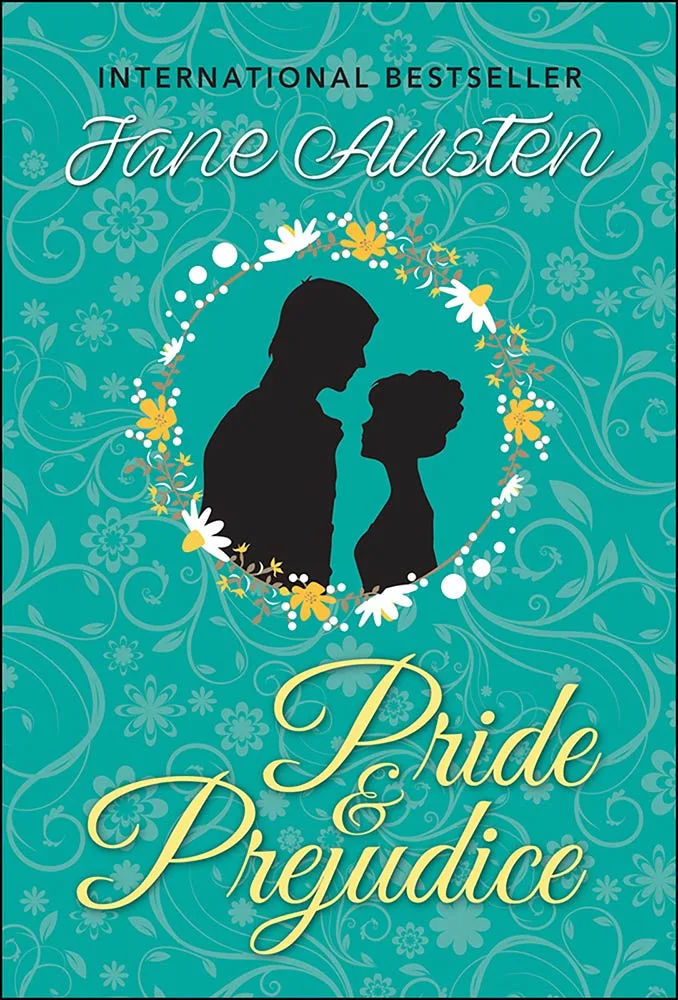
Download Cover Image
Do you want to download the full cover image for Pride and Prejudice?