
The Science of Getting Rich
Hardcover
• 124 Pages
• INR 345.00
• English
• 9789387669239
No ratings yet
| Publisher | General Press |
|---|---|
| ISBN13 | 9789387669239 |
| ASIN/SKU | 9387669238 |
| Book Format | Hardcover |
| Language | English |
| Pages | 124 |
| List Price | INR 345.00 |
| Subject Code | SEL027000, SEL015000, BUS000000 |
| Publishing Date | 03/02/2018 |
| Dimensions | 8.25 x 5.25 x 1.0 inches |
| Book Code | BD00068018 |
Buy this Book
Amazon Stores
Ebook Stores
Other Stores
Discover The Science of Getting Rich by Wallace D. Wattles. This book is published by General Press in Hardcover format, ISBN 9789387669239, ASIN 9387669238, under Self-Help, Business and Money, Motivational.
Book Description
What if getting rich were not simply a matter of luck, inheritance, or relentless competition, but a skill that could be developed through a clear way of thinking and acting? 'The Science of Getting Rich' by Wallace D. Wattles is a classic personal development and wealth-building book that explores this provocative idea, presenting prosperity as the result of purposeful thought, creative action, and a disciplined approach to life.
First published in 1910, the book challenges the belief that financial success is reserved for a fortunate few. Wattles argues that there is a fundamental “science” behind creating wealth and that anyone, regardless of their circumstances, can learn to apply its principles. Rather than encouraging readers to chase money through aggressive competition, he emphasizes a creative approach in which people seek to produce value, improve their circumstances, and contribute something meaningful to the world around them.
At the heart of the book is the power of thought. Wattles maintains that a person's mental attitude shapes the way they approach opportunities, overcome limitations, and turn ideas into tangible results. He encourages readers to develop a strong sense of purpose, cultivate gratitude, think constructively, and act with confidence instead of being consumed by fear, doubt, or scarcity. His message is not simply about accumulating possessions; it connects material prosperity with personal growth, purposeful work, and the freedom to live more fully.
The book also places unusual importance on taking action. Positive thinking alone, Wattles insists, is not enough. Readers are encouraged to perform every task in an efficient, purposeful, and forward-moving way while remaining focused on the larger vision of the life they want to create. His ideas combine spiritual reflection, practical ambition, and an optimistic belief in human potential.
Although written more than a century ago, 'The Science of Getting Rich' continues to attract readers interested in wealth creation, mindset, manifestation, entrepreneurship, and personal success. Whether you agree with all of Wattles's philosophy or simply want to understand one of the foundational books of modern prosperity literature, its straightforward ideas invite reflection—and may leave you wondering what could change if you began approaching your own ambitions differently.
First published in 1910, the book challenges the belief that financial success is reserved for a fortunate few. Wattles argues that there is a fundamental “science” behind creating wealth and that anyone, regardless of their circumstances, can learn to apply its principles. Rather than encouraging readers to chase money through aggressive competition, he emphasizes a creative approach in which people seek to produce value, improve their circumstances, and contribute something meaningful to the world around them.
At the heart of the book is the power of thought. Wattles maintains that a person's mental attitude shapes the way they approach opportunities, overcome limitations, and turn ideas into tangible results. He encourages readers to develop a strong sense of purpose, cultivate gratitude, think constructively, and act with confidence instead of being consumed by fear, doubt, or scarcity. His message is not simply about accumulating possessions; it connects material prosperity with personal growth, purposeful work, and the freedom to live more fully.
The book also places unusual importance on taking action. Positive thinking alone, Wattles insists, is not enough. Readers are encouraged to perform every task in an efficient, purposeful, and forward-moving way while remaining focused on the larger vision of the life they want to create. His ideas combine spiritual reflection, practical ambition, and an optimistic belief in human potential.
Although written more than a century ago, 'The Science of Getting Rich' continues to attract readers interested in wealth creation, mindset, manifestation, entrepreneurship, and personal success. Whether you agree with all of Wattles's philosophy or simply want to understand one of the foundational books of modern prosperity literature, its straightforward ideas invite reflection—and may leave you wondering what could change if you began approaching your own ambitions differently.
Author Biography
Wallace D. Wattles was an American author and a pioneer success writer. A practical author, Wattles encouraged his readers to test his theories on themselves rather than take his word as an authority, and he claimed to have tested his methods on himself and others before publishing them.
Born in the mid 1800s during the War between the States, Wallace D. Wattles experienced a life of failure after failure, until he formulated and put into practice the principles laid out in 'The Science of Getting Rich'.
His daughter Florence notes that in those last years, "He wrote almost constantly. It was then that he formed his mental picture. He saw himself as a successful writer, a personality of power, an advancing man, and he began to work toward the realization of this vision. He lived every page... His life was truly the powerful life."
Although Mr. Wattles died relatively young, and although his work was largely forgotten for years, those who have studied and applied these principles throughout the 20th century have experienced remarkable results. They have gotten rich!
Rhonda Byrne told a Newsweek interviewer that her inspiration for creating the 2006 hit film The Secret and the subsequent book by the same name, was her exposure to Wattles's The Science of Getting Rich. Byrne's daughter, Hayley, had given her mother a copy of the Wattles book to help her recover from her breakdown.
Born in the mid 1800s during the War between the States, Wallace D. Wattles experienced a life of failure after failure, until he formulated and put into practice the principles laid out in 'The Science of Getting Rich'.
His daughter Florence notes that in those last years, "He wrote almost constantly. It was then that he formed his mental picture. He saw himself as a successful writer, a personality of power, an advancing man, and he began to work toward the realization of this vision. He lived every page... His life was truly the powerful life."
Although Mr. Wattles died relatively young, and although his work was largely forgotten for years, those who have studied and applied these principles throughout the 20th century have experienced remarkable results. They have gotten rich!
Rhonda Byrne told a Newsweek interviewer that her inspiration for creating the 2006 hit film The Secret and the subsequent book by the same name, was her exposure to Wattles's The Science of Getting Rich. Byrne's daughter, Hayley, had given her mother a copy of the Wattles book to help her recover from her breakdown.
Editorial Reviews
Editorial Reviews will be added soon…
Book Summary
Wallace D. Wattles’s The Science of Getting Rich is a short but influential book about wealth, ambition, and the way a person can deliberately build a better life. First published in 1910, the book is not really a guide to investments, business techniques, or quick ways of making money. Instead, Wattles presents a philosophy of prosperity based on disciplined thinking, purposeful action, creativity, and a strong belief that every person has the ability to improve their circumstances. His central argument is simple: becoming wealthy is not something reserved for a lucky few. According to Wattles, wealth can be approached almost like a science, because certain principles, when understood and consistently practiced, can lead a person toward greater abundance.
The book begins with an idea that was quite bold for its time: wanting to become rich is not something a person should feel ashamed of. Wattles sees material prosperity as a legitimate human desire because having enough money can provide freedom, comfort, opportunities, and the ability to live more fully. Poverty, in his view, is not an ideal state that people should simply accept. He believes that people have a natural desire to grow, develop their talents, experience life, and contribute to others, and money can make many of these possibilities easier to pursue. Therefore, the desire for wealth is presented as part of the larger human desire for a richer and more complete existence.
A major foundation of Wattles’s philosophy is his belief that there is a creative intelligence or “Certain Way” through which people can bring desired changes into their lives. He repeatedly emphasizes the importance of thinking in a particular manner. Instead of approaching life from fear, competition, scarcity, or resentment, a person should develop a clear mental picture of the life they want. This does not mean simply wishing for wealth and waiting for it to appear. Wattles argues that thought must be combined with purposeful action. The mind establishes direction, while action turns that direction into reality.
One of the book’s most important distinctions is between creative action and competitive action. Wattles believes that people often think they can become wealthy only by taking something away from someone else. In a competitive mindset, success becomes a struggle in which one person’s gain is another person’s loss. Wattles rejects this approach. He argues that lasting prosperity comes through creating value rather than merely competing for existing wealth. A person should seek to produce, improve, serve, invent, organize, or contribute in ways that make life better for others. In this sense, wealth is connected with usefulness. The more effectively a person creates value, the more opportunities they have to receive wealth in return.
This creative approach also changes the way Wattles thinks about work. He does not advise people to spend their lives waiting for the perfect opportunity or dreaming about a completely different career. Instead, he repeatedly tells readers to act where they are and make the most of their present circumstances. Whatever work a person is currently doing, they should perform it with purpose, efficiency, imagination, and a genuine desire to improve. By doing their present work in a “Certain Way,” they can develop greater capability and open the door to new opportunities. The message is practical beneath its philosophical language: stop waiting for circumstances to become perfect and begin improving what is already within your control.
Wattles also places great importance on gratitude. For him, gratitude is not simply a polite attitude or a way of feeling positive. It is a mental discipline that helps a person focus on possibility rather than limitation. Someone who constantly concentrates on what is missing may become trapped in frustration and fear. Someone who recognizes what they already possess can approach life with greater confidence and openness. Gratitude, therefore, becomes a way of maintaining a constructive relationship with the world while continuing to pursue something better.
Another recurring theme is the importance of faith. Wattles asks readers to develop a strong belief in their ability to move toward their desired future. He understands that uncertainty and setbacks are unavoidable, but he argues that people should not allow temporary circumstances to dictate their entire outlook. The person seeking prosperity should maintain a clear vision of what they want and avoid constantly changing direction because of immediate difficulties. This requires persistence. The desired result may not appear immediately, but consistent thought and action gradually create new possibilities.
The book strongly discourages worry, fear, and excessive attention to competition. Wattles believes that constantly watching what other people are doing can distract a person from their own purpose. Comparing oneself with others creates anxiety and can make success appear like a race. Instead, the individual should concentrate on personal growth and on doing useful work. This does not mean ignoring reality or refusing to learn from others; rather, it means avoiding the mental habit of measuring one’s worth entirely through other people’s achievements.
Wattles also argues that a person should act in a way that expresses abundance rather than desperation. This is one of the more psychological aspects of the book. He believes that people who approach opportunities with fear may make poor decisions, while those who act with confidence and purpose are more likely to recognize possibilities. His idea of “acting in a certain way” therefore combines practical effort with an inner attitude of confidence, expectation, and determination.
The book’s philosophy becomes especially interesting when Wattles discusses the relationship between individual prosperity and the welfare of others. Although the title focuses on getting rich, Wattles does not present wealth as an excuse for selfishness. His ideal wealthy person creates rather than exploits. By becoming more capable, productive, and creative, a person can supposedly improve their own life while also increasing the opportunities and benefits available to others. In this respect, his philosophy treats prosperity as something that can expand rather than something that must be divided into a fixed amount.
At the same time, modern readers may find some of Wattles’s claims overly absolute. He sometimes suggests that disciplined thought and faith can produce results with a certainty that does not account for economic inequality, social circumstances, illness, discrimination, chance, or other realities beyond individual control. His argument can therefore be read most usefully as a philosophy of personal agency rather than as a literal guarantee of wealth. Thinking positively does not eliminate structural barriers or make success inevitable. What the book does offer is a powerful reminder that attitude, clarity, persistence, and purposeful action can influence how a person responds to circumstances.
Ultimately, The Science of Getting Rich is less about money itself than about the mindset behind purposeful living. Wattles asks readers to stop thinking of themselves as helpless victims of circumstances and instead become active creators of their futures. He encourages clear goals, gratitude, confidence, creative work, generosity, and persistent action. His central lesson is that prosperity begins with a decision to grow and is sustained by the willingness to act consistently in that direction. Even though many of the book’s ideas are expressed in the spiritual language of the early twentieth century, its emphasis on purposeful thinking, creating value, focusing on one’s own work, and taking action continues to explain why the book has remained influential. Its lasting appeal lies in its optimistic message: a better life begins not with waiting for opportunity, but with learning to recognize opportunity, create value, and act with intention.
The book begins with an idea that was quite bold for its time: wanting to become rich is not something a person should feel ashamed of. Wattles sees material prosperity as a legitimate human desire because having enough money can provide freedom, comfort, opportunities, and the ability to live more fully. Poverty, in his view, is not an ideal state that people should simply accept. He believes that people have a natural desire to grow, develop their talents, experience life, and contribute to others, and money can make many of these possibilities easier to pursue. Therefore, the desire for wealth is presented as part of the larger human desire for a richer and more complete existence.
A major foundation of Wattles’s philosophy is his belief that there is a creative intelligence or “Certain Way” through which people can bring desired changes into their lives. He repeatedly emphasizes the importance of thinking in a particular manner. Instead of approaching life from fear, competition, scarcity, or resentment, a person should develop a clear mental picture of the life they want. This does not mean simply wishing for wealth and waiting for it to appear. Wattles argues that thought must be combined with purposeful action. The mind establishes direction, while action turns that direction into reality.
One of the book’s most important distinctions is between creative action and competitive action. Wattles believes that people often think they can become wealthy only by taking something away from someone else. In a competitive mindset, success becomes a struggle in which one person’s gain is another person’s loss. Wattles rejects this approach. He argues that lasting prosperity comes through creating value rather than merely competing for existing wealth. A person should seek to produce, improve, serve, invent, organize, or contribute in ways that make life better for others. In this sense, wealth is connected with usefulness. The more effectively a person creates value, the more opportunities they have to receive wealth in return.
This creative approach also changes the way Wattles thinks about work. He does not advise people to spend their lives waiting for the perfect opportunity or dreaming about a completely different career. Instead, he repeatedly tells readers to act where they are and make the most of their present circumstances. Whatever work a person is currently doing, they should perform it with purpose, efficiency, imagination, and a genuine desire to improve. By doing their present work in a “Certain Way,” they can develop greater capability and open the door to new opportunities. The message is practical beneath its philosophical language: stop waiting for circumstances to become perfect and begin improving what is already within your control.
Wattles also places great importance on gratitude. For him, gratitude is not simply a polite attitude or a way of feeling positive. It is a mental discipline that helps a person focus on possibility rather than limitation. Someone who constantly concentrates on what is missing may become trapped in frustration and fear. Someone who recognizes what they already possess can approach life with greater confidence and openness. Gratitude, therefore, becomes a way of maintaining a constructive relationship with the world while continuing to pursue something better.
Another recurring theme is the importance of faith. Wattles asks readers to develop a strong belief in their ability to move toward their desired future. He understands that uncertainty and setbacks are unavoidable, but he argues that people should not allow temporary circumstances to dictate their entire outlook. The person seeking prosperity should maintain a clear vision of what they want and avoid constantly changing direction because of immediate difficulties. This requires persistence. The desired result may not appear immediately, but consistent thought and action gradually create new possibilities.
The book strongly discourages worry, fear, and excessive attention to competition. Wattles believes that constantly watching what other people are doing can distract a person from their own purpose. Comparing oneself with others creates anxiety and can make success appear like a race. Instead, the individual should concentrate on personal growth and on doing useful work. This does not mean ignoring reality or refusing to learn from others; rather, it means avoiding the mental habit of measuring one’s worth entirely through other people’s achievements.
Wattles also argues that a person should act in a way that expresses abundance rather than desperation. This is one of the more psychological aspects of the book. He believes that people who approach opportunities with fear may make poor decisions, while those who act with confidence and purpose are more likely to recognize possibilities. His idea of “acting in a certain way” therefore combines practical effort with an inner attitude of confidence, expectation, and determination.
The book’s philosophy becomes especially interesting when Wattles discusses the relationship between individual prosperity and the welfare of others. Although the title focuses on getting rich, Wattles does not present wealth as an excuse for selfishness. His ideal wealthy person creates rather than exploits. By becoming more capable, productive, and creative, a person can supposedly improve their own life while also increasing the opportunities and benefits available to others. In this respect, his philosophy treats prosperity as something that can expand rather than something that must be divided into a fixed amount.
At the same time, modern readers may find some of Wattles’s claims overly absolute. He sometimes suggests that disciplined thought and faith can produce results with a certainty that does not account for economic inequality, social circumstances, illness, discrimination, chance, or other realities beyond individual control. His argument can therefore be read most usefully as a philosophy of personal agency rather than as a literal guarantee of wealth. Thinking positively does not eliminate structural barriers or make success inevitable. What the book does offer is a powerful reminder that attitude, clarity, persistence, and purposeful action can influence how a person responds to circumstances.
Ultimately, The Science of Getting Rich is less about money itself than about the mindset behind purposeful living. Wattles asks readers to stop thinking of themselves as helpless victims of circumstances and instead become active creators of their futures. He encourages clear goals, gratitude, confidence, creative work, generosity, and persistent action. His central lesson is that prosperity begins with a decision to grow and is sustained by the willingness to act consistently in that direction. Even though many of the book’s ideas are expressed in the spiritual language of the early twentieth century, its emphasis on purposeful thinking, creating value, focusing on one’s own work, and taking action continues to explain why the book has remained influential. Its lasting appeal lies in its optimistic message: a better life begins not with waiting for opportunity, but with learning to recognize opportunity, create value, and act with intention.
Sample Chapters
Chapter 1 : The Right to be Rich
Whatever may be said in praise of poverty, the fact remains that it is not possible to live a really complete or successful life unless one is rich. No one can rise to his greatest possible height in talent or soul development unless he has plenty of money. For to unfold the soul and to develop talent he must have many things to use, and he cannot have these things unless he has money to buy them with.
A person develops in mind, soul, and body by making use of things, and society is so organized that one must have money in order to become the possessor of things. Therefore, the basis of all advancement must be the science of getting rich.
The object of all life is development. Everything that lives, has an inalienable right to all the development it is capable of attaining.
A person’s right to life means his right to have the free and unrestricted use of all the things which may be necessary to his fullest mental, spiritual, and physical unfolding, or, in other words, his right to be rich.
In this book, I shall not speak of riches in a figurative way. To be really rich does not mean to be satisfied or contented with a little. No one ought to be satisfied with a little if he is capable of using and enjoying more. The purpose of Nature is the advancement and unfolding of life. And every one should have all that can contribute to the power, elegance, beauty, and richness of life. To be content with less is sinful.
The person who owns all he wants for the living of all the life he is capable of living is rich. No person who does not have plenty of money can have all he wants. Life has advanced so far, and become so complex, that even the most ordinary man or woman requires a great amount of wealth in order to live in a manner that even approaches completeness. Every person naturally wants to become all that they are capable of becoming. This desire to realize innate possibilities is inherent in human nature. We cannot help wanting to be all that we can be. Success in life in becoming what you want to be. You can become what you want to be only by making use of things, and you can have the free use of things only as you become rich enough to buy them. To understand science of getting rich is therefore the most essential of all knowledge.
There is nothing wrong in wanting to get rich. The desire for riches is really the desire for a richer, fuller, and more abundant life; and that desire is praise worthy.
There is nothing wrong in wanting to get rich. The desire for riches is really the desire for a richer, fuller, and more abundant life; and that desire is praise worthy. The person who does not desire to live more abundantly is abnormal, and so the person who does not desire to have money enough to buy all he wants is abnormal.
There are three motives for which we live. We live for the body, we live for the mind and we live for the soul. No one of these is better or holier than the other. All three are alike desirable, and no one of them – body, mind, or soul, can live fully if either of the others is cut short of full life and expression. It is not right or noble to live only for the soul and deny mind or body; and it is wrong to live for the intellect and deny body or soul.
We are all acquainted with the loathsome consequences of living for the body and denying both mind and soul. And we see that real life means the complete expression of all that a person can give forth through body, mind, and soul. Whatever he can say, no one can be really happy or satisfied unless his body is living fully in every function, and unless the same is true of his mind and his soul. Wherever there is unexpressed possibility, or function not performed, there is unsatisfied desire. Desire is possibility seeking expression, or function seeking performance.
A person cannot live fully in body without good food, comfortable clothing, and warm shelter; and without freedom from excessive toil. Rest and recreation are also necessary to his physical life.
One cannot live fully in mind without books and time to study them, without opportunity for travel and observation, or without intellectual companionship.
To live fully in mind a person must have intellectual recreations, and must surround himself with all the objects of art and beauty he is capable of using and appreciating.
To live fully in soul, a person must have love; and love is denied fullest expression by poverty.
A person’s highest happiness is found in the bestowal of benefits on those he loves. Love finds its most natural and spontaneous expression in giving. The individual who has nothing to give cannot fill his place as a spouse or parent, as a citizen, or as a human being. It is in the use of material things that a person finds full life for his body, develops his mind, and unfolds his soul. It is therefore of supreme importance to him that he should be rich.
It is perfectly right that you should desire to be rich. If you are normal man or woman you cannot help doing so. It is perfectly right that you should give your best attention to the Science of Getting Rich, for it is the noblest and most necessary of all studies. If you neglect this study, you are derelict in your duty to yourself, to God and humanity; for you can render to God and humanity no greater service than to make the most of yourself.
Chapter 2 : There is a Science of Getting Rich
There is a science of getting rich, and it is an exact science, like algebra or arithmetic. There are certain laws that govern the process of acquiring riches. Once these laws are learned and obeyed by any one, that person will get rich with mathematical certainty.
The ownership of money and property comes as a result of doing things in a certain way. Those who do things in this certain way, whether on purpose or accidentally, get rich. While those who do not do things in this certain way, no matter how hard they work or how able they are, remain poor.
There is a science of getting rich, and it is an exact science, like algebra or arithmetic. There are certain laws that govern the process of acquiring riches. Once these laws are learned and obeyed by any one, that person will get rich with mathematical certainty.
It is a natural law that like causes always produce like effects. Therefore, any man or woman who learns to do things in this certain way will infallibly get rich.
That the above statement is true is shown by the following facts:
Getting rich is not a matter of environment. If it were, all the people in certain neighborhoods would become wealthy. The people of one city would all be rich, while those of other towns would all be poor. Or all the inhabitants of one state would roll in wealth, while those of an adjoining state would be in poverty.
But everywhere we see rich and poor living side by side, in the same environment, and often engaged in the same vocations. When two people are in the same locality, and in the same business, and one gets rich while the other remains poor, it shows that getting rich is not, primarily, a matter of environment. Some environments may be more favorable than others, but when two men in the same business are in the same neighborhood, and one gets rich while the other fails, it indicates that getting rich is the result of doing things in a certain way.
And further, the ability to do things in this certain way is not due solely to the possession of talent, for many people who have great talent remain poor, while other who have very little talent get rich.
Studying the people who have got rich, we find that they are an average lot in all respects, having no greater talents and abilities than other people have. It is evident that they do not get rich because they possess talents and abilities that others do not have, but because they happen to do things in a certain way.
Getting rich is not the result of saving, or “thrift”; many very penurious people are poor, while free spenders often get rich.
Nor is getting rich due to doing things which others fail to do; for two men in the same business often do almost exactly the same things, and one gets rich while the other remains poor or becomes bankrupt.
From all these things, we must come to the conclusion that getting rich is the result of doing things in a certain way.
If getting rich is the result of doing things in a certain way, and if like causes always produce like effects, then any man or woman who can do things in that way can become rich, and the whole matter is brought within the domain of exact science.
The question arises here as to whether this certain way may not be so difficult that only a few may follow it. This cannot be true, as we have seen, so far as natural ability is concerned. Talented people get rich, and blockheads get rich; intellectually brilliant people get rich, and very stupid people get rich; physically strong people get rich, and weak and sickly people get rich.
Some degree of ability to think and understand is, of course, essential. But in so far natural ability is concerned, any man or woman who has sense enough to read and understand these words can certainly get rich.
Also, we have seen that it is not a matter of environment. Location counts for something; one would not go to the heart of the Sahara and expect to do successful business. Getting rich involves the necessity of dealing with men, and of being where there are people to deal with; and if these people are inclined to deal in the way you want to deal, so much the better. But that is about as far as environment goes.
If anybody else in your town can get rich, so can you; and if anybody else in your state can get rich, so can you.
Again, it is not a matter of choosing some particular business or profession. People get rich in every business, and in every profession; while their next door neighbors in the same vocation remain in poverty.
It is true that you will do best in a business which you like, and which is congenial to you; and if you have certain talents which are well developed, you will do best in a business which calls for the exercise of those talents.
Also, you will do best in a business, which is suited to your locality. An ice-cream parlor would do better in a warm climate than in Greenland, and a salmon fishery will succeed better in the Northwest than in Florida, where there are no salmon.
But, aside from these general limitations, getting rich is not dependent upon your engaging in some particular business, but upon your learning to do things in a certain way. If you are now in business, and anybody else in your locality is getting rich in the same business, while you are not getting rich, it is because you are not doing things in the same way that the other person is doing them.
No one is prevented from getting rich by lack of capital. True, as you get capital the increase becomes more easy and rapid. But one who has capital is already rich, and does not need to consider how to become so. No matter how poor you may be, if you begin to do things in the certain way you will begin to get rich; and you will begin to have capital. The getting of capital is a part of the process of getting rich; and it is a part of the result which invariably follows the doing of things in the certain way. You may be the poorest man on the continent, and be deeply in debt; you may have neither friends, influence, nor resources; but if you begin to do things in this way, you must infallibly begin to get rich, for like causes must produce like effects. If you have no capital, you can get capital. If you are in the wrong business, you can get into the right business. If you are in the wrong location, you can go to the right location. And you can do so by beginning in your present business and in your present location to do things in the certain way, which causes success.
Whatever may be said in praise of poverty, the fact remains that it is not possible to live a really complete or successful life unless one is rich. No one can rise to his greatest possible height in talent or soul development unless he has plenty of money. For to unfold the soul and to develop talent he must have many things to use, and he cannot have these things unless he has money to buy them with.
A person develops in mind, soul, and body by making use of things, and society is so organized that one must have money in order to become the possessor of things. Therefore, the basis of all advancement must be the science of getting rich.
The object of all life is development. Everything that lives, has an inalienable right to all the development it is capable of attaining.
A person’s right to life means his right to have the free and unrestricted use of all the things which may be necessary to his fullest mental, spiritual, and physical unfolding, or, in other words, his right to be rich.
In this book, I shall not speak of riches in a figurative way. To be really rich does not mean to be satisfied or contented with a little. No one ought to be satisfied with a little if he is capable of using and enjoying more. The purpose of Nature is the advancement and unfolding of life. And every one should have all that can contribute to the power, elegance, beauty, and richness of life. To be content with less is sinful.
The person who owns all he wants for the living of all the life he is capable of living is rich. No person who does not have plenty of money can have all he wants. Life has advanced so far, and become so complex, that even the most ordinary man or woman requires a great amount of wealth in order to live in a manner that even approaches completeness. Every person naturally wants to become all that they are capable of becoming. This desire to realize innate possibilities is inherent in human nature. We cannot help wanting to be all that we can be. Success in life in becoming what you want to be. You can become what you want to be only by making use of things, and you can have the free use of things only as you become rich enough to buy them. To understand science of getting rich is therefore the most essential of all knowledge.
There is nothing wrong in wanting to get rich. The desire for riches is really the desire for a richer, fuller, and more abundant life; and that desire is praise worthy.
There is nothing wrong in wanting to get rich. The desire for riches is really the desire for a richer, fuller, and more abundant life; and that desire is praise worthy. The person who does not desire to live more abundantly is abnormal, and so the person who does not desire to have money enough to buy all he wants is abnormal.
There are three motives for which we live. We live for the body, we live for the mind and we live for the soul. No one of these is better or holier than the other. All three are alike desirable, and no one of them – body, mind, or soul, can live fully if either of the others is cut short of full life and expression. It is not right or noble to live only for the soul and deny mind or body; and it is wrong to live for the intellect and deny body or soul.
We are all acquainted with the loathsome consequences of living for the body and denying both mind and soul. And we see that real life means the complete expression of all that a person can give forth through body, mind, and soul. Whatever he can say, no one can be really happy or satisfied unless his body is living fully in every function, and unless the same is true of his mind and his soul. Wherever there is unexpressed possibility, or function not performed, there is unsatisfied desire. Desire is possibility seeking expression, or function seeking performance.
A person cannot live fully in body without good food, comfortable clothing, and warm shelter; and without freedom from excessive toil. Rest and recreation are also necessary to his physical life.
One cannot live fully in mind without books and time to study them, without opportunity for travel and observation, or without intellectual companionship.
To live fully in mind a person must have intellectual recreations, and must surround himself with all the objects of art and beauty he is capable of using and appreciating.
To live fully in soul, a person must have love; and love is denied fullest expression by poverty.
A person’s highest happiness is found in the bestowal of benefits on those he loves. Love finds its most natural and spontaneous expression in giving. The individual who has nothing to give cannot fill his place as a spouse or parent, as a citizen, or as a human being. It is in the use of material things that a person finds full life for his body, develops his mind, and unfolds his soul. It is therefore of supreme importance to him that he should be rich.
It is perfectly right that you should desire to be rich. If you are normal man or woman you cannot help doing so. It is perfectly right that you should give your best attention to the Science of Getting Rich, for it is the noblest and most necessary of all studies. If you neglect this study, you are derelict in your duty to yourself, to God and humanity; for you can render to God and humanity no greater service than to make the most of yourself.
Chapter 2 : There is a Science of Getting Rich
There is a science of getting rich, and it is an exact science, like algebra or arithmetic. There are certain laws that govern the process of acquiring riches. Once these laws are learned and obeyed by any one, that person will get rich with mathematical certainty.
The ownership of money and property comes as a result of doing things in a certain way. Those who do things in this certain way, whether on purpose or accidentally, get rich. While those who do not do things in this certain way, no matter how hard they work or how able they are, remain poor.
There is a science of getting rich, and it is an exact science, like algebra or arithmetic. There are certain laws that govern the process of acquiring riches. Once these laws are learned and obeyed by any one, that person will get rich with mathematical certainty.
It is a natural law that like causes always produce like effects. Therefore, any man or woman who learns to do things in this certain way will infallibly get rich.
That the above statement is true is shown by the following facts:
Getting rich is not a matter of environment. If it were, all the people in certain neighborhoods would become wealthy. The people of one city would all be rich, while those of other towns would all be poor. Or all the inhabitants of one state would roll in wealth, while those of an adjoining state would be in poverty.
But everywhere we see rich and poor living side by side, in the same environment, and often engaged in the same vocations. When two people are in the same locality, and in the same business, and one gets rich while the other remains poor, it shows that getting rich is not, primarily, a matter of environment. Some environments may be more favorable than others, but when two men in the same business are in the same neighborhood, and one gets rich while the other fails, it indicates that getting rich is the result of doing things in a certain way.
And further, the ability to do things in this certain way is not due solely to the possession of talent, for many people who have great talent remain poor, while other who have very little talent get rich.
Studying the people who have got rich, we find that they are an average lot in all respects, having no greater talents and abilities than other people have. It is evident that they do not get rich because they possess talents and abilities that others do not have, but because they happen to do things in a certain way.
Getting rich is not the result of saving, or “thrift”; many very penurious people are poor, while free spenders often get rich.
Nor is getting rich due to doing things which others fail to do; for two men in the same business often do almost exactly the same things, and one gets rich while the other remains poor or becomes bankrupt.
From all these things, we must come to the conclusion that getting rich is the result of doing things in a certain way.
If getting rich is the result of doing things in a certain way, and if like causes always produce like effects, then any man or woman who can do things in that way can become rich, and the whole matter is brought within the domain of exact science.
The question arises here as to whether this certain way may not be so difficult that only a few may follow it. This cannot be true, as we have seen, so far as natural ability is concerned. Talented people get rich, and blockheads get rich; intellectually brilliant people get rich, and very stupid people get rich; physically strong people get rich, and weak and sickly people get rich.
Some degree of ability to think and understand is, of course, essential. But in so far natural ability is concerned, any man or woman who has sense enough to read and understand these words can certainly get rich.
Also, we have seen that it is not a matter of environment. Location counts for something; one would not go to the heart of the Sahara and expect to do successful business. Getting rich involves the necessity of dealing with men, and of being where there are people to deal with; and if these people are inclined to deal in the way you want to deal, so much the better. But that is about as far as environment goes.
If anybody else in your town can get rich, so can you; and if anybody else in your state can get rich, so can you.
Again, it is not a matter of choosing some particular business or profession. People get rich in every business, and in every profession; while their next door neighbors in the same vocation remain in poverty.
It is true that you will do best in a business which you like, and which is congenial to you; and if you have certain talents which are well developed, you will do best in a business which calls for the exercise of those talents.
Also, you will do best in a business, which is suited to your locality. An ice-cream parlor would do better in a warm climate than in Greenland, and a salmon fishery will succeed better in the Northwest than in Florida, where there are no salmon.
But, aside from these general limitations, getting rich is not dependent upon your engaging in some particular business, but upon your learning to do things in a certain way. If you are now in business, and anybody else in your locality is getting rich in the same business, while you are not getting rich, it is because you are not doing things in the same way that the other person is doing them.
No one is prevented from getting rich by lack of capital. True, as you get capital the increase becomes more easy and rapid. But one who has capital is already rich, and does not need to consider how to become so. No matter how poor you may be, if you begin to do things in the certain way you will begin to get rich; and you will begin to have capital. The getting of capital is a part of the process of getting rich; and it is a part of the result which invariably follows the doing of things in the certain way. You may be the poorest man on the continent, and be deeply in debt; you may have neither friends, influence, nor resources; but if you begin to do things in this way, you must infallibly begin to get rich, for like causes must produce like effects. If you have no capital, you can get capital. If you are in the wrong business, you can get into the right business. If you are in the wrong location, you can go to the right location. And you can do so by beginning in your present business and in your present location to do things in the certain way, which causes success.
Reader Reviews
No reviews yet.
The Science of Getting Rich
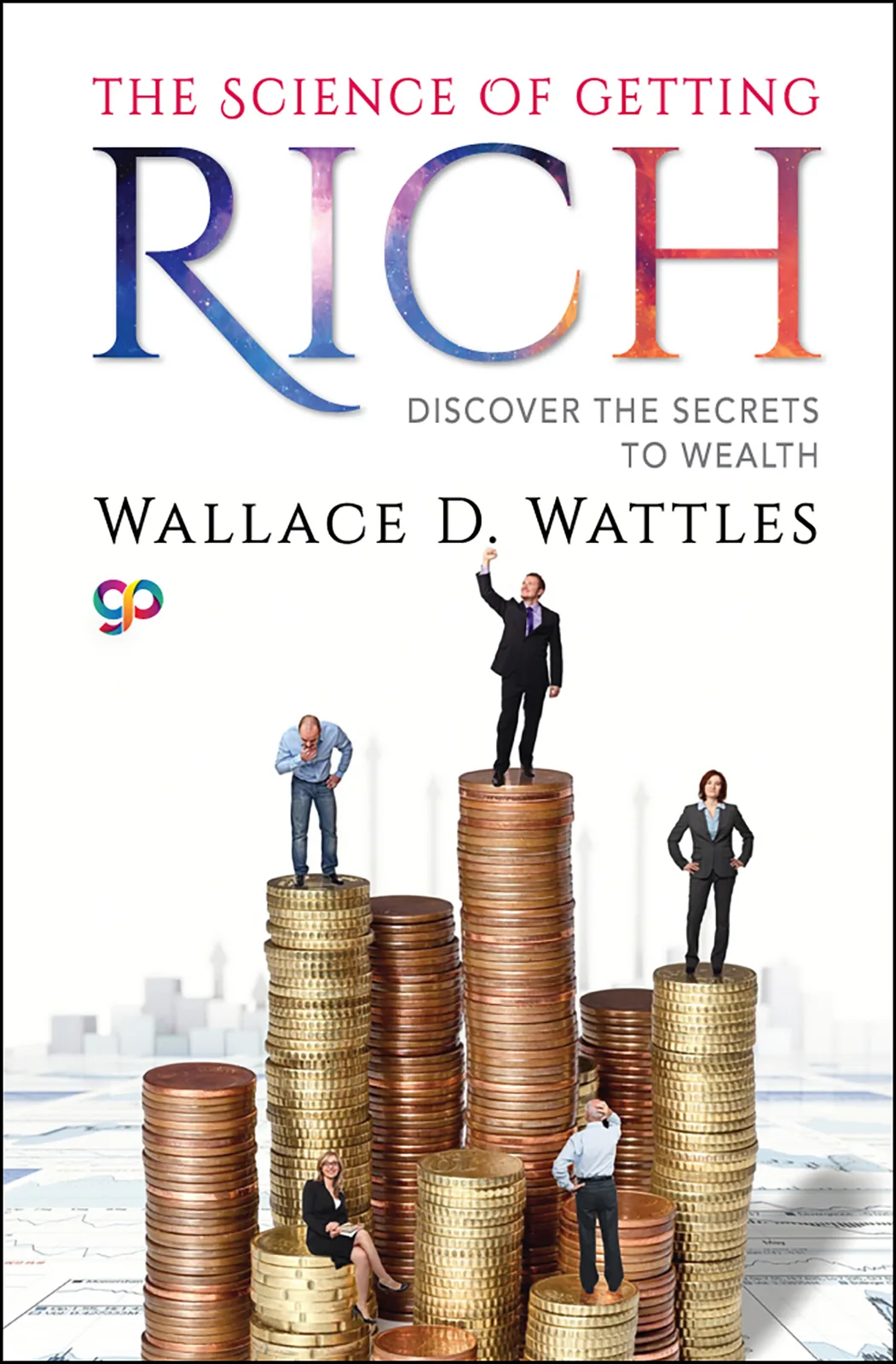
Download Cover Image
Do you want to download the full cover image for The Science of Getting Rich?