
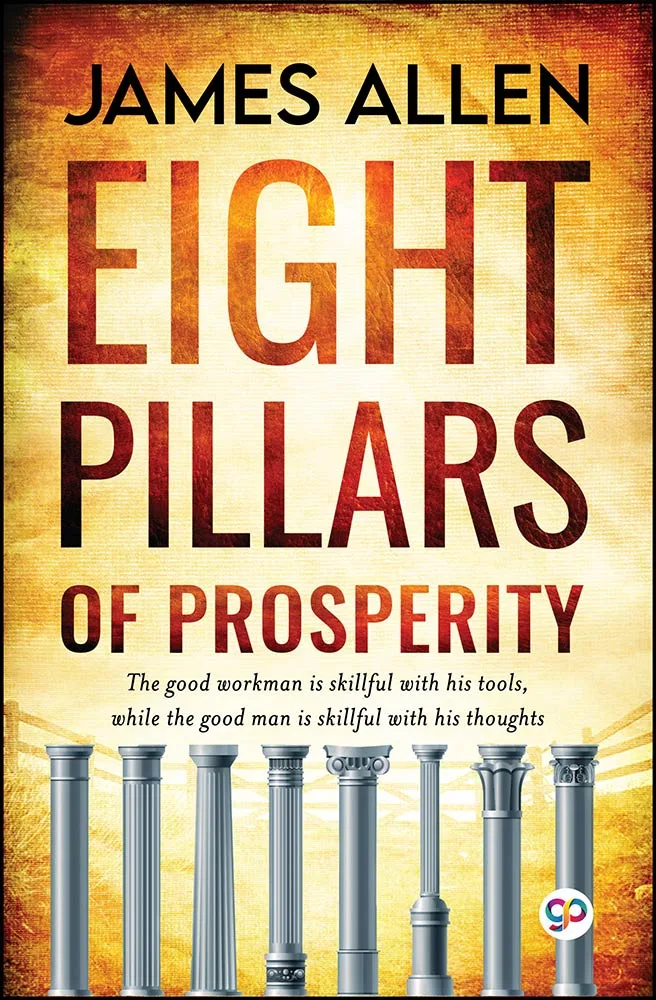
Eight Pillars of Prosperity
eBook
• INR 99.00
• English
• 9789354999420
No ratings yet
| Publisher | General Press |
|---|---|
| ISBN13 | 9789354999420 |
| ASIN/SKU | B0G1TQXZ3R |
| Book Format | eBook |
| Language | English |
| List Price | INR 99.00 |
| Subject Code | SEL027000, SEL021000, OCC019000 |
| Book Code | BD00068039 |
Buy this Book
Amazon Stores
Ebook Stores
Other Stores
Discover Eight Pillars of Prosperity by James Allen. This book is published by General Press in eBook format, ISBN 9789354999420, ASIN B0G1TQXZ3R, under Self-Help, Personal Growth, Success.
Book Description
One of James Allen's final publications, ‘Eight Pillars of Prosperity,’ was originally released in 1911. The philosopher, who was born in Britain, helped to establish the self-help movement with his spiritual and motivational works. This walks the reader through the eight characteristics that real prosperity for a man need. Beautiful hand-drawn images throughout the book elevate an ageless classic in the most wonderful way.
Among our best minds was James Allen. Allen teaches you about the power of positive thinking in this book. He also covers topics such as energy, economics, integrity, systems, sincerity, impartiality, and self-reliance. It is a common misconception that political and social reconstruction is the sole path to increased wealth for people or nations. This is not true in the absence of moral values being practiced by the people who make up a nation. These lessons remain relevant today just as they did back when they were first written. An essential book.
Among our best minds was James Allen. Allen teaches you about the power of positive thinking in this book. He also covers topics such as energy, economics, integrity, systems, sincerity, impartiality, and self-reliance. It is a common misconception that political and social reconstruction is the sole path to increased wealth for people or nations. This is not true in the absence of moral values being practiced by the people who make up a nation. These lessons remain relevant today just as they did back when they were first written. An essential book.
Author Biography
Born in Leicester, England, in 1864, James Allen experienced profound tragedy early in life. When he was just fifteen, his father traveled to America in search of better economic opportunities, only to be robbed and murdered before the family could join him. This sudden loss forced Allen to abandon his formal education and enter the workforce to support his family, taking on various clerical and secretarial jobs for British manufacturing firms over the next two decades.
Despite his abbreviated schooling, Allen was a voracious reader with a deeply inquisitive mind. He immersed himself in the works of Leo Tolstoy, Ralph Waldo Emerson, and various Eastern philosophical and religious texts, cultivating a profound understanding of spiritual principles. In 1902, drawing from years of quiet reflection, he published his first book, From Poverty to Power, and subsequently launched a spiritual magazine titled The Light of Reason to share his evolving insights on personal empowerment.
The following year, Allen published the work that would cement his legacy: As a Man Thinketh. A seminal text in the New Thought movement, the brief philosophical essay argued that individuals hold the key to their own happiness, health, and success through the mastery of their thoughts. With its empowering message that a person's character and outer circumstances are the direct result of their inner mind, the book became a foundational pillar of modern self-help literature and has continuously influenced readers for over a century.
Following his initial literary success, Allen retired from his corporate work and moved with his wife, Lily, to the coastal town of Ilfracombe in Devon. There, he embraced a quiet, contemplative lifestyle dedicated entirely to writing, meditation, and gardening. Over the course of a brief but remarkably prolific decade, he produced a total of nineteen books before his untimely death in 1912 at the age of forty-seven, leaving behind an enduring legacy of inspirational philosophy.
Despite his abbreviated schooling, Allen was a voracious reader with a deeply inquisitive mind. He immersed himself in the works of Leo Tolstoy, Ralph Waldo Emerson, and various Eastern philosophical and religious texts, cultivating a profound understanding of spiritual principles. In 1902, drawing from years of quiet reflection, he published his first book, From Poverty to Power, and subsequently launched a spiritual magazine titled The Light of Reason to share his evolving insights on personal empowerment.
The following year, Allen published the work that would cement his legacy: As a Man Thinketh. A seminal text in the New Thought movement, the brief philosophical essay argued that individuals hold the key to their own happiness, health, and success through the mastery of their thoughts. With its empowering message that a person's character and outer circumstances are the direct result of their inner mind, the book became a foundational pillar of modern self-help literature and has continuously influenced readers for over a century.
Following his initial literary success, Allen retired from his corporate work and moved with his wife, Lily, to the coastal town of Ilfracombe in Devon. There, he embraced a quiet, contemplative lifestyle dedicated entirely to writing, meditation, and gardening. Over the course of a brief but remarkably prolific decade, he produced a total of nineteen books before his untimely death in 1912 at the age of forty-seven, leaving behind an enduring legacy of inspirational philosophy.
Editorial Reviews
Editorial Reviews will be added soon…
Book Summary
James Allen’s Eight Pillars of Prosperity is a concise but deeply moral book about the principles that, according to Allen, create lasting success and a genuinely prosperous life. Best known for As a Man Thinketh, Allen approaches prosperity very differently from modern books about wealth or financial achievement. For him, prosperity is not simply the accumulation of money, possessions, or status. True prosperity is the result of developing a strong character and living according to sound principles. Wealth without wisdom, he argues, can easily become a source of anxiety, selfishness, or destruction.
The central idea of the book is expressed through its title: a prosperous life rests upon several essential “pillars.” Allen presents these pillars as qualities that support both individual success and the well-being of society. They include energy, economy, integrity, system, sympathy, sincerity, impartiality, and self-reliance. These principles are interconnected. A person who develops them becomes not only more capable of achieving material success but also better prepared to use success responsibly.
The first pillar is Energy. Allen believes that achievement requires purposeful effort. Nothing valuable can be accomplished through laziness, hesitation, or passive wishing. Energy does not simply mean physical strength. It means having the mental determination to act, persevere, and continue working when difficulties arise. A person with energy does not constantly wait for ideal conditions. Instead, he or she begins with what is available and steadily moves forward.
For Allen, energy must be directed toward a definite purpose. Random activity is not the same as productive effort. The prosperous person learns to concentrate attention and effort rather than scattering them across countless distractions. Persistence transforms ability into achievement.
The second pillar is Economy. Allen uses the word in a broader sense than simply saving money. Economy means using resources wisely. Time, energy, money, attention, and opportunities are all limited resources, and waste weakens a person's ability to progress. Allen therefore encourages moderation and careful management.
He does not present frugality as miserliness. The purpose of economy is to create stability and usefulness. A person who spends everything impulsively remains dependent on circumstances, while someone who manages resources carefully gains greater freedom. Economy also involves avoiding unnecessary desires and learning to distinguish genuine needs from temporary impulses.
The third pillar, Integrity, is perhaps the moral foundation of the entire book. Allen argues that lasting success cannot be built on dishonesty. A person may gain money through deception, manipulation, or exploitation, but such success is unstable. Integrity creates trust, and trust is essential to every lasting relationship, business, profession, and institution.
For Allen, integrity means doing what is right even when no one is watching. It requires consistency between one's private character and public behavior. A person who appears respectable but secretly acts dishonestly is not truly prosperous. Moral character matters more than external reputation.
The fourth pillar is System. Allen believes that successful people organize their lives rather than depending entirely on inspiration or luck. System means order, planning, discipline, and regularity. Work becomes more effective when it follows a thoughtful structure.
A systematic person knows what needs to be done and develops habits that make progress easier. Allen sees disorder as a form of waste. Without organization, energy is lost through confusion, delay, repetition, and poor decision-making. System therefore transforms effort into consistent results.
The fifth pillar is Sympathy. Here Allen moves beyond individual achievement and emphasizes human connection. Prosperity should not make a person indifferent to the struggles of others. Sympathy means developing the ability to understand other people's feelings, difficulties, and needs.
This quality is especially important in relationships and leadership. People are not merely instruments for achieving personal goals. They have fears, hopes, weaknesses, and aspirations of their own. A successful person who lacks sympathy may accumulate possessions while becoming emotionally isolated. Allen therefore sees compassion as an essential part of a genuinely prosperous life.
The sixth pillar is Sincerity. While integrity concerns moral honesty, sincerity emphasizes genuineness of character and intention. Allen warns against pretending to be something one is not. False appearances may impress people temporarily, but they eventually create distrust.
Sincerity means speaking honestly, acting naturally, and allowing one's conduct to reflect one's real principles. It also requires avoiding flattery and manipulation. A sincere person does not constantly change personality to gain approval. Instead, he or she develops a stable character that others can understand and trust.
The seventh pillar is Impartiality. Allen argues that a prosperous person should learn to judge situations fairly rather than allowing prejudice, anger, jealousy, or personal advantage to distort judgment. Impartiality requires emotional discipline.
This principle is particularly important when dealing with other people. We often judge ourselves by our intentions while judging others by their mistakes. Allen encourages readers to develop a more balanced perspective. Fairness strengthens relationships because people naturally trust those who are capable of judging situations without selfish bias.
The eighth and final pillar is Self-Reliance. Allen does not mean that people should refuse all assistance or live without relationships. Instead, self-reliance means developing the inner strength and practical ability to take responsibility for one's life.
A person who constantly blames circumstances, waits for rescue, or depends on others for every decision remains psychologically weak. Self-reliance means accepting responsibility, learning useful skills, making decisions, and facing consequences with courage. It is closely connected with confidence, but Allen's version of confidence comes from preparation and character rather than arrogance.
Together, these eight pillars form a unified philosophy. Energy without economy can become wasteful activity. Economy without sympathy can become selfishness. Integrity without system may remain an admirable intention without practical effectiveness. Self-reliance without impartiality can become stubbornness. Allen's point is that prosperity requires balance.
A particularly important feature of the book is its rejection of the idea that money alone defines success. Allen recognizes the usefulness of material wealth, but he regards it as an outward result rather than the deepest goal. A person who becomes wealthy while losing honesty, health, peace of mind, or meaningful relationships has not achieved complete prosperity.
He also emphasizes that prosperity is connected with service. Work becomes more valuable when it creates something useful for other people. Businesses, professions, and individual efforts contribute to society when they provide genuine value rather than merely exploiting others. In this sense, personal success and social responsibility should not be enemies.
Allen's philosophy also places great importance on habit. Character is not formed by occasional good intentions. It develops through repeated choices. A person becomes energetic by practicing disciplined action, economical by controlling waste, sincere by speaking truthfully, and self-reliant by accepting responsibility. Small habits gradually become permanent qualities.
The book's tone is idealistic but practical. Allen does not promise instant success or effortless wealth. Instead, he presents prosperity as the cumulative result of disciplined living. The message is especially relevant because it shifts attention away from external circumstances and toward qualities that individuals can cultivate.
Ultimately, Eight Pillars of Prosperity is less a book about getting rich than a book about becoming capable of living well. Allen suggests that genuine prosperity is built from the inside outward. Money may provide comfort, but character provides stability. Achievement may bring recognition, but integrity gives achievement lasting value. Success may improve circumstances, but sympathy and sincerity determine how that success affects other people.
The enduring message of the book is therefore simple: prosperity is not something a person merely possesses; it is something a person builds through character, discipline, usefulness, and responsible action. By cultivating energy, economy, integrity, system, sympathy, sincerity, impartiality, and self-reliance, a person can create a life that is not only materially successful but also meaningful, balanced, and worthy of respect.
The central idea of the book is expressed through its title: a prosperous life rests upon several essential “pillars.” Allen presents these pillars as qualities that support both individual success and the well-being of society. They include energy, economy, integrity, system, sympathy, sincerity, impartiality, and self-reliance. These principles are interconnected. A person who develops them becomes not only more capable of achieving material success but also better prepared to use success responsibly.
The first pillar is Energy. Allen believes that achievement requires purposeful effort. Nothing valuable can be accomplished through laziness, hesitation, or passive wishing. Energy does not simply mean physical strength. It means having the mental determination to act, persevere, and continue working when difficulties arise. A person with energy does not constantly wait for ideal conditions. Instead, he or she begins with what is available and steadily moves forward.
For Allen, energy must be directed toward a definite purpose. Random activity is not the same as productive effort. The prosperous person learns to concentrate attention and effort rather than scattering them across countless distractions. Persistence transforms ability into achievement.
The second pillar is Economy. Allen uses the word in a broader sense than simply saving money. Economy means using resources wisely. Time, energy, money, attention, and opportunities are all limited resources, and waste weakens a person's ability to progress. Allen therefore encourages moderation and careful management.
He does not present frugality as miserliness. The purpose of economy is to create stability and usefulness. A person who spends everything impulsively remains dependent on circumstances, while someone who manages resources carefully gains greater freedom. Economy also involves avoiding unnecessary desires and learning to distinguish genuine needs from temporary impulses.
The third pillar, Integrity, is perhaps the moral foundation of the entire book. Allen argues that lasting success cannot be built on dishonesty. A person may gain money through deception, manipulation, or exploitation, but such success is unstable. Integrity creates trust, and trust is essential to every lasting relationship, business, profession, and institution.
For Allen, integrity means doing what is right even when no one is watching. It requires consistency between one's private character and public behavior. A person who appears respectable but secretly acts dishonestly is not truly prosperous. Moral character matters more than external reputation.
The fourth pillar is System. Allen believes that successful people organize their lives rather than depending entirely on inspiration or luck. System means order, planning, discipline, and regularity. Work becomes more effective when it follows a thoughtful structure.
A systematic person knows what needs to be done and develops habits that make progress easier. Allen sees disorder as a form of waste. Without organization, energy is lost through confusion, delay, repetition, and poor decision-making. System therefore transforms effort into consistent results.
The fifth pillar is Sympathy. Here Allen moves beyond individual achievement and emphasizes human connection. Prosperity should not make a person indifferent to the struggles of others. Sympathy means developing the ability to understand other people's feelings, difficulties, and needs.
This quality is especially important in relationships and leadership. People are not merely instruments for achieving personal goals. They have fears, hopes, weaknesses, and aspirations of their own. A successful person who lacks sympathy may accumulate possessions while becoming emotionally isolated. Allen therefore sees compassion as an essential part of a genuinely prosperous life.
The sixth pillar is Sincerity. While integrity concerns moral honesty, sincerity emphasizes genuineness of character and intention. Allen warns against pretending to be something one is not. False appearances may impress people temporarily, but they eventually create distrust.
Sincerity means speaking honestly, acting naturally, and allowing one's conduct to reflect one's real principles. It also requires avoiding flattery and manipulation. A sincere person does not constantly change personality to gain approval. Instead, he or she develops a stable character that others can understand and trust.
The seventh pillar is Impartiality. Allen argues that a prosperous person should learn to judge situations fairly rather than allowing prejudice, anger, jealousy, or personal advantage to distort judgment. Impartiality requires emotional discipline.
This principle is particularly important when dealing with other people. We often judge ourselves by our intentions while judging others by their mistakes. Allen encourages readers to develop a more balanced perspective. Fairness strengthens relationships because people naturally trust those who are capable of judging situations without selfish bias.
The eighth and final pillar is Self-Reliance. Allen does not mean that people should refuse all assistance or live without relationships. Instead, self-reliance means developing the inner strength and practical ability to take responsibility for one's life.
A person who constantly blames circumstances, waits for rescue, or depends on others for every decision remains psychologically weak. Self-reliance means accepting responsibility, learning useful skills, making decisions, and facing consequences with courage. It is closely connected with confidence, but Allen's version of confidence comes from preparation and character rather than arrogance.
Together, these eight pillars form a unified philosophy. Energy without economy can become wasteful activity. Economy without sympathy can become selfishness. Integrity without system may remain an admirable intention without practical effectiveness. Self-reliance without impartiality can become stubbornness. Allen's point is that prosperity requires balance.
A particularly important feature of the book is its rejection of the idea that money alone defines success. Allen recognizes the usefulness of material wealth, but he regards it as an outward result rather than the deepest goal. A person who becomes wealthy while losing honesty, health, peace of mind, or meaningful relationships has not achieved complete prosperity.
He also emphasizes that prosperity is connected with service. Work becomes more valuable when it creates something useful for other people. Businesses, professions, and individual efforts contribute to society when they provide genuine value rather than merely exploiting others. In this sense, personal success and social responsibility should not be enemies.
Allen's philosophy also places great importance on habit. Character is not formed by occasional good intentions. It develops through repeated choices. A person becomes energetic by practicing disciplined action, economical by controlling waste, sincere by speaking truthfully, and self-reliant by accepting responsibility. Small habits gradually become permanent qualities.
The book's tone is idealistic but practical. Allen does not promise instant success or effortless wealth. Instead, he presents prosperity as the cumulative result of disciplined living. The message is especially relevant because it shifts attention away from external circumstances and toward qualities that individuals can cultivate.
Ultimately, Eight Pillars of Prosperity is less a book about getting rich than a book about becoming capable of living well. Allen suggests that genuine prosperity is built from the inside outward. Money may provide comfort, but character provides stability. Achievement may bring recognition, but integrity gives achievement lasting value. Success may improve circumstances, but sympathy and sincerity determine how that success affects other people.
The enduring message of the book is therefore simple: prosperity is not something a person merely possesses; it is something a person builds through character, discipline, usefulness, and responsible action. By cultivating energy, economy, integrity, system, sympathy, sincerity, impartiality, and self-reliance, a person can create a life that is not only materially successful but also meaningful, balanced, and worthy of respect.
Sample Chapters
Sample Chapters will be added soon…
Reader Reviews
No reviews yet.
Eight Pillars of Prosperity
Download Cover Image
Do you want to download the full cover image for Eight Pillars of Prosperity?