
Becoming a Writer
Paperback
• 124 Pages
• INR 275.00
• English
• 9789389157093
No ratings yet
| Publisher | General Press |
|---|---|
| ISBN13 | 9789389157093 |
| ASIN/SKU | 9389157099 |
| Book Format | Paperback |
| Language | English |
| Pages | 124 |
| List Price | INR 275.00 |
| Subject Code | SEL031000, SEL027000, SEL036000, REF020000 |
| Publishing Date | 22/05/2019 |
| Dimensions | 8.25 x 5.25 x 1.0 inches |
| Book Code | BD00068050 |
Buy this Book
Amazon Stores
Ebook Stores
Other Stores
Discover Becoming a Writer by Dorothea Brande. This book is published by General Press in Paperback format, ISBN 9789389157093, ASIN 9389157099, under Reference, Writing Skills, Writing and Publishing.
Book Description
Dorothea Brande's 'Becoming a Writer' remains evergreen decades after it was first written. Brande believed passionately that although people have varying amounts of talent, anyone can write. She also insists that writing can be both taught and learned. This is Dorothea Brande's legacy to all those who have ever wanted to express their ideas in written form. A sound, practical, inspirational and charming approach to writing, it fulfills on finding 'the writer's magic.'
Author Biography
American author, lecturer and magazine editor, Dorothea Brande, was the youngest of five children born to Frederick S. and Alice P. Thompson of Chicago, Illinois. Alice Dorothea Alden Thompson was born in Englewood, a Chicago community, on 12 January, 1892. Both of her parents were originally from Maine and had previously lived in Delaware where her three oldest siblings were born. Her father was employed as a manager at local business in the Chicago area. Brande attended the Universities of Michigan and Chicago, earning her Phi Beta Kappa key at the former. She went on to work as a newspaper reporter in Chicago and later as circulation manager for American Mercury magazine during the time of H.L. Mencken and George Jean Nathan. In the 1930s she became an associate editor of Bookman magazine and later its successor (1934), the American Review. In the years to come Brande would also operate a nationwide correspondence school for aspiring writers and tour on the lecture circuit. In 1916 she married fellow Chicago newspaper reporter Herbert Brande. Herbert would later gain some notoriety as an editorial writer. Their marriage ended in divorce sometime before 1930. In 1936 she married Seward B. Collins (1899-1952), who at the time was American Review's editor. Her inspirational book, 'Wake Up and Live' (1936) was written during the Great Depression and was a best seller and her most successful book. She was also the author of 'Becoming a Writer' (1934), 'Most Beautiful Lady' (1935), 'Letters to Philippa' (1937), 'My Invincible Aunt' (1938) and others.
Editorial Reviews
Editorial Reviews will be added soon…
Book Summary
Dorothea Brande’s Becoming a Writer is a thoughtful and practical guide to the inner life of writing. First published in 1934, the book is less concerned with teaching literary techniques than with helping aspiring writers overcome the fears, habits, doubts, and mental conflicts that prevent them from writing freely. Brande believes that many people who want to write already possess enough intelligence, imagination, and experience to produce meaningful work, but they struggle because they have not learned how to manage the different parts of their minds. Her approach is therefore both psychological and practical, encouraging writers to develop discipline while also protecting the spontaneous, imaginative part of themselves.
At the heart of Becoming a Writer is Brande’s belief that a successful writer needs to cultivate two different mental abilities. One is the conscious, critical mind that can organize ideas, revise sentences, judge quality, and make deliberate choices. The other is the unconscious or intuitive mind, which provides images, ideas, emotions, memories, and unexpected connections. Many beginning writers allow the critical mind to dominate too early. They judge every sentence as they write it, worry about whether an idea is good enough, and imagine how other people will react. As a result, the natural flow of creativity becomes blocked.
Brande’s solution is not to eliminate the critical mind but to learn when to use it. She wants the writer to separate creation from criticism. During the first stage of writing, the imaginative side should be given freedom to produce material without constant interference. Later, the analytical mind can return to shape, improve, and refine that material. This separation, she argues, allows both sides of the writer’s personality to perform their proper functions.
One of Brande’s most famous exercises is the practice of writing immediately after waking. She advises aspiring writers to rise early, before the ordinary concerns of the day have taken control of their attention, and write continuously for a set period. The purpose is not necessarily to produce polished prose. Instead, the exercise trains the mind to move directly from thought to writing without hesitation or self-censorship. By doing this regularly, the writer begins to discover how much material exists beneath the surface of conscious planning.
This morning-writing exercise also addresses one of the biggest problems Brande sees in aspiring writers: waiting for inspiration. Many people imagine that professional writers sit down only when they feel creative. Brande argues that this belief can become an excuse for avoidance. A writer must develop the ability to work even when inspiration seems absent. Discipline, in her view, does not destroy creativity. Properly understood, it creates the conditions in which creativity can appear more reliably.
Brande also recommends another important exercise: writing at a specific time without knowing beforehand what will be written. This forces the writer to trust the unconscious mind. Instead of spending hours planning a topic, the writer begins with an open mind and allows the material to emerge. The exercise can feel uncomfortable at first because it removes the security of complete preparation. Yet that discomfort is part of the training. The writer gradually learns that ideas can appear during the act of writing rather than having to be fully formed beforehand.
A major theme throughout the book is fear. Brande recognizes that writers often fear more than simple failure. They may fear discovering that they are not as talented as they hoped, fear criticism from others, fear success and the responsibilities that come with it, or fear exposing something personal through their work. Some writers may even unconsciously sabotage themselves when they begin to make progress. Brande encourages readers to examine these hidden fears instead of treating writer’s block as a mysterious force.
She is particularly interested in the conflict between the desire to write and the desire to remain safe. Writing requires a degree of emotional exposure. A writer has to put private thoughts, observations, opinions, and feelings into words, knowing that other people may judge them. This can create a powerful internal resistance. Brande’s exercises are designed to make writing a more natural activity so that the writer gradually becomes less frightened by the act itself.
Another important idea is the danger of trying too hard to sound like a writer. Beginners often become preoccupied with style, impressive vocabulary, literary sophistication, or the desire to imitate authors they admire. Brande suggests that this self-consciousness can make writing artificial. Instead of trying to produce something that looks literary, the writer should concentrate on communicating what he or she genuinely sees and feels. A distinctive voice develops through honest practice rather than forced originality.
Brande also encourages writers to cultivate a richer relationship with ordinary life. A writer should not live only inside books or consciously search for dramatic experiences. Everyday conversations, small observations, memories, places, gestures, and emotional reactions can all become valuable material. The important skill is learning to notice. A writer who pays attention to life develops a deeper store of impressions from which stories, essays, characters, and ideas can grow.
At the same time, Brande warns against confusing writing activity with genuine creative work. Reading about writing, discussing future projects, collecting notebooks, or endlessly planning a novel can create the pleasant feeling of being productive without requiring the difficult act of actually writing. For Brande, the aspiring writer must eventually move from intention to practice. Writing becomes a craft through repeated action, not through wishing, preparation, or identification with the idea of being a writer.
Her discussion of routine is therefore particularly important. She believes writers benefit from regular habits because routine reduces the number of decisions that have to be made before writing begins. If a person always waits for the perfect time, mood, or environment, writing becomes vulnerable to distraction. A dependable routine turns writing into an ordinary part of life. Once the habit becomes established, the psychological resistance surrounding it can gradually weaken.
Yet Brande’s idea of discipline is not rigid in the conventional sense. She wants writers to become disciplined enough to protect their creative freedom. The goal is not to force every writing session into a predetermined shape but to create a dependable space in which the imagination can operate. This balance between structure and freedom is one of the book’s most enduring insights.
Brande also places great importance on patience. Becoming a writer is not simply a matter of producing one successful piece. It is a long process of learning how one’s mind works, developing confidence, discovering a personal voice, and becoming comfortable with revision and uncertainty. The writer must be willing to produce imperfect work. In fact, accepting imperfect first drafts is essential because perfectionism can prevent the writer from producing anything at all.
Ultimately, Becoming a Writer is a book about freeing the mind so that writing can become natural and productive. Dorothea Brande does not promise an effortless path to literary success. Instead, she asks aspiring writers to understand themselves more honestly. Creativity requires trust, but it also requires discipline. Imagination needs freedom, but it also needs a regular place in everyday life. The critical mind is necessary, but it must learn when to step aside.
The lasting value of Becoming a Writer comes from its understanding that the greatest obstacles to writing are often internal. A person may possess plenty of ideas and talent yet remain unable to write because fear, perfectionism, self-consciousness, or inconsistent habits keep getting in the way. Brande’s answer is refreshingly humane: stop waiting to feel like a writer and begin behaving like one. Write regularly, write before the inner critic becomes too loud, trust the unexpected, observe life carefully, and allow imperfect work to exist.
In this sense, becoming a writer is not merely about learning how to construct sentences or stories. It is about developing a particular relationship with one’s own mind. Brande encourages readers to become more attentive, courageous, patient, and disciplined while preserving the curiosity and spontaneity that make creative work possible. Her central lesson remains simple but powerful: the writer is formed through practice, and the path to creative freedom begins when we give ourselves permission to write before we know exactly what we have to say.
At the heart of Becoming a Writer is Brande’s belief that a successful writer needs to cultivate two different mental abilities. One is the conscious, critical mind that can organize ideas, revise sentences, judge quality, and make deliberate choices. The other is the unconscious or intuitive mind, which provides images, ideas, emotions, memories, and unexpected connections. Many beginning writers allow the critical mind to dominate too early. They judge every sentence as they write it, worry about whether an idea is good enough, and imagine how other people will react. As a result, the natural flow of creativity becomes blocked.
Brande’s solution is not to eliminate the critical mind but to learn when to use it. She wants the writer to separate creation from criticism. During the first stage of writing, the imaginative side should be given freedom to produce material without constant interference. Later, the analytical mind can return to shape, improve, and refine that material. This separation, she argues, allows both sides of the writer’s personality to perform their proper functions.
One of Brande’s most famous exercises is the practice of writing immediately after waking. She advises aspiring writers to rise early, before the ordinary concerns of the day have taken control of their attention, and write continuously for a set period. The purpose is not necessarily to produce polished prose. Instead, the exercise trains the mind to move directly from thought to writing without hesitation or self-censorship. By doing this regularly, the writer begins to discover how much material exists beneath the surface of conscious planning.
This morning-writing exercise also addresses one of the biggest problems Brande sees in aspiring writers: waiting for inspiration. Many people imagine that professional writers sit down only when they feel creative. Brande argues that this belief can become an excuse for avoidance. A writer must develop the ability to work even when inspiration seems absent. Discipline, in her view, does not destroy creativity. Properly understood, it creates the conditions in which creativity can appear more reliably.
Brande also recommends another important exercise: writing at a specific time without knowing beforehand what will be written. This forces the writer to trust the unconscious mind. Instead of spending hours planning a topic, the writer begins with an open mind and allows the material to emerge. The exercise can feel uncomfortable at first because it removes the security of complete preparation. Yet that discomfort is part of the training. The writer gradually learns that ideas can appear during the act of writing rather than having to be fully formed beforehand.
A major theme throughout the book is fear. Brande recognizes that writers often fear more than simple failure. They may fear discovering that they are not as talented as they hoped, fear criticism from others, fear success and the responsibilities that come with it, or fear exposing something personal through their work. Some writers may even unconsciously sabotage themselves when they begin to make progress. Brande encourages readers to examine these hidden fears instead of treating writer’s block as a mysterious force.
She is particularly interested in the conflict between the desire to write and the desire to remain safe. Writing requires a degree of emotional exposure. A writer has to put private thoughts, observations, opinions, and feelings into words, knowing that other people may judge them. This can create a powerful internal resistance. Brande’s exercises are designed to make writing a more natural activity so that the writer gradually becomes less frightened by the act itself.
Another important idea is the danger of trying too hard to sound like a writer. Beginners often become preoccupied with style, impressive vocabulary, literary sophistication, or the desire to imitate authors they admire. Brande suggests that this self-consciousness can make writing artificial. Instead of trying to produce something that looks literary, the writer should concentrate on communicating what he or she genuinely sees and feels. A distinctive voice develops through honest practice rather than forced originality.
Brande also encourages writers to cultivate a richer relationship with ordinary life. A writer should not live only inside books or consciously search for dramatic experiences. Everyday conversations, small observations, memories, places, gestures, and emotional reactions can all become valuable material. The important skill is learning to notice. A writer who pays attention to life develops a deeper store of impressions from which stories, essays, characters, and ideas can grow.
At the same time, Brande warns against confusing writing activity with genuine creative work. Reading about writing, discussing future projects, collecting notebooks, or endlessly planning a novel can create the pleasant feeling of being productive without requiring the difficult act of actually writing. For Brande, the aspiring writer must eventually move from intention to practice. Writing becomes a craft through repeated action, not through wishing, preparation, or identification with the idea of being a writer.
Her discussion of routine is therefore particularly important. She believes writers benefit from regular habits because routine reduces the number of decisions that have to be made before writing begins. If a person always waits for the perfect time, mood, or environment, writing becomes vulnerable to distraction. A dependable routine turns writing into an ordinary part of life. Once the habit becomes established, the psychological resistance surrounding it can gradually weaken.
Yet Brande’s idea of discipline is not rigid in the conventional sense. She wants writers to become disciplined enough to protect their creative freedom. The goal is not to force every writing session into a predetermined shape but to create a dependable space in which the imagination can operate. This balance between structure and freedom is one of the book’s most enduring insights.
Brande also places great importance on patience. Becoming a writer is not simply a matter of producing one successful piece. It is a long process of learning how one’s mind works, developing confidence, discovering a personal voice, and becoming comfortable with revision and uncertainty. The writer must be willing to produce imperfect work. In fact, accepting imperfect first drafts is essential because perfectionism can prevent the writer from producing anything at all.
Ultimately, Becoming a Writer is a book about freeing the mind so that writing can become natural and productive. Dorothea Brande does not promise an effortless path to literary success. Instead, she asks aspiring writers to understand themselves more honestly. Creativity requires trust, but it also requires discipline. Imagination needs freedom, but it also needs a regular place in everyday life. The critical mind is necessary, but it must learn when to step aside.
The lasting value of Becoming a Writer comes from its understanding that the greatest obstacles to writing are often internal. A person may possess plenty of ideas and talent yet remain unable to write because fear, perfectionism, self-consciousness, or inconsistent habits keep getting in the way. Brande’s answer is refreshingly humane: stop waiting to feel like a writer and begin behaving like one. Write regularly, write before the inner critic becomes too loud, trust the unexpected, observe life carefully, and allow imperfect work to exist.
In this sense, becoming a writer is not merely about learning how to construct sentences or stories. It is about developing a particular relationship with one’s own mind. Brande encourages readers to become more attentive, courageous, patient, and disciplined while preserving the curiosity and spontaneity that make creative work possible. Her central lesson remains simple but powerful: the writer is formed through practice, and the path to creative freedom begins when we give ourselves permission to write before we know exactly what we have to say.
Sample Chapters
Sample Chapters will be added soon…
Reader Reviews
No reviews yet.
Becoming a Writer
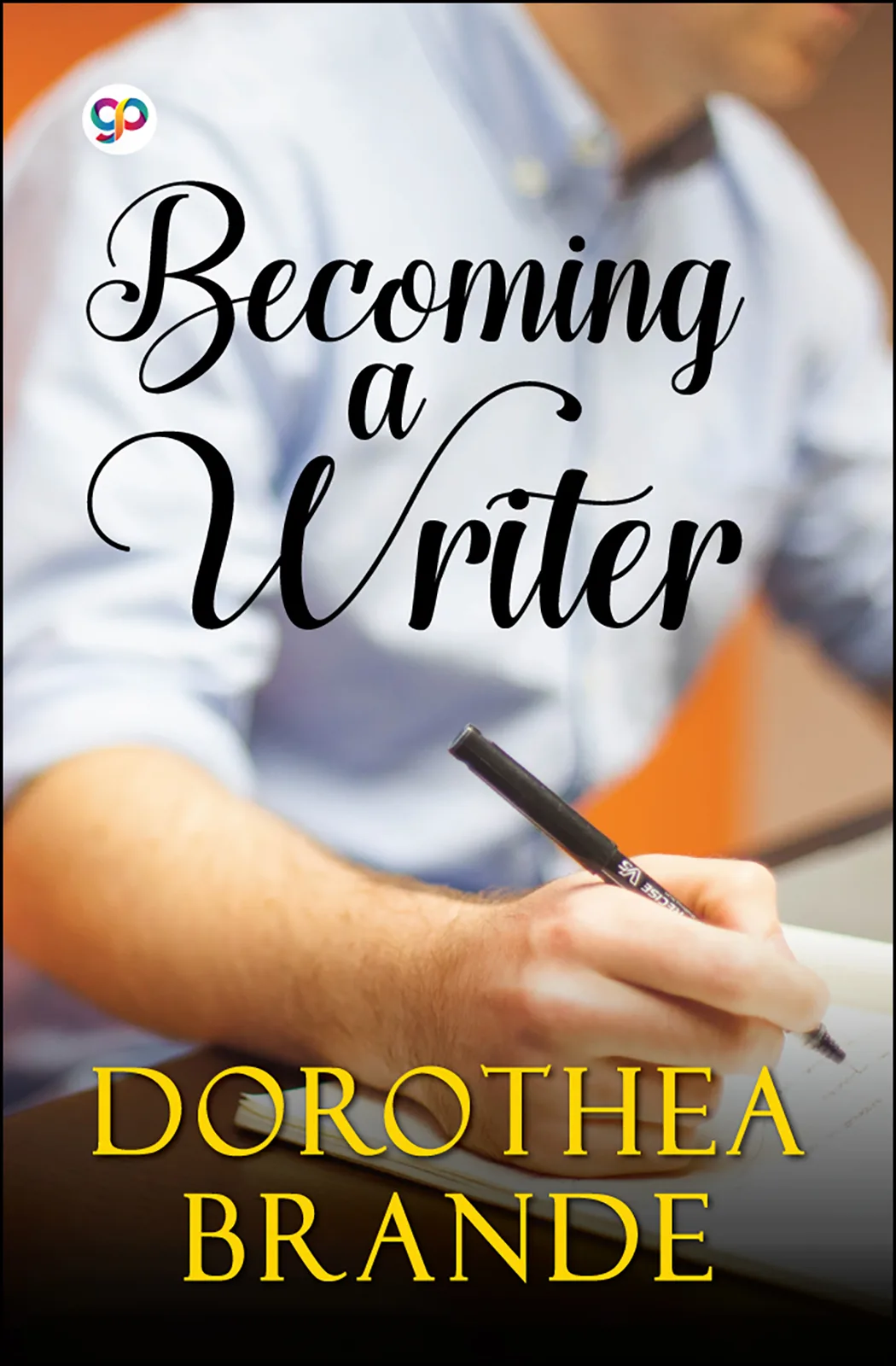
Download Cover Image
Do you want to download the full cover image for Becoming a Writer?