
The Pursuit of God
Paperback
• 106 Pages
• INR 245.00
• English
• 9789389157147
No ratings yet
| Publisher | General Press |
|---|---|
| ISBN13 | 9789389157147 |
| ASIN/SKU | 9389157145 |
| Book Format | Paperback |
| Language | English |
| Pages | 106 |
| List Price | INR 245.00 |
| Subject Code | REL023000, REL055020, REL012120 |
| Publishing Date | 22/05/2019 |
| Dimensions | 8.25 x 5.25 x 1.0 inches |
| Book Code | BD00068055 |
Buy this Book
Amazon Stores
Ebook Stores
Other Stores
Discover The Pursuit of God by A.W. Tozer. This book is published by General Press in Paperback format, ISBN 9789389157147, ASIN 9389157145, under Christian Books and Bibles, Christianity, Religion.
Book Description
A.W. Tozer’s "The Pursuit of God" is a profound, stirring classic of Christian literature that speaks directly to the deep, often unarticulated hunger of the human soul. Written during a train journey in the late 1940s, the book transcends time, offering a passionate invitation to move beyond mere religious routine and step into an intimate, living relationship with the Divine.
Tozer observes a tragic paradox in modern faith: we can possess flawlessly correct theology yet remain entirely starved of God’s actual presence. With striking lucidity and pastoral warmth, he diagnoses this spiritual complacency, gently challenging readers who have substituted intellectual knowledge for a burning, experiential love of the Creator. He explores the internal barriers we build—our pride, our attachments, and the noisy distractions of the world—which prevent us from hearing God’s quiet, continuous voice.
At the heart of the book is the beautiful metaphor of the torn veil. Tozer explains that the barrier between humanity and God has been removed, yet we often remain trapped behind the veil of our own ego. He urges a radical surrender of self, guiding the reader toward a posture of quiet receptivity and fierce longing.
Ultimately, 'The Pursuit of God' is a deeply humane and comforting masterpiece. It is not a rigid theological manual, but a heartfelt plea to recognize that God is always near, eagerly waiting to be discovered by anyone willing to earnestly seek Him.
Tozer observes a tragic paradox in modern faith: we can possess flawlessly correct theology yet remain entirely starved of God’s actual presence. With striking lucidity and pastoral warmth, he diagnoses this spiritual complacency, gently challenging readers who have substituted intellectual knowledge for a burning, experiential love of the Creator. He explores the internal barriers we build—our pride, our attachments, and the noisy distractions of the world—which prevent us from hearing God’s quiet, continuous voice.
At the heart of the book is the beautiful metaphor of the torn veil. Tozer explains that the barrier between humanity and God has been removed, yet we often remain trapped behind the veil of our own ego. He urges a radical surrender of self, guiding the reader toward a posture of quiet receptivity and fierce longing.
Ultimately, 'The Pursuit of God' is a deeply humane and comforting masterpiece. It is not a rigid theological manual, but a heartfelt plea to recognize that God is always near, eagerly waiting to be discovered by anyone willing to earnestly seek Him.
Author Biography
Aiden Wilson Tozer (1897–1963) was an influential American Christian pastor, author, and spiritual mentor whose profound theological insights continue to resonate worldwide. Born into poverty in rural western Pennsylvania, Tozer was entirely self-educated, never attending high school or a theological seminary. In 1915, after hearing a street preacher in Akron, Ohio, he committed his life to Christianity, igniting a relentless, lifelong pursuit of God.
Despite his lack of formal training, Tozer began a 44-year ministry in 1919 as a pastor with the Christian and Missionary Alliance (C&MA). He spent three decades leading the Southside Alliance Church in Chicago, where his uncompromising, prophetic preaching drew thousands. In 1950, he expanded his influence by becoming the editor of The Alliance Weekly.
Tozer is best remembered for his enduring literary classics, most notably The Pursuit of God and The Knowledge of the Holy. These works emphasize the absolute majesty of God and the necessity of a deeply contemplative spiritual life. Often referred to as a "20th-century prophet," Tozer lived a remarkably simple lifestyle, giving away much of his book royalties and prioritizing prayer over material wealth. His legacy endures through his writings, which continue to challenge readers to seek a genuine, intimate relationship with the Divine.
Despite his lack of formal training, Tozer began a 44-year ministry in 1919 as a pastor with the Christian and Missionary Alliance (C&MA). He spent three decades leading the Southside Alliance Church in Chicago, where his uncompromising, prophetic preaching drew thousands. In 1950, he expanded his influence by becoming the editor of The Alliance Weekly.
Tozer is best remembered for his enduring literary classics, most notably The Pursuit of God and The Knowledge of the Holy. These works emphasize the absolute majesty of God and the necessity of a deeply contemplative spiritual life. Often referred to as a "20th-century prophet," Tozer lived a remarkably simple lifestyle, giving away much of his book royalties and prioritizing prayer over material wealth. His legacy endures through his writings, which continue to challenge readers to seek a genuine, intimate relationship with the Divine.
Editorial Reviews
Editorial Reviews will be added soon…
Book Summary
A.W. Tozer's "The Pursuit of God" is a timeless Christian classic that encourages believers to seek a deeper, more personal relationship with God rather than settling for a faith based solely on rituals, traditions, or intellectual understanding. Written with remarkable sincerity and spiritual passion, the book reminds readers that God is not distant or unreachable but desires to be known intimately by those who genuinely seek Him. Tozer challenges Christians to move beyond superficial religion and cultivate a living faith marked by love, humility, obedience, and continuous fellowship with God. Throughout the book, he combines biblical teachings with heartfelt reflections, inviting readers to experience God's presence in their everyday lives.
The journey begins with Tozer explaining that every genuine desire to seek God originates with God Himself. Human beings do not naturally pursue God unless His grace first awakens that longing within their hearts. This divine invitation should never be ignored or taken lightly. According to Tozer, many people are satisfied with simply believing in God, attending church, or following religious practices, yet they never experience the joy of truly knowing Him. He argues that faith should not be limited to accepting facts about God but should become a living relationship in which believers continually grow closer to their Creator. Spiritual hunger, therefore, is not a weakness but a sign of spiritual life and maturity.
Tozer places great emphasis on removing the obstacles that prevent people from experiencing God's presence. One of the greatest barriers, he explains, is the excessive attachment to worldly possessions, ambitions, and personal desires. These "idols" are not necessarily sinful objects but anything that occupies the place that belongs to God alone. Wealth, success, reputation, comfort, relationships, or even religious achievements can become distractions if they dominate the heart. Tozer encourages readers to surrender everything to God, not because material things are inherently wrong, but because nothing should compete with God's rightful place in a believer's life. True spiritual freedom begins when the heart is fully devoted to Him.
Another important theme throughout the book is the necessity of complete surrender. Tozer believes that many Christians struggle because they attempt to maintain control over their own lives while expecting God to bless their plans. Genuine discipleship, however, requires yielding one's ambitions, fears, and personal will to God's guidance. This surrender is not an act of defeat but an expression of trust. As believers release their dependence on themselves, they become more aware of God's wisdom, strength, and loving direction. Tozer assures readers that God never forces His presence upon anyone, but He gladly fills the lives of those who willingly open themselves to His transforming work.
Prayer occupies a central place in Tozer's vision of spiritual growth. He presents prayer not merely as a way of asking God for blessings or solving problems but as an ongoing conversation that nurtures intimacy with Him. The deepest prayers, according to Tozer, often arise from quiet moments of worship, gratitude, and longing rather than from carefully prepared words. He encourages believers to develop an inner life where their hearts remain continually turned toward God, even while carrying out ordinary daily responsibilities. Such a lifestyle transforms every aspect of life into an opportunity for communion with God, making His presence a constant source of peace and strength.
The book also explores the importance of faith as a personal experience rather than an intellectual exercise. Tozer acknowledges that studying theology and understanding biblical doctrine are valuable, but they should ultimately lead to a living encounter with God. Merely possessing knowledge about God is not enough if it does not result in love, obedience, and worship. He invites readers to move beyond secondhand faith inherited from others and develop a firsthand relationship built on trust and experience. In doing so, believers discover that God is not simply an idea to be understood but a living reality who actively guides, comforts, and transforms those who seek Him with sincere hearts.
Humility and holiness are recurring themes that Tozer presents as essential qualities of the Christian life. He explains that pride prevents people from drawing near to God because it encourages self-sufficiency and dependence on personal achievements. In contrast, humility allows believers to recognize their complete need for God's grace. Holiness, in Tozer's understanding, is not merely about following rules but about becoming increasingly like Christ in character, thoughts, and actions. As believers spend more time in God's presence, they naturally begin to reflect His love, compassion, purity, and wisdom. Spiritual transformation, therefore, is the result of a close relationship with God rather than mere external discipline.
Tozer also addresses the reality of spiritual struggles and periods when God may seem distant. He reassures readers that such experiences do not necessarily indicate God's absence but often become opportunities for deeper faith and greater dependence on Him. During these seasons, perseverance, prayer, and trust become especially important. Rather than becoming discouraged by difficulties, believers should continue seeking God with confidence, knowing that He remains faithful even when His presence is not immediately felt. These moments of testing strengthen faith and prepare Christians for a richer understanding of God's character and purposes.
In its concluding message, 'The Pursuit of God' leaves readers with a powerful invitation to live a life centered entirely on God. Tozer reminds believers that the Christian journey is not a destination reached through religious accomplishment but a lifelong pursuit of knowing and loving God more deeply. Every chapter calls readers to examine their hearts, remove anything that hinders their relationship with God, and cultivate an ongoing awareness of His presence. Although written decades ago, the book continues to resonate with readers because of its timeless message of wholehearted devotion, spiritual intimacy, and authentic faith. Its gentle yet challenging words inspire Christians to seek not merely God's gifts or blessings but God Himself, believing that in finding Him they discover the deepest joy, lasting peace, and ultimate purpose for which every human heart was created.
The journey begins with Tozer explaining that every genuine desire to seek God originates with God Himself. Human beings do not naturally pursue God unless His grace first awakens that longing within their hearts. This divine invitation should never be ignored or taken lightly. According to Tozer, many people are satisfied with simply believing in God, attending church, or following religious practices, yet they never experience the joy of truly knowing Him. He argues that faith should not be limited to accepting facts about God but should become a living relationship in which believers continually grow closer to their Creator. Spiritual hunger, therefore, is not a weakness but a sign of spiritual life and maturity.
Tozer places great emphasis on removing the obstacles that prevent people from experiencing God's presence. One of the greatest barriers, he explains, is the excessive attachment to worldly possessions, ambitions, and personal desires. These "idols" are not necessarily sinful objects but anything that occupies the place that belongs to God alone. Wealth, success, reputation, comfort, relationships, or even religious achievements can become distractions if they dominate the heart. Tozer encourages readers to surrender everything to God, not because material things are inherently wrong, but because nothing should compete with God's rightful place in a believer's life. True spiritual freedom begins when the heart is fully devoted to Him.
Another important theme throughout the book is the necessity of complete surrender. Tozer believes that many Christians struggle because they attempt to maintain control over their own lives while expecting God to bless their plans. Genuine discipleship, however, requires yielding one's ambitions, fears, and personal will to God's guidance. This surrender is not an act of defeat but an expression of trust. As believers release their dependence on themselves, they become more aware of God's wisdom, strength, and loving direction. Tozer assures readers that God never forces His presence upon anyone, but He gladly fills the lives of those who willingly open themselves to His transforming work.
Prayer occupies a central place in Tozer's vision of spiritual growth. He presents prayer not merely as a way of asking God for blessings or solving problems but as an ongoing conversation that nurtures intimacy with Him. The deepest prayers, according to Tozer, often arise from quiet moments of worship, gratitude, and longing rather than from carefully prepared words. He encourages believers to develop an inner life where their hearts remain continually turned toward God, even while carrying out ordinary daily responsibilities. Such a lifestyle transforms every aspect of life into an opportunity for communion with God, making His presence a constant source of peace and strength.
The book also explores the importance of faith as a personal experience rather than an intellectual exercise. Tozer acknowledges that studying theology and understanding biblical doctrine are valuable, but they should ultimately lead to a living encounter with God. Merely possessing knowledge about God is not enough if it does not result in love, obedience, and worship. He invites readers to move beyond secondhand faith inherited from others and develop a firsthand relationship built on trust and experience. In doing so, believers discover that God is not simply an idea to be understood but a living reality who actively guides, comforts, and transforms those who seek Him with sincere hearts.
Humility and holiness are recurring themes that Tozer presents as essential qualities of the Christian life. He explains that pride prevents people from drawing near to God because it encourages self-sufficiency and dependence on personal achievements. In contrast, humility allows believers to recognize their complete need for God's grace. Holiness, in Tozer's understanding, is not merely about following rules but about becoming increasingly like Christ in character, thoughts, and actions. As believers spend more time in God's presence, they naturally begin to reflect His love, compassion, purity, and wisdom. Spiritual transformation, therefore, is the result of a close relationship with God rather than mere external discipline.
Tozer also addresses the reality of spiritual struggles and periods when God may seem distant. He reassures readers that such experiences do not necessarily indicate God's absence but often become opportunities for deeper faith and greater dependence on Him. During these seasons, perseverance, prayer, and trust become especially important. Rather than becoming discouraged by difficulties, believers should continue seeking God with confidence, knowing that He remains faithful even when His presence is not immediately felt. These moments of testing strengthen faith and prepare Christians for a richer understanding of God's character and purposes.
In its concluding message, 'The Pursuit of God' leaves readers with a powerful invitation to live a life centered entirely on God. Tozer reminds believers that the Christian journey is not a destination reached through religious accomplishment but a lifelong pursuit of knowing and loving God more deeply. Every chapter calls readers to examine their hearts, remove anything that hinders their relationship with God, and cultivate an ongoing awareness of His presence. Although written decades ago, the book continues to resonate with readers because of its timeless message of wholehearted devotion, spiritual intimacy, and authentic faith. Its gentle yet challenging words inspire Christians to seek not merely God's gifts or blessings but God Himself, believing that in finding Him they discover the deepest joy, lasting peace, and ultimate purpose for which every human heart was created.
Sample Chapters
I. Following Hard after God
“My soul followeth hard after thee: thy right hand upholdeth me.”
Psa. 63:8
Christian theology teaches the doctrine of prevenient grace, which briefly stated means this, that before a man can seek God, God must first have sought the man.
Before a sinful man can think a right thought of God, there must have been a work of enlightenment done within him; imperfect it may be, but a true work nonetheless, and the secret cause of all desiring and seeking and praying which may follow.
We pursue God because, and only because, He has first put an urge within us that spurs us to the pursuit. “No man can come to me,” said our Lord, “except the Father which hath sent me draw him,” and it is by this very prevenient drawing that God takes from us every vestige of credit for the act of coming. The impulse to pursue God originates with God, but the out working of that impulse is our following hard after Him; and all the time we are pursuing Him we are already in His hand: “Thy right hand upholdeth me.”
In this divine “upholding” and human “following” there is no contradiction. All is of God, for as von Hügel teaches, God is always previous. In practice, however, (that is, where God’s previous working meets man’s present response) man must pursue God. On our part there must be positive reciprocation if this secret drawing of God is to eventuate in identifiable experience of the Divine. In the warm language of personal feeling this is stated in the Forty-second Psalm: “As the hart panteth after the water brooks, so panteth my soul after thee, O God. My soul thirsteth for God, for the living God: when shall I come and appear before God?” This is deep calling unto deep, and the longing heart will understand it.
The doctrine of justification by faith—a Biblical truth, and a blessed relief from sterile legalism and unavailing self-effort—has in our time fallen into evil company and been interpreted by many in such manner as actually to bar men from the knowledge of God. The whole transaction of religious conversion has been made mechanical and spiritless. Faith may now be exercised without a jar to the moral life and without embarrassment to the Adamic ego. Christ may be “received” without creating any special love for Him in the soul of the receiver. The man is “saved,” but he is not hungry nor thirsty after God. In fact he is specifically taught to be satisfied and encouraged to be content with little.
The modern scientist has lost God amid the wonders of His world; we Christians are in real danger of losing God amid the wonders of His Word. We have almost forgotten that God is a Person and, as such, can be cultivated as any person can. It is inherent in personality to be able to know other personalities, but full knowledge of one personality by another cannot be achieved in one encounter. It is only after long and loving mental intercourse that the full possibilities of both can be explored.
All social intercourse between human beings is a response of personality to personality, grading upward from the most casual brush between man and man to the fullest, most intimate communion of which the human soul is capable. Religion, so far as it is genuine, is in essence the response of created personalities to the Creating Personality, God. “This is life eternal, that they might know thee the only true God, and Jesus Christ, whom thou hast sent.”
God is a Person, and in the deep of His mighty nature He thinks, wills, enjoys, feels, loves, desires and suffers as any other person may. In making Himself known to us He stays by the familiar pattern of personality. He communicates with us through the avenues of our minds, our wills and our emotions. The continuous and unembarrassed interchange of love and thought between God and the soul of the redeemed man is the throbbing heart of New Testament religion.
This intercourse between God and the soul is known to us in conscious personal awareness. It is personal: that is, it does not come through the body of believers, as such, but is known to the individual, and to the body through the individuals which compose it. And it is conscious: that is, it does not stay below the threshold of consciousness and work there unknown to the soul (as, for instance, infant baptism is thought by some to do), but comes within the field of awareness where the man can “know” it as he knows any other fact of experience.
You and I are in little (our sins excepted) what God is in large. Being made in His image we have within us the capacity to know Him. In our sins we lack only the power. The moment the Spirit has quickened us to life in regeneration our whole being senses its kinship to God and leaps up in joyous recognition. That is the heavenly birth without which we cannot see the Kingdom of God. It is, however, not an end but an inception, for now begins the glorious pursuit, the heart’s happy exploration of the infinite riches of the Godhead. That is where we begin, I say, but where we stop no man has yet discovered, for there is in the awful and mysterious depths of the Triune God neither limit nor end.
Shoreless Ocean, who can sound Thee?
Thine own eternity is round Thee,
Majesty divine!
To have found God and still to pursue Him is the soul’s paradox of love, scorned indeed by the too-easily-satisfied religionist, but justified in happy experience by the children of the burning heart. St. Bernard stated this holy paradox in a musical quatrain that will be instantly understood by every worshipping soul:
We taste Thee, O Thou Living Bread,
And long to feast upon Thee still:
We drink of Thee, the Fountainhead
And thirst our souls from Thee to fill.
Come near to the holy men and women of the past and you will soon feel the heat of their desire after God. They mourned for Him, they prayed and wrestled and sought for Him day and night, in season and out, and when they had found Him the finding was all the sweeter for the long seeking. Moses used the fact that he knew God as an argument for knowing Him better. “Now, therefore, I pray thee, if I have found grace in thy sight, show me now thy way, that I may know there, that I may find grace in thy sight”; and from there he rose to make the daring request, “I beseech thee, show me thy glory.” God was frankly pleased by this display of ardor, and the next day called Moses into the mount, and there in solemn procession made all His glory pass before him.
David’s life was a torrent of spiritual desire, and his psalms ring with the cry of the seeker and the glad shout of the finder. Paul confessed the mainspring of his life to be his burning desire after Christ. “That I may know Him,” was the goal of his heart, and to this he sacrificed everything. “Yea doubtless, and I count all things but loss for the Excellency of the knowledge of Christ Jesus my Lord: for whom I have suffered the loss of all things, and do count them but refuse, that I may win Christ.”
Hymnody is sweet with the longing after God, the God whom, while the singer seeks, he knows he has already found. “His track I see and I’ll pursue,” sang our fathers only a short generation ago, but that song is heard no more in the great congregation. How tragic that we in this dark day have had our seeking done for us by our teachers. Everything is made to center upon the initial act of “accepting” Christ (a term, incidentally, which is not found in the Bible) and we are not expected thereafter to crave any further revelation of God to our souls. We have been snared in the coils of a spurious logic which insists that if we have found Him we need no more seek Him. This is set before us as the last word in orthodoxy, and it is taken for granted that no Bible-taught Christian ever believed otherwise. Thus the whole testimony of the worshipping, seeking, singing Church on that subject is crisply set aside. The experiential heart-theology of a grand army of fragrant saints is rejected in favour of a smug interpretation of Scripture which would certainly have sounded strange to an Augustine, a Rutherford or a Brainerd.
In the midst of this great chill there are some, I rejoice to acknowledge, who will not be content with shallow logic. They will admit the force of the argument, and then turn away with tears to hunt some lonely place and pray, “O God, show me thy glory.” They want to taste, to touch with their hearts, to see with their inner eyes the wonder that is God.
I want deliberately to encourage this mighty longing after God. The lack of it has brought us to our present low estate. The stiff and wooden quality about our religious lives is a result of our lack of holy desire. Complacency is a deadly foe of all spiritual growth. Acute desire must be present or there will be no manifestation of Christ to His people. He waits to be wanted. Too bad that with many of us He waits so long, so very long, in vain.
Every age has its own characteristics. Right now we are in an age of religious complexity. The simplicity which is in Christ is rarely found among us. In its stead are programs, methods, organizations and a world of nervous activities which occupy time and attention but can never satisfy the longing of the heart. The shallowness of our inner experience, the hollowness of our worship, and that servile imitation of the world which marks our promotional methods all testify that we, in this day, know God only imperfectly, and the peace of God scarcely at all.
If we would find God amid all the religious externals we must first determine to find Him, and then proceed in the way of simplicity. Now as always God discovers Himself to “babes” and hides Himself in thick darkness from the wise and the prudent. We must simplify our approach to Him. We must strip down to essentials (and they will be found to be blessedly few). We must put away all effort to impress, and come with the guileless candor of childhood. If we do this, without doubt God will quickly respond.
When religion has said its last word, there is little that we need other than God Himself. The evil habit of seeking God-and effectively prevents us from finding God in full revelation. In the “and” lies our great woe. If we omit the “and” we shall soon find God, and in Him we shall find that for which we have all our lives been secretly longing.
We need not fear that in seeking God only we may narrow our lives or restrict the motions of our expanding hearts. The opposite is true. We can well afford to make God our All, to concentrate, to sacrifice the many for the One.
The author of the quaint old English classic, The Cloud of Unknowing, teaches us how to do this. “Lift up thine heart unto God with a meek stirring of love; and mean Himself, and none of His goods. And thereto, look thee loath to think on aught but God Himself. So that nought work in thy wit, nor in thy will, but only God Himself. This is the work of the soul that most pleaseth God.”
Again, he recommends that in prayer we practice a further stripping down of everything, even of our theology. “For it sufficeth enough, a naked intent direct unto God without any other cause than Himself.” Yet underneath all his thinking lay the broad foundation of New Testament truth, for he explains that by “Himself” he means “God that made thee, and bought thee, and that graciously called thee to thy degree.” And he is all for simplicity: If we would have religion “lapped and folden in one word, for that thou should have better hold thereupon, take thee but a little word of one syllable: for so it is better than of two, for even the shorter it is the better it accordeth with the work of the Spirit. And such a word is this word GOD or this word LOVE.”
When the Lord divided Canaan among the tribes of Israel Levi received no share of the land. God said to him simply, “I am thy part and thine inheritance,” and by those words made him richer than all his brethren, richer than all the kings and rajas who have ever lived in the world. And there is a spiritual principle here, a principle still valid for every priest of the Most High God.
The man who has God for his treasure has all things in One. Many ordinary treasures may be denied him, or if he is allowed to have them, the enjoyment of them will be so tempered that they will never be necessary to his happiness. Or if he must see them go, one after one, he will scarcely feel a sense of loss, for having the Source of all things he has in One all satisfaction, all pleasure, all delight. Whatever he may lose he has actually lost nothing, for he now has it all in One, and he has it purely, legitimately and forever.
O God, I have tasted Thy goodness, and it has both satisfied me and made me thirsty for more. I am painfully conscious of my need of further grace. I am ashamed of my lack of desire. O God, the Triune God, I want to want Thee; I long to be filled with longing; I thirst to be made more thirsty still. Show me Thy glory, I pray Thee, that so I may know Thee indeed. Begin in mercy a new work of love within me. Say to my soul, “Rise up, my love, my fair one, and come away.” Then give me grace to rise and follow Thee up from this misty lowland where I have wandered so long. In Jesus’ Name, Amen.
II. The Blessedness of Possessing Nothing
“Blessed are the poor in spirit: for theirs is the kingdom of heaven.”
Matt. 5:3
Before the Lord God made man upon the earth He first prepared for him by creating a world of useful and pleasant things for his sustenance and delight. In the Genesis account of the creation these are called simply “things.” They were made for man’s uses, but they were meant always to be external to the man and subservient to him. In the deep heart of the man was a shrine where none but God was worthy to come. Within him was God; without, a thousand gifts which God had showered upon him.
But sin has introduced complications and has made those very gifts of God a potential source of ruin to the soul.
Our woes began when God was forced out of His central shrine and “things” were allowed to enter. Within the human heart “things” have taken over. Men have now by nature no peace within their hearts, for God is crowned there no longer, but there in the moral dusk stubborn and aggressive usurpers fight among themselves for first place on the throne.
This is not a mere metaphor, but an accurate analysis of our real spiritual trouble. There is within the human heart a tough fibrous root of fallen life whose nature is to possess, always to possess. It covets “things” with a deep and fierce passion. The pronouns “my” and “mine” look innocent enough in print, but their constant and universal use is significant. They express the real nature of the old Adamic man better than a thousand volumes of theology could do. They are verbal symptoms of our deep disease. The roots of our hearts have grown down into things, and we dare not pull up one rootlet lest we die. Things have become necessary to us, a development never originally intended. God’s gifts now take the place of God, and the whole course of nature is upset by the monstrous substitution.
Our Lord referred to this tyranny of things when He said to His disciples, “If any man will come after me, let him deny himself, and take up his cross, and follow me. For whosoever will save his life shall lose it: and whosoever shall lose his life for my sake shall find it.”
Breaking this truth into fragments for our better understanding, it would seem that there is within each of us an enemy which we tolerate at our peril. Jesus called it “life” and “self,” or as we would say, the self-life. Its chief characteristic is its possessiveness: the words “gain” and “profit” suggest this. To allow this enemy to live is in the end to lose everything. To repudiate it and give up all for Christ’s sake is to lose nothing at last, but to preserve everything unto life eternal. And possibly also a hint is given here as to the only effective way to destroy this foe: it is by the Cross. “Let him take up his cross and follow me.”
The way to deeper knowledge of God is through the lonely valleys of soul poverty and abnegation of all things. The blessed ones who possess the Kingdom are they who have repudiated every external thing and have rooted from their hearts all sense of possessing. These are the “poor in spirit.” They have reached an inward state paralleling the outward circumstances of the common beggar in the streets of Jerusalem; that is what the word “poor” as Christ used it actually means. These blessed poor are no longer slaves to the tyranny of things. They have broken the yoke of the oppressor; and this they have done not by fighting but by surrendering. Though free from all sense of possessing, they yet possess all things. “Theirs is the kingdom of heaven.”
Let me exhort you to take this seriously. It is not to be understood as mere Bible teaching to be stored away in the mind along with an inert mass of other doctrines. It is a marker on the road to greener pastures, a path chiseled against the steep sides of the mount of God. We dare not try to by-pass it if we would follow on in this holy pursuit. We must ascend a step at a time. If we refuse one step we bring our progress to an end.
As is frequently true, this New Testament principle of spiritual life finds its best illustration in the Old Testament. In the story of Abraham and Isaac we have a dramatic picture of the surrendered life as well as an excellent commentary on the first Beatitude.
Abraham was old when Isaac was born, old enough indeed to have been his grandfather, and the child became at once the delight and idol of his heart. From that moment when he first stooped to take the tiny form awkwardly in his arms he was an eager love slave of his son. God went out of His way to comment on the strength of this affection. And it is not hard to understand. The baby represented everything sacred to his father’s heart: the promises of God, the covenants, the hopes of the years and the long messianic dream. As he watched him grow from babyhood to young manhood the heart of the old man was knit closer and closer with the life of his son, till at last the relationship bordered upon the perilous. It was then that God stepped in to save both father and son from the consequences of an un-cleansed love.
“Take now thy son,” said God to Abraham, “thine only son Isaac, whom thou lovest, and get thee into the land of Moriah; and offer him there for a burnt-offering upon one of the mountains which I will tell thee of.” The sacred writer spares us a close-up of the agony that night on the slopes near Beersheba when the aged man had it out with his God, but respectful imagination may view in awe the bent form and convulsive wrestling alone under the stars. Possibly not again until a Greater than Abraham wrestled in the Garden of Gethsemane did such mortal pain visit a human soul. If only the man himself might have been allowed to die. That would have been easier a thousand times, for he was old now, and to die would have been no great ordeal for one who had walked so long with God. Besides, it would have been a last sweet pleasure to let his dimming vision rest upon the figure of his stalwart son who would live to carry on the Abrahamic line and fulfill in himself the promises of God made long before in Ur of the Chaldees.
“My soul followeth hard after thee: thy right hand upholdeth me.”
Psa. 63:8
Christian theology teaches the doctrine of prevenient grace, which briefly stated means this, that before a man can seek God, God must first have sought the man.
Before a sinful man can think a right thought of God, there must have been a work of enlightenment done within him; imperfect it may be, but a true work nonetheless, and the secret cause of all desiring and seeking and praying which may follow.
We pursue God because, and only because, He has first put an urge within us that spurs us to the pursuit. “No man can come to me,” said our Lord, “except the Father which hath sent me draw him,” and it is by this very prevenient drawing that God takes from us every vestige of credit for the act of coming. The impulse to pursue God originates with God, but the out working of that impulse is our following hard after Him; and all the time we are pursuing Him we are already in His hand: “Thy right hand upholdeth me.”
In this divine “upholding” and human “following” there is no contradiction. All is of God, for as von Hügel teaches, God is always previous. In practice, however, (that is, where God’s previous working meets man’s present response) man must pursue God. On our part there must be positive reciprocation if this secret drawing of God is to eventuate in identifiable experience of the Divine. In the warm language of personal feeling this is stated in the Forty-second Psalm: “As the hart panteth after the water brooks, so panteth my soul after thee, O God. My soul thirsteth for God, for the living God: when shall I come and appear before God?” This is deep calling unto deep, and the longing heart will understand it.
The doctrine of justification by faith—a Biblical truth, and a blessed relief from sterile legalism and unavailing self-effort—has in our time fallen into evil company and been interpreted by many in such manner as actually to bar men from the knowledge of God. The whole transaction of religious conversion has been made mechanical and spiritless. Faith may now be exercised without a jar to the moral life and without embarrassment to the Adamic ego. Christ may be “received” without creating any special love for Him in the soul of the receiver. The man is “saved,” but he is not hungry nor thirsty after God. In fact he is specifically taught to be satisfied and encouraged to be content with little.
The modern scientist has lost God amid the wonders of His world; we Christians are in real danger of losing God amid the wonders of His Word. We have almost forgotten that God is a Person and, as such, can be cultivated as any person can. It is inherent in personality to be able to know other personalities, but full knowledge of one personality by another cannot be achieved in one encounter. It is only after long and loving mental intercourse that the full possibilities of both can be explored.
All social intercourse between human beings is a response of personality to personality, grading upward from the most casual brush between man and man to the fullest, most intimate communion of which the human soul is capable. Religion, so far as it is genuine, is in essence the response of created personalities to the Creating Personality, God. “This is life eternal, that they might know thee the only true God, and Jesus Christ, whom thou hast sent.”
God is a Person, and in the deep of His mighty nature He thinks, wills, enjoys, feels, loves, desires and suffers as any other person may. In making Himself known to us He stays by the familiar pattern of personality. He communicates with us through the avenues of our minds, our wills and our emotions. The continuous and unembarrassed interchange of love and thought between God and the soul of the redeemed man is the throbbing heart of New Testament religion.
This intercourse between God and the soul is known to us in conscious personal awareness. It is personal: that is, it does not come through the body of believers, as such, but is known to the individual, and to the body through the individuals which compose it. And it is conscious: that is, it does not stay below the threshold of consciousness and work there unknown to the soul (as, for instance, infant baptism is thought by some to do), but comes within the field of awareness where the man can “know” it as he knows any other fact of experience.
You and I are in little (our sins excepted) what God is in large. Being made in His image we have within us the capacity to know Him. In our sins we lack only the power. The moment the Spirit has quickened us to life in regeneration our whole being senses its kinship to God and leaps up in joyous recognition. That is the heavenly birth without which we cannot see the Kingdom of God. It is, however, not an end but an inception, for now begins the glorious pursuit, the heart’s happy exploration of the infinite riches of the Godhead. That is where we begin, I say, but where we stop no man has yet discovered, for there is in the awful and mysterious depths of the Triune God neither limit nor end.
Shoreless Ocean, who can sound Thee?
Thine own eternity is round Thee,
Majesty divine!
To have found God and still to pursue Him is the soul’s paradox of love, scorned indeed by the too-easily-satisfied religionist, but justified in happy experience by the children of the burning heart. St. Bernard stated this holy paradox in a musical quatrain that will be instantly understood by every worshipping soul:
We taste Thee, O Thou Living Bread,
And long to feast upon Thee still:
We drink of Thee, the Fountainhead
And thirst our souls from Thee to fill.
Come near to the holy men and women of the past and you will soon feel the heat of their desire after God. They mourned for Him, they prayed and wrestled and sought for Him day and night, in season and out, and when they had found Him the finding was all the sweeter for the long seeking. Moses used the fact that he knew God as an argument for knowing Him better. “Now, therefore, I pray thee, if I have found grace in thy sight, show me now thy way, that I may know there, that I may find grace in thy sight”; and from there he rose to make the daring request, “I beseech thee, show me thy glory.” God was frankly pleased by this display of ardor, and the next day called Moses into the mount, and there in solemn procession made all His glory pass before him.
David’s life was a torrent of spiritual desire, and his psalms ring with the cry of the seeker and the glad shout of the finder. Paul confessed the mainspring of his life to be his burning desire after Christ. “That I may know Him,” was the goal of his heart, and to this he sacrificed everything. “Yea doubtless, and I count all things but loss for the Excellency of the knowledge of Christ Jesus my Lord: for whom I have suffered the loss of all things, and do count them but refuse, that I may win Christ.”
Hymnody is sweet with the longing after God, the God whom, while the singer seeks, he knows he has already found. “His track I see and I’ll pursue,” sang our fathers only a short generation ago, but that song is heard no more in the great congregation. How tragic that we in this dark day have had our seeking done for us by our teachers. Everything is made to center upon the initial act of “accepting” Christ (a term, incidentally, which is not found in the Bible) and we are not expected thereafter to crave any further revelation of God to our souls. We have been snared in the coils of a spurious logic which insists that if we have found Him we need no more seek Him. This is set before us as the last word in orthodoxy, and it is taken for granted that no Bible-taught Christian ever believed otherwise. Thus the whole testimony of the worshipping, seeking, singing Church on that subject is crisply set aside. The experiential heart-theology of a grand army of fragrant saints is rejected in favour of a smug interpretation of Scripture which would certainly have sounded strange to an Augustine, a Rutherford or a Brainerd.
In the midst of this great chill there are some, I rejoice to acknowledge, who will not be content with shallow logic. They will admit the force of the argument, and then turn away with tears to hunt some lonely place and pray, “O God, show me thy glory.” They want to taste, to touch with their hearts, to see with their inner eyes the wonder that is God.
I want deliberately to encourage this mighty longing after God. The lack of it has brought us to our present low estate. The stiff and wooden quality about our religious lives is a result of our lack of holy desire. Complacency is a deadly foe of all spiritual growth. Acute desire must be present or there will be no manifestation of Christ to His people. He waits to be wanted. Too bad that with many of us He waits so long, so very long, in vain.
Every age has its own characteristics. Right now we are in an age of religious complexity. The simplicity which is in Christ is rarely found among us. In its stead are programs, methods, organizations and a world of nervous activities which occupy time and attention but can never satisfy the longing of the heart. The shallowness of our inner experience, the hollowness of our worship, and that servile imitation of the world which marks our promotional methods all testify that we, in this day, know God only imperfectly, and the peace of God scarcely at all.
If we would find God amid all the religious externals we must first determine to find Him, and then proceed in the way of simplicity. Now as always God discovers Himself to “babes” and hides Himself in thick darkness from the wise and the prudent. We must simplify our approach to Him. We must strip down to essentials (and they will be found to be blessedly few). We must put away all effort to impress, and come with the guileless candor of childhood. If we do this, without doubt God will quickly respond.
When religion has said its last word, there is little that we need other than God Himself. The evil habit of seeking God-and effectively prevents us from finding God in full revelation. In the “and” lies our great woe. If we omit the “and” we shall soon find God, and in Him we shall find that for which we have all our lives been secretly longing.
We need not fear that in seeking God only we may narrow our lives or restrict the motions of our expanding hearts. The opposite is true. We can well afford to make God our All, to concentrate, to sacrifice the many for the One.
The author of the quaint old English classic, The Cloud of Unknowing, teaches us how to do this. “Lift up thine heart unto God with a meek stirring of love; and mean Himself, and none of His goods. And thereto, look thee loath to think on aught but God Himself. So that nought work in thy wit, nor in thy will, but only God Himself. This is the work of the soul that most pleaseth God.”
Again, he recommends that in prayer we practice a further stripping down of everything, even of our theology. “For it sufficeth enough, a naked intent direct unto God without any other cause than Himself.” Yet underneath all his thinking lay the broad foundation of New Testament truth, for he explains that by “Himself” he means “God that made thee, and bought thee, and that graciously called thee to thy degree.” And he is all for simplicity: If we would have religion “lapped and folden in one word, for that thou should have better hold thereupon, take thee but a little word of one syllable: for so it is better than of two, for even the shorter it is the better it accordeth with the work of the Spirit. And such a word is this word GOD or this word LOVE.”
When the Lord divided Canaan among the tribes of Israel Levi received no share of the land. God said to him simply, “I am thy part and thine inheritance,” and by those words made him richer than all his brethren, richer than all the kings and rajas who have ever lived in the world. And there is a spiritual principle here, a principle still valid for every priest of the Most High God.
The man who has God for his treasure has all things in One. Many ordinary treasures may be denied him, or if he is allowed to have them, the enjoyment of them will be so tempered that they will never be necessary to his happiness. Or if he must see them go, one after one, he will scarcely feel a sense of loss, for having the Source of all things he has in One all satisfaction, all pleasure, all delight. Whatever he may lose he has actually lost nothing, for he now has it all in One, and he has it purely, legitimately and forever.
O God, I have tasted Thy goodness, and it has both satisfied me and made me thirsty for more. I am painfully conscious of my need of further grace. I am ashamed of my lack of desire. O God, the Triune God, I want to want Thee; I long to be filled with longing; I thirst to be made more thirsty still. Show me Thy glory, I pray Thee, that so I may know Thee indeed. Begin in mercy a new work of love within me. Say to my soul, “Rise up, my love, my fair one, and come away.” Then give me grace to rise and follow Thee up from this misty lowland where I have wandered so long. In Jesus’ Name, Amen.
II. The Blessedness of Possessing Nothing
“Blessed are the poor in spirit: for theirs is the kingdom of heaven.”
Matt. 5:3
Before the Lord God made man upon the earth He first prepared for him by creating a world of useful and pleasant things for his sustenance and delight. In the Genesis account of the creation these are called simply “things.” They were made for man’s uses, but they were meant always to be external to the man and subservient to him. In the deep heart of the man was a shrine where none but God was worthy to come. Within him was God; without, a thousand gifts which God had showered upon him.
But sin has introduced complications and has made those very gifts of God a potential source of ruin to the soul.
Our woes began when God was forced out of His central shrine and “things” were allowed to enter. Within the human heart “things” have taken over. Men have now by nature no peace within their hearts, for God is crowned there no longer, but there in the moral dusk stubborn and aggressive usurpers fight among themselves for first place on the throne.
This is not a mere metaphor, but an accurate analysis of our real spiritual trouble. There is within the human heart a tough fibrous root of fallen life whose nature is to possess, always to possess. It covets “things” with a deep and fierce passion. The pronouns “my” and “mine” look innocent enough in print, but their constant and universal use is significant. They express the real nature of the old Adamic man better than a thousand volumes of theology could do. They are verbal symptoms of our deep disease. The roots of our hearts have grown down into things, and we dare not pull up one rootlet lest we die. Things have become necessary to us, a development never originally intended. God’s gifts now take the place of God, and the whole course of nature is upset by the monstrous substitution.
Our Lord referred to this tyranny of things when He said to His disciples, “If any man will come after me, let him deny himself, and take up his cross, and follow me. For whosoever will save his life shall lose it: and whosoever shall lose his life for my sake shall find it.”
Breaking this truth into fragments for our better understanding, it would seem that there is within each of us an enemy which we tolerate at our peril. Jesus called it “life” and “self,” or as we would say, the self-life. Its chief characteristic is its possessiveness: the words “gain” and “profit” suggest this. To allow this enemy to live is in the end to lose everything. To repudiate it and give up all for Christ’s sake is to lose nothing at last, but to preserve everything unto life eternal. And possibly also a hint is given here as to the only effective way to destroy this foe: it is by the Cross. “Let him take up his cross and follow me.”
The way to deeper knowledge of God is through the lonely valleys of soul poverty and abnegation of all things. The blessed ones who possess the Kingdom are they who have repudiated every external thing and have rooted from their hearts all sense of possessing. These are the “poor in spirit.” They have reached an inward state paralleling the outward circumstances of the common beggar in the streets of Jerusalem; that is what the word “poor” as Christ used it actually means. These blessed poor are no longer slaves to the tyranny of things. They have broken the yoke of the oppressor; and this they have done not by fighting but by surrendering. Though free from all sense of possessing, they yet possess all things. “Theirs is the kingdom of heaven.”
Let me exhort you to take this seriously. It is not to be understood as mere Bible teaching to be stored away in the mind along with an inert mass of other doctrines. It is a marker on the road to greener pastures, a path chiseled against the steep sides of the mount of God. We dare not try to by-pass it if we would follow on in this holy pursuit. We must ascend a step at a time. If we refuse one step we bring our progress to an end.
As is frequently true, this New Testament principle of spiritual life finds its best illustration in the Old Testament. In the story of Abraham and Isaac we have a dramatic picture of the surrendered life as well as an excellent commentary on the first Beatitude.
Abraham was old when Isaac was born, old enough indeed to have been his grandfather, and the child became at once the delight and idol of his heart. From that moment when he first stooped to take the tiny form awkwardly in his arms he was an eager love slave of his son. God went out of His way to comment on the strength of this affection. And it is not hard to understand. The baby represented everything sacred to his father’s heart: the promises of God, the covenants, the hopes of the years and the long messianic dream. As he watched him grow from babyhood to young manhood the heart of the old man was knit closer and closer with the life of his son, till at last the relationship bordered upon the perilous. It was then that God stepped in to save both father and son from the consequences of an un-cleansed love.
“Take now thy son,” said God to Abraham, “thine only son Isaac, whom thou lovest, and get thee into the land of Moriah; and offer him there for a burnt-offering upon one of the mountains which I will tell thee of.” The sacred writer spares us a close-up of the agony that night on the slopes near Beersheba when the aged man had it out with his God, but respectful imagination may view in awe the bent form and convulsive wrestling alone under the stars. Possibly not again until a Greater than Abraham wrestled in the Garden of Gethsemane did such mortal pain visit a human soul. If only the man himself might have been allowed to die. That would have been easier a thousand times, for he was old now, and to die would have been no great ordeal for one who had walked so long with God. Besides, it would have been a last sweet pleasure to let his dimming vision rest upon the figure of his stalwart son who would live to carry on the Abrahamic line and fulfill in himself the promises of God made long before in Ur of the Chaldees.
Reader Reviews
No reviews yet.
The Pursuit of God
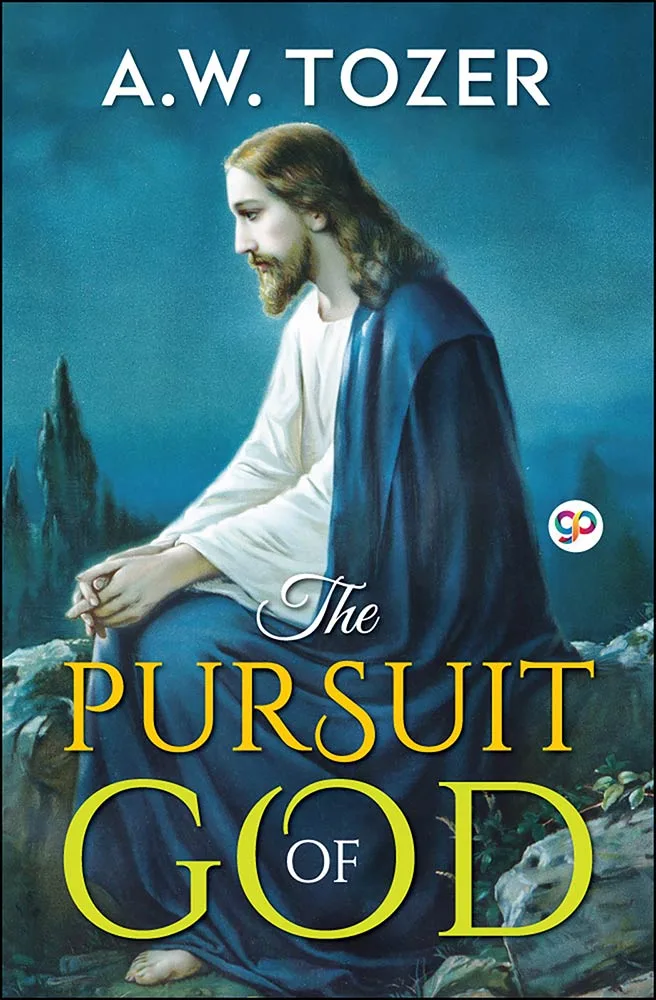
Download Cover Image
Do you want to download the full cover image for The Pursuit of God?