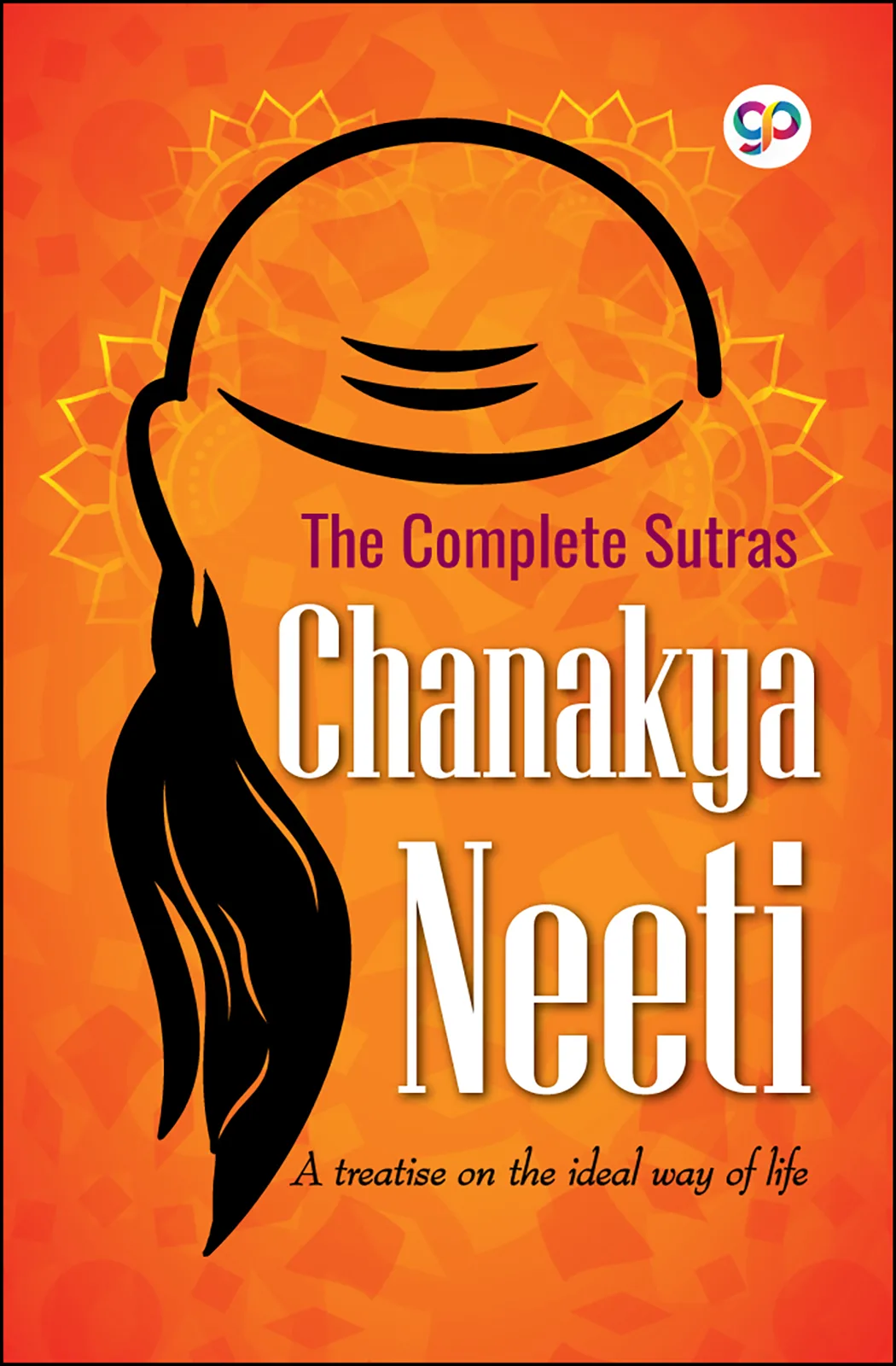
Chanakya Neeti
Paperback
• 108 Pages
• INR 245.00
• English
• 9789389716276
No ratings yet
| Publisher | General Press |
|---|---|
| ISBN13 | 9789389716276 |
| ASIN/SKU | 9389716276 |
| Book Format | Paperback |
| Language | English |
| Pages | 108 |
| List Price | INR 245.00 |
| Subject Code | PHI003000, PHI005000, POL010000 |
| Publishing Date | 01/08/2020 |
| Dimensions | 8.25 x 5.25 x 1.0 inches |
| Book Code | BD00068112 |
Buy this Book
Amazon Stores
Ebook Stores
Other Stores
Discover Chanakya Neeti by Chanakya. This book is published by General Press in Paperback format, ISBN 9789389716276, ASIN 9389716276, under Self-Help, Indian Philosophy, Philosophy.
Book Description
'Chanakya Neeti' by Chanakya is a classic work of political wisdom, practical philosophy, and ancient Indian literature that explores the art of living wisely in a complicated world. Rather than telling a conventional story, this influential text presents sharp observations about human nature, relationships, leadership, wealth, friendship, morality, and the responsibilities of those who seek success and influence. Its central theme is simple yet powerful: understanding people, circumstances, and one's own strengths is essential for navigating life intelligently.
Attributed to Chanakya, the renowned teacher, strategist, economist, and political thinker associated with the rise of the Mauryan Empire, Chanakya Neeti draws attention to the realities that often lie beneath everyday behavior. Chanakya examines friendship and betrayal, trust and deception, education and ignorance, wealth and poverty, family and social conduct, and the qualities that distinguish a wise person from a foolish one. His advice can sometimes feel blunt because he does not idealize human nature. Instead, he encourages readers to recognize both virtues and weaknesses and to respond to life's challenges with awareness rather than blind optimism.
One of the most fascinating aspects of Chanakya Neeti is its practical approach to wisdom. The book repeatedly emphasizes self-discipline, careful judgment, discretion, learning, courage, and the ability to recognize opportunities and danger. It also considers leadership and governance, offering insights into how rulers should deal with allies, enemies, advisers, resources, and public responsibilities. Although these teachings emerged from an ancient historical world, many of Chanakya's observations continue to feel surprisingly relevant because ambition, competition, loyalty, deception, and the desire for security remain part of human life.
'Chanakya Neeti' is therefore more than an ancient collection of sayings. It is a challenging guide to understanding human behavior and making thoughtful decisions in an unpredictable world. Some ideas may seem severe or uncomfortable to modern readers, but that directness is part of the book's enduring appeal. Each passage invites reflection on how we judge others, protect ourselves, build relationships, pursue success, and respond to adversity. For readers interested in ancient Indian wisdom, strategy, leadership, and practical philosophy, Chanakya Neeti offers a fascinating journey into the mind of one of India's most influential thinkers—and its lessons may leave you wondering how much of Chanakya's world still exists in our own.
Attributed to Chanakya, the renowned teacher, strategist, economist, and political thinker associated with the rise of the Mauryan Empire, Chanakya Neeti draws attention to the realities that often lie beneath everyday behavior. Chanakya examines friendship and betrayal, trust and deception, education and ignorance, wealth and poverty, family and social conduct, and the qualities that distinguish a wise person from a foolish one. His advice can sometimes feel blunt because he does not idealize human nature. Instead, he encourages readers to recognize both virtues and weaknesses and to respond to life's challenges with awareness rather than blind optimism.
One of the most fascinating aspects of Chanakya Neeti is its practical approach to wisdom. The book repeatedly emphasizes self-discipline, careful judgment, discretion, learning, courage, and the ability to recognize opportunities and danger. It also considers leadership and governance, offering insights into how rulers should deal with allies, enemies, advisers, resources, and public responsibilities. Although these teachings emerged from an ancient historical world, many of Chanakya's observations continue to feel surprisingly relevant because ambition, competition, loyalty, deception, and the desire for security remain part of human life.
'Chanakya Neeti' is therefore more than an ancient collection of sayings. It is a challenging guide to understanding human behavior and making thoughtful decisions in an unpredictable world. Some ideas may seem severe or uncomfortable to modern readers, but that directness is part of the book's enduring appeal. Each passage invites reflection on how we judge others, protect ourselves, build relationships, pursue success, and respond to adversity. For readers interested in ancient Indian wisdom, strategy, leadership, and practical philosophy, Chanakya Neeti offers a fascinating journey into the mind of one of India's most influential thinkers—and its lessons may leave you wondering how much of Chanakya's world still exists in our own.
Author Biography
Chanakya, traditionally known as Kautilya or Vishnu Gupta, was an Indian teacher, philosopher, economist, jurist and royal advisor. He wrote the Arthashastra, an ancient Indian political treatise. Considered a pioneer in the field of Political Science and Economics in India, his works, lost towards the end of the Gupta Empire, were fortunately rediscovered in 1915. He played a crucial role in the establishment and expansion of the Mauryan Empire.
Editorial Reviews
Editorial Reviews will be added soon…
Book Summary
Chanakya Neeti, traditionally attributed to Chanakya, is a classic collection of practical teachings on human behavior, personal conduct, relationships, wealth, leadership, and the difficult art of living wisely in an uncertain world. Chanakya, also known as Kautilya or Vishnugupta, is remembered as an ancient Indian strategist, teacher, political thinker, and adviser associated with the rise of Chandragupta Maurya. Unlike a philosophical work that asks only what an ideal life should look like, Chanakya Neeti is concerned with how people actually behave and how an intelligent person should respond to the realities of society.
The book is written in the form of concise observations and maxims. Many of them are blunt, sometimes severe, and occasionally cynical. Chanakya does not assume that everyone is honest, loyal, generous, or well-intentioned. Instead, he repeatedly advises readers to develop judgment, self-control, practical intelligence, and the ability to distinguish trustworthy people from dangerous ones. His central concern is survival with dignity and success through wisdom rather than naïve idealism.
One of the most important themes of Chanakya Neeti is the value of knowledge and education. Chanakya treats learning as a form of wealth that cannot easily be stolen or destroyed. Material possessions may disappear, social status may change, and circumstances may turn against a person, but knowledge remains a lasting resource. Education gives a person the ability to think, make decisions, understand situations, and navigate difficult circumstances.
However, Chanakya's idea of education goes beyond collecting information. True wisdom requires the ability to apply knowledge appropriately. A learned person who cannot understand people or circumstances may still make foolish decisions. Practical intelligence therefore becomes just as important as theoretical learning.
The book strongly emphasizes self-discipline. Chanakya repeatedly warns against uncontrolled desire, anger, greed, pride, and attachment. These emotions can weaken judgment and lead people into avoidable trouble. A person who cannot control himself will struggle to control his circumstances. The wise individual therefore learns to restrain impulses and think about consequences before acting.
This emphasis on self-control is closely connected to Chanakya's understanding of success. He does not present success as something that comes merely from luck or ambition. It requires patience, preparation, careful decisions, and awareness of one's limitations. People should understand what they are capable of doing and avoid entering situations for which they are unprepared.
Another major concern is choosing the right company. Chanakya believes that the people around us have a powerful influence on our character and future. Good companions can encourage discipline, wisdom, and progress, while foolish or dishonest companions can lead a person toward destruction. For this reason, the book repeatedly advises readers to judge people carefully rather than trusting everyone simply because they appear friendly.
Chanakya's observations about human relationships can be particularly sharp. He warns against excessive trust and encourages people to observe a person's actions rather than relying entirely on words. A person may speak kindly while secretly pursuing selfish interests. Trust, therefore, should be earned through consistent behavior.
At the same time, Chanakya Neeti does not simply recommend suspicion of everyone. Its deeper message is that discernment is necessary. Wisdom lies in knowing whom to trust, when to speak, when to remain silent, and when to distance oneself from harmful people.
The book also gives considerable attention to speech. Words can create relationships, resolve conflicts, or destroy opportunities. Chanakya encourages thoughtful communication and warns against speaking impulsively. Silence can sometimes be wiser than unnecessary explanation. A person who constantly reveals personal information, secrets, plans, or weaknesses may make himself vulnerable.
This idea connects with one of Chanakya's broader principles: not everything should be revealed. He advises discretion in matters involving personal plans, weaknesses, resources, and strategies. The reasoning is practical. Information can become a source of power when placed in the wrong hands. A wise person therefore understands that openness must be balanced with prudence.
Wealth is another recurring subject. Chanakya recognizes the practical importance of money and material security. Poverty can create vulnerability, dependence, and social difficulties. Yet wealth should not become an excuse for arrogance or reckless spending. The wise person earns honestly, saves carefully, uses resources responsibly, and prepares for difficult times.
Chanakya also stresses the importance of planning for the future. One should not live entirely for immediate pleasure. Unexpected difficulties are part of life, and preparation can reduce their impact. Saving resources, developing useful skills, maintaining good relationships, and thinking ahead are all forms of practical wisdom.
The book's teachings on leadership and governance reflect the political world in which Chanakya is traditionally understood to have lived. A ruler must be intelligent, disciplined, alert, and capable of protecting the interests of the state. Leadership is not presented as personal privilege alone; it carries responsibility. A weak or careless ruler can cause suffering for an entire population.
Chanakya believes that a leader must understand people. Political decisions require awareness of motives, alliances, strengths, weaknesses, and changing circumstances. Strategy therefore depends not only on courage but also on information and timing. Acting too quickly can be as dangerous as failing to act.
Another recurring principle is the importance of adaptability. Life changes constantly, and rigid behavior can lead to failure. A person should understand the nature of a situation before deciding how to respond. What works in one environment may be disastrous in another. Practical wisdom therefore involves observing circumstances and adjusting one's actions accordingly.
The book also contains teachings about family, friendship, marriage, children, and social responsibilities. Some of these observations reflect the social assumptions of ancient India and may feel dated or uncomfortable to modern readers. Its statements about women, social roles, caste, and family life should therefore be understood within their historical context rather than treated as universally acceptable principles.
Nevertheless, many of its broader insights remain recognizable. Chanakya repeatedly reminds readers that character becomes visible under pressure, that difficult circumstances reveal true friendships, and that people should judge others by consistent behavior rather than appearances. He also stresses that raising children requires discipline and education, while relationships require mutual understanding and responsibility.
Perhaps the most striking quality of Chanakya Neeti is its realism. Chanakya does not build his advice around the assumption that the world is fair. He recognizes that intelligent people can still be deceived, that good intentions do not guarantee good outcomes, and that power, wealth, ambition, jealousy, and competition influence human behavior.
Yet the book is not simply pessimistic. Its purpose is to make the reader more capable of dealing with reality. Chanakya's answer to an uncertain world is not helplessness but preparation. Learn continuously. Control yourself. Choose companions carefully. Protect your resources. Think before speaking. Observe people closely. Plan ahead. Know when to act and when to withdraw.
In this sense, Chanakya Neeti can be read as a manual of practical wisdom rather than a conventional philosophical treatise. Some of its individual maxims may feel harsh, overly general, or rooted in assumptions that no longer fit modern life. But beneath them lies a consistent concern with judgment and self-mastery.
Ultimately, the central lesson of Chanakya Neeti is that wisdom means understanding reality without losing control of oneself. Life will contain uncertainty, disappointment, competition, betrayal, success, and failure. We cannot control every circumstance, but we can improve the way we respond to them. By cultivating knowledge, discipline, discretion, financial prudence, good judgment, and awareness of human nature, a person becomes better equipped to live successfully.
That practical spirit explains why Chanakya Neeti has continued to attract readers for centuries. It does not promise an easy life. Instead, it teaches the reader to become difficult to deceive, difficult to destabilize, and capable of making thoughtful choices. Its enduring message is simple: wisdom is not merely knowing what is right; it is knowing what to do, when to do it, and how to protect oneself while doing it.
The book is written in the form of concise observations and maxims. Many of them are blunt, sometimes severe, and occasionally cynical. Chanakya does not assume that everyone is honest, loyal, generous, or well-intentioned. Instead, he repeatedly advises readers to develop judgment, self-control, practical intelligence, and the ability to distinguish trustworthy people from dangerous ones. His central concern is survival with dignity and success through wisdom rather than naïve idealism.
One of the most important themes of Chanakya Neeti is the value of knowledge and education. Chanakya treats learning as a form of wealth that cannot easily be stolen or destroyed. Material possessions may disappear, social status may change, and circumstances may turn against a person, but knowledge remains a lasting resource. Education gives a person the ability to think, make decisions, understand situations, and navigate difficult circumstances.
However, Chanakya's idea of education goes beyond collecting information. True wisdom requires the ability to apply knowledge appropriately. A learned person who cannot understand people or circumstances may still make foolish decisions. Practical intelligence therefore becomes just as important as theoretical learning.
The book strongly emphasizes self-discipline. Chanakya repeatedly warns against uncontrolled desire, anger, greed, pride, and attachment. These emotions can weaken judgment and lead people into avoidable trouble. A person who cannot control himself will struggle to control his circumstances. The wise individual therefore learns to restrain impulses and think about consequences before acting.
This emphasis on self-control is closely connected to Chanakya's understanding of success. He does not present success as something that comes merely from luck or ambition. It requires patience, preparation, careful decisions, and awareness of one's limitations. People should understand what they are capable of doing and avoid entering situations for which they are unprepared.
Another major concern is choosing the right company. Chanakya believes that the people around us have a powerful influence on our character and future. Good companions can encourage discipline, wisdom, and progress, while foolish or dishonest companions can lead a person toward destruction. For this reason, the book repeatedly advises readers to judge people carefully rather than trusting everyone simply because they appear friendly.
Chanakya's observations about human relationships can be particularly sharp. He warns against excessive trust and encourages people to observe a person's actions rather than relying entirely on words. A person may speak kindly while secretly pursuing selfish interests. Trust, therefore, should be earned through consistent behavior.
At the same time, Chanakya Neeti does not simply recommend suspicion of everyone. Its deeper message is that discernment is necessary. Wisdom lies in knowing whom to trust, when to speak, when to remain silent, and when to distance oneself from harmful people.
The book also gives considerable attention to speech. Words can create relationships, resolve conflicts, or destroy opportunities. Chanakya encourages thoughtful communication and warns against speaking impulsively. Silence can sometimes be wiser than unnecessary explanation. A person who constantly reveals personal information, secrets, plans, or weaknesses may make himself vulnerable.
This idea connects with one of Chanakya's broader principles: not everything should be revealed. He advises discretion in matters involving personal plans, weaknesses, resources, and strategies. The reasoning is practical. Information can become a source of power when placed in the wrong hands. A wise person therefore understands that openness must be balanced with prudence.
Wealth is another recurring subject. Chanakya recognizes the practical importance of money and material security. Poverty can create vulnerability, dependence, and social difficulties. Yet wealth should not become an excuse for arrogance or reckless spending. The wise person earns honestly, saves carefully, uses resources responsibly, and prepares for difficult times.
Chanakya also stresses the importance of planning for the future. One should not live entirely for immediate pleasure. Unexpected difficulties are part of life, and preparation can reduce their impact. Saving resources, developing useful skills, maintaining good relationships, and thinking ahead are all forms of practical wisdom.
The book's teachings on leadership and governance reflect the political world in which Chanakya is traditionally understood to have lived. A ruler must be intelligent, disciplined, alert, and capable of protecting the interests of the state. Leadership is not presented as personal privilege alone; it carries responsibility. A weak or careless ruler can cause suffering for an entire population.
Chanakya believes that a leader must understand people. Political decisions require awareness of motives, alliances, strengths, weaknesses, and changing circumstances. Strategy therefore depends not only on courage but also on information and timing. Acting too quickly can be as dangerous as failing to act.
Another recurring principle is the importance of adaptability. Life changes constantly, and rigid behavior can lead to failure. A person should understand the nature of a situation before deciding how to respond. What works in one environment may be disastrous in another. Practical wisdom therefore involves observing circumstances and adjusting one's actions accordingly.
The book also contains teachings about family, friendship, marriage, children, and social responsibilities. Some of these observations reflect the social assumptions of ancient India and may feel dated or uncomfortable to modern readers. Its statements about women, social roles, caste, and family life should therefore be understood within their historical context rather than treated as universally acceptable principles.
Nevertheless, many of its broader insights remain recognizable. Chanakya repeatedly reminds readers that character becomes visible under pressure, that difficult circumstances reveal true friendships, and that people should judge others by consistent behavior rather than appearances. He also stresses that raising children requires discipline and education, while relationships require mutual understanding and responsibility.
Perhaps the most striking quality of Chanakya Neeti is its realism. Chanakya does not build his advice around the assumption that the world is fair. He recognizes that intelligent people can still be deceived, that good intentions do not guarantee good outcomes, and that power, wealth, ambition, jealousy, and competition influence human behavior.
Yet the book is not simply pessimistic. Its purpose is to make the reader more capable of dealing with reality. Chanakya's answer to an uncertain world is not helplessness but preparation. Learn continuously. Control yourself. Choose companions carefully. Protect your resources. Think before speaking. Observe people closely. Plan ahead. Know when to act and when to withdraw.
In this sense, Chanakya Neeti can be read as a manual of practical wisdom rather than a conventional philosophical treatise. Some of its individual maxims may feel harsh, overly general, or rooted in assumptions that no longer fit modern life. But beneath them lies a consistent concern with judgment and self-mastery.
Ultimately, the central lesson of Chanakya Neeti is that wisdom means understanding reality without losing control of oneself. Life will contain uncertainty, disappointment, competition, betrayal, success, and failure. We cannot control every circumstance, but we can improve the way we respond to them. By cultivating knowledge, discipline, discretion, financial prudence, good judgment, and awareness of human nature, a person becomes better equipped to live successfully.
That practical spirit explains why Chanakya Neeti has continued to attract readers for centuries. It does not promise an easy life. Instead, it teaches the reader to become difficult to deceive, difficult to destabilize, and capable of making thoughtful choices. Its enduring message is simple: wisdom is not merely knowing what is right; it is knowing what to do, when to do it, and how to protect oneself while doing it.
Sample Chapters
Sample Chapters will be added soon…
Reader Reviews
No reviews yet.
Chanakya Neeti