
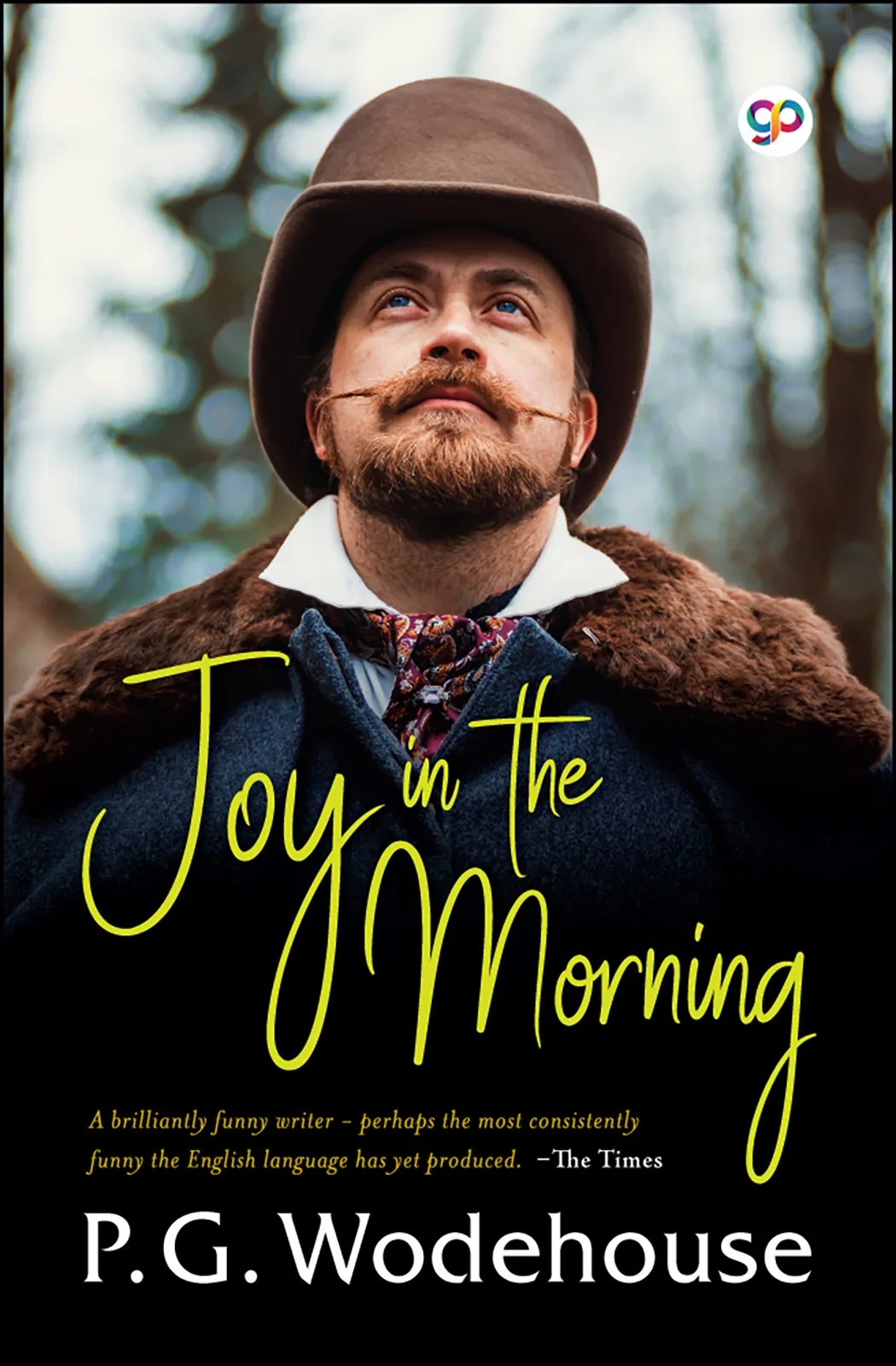
Joy in the Morning
Paperback
• 192 Pages
• INR 295.00
• English
• 9789354994449
No ratings yet
| Publisher | General Press |
|---|---|
| ISBN13 | 9789354994449 |
| ASIN/SKU | 935499444X |
| Book Format | Paperback |
| Language | English |
| Pages | 192 |
| List Price | INR 295.00 |
| Subject Code | FIC045000, HUM000000, FIC016000 |
| Publishing Date | 22/09/2022 |
| Dimensions | 8.25 x 5.25 x 1.0 inches |
| Book Code | BD00068177 |
Buy this Book
Amazon Stores
Ebook Stores
Other Stores
Discover Joy in the Morning by P.G. Wodehouse. This book is published by General Press in Paperback format, ISBN 9789354994449, ASIN 935499444X, under Literature and Fiction, Classics.
Book Description
‘Joy in the Morning’ is another novel from the wonderful series of books about Bertram Wooster and Jeeves by English humorist P.G. Wodehouse. It was first published in 1946. The novel, completed amid the horrors of wartime Germany, was something of a miracle, “the supreme Jeeves novel of all time.”
Bertie is a young gentleman of inherited means and no present occupation. He is a good humoured and well-meant chap, however clearly not the smartest tool in the shed. Bertie seems to have a talent of getting himself into trouble but that is where Jeeves, his loyal, educated and painfully clever butler comes to his rescue. Jeeves is irreplaceable when it comes to saving Bertie from whatever creative, complicated and incredibly funny situations Wodehouse puts his characters through.
Bertie is a young gentleman of inherited means and no present occupation. He is a good humoured and well-meant chap, however clearly not the smartest tool in the shed. Bertie seems to have a talent of getting himself into trouble but that is where Jeeves, his loyal, educated and painfully clever butler comes to his rescue. Jeeves is irreplaceable when it comes to saving Bertie from whatever creative, complicated and incredibly funny situations Wodehouse puts his characters through.
Author Biography
Sir Pelham Grenville Wodehouse, KBE (/ˈwʊdhaʊs/; 15 October 1881 – 14 February 1975) was an English author and one of the most widely read humorists of the 20th century. Born in Guildford, the son of a British magistrate based in Hong Kong, Wodehouse spent happy teenage years at Dulwich College, to which he remained devoted all his life. After leaving school he was employed by a bank but disliked the work and turned to writing in his spare time. His early novels were mostly school stories, but he later switched to comic fiction, creating several regular characters who became familiar to the public over the years. They include the feather-brained Bertie Wooster and his sagacious valet, Jeeves; the immaculate and loquacious Psmith; the feeble-minded Lord Emsworth and the Blandings Castle set; the loquacious Oldest Member, with stories about golf; and the equally loquacious Mr Mulliner, with tall tales on subjects ranging from bibulous bishops to megalomaniac movie moguls.
Although most of Wodehouse's fiction is set in England, he spent much of his life in the US and used New York and Hollywood as settings for some of his novels and short stories. During and after the First World War, together with Guy Bolton and Jerome Kern, he wrote a series of Broadway musical comedies that were an important part of the development of the American musical. He began the 1930s writing for MGM in Hollywood. In a 1931 interview, his naïve revelations of incompetence and extravagance at Hollywood studios caused a furore. In the same decade, his literary career reached a new peak.
In 1934 Wodehouse moved to France for tax reasons; in 1940 he was taken prisoner at Le Touquet by the invading Germans and interned for nearly a year. After his release he made six broadcasts from German radio in Berlin to the US, which had not yet entered the war. The talks were comic and apolitical, but his broadcasting over enemy radio prompted anger and strident controversy in Britain, and a threat of prosecution. Wodehouse never returned to England. From 1947 until his death he lived in the US, taking dual British-American citizenship in 1955. He was a prolific writer throughout his life, publishing more than ninety books, forty plays, two hundred short stories and other writings between 1902 and 1974. He died in 1975, at the age of 93, in Southampton, New York.
Wodehouse worked extensively on his books, sometimes having two or more in preparation simultaneously. He would take up to two years to build a plot and write a scenario of about thirty thousand words. After the scenario was complete he would write the story. Early in his career he would produce a novel in about three months, but he slowed in old age to around six months. He used a mixture of Edwardian slang, quotations from and allusions to numerous poets, and several literary techniques to produce a prose style that has been compared with comic poetry and musical comedy. Some critics of Wodehouse have considered his work flippant, but among his fans are former British prime ministers and many of his fellow writers.
Bio from Wikipedia, the free encyclopedia. Photo by Unlisted photographer for Screenland (Screenland, August 1930 (Vol XXI, No 4); p. 20) [Public domain], via Wikimedia Commons.
Although most of Wodehouse's fiction is set in England, he spent much of his life in the US and used New York and Hollywood as settings for some of his novels and short stories. During and after the First World War, together with Guy Bolton and Jerome Kern, he wrote a series of Broadway musical comedies that were an important part of the development of the American musical. He began the 1930s writing for MGM in Hollywood. In a 1931 interview, his naïve revelations of incompetence and extravagance at Hollywood studios caused a furore. In the same decade, his literary career reached a new peak.
In 1934 Wodehouse moved to France for tax reasons; in 1940 he was taken prisoner at Le Touquet by the invading Germans and interned for nearly a year. After his release he made six broadcasts from German radio in Berlin to the US, which had not yet entered the war. The talks were comic and apolitical, but his broadcasting over enemy radio prompted anger and strident controversy in Britain, and a threat of prosecution. Wodehouse never returned to England. From 1947 until his death he lived in the US, taking dual British-American citizenship in 1955. He was a prolific writer throughout his life, publishing more than ninety books, forty plays, two hundred short stories and other writings between 1902 and 1974. He died in 1975, at the age of 93, in Southampton, New York.
Wodehouse worked extensively on his books, sometimes having two or more in preparation simultaneously. He would take up to two years to build a plot and write a scenario of about thirty thousand words. After the scenario was complete he would write the story. Early in his career he would produce a novel in about three months, but he slowed in old age to around six months. He used a mixture of Edwardian slang, quotations from and allusions to numerous poets, and several literary techniques to produce a prose style that has been compared with comic poetry and musical comedy. Some critics of Wodehouse have considered his work flippant, but among his fans are former British prime ministers and many of his fellow writers.
Bio from Wikipedia, the free encyclopedia. Photo by Unlisted photographer for Screenland (Screenland, August 1930 (Vol XXI, No 4); p. 20) [Public domain], via Wikimedia Commons.
Editorial Reviews
Editorial Reviews will be added soon…
Book Summary
Joy in the Morning is one of P.G. Wodehouse's most celebrated Jeeves and Wooster novels, blending witty dialogue, intricate misunderstandings, and delightfully absurd situations into a timeless comedy. Set largely at the English country estate of Steeple Bumpleigh, the novel follows the well-meaning but perpetually bewildered Bertie Wooster as he becomes entangled in a web of romantic complications, family expectations, and social obligations. As always, his brilliant valet, Jeeves, quietly orchestrates solutions with remarkable intelligence and composure.
The novel begins with Bertie enjoying what he hopes will be a peaceful existence, only to find himself drawn into helping several friends and acquaintances with their personal problems. His generous nature makes him reluctant to refuse anyone, even when he suspects that doing so will lead to trouble. Before long, he is carrying messages, making promises, and attempting to smooth over disagreements, all while trying to avoid creating even greater confusion.
Much of the humor arises from Bertie's tendency to underestimate how quickly simple favors can grow into elaborate predicaments. Every attempt to solve one difficulty seems to create two more, and seemingly unrelated events become tightly connected. Wodehouse delights in building these complications with perfect comic timing, allowing readers to watch the chaos unfold while knowing that Bertie himself rarely understands the full picture.
Steeple Bumpleigh provides the perfect setting for these events. Like many country houses in Wodehouse's fiction, it is filled with eccentric relatives, stern authority figures, hopeful lovers, and unexpected visitors. Hidden agendas, mistaken assumptions, and awkward encounters transform an otherwise peaceful estate into the stage for an increasingly complicated series of comic misunderstandings.
Bertie remains one of literature's most lovable narrators. Cheerful, generous, and unfailingly polite, he is never malicious or selfish. His greatest weakness is his inability to say no when friends ask for help. Although he often lacks practical judgment, he possesses genuine kindness and loyalty. Readers are invited to laugh at his predicaments without ever losing sympathy for him, making him one of Wodehouse's most enduring creations.
Standing in sharp contrast to Bertie is Jeeves, whose calm intelligence and flawless judgment make him indispensable. Jeeves rarely seeks attention or recognition, yet he quietly observes every detail that others overlook. His extraordinary understanding of human nature allows him to untangle problems that appear impossible. Rather than dominating the story, he waits patiently until the right moment before offering a solution that restores order with elegant simplicity.
The supporting cast contributes enormously to the novel's charm. Wodehouse populates the story with determined aunts, demanding guardians, anxious young lovers, ambitious relatives, and eccentric country-house guests. Each character pursues personal goals with complete seriousness, even when those goals appear hilariously unreasonable. Their conflicting ambitions generate much of the novel's momentum and provide countless opportunities for misunderstandings.
Romantic relationships form one of the novel's central themes. Several couples struggle with misunderstandings, parental disapproval, conflicting expectations, or simple miscommunication. Wodehouse treats romance not as sentimental drama but as fertile ground for comedy. The lovers are sincere, yet their problems become increasingly complicated because they hesitate to speak openly or jump to incorrect conclusions.
Another recurring theme is the contrast between appearance and reality. Characters frequently make assumptions based on incomplete information, leading them to misinterpret innocent actions as evidence of elaborate schemes. These mistaken impressions multiply throughout the novel, creating situations in which everyone believes something different is happening. The resulting confusion drives much of the comedy while highlighting how easily misunderstandings can arise.
Family expectations also play an important role. Older relatives often attempt to direct the lives of younger family members, believing they know what is best. Their confidence contrasts amusingly with the younger generation's desire for independence. Wodehouse presents these conflicts with warmth rather than bitterness, emphasizing affection beneath the disagreements.
The novel celebrates friendship and loyalty despite its comic complications. Bertie's willingness to help others, even when it places him in embarrassing situations, reflects his generous character. Jeeves's quiet dedication likewise demonstrates loyalty expressed through competence and discretion. Together, they form one of literature's most beloved partnerships, built on mutual respect despite their very different personalities.
Wodehouse's greatest achievement lies in his style. His sparkling prose, inventive similes, playful language, and impeccable comic timing transform ordinary conversations into memorable scenes. Even moments of apparent crisis remain light-hearted because readers trust that the story's humor will ultimately prevail over genuine misfortune. His dialogue captures both the confidence of eccentric personalities and the bewilderment of those trying to keep pace with rapidly changing circumstances.
Underlying the comedy is a reassuring vision of the world. While problems may appear overwhelming, they are rarely permanent. Patience, intelligence, good humor, and a willingness to forgive eventually restore harmony. Wodehouse creates a fictional universe where embarrassment replaces tragedy, misunderstandings replace malice, and cleverness triumphs over confusion.
Ultimately, Joy in the Morning is a joyful celebration of wit, friendship, and comic storytelling. Through the unforgettable partnership of Bertie Wooster and Jeeves, P.G. Wodehouse crafts a delightful tale in which everyday social obligations become grand adventures filled with laughter and surprise. The novel remains a shining example of classic English humor, admired for its elegant prose, memorable characters, and enduring ability to entertain readers across generations.
The novel begins with Bertie enjoying what he hopes will be a peaceful existence, only to find himself drawn into helping several friends and acquaintances with their personal problems. His generous nature makes him reluctant to refuse anyone, even when he suspects that doing so will lead to trouble. Before long, he is carrying messages, making promises, and attempting to smooth over disagreements, all while trying to avoid creating even greater confusion.
Much of the humor arises from Bertie's tendency to underestimate how quickly simple favors can grow into elaborate predicaments. Every attempt to solve one difficulty seems to create two more, and seemingly unrelated events become tightly connected. Wodehouse delights in building these complications with perfect comic timing, allowing readers to watch the chaos unfold while knowing that Bertie himself rarely understands the full picture.
Steeple Bumpleigh provides the perfect setting for these events. Like many country houses in Wodehouse's fiction, it is filled with eccentric relatives, stern authority figures, hopeful lovers, and unexpected visitors. Hidden agendas, mistaken assumptions, and awkward encounters transform an otherwise peaceful estate into the stage for an increasingly complicated series of comic misunderstandings.
Bertie remains one of literature's most lovable narrators. Cheerful, generous, and unfailingly polite, he is never malicious or selfish. His greatest weakness is his inability to say no when friends ask for help. Although he often lacks practical judgment, he possesses genuine kindness and loyalty. Readers are invited to laugh at his predicaments without ever losing sympathy for him, making him one of Wodehouse's most enduring creations.
Standing in sharp contrast to Bertie is Jeeves, whose calm intelligence and flawless judgment make him indispensable. Jeeves rarely seeks attention or recognition, yet he quietly observes every detail that others overlook. His extraordinary understanding of human nature allows him to untangle problems that appear impossible. Rather than dominating the story, he waits patiently until the right moment before offering a solution that restores order with elegant simplicity.
The supporting cast contributes enormously to the novel's charm. Wodehouse populates the story with determined aunts, demanding guardians, anxious young lovers, ambitious relatives, and eccentric country-house guests. Each character pursues personal goals with complete seriousness, even when those goals appear hilariously unreasonable. Their conflicting ambitions generate much of the novel's momentum and provide countless opportunities for misunderstandings.
Romantic relationships form one of the novel's central themes. Several couples struggle with misunderstandings, parental disapproval, conflicting expectations, or simple miscommunication. Wodehouse treats romance not as sentimental drama but as fertile ground for comedy. The lovers are sincere, yet their problems become increasingly complicated because they hesitate to speak openly or jump to incorrect conclusions.
Another recurring theme is the contrast between appearance and reality. Characters frequently make assumptions based on incomplete information, leading them to misinterpret innocent actions as evidence of elaborate schemes. These mistaken impressions multiply throughout the novel, creating situations in which everyone believes something different is happening. The resulting confusion drives much of the comedy while highlighting how easily misunderstandings can arise.
Family expectations also play an important role. Older relatives often attempt to direct the lives of younger family members, believing they know what is best. Their confidence contrasts amusingly with the younger generation's desire for independence. Wodehouse presents these conflicts with warmth rather than bitterness, emphasizing affection beneath the disagreements.
The novel celebrates friendship and loyalty despite its comic complications. Bertie's willingness to help others, even when it places him in embarrassing situations, reflects his generous character. Jeeves's quiet dedication likewise demonstrates loyalty expressed through competence and discretion. Together, they form one of literature's most beloved partnerships, built on mutual respect despite their very different personalities.
Wodehouse's greatest achievement lies in his style. His sparkling prose, inventive similes, playful language, and impeccable comic timing transform ordinary conversations into memorable scenes. Even moments of apparent crisis remain light-hearted because readers trust that the story's humor will ultimately prevail over genuine misfortune. His dialogue captures both the confidence of eccentric personalities and the bewilderment of those trying to keep pace with rapidly changing circumstances.
Underlying the comedy is a reassuring vision of the world. While problems may appear overwhelming, they are rarely permanent. Patience, intelligence, good humor, and a willingness to forgive eventually restore harmony. Wodehouse creates a fictional universe where embarrassment replaces tragedy, misunderstandings replace malice, and cleverness triumphs over confusion.
Ultimately, Joy in the Morning is a joyful celebration of wit, friendship, and comic storytelling. Through the unforgettable partnership of Bertie Wooster and Jeeves, P.G. Wodehouse crafts a delightful tale in which everyday social obligations become grand adventures filled with laughter and surprise. The novel remains a shining example of classic English humor, admired for its elegant prose, memorable characters, and enduring ability to entertain readers across generations.
Sample Chapters
Sample Chapters will be added soon…
Reader Reviews
No reviews yet.
Joy in the Morning
Download Cover Image
Do you want to download the full cover image for Joy in the Morning?