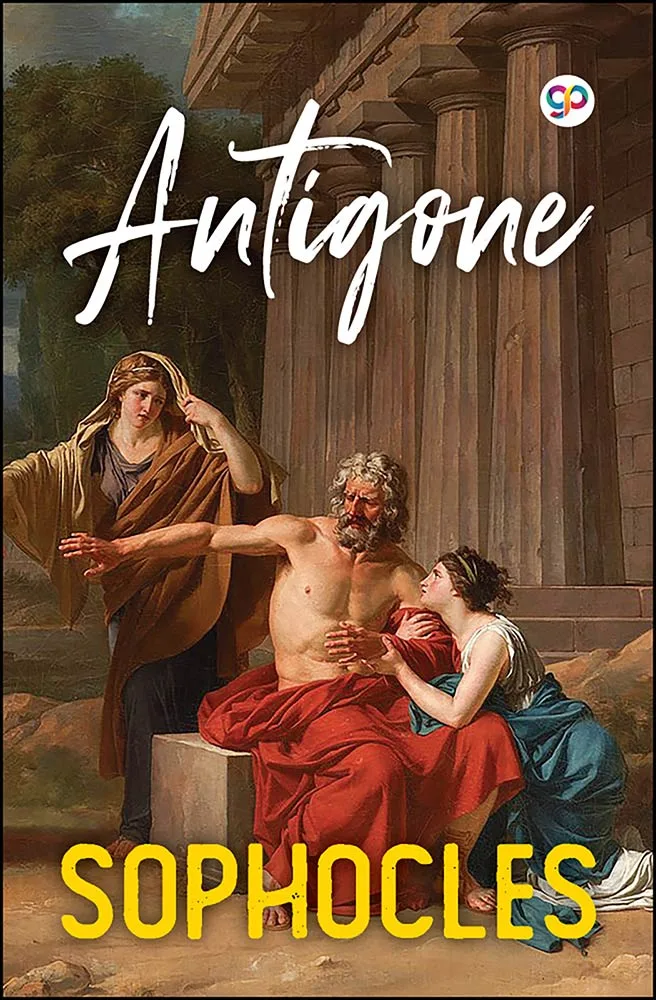
Antigone
Paperback
• 80 Pages
• INR 199.00
• English
• 9789354995873
No ratings yet
| Publisher | General Press |
|---|---|
| ISBN13 | 9789354995873 |
| ASIN/SKU | 935499587X |
| Book Format | Paperback |
| Language | English |
| Pages | 80 |
| List Price | INR 199.00 |
| Subject Code | DRA006000, DRA003000, DRA000000 |
| Publishing Date | 05/09/2023 |
| Dimensions | 8.25 x 5.25 x 1.0 inches |
| Book Code | BD00068186 |
Buy this Book
Amazon Stores
Ebook Stores
Other Stores
Discover Antigone by Sophocles. This book is published by General Press in Paperback format, ISBN 9789354995873, ASIN 935499587X, under Literature and Fiction, Classics, Greek Literature.
Book Description
Premiered originally in Ancient Greek in c. 441 BCE, Athens, ‘Antigone’, is the first Theban play written by Sophocles yet chronologically last in the cycle, is a masterpiece of classical antiquity which examines the conflict between public duty and personal loyalty.
Following the banishment of Oedipus, his two sons Eteocles and Polyneices died leading opposite sides in Thebes’s civil war, fighting each other for the throne.
In ancient Greece, the refusal of burial rites was one of the most disrespectful acts that could have been shown to a person and their family. Antigone finds herself compelled by familial duty and disregards Creon’s edict by scattering dirt across Polyneices’s corpse.
Creon, whose son Haemon is engaged to Antigone, finds himself torn between personal loyalty to his family and civic duty to punish Antigone for this crime. One of the greatest dramas from classical antiquity, it established Sophocles as one of the most renowned dramatists of his era.
Following the banishment of Oedipus, his two sons Eteocles and Polyneices died leading opposite sides in Thebes’s civil war, fighting each other for the throne.
In ancient Greece, the refusal of burial rites was one of the most disrespectful acts that could have been shown to a person and their family. Antigone finds herself compelled by familial duty and disregards Creon’s edict by scattering dirt across Polyneices’s corpse.
Creon, whose son Haemon is engaged to Antigone, finds himself torn between personal loyalty to his family and civic duty to punish Antigone for this crime. One of the greatest dramas from classical antiquity, it established Sophocles as one of the most renowned dramatists of his era.
Author Biography
Sophocles (c. 497/496 BCE–406/405 BCE) was one of the greatest playwrights of ancient Greece and a towering figure in the history of world literature. His tragedies explored timeless questions about fate, justice, morality, leadership, and the complexity of human nature. Celebrated for his masterful storytelling and profound understanding of human emotions, Sophocles helped shape the art of drama in ways that continue to influence theatre, literature, and philosophy more than two thousand years after his lifetime.
Sophocles was born in Colonus, a village just outside Athens, into a prosperous family. Growing up during the Golden Age of Athens, he received an excellent education in music, poetry, athletics, and the arts. His remarkable talent became evident at an early age. Tradition records that, as a young man, he was chosen to lead a victory chorus celebrating the Greek triumph over Persia after the Battle of Salamis in 480 BCE, reflecting the high regard in which he was already held.
Throughout his long career, Sophocles wrote more than 120 plays and won numerous dramatic competitions at the annual festivals honoring the god Dionysus. Although only seven of his tragedies survive in complete form, they rank among the greatest achievements of classical literature. These include Oedipus Rex, Antigone, Oedipus at Colonus, Electra, Ajax, Philoctetes, and The Trachiniae. His plays are admired for their compelling characters, tightly structured plots, and deep exploration of moral responsibility and the consequences of human choices.
Sophocles also introduced important innovations to Greek theatre. He expanded the number of actors on stage from two to three, allowing for more complex dialogue and dramatic conflict. He also refined the use of scenery and character development, helping transform Greek tragedy into a richer and more psychologically engaging art form.
Beyond his literary achievements, Sophocles served Athens in several public roles, including as a military general and a civic official, earning the respect of his fellow citizens for both his artistic and public service. He died around 406 or 405 BCE at approximately ninety years of age.
Today, Sophocles is remembered as one of history's greatest dramatists. His enduring works continue to challenge and inspire readers and audiences with their timeless insights into destiny, conscience, suffering, and the resilience of the human spirit.
Sophocles was born in Colonus, a village just outside Athens, into a prosperous family. Growing up during the Golden Age of Athens, he received an excellent education in music, poetry, athletics, and the arts. His remarkable talent became evident at an early age. Tradition records that, as a young man, he was chosen to lead a victory chorus celebrating the Greek triumph over Persia after the Battle of Salamis in 480 BCE, reflecting the high regard in which he was already held.
Throughout his long career, Sophocles wrote more than 120 plays and won numerous dramatic competitions at the annual festivals honoring the god Dionysus. Although only seven of his tragedies survive in complete form, they rank among the greatest achievements of classical literature. These include Oedipus Rex, Antigone, Oedipus at Colonus, Electra, Ajax, Philoctetes, and The Trachiniae. His plays are admired for their compelling characters, tightly structured plots, and deep exploration of moral responsibility and the consequences of human choices.
Sophocles also introduced important innovations to Greek theatre. He expanded the number of actors on stage from two to three, allowing for more complex dialogue and dramatic conflict. He also refined the use of scenery and character development, helping transform Greek tragedy into a richer and more psychologically engaging art form.
Beyond his literary achievements, Sophocles served Athens in several public roles, including as a military general and a civic official, earning the respect of his fellow citizens for both his artistic and public service. He died around 406 or 405 BCE at approximately ninety years of age.
Today, Sophocles is remembered as one of history's greatest dramatists. His enduring works continue to challenge and inspire readers and audiences with their timeless insights into destiny, conscience, suffering, and the resilience of the human spirit.
Editorial Reviews
Editorial Reviews will be added soon…
Book Summary
Sophocles’ Antigone is one of the most powerful tragedies of ancient Greek literature. Written more than two thousand years ago, the play explores the conflict between individual conscience and political authority, family loyalty and public law, and religious duty and human pride. At the center of the story is Antigone, a young woman who chooses to obey what she believes are the eternal laws of the gods rather than the command of King Creon. Her decision sets off a chain of events that destroys her family and teaches Creon, far too late, the terrible cost of stubbornness and pride.
The play takes place in Thebes shortly after a violent civil war. Antigone and her sister Ismene are the daughters of Oedipus, the former king of Thebes whose tragic life has brought suffering upon his entire family. Their brothers, Eteocles and Polynices, have fought against each other for control of the city. In the battle, both brothers are killed.
After their deaths, Creon becomes the ruler of Thebes. He declares that Eteocles, who defended the city, will receive an honorable burial. Polynices, however, is considered a traitor because he attacked Thebes. Creon therefore orders that Polynices’ body must remain unburied. Anyone who attempts to bury him will be punished by death.
For Creon, this law is a matter of political order. He believes that a ruler must reward loyalty and punish treason. He wants the people of Thebes to understand that the city’s authority must come before personal relationships. His decision reflects his belief that leadership requires absolute firmness.
Antigone sees the matter very differently. To her, Polynices is first of all her brother. More importantly, Greek religious tradition demands that the dead receive proper burial. Antigone believes that the gods’ unwritten and eternal laws are greater than any temporary command made by a human ruler. She tells Ismene that she intends to bury Polynices even if it means dying.
Ismene is frightened. She loves her brother but believes that they are powerless against Creon. As women in their society, she feels that they have even less authority to challenge the king. She begs Antigone to reconsider, but Antigone refuses. Her determination reveals her central characteristic: she would rather die while remaining faithful to her conscience than live by obeying a law she considers unjust.
Antigone secretly performs burial rites for Polynices. When Creon learns that someone has violated his order, he becomes furious. He demands that the guilty person be found. Eventually, a guard brings Antigone before him. She openly admits what she has done and refuses to apologize.
Creon is shocked by her defiance. He sees her actions not only as disobedience but as a direct challenge to his authority. Antigone, however, does not see herself as a rebel for rebellion’s sake. She believes that Creon’s law is temporary while the laws of the gods are eternal. The confrontation between them becomes the central conflict of the play.
Antigone’s sister Ismene later tries to share the blame, but Antigone refuses to allow her to claim responsibility for an action she did not perform. This moment shows that Antigone is not acting from hatred toward Ismene. She understands that each person must make his or her own moral choice.
Creon orders that Antigone be put to death. This creates a personal conflict because Antigone is engaged to Creon’s son, Haemon. Haemon initially approaches his father respectfully and tries to persuade him to reconsider. He explains that the people of Thebes sympathize with Antigone and believe she has acted honorably. He warns Creon that a good ruler must be willing to listen.
Creon interprets Haemon’s argument as weakness and disobedience. He insists that a ruler cannot allow a woman to challenge his authority. His pride becomes increasingly obvious. He confuses leadership with absolute control and believes that changing his decision would make him appear weak.
Haemon becomes desperate. He tells Creon that if Antigone dies, her death will lead to another death. He leaves his father in anger and despair. The conflict between father and son demonstrates how Creon’s political stubbornness is destroying his own family.
Antigone is eventually taken away and sealed alive inside a tomb. As she approaches death, she expresses sorrow for the life she will never have. She will never marry Haemon or experience the ordinary joys of adulthood. Her courage remains strong, but she is not without fear or grief. This makes her more human. She has chosen her path, but she still mourns the life that choice has taken from her.
At this point, the prophet Tiresias enters the story. Tiresias warns Creon that the gods are displeased because Polynices has been denied burial and Antigone has been unjustly condemned. He predicts that Creon will pay for his actions with the death of someone from his own family.
At first, Creon reacts angrily and accuses Tiresias of corruption. But fear eventually overcomes his pride. He begins to understand that he may have made a terrible mistake. The Chorus also advises him to listen to the prophet.
Creon finally decides to reverse his decisions. He orders Polynices to be buried and rushes to free Antigone. But his change comes too late.
When Creon reaches Antigone’s tomb, he discovers that she has hanged herself. Haemon is beside her. When Haemon sees his father, he attacks him and then turns his weapon on himself. Haemon dies in front of Creon.
The tragedy continues when Creon returns to the palace carrying his son’s body. His wife, Eurydice, learns of Haemon’s death and quietly leaves. She then takes her own life, blaming Creon for the deaths of their children.
Creon is left completely broken. The man who once spoke confidently about the power of the king now recognizes the consequences of his decisions. His insistence on absolute authority has destroyed his family. He finally understands the lesson that Tiresias tried to teach him: human beings must respect the divine order and recognize the limits of their own wisdom.
The Chorus concludes the play by emphasizing the importance of wisdom and humility. Human beings may possess great power and intelligence, but they must respect the gods and avoid arrogance. In Greek tragedy, excessive pride, or hubris, often leads to destruction, and Creon’s story is a powerful example.
Yet Antigone is not simply a story in which Antigone is right and Creon is wrong. Sophocles creates a more complicated moral conflict. Creon’s concern for political stability is not entirely unreasonable. A city recovering from civil war needs laws and order. Antigone’s loyalty to her brother and the gods is also deeply sincere. The tragedy emerges because neither character is willing to recognize the other’s perspective.
Antigone’s courage is admirable, but she is also uncompromising. Creon’s desire for order may have begun with legitimate concerns, but his pride turns authority into tyranny. Both characters are trapped by their certainty. The difference is that Antigone accepts death as the price of her principles, while Creon understands his mistake only after losing everything he loves.
Ultimately, Antigone remains powerful because its central questions are still relevant. What should a person do when the law conflicts with conscience? When should citizens obey authority, and when should they resist it? Can political power ever justify violating moral or religious principles? And what happens when leaders become too proud to admit that they are wrong?
Sophocles offers no easy answer, but the tragedy makes one lesson unmistakable: power without humility can become destructive. Creon’s greatest failure is not simply that he makes the wrong decision; it is that he refuses to listen until the consequences become irreversible. Antigone therefore stands as a lasting reminder of the importance of conscience, moral courage, compassion, and humility. Its tragedy lies not only in the deaths of Antigone, Haemon, and Eurydice, but in the painful realization that wisdom often arrives only after the opportunity to act wisely has disappeared.
The play takes place in Thebes shortly after a violent civil war. Antigone and her sister Ismene are the daughters of Oedipus, the former king of Thebes whose tragic life has brought suffering upon his entire family. Their brothers, Eteocles and Polynices, have fought against each other for control of the city. In the battle, both brothers are killed.
After their deaths, Creon becomes the ruler of Thebes. He declares that Eteocles, who defended the city, will receive an honorable burial. Polynices, however, is considered a traitor because he attacked Thebes. Creon therefore orders that Polynices’ body must remain unburied. Anyone who attempts to bury him will be punished by death.
For Creon, this law is a matter of political order. He believes that a ruler must reward loyalty and punish treason. He wants the people of Thebes to understand that the city’s authority must come before personal relationships. His decision reflects his belief that leadership requires absolute firmness.
Antigone sees the matter very differently. To her, Polynices is first of all her brother. More importantly, Greek religious tradition demands that the dead receive proper burial. Antigone believes that the gods’ unwritten and eternal laws are greater than any temporary command made by a human ruler. She tells Ismene that she intends to bury Polynices even if it means dying.
Ismene is frightened. She loves her brother but believes that they are powerless against Creon. As women in their society, she feels that they have even less authority to challenge the king. She begs Antigone to reconsider, but Antigone refuses. Her determination reveals her central characteristic: she would rather die while remaining faithful to her conscience than live by obeying a law she considers unjust.
Antigone secretly performs burial rites for Polynices. When Creon learns that someone has violated his order, he becomes furious. He demands that the guilty person be found. Eventually, a guard brings Antigone before him. She openly admits what she has done and refuses to apologize.
Creon is shocked by her defiance. He sees her actions not only as disobedience but as a direct challenge to his authority. Antigone, however, does not see herself as a rebel for rebellion’s sake. She believes that Creon’s law is temporary while the laws of the gods are eternal. The confrontation between them becomes the central conflict of the play.
Antigone’s sister Ismene later tries to share the blame, but Antigone refuses to allow her to claim responsibility for an action she did not perform. This moment shows that Antigone is not acting from hatred toward Ismene. She understands that each person must make his or her own moral choice.
Creon orders that Antigone be put to death. This creates a personal conflict because Antigone is engaged to Creon’s son, Haemon. Haemon initially approaches his father respectfully and tries to persuade him to reconsider. He explains that the people of Thebes sympathize with Antigone and believe she has acted honorably. He warns Creon that a good ruler must be willing to listen.
Creon interprets Haemon’s argument as weakness and disobedience. He insists that a ruler cannot allow a woman to challenge his authority. His pride becomes increasingly obvious. He confuses leadership with absolute control and believes that changing his decision would make him appear weak.
Haemon becomes desperate. He tells Creon that if Antigone dies, her death will lead to another death. He leaves his father in anger and despair. The conflict between father and son demonstrates how Creon’s political stubbornness is destroying his own family.
Antigone is eventually taken away and sealed alive inside a tomb. As she approaches death, she expresses sorrow for the life she will never have. She will never marry Haemon or experience the ordinary joys of adulthood. Her courage remains strong, but she is not without fear or grief. This makes her more human. She has chosen her path, but she still mourns the life that choice has taken from her.
At this point, the prophet Tiresias enters the story. Tiresias warns Creon that the gods are displeased because Polynices has been denied burial and Antigone has been unjustly condemned. He predicts that Creon will pay for his actions with the death of someone from his own family.
At first, Creon reacts angrily and accuses Tiresias of corruption. But fear eventually overcomes his pride. He begins to understand that he may have made a terrible mistake. The Chorus also advises him to listen to the prophet.
Creon finally decides to reverse his decisions. He orders Polynices to be buried and rushes to free Antigone. But his change comes too late.
When Creon reaches Antigone’s tomb, he discovers that she has hanged herself. Haemon is beside her. When Haemon sees his father, he attacks him and then turns his weapon on himself. Haemon dies in front of Creon.
The tragedy continues when Creon returns to the palace carrying his son’s body. His wife, Eurydice, learns of Haemon’s death and quietly leaves. She then takes her own life, blaming Creon for the deaths of their children.
Creon is left completely broken. The man who once spoke confidently about the power of the king now recognizes the consequences of his decisions. His insistence on absolute authority has destroyed his family. He finally understands the lesson that Tiresias tried to teach him: human beings must respect the divine order and recognize the limits of their own wisdom.
The Chorus concludes the play by emphasizing the importance of wisdom and humility. Human beings may possess great power and intelligence, but they must respect the gods and avoid arrogance. In Greek tragedy, excessive pride, or hubris, often leads to destruction, and Creon’s story is a powerful example.
Yet Antigone is not simply a story in which Antigone is right and Creon is wrong. Sophocles creates a more complicated moral conflict. Creon’s concern for political stability is not entirely unreasonable. A city recovering from civil war needs laws and order. Antigone’s loyalty to her brother and the gods is also deeply sincere. The tragedy emerges because neither character is willing to recognize the other’s perspective.
Antigone’s courage is admirable, but she is also uncompromising. Creon’s desire for order may have begun with legitimate concerns, but his pride turns authority into tyranny. Both characters are trapped by their certainty. The difference is that Antigone accepts death as the price of her principles, while Creon understands his mistake only after losing everything he loves.
Ultimately, Antigone remains powerful because its central questions are still relevant. What should a person do when the law conflicts with conscience? When should citizens obey authority, and when should they resist it? Can political power ever justify violating moral or religious principles? And what happens when leaders become too proud to admit that they are wrong?
Sophocles offers no easy answer, but the tragedy makes one lesson unmistakable: power without humility can become destructive. Creon’s greatest failure is not simply that he makes the wrong decision; it is that he refuses to listen until the consequences become irreversible. Antigone therefore stands as a lasting reminder of the importance of conscience, moral courage, compassion, and humility. Its tragedy lies not only in the deaths of Antigone, Haemon, and Eurydice, but in the painful realization that wisdom often arrives only after the opportunity to act wisely has disappeared.
Sample Chapters
Sample Chapters will be added soon…
Reader Reviews
No reviews yet.
Antigone