
The Light of Asia
Paperback
• 160 Pages
• INR 295.00
• English
• 9789380914923
No ratings yet
| Publisher | General Press |
|---|---|
| ISBN13 | 9789380914923 |
| ASIN/SKU | 938091492X |
| Book Format | Paperback |
| Language | English |
| Pages | 160 |
| List Price | INR 295.00 |
| Subject Code | REL007030, FIC004000, REL007000, POE000000 |
| Publishing Date | 20/05/2013 |
| Dimensions | 8.25 x 5.25 x 1.0 inches |
| Book Code | BD00068205 |
Buy this Book
Amazon Stores
Ebook Stores
Other Stores
Discover The Light of Asia by Sir Edwin Arnold. This book is published by General Press in Paperback format, ISBN 9789380914923, ASIN 938091492X, under Literature and Fiction, Classics, Poetry.
Book Description
What if the greatest journey a human being could make were not across kingdoms or battlefields, but inward, toward a deeper understanding of life, suffering, and compassion? 'The Light of Asia' by Sir Edwin Arnold is a classic religious and philosophical narrative poem that retells the life and spiritual awakening of Siddhartha Gautama, the Buddha, in a vivid and deeply human way. First published in 1879, the work introduces readers to the prince who grows up surrounded by luxury yet becomes increasingly troubled by the suffering he sees beyond the walls of his sheltered world.
Arnold follows Siddhartha from his privileged childhood and royal upbringing to the encounters that awaken him to the realities of old age, sickness, and death. These experiences challenge everything he has been taught about happiness and lead him to question the meaning of existence itself. Eventually, he leaves behind his royal life, family, and worldly comforts to search for an answer to human suffering. His journey takes him through years of discipline, meditation, doubt, and profound spiritual struggle as he seeks a path that can free humanity from the endless cycle of desire and pain.
Rather than presenting the Buddha as a distant religious figure, Arnold portrays him as a compassionate seeker whose questions are universal. The poem explores themes of sacrifice, self-discovery, desire, suffering, compassion, karma, and the search for inner peace. Its storytelling combines the atmosphere of ancient India with lyrical descriptions and accessible philosophical ideas, making it appealing even to readers who are unfamiliar with Buddhist teachings.
At its heart, 'The Light of Asia' is a story about transformation: the movement from privilege to understanding, from attachment to compassion, and from uncertainty toward spiritual insight. Its enduring appeal lies in the way it invites readers to consider their own relationship with happiness, suffering, and the search for meaning. For anyone curious about the life of the Buddha or the spiritual ideas that shaped one of the world's great traditions, this timeless poem offers a fascinating journey—and leaves much to discover within its verses.
Arnold follows Siddhartha from his privileged childhood and royal upbringing to the encounters that awaken him to the realities of old age, sickness, and death. These experiences challenge everything he has been taught about happiness and lead him to question the meaning of existence itself. Eventually, he leaves behind his royal life, family, and worldly comforts to search for an answer to human suffering. His journey takes him through years of discipline, meditation, doubt, and profound spiritual struggle as he seeks a path that can free humanity from the endless cycle of desire and pain.
Rather than presenting the Buddha as a distant religious figure, Arnold portrays him as a compassionate seeker whose questions are universal. The poem explores themes of sacrifice, self-discovery, desire, suffering, compassion, karma, and the search for inner peace. Its storytelling combines the atmosphere of ancient India with lyrical descriptions and accessible philosophical ideas, making it appealing even to readers who are unfamiliar with Buddhist teachings.
At its heart, 'The Light of Asia' is a story about transformation: the movement from privilege to understanding, from attachment to compassion, and from uncertainty toward spiritual insight. Its enduring appeal lies in the way it invites readers to consider their own relationship with happiness, suffering, and the search for meaning. For anyone curious about the life of the Buddha or the spiritual ideas that shaped one of the world's great traditions, this timeless poem offers a fascinating journey—and leaves much to discover within its verses.
Author Biography
Sir Edwin Arnold was a remarkable English poet, journalist, and translator whose writing helped introduce Asian religious and philosophical ideas to Victorian readers. Best known for his celebrated epic poem 'The Light of Asia', Arnold devoted much of his literary career to exploring Buddhism, Hinduism, and the spiritual traditions of the East through poetry and translation.
Born on June 10, 1832, in Gravesend, Kent, England, Edwin Arnold was educated at King's School, Rochester, and later at King's College London and the University of Oxford. His early career took him to India, where he served as principal of the Government Sanskrit College in Poona. His years in India had a lasting influence on his imagination and deepened his interest in Indian culture, religion, and literature. After returning to England, he worked as a journalist and became closely associated with the 'Daily Telegraph', eventually serving as its editor.
Arnold gained international recognition with 'The Light of Asia', published in 1879. Written in poetic narrative form, the work presents the life and teachings of Siddhartha Gautama, the Buddha, in language that was accessible to Western readers. Its success made Arnold one of the most influential Victorian interpreters of Eastern spirituality. He later wrote 'The Song Celestial', a poetic rendering of the 'Bhagavad Gita', as well as other works inspired by Indian philosophy and religious thought.
His writing combined lyrical beauty, vivid imagery, and a sincere fascination with cultures beyond the West. Arnold's work played an important role in shaping Western interest in Buddhism and Indian philosophy during the nineteenth century. Knighted in 1888, he remained a respected literary figure until his death in London on March 24, 1904. Sir Edwin Arnold's legacy endures through his poetry and translations, which continue to connect readers with the spiritual traditions that inspired him.
Born on June 10, 1832, in Gravesend, Kent, England, Edwin Arnold was educated at King's School, Rochester, and later at King's College London and the University of Oxford. His early career took him to India, where he served as principal of the Government Sanskrit College in Poona. His years in India had a lasting influence on his imagination and deepened his interest in Indian culture, religion, and literature. After returning to England, he worked as a journalist and became closely associated with the 'Daily Telegraph', eventually serving as its editor.
Arnold gained international recognition with 'The Light of Asia', published in 1879. Written in poetic narrative form, the work presents the life and teachings of Siddhartha Gautama, the Buddha, in language that was accessible to Western readers. Its success made Arnold one of the most influential Victorian interpreters of Eastern spirituality. He later wrote 'The Song Celestial', a poetic rendering of the 'Bhagavad Gita', as well as other works inspired by Indian philosophy and religious thought.
His writing combined lyrical beauty, vivid imagery, and a sincere fascination with cultures beyond the West. Arnold's work played an important role in shaping Western interest in Buddhism and Indian philosophy during the nineteenth century. Knighted in 1888, he remained a respected literary figure until his death in London on March 24, 1904. Sir Edwin Arnold's legacy endures through his poetry and translations, which continue to connect readers with the spiritual traditions that inspired him.
Editorial Reviews
Editorial Reviews will be added soon…
Book Summary
"The Light of Asia" by Sir Edwin Arnold is a poetic retelling of the life and teachings of Siddhartha Gautama, the prince who became the Buddha. Written in graceful verse, the book introduces readers to one of the world's greatest spiritual figures with warmth, reverence, and deep respect. Rather than presenting a strict historical account, Arnold creates a vivid and moving narrative that captures the emotional, philosophical, and spiritual journey of the Buddha. The poem begins in ancient India, where Prince Siddhartha is born into luxury and privilege. From the moment of his birth, wise men predict that he is destined either to become a powerful emperor or a great spiritual teacher. His father, hoping that his son will rule the kingdom, shields him from all forms of suffering, ensuring that the young prince grows up surrounded only by beauty, comfort, and happiness.
As Siddhartha matures, he enjoys every privilege that royal life can offer. He receives the finest education, masters the arts and sciences, and marries the beautiful Princess Yasodhara, with whom he has a son. Yet despite his outward happiness, an unexplained sense of dissatisfaction begins to grow within him. Curious about the world beyond the palace walls, he ventures outside and encounters four sights that transform his understanding of life forever: an old man, a sick person, a dead body, and finally a peaceful wandering ascetic. These encounters reveal the unavoidable realities of aging, illness, death, and the possibility of spiritual liberation. The comfortable world that had once seemed perfect suddenly appears fragile and temporary.
Unable to ignore these discoveries, Siddhartha becomes deeply troubled by the suffering that touches every human life. He realizes that wealth, youth, and power cannot protect anyone from pain or mortality. This awakening fills him with compassion and an overwhelming desire to find a solution not only for himself but for all living beings. One night, despite his love for his family, he quietly leaves the palace, giving up his royal status, luxurious possessions, and future throne. This "Great Renunciation" marks the beginning of a lifelong quest for truth and enlightenment. Arnold presents this decision not as an act of abandonment but as the greatest sacrifice a person could make in the service of humanity.
The prince spends many years wandering across forests and villages, learning from renowned teachers and practicing severe forms of asceticism. He believes that by denying himself food, comfort, and physical needs, he may discover the ultimate truth. However, after years of extreme hardship, Siddhartha realizes that self-torture is no more effective than indulgence. Both extremes prevent genuine understanding. This realization leads him to embrace what later becomes known as the Middle Way, a balanced path between excess and deprivation. Arnold describes this moment as a turning point, emphasizing that wisdom often comes through experience rather than blind obedience to tradition.
Determined to continue his search, Siddhartha sits beneath the Bodhi Tree and vows not to rise until he has found the answer to life's deepest questions. There he faces intense inner struggles, temptations, fears, and distractions, symbolized by the assaults of Mara, the embodiment of illusion and desire. Instead of resisting with anger or fear, Siddhartha confronts these challenges through unwavering calm, mindfulness, and compassion. As dawn breaks, he attains enlightenment and becomes the Buddha, the "Awakened One." In Arnold's telling, this moment represents not a supernatural miracle but the complete awakening of human wisdom, compassion, and understanding.
After attaining enlightenment, the Buddha chooses not to remain in solitude but dedicates the rest of his life to teaching others. He travels across northern India, speaking to kings and beggars, merchants and farmers, scholars and ordinary villagers alike. His message is simple yet profound: suffering exists, it has causes, it can end, and there is a practical path leading to its end. Arnold explains these teachings through vivid stories and poetic reflections rather than philosophical arguments, making them accessible even to readers unfamiliar with Buddhist thought. Compassion, kindness, self-discipline, and mindfulness emerge as the foundations of a meaningful life.
Throughout his journeys, the Buddha challenges many social customs and prejudices of his time. He teaches that true nobility comes not from birth, wealth, or social rank but from one's actions and character. People from every background are welcomed into his growing community of followers. Arnold portrays the Buddha as a teacher who values reason over blind faith and encourages people to examine his teachings through their own experience. This emphasis on personal responsibility and inner transformation gives the poem a timeless quality, showing that lasting peace begins within the individual rather than through external power or possessions.
As the story approaches its conclusion, the Buddha continues to spread his teachings with patience and humility, helping countless people overcome fear, hatred, and ignorance. Even in old age, he remains devoted to guiding others with gentle wisdom. Eventually, he passes peacefully into Parinirvana, having completed his earthly mission. Arnold presents this final moment not as a tragic ending but as the natural completion of a life dedicated entirely to compassion and enlightenment. The Buddha leaves behind no empire or worldly inheritance, but a spiritual legacy that continues to inspire millions across generations.
'The Light of Asia' is ultimately more than the biography of a remarkable man; it is an exploration of universal human questions about suffering, purpose, and inner peace. Sir Edwin Arnold's elegant poetry bridges Eastern philosophy and Western readers, presenting Buddhist teachings with admiration and clarity. The book reminds readers that true greatness lies not in power or wealth but in wisdom, compassion, and selfless service. By following Siddhartha's extraordinary journey from sheltered prince to enlightened teacher, the poem encourages every reader to reflect on their own lives, seek truth with an open heart, and cultivate kindness toward all living beings. Even more than a century after its publication, The Light of Asia remains a deeply moving and inspiring work that celebrates humanity's enduring search for understanding and spiritual awakening.
As Siddhartha matures, he enjoys every privilege that royal life can offer. He receives the finest education, masters the arts and sciences, and marries the beautiful Princess Yasodhara, with whom he has a son. Yet despite his outward happiness, an unexplained sense of dissatisfaction begins to grow within him. Curious about the world beyond the palace walls, he ventures outside and encounters four sights that transform his understanding of life forever: an old man, a sick person, a dead body, and finally a peaceful wandering ascetic. These encounters reveal the unavoidable realities of aging, illness, death, and the possibility of spiritual liberation. The comfortable world that had once seemed perfect suddenly appears fragile and temporary.
Unable to ignore these discoveries, Siddhartha becomes deeply troubled by the suffering that touches every human life. He realizes that wealth, youth, and power cannot protect anyone from pain or mortality. This awakening fills him with compassion and an overwhelming desire to find a solution not only for himself but for all living beings. One night, despite his love for his family, he quietly leaves the palace, giving up his royal status, luxurious possessions, and future throne. This "Great Renunciation" marks the beginning of a lifelong quest for truth and enlightenment. Arnold presents this decision not as an act of abandonment but as the greatest sacrifice a person could make in the service of humanity.
The prince spends many years wandering across forests and villages, learning from renowned teachers and practicing severe forms of asceticism. He believes that by denying himself food, comfort, and physical needs, he may discover the ultimate truth. However, after years of extreme hardship, Siddhartha realizes that self-torture is no more effective than indulgence. Both extremes prevent genuine understanding. This realization leads him to embrace what later becomes known as the Middle Way, a balanced path between excess and deprivation. Arnold describes this moment as a turning point, emphasizing that wisdom often comes through experience rather than blind obedience to tradition.
Determined to continue his search, Siddhartha sits beneath the Bodhi Tree and vows not to rise until he has found the answer to life's deepest questions. There he faces intense inner struggles, temptations, fears, and distractions, symbolized by the assaults of Mara, the embodiment of illusion and desire. Instead of resisting with anger or fear, Siddhartha confronts these challenges through unwavering calm, mindfulness, and compassion. As dawn breaks, he attains enlightenment and becomes the Buddha, the "Awakened One." In Arnold's telling, this moment represents not a supernatural miracle but the complete awakening of human wisdom, compassion, and understanding.
After attaining enlightenment, the Buddha chooses not to remain in solitude but dedicates the rest of his life to teaching others. He travels across northern India, speaking to kings and beggars, merchants and farmers, scholars and ordinary villagers alike. His message is simple yet profound: suffering exists, it has causes, it can end, and there is a practical path leading to its end. Arnold explains these teachings through vivid stories and poetic reflections rather than philosophical arguments, making them accessible even to readers unfamiliar with Buddhist thought. Compassion, kindness, self-discipline, and mindfulness emerge as the foundations of a meaningful life.
Throughout his journeys, the Buddha challenges many social customs and prejudices of his time. He teaches that true nobility comes not from birth, wealth, or social rank but from one's actions and character. People from every background are welcomed into his growing community of followers. Arnold portrays the Buddha as a teacher who values reason over blind faith and encourages people to examine his teachings through their own experience. This emphasis on personal responsibility and inner transformation gives the poem a timeless quality, showing that lasting peace begins within the individual rather than through external power or possessions.
As the story approaches its conclusion, the Buddha continues to spread his teachings with patience and humility, helping countless people overcome fear, hatred, and ignorance. Even in old age, he remains devoted to guiding others with gentle wisdom. Eventually, he passes peacefully into Parinirvana, having completed his earthly mission. Arnold presents this final moment not as a tragic ending but as the natural completion of a life dedicated entirely to compassion and enlightenment. The Buddha leaves behind no empire or worldly inheritance, but a spiritual legacy that continues to inspire millions across generations.
'The Light of Asia' is ultimately more than the biography of a remarkable man; it is an exploration of universal human questions about suffering, purpose, and inner peace. Sir Edwin Arnold's elegant poetry bridges Eastern philosophy and Western readers, presenting Buddhist teachings with admiration and clarity. The book reminds readers that true greatness lies not in power or wealth but in wisdom, compassion, and selfless service. By following Siddhartha's extraordinary journey from sheltered prince to enlightened teacher, the poem encourages every reader to reflect on their own lives, seek truth with an open heart, and cultivate kindness toward all living beings. Even more than a century after its publication, The Light of Asia remains a deeply moving and inspiring work that celebrates humanity's enduring search for understanding and spiritual awakening.
Sample Chapters
Book the First
The Scripture of the Saviour of the World,
Lord Buddha—Prince Siddhartha styled on Earth
In Earth and Heavens and Hells Incomparable,
All-honoured, Wisest, Best, most Pitiful;
The Teacher of Nirvana and the Law.
Then came he to be born again for men.
Below the highest sphere, four Regents sit
Who rule our world, and under them are zones
Nearer, but high, where saintliest spirits dead
Wait thrice ten thousand years, then live again;
And on Lord Buddha, waiting in that sky,
Came for our sakes the five sure signs of birth
So that the Devas knew the signs, and said,
“Buddha will go again to help the World.”
“Yea!” spake He, “now I go to help the World.
This last of many times; for birth and death
End hence for me and those who learn my Law.
I will go down among the Sakyas,
Under the southward snows of Himalaya,
Where pious people live and a just King.”
That night the wife of King Suddhodana,
Maya the Queen, asleep beside her Lord,
Dreamed a strange dream; dreamed that a star from heaven—
Splendid, six-rayed, in colour rosy-pearl,
Whereof the token was an Elephant
Six-tusked and whiter than Vahuka’s milk—
Shot through the void and, shining into her,
Entered her womb upon the right. Awaked,
Bliss beyond mortal mother’s filled her breast,
And over half the Earth a lovely light
Forewent the morn. The strong hills shook; the waves
Sank lulled; all flowers that blow by day came forth
As ‘t were high noon; down to the farthest hills
Passed the Queen’s joy, as when warm sunshine thrills
Wood-glooms to gold, and into all the deeps
A tender whisper pierced. “Oh ye,” it said,
“The dead that are to live, the live who die,
Arise, and hear, and hope! Buddha is come!”
Whereat in Limbos numberless much peace
Spread, and the world’s heart throbbed, and a wind blew
With unknown freshness over lands and seas.
And when the morning dawned, and this was told,
The grey dream-readers said, “The dream is good!
The Crab is in conjunction with the Sun;
The Queen shall bear a boy, a holy child
Of wondrous wisdom, profiting all flesh,
Who shall deliver men from ignorance,
Or rule the world, if he will deign to rule.”
In this wise was the holy Buddha born.
Queen Maya stood at noon, her days fulfilled,
Under a Palsa in the Palace-grounds,
A stately trunk, straight as a temple-shaft,
With crown of glossy leaves and fragrant blooms;
And, knowing the time come—for all things knew—
The conscious tree bent down its boughs to make
A bower above Queen Maya’s majesty,
And Earth put forth a thousand sudden flowers
To spread a couch, while, ready for the bath,
The rock hard by gave out a limpid stream
Of crystal flow. So brought she forth her child
Pangless—he having on his perfect form
The marks, thirty and two, of blessed birth;
Of which the great news to the Palace come.
But when they brought the painted palanquin
To fetch him home, the bearers of the poles
Were the four Regents of the Earth, come down
From Mount Sumeru—they who write men’s deeds
On brazen plates—the Angel of the East,
Whose hosts are clad in silver robes, and bear
Targets of pearl: the Angel of the South,
Whose horsemen, the Kumbhandas, ride blue steeds,
With sapphire shields: the Angel of the West,
By Nagas followed, riding steeds blood-red,
With coral shields: the Angel of the North,
Environed by his Yakshas, all in gold,
On yellow horses, bearing shields of gold.
These, with their pomp invisible, came down
And took the poles, in caste and outward garb
Like bearers, yet most mighty gods; and gods
Walked free with men that day, though men knew not
For Heaven was filled with gladness for Earth’s sake,
Knowing Lord Buddha thus was come again.
But King Suddhodana wist not of this;
The portents troubled, till his dream-readers
Augured a Prince of earthly dominance,
A Chakravartin, such as rise to rule
Once in each thousand years; seven gifts he has
The Chakra-ratna, disc divine; the gem;
The horse, the Aswa-ratna, that proud steed
Which tramps the clouds; a snow-white elephant,
The Hasti-ratna, born to bear his King;
The crafty Minister, the General
Unconquered, and the wife of peerless grace,
The Istri-ratna, lovelier than the Dawn.
For which gifts looking with this wondrous boy,
The King gave order that his town should keep
High festival; therefore the ways were swept,
Rose-odours sprinkled in the street, the trees
Were hung with lamps and flags, while merry crowds
Gaped on the sword-players and posturers,
The jugglers, charmers, swingers, rope-walkers,
The nautch-girls in their spangled skirts and bells
That chime light laughter round their restless feet;
The masquers wrapped in skins of bear and deer.
The tiger-tamers, wrestlers, quail-fighters,
Beaters of drum and twanglers of the wire,
Who made the people happy by command.
Moreover from afar came merchant-men,
Bringing, on tidings of this birth, rich gifts
In golden trays; goat-shawls, and nard and jade,
Turkises, “evening-sky” tint, woven webs—
So fine twelve folds hide not a modest face—
Waist-cloths sewn thick with pearls, and sandalwood;
Homage from tribute cities; so they called
Their Prince Svarthasiddh, “All-Prospering”,
Briefer, Siddhartha.
‘Mongst the strangers came
A grey-haired saint, Asita, one whose ears,
Long closed to earthly things, caught heavenly sounds,
And heard at prayer beneath his peepul-tree
The Devas singing songs at Buddha’s birth.
Wondrous in lore he was by age and fasts;
Him, drawing nigh, seeming so reverend,
The King saluted, and Queen Maya made
To lay her babe before such holy feet;
But when he saw the Prince, the old man cried,
“Ah, Queen, not so!” and thereupon he touched
Eight times the dust, laid his waste visage there,
Saying, “O Babe! I worship! Thou art He!
I see the rosy light, the foot-sole marks,
The soft curled tendril of the Swastika,
The sacred primal signs thirty and two,
The eighty lesser tokens. Thou art Buddha,
And thou wilt preach the Law and save all flesh
Who learn the Law, though I shall never hear,
Dying too soon, who lately longed to die;
Howbeit I have seen Thee. Know, O King!
This is that Blossom on our human tree
Which opens once in many myriad years—
But opened, fills the world with Wisdom’s scent
And Love’s dropped honey; from thy royal root
A Heavenly Lotus springs: Ah, happy House!
Yet not all-happy, for a sword must pierce
Thy bowels for this boy—whilst thou, sweet Queen!
Dear to all gods and men for this great birth,
Henceforth art grown too sacred for more woe,
And life is woe, therefore in seven days
Painless thou shalt attain the close of pain.”
Which fell: for on the seventh evening
Queen Maya smiling slept, and waked no more,
Passing content to Trayastrinshas-Heaven,
Where countless Devas worship her and wait
Attendant on that radiant Motherhead.
But for the Babe they found a foster-nurse,
Princess Mahaprajapati—her breast
Nourished with noble milk the lips of
Him Whose lips comfort the Worlds.
When th’ eighth year passed
The careful King bethought to teach his son
All that a Prince should learn, for still he shunned
The two vast presage of those miracles,
The glories and the sufferings of a Buddha.
So, in full council of his Ministers,
“Who is the wisest man, great sirs,” he asked,
“To teach my Prince that which a Prince should know?”
Whereto gave answer each with instant voice,
“King! Viswamitra is the wisest one,
The farthest-seen in Scriptures, and the best
In learning, and the manual arts, and all.”
Thus Viswamitra came and heard commands;
And, on a day found fortunate, the Prince
Took up his slate of ox-red sandal-wood,
All-beautified by gems around the rim,
And sprinkled smooth with dust of emery,
These took he, and his writing-stick, and stood
With eyes bent down before the Sage, who said,
“Child, write this Scripture, speaking slow the verse
‘Gayatri’ named, which only High-born hear:—
“Om, tatsaviturvarenyam
Bhargo devasya dhimahi
Dhiyo yo na prachodayat.”
“Acharya, I write,” meekly replied
The Prince, and quickly on the dust he drew—
Not in one script, but many characters
The sacred verse; Nagri and Dakshin, Ni,
Mangal, Parusha, Yava, Tirthi, Uk,
Darad, Sikhyani, Mana, Madhyachar,
The pictured writings and the speech of signs,
Tokens of cave-men and the sea-peoples,
Of those who worship snakes beneath the Earth,
And those who flame adore and the sun’s orb,
The Magians and the dwellers on the mounds;
Of all the nations all strange scripts he traced
One after other with his writing-stick.
Reading the master’s verse in every tongue;
And Viswamitra said, “It is enough,
Let us to numbers.
“After me repeat
Your numeration till we reach the Lakh,
One, two, three, four, to ten, and then by tens
To hundreds, thousands.” After him the child
Named digits, decades, centuries; nor paused,
The round Lakh reached, but softly murmured on,
“Then comes the koti, nahut, ninnahut,
Khamba, viskhamba, abab, attata,
To kumuds, gundhikas, and utpalas,
By pundarikas unto padumas,
Which last is how you count the utmost grains
Of Hastagiri ground to finest dust;
But beyond that a numeration is,
The Katha, used to count the stars of night;
The Koti-Katha, for the ocean drops;
Ingga, the calculus of circulars;
Sarvanikchepa, by the which you deal
With all the sands of Gunga, till we come
To Antah-Kalpas, where the unit is
The sands of ten crore Gungas. If one seeks
More comprehensive scale, th’ arithmic mounts
By the Asankya, which is the tale
Of all the drops that in ten thousand years
Would fall on all the worlds by daily rain;
Thence unto Maha Kalpas, by the which
The Gods compute their future and their past.”
“’Tis good,” the Sage rejoined, “Most noble Prince,
If these thou know’st, needs it that I should teach
The mensuration of the lineal?”
Humbly the boy replied, “Acharya!”
“Be pleased to hear me. Paramanus ten
A parasukshma make; ten of those build
The trasarene, and seven trasarenes
One mote’s-length floating in the beam, seven motes
The whisker-point of mouse, and ten of these
One likhya; likhyas ten a yuka, ten
Yukas a heart of barley, which is held
Seven times at wasp-waist; so unto the grain
Of mung and mustard and the barley-corn,
Whereof ten give the finger joint, twelve joints
The span, wherefrom we reach the cubit, staff,
Bow-length, lance-length; while twenty lengths of lance
Mete what is named a ‘breath’, which is to say
Such space as man may stride with lungs once filled,
Whereof a gow is forty, four times that
A yojana; and, Master! If it please,
I shall recite how many sun-motes lie
From end to end within a yojana.”
Thereat, with instant skill, the little Prince
Pronounced the total of the atoms true.
But Viswamitra heard it on his face
Prostrate before the boy; “For thou,” he cried,
“Art Teacher of thy teachers—thou, not I,
Art Guru. Oh, I worship thee, sweet Prince!
That comest to my school only to show
Thou knowest all without the books, and know’st
Fair reverence besides.”
Which reverence
Lord Buddha kept to all his schoolmasters,
Albeit beyond their learning taught; in speech
Right gentle, yet so wise; princely of mien,
Yet softly-mannered; modest, deferent,
And tender-hearted, though of fearless blood;
No bolder horseman in the youthful band
E’er rode in gay chase of the shy gazelles;
No keener driver of the chariot
In mimic contest scoured the Palace-courts;
Yet in mid-play the boy would ofttimes pause,
Letting the deer pass free; would ofttimes yield
His half-won race because the labouring steeds
Fetched painful breath; or if his princely mates
Saddened to lose, or if some wistful dream
Swept o’er his thoughts. And ever with the years
Waxed this compassionateness of our Lord,
Even as a great tree grows from two soft leaves
To spread its shade afar; but hardly yet
Knew the young child of sorrow, pain, or tears,
Save as strange names for things not felt by kings,
Nor ever to be felt. But it befell
In the Royal garden on a day of spring,
A flock of wild swans passed, voyaging north
To their nest-places on Himalaya’s breast.
Calling in love-notes down their snowy line
The bright birds flew, by fond love piloted;
And Devadatta, cousin of the Prince,
Pointed his bow, and loosed a wilful shaft
Which found the wide wing of the foremost swan
Broad-spread to glide upon the free blue road,
So that it fell, the bitter arrow fixed,
Bright scarlet blood-gouts staining the pure plumes.
Which seeing, Prince Siddhartha took the bird
Tenderly up, rested it in his lap
Sitting with knees crossed, as Lord Buddha sits
And, soothing with a touch the wild thing’s fright,
Composed its ruffled vans, calmed its quick heart,
Caressed it into peace with light kind palms
As soft as plantain-leaves an hour unrolled;
And while the left hand held, the right hand drew
The cruel steel forth from the wound and laid
Cool leaves and healing honey on the smart.
Yet all so little knew the boy of pain
That curiously into his wrist he pressed
The arrow’s barb, and winced to feel it sting,
And turned with tears to soothe his bird again.
Then someone came who said, “My Prince hath shot
A swan, which fell among the roses here,
He bids me pray you send it. Will you send?”
“Nay,” quoth Siddhartha, “if the bird were dead
To send it to the slayer might be well,
But the swan lives; my cousin hath but killed
The god-like speed which throbbed in this white wing.”
And Devadatta answered, “The wild thing,
Living or dead, is his who fetched it down;
’t was no man’s in the clouds, but fall’n ‘t is mine,
Give me my prize, fair Cousin.” Then our Lord
Laid the swan’s neck beside his own smooth cheek
And gravely spake, “Say no! The bird is mine,
The first of myriad things which shall be mine
By right of mercy and love’s lordliness.
For now I know, by what within me stirs,
That I shall teach compassion unto men
And be a speechless world’s interpreter,
Abating this accursed flood of woe,
Not man’s alone; but, if the Prince disputes,
Let him submit this matter to the wise
And we will wait their word.” So was it done;
In full divan the business had debate,
And many thought this thing and many that,
Till there arose an unknown priest who said,
“If life be aught, the saviour of a life
Owns more the living thing than he can own
Who sought to slay—the slayer spoils and wastes,
The cherisher sustains, give him the bird:”
Which judgement all found just; but when the King
Sought out the sage for honour, he was gone;
And someone saw a hooded snake glide forth
The gods come ofttimes thus! So our Lord Buddha
Began his works of mercy.
Yet not more
Knew he as yet of grief than that one bird’s,
Which, being healed, went joyous to its kind.
But on another day, the King said, “Come,
Sweet son! And see the pleasaunce of the spring,
And how the fruitful Earth is wooed to yield
Its riches to the reaper; how my realm—
Which shall be thine when the pile flames for me—
Feeds all its mouths and keeps the King’s chest filled.
Fair is the season with new leaves, bright blooms,
Green grass, and cries of plough-time.” So they rode
Into a lane of wells and gardens, where,
All up and down the rich red loam, the steers
Strained their strong shoulders in the creaking yoke
Dragging the ploughs; the fat soil rose and rolled
In smooth dark waves back from the plough; who drove
Planted both feet upon the leaping share
To make the furrow deep; among the palms
The tinkle of the rippling water rang,
And where it ran the glad Earth ’broidered it
With balsams and the spears of lemon-grass.
Elsewhere were sowers who went forth to sow;
And all the jungle laughed with nesting-songs,
And all the thickets rustled with small life
Of lizard, bee, beetle, and creeping things
Pleased at the spring-time. In the mango-sprays
The sun-birds flashed; alone at his green forge
Toiled the loud coppersmith; bee-eaters hawked
Chasing the purple butterflies; beneath,
Striped squirrels raced, the mynas perked and picked,
The nine brown sisters chattered in the thorn,
The pied fish-tiger hung above the pool,
The egrets stalked among the buffaloes,
The kites sailed circles in the golden air;
About the painted temple peacocks flew,
The blue doves cooed from every well, far off
The village drums beat for some marriage-feast;
All things spoke peace and plenty, and the Prince
Saw and rejoiced. But, looking deep, he saw
The thorns which grow upon this rose of life
How the sweat peasant sweated for his wage,
Toiling for leave to live; and how he urged
The great-eyed oxen through the flaming hours,
Goading their velvet flanks: then marked he, too,
How lizard fed on ant, and snake on him,
And kite on both; and how the fish-hawk robbed
The fish-tiger of that which it had seized;
The shrike chasing the bulbul, which did chase
The jewelled butterflies; till everywhere
Each slew a slayer and in turn was slain,
Life living upon death. So the fair show
Veiled one vast, savage, grim conspiracy
Of mutual murder, from the worm to man,
Who himself kills his fellow; seeing which—
The hungry ploughman and his labouring kine,
Their dewlaps blistered with the bitter yoke,
The rage to live which makes all living strife—
The Prince Siddhartha sighed. “Is this,” he said,
“That happy Earth they brought me forth to see?
How salt with sweat the peasant’s bread! How hard
The oxen’s service! In the brake how fierce
The war of weak and strong! i’ th’ air what plots!
No refuge e’en in water. Go aside
A space, and let me muse on what ye show.”
So saying, the good Lord Buddha seated him
Under a jambu-tree, with ankles crossed—
As holy statues sit—and first began
To meditate this deep disease of life,
What its far source and whence its remedy.
So vast a pity filled him, such wide love
For living things, such passion to heal pain,
That by their stress his princely spirit passed
To ecstasy, and, purged from mortal taint
Of sense and self, the boy attained thereat
Dhyana, first step of “the path”.
There flew
High overhead that hour five holy ones,
Whose free wings faltered as they passed the tree.
“What power superior draws us from our flight?”
They asked, for spirits feel all force divine,
And know the sacred presence of the pure.
Then, looking downward, they beheld the Buddha
Crowned with a rose-hued aureole, intent
On thoughts to save; while from the grove a voice
Cried, “Rishis! This is He shall help the world,
Descend and worship.” So the Bright Ones came
And sang a song of praise, folding their wings,
Then journeyed on, taking good news to gods.
But certain from the King seeking the Prince
Found him still musing, though the noon was past,
And the sun hastened to the western hills
Yet, while all shadows moved, the jambu-tree
Stayed in one quarter, overspreading him,
Lest the sloped rays should strike that sacred head;
And he who saw this sight heard a voice say,
Amid the blossoms of the rose-apple,
“Let be the King’s son! Till the shadow goes
Forth from his heart, my shadow will not shift.”
The Scripture of the Saviour of the World,
Lord Buddha—Prince Siddhartha styled on Earth
In Earth and Heavens and Hells Incomparable,
All-honoured, Wisest, Best, most Pitiful;
The Teacher of Nirvana and the Law.
Then came he to be born again for men.
Below the highest sphere, four Regents sit
Who rule our world, and under them are zones
Nearer, but high, where saintliest spirits dead
Wait thrice ten thousand years, then live again;
And on Lord Buddha, waiting in that sky,
Came for our sakes the five sure signs of birth
So that the Devas knew the signs, and said,
“Buddha will go again to help the World.”
“Yea!” spake He, “now I go to help the World.
This last of many times; for birth and death
End hence for me and those who learn my Law.
I will go down among the Sakyas,
Under the southward snows of Himalaya,
Where pious people live and a just King.”
That night the wife of King Suddhodana,
Maya the Queen, asleep beside her Lord,
Dreamed a strange dream; dreamed that a star from heaven—
Splendid, six-rayed, in colour rosy-pearl,
Whereof the token was an Elephant
Six-tusked and whiter than Vahuka’s milk—
Shot through the void and, shining into her,
Entered her womb upon the right. Awaked,
Bliss beyond mortal mother’s filled her breast,
And over half the Earth a lovely light
Forewent the morn. The strong hills shook; the waves
Sank lulled; all flowers that blow by day came forth
As ‘t were high noon; down to the farthest hills
Passed the Queen’s joy, as when warm sunshine thrills
Wood-glooms to gold, and into all the deeps
A tender whisper pierced. “Oh ye,” it said,
“The dead that are to live, the live who die,
Arise, and hear, and hope! Buddha is come!”
Whereat in Limbos numberless much peace
Spread, and the world’s heart throbbed, and a wind blew
With unknown freshness over lands and seas.
And when the morning dawned, and this was told,
The grey dream-readers said, “The dream is good!
The Crab is in conjunction with the Sun;
The Queen shall bear a boy, a holy child
Of wondrous wisdom, profiting all flesh,
Who shall deliver men from ignorance,
Or rule the world, if he will deign to rule.”
In this wise was the holy Buddha born.
Queen Maya stood at noon, her days fulfilled,
Under a Palsa in the Palace-grounds,
A stately trunk, straight as a temple-shaft,
With crown of glossy leaves and fragrant blooms;
And, knowing the time come—for all things knew—
The conscious tree bent down its boughs to make
A bower above Queen Maya’s majesty,
And Earth put forth a thousand sudden flowers
To spread a couch, while, ready for the bath,
The rock hard by gave out a limpid stream
Of crystal flow. So brought she forth her child
Pangless—he having on his perfect form
The marks, thirty and two, of blessed birth;
Of which the great news to the Palace come.
But when they brought the painted palanquin
To fetch him home, the bearers of the poles
Were the four Regents of the Earth, come down
From Mount Sumeru—they who write men’s deeds
On brazen plates—the Angel of the East,
Whose hosts are clad in silver robes, and bear
Targets of pearl: the Angel of the South,
Whose horsemen, the Kumbhandas, ride blue steeds,
With sapphire shields: the Angel of the West,
By Nagas followed, riding steeds blood-red,
With coral shields: the Angel of the North,
Environed by his Yakshas, all in gold,
On yellow horses, bearing shields of gold.
These, with their pomp invisible, came down
And took the poles, in caste and outward garb
Like bearers, yet most mighty gods; and gods
Walked free with men that day, though men knew not
For Heaven was filled with gladness for Earth’s sake,
Knowing Lord Buddha thus was come again.
But King Suddhodana wist not of this;
The portents troubled, till his dream-readers
Augured a Prince of earthly dominance,
A Chakravartin, such as rise to rule
Once in each thousand years; seven gifts he has
The Chakra-ratna, disc divine; the gem;
The horse, the Aswa-ratna, that proud steed
Which tramps the clouds; a snow-white elephant,
The Hasti-ratna, born to bear his King;
The crafty Minister, the General
Unconquered, and the wife of peerless grace,
The Istri-ratna, lovelier than the Dawn.
For which gifts looking with this wondrous boy,
The King gave order that his town should keep
High festival; therefore the ways were swept,
Rose-odours sprinkled in the street, the trees
Were hung with lamps and flags, while merry crowds
Gaped on the sword-players and posturers,
The jugglers, charmers, swingers, rope-walkers,
The nautch-girls in their spangled skirts and bells
That chime light laughter round their restless feet;
The masquers wrapped in skins of bear and deer.
The tiger-tamers, wrestlers, quail-fighters,
Beaters of drum and twanglers of the wire,
Who made the people happy by command.
Moreover from afar came merchant-men,
Bringing, on tidings of this birth, rich gifts
In golden trays; goat-shawls, and nard and jade,
Turkises, “evening-sky” tint, woven webs—
So fine twelve folds hide not a modest face—
Waist-cloths sewn thick with pearls, and sandalwood;
Homage from tribute cities; so they called
Their Prince Svarthasiddh, “All-Prospering”,
Briefer, Siddhartha.
‘Mongst the strangers came
A grey-haired saint, Asita, one whose ears,
Long closed to earthly things, caught heavenly sounds,
And heard at prayer beneath his peepul-tree
The Devas singing songs at Buddha’s birth.
Wondrous in lore he was by age and fasts;
Him, drawing nigh, seeming so reverend,
The King saluted, and Queen Maya made
To lay her babe before such holy feet;
But when he saw the Prince, the old man cried,
“Ah, Queen, not so!” and thereupon he touched
Eight times the dust, laid his waste visage there,
Saying, “O Babe! I worship! Thou art He!
I see the rosy light, the foot-sole marks,
The soft curled tendril of the Swastika,
The sacred primal signs thirty and two,
The eighty lesser tokens. Thou art Buddha,
And thou wilt preach the Law and save all flesh
Who learn the Law, though I shall never hear,
Dying too soon, who lately longed to die;
Howbeit I have seen Thee. Know, O King!
This is that Blossom on our human tree
Which opens once in many myriad years—
But opened, fills the world with Wisdom’s scent
And Love’s dropped honey; from thy royal root
A Heavenly Lotus springs: Ah, happy House!
Yet not all-happy, for a sword must pierce
Thy bowels for this boy—whilst thou, sweet Queen!
Dear to all gods and men for this great birth,
Henceforth art grown too sacred for more woe,
And life is woe, therefore in seven days
Painless thou shalt attain the close of pain.”
Which fell: for on the seventh evening
Queen Maya smiling slept, and waked no more,
Passing content to Trayastrinshas-Heaven,
Where countless Devas worship her and wait
Attendant on that radiant Motherhead.
But for the Babe they found a foster-nurse,
Princess Mahaprajapati—her breast
Nourished with noble milk the lips of
Him Whose lips comfort the Worlds.
When th’ eighth year passed
The careful King bethought to teach his son
All that a Prince should learn, for still he shunned
The two vast presage of those miracles,
The glories and the sufferings of a Buddha.
So, in full council of his Ministers,
“Who is the wisest man, great sirs,” he asked,
“To teach my Prince that which a Prince should know?”
Whereto gave answer each with instant voice,
“King! Viswamitra is the wisest one,
The farthest-seen in Scriptures, and the best
In learning, and the manual arts, and all.”
Thus Viswamitra came and heard commands;
And, on a day found fortunate, the Prince
Took up his slate of ox-red sandal-wood,
All-beautified by gems around the rim,
And sprinkled smooth with dust of emery,
These took he, and his writing-stick, and stood
With eyes bent down before the Sage, who said,
“Child, write this Scripture, speaking slow the verse
‘Gayatri’ named, which only High-born hear:—
“Om, tatsaviturvarenyam
Bhargo devasya dhimahi
Dhiyo yo na prachodayat.”
“Acharya, I write,” meekly replied
The Prince, and quickly on the dust he drew—
Not in one script, but many characters
The sacred verse; Nagri and Dakshin, Ni,
Mangal, Parusha, Yava, Tirthi, Uk,
Darad, Sikhyani, Mana, Madhyachar,
The pictured writings and the speech of signs,
Tokens of cave-men and the sea-peoples,
Of those who worship snakes beneath the Earth,
And those who flame adore and the sun’s orb,
The Magians and the dwellers on the mounds;
Of all the nations all strange scripts he traced
One after other with his writing-stick.
Reading the master’s verse in every tongue;
And Viswamitra said, “It is enough,
Let us to numbers.
“After me repeat
Your numeration till we reach the Lakh,
One, two, three, four, to ten, and then by tens
To hundreds, thousands.” After him the child
Named digits, decades, centuries; nor paused,
The round Lakh reached, but softly murmured on,
“Then comes the koti, nahut, ninnahut,
Khamba, viskhamba, abab, attata,
To kumuds, gundhikas, and utpalas,
By pundarikas unto padumas,
Which last is how you count the utmost grains
Of Hastagiri ground to finest dust;
But beyond that a numeration is,
The Katha, used to count the stars of night;
The Koti-Katha, for the ocean drops;
Ingga, the calculus of circulars;
Sarvanikchepa, by the which you deal
With all the sands of Gunga, till we come
To Antah-Kalpas, where the unit is
The sands of ten crore Gungas. If one seeks
More comprehensive scale, th’ arithmic mounts
By the Asankya, which is the tale
Of all the drops that in ten thousand years
Would fall on all the worlds by daily rain;
Thence unto Maha Kalpas, by the which
The Gods compute their future and their past.”
“’Tis good,” the Sage rejoined, “Most noble Prince,
If these thou know’st, needs it that I should teach
The mensuration of the lineal?”
Humbly the boy replied, “Acharya!”
“Be pleased to hear me. Paramanus ten
A parasukshma make; ten of those build
The trasarene, and seven trasarenes
One mote’s-length floating in the beam, seven motes
The whisker-point of mouse, and ten of these
One likhya; likhyas ten a yuka, ten
Yukas a heart of barley, which is held
Seven times at wasp-waist; so unto the grain
Of mung and mustard and the barley-corn,
Whereof ten give the finger joint, twelve joints
The span, wherefrom we reach the cubit, staff,
Bow-length, lance-length; while twenty lengths of lance
Mete what is named a ‘breath’, which is to say
Such space as man may stride with lungs once filled,
Whereof a gow is forty, four times that
A yojana; and, Master! If it please,
I shall recite how many sun-motes lie
From end to end within a yojana.”
Thereat, with instant skill, the little Prince
Pronounced the total of the atoms true.
But Viswamitra heard it on his face
Prostrate before the boy; “For thou,” he cried,
“Art Teacher of thy teachers—thou, not I,
Art Guru. Oh, I worship thee, sweet Prince!
That comest to my school only to show
Thou knowest all without the books, and know’st
Fair reverence besides.”
Which reverence
Lord Buddha kept to all his schoolmasters,
Albeit beyond their learning taught; in speech
Right gentle, yet so wise; princely of mien,
Yet softly-mannered; modest, deferent,
And tender-hearted, though of fearless blood;
No bolder horseman in the youthful band
E’er rode in gay chase of the shy gazelles;
No keener driver of the chariot
In mimic contest scoured the Palace-courts;
Yet in mid-play the boy would ofttimes pause,
Letting the deer pass free; would ofttimes yield
His half-won race because the labouring steeds
Fetched painful breath; or if his princely mates
Saddened to lose, or if some wistful dream
Swept o’er his thoughts. And ever with the years
Waxed this compassionateness of our Lord,
Even as a great tree grows from two soft leaves
To spread its shade afar; but hardly yet
Knew the young child of sorrow, pain, or tears,
Save as strange names for things not felt by kings,
Nor ever to be felt. But it befell
In the Royal garden on a day of spring,
A flock of wild swans passed, voyaging north
To their nest-places on Himalaya’s breast.
Calling in love-notes down their snowy line
The bright birds flew, by fond love piloted;
And Devadatta, cousin of the Prince,
Pointed his bow, and loosed a wilful shaft
Which found the wide wing of the foremost swan
Broad-spread to glide upon the free blue road,
So that it fell, the bitter arrow fixed,
Bright scarlet blood-gouts staining the pure plumes.
Which seeing, Prince Siddhartha took the bird
Tenderly up, rested it in his lap
Sitting with knees crossed, as Lord Buddha sits
And, soothing with a touch the wild thing’s fright,
Composed its ruffled vans, calmed its quick heart,
Caressed it into peace with light kind palms
As soft as plantain-leaves an hour unrolled;
And while the left hand held, the right hand drew
The cruel steel forth from the wound and laid
Cool leaves and healing honey on the smart.
Yet all so little knew the boy of pain
That curiously into his wrist he pressed
The arrow’s barb, and winced to feel it sting,
And turned with tears to soothe his bird again.
Then someone came who said, “My Prince hath shot
A swan, which fell among the roses here,
He bids me pray you send it. Will you send?”
“Nay,” quoth Siddhartha, “if the bird were dead
To send it to the slayer might be well,
But the swan lives; my cousin hath but killed
The god-like speed which throbbed in this white wing.”
And Devadatta answered, “The wild thing,
Living or dead, is his who fetched it down;
’t was no man’s in the clouds, but fall’n ‘t is mine,
Give me my prize, fair Cousin.” Then our Lord
Laid the swan’s neck beside his own smooth cheek
And gravely spake, “Say no! The bird is mine,
The first of myriad things which shall be mine
By right of mercy and love’s lordliness.
For now I know, by what within me stirs,
That I shall teach compassion unto men
And be a speechless world’s interpreter,
Abating this accursed flood of woe,
Not man’s alone; but, if the Prince disputes,
Let him submit this matter to the wise
And we will wait their word.” So was it done;
In full divan the business had debate,
And many thought this thing and many that,
Till there arose an unknown priest who said,
“If life be aught, the saviour of a life
Owns more the living thing than he can own
Who sought to slay—the slayer spoils and wastes,
The cherisher sustains, give him the bird:”
Which judgement all found just; but when the King
Sought out the sage for honour, he was gone;
And someone saw a hooded snake glide forth
The gods come ofttimes thus! So our Lord Buddha
Began his works of mercy.
Yet not more
Knew he as yet of grief than that one bird’s,
Which, being healed, went joyous to its kind.
But on another day, the King said, “Come,
Sweet son! And see the pleasaunce of the spring,
And how the fruitful Earth is wooed to yield
Its riches to the reaper; how my realm—
Which shall be thine when the pile flames for me—
Feeds all its mouths and keeps the King’s chest filled.
Fair is the season with new leaves, bright blooms,
Green grass, and cries of plough-time.” So they rode
Into a lane of wells and gardens, where,
All up and down the rich red loam, the steers
Strained their strong shoulders in the creaking yoke
Dragging the ploughs; the fat soil rose and rolled
In smooth dark waves back from the plough; who drove
Planted both feet upon the leaping share
To make the furrow deep; among the palms
The tinkle of the rippling water rang,
And where it ran the glad Earth ’broidered it
With balsams and the spears of lemon-grass.
Elsewhere were sowers who went forth to sow;
And all the jungle laughed with nesting-songs,
And all the thickets rustled with small life
Of lizard, bee, beetle, and creeping things
Pleased at the spring-time. In the mango-sprays
The sun-birds flashed; alone at his green forge
Toiled the loud coppersmith; bee-eaters hawked
Chasing the purple butterflies; beneath,
Striped squirrels raced, the mynas perked and picked,
The nine brown sisters chattered in the thorn,
The pied fish-tiger hung above the pool,
The egrets stalked among the buffaloes,
The kites sailed circles in the golden air;
About the painted temple peacocks flew,
The blue doves cooed from every well, far off
The village drums beat for some marriage-feast;
All things spoke peace and plenty, and the Prince
Saw and rejoiced. But, looking deep, he saw
The thorns which grow upon this rose of life
How the sweat peasant sweated for his wage,
Toiling for leave to live; and how he urged
The great-eyed oxen through the flaming hours,
Goading their velvet flanks: then marked he, too,
How lizard fed on ant, and snake on him,
And kite on both; and how the fish-hawk robbed
The fish-tiger of that which it had seized;
The shrike chasing the bulbul, which did chase
The jewelled butterflies; till everywhere
Each slew a slayer and in turn was slain,
Life living upon death. So the fair show
Veiled one vast, savage, grim conspiracy
Of mutual murder, from the worm to man,
Who himself kills his fellow; seeing which—
The hungry ploughman and his labouring kine,
Their dewlaps blistered with the bitter yoke,
The rage to live which makes all living strife—
The Prince Siddhartha sighed. “Is this,” he said,
“That happy Earth they brought me forth to see?
How salt with sweat the peasant’s bread! How hard
The oxen’s service! In the brake how fierce
The war of weak and strong! i’ th’ air what plots!
No refuge e’en in water. Go aside
A space, and let me muse on what ye show.”
So saying, the good Lord Buddha seated him
Under a jambu-tree, with ankles crossed—
As holy statues sit—and first began
To meditate this deep disease of life,
What its far source and whence its remedy.
So vast a pity filled him, such wide love
For living things, such passion to heal pain,
That by their stress his princely spirit passed
To ecstasy, and, purged from mortal taint
Of sense and self, the boy attained thereat
Dhyana, first step of “the path”.
There flew
High overhead that hour five holy ones,
Whose free wings faltered as they passed the tree.
“What power superior draws us from our flight?”
They asked, for spirits feel all force divine,
And know the sacred presence of the pure.
Then, looking downward, they beheld the Buddha
Crowned with a rose-hued aureole, intent
On thoughts to save; while from the grove a voice
Cried, “Rishis! This is He shall help the world,
Descend and worship.” So the Bright Ones came
And sang a song of praise, folding their wings,
Then journeyed on, taking good news to gods.
But certain from the King seeking the Prince
Found him still musing, though the noon was past,
And the sun hastened to the western hills
Yet, while all shadows moved, the jambu-tree
Stayed in one quarter, overspreading him,
Lest the sloped rays should strike that sacred head;
And he who saw this sight heard a voice say,
Amid the blossoms of the rose-apple,
“Let be the King’s son! Till the shadow goes
Forth from his heart, my shadow will not shift.”
Reader Reviews
No reviews yet.
The Light of Asia
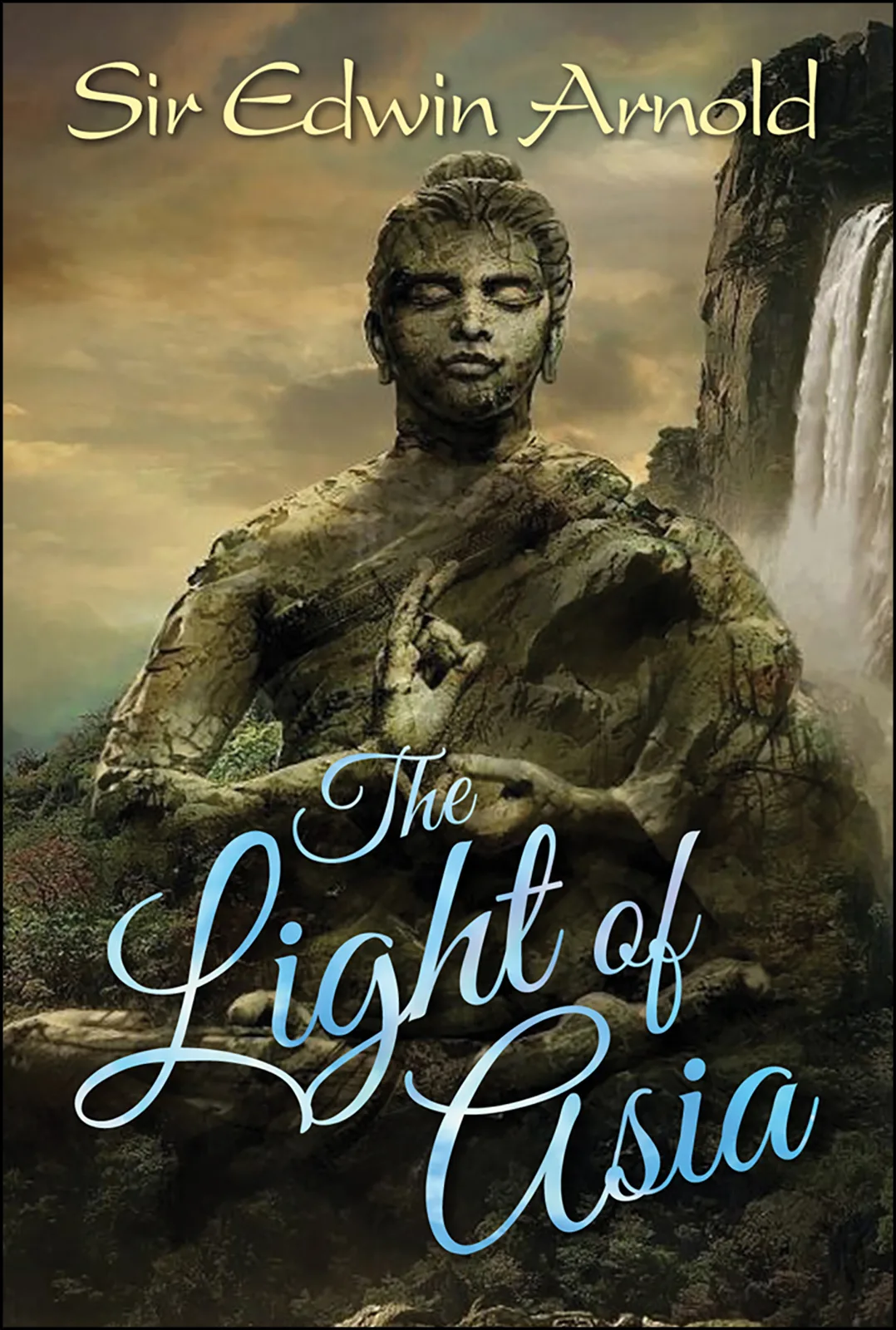
Download Cover Image
Do you want to download the full cover image for The Light of Asia?