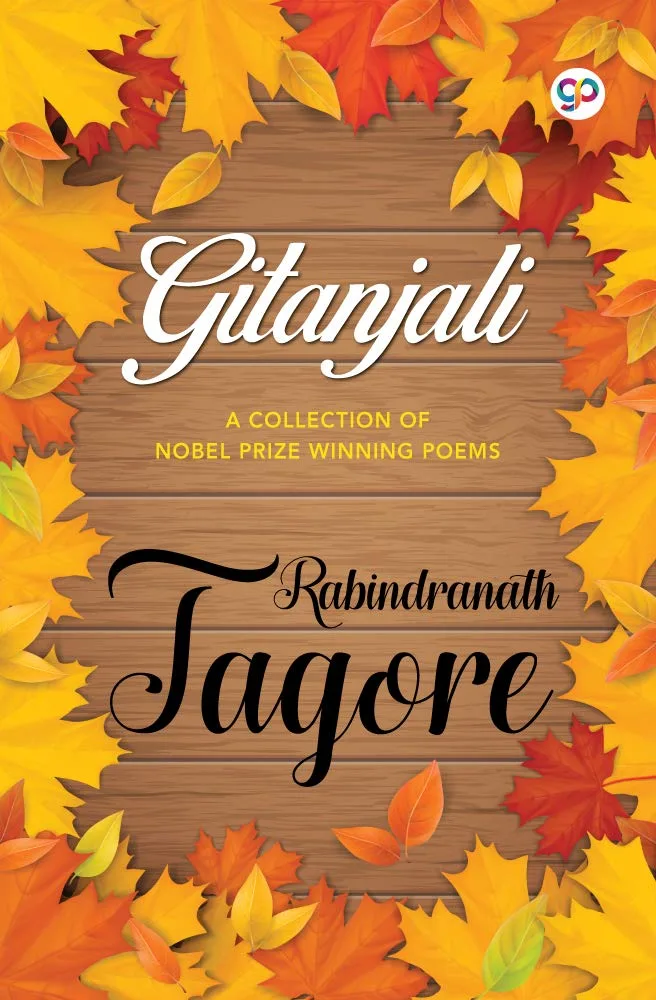
Gitanjali
eBook
• INR 99.00
• English
No ratings yet
| Publisher | General Press |
|---|---|
| ASIN/SKU | B00R86QA1C |
| Book Format | eBook |
| Language | English |
| List Price | INR 99.00 |
| Subject Code | FIC004000, POE000000, POE023000 |
| Book Code | BD00068225 |
Buy this Book
Amazon Stores
Ebook Stores
Other Stores
Discover Gitanjali by Rabindranath Tagore. This book is published by General Press in eBook format, ASIN B00R86QA1C, under Literature and Fiction, Indian Writing, Poetry.
Book Description
'Gitanjali' by Rabindranath Tagore is a celebrated work of devotional poetry and spiritual literature that explores the deepest questions of faith, love, life, death, and humanity’s relationship with the divine. What makes this classic so moving is its quiet simplicity: rather than presenting grand religious arguments, Tagore finds the sacred in ordinary moments, human emotions, nature, work, suffering, and the longing of the individual soul.
The poems in Gitanjali, meaning “Song Offerings,” unfold like an intimate conversation between the poet and a presence greater than himself. Tagore writes of a human heart that seeks closeness with God while recognizing its own weaknesses, doubts, pride, and limitations. The speaker repeatedly turns away from worldly possessions and ego, searching instead for humility, freedom, inner peace, and a life devoted to something beyond the self. Along the way, love becomes more than a personal emotion; it becomes a spiritual force capable of connecting human beings with one another and with the world around them.
Nature plays an especially important role in the collection. Rivers, flowers, sunlight, seasons, dust, birds, and changing landscapes become reflections of spiritual truth. Tagore’s vision is not one of escaping the world but of discovering the divine within it. He also celebrates ordinary people and everyday labor, suggesting that holiness can be found not only in temples or moments of prayer but in honest work and compassionate human connection.
At its heart, 'Gitanjali' is a meditation on surrender, devotion, mortality, and the search for meaning. Its language is lyrical yet remarkably accessible, allowing readers to approach profound ideas through images and emotions rather than complicated philosophy. More than a collection of poems, it feels like a journey inward—a gentle invitation to look beyond the noise of everyday life and listen to the voice of the soul. Even after more than a century, Gitanjali continues to raise timeless questions about what it means to love, believe, live, and finally let go, making it a classic worth discovering for yourself.
The poems in Gitanjali, meaning “Song Offerings,” unfold like an intimate conversation between the poet and a presence greater than himself. Tagore writes of a human heart that seeks closeness with God while recognizing its own weaknesses, doubts, pride, and limitations. The speaker repeatedly turns away from worldly possessions and ego, searching instead for humility, freedom, inner peace, and a life devoted to something beyond the self. Along the way, love becomes more than a personal emotion; it becomes a spiritual force capable of connecting human beings with one another and with the world around them.
Nature plays an especially important role in the collection. Rivers, flowers, sunlight, seasons, dust, birds, and changing landscapes become reflections of spiritual truth. Tagore’s vision is not one of escaping the world but of discovering the divine within it. He also celebrates ordinary people and everyday labor, suggesting that holiness can be found not only in temples or moments of prayer but in honest work and compassionate human connection.
At its heart, 'Gitanjali' is a meditation on surrender, devotion, mortality, and the search for meaning. Its language is lyrical yet remarkably accessible, allowing readers to approach profound ideas through images and emotions rather than complicated philosophy. More than a collection of poems, it feels like a journey inward—a gentle invitation to look beyond the noise of everyday life and listen to the voice of the soul. Even after more than a century, Gitanjali continues to raise timeless questions about what it means to love, believe, live, and finally let go, making it a classic worth discovering for yourself.
Author Biography
Rabindranath Tagore (1861–1941) was one of India's greatest literary figures and a remarkable poet, novelist, playwright, composer, philosopher, painter, and educator. His extraordinary creativity and humanistic vision made him a global cultural icon. In 1913, he became the first non-European to receive the Nobel Prize in Literature for his collection of poems Gitanjali, introducing the spiritual richness of Indian literature to readers around the world. His works continue to inspire generations with their profound reflections on humanity, nature, freedom, and the beauty of life.
Tagore was born on May 7, 1861, in the Jorasanko Thakur Bari in Calcutta (now Kolkata), into the distinguished Tagore family, which played a leading role in the Bengal Renaissance. His father, Debendranath Tagore, was a respected philosopher and religious reformer. Although Tagore briefly attended formal schools, he preferred learning through observation, literature, music, and nature. This unconventional education nurtured his imagination and shaped the originality of his artistic vision.
From an early age, Tagore displayed exceptional literary talent. He wrote poetry as a child and went on to produce an astonishing body of work that included novels such as Gora, The Home and the World, and Chokher Bali, along with countless poems, short stories, essays, songs, and plays. He composed more than 2,000 songs, known collectively as Rabindra Sangeet, and his compositions later became the national anthems of both India ("Jana Gana Mana") and Bangladesh ("Amar Sonar Bangla").
Beyond literature, Tagore was a passionate educator and social thinker. In 1901, he founded a school at Santiniketan that emphasized creativity, learning in harmony with nature, and cultural openness. This institution later developed into Visva-Bharati University, reflecting his dream of bringing together the best traditions of Eastern and Western learning. He also traveled extensively, delivering lectures that promoted international understanding, peace, and cultural exchange.
Rabindranath Tagore passed away on August 7, 1941, in Kolkata. His influence reaches far beyond literature, touching music, education, philosophy, and social thought. Today, he is remembered as one of the world's greatest humanists—a visionary whose timeless words continue to inspire compassion, creativity, and a deep appreciation for the unity of humanity and the natural world.
Tagore was born on May 7, 1861, in the Jorasanko Thakur Bari in Calcutta (now Kolkata), into the distinguished Tagore family, which played a leading role in the Bengal Renaissance. His father, Debendranath Tagore, was a respected philosopher and religious reformer. Although Tagore briefly attended formal schools, he preferred learning through observation, literature, music, and nature. This unconventional education nurtured his imagination and shaped the originality of his artistic vision.
From an early age, Tagore displayed exceptional literary talent. He wrote poetry as a child and went on to produce an astonishing body of work that included novels such as Gora, The Home and the World, and Chokher Bali, along with countless poems, short stories, essays, songs, and plays. He composed more than 2,000 songs, known collectively as Rabindra Sangeet, and his compositions later became the national anthems of both India ("Jana Gana Mana") and Bangladesh ("Amar Sonar Bangla").
Beyond literature, Tagore was a passionate educator and social thinker. In 1901, he founded a school at Santiniketan that emphasized creativity, learning in harmony with nature, and cultural openness. This institution later developed into Visva-Bharati University, reflecting his dream of bringing together the best traditions of Eastern and Western learning. He also traveled extensively, delivering lectures that promoted international understanding, peace, and cultural exchange.
Rabindranath Tagore passed away on August 7, 1941, in Kolkata. His influence reaches far beyond literature, touching music, education, philosophy, and social thought. Today, he is remembered as one of the world's greatest humanists—a visionary whose timeless words continue to inspire compassion, creativity, and a deep appreciation for the unity of humanity and the natural world.
Editorial Reviews
Editorial Reviews will be added soon…
Book Summary
Rabindranath Tagore’s Gitanjali, often translated as “Song Offerings,” is not a conventional book with a continuous story, plot, or group of characters. It is a collection of deeply personal poems in which Tagore explores God, nature, love, death, work, human dignity, loneliness, and the search for spiritual freedom. Written in a simple yet profound language, the poems describe an inner journey from self-centeredness toward surrender, from fear toward freedom, and from separation toward a sense of unity with the world.
The English Gitanjali, published in 1912, brought Tagore international recognition and contributed to his receiving the Nobel Prize in Literature in 1913. Although the poems are deeply rooted in Indian spiritual traditions, their emotional concerns are universal. Tagore speaks about the human longing to find meaning in ordinary existence and to experience a living relationship with the divine.
The Search for God
At the heart of Gitanjali is Tagore’s relationship with God. Yet the God he describes is not distant, abstract, or confined to a temple. The divine is present in nature, in human relationships, in work, in suffering, and in everyday life.
The speaker repeatedly addresses God directly, sometimes as a beloved, sometimes as a master, sometimes as a companion, and sometimes as an unseen presence. There is an intimate quality to these conversations. The poet does not pretend to possess perfect faith. Instead, he admits his weaknesses, doubts, distractions, pride, and fears.
This makes the spirituality of Gitanjali deeply human. Tagore’s relationship with God is not presented as something already completed. It is a continuous search. The poet longs to become worthy of divine presence, but he also recognizes that his own ego constantly stands in the way.
The Problem of the Ego
One of the collection’s most important themes is the struggle against ego and selfishness. Tagore repeatedly suggests that human beings suffer because they become too attached to possessions, pride, status, personal desires, and the illusion of separateness.
The individual wants to possess life rather than receive it. He wants recognition rather than service. He wants to control rather than surrender.
Tagore therefore longs to empty himself of unnecessary pride so that something greater can enter. His spiritual ideal is not the destruction of individuality but its transformation. The human self becomes meaningful when it recognizes its connection with something larger than itself.
This surrender is not passive weakness. It is a form of liberation. When the individual stops making the ego the center of existence, life becomes wider, more generous, and more joyful.
Nature as a Spiritual Presence
Nature occupies an essential place in Gitanjali. Rivers, flowers, rain, sunlight, clouds, seasons, fields, birds, and the changing sky are not merely decorative images. They are ways through which the poet experiences the sacred.
The natural world constantly reminds the speaker that life is larger than individual concerns. A flower blooms without demanding recognition. A river moves without possessing anything. The seasons change without resistance. Through such images, Tagore presents nature as a teacher of humility, renewal, and freedom.
The beauty of nature also connects the physical and spiritual worlds. A morning breeze or a simple landscape can become an occasion for discovering divine presence. Tagore suggests that spiritual experience does not always require withdrawal from the world; sometimes it requires learning to see the world more deeply.
God in Ordinary Human Life
A particularly striking feature of Gitanjali is Tagore’s rejection of spirituality that isolates itself from ordinary people. He does not believe that one can truly find God by escaping human life and hiding away in religious ritual.
Instead, the divine can be encountered among ordinary workers—the farmer, laborer, traveler, and person engaged in daily effort. This gives the collection an important ethical dimension.
Tagore’s message is that love of God must express itself through love and service toward humanity. Spirituality that ignores human suffering becomes empty. The sacred is present not only in prayer but also in honest work, compassion, and participation in the life of the world.
This idea makes Gitanjali more than a collection of devotional poems. It becomes a meditation on how a person should live.
Freedom from Fear
Another major theme is freedom. Tagore is deeply concerned with the many forms of imprisonment that affect human beings: fear, ignorance, narrow-mindedness, superstition, social divisions, and excessive attachment to tradition.
One of the collection’s most famous visions is of a country where the mind is “without fear” and knowledge is freely available. In this vision, freedom is not simply political independence. It is intellectual and spiritual freedom.
A truly free person is capable of thinking clearly, seeking truth, and moving beyond artificial divisions. Tagore connects personal liberation with the liberation of society. A nation cannot become genuinely free if its people remain imprisoned by fear and prejudice.
Love, Separation, and Longing
The poems also use the language of love and longing. The speaker often waits for the divine beloved, sometimes feeling close to God and sometimes painfully separated.
This longing gives the poems their emotional intensity. The absence of God is not simply emptiness; it creates a desire that continually draws the speaker forward.
Human love and divine love sometimes overlap in Tagore’s imagery. Love becomes a way of understanding the relationship between the individual and the infinite. The heart longs for union because it senses that its present state of separation is incomplete.
Death and Immortality
Death is another recurring presence in Gitanjali. Tagore does not treat death merely as something terrifying. Instead, he gradually learns to see it as part of the larger rhythm of existence.
Death reminds human beings that they do not own life. Everything they possess is temporary. Yet this recognition need not produce despair. When one learns to surrender attachment, death becomes less frightening.
The poet hopes to meet death with dignity and openness, having lived fully and offered himself completely. Immortality, in this sense, is not necessarily endless physical existence. It is participation in something larger than the individual self.
The Journey Toward Spiritual Fulfillment
Taken as a whole, Gitanjali describes an inner movement. The poet begins with a sense of separation, weakness, and longing. He struggles against pride and attachment, searches for God in nature and humanity, confronts fear and death, and gradually moves toward surrender and acceptance.
The journey never becomes a simple declaration that all problems have disappeared. Tagore retains humility about the human condition. Spiritual awareness comes through repeated moments of recognition rather than through one dramatic revelation.
Ultimately, Gitanjali teaches that the sacred is already present within ordinary life. God is not something that must necessarily be discovered by escaping the world. God can be found in love, work, nature, beauty, suffering, humility, and service.
The deepest message of the collection is therefore one of surrender and connection. Human beings become truly free not when they possess everything, but when they release their possessiveness. They become spiritually rich not by accumulating more, but by giving themselves more completely. And they come closer to the divine when they stop seeing themselves as isolated individuals and recognize the unity that connects all life.
In Gitanjali, Tagore transforms personal prayer into universal poetry. His poems speak quietly, but their central invitation is powerful: live without fear, love without possession, work without selfishness, accept death without despair, and remain open to the divine presence flowing through the world.
The English Gitanjali, published in 1912, brought Tagore international recognition and contributed to his receiving the Nobel Prize in Literature in 1913. Although the poems are deeply rooted in Indian spiritual traditions, their emotional concerns are universal. Tagore speaks about the human longing to find meaning in ordinary existence and to experience a living relationship with the divine.
The Search for God
At the heart of Gitanjali is Tagore’s relationship with God. Yet the God he describes is not distant, abstract, or confined to a temple. The divine is present in nature, in human relationships, in work, in suffering, and in everyday life.
The speaker repeatedly addresses God directly, sometimes as a beloved, sometimes as a master, sometimes as a companion, and sometimes as an unseen presence. There is an intimate quality to these conversations. The poet does not pretend to possess perfect faith. Instead, he admits his weaknesses, doubts, distractions, pride, and fears.
This makes the spirituality of Gitanjali deeply human. Tagore’s relationship with God is not presented as something already completed. It is a continuous search. The poet longs to become worthy of divine presence, but he also recognizes that his own ego constantly stands in the way.
The Problem of the Ego
One of the collection’s most important themes is the struggle against ego and selfishness. Tagore repeatedly suggests that human beings suffer because they become too attached to possessions, pride, status, personal desires, and the illusion of separateness.
The individual wants to possess life rather than receive it. He wants recognition rather than service. He wants to control rather than surrender.
Tagore therefore longs to empty himself of unnecessary pride so that something greater can enter. His spiritual ideal is not the destruction of individuality but its transformation. The human self becomes meaningful when it recognizes its connection with something larger than itself.
This surrender is not passive weakness. It is a form of liberation. When the individual stops making the ego the center of existence, life becomes wider, more generous, and more joyful.
Nature as a Spiritual Presence
Nature occupies an essential place in Gitanjali. Rivers, flowers, rain, sunlight, clouds, seasons, fields, birds, and the changing sky are not merely decorative images. They are ways through which the poet experiences the sacred.
The natural world constantly reminds the speaker that life is larger than individual concerns. A flower blooms without demanding recognition. A river moves without possessing anything. The seasons change without resistance. Through such images, Tagore presents nature as a teacher of humility, renewal, and freedom.
The beauty of nature also connects the physical and spiritual worlds. A morning breeze or a simple landscape can become an occasion for discovering divine presence. Tagore suggests that spiritual experience does not always require withdrawal from the world; sometimes it requires learning to see the world more deeply.
God in Ordinary Human Life
A particularly striking feature of Gitanjali is Tagore’s rejection of spirituality that isolates itself from ordinary people. He does not believe that one can truly find God by escaping human life and hiding away in religious ritual.
Instead, the divine can be encountered among ordinary workers—the farmer, laborer, traveler, and person engaged in daily effort. This gives the collection an important ethical dimension.
Tagore’s message is that love of God must express itself through love and service toward humanity. Spirituality that ignores human suffering becomes empty. The sacred is present not only in prayer but also in honest work, compassion, and participation in the life of the world.
This idea makes Gitanjali more than a collection of devotional poems. It becomes a meditation on how a person should live.
Freedom from Fear
Another major theme is freedom. Tagore is deeply concerned with the many forms of imprisonment that affect human beings: fear, ignorance, narrow-mindedness, superstition, social divisions, and excessive attachment to tradition.
One of the collection’s most famous visions is of a country where the mind is “without fear” and knowledge is freely available. In this vision, freedom is not simply political independence. It is intellectual and spiritual freedom.
A truly free person is capable of thinking clearly, seeking truth, and moving beyond artificial divisions. Tagore connects personal liberation with the liberation of society. A nation cannot become genuinely free if its people remain imprisoned by fear and prejudice.
Love, Separation, and Longing
The poems also use the language of love and longing. The speaker often waits for the divine beloved, sometimes feeling close to God and sometimes painfully separated.
This longing gives the poems their emotional intensity. The absence of God is not simply emptiness; it creates a desire that continually draws the speaker forward.
Human love and divine love sometimes overlap in Tagore’s imagery. Love becomes a way of understanding the relationship between the individual and the infinite. The heart longs for union because it senses that its present state of separation is incomplete.
Death and Immortality
Death is another recurring presence in Gitanjali. Tagore does not treat death merely as something terrifying. Instead, he gradually learns to see it as part of the larger rhythm of existence.
Death reminds human beings that they do not own life. Everything they possess is temporary. Yet this recognition need not produce despair. When one learns to surrender attachment, death becomes less frightening.
The poet hopes to meet death with dignity and openness, having lived fully and offered himself completely. Immortality, in this sense, is not necessarily endless physical existence. It is participation in something larger than the individual self.
The Journey Toward Spiritual Fulfillment
Taken as a whole, Gitanjali describes an inner movement. The poet begins with a sense of separation, weakness, and longing. He struggles against pride and attachment, searches for God in nature and humanity, confronts fear and death, and gradually moves toward surrender and acceptance.
The journey never becomes a simple declaration that all problems have disappeared. Tagore retains humility about the human condition. Spiritual awareness comes through repeated moments of recognition rather than through one dramatic revelation.
Ultimately, Gitanjali teaches that the sacred is already present within ordinary life. God is not something that must necessarily be discovered by escaping the world. God can be found in love, work, nature, beauty, suffering, humility, and service.
The deepest message of the collection is therefore one of surrender and connection. Human beings become truly free not when they possess everything, but when they release their possessiveness. They become spiritually rich not by accumulating more, but by giving themselves more completely. And they come closer to the divine when they stop seeing themselves as isolated individuals and recognize the unity that connects all life.
In Gitanjali, Tagore transforms personal prayer into universal poetry. His poems speak quietly, but their central invitation is powerful: live without fear, love without possession, work without selfishness, accept death without despair, and remain open to the divine presence flowing through the world.
Sample Chapters
Sample Chapters will be added soon…
Reader Reviews
No reviews yet.
Gitanjali