
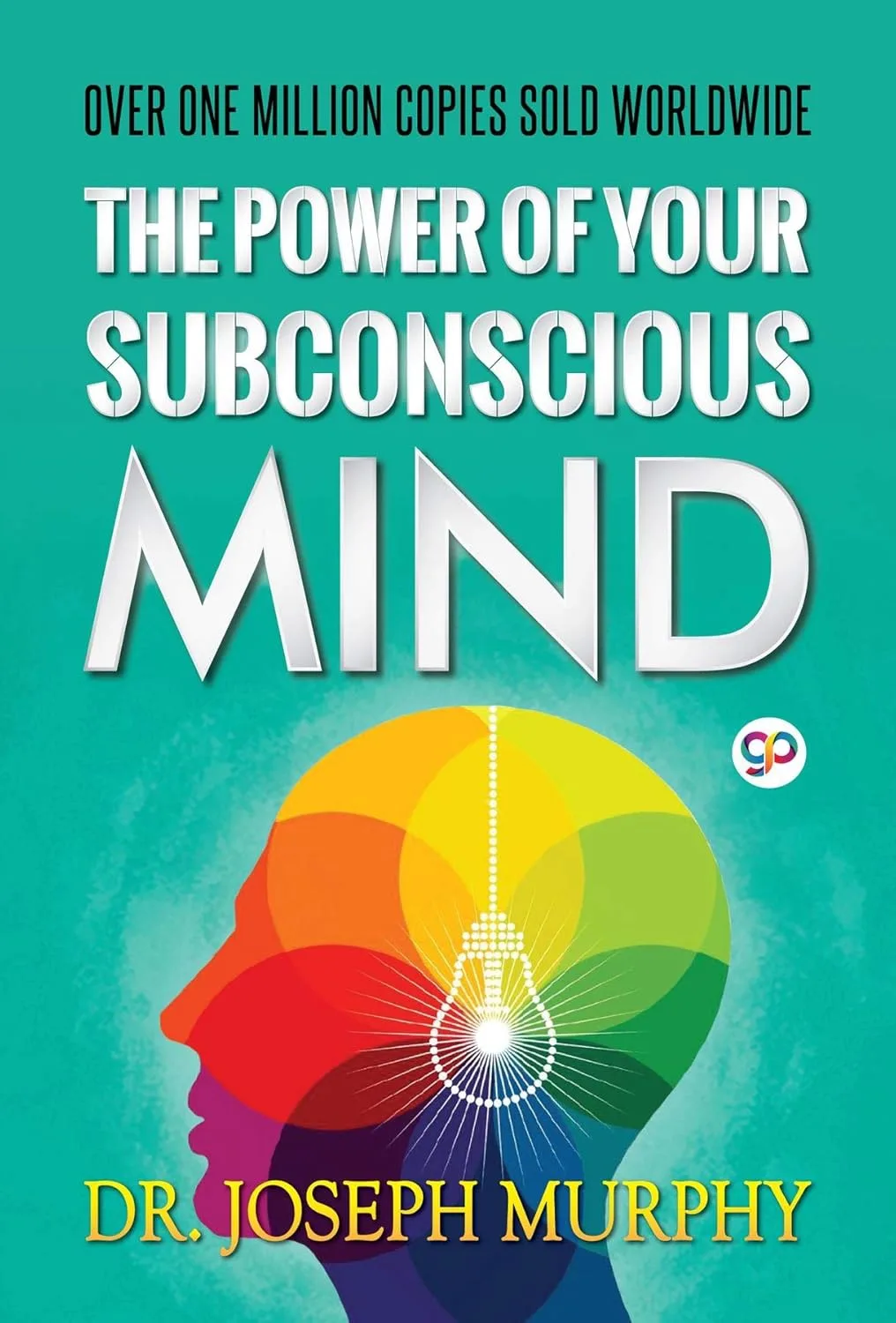
The Power of Your Subconscious Mind
eBook
• INR 257.00
• English
No ratings yet
| Publisher | General Press |
|---|---|
| ASIN/SKU | B01BT0ISGM |
| Book Format | eBook |
| Language | English |
| List Price | INR 257.00 |
| Subject Code | SEL021000, OCC014000, SEL027000 |
| Book Code | BD00068233 |
Buy this Book
Amazon Stores
Ebook Stores
Other Stores
Discover The Power of Your Subconscious Mind by Joseph Murphy. This book is published by General Press in eBook format, ASIN B01BT0ISGM, under Self-Help, Success Self-Help, Motivational Self-Help.
Book Description
'The Power of Your Subconscious Mind' by Dr. Joseph Murphy is a landmark work in the field of personal development and spiritual psychology. First published in 1963, the book explores the remarkable influence of the subconscious mind on every aspect of human life, including health, relationships, success, happiness, and inner peace. Murphy argues that the subconscious is a powerful force that faithfully acts upon the thoughts, beliefs, and emotions it repeatedly receives.
Through a blend of practical advice, spiritual principles, and real-life examples, the author explains how positive thinking, faith, visualization, and affirmations can reshape deeply held beliefs and bring about meaningful change. He encourages readers to replace fear, doubt, resentment, and negativity with confidence, gratitude, and constructive expectations. According to Murphy, the subconscious mind cannot distinguish between imagined and real experiences; therefore, consistently holding positive mental images can influence actions, attitudes, and outcomes.
The book also discusses the role of prayer, forgiveness, and self-belief in overcoming obstacles and achieving personal goals. Rather than presenting success as a matter of luck or circumstance, Murphy emphasizes that lasting transformation begins within. He urges readers to cultivate a peaceful and optimistic mindset, trusting that the subconscious will work continuously to support their deepest convictions.
Written in a warm, encouraging, and accessible style, 'The Power of Your Subconscious Mind' remains one of the most widely read self-help classics. Its timeless message inspires readers to unlock their inner potential, develop greater confidence, and create a more fulfilling life by changing the way they think from within.
Through a blend of practical advice, spiritual principles, and real-life examples, the author explains how positive thinking, faith, visualization, and affirmations can reshape deeply held beliefs and bring about meaningful change. He encourages readers to replace fear, doubt, resentment, and negativity with confidence, gratitude, and constructive expectations. According to Murphy, the subconscious mind cannot distinguish between imagined and real experiences; therefore, consistently holding positive mental images can influence actions, attitudes, and outcomes.
The book also discusses the role of prayer, forgiveness, and self-belief in overcoming obstacles and achieving personal goals. Rather than presenting success as a matter of luck or circumstance, Murphy emphasizes that lasting transformation begins within. He urges readers to cultivate a peaceful and optimistic mindset, trusting that the subconscious will work continuously to support their deepest convictions.
Written in a warm, encouraging, and accessible style, 'The Power of Your Subconscious Mind' remains one of the most widely read self-help classics. Its timeless message inspires readers to unlock their inner potential, develop greater confidence, and create a more fulfilling life by changing the way they think from within.
Author Biography
Born in 1898 in County Cork, Ireland, Joseph Murphy was raised in a devout Catholic family and initially studied for the priesthood within the Jesuit order. However, his expanding intellectual curiosity soon led him to question traditional orthodox teachings. In his early twenties, he made the pivotal decision to leave the seminary and emigrate to the United States, arriving in New York City with very little money. There, he worked as a pharmacist while continuing his intense spiritual and philosophical explorations.
In America, Murphy became deeply immersed in the New Thought movement, studying under prominent spiritual teachers like Ernest Holmes and Emmet Fox. His unyielding quest for spiritual understanding also took him to India, where he spent significant time studying Eastern religions and Hindu philosophy. This diverse theological education allowed him to uniquely synthesize Eastern spiritual traditions with Western psychological concepts, forming the bedrock of his later teachings on the power of the human mind.
Upon returning to the United States, Murphy relocated to Los Angeles and became an ordained minister of the Church of Divine Science. Over the next several decades, he built one of the largest New Thought congregations in the country. His dynamic weekly Sunday lectures attracted thousands of attendees, and his popular radio broadcasts reached millions globally, establishing him as a premier voice in the mid-twentieth century self-help and human potential movements.
Murphy's enduring legacy was firmly cemented in 1963 with the publication of his masterpiece, The Power of Your Subconscious Mind. The book elegantly combined spiritual wisdom with practical psychological techniques, arguing that individuals can dramatically alter their reality, health, and success by reprogramming their subconscious beliefs. It quickly became a massive international bestseller and remains a foundational text in modern personal development literature, continuing to inspire countless readers long after Murphy's death in 1981.
In America, Murphy became deeply immersed in the New Thought movement, studying under prominent spiritual teachers like Ernest Holmes and Emmet Fox. His unyielding quest for spiritual understanding also took him to India, where he spent significant time studying Eastern religions and Hindu philosophy. This diverse theological education allowed him to uniquely synthesize Eastern spiritual traditions with Western psychological concepts, forming the bedrock of his later teachings on the power of the human mind.
Upon returning to the United States, Murphy relocated to Los Angeles and became an ordained minister of the Church of Divine Science. Over the next several decades, he built one of the largest New Thought congregations in the country. His dynamic weekly Sunday lectures attracted thousands of attendees, and his popular radio broadcasts reached millions globally, establishing him as a premier voice in the mid-twentieth century self-help and human potential movements.
Murphy's enduring legacy was firmly cemented in 1963 with the publication of his masterpiece, The Power of Your Subconscious Mind. The book elegantly combined spiritual wisdom with practical psychological techniques, arguing that individuals can dramatically alter their reality, health, and success by reprogramming their subconscious beliefs. It quickly became a massive international bestseller and remains a foundational text in modern personal development literature, continuing to inspire countless readers long after Murphy's death in 1981.
Editorial Reviews
Editorial Reviews will be added soon…
Book Summary
Joseph Murphy’s "The Power of Your Subconscious Mind" rests on a beautifully simple, albeit profound, premise: your life is the exact physical manifestation of your habitual thoughts. Published in 1963, this classic of the self-help genre strips away the mystical jargon often associated with manifesting and replaces it with a highly accessible psychological framework. Murphy posits that we all possess a dual mind—the objective conscious mind and the subjective subconscious mind. The tragedy, he argues, is that most of us go through life completely unaware of the vast, untapped reservoir of power lying just beneath our everyday awareness. We tend to treat life as something that happens to us, rather than something we are actively, if unconsciously, creating every single moment.
To understand how this creation happens, Murphy uses the enduring analogy of a ship. Your conscious mind is the captain standing on the bridge, looking out at the horizon and giving orders. It is the rational, analytical part of you that makes daily decisions and interacts with the physical world. Your subconscious mind is the crew down in the engine room, blindly and dutifully following those orders. The crew doesn’t question whether the coordinates will steer the ship into a safe harbor or directly into an iceberg; they simply turn the dials and shovel the coal. Similarly, your subconscious mind does not argue with you. It accepts whatever your conscious mind believes to be true. If you constantly think you are bound to fail, the subconscious accepts this as a literal directive and orchestrates your behavior to ensure that failure.
This blind obedience highlights the terrifying and thrilling reality of the power of suggestion. The subconscious is entirely uncritical. It is a fertile garden that will grow whatever seeds you plant, whether they are poisonous weeds or nourishing fruits. Every time you engage in negative self-talk, complain about your circumstances, or entertain thoughts of jealousy and anger, you are dropping seeds of destruction into this fertile soil. Murphy emphasizes that the subconscious cannot take a joke and does not understand sarcasm. If you repeatedly say you can't afford something, or that you are always sick, your subconscious takes you at your word and alters your reality to match that deeply held, persistent belief.
Changing your life, therefore, requires a deliberate and sustained effort to change your mental diet. However, you cannot simply force the subconscious to change through sheer willpower alone. Willpower is a function of the conscious mind and is easily exhausted. Instead, the subconscious responds to repetition, authority, and most importantly, emotion. A fleeting positive thought will not override decades of deeply ingrained negative beliefs. To truly reprogram the subconscious engine room, an idea must be felt as true. You have to emotionally embody the state of already having what you desire. It is the marriage of a clear thought and an elevated emotion that successfully plants a new, positive seed in the mind.
Because the subconscious communicates primarily through feelings and imagery rather than logic, visualization is one of Murphy’s most championed techniques. He advises readers to vividly imagine the desired end result, not the convoluted steps to get there. When you picture your goal with intense sensory detail—feeling the joy, relief, or excitement of its accomplishment—the subconscious mind registers this imagined reality as an actual experience. Murphy particularly recommends doing this in a relaxed, drowsy state, such as right before falling asleep or immediately upon waking. In these twilight moments, the critical, rational conscious mind steps aside, leaving the door to the subconscious wide open and highly receptive to new impressions.
One of the most striking applications of this power, according to Murphy, is in the realm of physical health and healing. He asserts that the subconscious mind is the master builder of the body, continuously overseeing vital functions like breathing, digestion, and cellular repair without any need for our conscious effort. Because it controls these physical processes, it also has the profound capacity to heal the body when directed by positive, life-affirming thoughts. While he does not advocate abandoning modern medicine, Murphy provides numerous anecdotal accounts of people curing themselves of ailments through the sheer force of faith and the refusal to accept sickness as their ultimate reality. The placebo effect is, essentially, the subconscious mind at work, healing the body based purely on the deeply held belief that a cure has been administered.
Beyond health, Murphy applies these principles to the acquisition of wealth and professional success. He heavily critiques the societal conditioning that equates poverty with virtue, arguing instead that abundance is a natural state of being. The primary obstacle to wealth is usually a subconscious feeling of unworthiness or a deep-seated belief in scarcity. If you consciously desire money but subconsciously resent wealthy people or secretly fear financial ruin, the subconscious will resolve this internal conflict by keeping you exactly where you are. To attract wealth, you must cultivate a prosperity mindset, quietly affirming your right to be rich, happy, and successful, and genuinely celebrating the success of others rather than harboring envy.
This inner alignment also extends to how we navigate our relationships. Murphy suggests that our interactions with others are essentially mirrors reflecting our own internal state. If you are harboring resentment, anger, or bitterness, your subconscious will project these feelings outward, drawing hostility and conflict into your life. Therefore, forgiveness is not just a moral imperative; it is a psychological necessity. Holding onto grudges poisons your own subconscious garden. By choosing to forgive others and, crucially, forgiving yourself for past mistakes, you release negative mental blocks and open the channels for harmony, love, and respect to flow naturally into your relationships.
Ultimately, the greatest enemy we face in life is fear, which Murphy views as nothing more than a negative thought deeply lodged in the subconscious. Phobias, anxieties, and chronic worry are all learned behaviors resulting from repeated negative suggestions. The antidote is not to fight the fear directly, which often only reinforces it, but to displace it by crowding the mind with its opposite: thoughts of courage, peace, and ultimate success. By persistently feeding the mind affirmations of safety and confidence, the old, fear-based patterns are eventually starved of attention and replaced by a resilient, peaceful inner foundation that can withstand life's challenges.
In the end, "The Power of Your Subconscious Mind" is a manual for radical self-responsibility. It demands that we stop playing the victim to external circumstances and recognize that the true author of our destiny sits between our ears. It is not necessarily an easy path; standing guard at the door of your own mind requires relentless vigilance and the discipline to dismiss destructive thoughts before they take root. However, the reward for this mental mastery is absolute freedom. By learning to harmonize the conscious and subconscious minds, we unlock a boundless inner wisdom capable of guiding us toward a life of health, wealth, and profound peace.
To understand how this creation happens, Murphy uses the enduring analogy of a ship. Your conscious mind is the captain standing on the bridge, looking out at the horizon and giving orders. It is the rational, analytical part of you that makes daily decisions and interacts with the physical world. Your subconscious mind is the crew down in the engine room, blindly and dutifully following those orders. The crew doesn’t question whether the coordinates will steer the ship into a safe harbor or directly into an iceberg; they simply turn the dials and shovel the coal. Similarly, your subconscious mind does not argue with you. It accepts whatever your conscious mind believes to be true. If you constantly think you are bound to fail, the subconscious accepts this as a literal directive and orchestrates your behavior to ensure that failure.
This blind obedience highlights the terrifying and thrilling reality of the power of suggestion. The subconscious is entirely uncritical. It is a fertile garden that will grow whatever seeds you plant, whether they are poisonous weeds or nourishing fruits. Every time you engage in negative self-talk, complain about your circumstances, or entertain thoughts of jealousy and anger, you are dropping seeds of destruction into this fertile soil. Murphy emphasizes that the subconscious cannot take a joke and does not understand sarcasm. If you repeatedly say you can't afford something, or that you are always sick, your subconscious takes you at your word and alters your reality to match that deeply held, persistent belief.
Changing your life, therefore, requires a deliberate and sustained effort to change your mental diet. However, you cannot simply force the subconscious to change through sheer willpower alone. Willpower is a function of the conscious mind and is easily exhausted. Instead, the subconscious responds to repetition, authority, and most importantly, emotion. A fleeting positive thought will not override decades of deeply ingrained negative beliefs. To truly reprogram the subconscious engine room, an idea must be felt as true. You have to emotionally embody the state of already having what you desire. It is the marriage of a clear thought and an elevated emotion that successfully plants a new, positive seed in the mind.
Because the subconscious communicates primarily through feelings and imagery rather than logic, visualization is one of Murphy’s most championed techniques. He advises readers to vividly imagine the desired end result, not the convoluted steps to get there. When you picture your goal with intense sensory detail—feeling the joy, relief, or excitement of its accomplishment—the subconscious mind registers this imagined reality as an actual experience. Murphy particularly recommends doing this in a relaxed, drowsy state, such as right before falling asleep or immediately upon waking. In these twilight moments, the critical, rational conscious mind steps aside, leaving the door to the subconscious wide open and highly receptive to new impressions.
One of the most striking applications of this power, according to Murphy, is in the realm of physical health and healing. He asserts that the subconscious mind is the master builder of the body, continuously overseeing vital functions like breathing, digestion, and cellular repair without any need for our conscious effort. Because it controls these physical processes, it also has the profound capacity to heal the body when directed by positive, life-affirming thoughts. While he does not advocate abandoning modern medicine, Murphy provides numerous anecdotal accounts of people curing themselves of ailments through the sheer force of faith and the refusal to accept sickness as their ultimate reality. The placebo effect is, essentially, the subconscious mind at work, healing the body based purely on the deeply held belief that a cure has been administered.
Beyond health, Murphy applies these principles to the acquisition of wealth and professional success. He heavily critiques the societal conditioning that equates poverty with virtue, arguing instead that abundance is a natural state of being. The primary obstacle to wealth is usually a subconscious feeling of unworthiness or a deep-seated belief in scarcity. If you consciously desire money but subconsciously resent wealthy people or secretly fear financial ruin, the subconscious will resolve this internal conflict by keeping you exactly where you are. To attract wealth, you must cultivate a prosperity mindset, quietly affirming your right to be rich, happy, and successful, and genuinely celebrating the success of others rather than harboring envy.
This inner alignment also extends to how we navigate our relationships. Murphy suggests that our interactions with others are essentially mirrors reflecting our own internal state. If you are harboring resentment, anger, or bitterness, your subconscious will project these feelings outward, drawing hostility and conflict into your life. Therefore, forgiveness is not just a moral imperative; it is a psychological necessity. Holding onto grudges poisons your own subconscious garden. By choosing to forgive others and, crucially, forgiving yourself for past mistakes, you release negative mental blocks and open the channels for harmony, love, and respect to flow naturally into your relationships.
Ultimately, the greatest enemy we face in life is fear, which Murphy views as nothing more than a negative thought deeply lodged in the subconscious. Phobias, anxieties, and chronic worry are all learned behaviors resulting from repeated negative suggestions. The antidote is not to fight the fear directly, which often only reinforces it, but to displace it by crowding the mind with its opposite: thoughts of courage, peace, and ultimate success. By persistently feeding the mind affirmations of safety and confidence, the old, fear-based patterns are eventually starved of attention and replaced by a resilient, peaceful inner foundation that can withstand life's challenges.
In the end, "The Power of Your Subconscious Mind" is a manual for radical self-responsibility. It demands that we stop playing the victim to external circumstances and recognize that the true author of our destiny sits between our ears. It is not necessarily an easy path; standing guard at the door of your own mind requires relentless vigilance and the discipline to dismiss destructive thoughts before they take root. However, the reward for this mental mastery is absolute freedom. By learning to harmonize the conscious and subconscious minds, we unlock a boundless inner wisdom capable of guiding us toward a life of health, wealth, and profound peace.
Sample Chapters
1. The Treasure House Within You
You have infinite riches within your reach. To gain them, all you have to do is open your mental eyes and behold the treasure house of infinity within you. There is a storehouse within you from which you can extract everything you need to live life gloriously, joyously, and abundantly.
Many people are closed off to their own potential because they do not know about this storehouse of infinite intelligence and boundless love within themselves. Whatever you want, you can draw it forth.
A magnetized piece of iron will lift about twelve times its own weight. But if you demagnetize this same piece of iron, it will not lift even a feather.
In the same way, there are two types of people. Those who are magnetized are full of confidence and faith. They know they are born to succeed and to win.
Others, so many others, are demagnetized. They are full of fears and doubts. When an opportunity comes, they say, “What if I fail? I might lose my money. People will laugh at me.” People of this sort will not get very far in life. Their fear to go forward makes them simply stay where they are.
You can become a magnetized person when you discover and put to use the master secret of the ages.
THE MASTER SECRET OF THE AGES
Suppose someone asked you to name the master secret of the ages. What would you answer? Atomic energy? Interplanetary travel? Black holes? No, it is not any of these. Then what is this master secret? Where can one find it? How can it be understood and put into action?
The answer is extraordinarily simple. This secret is the marvelous, miracle-working power found in your own subconscious mind. This is the last place most people would look for it, which is the reason so few ever find it.
THE MARVELOUS POWER OF YOUR SUBCONSCIOUS
Once you learn to contact and release the hidden power of your subconscious mind, you can bring into your life more power, more wealth, more health, more happiness, and more joy.
You do not need to acquire this power. You already possess it. But you will have to learn how to use it. You must understand it so that you can apply it in all departments of your life.
If you follow the simple techniques and processes explained in this book, you can gain the necessary knowledge and understanding. You can be inspired by a new light, and you can generate a new force that enables you to realize your hopes and make all your dreams come true. Decide now to make your life grander, greater, richer, and nobler than ever before.
Within your subconscious depths lie infinite wisdom, infinite power, an infinite supply of all that is necessary. It is waiting there for you to give it development and expression. If you begin now to recognize these potentialities of your deeper mind, they will take form in the world without.
Provided you are open-minded and receptive, the infinite intelligence within your subconscious mind can reveal to you everything you need to know at every moment of time and point of space. You can receive new thoughts and ideas, bring forth new inventions, make new discoveries, create new works of art. The infinite intelligence in your subconscious can give you access to wonderful new kinds of knowledge. Let it reveal itself to you and it will open the way to perfect expression and true place in your life.
Through the wisdom of your subconscious mind, you can attract the ideal companion, as well as the right business associate or partner. It can show you how to get all the money you need and give you the financial freedom to be, to do, and to go as your heart desires.
It is your right to discover this inner world of thought, feeling, and power, of light, love, and beauty. Though invisible, its forces are mighty. Within your subconscious mind you will find the solution for every problem and the cause for every effect. Once you learn to draw out these hidden powers, you come into actual possession of the power and wisdom necessary to move forward in abundance, security, joy, and dominion.
I have seen the power of the subconscious lift people up out of crippled states, making them whole, vital, and strong once more. Their minds made them free to go out into the world to experience happiness, health, and joyous expression. There is a miraculous curative force in your subconscious that can heal the troubled mind and the broken heart. It can open the prison door of the mind and liberate you. It can free you from all kinds of material and physical bondage.
NECESSITY OF A WORKING BASIS
If you want to make progress in any field of endeavor, there is an essential first step. You must discover a working basis that is universal in its application. Before you can become skilled in the operation of your subconscious mind, you must understand its principles. Once that is achieved, you can practice its powers knowing the results you will certainly obtain. You can apply these powers for the definite specific purposes and goals you want to accomplish.
For many years I followed the profession of chemist. One of the first things I learned in my early training was that if you combine two atoms of hydrogen and one of oxygen, the product will be water—not occasionally or most of the time, always. If you take one atom of oxygen and one atom of carbon and combine them, you will produce carbon monoxide, a poisonous gas. But if you add another atom of oxygen, you will get carbon dioxide, a gas that is harmless to animals and vital to plants. These facts are universal and unchangeable. They are what we call principles.
The principles of chemistry, physics, and mathematics are no different in their workings from the principles of your subconscious mind. If you want to make use of chemical or physical forces, you must learn the principles of these fields. If you want to make use of the force of your subconscious mind, you must learn its principles.
Take the generally accepted principle, Water seeks its own level. This is a universal principle. It applies to water everywhere, at any time, and to all liquids that behave like water.
The ancient Egyptians knew this principle. They used it to make the foundations of the great pyramids perfectly level. Today, engineers use it when planning everything from an irrigation system to a hydroelectric power station.
Or take the principle, Matter expands when heated. This is true anywhere, at any time, and under all circumstances. If you heat a piece of steel, it will expand, whether the steel is found in China, England, India, or in an orbiting space station.
Matter expands when heated... This is a universal truth. It is also a universal truth that whatever you impress on your subconscious mind is expressed on the screen of space as condition, experience, and event.
Your prayer is answered because your subconscious mind is principle, and by principle I mean the way a thing works. For example, an important principle of electricity is that it works from a higher to a lower potential. You do not change the principle of electricity when you turn on a lamp or cook on an electric stove. No, you use the principle. By cooperating with nature, you can bring forth marvelous inventions and discoveries that bless humanity in countless ways.
Your subconscious mind is principle. It works according to the law of belief. You must know what belief is, why it works, and how it works. Your Bible says in a simple, clear, and beautiful way:
Whosoever shall say unto this mountain, be thou removed, and be thou cast into the sea; and shall not doubt in his heart, but shall believe that those things which he saith shall come to pass; he shall have whatsoever he saith.
MARK 11:23
The law of your mind is the law of belief. This means to believe in the way your mind works, to believe in belief itself The belief of your mind is the thought of your mind, just that and nothing else.
All your experiences, events, conditions, and acts are produced by your subconscious mind in reaction to your thoughts. Remember, it is not the thing believed in, but the belief in your own mind that brings about the result. Stop accepting the false beliefs, opinions, superstitions, and fears that plague our humankind. Begin to believe in the eternal verities and truths of life that never change. At that point you will move onward, upward, and Godward.
All those who read this book and faithfully apply the principles of the subconscious mind that are set forth here will gain the ability to pray scientifically and effectively for themselves and for others. Your prayer is answered according to the universal law of action and reaction.
Thought is incipient action. The reaction is the response from your subconscious mind that corresponds to the nature of your thought. Fill your mind with the concepts of harmony, health, peace, and goodwill, and wonders will happen in your life.
THE DUALITY OF MIND
You have only one mind, but that one mind possesses two distinct and characteristic functional parts. The frontier that separates the two is well known to students of the mind. The two functions of your mind are essentially different from each other. Each has its own separate and distinct attributes and powers.
Many names have been used to distinguish the two functions of the mind. These include the objective and the subjective mind, the conscious and the subconscious mind, the waking and the sleeping mind, the surface and the deep self, the voluntary and the involuntary mind, the male and the female mind, and many others. All of these, whatever their implications, are recognitions of this essential duality.
Throughout this book I use the terms conscious and subconscious to represent the dual nature of your mind. If another set of terms comes more easily to you, by all means use it. The important starting point is to recognize and acknowledge the double nature of the mind.
THE CONSCIOUS AND THE SUBCONSCIOUS MIND
A wonderful way to begin getting to know the two functions of your mind is to think of it as a garden. You are the gardener. You are planting seeds of thought in your subconscious mind all day long. Much of the time you are not even aware of doing so, because the seeds are based on your habitual thinking. As you sow in your subconscious mind, so shall you reap in your body and environment.
Imagine your subconscious mind as a bed of rich soil that will help all kinds of seeds to sprout and flourish, whether good or bad. If you sow thorns, will you gather grapes? If you sow thistles, will you harvest figs? Every thought is a cause, and every condition is an effect. This is the reason it is so essential that you take charge of your thoughts. In that way, you can bring forth only desirable conditions.
Begin now to sow thoughts of peace, happiness, right action, goodwill, and prosperity. Think quietly and with conviction on these qualities. Accept them fully in your conscious reasoning mind. Continue to plant these wonderful seeds of thought in the garden of your mind and you will reap a glorious harvest.
When your mind thinks correctly, when you understand the truth, when the thoughts deposited in your subconscious mind are constructive, harmonious, and peaceful, the magic working power of your subconscious will respond. It will bring about harmonious conditions, agreeable surroundings, and the best of everything. Once you begin to control your thought processes, you can apply the powers of your subconscious to any problem or difficulty. You will actually be consciously cooperating with the infinite power and omnipotent law that governs all things.
Look around you. Wherever you live, whatever circle of society you are part of, you will notice that the vast majority of people lives in the world without. Those who are more enlightened, however, are intensely involved with the world within. They realize—as you will, too—that the world within creates the world without. Your thoughts, feelings, and visualized imagery are the organizing principles of your experience. The world within is the only creative power. Everything you find in your world of expression has been created by you in the inner world of your mind, whether consciously or unconsciously.
Once you learn the truth about the interaction of your conscious and subconscious minds, you will be able to transform your whole life. If you want to change external conditions, you must change the cause. Most people try to change conditions and circumstances by working on those conditions and circumstances. This is a terrible waste of time and effort. They fail to see that their conditions flow from a cause. To remove discord, confusion, lack, and limitation from your life, you must remove the cause. That cause is the way you use your conscious mind, the thoughts and images you encourage in it. Change the cause, and you change the effect. It is just that simple.
We all live in an unfathomable sea of infinite riches. Your subconscious is very sensitive to your conscious thoughts. Those conscious thoughts form the matrix through which the infinite intelligence, wisdom, vital forces, and energies of your subconscious flow. Shape that matrix in a more positive direction and you redirect those infinite energies to your greater benefit.
Each chapter of this book gives concrete, specific illustrations of how to apply the laws of mind. Once you learn to use these techniques, you will experience abundance instead of poverty, wisdom instead of superstition and ignorance, peace instead of inner strife, success instead of failure, joy instead of sadness, light instead of darkness, harmony instead of discord, faith and confidence instead of fear. Could there be any more wonderful set of blessings than these?
Most of the great scientists, artists, poets, singers, writers, and inventors have had a deep understanding of the workings of the conscious and subconscious minds. It was this that gave them the power to accomplish their goals.
Once Enrico Caruso, the great operatic tenor, was struck with stage fright. Spasms caused by intense fear constricted the muscles of his throat. His vocal cords felt paralyzed, useless. He stood backstage, already in costume, while perspiration poured down his face. In just moments he was supposed to go out on the stage and sing, before an eager audience of thousands.
Trembling, he said, “I can’t sing. They will all laugh at me. My career is finished.”
He turned to go back to his dressing room, then, suddenly, he stopped and shouted, “The Little Me is trying to strangle the Big Me within!”
He turned toward the stage again and stood taller. “Get out of here,” he commanded, addressing the Little Me. “The Big Me wants to sing through me.”
By the Big Me, Caruso meant the limitless power and wisdom of his subconscious mind. He began to shout, “Get out, get out, the Big Me is going to sing!”
His subconscious mind responded by releasing the vital forces within him. When the call came, he walked out onstage and sang gloriously and majestically. The audience was enthralled.
From what you have already learned, you can see that Caruso understood the two levels of mind—the conscious or rational, and the subconscious or irrational level. Your subconscious mind is reactive. It responds to the nature of your thoughts. When your conscious mind (Caruso’s Little Me) is full of fear, worry, and anxiety, the negative emotions these create in your subconscious mind (the Big Me) are released. They flood the conscious mind with a sense of panic, foreboding, and despair. When this happens to you—you can follow the example of the great Caruso. You can speak affirmatively and with a deep sense of authority to the irrational emotions generated in your deeper mind. You can say, “Be still. Be quiet. I am in control. You must obey me. You are subject to my command. You cannot intrude where you do not belong.”
You will be fascinated to see what happens when you speak authoritatively and with conviction to the irrational movement of your deeper self. Your mind will be flooded with harmony and with peace. The subconscious is subject to the conscious mind. That is why it is called subconscious or subjective.
OUTSTANDING DIFFERENCES AND MODES OF OPERATION
The conscious mind is like the navigator or captain at the bridge of a ship. He directs the ship. He sends orders to men and women in the engine room. They in turn control the boilers, instruments, gauges, and so on. The people in the engine room do not know where they are going; they follow orders. They would go on the rocks if the man on the bridge issued faulty or wrong instructions based on his findings with the compass, sextant, and other instruments. The people in the engine room obey him because he is in charge. Because he is supposed to know what he is doing, the members of the crew do not talk back to the captain; they simply carry out his orders.
The captain is the master of his ship, and his decrees are carried out. In the same way, your conscious mind is the captain and the master of your ship—your body, your environment, and all your affairs. Your subconscious mind takes the orders you give it, based upon what your conscious mind believes and accepts as true. It does not question the orders or the basis on which they are given.
If you repeatedly say to yourself, “I can’t afford it,” your subconscious mind takes you at your word. It sees to it that you will not be in a position to buy what you want. As long as you go on saying, “I can’t afford that car, that vacation, that home,” you can be sure your subconscious mind will follow your orders. You will go through life experiencing the lack of all these things, and you will believe that circumstances made it so. It will not occur to you that you have created those circumstances yourself, by your own negative, denying thoughts.
Last Christmas Eve, a young woman named Nina W., who is a student at the University of Southern California, scrolled through an exclusive shopping area in Beverly Hills. Her mind was filled with anticipation. She was about to spend the holidays with her family in Buffalo, New York.
As Nina passed a shop window, a beautiful Spanish-leather shoulder bag caught her eye. She looked at it yearningly. Then she noticed the price tag and gasped.
She was about to say to herself, “I could never afford such an expensive bag.”
Then she remembered something she had heard me say at one of my lectures. “Never finish a negative statement. Reverse it immediately and wonders will happen in your life.”
Staring through the glass, she said, “That bag is mine. It is for sale. I accept it mentally, and my subconscious sees to it that I receive it.”
Later that day, Nina met her fiancé for a send-off dinner. He arrived with an elegantly wrapped gift under his arm. Holding her breath, she unwrapped it. There was the identical leather shoulder bag she had looked at and identified as her own that same morning. She had filled her mind with the thought of expectancy. Then she had turned the matter over to her deeper mind, which has the power of accomplishment.
You have infinite riches within your reach. To gain them, all you have to do is open your mental eyes and behold the treasure house of infinity within you. There is a storehouse within you from which you can extract everything you need to live life gloriously, joyously, and abundantly.
Many people are closed off to their own potential because they do not know about this storehouse of infinite intelligence and boundless love within themselves. Whatever you want, you can draw it forth.
A magnetized piece of iron will lift about twelve times its own weight. But if you demagnetize this same piece of iron, it will not lift even a feather.
In the same way, there are two types of people. Those who are magnetized are full of confidence and faith. They know they are born to succeed and to win.
Others, so many others, are demagnetized. They are full of fears and doubts. When an opportunity comes, they say, “What if I fail? I might lose my money. People will laugh at me.” People of this sort will not get very far in life. Their fear to go forward makes them simply stay where they are.
You can become a magnetized person when you discover and put to use the master secret of the ages.
THE MASTER SECRET OF THE AGES
Suppose someone asked you to name the master secret of the ages. What would you answer? Atomic energy? Interplanetary travel? Black holes? No, it is not any of these. Then what is this master secret? Where can one find it? How can it be understood and put into action?
The answer is extraordinarily simple. This secret is the marvelous, miracle-working power found in your own subconscious mind. This is the last place most people would look for it, which is the reason so few ever find it.
THE MARVELOUS POWER OF YOUR SUBCONSCIOUS
Once you learn to contact and release the hidden power of your subconscious mind, you can bring into your life more power, more wealth, more health, more happiness, and more joy.
You do not need to acquire this power. You already possess it. But you will have to learn how to use it. You must understand it so that you can apply it in all departments of your life.
If you follow the simple techniques and processes explained in this book, you can gain the necessary knowledge and understanding. You can be inspired by a new light, and you can generate a new force that enables you to realize your hopes and make all your dreams come true. Decide now to make your life grander, greater, richer, and nobler than ever before.
Within your subconscious depths lie infinite wisdom, infinite power, an infinite supply of all that is necessary. It is waiting there for you to give it development and expression. If you begin now to recognize these potentialities of your deeper mind, they will take form in the world without.
Provided you are open-minded and receptive, the infinite intelligence within your subconscious mind can reveal to you everything you need to know at every moment of time and point of space. You can receive new thoughts and ideas, bring forth new inventions, make new discoveries, create new works of art. The infinite intelligence in your subconscious can give you access to wonderful new kinds of knowledge. Let it reveal itself to you and it will open the way to perfect expression and true place in your life.
Through the wisdom of your subconscious mind, you can attract the ideal companion, as well as the right business associate or partner. It can show you how to get all the money you need and give you the financial freedom to be, to do, and to go as your heart desires.
It is your right to discover this inner world of thought, feeling, and power, of light, love, and beauty. Though invisible, its forces are mighty. Within your subconscious mind you will find the solution for every problem and the cause for every effect. Once you learn to draw out these hidden powers, you come into actual possession of the power and wisdom necessary to move forward in abundance, security, joy, and dominion.
I have seen the power of the subconscious lift people up out of crippled states, making them whole, vital, and strong once more. Their minds made them free to go out into the world to experience happiness, health, and joyous expression. There is a miraculous curative force in your subconscious that can heal the troubled mind and the broken heart. It can open the prison door of the mind and liberate you. It can free you from all kinds of material and physical bondage.
NECESSITY OF A WORKING BASIS
If you want to make progress in any field of endeavor, there is an essential first step. You must discover a working basis that is universal in its application. Before you can become skilled in the operation of your subconscious mind, you must understand its principles. Once that is achieved, you can practice its powers knowing the results you will certainly obtain. You can apply these powers for the definite specific purposes and goals you want to accomplish.
For many years I followed the profession of chemist. One of the first things I learned in my early training was that if you combine two atoms of hydrogen and one of oxygen, the product will be water—not occasionally or most of the time, always. If you take one atom of oxygen and one atom of carbon and combine them, you will produce carbon monoxide, a poisonous gas. But if you add another atom of oxygen, you will get carbon dioxide, a gas that is harmless to animals and vital to plants. These facts are universal and unchangeable. They are what we call principles.
The principles of chemistry, physics, and mathematics are no different in their workings from the principles of your subconscious mind. If you want to make use of chemical or physical forces, you must learn the principles of these fields. If you want to make use of the force of your subconscious mind, you must learn its principles.
Take the generally accepted principle, Water seeks its own level. This is a universal principle. It applies to water everywhere, at any time, and to all liquids that behave like water.
The ancient Egyptians knew this principle. They used it to make the foundations of the great pyramids perfectly level. Today, engineers use it when planning everything from an irrigation system to a hydroelectric power station.
Or take the principle, Matter expands when heated. This is true anywhere, at any time, and under all circumstances. If you heat a piece of steel, it will expand, whether the steel is found in China, England, India, or in an orbiting space station.
Matter expands when heated... This is a universal truth. It is also a universal truth that whatever you impress on your subconscious mind is expressed on the screen of space as condition, experience, and event.
Your prayer is answered because your subconscious mind is principle, and by principle I mean the way a thing works. For example, an important principle of electricity is that it works from a higher to a lower potential. You do not change the principle of electricity when you turn on a lamp or cook on an electric stove. No, you use the principle. By cooperating with nature, you can bring forth marvelous inventions and discoveries that bless humanity in countless ways.
Your subconscious mind is principle. It works according to the law of belief. You must know what belief is, why it works, and how it works. Your Bible says in a simple, clear, and beautiful way:
Whosoever shall say unto this mountain, be thou removed, and be thou cast into the sea; and shall not doubt in his heart, but shall believe that those things which he saith shall come to pass; he shall have whatsoever he saith.
MARK 11:23
The law of your mind is the law of belief. This means to believe in the way your mind works, to believe in belief itself The belief of your mind is the thought of your mind, just that and nothing else.
All your experiences, events, conditions, and acts are produced by your subconscious mind in reaction to your thoughts. Remember, it is not the thing believed in, but the belief in your own mind that brings about the result. Stop accepting the false beliefs, opinions, superstitions, and fears that plague our humankind. Begin to believe in the eternal verities and truths of life that never change. At that point you will move onward, upward, and Godward.
All those who read this book and faithfully apply the principles of the subconscious mind that are set forth here will gain the ability to pray scientifically and effectively for themselves and for others. Your prayer is answered according to the universal law of action and reaction.
Thought is incipient action. The reaction is the response from your subconscious mind that corresponds to the nature of your thought. Fill your mind with the concepts of harmony, health, peace, and goodwill, and wonders will happen in your life.
THE DUALITY OF MIND
You have only one mind, but that one mind possesses two distinct and characteristic functional parts. The frontier that separates the two is well known to students of the mind. The two functions of your mind are essentially different from each other. Each has its own separate and distinct attributes and powers.
Many names have been used to distinguish the two functions of the mind. These include the objective and the subjective mind, the conscious and the subconscious mind, the waking and the sleeping mind, the surface and the deep self, the voluntary and the involuntary mind, the male and the female mind, and many others. All of these, whatever their implications, are recognitions of this essential duality.
Throughout this book I use the terms conscious and subconscious to represent the dual nature of your mind. If another set of terms comes more easily to you, by all means use it. The important starting point is to recognize and acknowledge the double nature of the mind.
THE CONSCIOUS AND THE SUBCONSCIOUS MIND
A wonderful way to begin getting to know the two functions of your mind is to think of it as a garden. You are the gardener. You are planting seeds of thought in your subconscious mind all day long. Much of the time you are not even aware of doing so, because the seeds are based on your habitual thinking. As you sow in your subconscious mind, so shall you reap in your body and environment.
Imagine your subconscious mind as a bed of rich soil that will help all kinds of seeds to sprout and flourish, whether good or bad. If you sow thorns, will you gather grapes? If you sow thistles, will you harvest figs? Every thought is a cause, and every condition is an effect. This is the reason it is so essential that you take charge of your thoughts. In that way, you can bring forth only desirable conditions.
Begin now to sow thoughts of peace, happiness, right action, goodwill, and prosperity. Think quietly and with conviction on these qualities. Accept them fully in your conscious reasoning mind. Continue to plant these wonderful seeds of thought in the garden of your mind and you will reap a glorious harvest.
When your mind thinks correctly, when you understand the truth, when the thoughts deposited in your subconscious mind are constructive, harmonious, and peaceful, the magic working power of your subconscious will respond. It will bring about harmonious conditions, agreeable surroundings, and the best of everything. Once you begin to control your thought processes, you can apply the powers of your subconscious to any problem or difficulty. You will actually be consciously cooperating with the infinite power and omnipotent law that governs all things.
Look around you. Wherever you live, whatever circle of society you are part of, you will notice that the vast majority of people lives in the world without. Those who are more enlightened, however, are intensely involved with the world within. They realize—as you will, too—that the world within creates the world without. Your thoughts, feelings, and visualized imagery are the organizing principles of your experience. The world within is the only creative power. Everything you find in your world of expression has been created by you in the inner world of your mind, whether consciously or unconsciously.
Once you learn the truth about the interaction of your conscious and subconscious minds, you will be able to transform your whole life. If you want to change external conditions, you must change the cause. Most people try to change conditions and circumstances by working on those conditions and circumstances. This is a terrible waste of time and effort. They fail to see that their conditions flow from a cause. To remove discord, confusion, lack, and limitation from your life, you must remove the cause. That cause is the way you use your conscious mind, the thoughts and images you encourage in it. Change the cause, and you change the effect. It is just that simple.
We all live in an unfathomable sea of infinite riches. Your subconscious is very sensitive to your conscious thoughts. Those conscious thoughts form the matrix through which the infinite intelligence, wisdom, vital forces, and energies of your subconscious flow. Shape that matrix in a more positive direction and you redirect those infinite energies to your greater benefit.
Each chapter of this book gives concrete, specific illustrations of how to apply the laws of mind. Once you learn to use these techniques, you will experience abundance instead of poverty, wisdom instead of superstition and ignorance, peace instead of inner strife, success instead of failure, joy instead of sadness, light instead of darkness, harmony instead of discord, faith and confidence instead of fear. Could there be any more wonderful set of blessings than these?
Most of the great scientists, artists, poets, singers, writers, and inventors have had a deep understanding of the workings of the conscious and subconscious minds. It was this that gave them the power to accomplish their goals.
Once Enrico Caruso, the great operatic tenor, was struck with stage fright. Spasms caused by intense fear constricted the muscles of his throat. His vocal cords felt paralyzed, useless. He stood backstage, already in costume, while perspiration poured down his face. In just moments he was supposed to go out on the stage and sing, before an eager audience of thousands.
Trembling, he said, “I can’t sing. They will all laugh at me. My career is finished.”
He turned to go back to his dressing room, then, suddenly, he stopped and shouted, “The Little Me is trying to strangle the Big Me within!”
He turned toward the stage again and stood taller. “Get out of here,” he commanded, addressing the Little Me. “The Big Me wants to sing through me.”
By the Big Me, Caruso meant the limitless power and wisdom of his subconscious mind. He began to shout, “Get out, get out, the Big Me is going to sing!”
His subconscious mind responded by releasing the vital forces within him. When the call came, he walked out onstage and sang gloriously and majestically. The audience was enthralled.
From what you have already learned, you can see that Caruso understood the two levels of mind—the conscious or rational, and the subconscious or irrational level. Your subconscious mind is reactive. It responds to the nature of your thoughts. When your conscious mind (Caruso’s Little Me) is full of fear, worry, and anxiety, the negative emotions these create in your subconscious mind (the Big Me) are released. They flood the conscious mind with a sense of panic, foreboding, and despair. When this happens to you—you can follow the example of the great Caruso. You can speak affirmatively and with a deep sense of authority to the irrational emotions generated in your deeper mind. You can say, “Be still. Be quiet. I am in control. You must obey me. You are subject to my command. You cannot intrude where you do not belong.”
You will be fascinated to see what happens when you speak authoritatively and with conviction to the irrational movement of your deeper self. Your mind will be flooded with harmony and with peace. The subconscious is subject to the conscious mind. That is why it is called subconscious or subjective.
OUTSTANDING DIFFERENCES AND MODES OF OPERATION
The conscious mind is like the navigator or captain at the bridge of a ship. He directs the ship. He sends orders to men and women in the engine room. They in turn control the boilers, instruments, gauges, and so on. The people in the engine room do not know where they are going; they follow orders. They would go on the rocks if the man on the bridge issued faulty or wrong instructions based on his findings with the compass, sextant, and other instruments. The people in the engine room obey him because he is in charge. Because he is supposed to know what he is doing, the members of the crew do not talk back to the captain; they simply carry out his orders.
The captain is the master of his ship, and his decrees are carried out. In the same way, your conscious mind is the captain and the master of your ship—your body, your environment, and all your affairs. Your subconscious mind takes the orders you give it, based upon what your conscious mind believes and accepts as true. It does not question the orders or the basis on which they are given.
If you repeatedly say to yourself, “I can’t afford it,” your subconscious mind takes you at your word. It sees to it that you will not be in a position to buy what you want. As long as you go on saying, “I can’t afford that car, that vacation, that home,” you can be sure your subconscious mind will follow your orders. You will go through life experiencing the lack of all these things, and you will believe that circumstances made it so. It will not occur to you that you have created those circumstances yourself, by your own negative, denying thoughts.
Last Christmas Eve, a young woman named Nina W., who is a student at the University of Southern California, scrolled through an exclusive shopping area in Beverly Hills. Her mind was filled with anticipation. She was about to spend the holidays with her family in Buffalo, New York.
As Nina passed a shop window, a beautiful Spanish-leather shoulder bag caught her eye. She looked at it yearningly. Then she noticed the price tag and gasped.
She was about to say to herself, “I could never afford such an expensive bag.”
Then she remembered something she had heard me say at one of my lectures. “Never finish a negative statement. Reverse it immediately and wonders will happen in your life.”
Staring through the glass, she said, “That bag is mine. It is for sale. I accept it mentally, and my subconscious sees to it that I receive it.”
Later that day, Nina met her fiancé for a send-off dinner. He arrived with an elegantly wrapped gift under his arm. Holding her breath, she unwrapped it. There was the identical leather shoulder bag she had looked at and identified as her own that same morning. She had filled her mind with the thought of expectancy. Then she had turned the matter over to her deeper mind, which has the power of accomplishment.
Reader Reviews
No reviews yet.
The Power of Your Subconscious Mind
Download Cover Image
Do you want to download the full cover image for The Power of Your Subconscious Mind?