
The Science of Getting Rich
eBook
• INR 173.00
• English
No ratings yet
| Publisher | General Press |
|---|---|
| ASIN/SKU | B01C7YI08A |
| Book Format | eBook |
| Language | English |
| List Price | INR 173.00 |
| Subject Code | SEL027000, SEL015000, BUS000000 |
| Book Code | BD00068235 |
Buy this Book
Amazon Stores
Ebook Stores
Other Stores
Discover The Science of Getting Rich by Wallace D. Wattles. This book is published by General Press in eBook format, ASIN B01C7YI08A, under Self-Help, Business and Money, Motivational.
Book Description
What if getting rich were not simply a matter of luck, inheritance, or relentless competition, but a skill that could be developed through a clear way of thinking and acting? 'The Science of Getting Rich' by Wallace D. Wattles is a classic personal development and wealth-building book that explores this provocative idea, presenting prosperity as the result of purposeful thought, creative action, and a disciplined approach to life.
First published in 1910, the book challenges the belief that financial success is reserved for a fortunate few. Wattles argues that there is a fundamental “science” behind creating wealth and that anyone, regardless of their circumstances, can learn to apply its principles. Rather than encouraging readers to chase money through aggressive competition, he emphasizes a creative approach in which people seek to produce value, improve their circumstances, and contribute something meaningful to the world around them.
At the heart of the book is the power of thought. Wattles maintains that a person's mental attitude shapes the way they approach opportunities, overcome limitations, and turn ideas into tangible results. He encourages readers to develop a strong sense of purpose, cultivate gratitude, think constructively, and act with confidence instead of being consumed by fear, doubt, or scarcity. His message is not simply about accumulating possessions; it connects material prosperity with personal growth, purposeful work, and the freedom to live more fully.
The book also places unusual importance on taking action. Positive thinking alone, Wattles insists, is not enough. Readers are encouraged to perform every task in an efficient, purposeful, and forward-moving way while remaining focused on the larger vision of the life they want to create. His ideas combine spiritual reflection, practical ambition, and an optimistic belief in human potential.
Although written more than a century ago, 'The Science of Getting Rich' continues to attract readers interested in wealth creation, mindset, manifestation, entrepreneurship, and personal success. Whether you agree with all of Wattles's philosophy or simply want to understand one of the foundational books of modern prosperity literature, its straightforward ideas invite reflection—and may leave you wondering what could change if you began approaching your own ambitions differently.
First published in 1910, the book challenges the belief that financial success is reserved for a fortunate few. Wattles argues that there is a fundamental “science” behind creating wealth and that anyone, regardless of their circumstances, can learn to apply its principles. Rather than encouraging readers to chase money through aggressive competition, he emphasizes a creative approach in which people seek to produce value, improve their circumstances, and contribute something meaningful to the world around them.
At the heart of the book is the power of thought. Wattles maintains that a person's mental attitude shapes the way they approach opportunities, overcome limitations, and turn ideas into tangible results. He encourages readers to develop a strong sense of purpose, cultivate gratitude, think constructively, and act with confidence instead of being consumed by fear, doubt, or scarcity. His message is not simply about accumulating possessions; it connects material prosperity with personal growth, purposeful work, and the freedom to live more fully.
The book also places unusual importance on taking action. Positive thinking alone, Wattles insists, is not enough. Readers are encouraged to perform every task in an efficient, purposeful, and forward-moving way while remaining focused on the larger vision of the life they want to create. His ideas combine spiritual reflection, practical ambition, and an optimistic belief in human potential.
Although written more than a century ago, 'The Science of Getting Rich' continues to attract readers interested in wealth creation, mindset, manifestation, entrepreneurship, and personal success. Whether you agree with all of Wattles's philosophy or simply want to understand one of the foundational books of modern prosperity literature, its straightforward ideas invite reflection—and may leave you wondering what could change if you began approaching your own ambitions differently.
Author Biography
Wallace D. Wattles (1860–1911) was an American author and one of the early pioneers of the New Thought movement. Best known for his influential book The Science of Getting Rich, he wrote extensively about personal success, prosperity, self-improvement, and the power of positive thinking. Although he lived a relatively short life and received modest recognition during his lifetime, his ideas gained widespread popularity decades after his death and continue to inspire readers interested in personal growth and achievement.
Wattles was born in 1860 in the United States, though details about his early life remain limited. He grew up during a time of rapid industrial and social change, and like many Americans of his era, he experienced financial hardship. These personal struggles shaped his lifelong interest in understanding why some people achieved success while others remained trapped in poverty. Rather than accepting wealth as a matter of luck or privilege, Wattles believed that disciplined thought, purposeful action, and unwavering faith could help individuals transform their lives.
Drawing inspiration from philosophy, religion, and the principles of the New Thought movement, Wattles developed a practical approach to success. He argued that the human mind possesses creative power and that clear intention, gratitude, and persistent effort are essential ingredients for achieving one's goals. Unlike many writers who focused solely on material wealth, Wattles also emphasized living with integrity, contributing to society, and using success to improve the lives of others.
His most famous work, The Science of Getting Rich, was published in 1910 and became the cornerstone of his literary legacy. Written in clear and accessible language, the book presents a step-by-step philosophy for achieving financial success while maintaining ethical values. He also authored The Science of Being Well and The Science of Being Great, expanding his ideas to include health, character, and personal development.
Wallace D. Wattles died on February 7, 1911, only a year after the publication of his best-known book. Although his work was largely overlooked for many years, it experienced a remarkable revival in the late twentieth and early twenty-first centuries. Today, Wattles is regarded as one of the foundational voices in modern self-help literature, remembered for his optimistic belief that purposeful thinking, consistent action, and a generous spirit can help individuals create more meaningful and successful lives.
Wattles was born in 1860 in the United States, though details about his early life remain limited. He grew up during a time of rapid industrial and social change, and like many Americans of his era, he experienced financial hardship. These personal struggles shaped his lifelong interest in understanding why some people achieved success while others remained trapped in poverty. Rather than accepting wealth as a matter of luck or privilege, Wattles believed that disciplined thought, purposeful action, and unwavering faith could help individuals transform their lives.
Drawing inspiration from philosophy, religion, and the principles of the New Thought movement, Wattles developed a practical approach to success. He argued that the human mind possesses creative power and that clear intention, gratitude, and persistent effort are essential ingredients for achieving one's goals. Unlike many writers who focused solely on material wealth, Wattles also emphasized living with integrity, contributing to society, and using success to improve the lives of others.
His most famous work, The Science of Getting Rich, was published in 1910 and became the cornerstone of his literary legacy. Written in clear and accessible language, the book presents a step-by-step philosophy for achieving financial success while maintaining ethical values. He also authored The Science of Being Well and The Science of Being Great, expanding his ideas to include health, character, and personal development.
Wallace D. Wattles died on February 7, 1911, only a year after the publication of his best-known book. Although his work was largely overlooked for many years, it experienced a remarkable revival in the late twentieth and early twenty-first centuries. Today, Wattles is regarded as one of the foundational voices in modern self-help literature, remembered for his optimistic belief that purposeful thinking, consistent action, and a generous spirit can help individuals create more meaningful and successful lives.
Editorial Reviews
Editorial Reviews will be added soon…
Book Summary
Wallace D. Wattles’s The Science of Getting Rich is a short but influential book about wealth, ambition, and the way a person can deliberately build a better life. First published in 1910, the book is not really a guide to investments, business techniques, or quick ways of making money. Instead, Wattles presents a philosophy of prosperity based on disciplined thinking, purposeful action, creativity, and a strong belief that every person has the ability to improve their circumstances. His central argument is simple: becoming wealthy is not something reserved for a lucky few. According to Wattles, wealth can be approached almost like a science, because certain principles, when understood and consistently practiced, can lead a person toward greater abundance.
The book begins with an idea that was quite bold for its time: wanting to become rich is not something a person should feel ashamed of. Wattles sees material prosperity as a legitimate human desire because having enough money can provide freedom, comfort, opportunities, and the ability to live more fully. Poverty, in his view, is not an ideal state that people should simply accept. He believes that people have a natural desire to grow, develop their talents, experience life, and contribute to others, and money can make many of these possibilities easier to pursue. Therefore, the desire for wealth is presented as part of the larger human desire for a richer and more complete existence.
A major foundation of Wattles’s philosophy is his belief that there is a creative intelligence or “Certain Way” through which people can bring desired changes into their lives. He repeatedly emphasizes the importance of thinking in a particular manner. Instead of approaching life from fear, competition, scarcity, or resentment, a person should develop a clear mental picture of the life they want. This does not mean simply wishing for wealth and waiting for it to appear. Wattles argues that thought must be combined with purposeful action. The mind establishes direction, while action turns that direction into reality.
One of the book’s most important distinctions is between creative action and competitive action. Wattles believes that people often think they can become wealthy only by taking something away from someone else. In a competitive mindset, success becomes a struggle in which one person’s gain is another person’s loss. Wattles rejects this approach. He argues that lasting prosperity comes through creating value rather than merely competing for existing wealth. A person should seek to produce, improve, serve, invent, organize, or contribute in ways that make life better for others. In this sense, wealth is connected with usefulness. The more effectively a person creates value, the more opportunities they have to receive wealth in return.
This creative approach also changes the way Wattles thinks about work. He does not advise people to spend their lives waiting for the perfect opportunity or dreaming about a completely different career. Instead, he repeatedly tells readers to act where they are and make the most of their present circumstances. Whatever work a person is currently doing, they should perform it with purpose, efficiency, imagination, and a genuine desire to improve. By doing their present work in a “Certain Way,” they can develop greater capability and open the door to new opportunities. The message is practical beneath its philosophical language: stop waiting for circumstances to become perfect and begin improving what is already within your control.
Wattles also places great importance on gratitude. For him, gratitude is not simply a polite attitude or a way of feeling positive. It is a mental discipline that helps a person focus on possibility rather than limitation. Someone who constantly concentrates on what is missing may become trapped in frustration and fear. Someone who recognizes what they already possess can approach life with greater confidence and openness. Gratitude, therefore, becomes a way of maintaining a constructive relationship with the world while continuing to pursue something better.
Another recurring theme is the importance of faith. Wattles asks readers to develop a strong belief in their ability to move toward their desired future. He understands that uncertainty and setbacks are unavoidable, but he argues that people should not allow temporary circumstances to dictate their entire outlook. The person seeking prosperity should maintain a clear vision of what they want and avoid constantly changing direction because of immediate difficulties. This requires persistence. The desired result may not appear immediately, but consistent thought and action gradually create new possibilities.
The book strongly discourages worry, fear, and excessive attention to competition. Wattles believes that constantly watching what other people are doing can distract a person from their own purpose. Comparing oneself with others creates anxiety and can make success appear like a race. Instead, the individual should concentrate on personal growth and on doing useful work. This does not mean ignoring reality or refusing to learn from others; rather, it means avoiding the mental habit of measuring one’s worth entirely through other people’s achievements.
Wattles also argues that a person should act in a way that expresses abundance rather than desperation. This is one of the more psychological aspects of the book. He believes that people who approach opportunities with fear may make poor decisions, while those who act with confidence and purpose are more likely to recognize possibilities. His idea of “acting in a certain way” therefore combines practical effort with an inner attitude of confidence, expectation, and determination.
The book’s philosophy becomes especially interesting when Wattles discusses the relationship between individual prosperity and the welfare of others. Although the title focuses on getting rich, Wattles does not present wealth as an excuse for selfishness. His ideal wealthy person creates rather than exploits. By becoming more capable, productive, and creative, a person can supposedly improve their own life while also increasing the opportunities and benefits available to others. In this respect, his philosophy treats prosperity as something that can expand rather than something that must be divided into a fixed amount.
At the same time, modern readers may find some of Wattles’s claims overly absolute. He sometimes suggests that disciplined thought and faith can produce results with a certainty that does not account for economic inequality, social circumstances, illness, discrimination, chance, or other realities beyond individual control. His argument can therefore be read most usefully as a philosophy of personal agency rather than as a literal guarantee of wealth. Thinking positively does not eliminate structural barriers or make success inevitable. What the book does offer is a powerful reminder that attitude, clarity, persistence, and purposeful action can influence how a person responds to circumstances.
Ultimately, The Science of Getting Rich is less about money itself than about the mindset behind purposeful living. Wattles asks readers to stop thinking of themselves as helpless victims of circumstances and instead become active creators of their futures. He encourages clear goals, gratitude, confidence, creative work, generosity, and persistent action. His central lesson is that prosperity begins with a decision to grow and is sustained by the willingness to act consistently in that direction. Even though many of the book’s ideas are expressed in the spiritual language of the early twentieth century, its emphasis on purposeful thinking, creating value, focusing on one’s own work, and taking action continues to explain why the book has remained influential. Its lasting appeal lies in its optimistic message: a better life begins not with waiting for opportunity, but with learning to recognize opportunity, create value, and act with intention.
The book begins with an idea that was quite bold for its time: wanting to become rich is not something a person should feel ashamed of. Wattles sees material prosperity as a legitimate human desire because having enough money can provide freedom, comfort, opportunities, and the ability to live more fully. Poverty, in his view, is not an ideal state that people should simply accept. He believes that people have a natural desire to grow, develop their talents, experience life, and contribute to others, and money can make many of these possibilities easier to pursue. Therefore, the desire for wealth is presented as part of the larger human desire for a richer and more complete existence.
A major foundation of Wattles’s philosophy is his belief that there is a creative intelligence or “Certain Way” through which people can bring desired changes into their lives. He repeatedly emphasizes the importance of thinking in a particular manner. Instead of approaching life from fear, competition, scarcity, or resentment, a person should develop a clear mental picture of the life they want. This does not mean simply wishing for wealth and waiting for it to appear. Wattles argues that thought must be combined with purposeful action. The mind establishes direction, while action turns that direction into reality.
One of the book’s most important distinctions is between creative action and competitive action. Wattles believes that people often think they can become wealthy only by taking something away from someone else. In a competitive mindset, success becomes a struggle in which one person’s gain is another person’s loss. Wattles rejects this approach. He argues that lasting prosperity comes through creating value rather than merely competing for existing wealth. A person should seek to produce, improve, serve, invent, organize, or contribute in ways that make life better for others. In this sense, wealth is connected with usefulness. The more effectively a person creates value, the more opportunities they have to receive wealth in return.
This creative approach also changes the way Wattles thinks about work. He does not advise people to spend their lives waiting for the perfect opportunity or dreaming about a completely different career. Instead, he repeatedly tells readers to act where they are and make the most of their present circumstances. Whatever work a person is currently doing, they should perform it with purpose, efficiency, imagination, and a genuine desire to improve. By doing their present work in a “Certain Way,” they can develop greater capability and open the door to new opportunities. The message is practical beneath its philosophical language: stop waiting for circumstances to become perfect and begin improving what is already within your control.
Wattles also places great importance on gratitude. For him, gratitude is not simply a polite attitude or a way of feeling positive. It is a mental discipline that helps a person focus on possibility rather than limitation. Someone who constantly concentrates on what is missing may become trapped in frustration and fear. Someone who recognizes what they already possess can approach life with greater confidence and openness. Gratitude, therefore, becomes a way of maintaining a constructive relationship with the world while continuing to pursue something better.
Another recurring theme is the importance of faith. Wattles asks readers to develop a strong belief in their ability to move toward their desired future. He understands that uncertainty and setbacks are unavoidable, but he argues that people should not allow temporary circumstances to dictate their entire outlook. The person seeking prosperity should maintain a clear vision of what they want and avoid constantly changing direction because of immediate difficulties. This requires persistence. The desired result may not appear immediately, but consistent thought and action gradually create new possibilities.
The book strongly discourages worry, fear, and excessive attention to competition. Wattles believes that constantly watching what other people are doing can distract a person from their own purpose. Comparing oneself with others creates anxiety and can make success appear like a race. Instead, the individual should concentrate on personal growth and on doing useful work. This does not mean ignoring reality or refusing to learn from others; rather, it means avoiding the mental habit of measuring one’s worth entirely through other people’s achievements.
Wattles also argues that a person should act in a way that expresses abundance rather than desperation. This is one of the more psychological aspects of the book. He believes that people who approach opportunities with fear may make poor decisions, while those who act with confidence and purpose are more likely to recognize possibilities. His idea of “acting in a certain way” therefore combines practical effort with an inner attitude of confidence, expectation, and determination.
The book’s philosophy becomes especially interesting when Wattles discusses the relationship between individual prosperity and the welfare of others. Although the title focuses on getting rich, Wattles does not present wealth as an excuse for selfishness. His ideal wealthy person creates rather than exploits. By becoming more capable, productive, and creative, a person can supposedly improve their own life while also increasing the opportunities and benefits available to others. In this respect, his philosophy treats prosperity as something that can expand rather than something that must be divided into a fixed amount.
At the same time, modern readers may find some of Wattles’s claims overly absolute. He sometimes suggests that disciplined thought and faith can produce results with a certainty that does not account for economic inequality, social circumstances, illness, discrimination, chance, or other realities beyond individual control. His argument can therefore be read most usefully as a philosophy of personal agency rather than as a literal guarantee of wealth. Thinking positively does not eliminate structural barriers or make success inevitable. What the book does offer is a powerful reminder that attitude, clarity, persistence, and purposeful action can influence how a person responds to circumstances.
Ultimately, The Science of Getting Rich is less about money itself than about the mindset behind purposeful living. Wattles asks readers to stop thinking of themselves as helpless victims of circumstances and instead become active creators of their futures. He encourages clear goals, gratitude, confidence, creative work, generosity, and persistent action. His central lesson is that prosperity begins with a decision to grow and is sustained by the willingness to act consistently in that direction. Even though many of the book’s ideas are expressed in the spiritual language of the early twentieth century, its emphasis on purposeful thinking, creating value, focusing on one’s own work, and taking action continues to explain why the book has remained influential. Its lasting appeal lies in its optimistic message: a better life begins not with waiting for opportunity, but with learning to recognize opportunity, create value, and act with intention.
Sample Chapters
Sample Chapters will be added soon…
Reader Reviews
No reviews yet.
The Science of Getting Rich
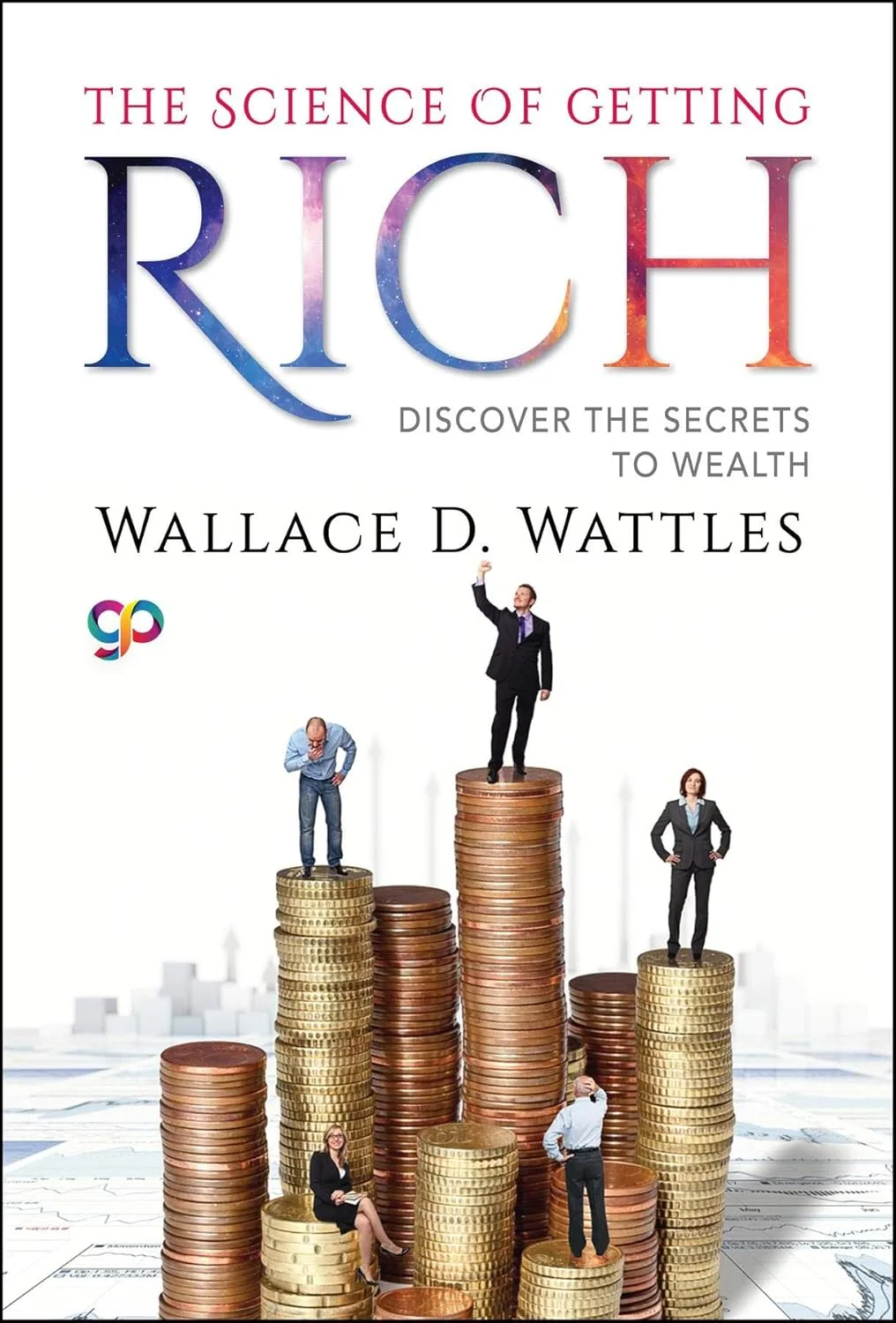
Download Cover Image
Do you want to download the full cover image for The Science of Getting Rich?