
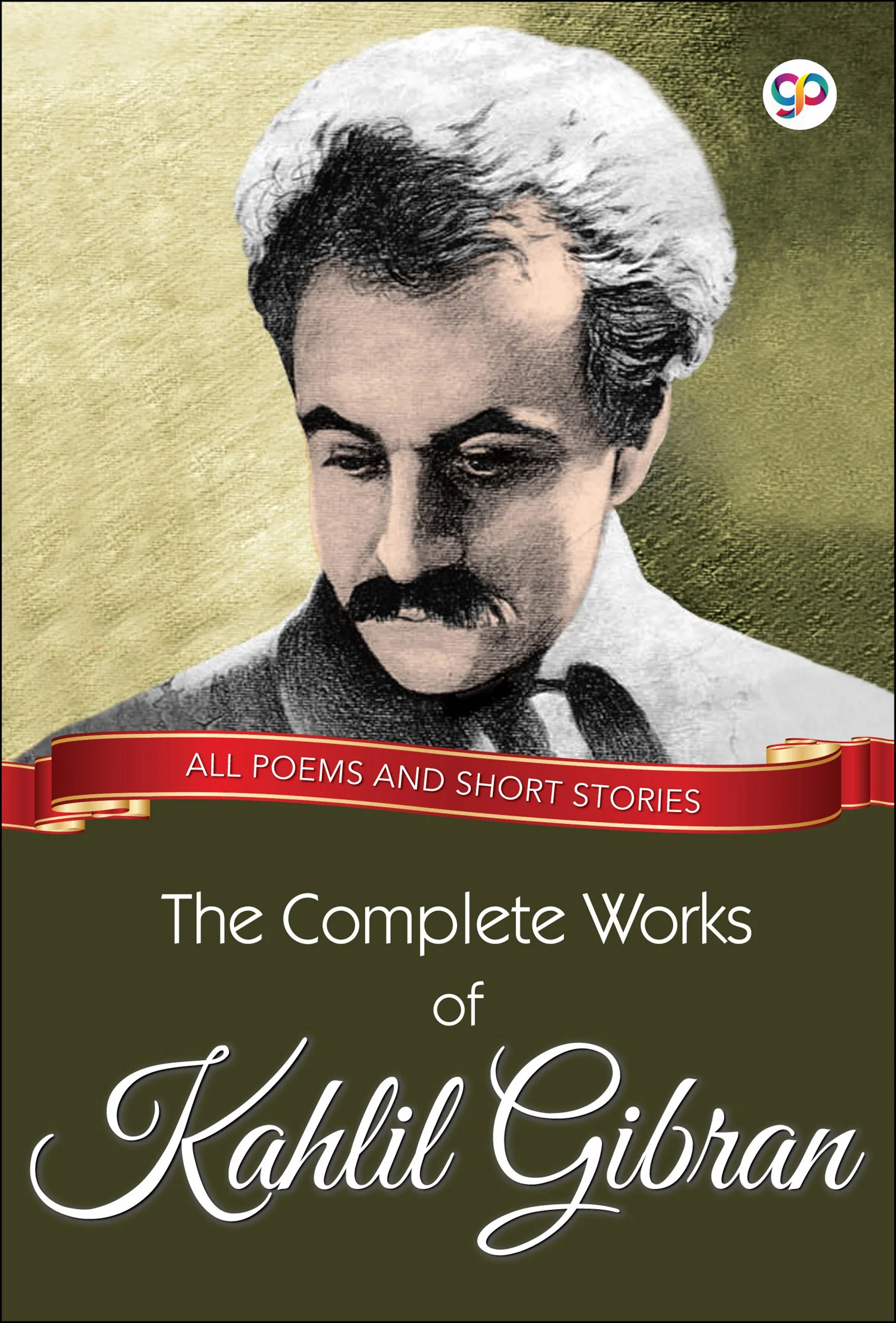
The Complete Works of Kahlil Gibran
eBook
• INR 51.00
• English
• 9789380914800
No ratings yet
| Publisher | General Press |
|---|---|
| ISBN13 | 9789380914800 |
| ASIN/SKU | B01GOYKVWM |
| Book Format | eBook |
| Language | English |
| List Price | INR 51.00 |
| Subject Code | LCO012000, POE013000, FIC004000 |
| Publishing Date | 24/05/2016 |
| Book Code | BD00068240 |
Buy this Book
Amazon Stores
Ebook Stores
Other Stores
Discover The Complete Works of Kahlil Gibran by Kahlil Gibran. This book is published by General Press in eBook format, ISBN 9789380914800, ASIN B01GOYKVWM, under Literature and Fiction, Middle Eastern Literature, Middle Eastern Poetry.
Book Description
'The Complete Works of Kahlil Gibran' is a rich collection of the writings of one of the twentieth century’s most beloved poets, philosophers, and artists. Bringing together his poetry, essays, parables, plays, and reflections, this volume offers readers a profound journey through themes of love, freedom, spirituality, nature, joy, sorrow, and the search for life's deeper meaning. It showcases the full breadth of Gibran’s literary vision, revealing both his artistic brilliance and his enduring wisdom.
At the heart of the collection is Gibran’s belief in the unity of humanity and the power of the human spirit. His works encourage readers to look beyond material concerns and discover the values of compassion, self-awareness, forgiveness, and inner peace. Through symbolic stories and poetic language, he explores universal experiences such as birth, friendship, marriage, work, suffering, hope, and death, offering timeless insights that remain relevant across cultures and generations.
Although many readers know Gibran best for The Prophet, this comprehensive volume includes numerous other works that reveal the evolution of his thought and his deep engagement with both Eastern and Western philosophical traditions. His writing combines lyrical beauty with spiritual depth, making complex ideas feel accessible and deeply personal.
More than a literary anthology, 'The Complete Works of Kahlil Gibran' is an invitation to reflect on the human condition and the mysteries of existence. Whether read from beginning to end or explored one piece at a time, the collection offers enduring inspiration, quiet wisdom, and a gentle reminder to live with love, purpose, and an open heart.
At the heart of the collection is Gibran’s belief in the unity of humanity and the power of the human spirit. His works encourage readers to look beyond material concerns and discover the values of compassion, self-awareness, forgiveness, and inner peace. Through symbolic stories and poetic language, he explores universal experiences such as birth, friendship, marriage, work, suffering, hope, and death, offering timeless insights that remain relevant across cultures and generations.
Although many readers know Gibran best for The Prophet, this comprehensive volume includes numerous other works that reveal the evolution of his thought and his deep engagement with both Eastern and Western philosophical traditions. His writing combines lyrical beauty with spiritual depth, making complex ideas feel accessible and deeply personal.
More than a literary anthology, 'The Complete Works of Kahlil Gibran' is an invitation to reflect on the human condition and the mysteries of existence. Whether read from beginning to end or explored one piece at a time, the collection offers enduring inspiration, quiet wisdom, and a gentle reminder to live with love, purpose, and an open heart.
Author Biography
Born in 1883 in the mountainous village of Bsharri in modern-day Lebanon, then part of the Ottoman Empire, Kahlil Gibran experienced a childhood marked by poverty and a lack of formal education. Seeking a better life, his mother immigrated to the United States in 1895, settling the family in the South End of Boston. It was there that Gibran's innate artistic talents were first recognized by a progressive settlement house, introducing the young immigrant to the local avant-garde art scene and setting him on a lifelong creative path.
To preserve his cultural heritage, Gibran returned to Lebanon in 1898 for several years of formal schooling. He traveled back to Boston in 1902 amidst a series of severe family tragedies, losing a brother, a sister, and his mother to illness in rapid succession. Despite his profound grief, he began to establish himself as both a painter and an Arabic-language writer. His trajectory shifted significantly when he met Mary Haskell, a school headmistress who became his lifelong benefactor, funding his art studies in Paris and heavily editing his later English writings.
Relocating to New York City in 1911, Gibran immersed himself in the local literary community and began to transition from writing exclusively in Arabic to publishing in English. His unique synthesis of Eastern mysticism, romanticism, and Western literary styles culminated in his 1923 masterpiece, The Prophet. This brief but deeply moving collection of poetic essays, exploring universal human themes such as love, joy, sorrow, and work, resonated profoundly with readers. Although it initially received a lukewarm reception from critics, it quickly found massive word-of-mouth success.
Over the following decades, The Prophet achieved phenomenal international popularity, cementing Gibran as one of the best-selling poets in history. He spent his final years continuing to write and paint, though he struggled with declining health and severe alcoholism. Gibran died in New York in 1931 at the age of forty-eight from cirrhosis of the liver and tuberculosis. Fulfilling his final wishes, his remains were returned to his hometown in Lebanon, where he is celebrated as a national hero and an enduring symbol of spiritual and literary bridge-building between the East and West.
To preserve his cultural heritage, Gibran returned to Lebanon in 1898 for several years of formal schooling. He traveled back to Boston in 1902 amidst a series of severe family tragedies, losing a brother, a sister, and his mother to illness in rapid succession. Despite his profound grief, he began to establish himself as both a painter and an Arabic-language writer. His trajectory shifted significantly when he met Mary Haskell, a school headmistress who became his lifelong benefactor, funding his art studies in Paris and heavily editing his later English writings.
Relocating to New York City in 1911, Gibran immersed himself in the local literary community and began to transition from writing exclusively in Arabic to publishing in English. His unique synthesis of Eastern mysticism, romanticism, and Western literary styles culminated in his 1923 masterpiece, The Prophet. This brief but deeply moving collection of poetic essays, exploring universal human themes such as love, joy, sorrow, and work, resonated profoundly with readers. Although it initially received a lukewarm reception from critics, it quickly found massive word-of-mouth success.
Over the following decades, The Prophet achieved phenomenal international popularity, cementing Gibran as one of the best-selling poets in history. He spent his final years continuing to write and paint, though he struggled with declining health and severe alcoholism. Gibran died in New York in 1931 at the age of forty-eight from cirrhosis of the liver and tuberculosis. Fulfilling his final wishes, his remains were returned to his hometown in Lebanon, where he is celebrated as a national hero and an enduring symbol of spiritual and literary bridge-building between the East and West.
Editorial Reviews
Editorial Reviews will be added soon…
Book Summary
"The Complete Works of Kahlil Gibran" is a comprehensive collection of the writings of Lebanese-American poet, philosopher, and artist Kahlil Gibran. Rather than following a single storyline, the volume brings together his most celebrated books, essays, poems, parables, letters, and reflections, presenting a rich exploration of the human condition. Across these works, Gibran examines universal themes such as love, freedom, spirituality, joy, sorrow, friendship, work, nature, self-discovery, and the relationship between humanity and the divine. His writing blends poetic beauty with philosophical insight, inviting readers to reflect deeply on life's greatest questions while finding meaning in everyday experiences.
Among the collection's best-known works is The Prophet, a series of poetic discourses delivered by the wise figure Almustafa before he leaves the city where he has lived for many years. As the people gather to bid him farewell, they ask him to share his wisdom on essential aspects of life, including love, marriage, children, giving, work, freedom, pain, beauty, and death. Rather than offering strict rules or religious doctrines, Almustafa responds with thoughtful reflections that encourage readers to seek balance, compassion, and understanding. His teachings suggest that life is a journey of continual growth, where joy and suffering exist together and each experience contributes to a deeper appreciation of human existence.
Another significant work in the collection, The Madman, presents a series of symbolic stories that challenge conventional ideas about identity and society. Through imaginative narratives and memorable characters, Gibran explores what it means to remove the masks people wear to satisfy the expectations of others. He argues that true freedom begins when individuals embrace their authentic selves instead of seeking approval or fearing criticism. The stories often blur the boundaries between wisdom and madness, suggesting that those considered unconventional may possess a deeper understanding of truth than those who unquestioningly follow social norms.
In The Forerunner and Sand and Foam, Gibran continues this reflective style through short parables, aphorisms, and poetic observations. These brief pieces examine the complexities of human relationships, the passage of time, the search for wisdom, and the mysteries of the soul. Gibran frequently uses images drawn from nature—mountains, rivers, trees, birds, the sea, and the changing seasons—to illustrate spiritual truths. His language remains simple yet evocative, encouraging readers to discover deeper meanings behind ordinary experiences. Rather than providing definitive answers, he invites contemplation, allowing each reader to interpret his words according to personal experience.
Love stands at the heart of much of Gibran's writing, though he presents it as far more than romantic affection. He describes love as a powerful force capable of bringing both profound happiness and painful transformation. According to his philosophy, genuine love requires courage, sacrifice, honesty, and acceptance of vulnerability. Likewise, friendship, family, and community are portrayed as relationships that flourish through mutual respect rather than control or possession. Gibran consistently reminds readers that true affection allows individuals to grow independently while remaining deeply connected to one another.
Spirituality is another central theme woven throughout the collection. Although Gibran draws inspiration from Christianity, Islam, and various mystical traditions, his message transcends the boundaries of any single religion. He focuses on the direct relationship between the individual soul and the divine, encouraging readers to seek God through love, compassion, creativity, and inner reflection rather than through ritual alone. His writings suggest that every person carries a spark of the divine within, and that spiritual fulfilment comes from recognising this shared humanity. By emphasising unity instead of division, Gibran promotes a vision of faith rooted in understanding and universal compassion.
The collection also reflects deeply on suffering, loss, and personal transformation. Gibran does not portray pain as something to be avoided at all costs but as an experience that often leads to wisdom and emotional growth. He believes that moments of grief can deepen a person's capacity for love, empathy, and gratitude. In many of his essays and poems, he encourages readers to accept life's changing seasons with patience, recognising that hardship and happiness are closely connected. Just as nature moves through cycles of growth and renewal, human beings are continually shaped by both their triumphs and their struggles.
Throughout his works, Gibran celebrates creativity, imagination, and the importance of meaningful work. He views artistic expression as a natural extension of the human spirit and believes that every honest effort carries dignity when performed with love and purpose. Whether writing about labour, education, leadership, or freedom, he consistently urges individuals to pursue lives guided by integrity rather than ambition alone. Material success is presented as temporary, while wisdom, kindness, and generosity are shown to possess lasting value. His reflections encourage readers to measure fulfilment not by wealth or status but by the depth of their character and the quality of their relationships.
Ultimately, "The Complete Works of Kahlil Gibran" offers a timeless meditation on what it means to live with compassion, courage, and purpose. Through lyrical prose, symbolic storytelling, and philosophical reflection, Gibran explores the joys and sorrows that unite all people, regardless of culture or belief. His writings encourage readers to embrace love without fear, welcome change with grace, seek truth with humility, and recognise the beauty hidden within both ordinary moments and life's greatest challenges. More than a literary collection, the volume serves as a lifelong companion for reflection, inspiring generations of readers to look beyond outward appearances and cultivate wisdom, inner peace, and a deeper appreciation for the shared journey of humanity.
Among the collection's best-known works is The Prophet, a series of poetic discourses delivered by the wise figure Almustafa before he leaves the city where he has lived for many years. As the people gather to bid him farewell, they ask him to share his wisdom on essential aspects of life, including love, marriage, children, giving, work, freedom, pain, beauty, and death. Rather than offering strict rules or religious doctrines, Almustafa responds with thoughtful reflections that encourage readers to seek balance, compassion, and understanding. His teachings suggest that life is a journey of continual growth, where joy and suffering exist together and each experience contributes to a deeper appreciation of human existence.
Another significant work in the collection, The Madman, presents a series of symbolic stories that challenge conventional ideas about identity and society. Through imaginative narratives and memorable characters, Gibran explores what it means to remove the masks people wear to satisfy the expectations of others. He argues that true freedom begins when individuals embrace their authentic selves instead of seeking approval or fearing criticism. The stories often blur the boundaries between wisdom and madness, suggesting that those considered unconventional may possess a deeper understanding of truth than those who unquestioningly follow social norms.
In The Forerunner and Sand and Foam, Gibran continues this reflective style through short parables, aphorisms, and poetic observations. These brief pieces examine the complexities of human relationships, the passage of time, the search for wisdom, and the mysteries of the soul. Gibran frequently uses images drawn from nature—mountains, rivers, trees, birds, the sea, and the changing seasons—to illustrate spiritual truths. His language remains simple yet evocative, encouraging readers to discover deeper meanings behind ordinary experiences. Rather than providing definitive answers, he invites contemplation, allowing each reader to interpret his words according to personal experience.
Love stands at the heart of much of Gibran's writing, though he presents it as far more than romantic affection. He describes love as a powerful force capable of bringing both profound happiness and painful transformation. According to his philosophy, genuine love requires courage, sacrifice, honesty, and acceptance of vulnerability. Likewise, friendship, family, and community are portrayed as relationships that flourish through mutual respect rather than control or possession. Gibran consistently reminds readers that true affection allows individuals to grow independently while remaining deeply connected to one another.
Spirituality is another central theme woven throughout the collection. Although Gibran draws inspiration from Christianity, Islam, and various mystical traditions, his message transcends the boundaries of any single religion. He focuses on the direct relationship between the individual soul and the divine, encouraging readers to seek God through love, compassion, creativity, and inner reflection rather than through ritual alone. His writings suggest that every person carries a spark of the divine within, and that spiritual fulfilment comes from recognising this shared humanity. By emphasising unity instead of division, Gibran promotes a vision of faith rooted in understanding and universal compassion.
The collection also reflects deeply on suffering, loss, and personal transformation. Gibran does not portray pain as something to be avoided at all costs but as an experience that often leads to wisdom and emotional growth. He believes that moments of grief can deepen a person's capacity for love, empathy, and gratitude. In many of his essays and poems, he encourages readers to accept life's changing seasons with patience, recognising that hardship and happiness are closely connected. Just as nature moves through cycles of growth and renewal, human beings are continually shaped by both their triumphs and their struggles.
Throughout his works, Gibran celebrates creativity, imagination, and the importance of meaningful work. He views artistic expression as a natural extension of the human spirit and believes that every honest effort carries dignity when performed with love and purpose. Whether writing about labour, education, leadership, or freedom, he consistently urges individuals to pursue lives guided by integrity rather than ambition alone. Material success is presented as temporary, while wisdom, kindness, and generosity are shown to possess lasting value. His reflections encourage readers to measure fulfilment not by wealth or status but by the depth of their character and the quality of their relationships.
Ultimately, "The Complete Works of Kahlil Gibran" offers a timeless meditation on what it means to live with compassion, courage, and purpose. Through lyrical prose, symbolic storytelling, and philosophical reflection, Gibran explores the joys and sorrows that unite all people, regardless of culture or belief. His writings encourage readers to embrace love without fear, welcome change with grace, seek truth with humility, and recognise the beauty hidden within both ordinary moments and life's greatest challenges. More than a literary collection, the volume serves as a lifelong companion for reflection, inspiring generations of readers to look beyond outward appearances and cultivate wisdom, inner peace, and a deeper appreciation for the shared journey of humanity.
Sample Chapters
THE COMPLETE WORKS OF KAHLIL GIBRAN
A Tear and A Smile
The Broken Wings
The Earth Gods
The Forerunner
The Garden of The Prophet
I Believe in You
Jesus The Son of Man
Lazarus and His Beloved
The Madman—His Parables and Poems
My Countrymen
The New Frontier
The Prophet
Sand And Foam
Satan
Spirits Rebellious
The Wanderer—His Parables and His Sayings
You Have Your Lebanon and I Have My Lebanon
Your Thought and Mine
A TEAR AND A SMILE
The Creation
The God separated a spirit from Himself and fashioned it into Beauty. He showered upon her all the blessings of gracefulness and kindness. He gave her the cup of happiness and said, “Drink not from this cup unless you forget the past and the future, for happiness is naught but the moment.” And He also gave her a cup of sorrow and said, “Drink from this cup and you will understand the meaning of the fleeting instants of the joy of life, for sorrow ever abounds.”
And the God bestowed upon her a love that would desert her forever upon her first sigh of earthly satisfaction, and a sweetness that would vanish with her first awareness of flattery.
And He gave her wisdom from heaven to lead to the all-righteous path, and placed in the depth of her heart an eye that sees the unseen, and created in her an affection and goodness toward all things. He dressed her with raiment of hopes spun by the angels of heaven from the sinews of the rainbow. And He cloaked her in the shadow of confusion, which is the dawn of life and light.
Then the God took consuming fire from the furnace of anger, and searing wind from the desert of ignorance, and sharp- cutting sands from the shore of selfishness, and coarse earth from under the feet of ages, and combined them all and fashioned Man. He gave to Man a blind power that rages and drives him into a madness which extinguishes only before gratification of desire, and placed life in him which is the spectre of death.
And the God laughed and cried. He felt an overwhelming love and pity for Man, and sheltered him beneath His guidance.
Two Infants
A prince stood on the balcony of his palace addressing a great multitude summoned for the occasion and said, “Let me offer you and this whole fortunate country my congratulations upon the birth of a new prince who will carry the name of my noble family, and of whom you will be justly proud. He is the new bearer of a great and illustrious ancestry, and upon him depends the brilliant future of this realm. Sing and be merry!” The voices of the throngs, full of joy and thankfulness, flooded the sky with exhilarating song, welcoming the new tyrant who would affix the yoke of oppression to their necks by ruling the weak with bitter authority, and exploiting their bodies and killing their souls. For that destiny, the people were singing and drinking ecstatically to the heady of the new Emir.
Another child entered life and that kingdom at the same time. While the crowds were glorifying the strong and belittling themselves by singing praise to a potential despot, and while the angels of heaven were weeping over the people’s weakness and servitude, a sick woman was thinking. She lived in an old, deserted hovel and, lying in her hard bed beside her newly born infant wrapped with ragged swaddles, was starving to death. She was a penurious and miserable young wife neglected by humanity; her husband had fallen into the trap of death set by the prince’s oppression, leaving a solitary woman to whom God had sent, that night, a tiny companion to prevent her from working and sustaining life.
As the mass dispersed and silence was restored to the vicinity, the wretched woman placed the infant on her lap and looked into his face and wept as if she were to baptize him with tears. And with a hunger weakened voice she spoke to the child saying, “Why have you left the spiritual world and come to share with me the bitterness of earthly life? Why have you deserted the angels and the spacious firmament and come to this miserable land of humans, filled with agony, oppression, and heartlessness? I have nothing to give you except tears; will you be nourished on tears instead of milk? I have no silk clothes to put on you; will my naked, shivering arms give you warmth? The little animals graze in the pasture and return safely to their shed; and the small birds pick the seeds and sleep placidly between the branches. But you, my beloved, have naught save a loving but destitute mother.”
Then she took the infant to her withered breast and clasped her arms around him as if wanting to join the two bodies in one, as before. She lifted her burning eyes slowly toward heaven and cried, “God! Have mercy on my unfortunate countrymen!”
At that moment the clouds floated from the face of the moon, whose beams penetrated the transom of that poor home and fell upon two corpses.
The House of Fortune
My wearied heart bade me farewell and left for the House of Fortune. As he reached that holy city which the soul had blessed and worshipped, he commenced wondering, for he could not find what he had always imagined would be there. The city was empty of power, money, and authority.
And my heart spoke to the daughter of Love saying, “Oh Love, where can I find Contentment? I heard that she had come here to join you.”
And the daughter of Love responded, “Contentment has already gone to preach her gospel in the city, where greed and corruption are paramount; we are not in need of her.”
Fortune craves not Contentment, for it is an earthly hope, and its desires are embraced by union with objects, while Contentment is naught but heartfelt.
The eternal soul is never contented; it ever seeks exaltation. Then my heart looked upon Life of Beauty and said: “Thou art all knowledge; enlighten me as to the mystery of Woman.” And he answered, “Oh human heart, woman is your own reflection, and whatever you are, she is; wherever you live, she lives; she is like religion if not interpreted by the ignorant, and like a moon, if not veiled with clouds, and like a breeze, if not poisoned with impurities.”
And my heart walked toward Knowledge, the daughter of Love and Beauty, and said, “Bestow upon me wisdom, that I might share it with the people.” And she responded, “Say not wisdom, but rather fortune, for real fortune comes not from outside, but begins in the Holy of Holies of life. Share of thyself with the people.”
A Poet’s Death is His Life
The dark wings of night enfolded the city upon which Nature had spread a pure white garment of snow; and men deserted the streets for their houses in search of warmth, while the north wind probed in contemplation of laying waste the gardens. There in the suburb stood an old hut heavily laden with snow and on the verge of falling. In a dark recess of that hovel was a poor bed in which a dying youth was lying, staring at the dim light of his oil lamp, made to flicker by the entering winds. He a man in the spring of life who foresaw fully that the peaceful hour of freeing himself from the clutches of life was fast nearing. He was awaiting Death’s visit gratefully, and upon his pale face appeared the dawn of hope; and on his lips a sorrowful smile; and in his eyes forgiveness.
He was poet perishing from hunger in the city of living rich. He was placed in the earthly world to enliven the heart of man with his beautiful and profound sayings. He as noble soul, sent by the Goddess of Understanding to soothe and make gentle the human spirit. But alas! He gladly bade the cold earth farewell without receiving a smile from its strange occupants.
He was breathing his last and had no one at his bedside save the oil lamp, his only companion, and some parchments upon which he had inscribed his heart’s feeling. As he salvaged the remnants of his withering strength he lifted his hands heavenward; he moved his eyes hopelessly, as if wanting to penetrate the ceiling in order to see the stars from behind the veil clouds.
And he said, “Come, oh beautiful Death; my soul is longing for you. Come close to me and unfasten the irons life, for I am weary of dragging them. Come, oh sweet Death, and deliver me from my neighbours who looked upon me as a stranger because I interpret to them the language of the angels. Hurry, oh peaceful Death, and carry me from these multitudes who left me in the dark corner of oblivion because I do not bleed the weak as they do. Come, oh gentle Death, and enfold me under your white wings, for my fellowmen are not in want of me. Embrace me, oh Death, full of love and mercy; let your lips touch my lips which never tasted a mother’s kiss, not touched a sister’s cheeks, not caresses a sweetheart’s fingertips. Come and take me, by beloved Death.”
Then, at the bedside of the dying poet appeared an angel who possessed a supernatural and divine beauty, holding in her hand a wreath of lilies. She embraced him and closed his eyes so he could see no more, except with the eye of his spirit. She impressed a deep and long and gently withdrawn kiss that left an eternal smile of fulfilment upon his lips. Then the hovel became empty and nothing was lest save parchments and papers which the poet had strewn with bitter futility.
Hundreds of years later, when the people of the city arose from the diseased slumber of ignorance and saw the dawn of knowledge, they erected a monument in the most beautiful garden of the city and celebrated a feast every year in honour of that poet, whose writings had freed them. Oh, how cruel is man’s ignorance!
The Criminal
A young man of strong body, weakened by hunger, sat on the walker’s portion of the street stretching his hand toward all who passed, begging and repeating his hand toward all who passed, begging and repeating the sad song of his defeat in life, while suffering from hunger and from humiliation.
When night came, his lips and tongue were parched, while his hand was still as empty as his stomach.
He gathered himself and went out from the city, where he sat under a tree and wept bitterly. Then he lifted his puzzled eyes to heaven while hunger was eating his inside, and he said, “Oh Lord, I went to the rich man and asked for employment, but he turned me away because of my shabbiness; I knocked at the school door, but was forbidden solace because I was empty- handed; I sought any occupation that would give me bread, but all to no avail. In desperation I asked alms, but the worshippers saw me and said “He is strong and lazy, and he should not beg.”
“Oh Lord, it is Thy will that my mother gave birth unto me, and now the earth offers me back to You before the Ending.”
His expression then changed. He arose and his eyes now glittered in determination. He fashioned a thick and heavy stick from the branch of the tree, and pointed it toward the city, shouting, “I asked for bread with all the strength of my voice, and was refused. Now I shall obtain it by the strength of my muscles! I asked for bread in the name of mercy and love, but humanity did not heed. I shall take it now in the name of evil!”
The passing years rendered the youth a robber, killer and destroyer of souls; he crushed all who opposed him; he amassed fabulous wealth with which he won himself over to those in power. He was admired by colleagues, envied by other thieves, and feared by the multitudes.
His riches and false position prevailed upon the Emir to appoint him deputy in that city—the sad process pursued by unwise governors. Thefts were then legalized; oppression was supported by authority; crushing of the weak became commonplace; the throngs curried and praised.
A Tear and A Smile
The Broken Wings
The Earth Gods
The Forerunner
The Garden of The Prophet
I Believe in You
Jesus The Son of Man
Lazarus and His Beloved
The Madman—His Parables and Poems
My Countrymen
The New Frontier
The Prophet
Sand And Foam
Satan
Spirits Rebellious
The Wanderer—His Parables and His Sayings
You Have Your Lebanon and I Have My Lebanon
Your Thought and Mine
A TEAR AND A SMILE
The Creation
The God separated a spirit from Himself and fashioned it into Beauty. He showered upon her all the blessings of gracefulness and kindness. He gave her the cup of happiness and said, “Drink not from this cup unless you forget the past and the future, for happiness is naught but the moment.” And He also gave her a cup of sorrow and said, “Drink from this cup and you will understand the meaning of the fleeting instants of the joy of life, for sorrow ever abounds.”
And the God bestowed upon her a love that would desert her forever upon her first sigh of earthly satisfaction, and a sweetness that would vanish with her first awareness of flattery.
And He gave her wisdom from heaven to lead to the all-righteous path, and placed in the depth of her heart an eye that sees the unseen, and created in her an affection and goodness toward all things. He dressed her with raiment of hopes spun by the angels of heaven from the sinews of the rainbow. And He cloaked her in the shadow of confusion, which is the dawn of life and light.
Then the God took consuming fire from the furnace of anger, and searing wind from the desert of ignorance, and sharp- cutting sands from the shore of selfishness, and coarse earth from under the feet of ages, and combined them all and fashioned Man. He gave to Man a blind power that rages and drives him into a madness which extinguishes only before gratification of desire, and placed life in him which is the spectre of death.
And the God laughed and cried. He felt an overwhelming love and pity for Man, and sheltered him beneath His guidance.
Two Infants
A prince stood on the balcony of his palace addressing a great multitude summoned for the occasion and said, “Let me offer you and this whole fortunate country my congratulations upon the birth of a new prince who will carry the name of my noble family, and of whom you will be justly proud. He is the new bearer of a great and illustrious ancestry, and upon him depends the brilliant future of this realm. Sing and be merry!” The voices of the throngs, full of joy and thankfulness, flooded the sky with exhilarating song, welcoming the new tyrant who would affix the yoke of oppression to their necks by ruling the weak with bitter authority, and exploiting their bodies and killing their souls. For that destiny, the people were singing and drinking ecstatically to the heady of the new Emir.
Another child entered life and that kingdom at the same time. While the crowds were glorifying the strong and belittling themselves by singing praise to a potential despot, and while the angels of heaven were weeping over the people’s weakness and servitude, a sick woman was thinking. She lived in an old, deserted hovel and, lying in her hard bed beside her newly born infant wrapped with ragged swaddles, was starving to death. She was a penurious and miserable young wife neglected by humanity; her husband had fallen into the trap of death set by the prince’s oppression, leaving a solitary woman to whom God had sent, that night, a tiny companion to prevent her from working and sustaining life.
As the mass dispersed and silence was restored to the vicinity, the wretched woman placed the infant on her lap and looked into his face and wept as if she were to baptize him with tears. And with a hunger weakened voice she spoke to the child saying, “Why have you left the spiritual world and come to share with me the bitterness of earthly life? Why have you deserted the angels and the spacious firmament and come to this miserable land of humans, filled with agony, oppression, and heartlessness? I have nothing to give you except tears; will you be nourished on tears instead of milk? I have no silk clothes to put on you; will my naked, shivering arms give you warmth? The little animals graze in the pasture and return safely to their shed; and the small birds pick the seeds and sleep placidly between the branches. But you, my beloved, have naught save a loving but destitute mother.”
Then she took the infant to her withered breast and clasped her arms around him as if wanting to join the two bodies in one, as before. She lifted her burning eyes slowly toward heaven and cried, “God! Have mercy on my unfortunate countrymen!”
At that moment the clouds floated from the face of the moon, whose beams penetrated the transom of that poor home and fell upon two corpses.
The House of Fortune
My wearied heart bade me farewell and left for the House of Fortune. As he reached that holy city which the soul had blessed and worshipped, he commenced wondering, for he could not find what he had always imagined would be there. The city was empty of power, money, and authority.
And my heart spoke to the daughter of Love saying, “Oh Love, where can I find Contentment? I heard that she had come here to join you.”
And the daughter of Love responded, “Contentment has already gone to preach her gospel in the city, where greed and corruption are paramount; we are not in need of her.”
Fortune craves not Contentment, for it is an earthly hope, and its desires are embraced by union with objects, while Contentment is naught but heartfelt.
The eternal soul is never contented; it ever seeks exaltation. Then my heart looked upon Life of Beauty and said: “Thou art all knowledge; enlighten me as to the mystery of Woman.” And he answered, “Oh human heart, woman is your own reflection, and whatever you are, she is; wherever you live, she lives; she is like religion if not interpreted by the ignorant, and like a moon, if not veiled with clouds, and like a breeze, if not poisoned with impurities.”
And my heart walked toward Knowledge, the daughter of Love and Beauty, and said, “Bestow upon me wisdom, that I might share it with the people.” And she responded, “Say not wisdom, but rather fortune, for real fortune comes not from outside, but begins in the Holy of Holies of life. Share of thyself with the people.”
A Poet’s Death is His Life
The dark wings of night enfolded the city upon which Nature had spread a pure white garment of snow; and men deserted the streets for their houses in search of warmth, while the north wind probed in contemplation of laying waste the gardens. There in the suburb stood an old hut heavily laden with snow and on the verge of falling. In a dark recess of that hovel was a poor bed in which a dying youth was lying, staring at the dim light of his oil lamp, made to flicker by the entering winds. He a man in the spring of life who foresaw fully that the peaceful hour of freeing himself from the clutches of life was fast nearing. He was awaiting Death’s visit gratefully, and upon his pale face appeared the dawn of hope; and on his lips a sorrowful smile; and in his eyes forgiveness.
He was poet perishing from hunger in the city of living rich. He was placed in the earthly world to enliven the heart of man with his beautiful and profound sayings. He as noble soul, sent by the Goddess of Understanding to soothe and make gentle the human spirit. But alas! He gladly bade the cold earth farewell without receiving a smile from its strange occupants.
He was breathing his last and had no one at his bedside save the oil lamp, his only companion, and some parchments upon which he had inscribed his heart’s feeling. As he salvaged the remnants of his withering strength he lifted his hands heavenward; he moved his eyes hopelessly, as if wanting to penetrate the ceiling in order to see the stars from behind the veil clouds.
And he said, “Come, oh beautiful Death; my soul is longing for you. Come close to me and unfasten the irons life, for I am weary of dragging them. Come, oh sweet Death, and deliver me from my neighbours who looked upon me as a stranger because I interpret to them the language of the angels. Hurry, oh peaceful Death, and carry me from these multitudes who left me in the dark corner of oblivion because I do not bleed the weak as they do. Come, oh gentle Death, and enfold me under your white wings, for my fellowmen are not in want of me. Embrace me, oh Death, full of love and mercy; let your lips touch my lips which never tasted a mother’s kiss, not touched a sister’s cheeks, not caresses a sweetheart’s fingertips. Come and take me, by beloved Death.”
Then, at the bedside of the dying poet appeared an angel who possessed a supernatural and divine beauty, holding in her hand a wreath of lilies. She embraced him and closed his eyes so he could see no more, except with the eye of his spirit. She impressed a deep and long and gently withdrawn kiss that left an eternal smile of fulfilment upon his lips. Then the hovel became empty and nothing was lest save parchments and papers which the poet had strewn with bitter futility.
Hundreds of years later, when the people of the city arose from the diseased slumber of ignorance and saw the dawn of knowledge, they erected a monument in the most beautiful garden of the city and celebrated a feast every year in honour of that poet, whose writings had freed them. Oh, how cruel is man’s ignorance!
The Criminal
A young man of strong body, weakened by hunger, sat on the walker’s portion of the street stretching his hand toward all who passed, begging and repeating his hand toward all who passed, begging and repeating the sad song of his defeat in life, while suffering from hunger and from humiliation.
When night came, his lips and tongue were parched, while his hand was still as empty as his stomach.
He gathered himself and went out from the city, where he sat under a tree and wept bitterly. Then he lifted his puzzled eyes to heaven while hunger was eating his inside, and he said, “Oh Lord, I went to the rich man and asked for employment, but he turned me away because of my shabbiness; I knocked at the school door, but was forbidden solace because I was empty- handed; I sought any occupation that would give me bread, but all to no avail. In desperation I asked alms, but the worshippers saw me and said “He is strong and lazy, and he should not beg.”
“Oh Lord, it is Thy will that my mother gave birth unto me, and now the earth offers me back to You before the Ending.”
His expression then changed. He arose and his eyes now glittered in determination. He fashioned a thick and heavy stick from the branch of the tree, and pointed it toward the city, shouting, “I asked for bread with all the strength of my voice, and was refused. Now I shall obtain it by the strength of my muscles! I asked for bread in the name of mercy and love, but humanity did not heed. I shall take it now in the name of evil!”
The passing years rendered the youth a robber, killer and destroyer of souls; he crushed all who opposed him; he amassed fabulous wealth with which he won himself over to those in power. He was admired by colleagues, envied by other thieves, and feared by the multitudes.
His riches and false position prevailed upon the Emir to appoint him deputy in that city—the sad process pursued by unwise governors. Thefts were then legalized; oppression was supported by authority; crushing of the weak became commonplace; the throngs curried and praised.
Reader Reviews
No reviews yet.
The Complete Works of Kahlil Gibran
Download Cover Image
Do you want to download the full cover image for The Complete Works of Kahlil Gibran?