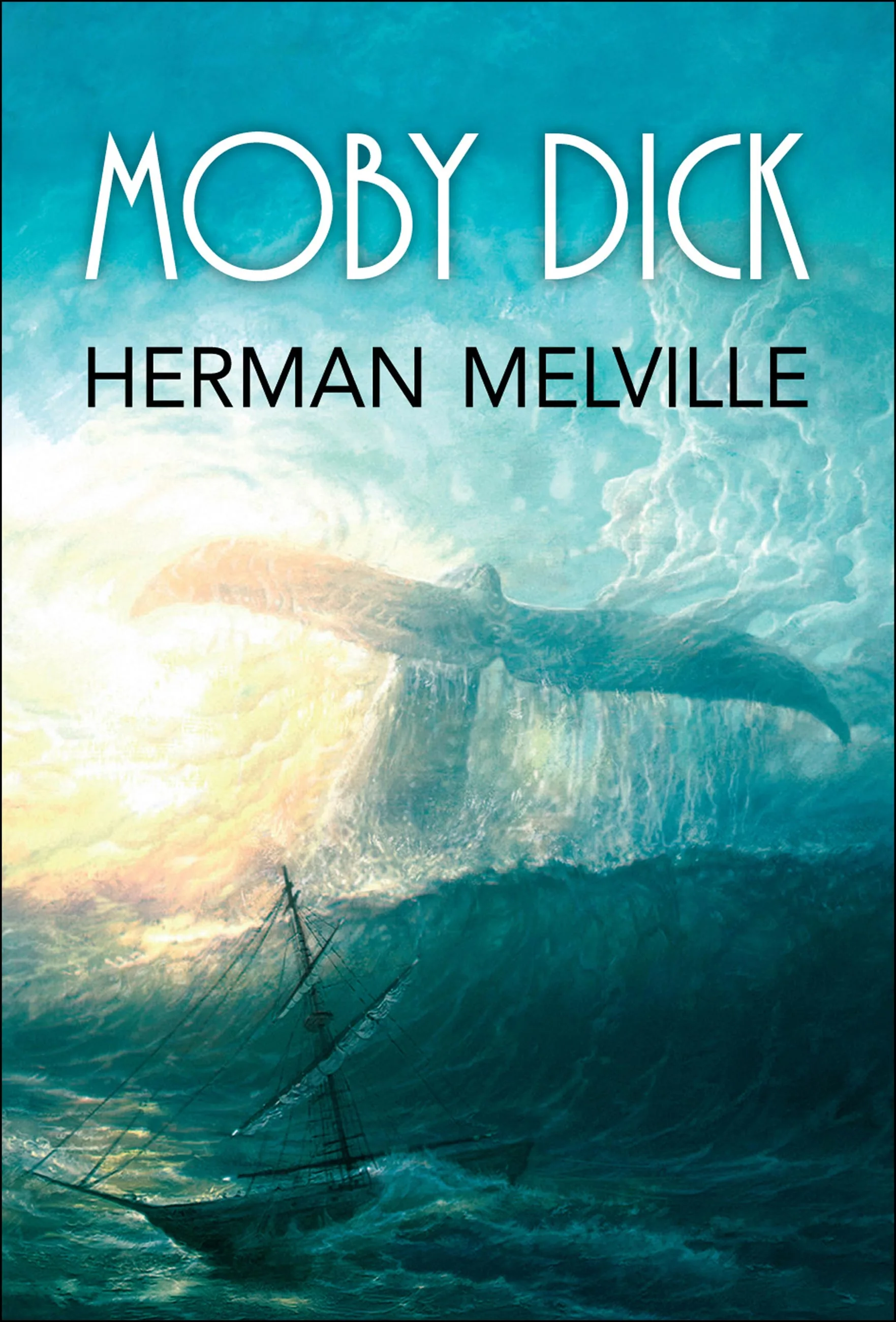
Moby Dick
eBook
• INR 51.00
• English
• 9788180320088
No ratings yet
| Publisher | General Press |
|---|---|
| ISBN13 | 9788180320088 |
| ASIN/SKU | B01K5S5VDM |
| Book Format | eBook |
| Language | English |
| List Price | INR 51.00 |
| Subject Code | FIC004000, FIC002000 |
| Book Code | BD00068243 |
Buy this Book
Amazon Stores
Ebook Stores
Other Stores
Discover Moby Dick by Herman Melville. This book is published by General Press in eBook format, ISBN 9788180320088, ASIN B01K5S5VDM, under Literature and Fiction, Action and Adventure, Sea Stories.
Book Description
What drives a man to sacrifice everything, including his own crew, for a single, blinding obsession? In the legendary maritime epic "Moby-Dick", Herman Melville plunges readers into the ultimate tale of madness, nature, and survival. Narrated by the wandering sailor Ishmael, the story begins as he signs aboard the whaling ship 'Pequod', seeking the freedom of the open ocean. But he soon discovers that this is no ordinary commercial voyage. At the helm is the brooding, one-legged Captain Ahab, a man consumed by a singular, terrifying purpose: to hunt down and kill the massive white sperm whale that once maimed him. As the ship ventures deeper into isolated, dangerous waters, the hunt transforms from a mere whaling expedition into a profound exploration of human defiance and the raw, untamable power of the natural world. Melville brilliantly captures the gritty, fascinating details of 19th-century life at sea, contrasting it with Ahab’s escalating fanaticism. The diverse crew, including the skilled harpooneer Queequeg and the pragmatic first mate Starbuck, find themselves helplessly bound to their captain’s dark quest, trapped on a floating wooden world where the line between courage and insanity begins to blur. With the mythical white leviathan lurking just beneath the waves and a volatile captain pushing his men toward the brink, one cannot help but wonder: who will actually be the hunter, and who will become the prey in this catastrophic final showdown?
Author Biography
Herman Melville (1819–1891) was one of America's greatest novelists, short story writers, and poets, celebrated for his profound exploration of adventure, human nature, and the mysteries of existence. Although his literary genius was not fully recognized during his lifetime, he is now regarded as one of the most influential figures in world literature. His masterpiece, Moby-Dick (1851), is widely considered one of the greatest novels ever written, admired for its philosophical depth, vivid symbolism, and unforgettable storytelling.
Born on August 1, 1819, in New York City, Melville grew up in a family that faced severe financial hardship after the death of his father. Forced to leave school at a young age, he worked in a variety of jobs before finding his true calling at sea. His years as a sailor aboard merchant ships and whaling vessels took him across the Atlantic and Pacific Oceans, exposing him to diverse cultures, distant islands, and the demanding realities of maritime life. These extraordinary experiences became the foundation of much of his fiction.
Melville's early novels, including Typee (1846), Omoo (1847), and White-Jacket (1850), were inspired by his travels and quickly earned him popularity. However, his ambitious novel Moby-Dick received a mixed reception upon publication, as many contemporary readers found its philosophical scope and experimental style difficult to appreciate. He later wrote Pierre, Israel Potter, The Confidence-Man, and the acclaimed novella Billy Budd, Sailor, which was published after his death.
Throughout his works, Melville explored universal themes such as ambition, obsession, freedom, morality, fate, and humanity's relationship with nature. His richly layered narratives combine thrilling adventure with profound reflections on life, making his writing both intellectually challenging and emotionally compelling. Despite declining public interest in his later years, he continued writing poetry and prose while working as a customs inspector in New York to support his family.
Melville passed away on September 28, 1891, with much of his literary achievement still underappreciated. It was only in the early twentieth century that critics and readers rediscovered his remarkable contributions, leading to what became known as the "Melville Revival." Today, Herman Melville is celebrated as one of the greatest voices in American literature, whose timeless works continue to inspire readers with their profound insight, imaginative power, and enduring exploration of the human spirit.
Born on August 1, 1819, in New York City, Melville grew up in a family that faced severe financial hardship after the death of his father. Forced to leave school at a young age, he worked in a variety of jobs before finding his true calling at sea. His years as a sailor aboard merchant ships and whaling vessels took him across the Atlantic and Pacific Oceans, exposing him to diverse cultures, distant islands, and the demanding realities of maritime life. These extraordinary experiences became the foundation of much of his fiction.
Melville's early novels, including Typee (1846), Omoo (1847), and White-Jacket (1850), were inspired by his travels and quickly earned him popularity. However, his ambitious novel Moby-Dick received a mixed reception upon publication, as many contemporary readers found its philosophical scope and experimental style difficult to appreciate. He later wrote Pierre, Israel Potter, The Confidence-Man, and the acclaimed novella Billy Budd, Sailor, which was published after his death.
Throughout his works, Melville explored universal themes such as ambition, obsession, freedom, morality, fate, and humanity's relationship with nature. His richly layered narratives combine thrilling adventure with profound reflections on life, making his writing both intellectually challenging and emotionally compelling. Despite declining public interest in his later years, he continued writing poetry and prose while working as a customs inspector in New York to support his family.
Melville passed away on September 28, 1891, with much of his literary achievement still underappreciated. It was only in the early twentieth century that critics and readers rediscovered his remarkable contributions, leading to what became known as the "Melville Revival." Today, Herman Melville is celebrated as one of the greatest voices in American literature, whose timeless works continue to inspire readers with their profound insight, imaginative power, and enduring exploration of the human spirit.
Editorial Reviews
Editorial Reviews will be added soon…
Book Summary
Moby-Dick by Herman Melville is one of the greatest and most ambitious novels in American literature, combining adventure, philosophy, religion, tragedy, natural history, symbolism, and psychological exploration. First published in 1851, the novel follows Ishmael, a reflective young sailor who joins the whaling ship Pequod under the command of the mysterious and obsessive Captain Ahab. What begins as a voyage to hunt whales gradually becomes a terrifying quest for revenge against Moby Dick, the enormous white sperm whale that previously injured Ahab and left him physically and psychologically scarred. The Moby-Dick story is therefore much more than a tale about a sailor hunting a whale. It is an exploration of obsession, fate, free will, good and evil, humanity's struggle against nature, and the dangerous consequences of allowing one consuming idea to control an entire life.
The novel opens with one of the most recognizable lines in American literature: “Call me Ishmael.” Ishmael introduces himself as a man who sometimes goes to sea when he feels troubled or restless on land. He is attracted to the ocean because it offers both escape and adventure. After deciding to join a whaling expedition, he travels to New Bedford, Massachusetts, an important center of the American whaling industry. There he meets Queequeg, a tattooed harpooner from a distant island. At first, Ishmael is uncertain and even frightened by Queequeg's appearance and unfamiliar customs, but the two quickly become close friends. Their friendship becomes one of the novel's most human elements because it crosses boundaries of nationality, religion, culture, and race.
Ishmael and Queequeg eventually sign aboard the Pequod, an old whaling ship commanded by Captain Ahab. Before the voyage begins, Ishmael hears unsettling stories about Ahab. The captain has recently returned from a previous voyage after encountering a gigantic white sperm whale named Moby Dick. During that encounter, the whale attacked the Pequod's captain and bit off Ahab's leg. Ahab now wears a prosthetic leg made partly from whale bone. The physical wound is obvious, but Ishmael gradually realizes that Ahab's deeper injury is psychological. Ahab has become consumed by hatred for Moby Dick and intends to find the whale and kill it.
When Ahab finally appears before the crew, he reveals the true purpose of the voyage. He nails a gold coin to the mast as a reward for the first sailor who spots Moby Dick and announces that the whale is his personal enemy. The crew members initially respond to his charisma and confidence, but Ahab's obsession soon becomes clear. He is not interested simply in whaling for profit. He wants revenge. The distinction is crucial because ordinary whaling is dangerous but economically motivated, whereas Ahab's mission is irrationally personal. He is willing to risk the lives of everyone aboard the ship to satisfy his need for vengeance.
The crew includes several important characters who represent different cultures and perspectives. Starbuck, the first mate, is a serious and religious Quaker who recognizes the danger of Ahab's obsession. Stubb, the second mate, is more cheerful and practical, often responding to danger with humor. Flask, the third mate, is energetic and aggressive. The harpooners include Queequeg, the powerful Polynesian sailor; Tashtego, a Native American from Gay Head; and Daggoo, a gigantic African harpooner. Together, these characters make the Pequod a miniature representation of the wider human world. The ship carries people from different backgrounds, but their lives become increasingly subject to Ahab's single-minded purpose.
As the voyage progresses, Melville expands the story far beyond conventional adventure fiction. Ishmael spends enormous portions of the novel describing whales, whaling techniques, ships, ropes, harpoons, anatomy, oceans, mythology, religion, and maritime customs. These passages can sometimes feel distant from the central plot, but they are essential to the novel's larger design. Ishmael is trying to understand the whale from every possible angle. He considers whales as biological creatures, economic resources, religious symbols, artistic subjects, and mysterious beings. His inability to reach a final understanding becomes part of the novel's meaning. Moby Dick is never reduced to one simple explanation.
The white whale itself is the novel's central symbol. White is traditionally associated with purity, innocence, holiness, and goodness, but Melville also connects it with terror, emptiness, and the unknown. Moby Dick is frightening partly because the whale seems to mean different things to different people. To Ahab, the whale represents the evil force that has wounded him. To Ishmael, Moby Dick becomes something much more mysterious. The whale may symbolize nature, God, fate, death, evil, or simply the unknowable reality that human beings cannot fully control. Melville deliberately refuses to provide one definitive interpretation.
Ahab's obsession becomes increasingly extreme. He sees Moby Dick not merely as an animal but as the visible expression of an invisible power behind the universe. He believes that if he can kill the whale, he can strike back at whatever force he believes has caused his suffering. This makes his revenge quest almost religious in intensity. He turns the hunt into a personal crusade. His obsession is so powerful that he gradually loses the ability to distinguish between his own interpretation of reality and reality itself.
One of the most revealing moments comes when Starbuck challenges Ahab's plan. Starbuck understands that the voyage has become irrational and dangerous. He reminds Ahab that Moby Dick is an animal and that seeking revenge against a creature for behaving according to its nature is madness. But Ahab refuses to listen. His response demonstrates one of the novel's central themes: obsession can destroy judgment. Ahab is no longer commanding the ship according to the practical responsibilities of a captain. Instead, the captain is being commanded by his obsession.
The novel's famous sermon of Father Mapple early in the story establishes another important theme: the conflict between obedience and resistance to God. Mapple's sermon focuses on the biblical story of Jonah, who attempts to flee from God's command and is swallowed by a great fish. The sermon suggests that people may try to escape divine authority but cannot ultimately escape the consequences of their choices. The story of Jonah also introduces the theme of a human being confronting a power much greater than himself. This theme later becomes central to Ahab's confrontation with Moby Dick.
Religion appears throughout Moby-Dick, but Melville never treats it simply. Ishmael is curious about Christianity, Judaism, Islam, pagan traditions, and other forms of belief. Queequeg initially follows his own island religion, yet his friendship with Ishmael demonstrates that human connection can exist across religious boundaries. The novel continually asks whether different religious traditions are pointing toward the same mystery or merely creating different interpretations of something humanity cannot fully understand.
Another major theme is nature versus humanity. The sailors depend upon the sea and whales for their livelihood, yet they also attempt to dominate and kill the creatures they hunt. Whaling represents humanity's practical relationship with nature: the ocean is beautiful and mysterious, but it is also a source of food, oil, money, and danger. Ahab's attempt to conquer Moby Dick pushes this relationship to an extreme. He refuses to accept nature as something beyond his control. His tragedy comes partly from this refusal.
The Pequod itself becomes an important symbol. It is a small human community traveling through an immense and unpredictable world. As the voyage continues, the ship begins to resemble Ahab's mind. Everything aboard it becomes organized around the hunt for Moby Dick. The ship's ordinary commercial purpose disappears beneath the captain's obsession. Melville's use of the ship as a symbolic community also allows him to explore leadership, hierarchy, labor, cultural diversity, and the dangers of charismatic authority.
The novel's climax begins when the Pequod finally encounters Moby Dick. The whale is spotted, and the chase begins. Ahab's determination reaches its peak. The crew launches boats against the whale, and the pursuit becomes increasingly violent. Moby Dick attacks the whaleboats and demonstrates enormous strength and intelligence. Yet Ahab refuses to retreat. For him, turning back would mean surrendering not simply a hunt but his entire identity.
The final chase unfolds over several days. Each encounter brings the crew closer to disaster. The whale destroys boats, breaks equipment, and ultimately turns its attention toward the Pequod itself. Ahab remains determined to kill Moby Dick even as the consequences become obvious. In the final confrontation, the whale destroys the ship. Ahab becomes entangled in a harpoon line and is dragged into the sea. The Pequod sinks, taking nearly everyone with it.
The ending is one of the most powerful in American fiction. Almost the entire crew dies, but Ishmael survives because he is thrown from the sinking ship and manages to cling to Queequeg's coffin, which has been transformed into a life buoy. He is eventually rescued by another ship, the Rachel. This ending gives the novel its famous combination of catastrophe and survival. Ishmael survives not because he defeats nature or solves its mysteries but because he accepts, however indirectly, his own vulnerability.
The survival of Ishmael is deeply significant. Throughout the novel, he is the observer, the questioner, and the storyteller. Unlike Ahab, he does not insist that the universe must conform to his personal interpretation. Ishmael remains curious about the world even when he cannot understand it completely. His survival therefore contrasts with Ahab's destruction. Ahab seeks certainty through domination; Ishmael survives through observation, flexibility, friendship, and the willingness to live with mystery.
At its deepest level, Moby-Dick is a novel about the dangers of turning suffering into obsession. Ahab has suffered terribly, and his pain is real, but instead of accepting his wound, he makes revenge the purpose of his existence. The tragedy is not simply that he dies. It is that he sacrifices everything else—friendship, responsibility, reason, human life, and ultimately his own identity—to pursue one interpretation of his suffering.
Melville also explores the limits of human knowledge. Ishmael describes whales in extraordinary detail, but the more he studies them, the more mysterious they become. This paradox is central to the book. Knowledge can reveal new information while simultaneously exposing how much remains unknown. Moby Dick cannot be reduced to a single symbol because the universe itself cannot be reduced to a single explanation.
Ultimately, Moby-Dick by Herman Melville is far more than a classic adventure novel about a whale hunt. It is a profound meditation on obsession, revenge, fate, free will, religion, nature, friendship, mortality, and the limits of human understanding. The story of Captain Ahab and Moby Dick provides the dramatic surface, but Ishmael's philosophical reflections give the novel its extraordinary depth. Ahab represents the person who demands that the universe explain itself according to his personal suffering, while Ishmael represents the person who remains willing to observe, question, learn, and survive without possessing all the answers. For readers searching for a Moby-Dick summary, Moby-Dick analysis, explanation of the white whale, Captain Ahab's character, major themes of Moby-Dick, the meaning of Moby Dick, or an introduction to Herman Melville's masterpiece, the novel's lasting lesson is both simple and profound: the world is larger and more mysterious than any single human interpretation, and the attempt to conquer what we cannot understand can ultimately destroy us.
The novel opens with one of the most recognizable lines in American literature: “Call me Ishmael.” Ishmael introduces himself as a man who sometimes goes to sea when he feels troubled or restless on land. He is attracted to the ocean because it offers both escape and adventure. After deciding to join a whaling expedition, he travels to New Bedford, Massachusetts, an important center of the American whaling industry. There he meets Queequeg, a tattooed harpooner from a distant island. At first, Ishmael is uncertain and even frightened by Queequeg's appearance and unfamiliar customs, but the two quickly become close friends. Their friendship becomes one of the novel's most human elements because it crosses boundaries of nationality, religion, culture, and race.
Ishmael and Queequeg eventually sign aboard the Pequod, an old whaling ship commanded by Captain Ahab. Before the voyage begins, Ishmael hears unsettling stories about Ahab. The captain has recently returned from a previous voyage after encountering a gigantic white sperm whale named Moby Dick. During that encounter, the whale attacked the Pequod's captain and bit off Ahab's leg. Ahab now wears a prosthetic leg made partly from whale bone. The physical wound is obvious, but Ishmael gradually realizes that Ahab's deeper injury is psychological. Ahab has become consumed by hatred for Moby Dick and intends to find the whale and kill it.
When Ahab finally appears before the crew, he reveals the true purpose of the voyage. He nails a gold coin to the mast as a reward for the first sailor who spots Moby Dick and announces that the whale is his personal enemy. The crew members initially respond to his charisma and confidence, but Ahab's obsession soon becomes clear. He is not interested simply in whaling for profit. He wants revenge. The distinction is crucial because ordinary whaling is dangerous but economically motivated, whereas Ahab's mission is irrationally personal. He is willing to risk the lives of everyone aboard the ship to satisfy his need for vengeance.
The crew includes several important characters who represent different cultures and perspectives. Starbuck, the first mate, is a serious and religious Quaker who recognizes the danger of Ahab's obsession. Stubb, the second mate, is more cheerful and practical, often responding to danger with humor. Flask, the third mate, is energetic and aggressive. The harpooners include Queequeg, the powerful Polynesian sailor; Tashtego, a Native American from Gay Head; and Daggoo, a gigantic African harpooner. Together, these characters make the Pequod a miniature representation of the wider human world. The ship carries people from different backgrounds, but their lives become increasingly subject to Ahab's single-minded purpose.
As the voyage progresses, Melville expands the story far beyond conventional adventure fiction. Ishmael spends enormous portions of the novel describing whales, whaling techniques, ships, ropes, harpoons, anatomy, oceans, mythology, religion, and maritime customs. These passages can sometimes feel distant from the central plot, but they are essential to the novel's larger design. Ishmael is trying to understand the whale from every possible angle. He considers whales as biological creatures, economic resources, religious symbols, artistic subjects, and mysterious beings. His inability to reach a final understanding becomes part of the novel's meaning. Moby Dick is never reduced to one simple explanation.
The white whale itself is the novel's central symbol. White is traditionally associated with purity, innocence, holiness, and goodness, but Melville also connects it with terror, emptiness, and the unknown. Moby Dick is frightening partly because the whale seems to mean different things to different people. To Ahab, the whale represents the evil force that has wounded him. To Ishmael, Moby Dick becomes something much more mysterious. The whale may symbolize nature, God, fate, death, evil, or simply the unknowable reality that human beings cannot fully control. Melville deliberately refuses to provide one definitive interpretation.
Ahab's obsession becomes increasingly extreme. He sees Moby Dick not merely as an animal but as the visible expression of an invisible power behind the universe. He believes that if he can kill the whale, he can strike back at whatever force he believes has caused his suffering. This makes his revenge quest almost religious in intensity. He turns the hunt into a personal crusade. His obsession is so powerful that he gradually loses the ability to distinguish between his own interpretation of reality and reality itself.
One of the most revealing moments comes when Starbuck challenges Ahab's plan. Starbuck understands that the voyage has become irrational and dangerous. He reminds Ahab that Moby Dick is an animal and that seeking revenge against a creature for behaving according to its nature is madness. But Ahab refuses to listen. His response demonstrates one of the novel's central themes: obsession can destroy judgment. Ahab is no longer commanding the ship according to the practical responsibilities of a captain. Instead, the captain is being commanded by his obsession.
The novel's famous sermon of Father Mapple early in the story establishes another important theme: the conflict between obedience and resistance to God. Mapple's sermon focuses on the biblical story of Jonah, who attempts to flee from God's command and is swallowed by a great fish. The sermon suggests that people may try to escape divine authority but cannot ultimately escape the consequences of their choices. The story of Jonah also introduces the theme of a human being confronting a power much greater than himself. This theme later becomes central to Ahab's confrontation with Moby Dick.
Religion appears throughout Moby-Dick, but Melville never treats it simply. Ishmael is curious about Christianity, Judaism, Islam, pagan traditions, and other forms of belief. Queequeg initially follows his own island religion, yet his friendship with Ishmael demonstrates that human connection can exist across religious boundaries. The novel continually asks whether different religious traditions are pointing toward the same mystery or merely creating different interpretations of something humanity cannot fully understand.
Another major theme is nature versus humanity. The sailors depend upon the sea and whales for their livelihood, yet they also attempt to dominate and kill the creatures they hunt. Whaling represents humanity's practical relationship with nature: the ocean is beautiful and mysterious, but it is also a source of food, oil, money, and danger. Ahab's attempt to conquer Moby Dick pushes this relationship to an extreme. He refuses to accept nature as something beyond his control. His tragedy comes partly from this refusal.
The Pequod itself becomes an important symbol. It is a small human community traveling through an immense and unpredictable world. As the voyage continues, the ship begins to resemble Ahab's mind. Everything aboard it becomes organized around the hunt for Moby Dick. The ship's ordinary commercial purpose disappears beneath the captain's obsession. Melville's use of the ship as a symbolic community also allows him to explore leadership, hierarchy, labor, cultural diversity, and the dangers of charismatic authority.
The novel's climax begins when the Pequod finally encounters Moby Dick. The whale is spotted, and the chase begins. Ahab's determination reaches its peak. The crew launches boats against the whale, and the pursuit becomes increasingly violent. Moby Dick attacks the whaleboats and demonstrates enormous strength and intelligence. Yet Ahab refuses to retreat. For him, turning back would mean surrendering not simply a hunt but his entire identity.
The final chase unfolds over several days. Each encounter brings the crew closer to disaster. The whale destroys boats, breaks equipment, and ultimately turns its attention toward the Pequod itself. Ahab remains determined to kill Moby Dick even as the consequences become obvious. In the final confrontation, the whale destroys the ship. Ahab becomes entangled in a harpoon line and is dragged into the sea. The Pequod sinks, taking nearly everyone with it.
The ending is one of the most powerful in American fiction. Almost the entire crew dies, but Ishmael survives because he is thrown from the sinking ship and manages to cling to Queequeg's coffin, which has been transformed into a life buoy. He is eventually rescued by another ship, the Rachel. This ending gives the novel its famous combination of catastrophe and survival. Ishmael survives not because he defeats nature or solves its mysteries but because he accepts, however indirectly, his own vulnerability.
The survival of Ishmael is deeply significant. Throughout the novel, he is the observer, the questioner, and the storyteller. Unlike Ahab, he does not insist that the universe must conform to his personal interpretation. Ishmael remains curious about the world even when he cannot understand it completely. His survival therefore contrasts with Ahab's destruction. Ahab seeks certainty through domination; Ishmael survives through observation, flexibility, friendship, and the willingness to live with mystery.
At its deepest level, Moby-Dick is a novel about the dangers of turning suffering into obsession. Ahab has suffered terribly, and his pain is real, but instead of accepting his wound, he makes revenge the purpose of his existence. The tragedy is not simply that he dies. It is that he sacrifices everything else—friendship, responsibility, reason, human life, and ultimately his own identity—to pursue one interpretation of his suffering.
Melville also explores the limits of human knowledge. Ishmael describes whales in extraordinary detail, but the more he studies them, the more mysterious they become. This paradox is central to the book. Knowledge can reveal new information while simultaneously exposing how much remains unknown. Moby Dick cannot be reduced to a single symbol because the universe itself cannot be reduced to a single explanation.
Ultimately, Moby-Dick by Herman Melville is far more than a classic adventure novel about a whale hunt. It is a profound meditation on obsession, revenge, fate, free will, religion, nature, friendship, mortality, and the limits of human understanding. The story of Captain Ahab and Moby Dick provides the dramatic surface, but Ishmael's philosophical reflections give the novel its extraordinary depth. Ahab represents the person who demands that the universe explain itself according to his personal suffering, while Ishmael represents the person who remains willing to observe, question, learn, and survive without possessing all the answers. For readers searching for a Moby-Dick summary, Moby-Dick analysis, explanation of the white whale, Captain Ahab's character, major themes of Moby-Dick, the meaning of Moby Dick, or an introduction to Herman Melville's masterpiece, the novel's lasting lesson is both simple and profound: the world is larger and more mysterious than any single human interpretation, and the attempt to conquer what we cannot understand can ultimately destroy us.
Sample Chapters
Sample Chapters will be added soon…
Reader Reviews
No reviews yet.
Moby Dick